Chicken Fried Rice


Comfort food brings up all kinds of dishes: macaroni and cheese, meat loaf, casserole, matzo ball soup. French fries, ice cream, chocolate. These foods are comforting for lots of people. But comfort food is so subjective. What comforts someone, might be strange and unappetizing for someone else.

What makes food comfortable and familiar is oftentimes a complex interplay between memory, taste, nostalgia, personal history, ethnicity, and emotion. There is no existing formula to make things comforting; they either are or they aren’t.

Despite the subjectivity of comfort food, I do think that in order to be comforting, there are certain qualities that must be present:

1. The dish is usually warm. Sno-cones, for example,  evoke nostalgia. You can crave a Sno-Cone. Do you want a Sno-Cone to comfort you when you have had a disaster day at work? Probably not.

Ice cream maybe, but ice cream has enough fat to have a luxurious mouthfeel, negating the fact that it is cold.

2. It’s usually filling. True comfort should relax you. It should be full of soft middles and rounded edges. It should warm you from your core, and make you feel full and satisfied. It should make you feel safe, cosseted in familiar smells and textures.

3. It’s usually full of salt and fat, or fat and sugar. Despite efforts to negate our very human attraction to calories, millions of years of biology and evolution have made us creatures who crave fattening foods simply because they are fattening.

4. Comfort food should above all taste good. It should hit all the sweet spots, and tick all of the boxes.

If you had to say something about comfort food, it makes you happy to eat it. It takes your stress away. It transports you to a simpler, less complicated time. Recently, there was a NYT article about Filipino cruise ship workers who pull into Red Hook when their luxury liners dock in New York City. It’s really a great little story about how food can connect you, and make you feel closer to home.

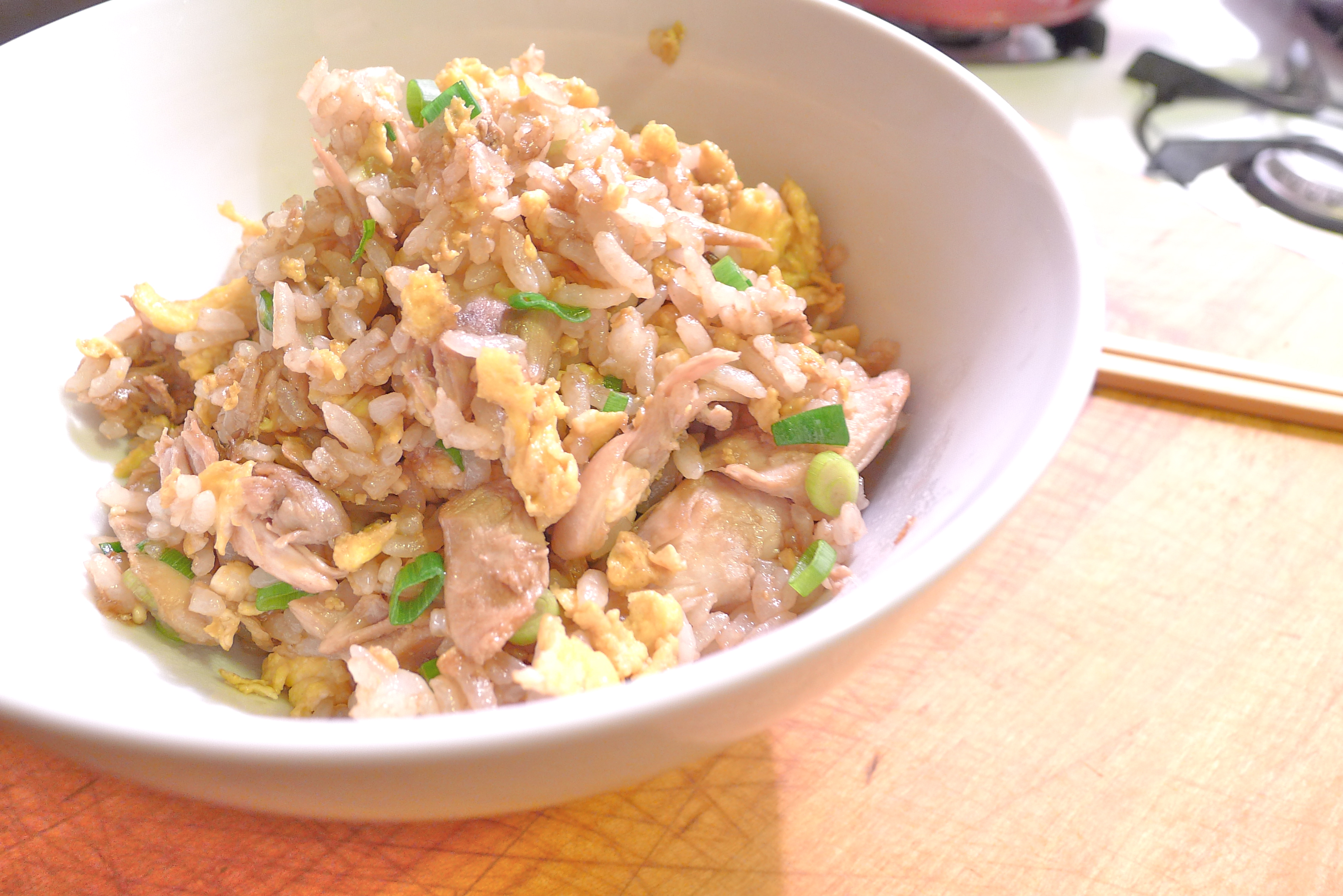
And that is precisely what fried rice does for me. My mom would make fried rice for me after school, after long speech meets, after coming home too late, after long hours at summer jobs, after exhausting semesters at college, after months abroad. She would use leftover rice, and whatever else was in the fridge. It didn’t matter if it was some extra pork, or beef, shrimp, or chicken from the night before. Sometimes she had some broccoli, some carrots, some peas. Sometimes she just had some scallions, which — let’s be honest — she always has.

Left with some extra soy-poached chicken and steamed rice myself after dinner with Tomoko, I decided to do the same.

Fried rice has no recipe. What I do when I am just making it just for myself is I scramble two eggs in a skillet, breaking up the curds into smaller bits. When they are done, I remove them from the skillet and set them aside. I add about a tablespoon of vegetable oil to the same pan, and set it over medium-high heat. When the oil starts to shimmer, I add the rice, the chicken, and the eggs. I let the everything begin to brown and sizzle, stirring and tossing the ingredients together all the while. I add a few splashes of good soy sauce, continuing to move all the ingredients around with a spatula. Once most of the liquid has evaporated, I add a handful of chopped scallions. I toss everything together so that the scallions are evenly distributed throughout the rice. Then I eat, and think of home.

Sliced Filet Mignon with Fava Beans and Radishes


This is another recipe is from Epicurious. It is terrific for spring. I’ve modified the recipe a little bit, but kept the primary components.

I like to do steak in a pan the Tom Colicchio-way, basting the meat in butter as it cooks. Factor in about one steak per person.

I prefer my radishes crunchy, so I wouldn’t recommend letting them sit in the dressing for as long as the original recipe states.

I love fava beans. Get them fresh while you can (now is the season). They are extremely labor intensive to shuck and peel, but it is worth it. Here is a handy video clip to show you how if you have never cooked with fava beans before. Just ignore the cooking times that the cook in the clip recommends.

I never really measure out my oil or vinegar for the vinaigrette . . . If pressed, I would suggest that 3:1 ratio of oil to vinegar.

Ingredients:

About a 1/4 cup of extra-virgin olive oil

A splash of apple cider vinegar

Dijon mustard to taste (I use about a teaspoon and a half)

About 1/3 cup of fresh fava beans (from about 6-7 pods)

2 radishes, thinly sliced

2 filet mignon steaks, about 5-7 ounces each

Canola oil

Butter

Salt and pepper

About a tablespoon of chopped chives

Crumbled, soft goat cheese, or chèvre

How to prepare:

1. In a medium bowl, whisk together the vinegar, oil, and mustard until they form an emulsion. Adjust the seasoning to your taste.

If using fresh favas, you will first need to shuck the beans from the pods. Discard the empty pods, and blanch the beans in boiling water for about 2 minutes — any longer than that, and they will be mushy. Have an ice bath ready to shock the beans. By submerging the beans in ice water after draining them, you will retain their beautiful green color. When the beans are cool, you will need to remove the waxy outer-covering of each one. If you nick the end of a bean with your finger nail, you can easily squeeze the bean out of its peel.

Toss the fava beans and the radishes in the vinaigrette. You want them evenly-coated with the dressing.

2. Pat the steaks dry with paper towels, and season them liberally with kosher salt and pepper. In a heavy pan, heat the canola oil over high heat until it is almost smoking. You’ll be able to see when the oil is up to temperature when its surface begins to shimmer. Sear the meat on both sides, about 2 minutes per side. Reduce the heat to medium-low. You must reduce the heat to prevent the butter from burning on contact with the pan. Add a good knob of butter to the pan. Tilt the pan and, using a spoon, baste the steaks continually with the melted butter and oil mixture, flipping them halfway through cooking. Continue to cook the steaks until you have achieved your desired level of doneness.

Transfer the steaks to a cutting board. Let them rest a few minutes before slicing them.
Bear in mind that the steaks will continue to cook a little bit while resting, so you may want to keep this in mind and remove them from the pan when they are a little bit rarer than how you want to eat them.

3. Toss the fava beans and the radishes with the chives. Divide the fava bean and radish mixture between two plates. Top each portion with one of the sliced filet mignons. Drizzle some of the vinaigrette, and sprinkle on some of the crumbled chèvre over each steak. Serve immediately.

Sliced Egg and Black Truffle Mayonnaise on Toast


My first year of graduate school, I lived down the street from an appallingly awkward airline-themed café. The space was pleasant with floor-to-ceiling windows. It had those lovely columns that fewer and fewer downtown places seem to want to retain. Apart from the odd collection of 1960’s memorabilia (Braniff, Pan-Am, and TWA), there were these nice, fat couches strewn about a lofted area — perfect for passing out after too much coursework.

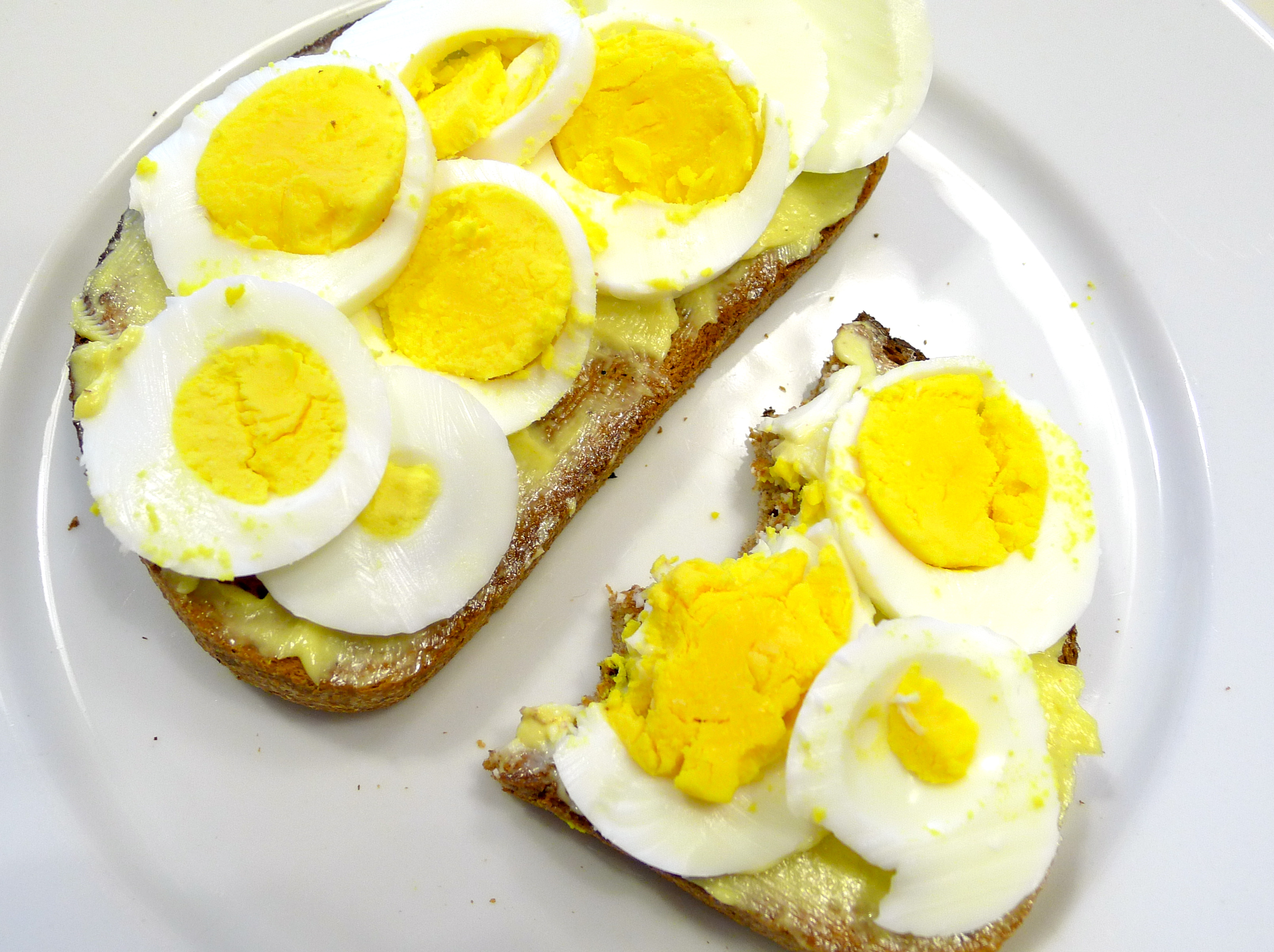
There was also the food, which thankfully was nothing like what was served on airlines. The coffee was strong, good, and Italian. They never burned my espresso. They served little panini, cut into neat quarters that you could eat while burying your nose in a book. My favorite was simple: sliced egg on toast with truffled mayonnaise.

Laura gifted me with a little tub of black truffle salt a while ago. Admittedly, I have parked myself on it for too long. When I finally decided to put it to some good use, the smell took me back to those early years when my worries were fewer.

As I have expounded on how to hard boil eggs, and how to make mayonnaise on this blog before, I will refrain from further exposition. I will just say that you should use a neutral oil, like grapeseed or canola. Add about half a teaspoon of truffle salt to the mayonnaise at first, and then build up from there. I tend to make a saltier mayonnaise to compensate for the unsalted eggs. Slather each slice with the mayonnaise, and layer the sliced egg on top. Factor in about one egg per slice of toast.

Truffles, mayonnaise, and eggs. I do the sandwich open-faced these days. It is wonderful. I was in such a hurry to eat it that I hastily, and sloppily sliced up the egg. I had crammed half of it greedily down my gullet before it occurred to me that I should take a photo. So please excuse the photographic evidence of my gastronomic enthusiasm!

Simple Green Salad


This is not really a recipe, but an special welcome extended to season’s first lettuces.

It is also a gift from Tomoko, who appears to be drowning in seasonal produce at the moment. She asked if I might be interested in taking some off her hands, a precious bag of tender leaves plucked just that morning. Wouldn’t my interest be a given? Lettuces are best eaten immediately right after harvesting, but I’ll gladly take them harvested the morning of!

The leaves were sugar sweet, with fluffy folds and crunchy ribs. Delicious on their own, right out of the bag (I didn’t mind the few grains of dirt clinging to them), they were even better properly washed, hand-torn, and drizzled with a broken vinaigrette — just some lovely olive oil, and a few drops of apple cider vinegar stirred gently together so that they didn’t emulsify into regular vinaigrette. Flaky Maldon salt. Fresh black pepper.

It’s shaping up to be a great season.

Penne with Tuna, Basil, and Lemon Zest

This recipe comes from Epicurious. It is a terrific example of how the fewest number of ingredients, and the simplest preparation, can taste really divine.

For this, you’re going to want to find some really good tuna. Not the water-packed stuff, but the luscious olive oil-packed kind. The tuna belly, line or pole-caught stuff. Preferably from Italy, or Spain. You want the stuff that tapas bars in Spain serve out of a can with a toothpick, and charge you money for.

The best tuna recommendations can be found here. This is a great little recipe to have in your repertoire. Tuna is a good staple to have in the pantry, and dinner can be on the table in just a few delicious minutes.

Ingredients:

1/2 pound of penne

The zest and juice of one lemon

1 clove of garlic, grated

1 big handful of basil leaves, coarsely cut into strips

6 ounces of good quality, olive oil-packed tuna

How to prepare:

1. Set a large pot of heavily salted water to boil. When it starts to boil, add the penne.

2. Meanwhile, in a large bowl, combine the lemon zest, lemon juice, grated garlic, and tuna with the oil from the can or the jar. If you think there might be too much olive oil, pour off some of it into a small bowl or ramekin. You can always add more as needed. As you combine the ingredients together, break up any larger chunks of tuna into smaller one.

3. When the pasta is al dente, drain it and add it to the bowl full of the other ingredients. Toss everything together so that the pasta is well-coated with the sauce. Add the basil, and toss again. Adjust the seasoning if needed, and serve immediately.

Egg Salad with Basil on Toast


When people say that so-and-so “can’t boil an egg,” they generally mean to say that the person in question can’t cook.

Insofar as idioms go, it’s a pretty silly one; there are a lot of people out there who cook all the time, who cook all kinds of things that people like to eat, who can’t boil an egg at all.

Because boiling an egg is both ridiculously easy, and easy to mess up at the same time. It’s really kind of tricky. I see badly boiled eggs all the time. Overcooked, horrible things with sulfurous dun-colored yolks, ringed with a nasty grayish-green penumbra.

So gross. They taste awful too, chalky and rank. No wonder there are so many people out there who don’t like their eggs hard-boiled: they have only ever had bad ones.

But a good, really good hard-boiled egg is delicious. It has a soft, silky white that cushions a rich and velvety yolk. A egg salad made with properly boiled eggs is creamy, full, and wonderfully fatty. It is very very satisfying.

Here are some ways to properly hard boil an egg:

Technique #1:

1. Carefully prick the bottom of the egg (the widest end) with a needle, or a pin (I use a push pin). You want to pierce the shell, but not the membrane separating the air pocket in the base of the egg from the egg itself. Don’t worry: you won’t “ruin” the egg, it won’t “go everywhere,” it will not leak, it will not explode. It will be okay.

2. Place the eggs in a medium saucepan filled with cold water. The eggs should be covered with about an inch of water. The eggs might bob around, pricked end-up. Don’t worry. If it bothers you, you can just hold them down a little bit until the air in the bottom-end of the egg escapes, and they sink to the bottom of the pan.

3. Bring the water to a boil. When the water starts boiling, turn off the heat and put the lid on the saucepan. Set the timer for 10 minutes. 10 minutes. No more, no less.

4. Meanwhile, set up a nice ice bath. After ten minutes, lift the eggs out of the hot water and plunge them in the ice water. Leave them there for 5 minutes. 5 minutes.

5. Now your eggs are perfectly boiled, and ready to peel.

Why is it important that you prick the bottom of the egg’s shell?

Each egg has a small pocket of air at its base. Hot air expands, and by pricking the bottom of the egg, the small hole allows this air to escape. This will relieve any pressure caused by the expanding air, instead of cracking the egg while it is still cooking and making a mess. You can just boil the egg without doing this (see Technique #2), but why risk being sorry when you can be safe?

Technique #2:

1. Place the eggs in a medium saucepan filled with cold water. The eggs should be covered with about an inch of water.

2. Bring the water to a boil. When the water starts boiling, turn off the heat and put the lid on the saucepan. Set the timer for 10 minutes. 10 minutes. No more, no less.

3. Meanwhile, set up a nice ice bath. After ten minutes, lift the eggs out of the hot water with tongs. Right before submerging them in the ice water, bang the widest end of each egg against the countertop. You want to crack the shell at the base. Leave the eggs in the ice water for 5 minutes. 5 minutes.

4. Now your eggs are perfectly boiled and ready to peel.

Technique #3:

1. Carefully prick the bottom of the egg (the widest end) with a needle, or a pin. You want to pierce the shell, but not the membrane separating the the air pocket in the base of the egg from the egg itself.

2. Place the eggs in a medium saucepan filled with cold water. The eggs should be covered with about an inch of water.

3. Bring the water to a boil. When the water starts boiling, turn off the heat and put the lid on the saucepan. Set the timer for 10 minutes. 10 minutes. No more, no less.

4. Meanwhile, set up a nice ice bath. After ten minutes, pour off the hot water. With the lid on the pan, shake the eggs enough so that their shells crackle. Submerge them in the ice water. Leave the eggs in the ice water for 5 minutes. 5 minutes.

Why is cracking the shell after cooking important?

You want to crack the shell so that any sulfurous smells inside of the egg can escape and dissipate into the ice water bath. Or so says Jacques Pépin.

Oh no, my eggs are hard to peel! What happened?

Your eggs are hard to peel, my friend, because you have very fresh eggs. The fresher the egg, the harder it is to peel it. The older the egg, the easier it is to peel.

So it’s okay if some of the egg white comes away while you are peeling the egg. Sometimes, peeling them under running water helps.

This all might seem like a fussy way to boil eggs, but believe me, once you do it right, you’ll never want to do it badly again.

Now back to the recipe . . .

Ingredients for Egg Salad with Basil on Toast:

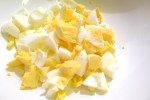
6 hard-boiled eggs, lightly chopped

2/3 cup of mayonnaise*

Salt to taste

One good handful of basil leaves, chopped (but I did a chiffonade, ’cause I’m all fancy like that)

Juice of 1 lemon

4 slices of toasted multigrain bread

How to prepare:

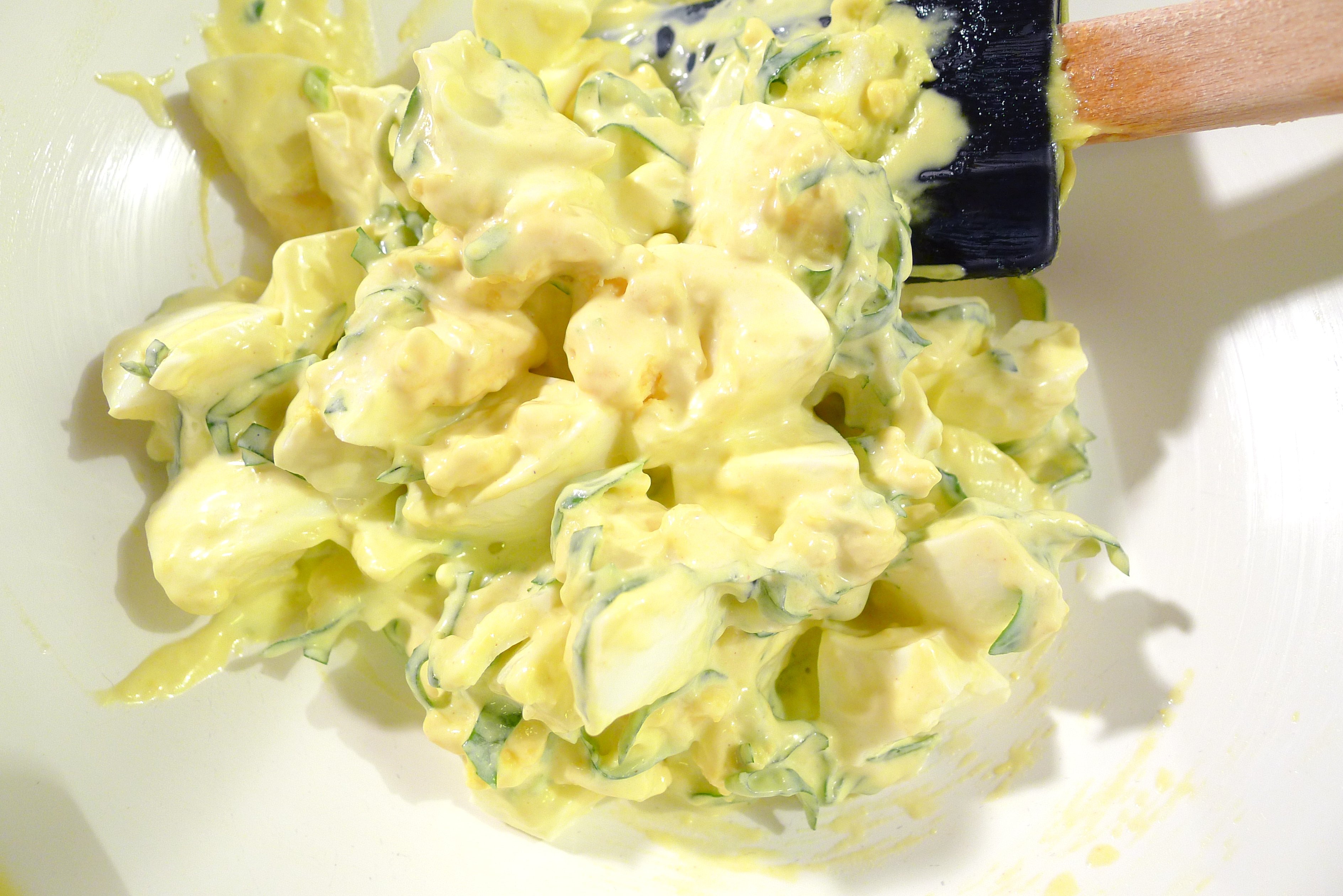
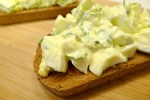
1. In a large bowl, combine the eggs, the mayonnaise, the basil, and a good sprinkling of salt. Add the lemon juice, a little bit at a time, until the salad is nice and creamy. Adjust the seasoning if needed.

2. Heap a large spoonful or two on top of each piece of toast. Serve immediately.

For the mayonnaise:

2 teaspoons of freshly-squeezed lemon juice

1/2 teaspoon of sea salt

1/2 tablespoon of Dijon mustard

1 large egg yolk at room temperature

1/2 cup of olive oil (I like a good, vibrant olive oil with eggs)

How to prepare:

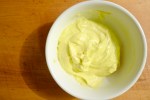
1. Whisk the lemon juice, salt, and Dijon mustard together in a medium-sized bowl.

2. Measure out the olive oil into a cup with a pouring spout.

3. Whisk the egg yolk into the mustard mixture until it is well-incorporated and creamy. Continue whisking while you add a few drops of oil to the mixture. Whisk until completely incorporated before adding a few more drops. Try not to add too much oil, too quickly in the beginning, or the mixture will not emulsify. As the mixture begins to thicken, begin to add the rest of the oil in a thin and steady stream while whisking constantly.

If using a hand-blender, hand-mixer, or food processor, just start slowly adding the oil in the beginning, before adding the rest in a steady stream.

To help you visualize how mayonnaise comes together, here is a really good video clip.

Chicken-Fried Steak with Mashed Potatoes and Pan Gravy


It is a stunning 92.7° outside.

92°. Even after 8PM. It is just barely June.

This is almost 20 degrees above the seasonal average. It feels like August. This is so wrong!

So what did I decide to cook? Did I have a cool, crisp salad? Did I just lie on my floor, alternating slices of cucumber between my eyelids and my mouth?

Nope. I made chicken-fried steak, mashed potatoes, and gravy.

Why? Because apparently, the heat has made me insane.

Or maybe I can blame it on my Arkansas-born father, say that I am simply channeling the Spirit of the South. You know that Spirit? The one that makes you crave stewed collards, macaroni and cheese, and smoked meat in the wilting Delta heat?

You don’t actually need a recipe for chicken-fried steak, but for reference, I give you the link to the Pioneer Woman’s version here.

Love her or hate her, the Pioneer Woman’s blog is terrific form of escapism. Everything about Ree Drummond’s life seems beautiful: she’s beautiful, she has beautiful children, her kitchen is huge and beautiful, her ranch is beautiful, her friends and family are beautiful, her photos are beautiful. Everything is highly calorific, and all the colors are super-saturated.

And her bodice-ripper stereotype of a husband is every woman’s dirty, little secret fantasy.

The Pioneer Woman’s little slice of Oklahoma seems fantastic too. True, there is a lot of backlash (some of it really funny, like this and this), but you can’t deny that Drummond makes American Comfort Food look really, really good. Plus she slayed the Flay in Bobby’s Food Network Thanksgiving showdown. Kudos.

So, how do you make chicken-fried steak without a recipe?

You will need:

Some cube steaks (or minute steaks)

Some flour

A lot of milk

2 eggs

Some canola oil

Lots of salt and pepper

Some seasoning.

First of all, pat the cube, or minute steaks dry with paper towels. In a large shallow dish, pour in about half a cup of milk. Beat 2 eggs into the milk. In another dish, stir together about 4 heaping spoonfuls of flour, about a teaspoon and a half of salt, a lot of freshly ground black pepper, and whatever seasoning you want to add (seasoned salt, paprika, cayenne pepper, garlic powder, onion powder).

Coat each steak, one at a time, with the milk and egg mixture. Dredge each steak with the flour. Dunk each flour-covered steak back in the egg and milk mixture, and redredge each in the flour mixture. Place them on a clean plate after you are done.

In a large cast-iron skillet, heat about 1/4 inch of canola oil over medium-high heat. You want the oil to just start to smoke. When the oil has reached a good temperature, add the steaks to the pan, being careful not to overcrowd it. Fry each steak until each side is golden brown. Remove the steaks to a paper-towel covered plate the drain.

Pour off all but about a 1/4 cup of oil. Add a heaping 1/4 cup of flour to the pan, and make a roux. Brown the flour so that your gravy doesn’t have that raw flour kind of taste. It should be golden brown when you pour in the milk (about two cups). You will end up with a lot of gravy. Whisk the gravy, breaking up any lumps, until you have the consistency that you want. This can take between 5 to 10 minutes. You might have to add more milk if the gravy starts to look too thickAdjust the seasoning as you go along, adding more salt and black pepper as needed.

Ladle a generous amount of gravy over your chicken-fried steak. If you serve your chicken-fried steak with mashed potatoes, you can cover your spuds with the gravy too.

Enjoy responsibly: make this in November, not during a heat wave like now!

Sautéed Fiddlehead Ferns with Garlic and Lemon


I have a food confession to make: I have been so busy that I haven’t been to the Greenmarket at all this season. Blame it on work, blame it on the incessant rain, blame it on the suffocating heat and humidity, but the real blame goes to me.

I have been a very lazy eater of late.

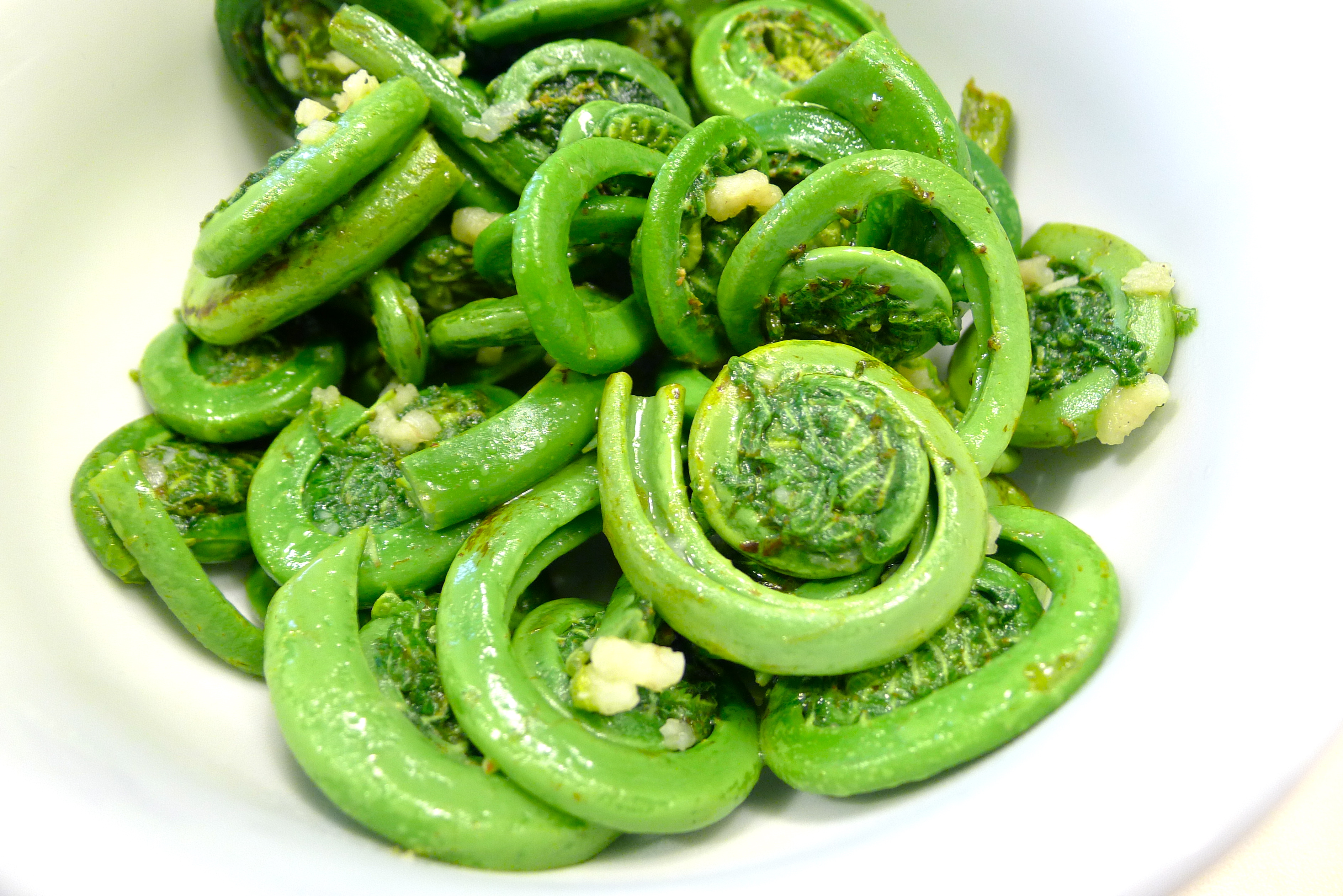
But spring vegetables are an excellent reason to get off of my duff. Since I missed ramp season (argh!), I wasn’t going to let the fiddlehead fern pass me by.

Fiddlehead ferns are the unfurled leaves of a young fern. They are harvested around this time, before they unroll and spread out as a new frond.

You blink and you miss the season.

So this is time-sensitive post, people!

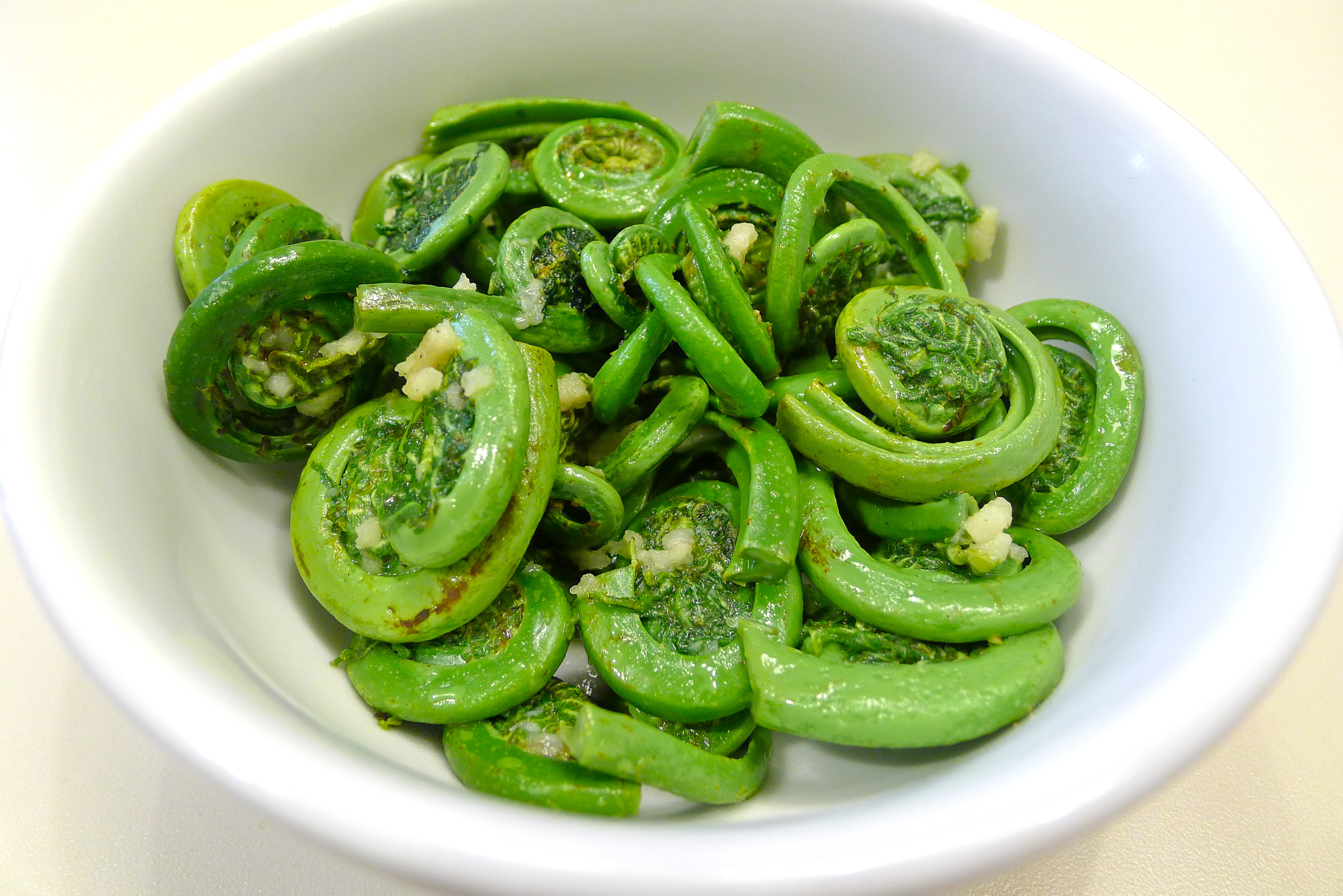
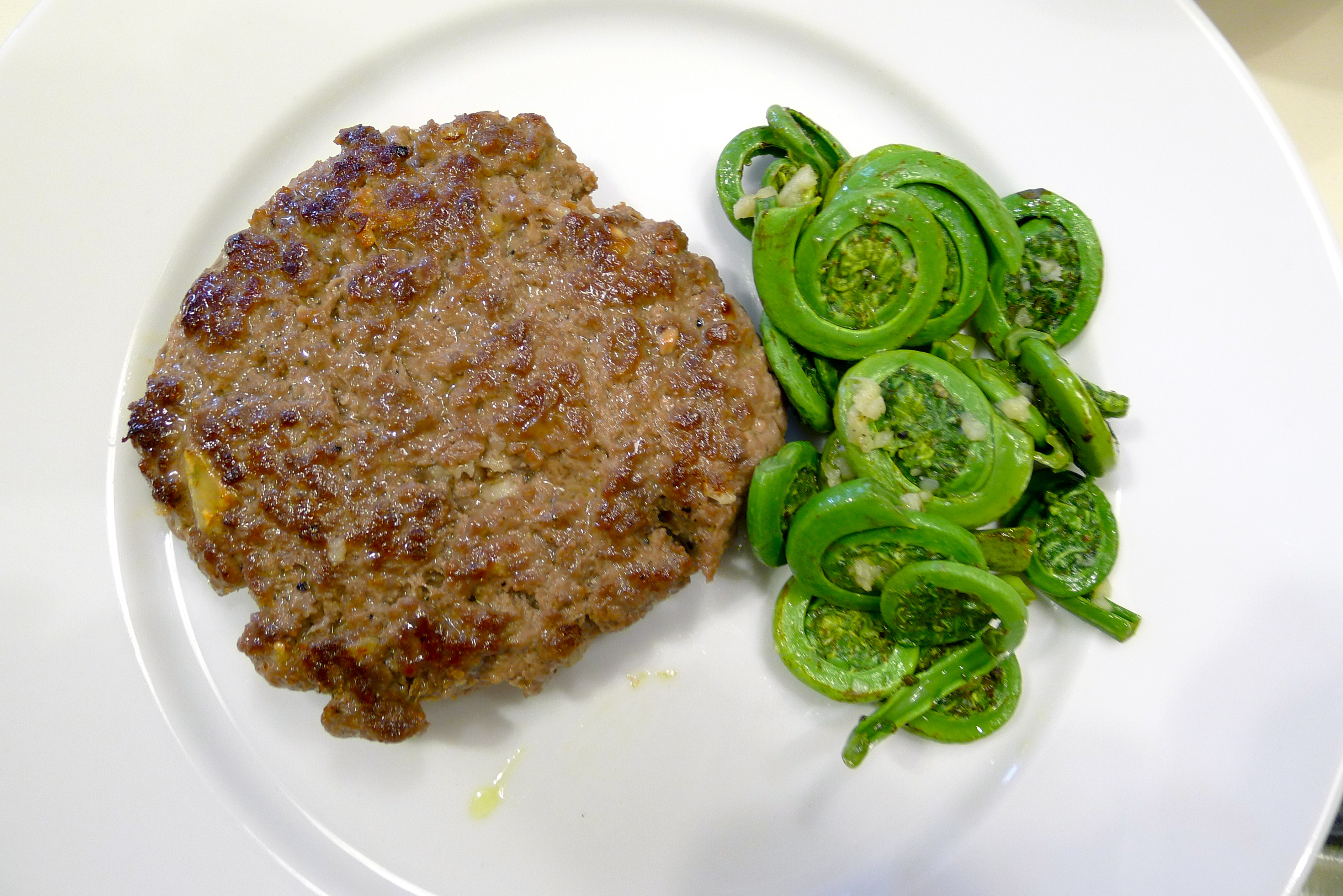
I love them simply cooked: blanched, sautéed in olive oil and butter with garlic, and spritzed with lemon before serving.

Be sure to clean the ferns well before blanching. Swish them around in a big bowl of water, trimming the ends a little if they need it. After boiling them briefly in salted water, plunge them into an ice cold bath to stop the cooking and preserve their wonderful color. As the fiddleheads drain, heat a little bit of olive oil with a small knob of butter in a sauté pan with some finely minced garlic. When the garlic begins to sizzle, add the ferns. Shower them with sea salt, and sauté them until they start to brown slightly. A quick squeeze of lemon over the top before serving. They are fabulous.