Cream of Golden Summer Squash

Didn’t I just make this soup?

Summer time vegetables are terrific to turn into soups which can be served both hot and cold. As you can see, the basic template for a puréed soup is pretty simple, and infinitely adaptable:

1. Sauté your alliums (onion, shallots, garlic, etc.) in butter and olive oil until soft and translucent.

2. Add your chopped vegetables to the pot, warming them in the oniony mixture.

3. Cover with water. Cook until tender.

4. Purée and adjust seasoning.

Golden summer squash is in season right now. And it makes a soup the color of sunshine.

Ingredients:

1 knob of butter

1 tablespoon of olive oil

1 small onion, chopped

2 golden summer squashes, cut into 1-inch pieces

2 tablespoons of crème fraîche

Water

Fresh basil

Special Equipment:

A hand-held immersion blender

How to prepare:

1. In a medium sauce-pan (about 2 quarts), heat the butter and the olive oil together over medium heat until it begins to foam. Add the chopped onion, and sauté it until it is translucent. When the onions begin to get a twinge of goldenness, add the squash. Toss and warm everything together for about another a minute or two. Make sure that the squash is well-coated with the onion mixture.

2. Cover the squash with about 1/2-inch of water. Add a few healthy pinches of salt, and simmer everything until the squash is nice and tender. When the squash is done, turn off the heat. Using an immersion blender, purée the vegetables in the pan (makes for easier clean-up). You want the texture to be smooth and creamy. If the soup seems a little thick, you can add some more water to thin it. Stir in the crème fraîche. Adjust the seasoning (I just use salt because I like to keep the vibrant color of the soup unmarred by little flecks of black pepper).

3. Top the soup with a chiffonade of basil, and serve it hot or cold. If you serve it cold, it will thicken upon standing.

Cream of Carrot Soup with Cumin and Honey

With puréed soups, sometimes I use water, not stock for the base. If the vegetables are lovely and in-season, I just want a pure taste with minimal distractions.

Carrots pair well with cumin, and the honey heightens their natural sweetness.

Ingredients:

1 knob of butter

1 tablespoon of olive oil

1 small onion, chopped

Ground cumin

1 bunch of carrots (about a pound), peeled, or well-scrubbed, and cut into 1/2 inch pieces

1-2 tablespoons of honey

Water

Salt to taste

Special Equipment:

A hand-held immersion blender

How to prepare:

1. In a medium sauce-pan (about 2 quarts), heat the butter and the olive oil together over medium heat until it begins to foam. Add the onions, and sauté them in the butter until they are translucent. When the onions begin to get a twinge of goldenness, sprinkle them lightly with cumin (a little goes a long way). Toss the onions and the cumin together for about 20 to 30 seconds. You want the ground spice to become a little fragrant and toasted, but not burnt. Add the carrots, and toss them with the onions.  Warm everything together for about a minute or two, making sure that the carrots are well-coated with the onion mixture.

2. Cover the carrots with about 1/2-inch of water. Add a few healthy pinches of salt, and simmer everything until the carrots are nice and tender. When the carrots are done, turn off the heat. Using an immersion blender, purée the vegetables in the pan (easier clean-up, no?). You want the texture to be smooth and creamy. If the soup seems a little thick, you can add some more water to thin it. Stir in the honey. Start with one tablespoon, and add another if you feel like the soup needs more sweetness. Adjust the seasoning (I only use salt because I like to keep the vibrant orange smoothness of the soup unmarred by little black flecks of pepper).

3. Top the soup with a dollop of crème fraîche, and serve it hot or cold. If you serve it cold, it will thicken upon standing.

Nigel Slater’s Blueberry-Pear Cake


One of my favorite books is Nigel Slater’s The Kitchen Diaries. Part cookbook, part, well, diary, longtime Observer columnist Slater takes you through a year in his life food-wise. He doesn’t give an entry for every day (and some days he doesn’t even cook at all), but each one is a beautiful little snippet of real life lived well.

I love Slater’s writing voice, which seems to be a reflection of his cooking: honest and personal. He has had some training, but is not a chef per se (neither was Julia). That doesn’t mean that his food suffers; Slater is a good eater who appreciates food, and loves to share generously. Who can’t respect that?

His recipes are dead-simple, but they are made with the assumption that you know your way around the kitchen. Sometimes, they are a little skimpy on details, but they do all work (at least the ones that I have tried).

His tastes are also very, very British, which — forgive me — might be construed as a somewhat dumb statement to make, given that he is British. That being said, there are some things to note:

1. The Brits eat a lot of gooseberries, and drink a lot of things flavo(u)red with elderflower.
2. They like desserts named “fool” and “mess,” and collectively dessert is referred to as “pudding.”
3. There is a lot of smoked fish.
4. Chili is spelled with two l’s.
5. Curry powder is common.
6. Parsley sometimes seems bizarrely interchangeable with cilantro.
7. Cilantro is called “coriander.”
8. “Medium-rare” can infuriatingly mean “medium-done.”

As for Mr. Slater himself, he has:

1. A kick-ass garden.
2. A beautiful wooden-plank farm-house table.
3. A lot of chipped dishes.
4. A kick-ass neighborhood deli.

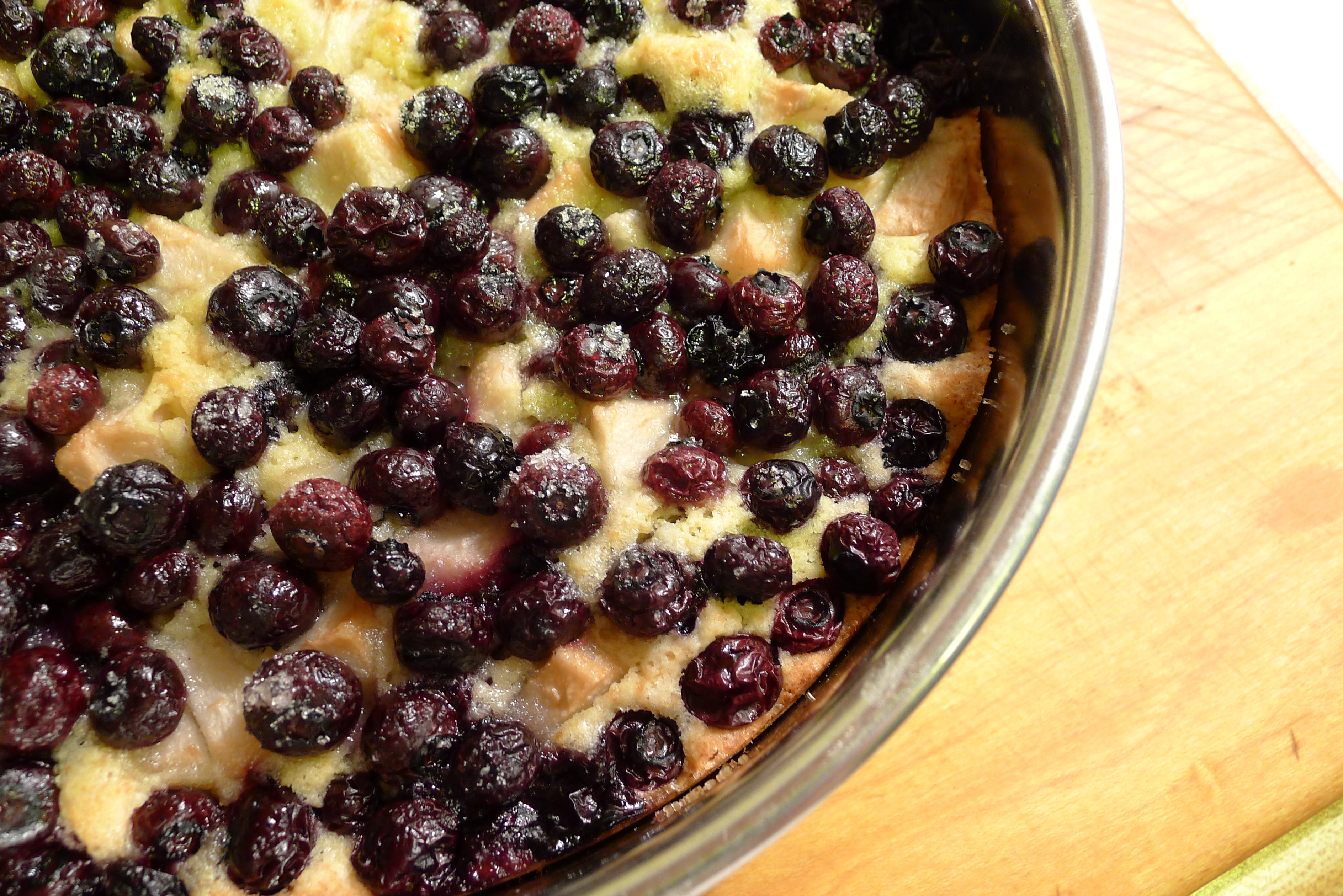
This recipe adapted from Slater’s is a terrific way to take advantage of the blueberries currently in the market. It comes together quickly, and looks beautiful. Though Slater makes no mention of it in his Diary, my dining companion did suggest that a little jug of crème anglaise on the side would be a nice addition.

Ingredients:

1 1/4 cups of flour

A pinch of salt

1 teaspoon of baking powder

1/2 cup of good butter, softened

1/2 cup of sugar

2 eggs, beaten

1-2 ripe pears, peeled, cored, and cut into small pieces

1 large pint of blueberries

About 2 more tablespoons of sugar

Special equipment:

A spring-form pan

How to prepare:

1. Preheat the oven to 350°. Butter the bottom and sides of the spring-form pan. Line just the bottom with a circle of parchment paper.

2. Sift or stir together the flour, salt, and baking powder.

3. In a separate large bowl, beat the butter and sugar together until the mixture is pale and fluffy. Add the beaten eggs slowly to the butter/sugar mixture. While continuing to beat everything together, add the dry ingredients a little bit at a time until they are fully incorporated. The resulting batter will be a little thick.

4. Pour (or spread) the batter out in an even layer over the lined bottom of the spring-form pan. Scatter the pear pieces and the blueberries evenly across the top of the batter. Sprinkle the fruit with the remaining 2 tablespoons of sugar.

5. Bake for about 55 minutes to an hour. The top should be golden, and a skewer or knife inserted into the center of the cake should come out clean when it is done. Let cool before removing the spring-form pan’s outer ring.

Andouille Pigs-In-A-Blanket


What’s cuter? Pigs-in-a-blanket, the name “pigs-in-a-blanket,” or real pigs in blankets?

Regardless, whoever came up with pigs-in-a-blanket is a complete genius!

Pigs-in-a-blanket can go upscale. You could use nice puff pastry, and nestle your “pigs” in flaky baskets of buttery goodness. But is that going too fancy?

When I think of pigs-in-a-blanket, what I want good ol’ uncomplicated nostalgia . . . okay, nostalgia with a twist.

So use that commercial tube of pop-out crescent rolls! Preheat your oven to 375°. Take about half a pound of excellent CSA andouille, and cut it into 1 1/2 to 2-inch sections. Cut each section into quarters. Separate the crescent roll dough into its pre-cut triangles. You will need to split each triangle kind of “in half.”

Wrap a triangle of crescent roll dough around each andouille sausage quarter. Spread them out evenly on a baking sheet lined with parchment paper. Bake your andouille pigs-in-blankets for about 12-15 minutes, or until golden and flaky. 

Steak and Eggs

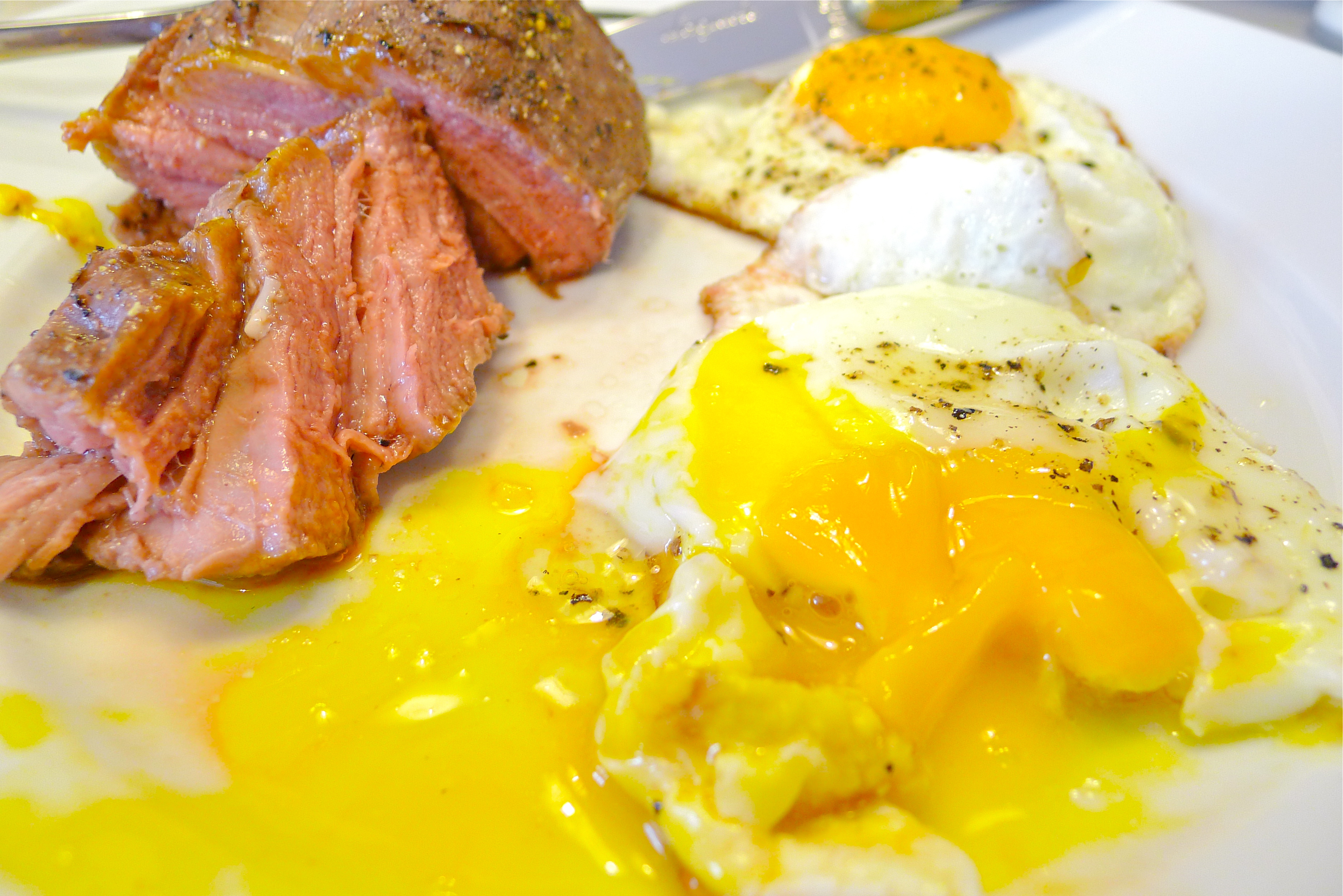
Do you really need a recipe for steak and eggs? The title pretty much says it all. However, I did manage to distill the instructions into three easy steps . . . and in haiku too!

How to prepare:

1.

Room temperature.
Season with salt and pepper.
Heat oil till smoking.

2.

Sear steak on both sides.
Will have a very nice crust.
Let it rest a bit.

3.

Fry up your two eggs.
Sunny-side up is my thing.
Please keep yolks runny

4.

Sometimes toast is nice.
It is not necessary,
But it is tasty.

Freshly Shucked Peas


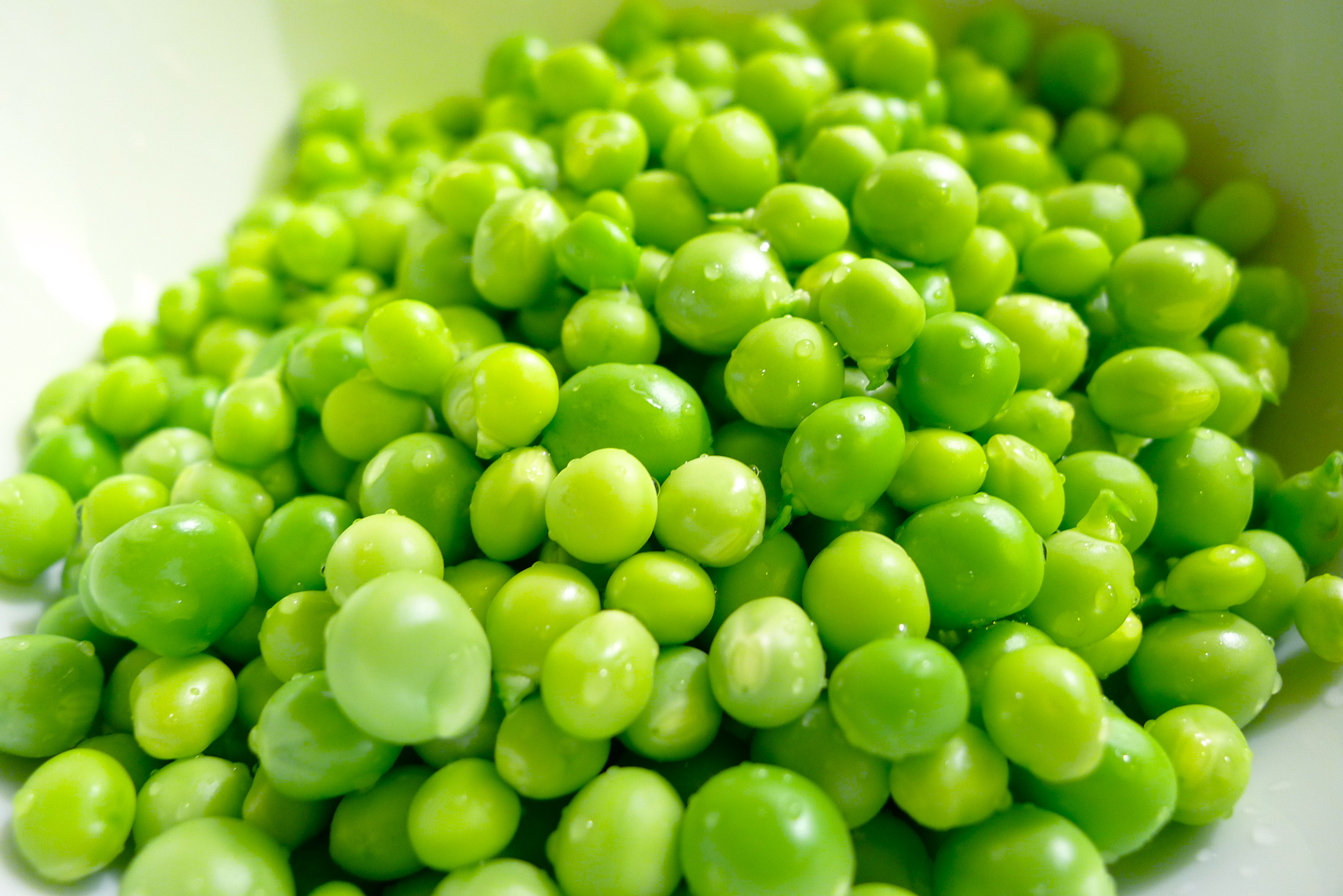
This crazy spring/summer has been a little bit of a wrench in what has been coming to market lately. A shortened period of sweet, delicate spring vegetables, and an early arrival of things like squash. In any case, freshly shucked peas are wonderful — despite President Obama’s recent diss!

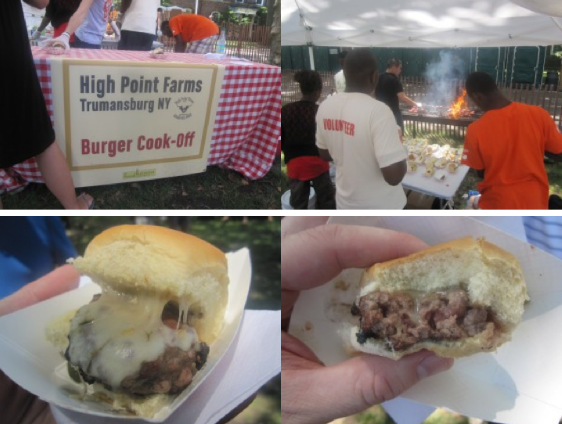
High Point Farms takes Best Burger at Cook Out NYC on Governor’s Island

Photos courtesy of the Reverend at burgerconquest.com.

Happy cows make delicious burgers! Congratulations to High Point Farms for taking the Best Burger award at last weekend’s Burger Cook-Off on Governor’s Island! Go CSA!

Read about the event here.

And see more pictures of the event here!

Lemon Pasta Salad with Sun Gold Cherry Tomatoes and Feta


This is another great pasta salad recipe from Epicurious
. I didn’t deviate from it too much. I changed some of the proportions for the dressing, and substituted chives for the green onions (sometimes green onions can be really overwhelming).

Also, the recipe calls for red cherry tomatoes and for red bell pepper, but as I prefer more contrasting colors, I opted for the deliciously sugar-sweet Sun Gold.

Ingredients:

For the dressing:

7 tablespoons of good extra-virgin olive oil

The juice of two lemons

The zest of two lemons

1 fat clove of garlic, grated

1 to 1 1/2 heaping tablespoons of coarse-grain Dijon mustard

For the rest:

1 pound of penne

1 pint of Sun Gold cherry tomatoes, quartered (or halved if they are small)

1 red bell pepper, seeded and diced

1 cup of crumbled French feta (I sometimes find Greek feta too salty)

1 bunch of chives, finely chopped

How to prepare:

1. Bring a large pot of salted water to boil. Add the penne and cook it until it is al dente.

2. Meanwhile, whisk the ingredients for the dressing together in a large mixing bowl. A Microplane grater is terrific for both the lemon zest, and for grating the garlic.

3. When the pasta is done, drain it and rinse it with cold water to cool it down quickly. Drain the pasta again and add it to the dressing, along with the tomatoes and the bell pepper. Toss all of the ingredients together, making sure that the pasta is well-coated. Add the crumbled cheese and the chives. Toss again. The cheese, the chives, and the vegetables should be evenly distributed throughout the salad. Adjust the seasoning if needed (depending on how salty the mustard and the feta are, you might not have to).

Pack it up for the party, or eat it immediately.

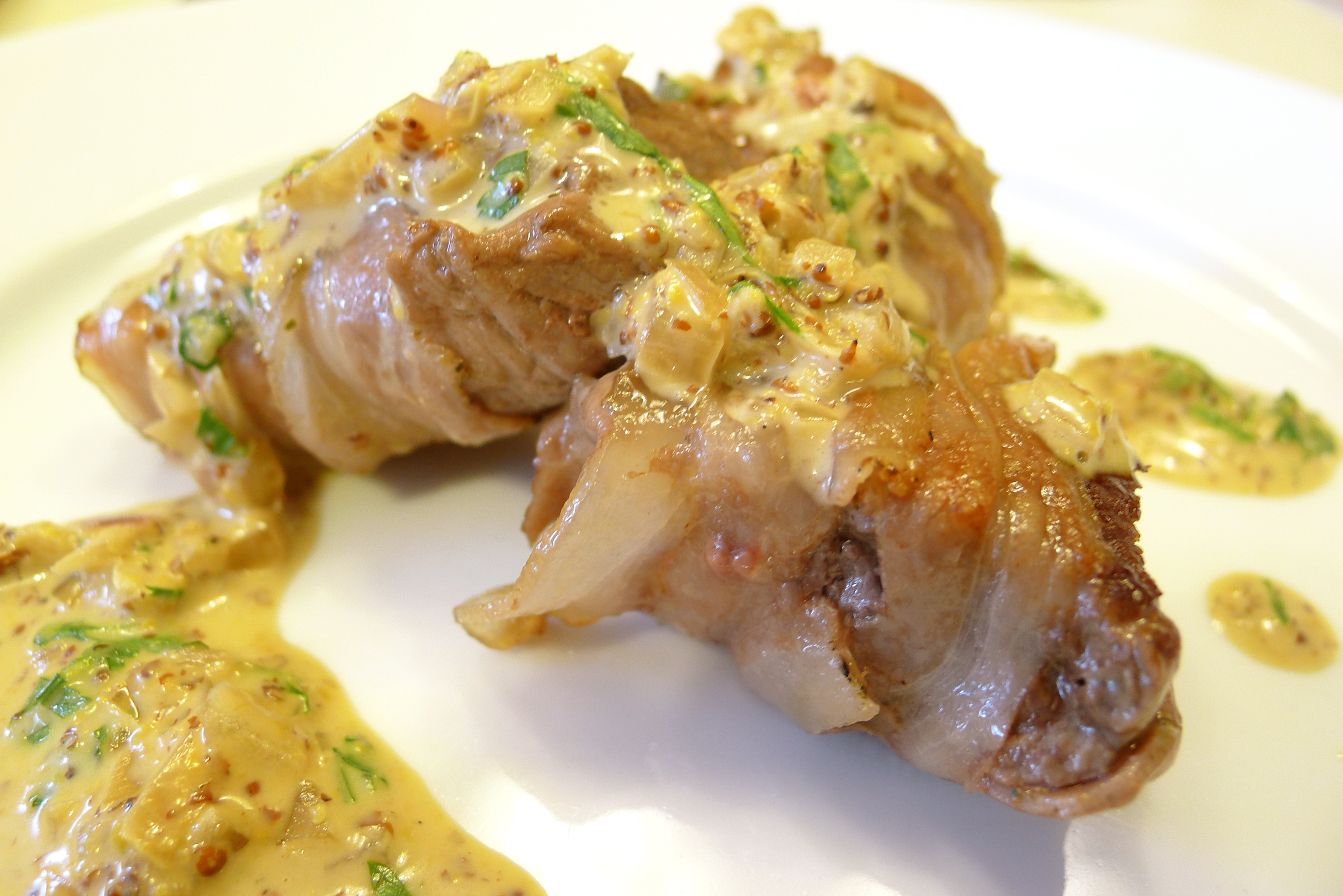
Pancetta-Wrapped Beef with Mustard Cream Sauce


When looking for a recipe to try, I find myself repeatedly drawn to certain things. In general, I prefer natural food pairings: peas and mint, asparagus and parmesan, brussels sprouts and bacon. Even though I like flavor combinations to be on the conventional side, I do want food to be inspired, but never forced. I don’t like tortured dishes made from overly complicated recipes — meaning the ones with too many things going on.

I look for balance. I want harmony. The plate has to “work.” Most importantly, it has to let the ingredients shine. The emphasis should be on letting food taste like what it is supposed to taste like. I’m not that keen on hiding the flavors with a bunch of heavy spices, nor do I look fondly on over-worked preparation.

Simplicity is best. Simplicity is not boring, it’s elegant.

That is what I like about this recipe. It’s just enough work to be interesting, but not so much that it is a chore. I have tweaked it a bit from its original, but it makes a terrific little meal when you don’t have a lot of time, but want a lot of style.

Ingredients:

1 pound of tender cut beef, cut into 2-inch cubes (you should have about 12 cubes total)

About 12 thin slices of pancetta or proscuitto, one per beef cube

2 tablespoons of canola oil

1 shallot, finely minced

1/4 cup of Bourbon

1/4 cup of water

1 tablespoon coarse Dijon mustard

1/4 cup of heavy cream

2 tablespoons of parsley, finely chopped

How to prepare:

1. Pat the beef cubes dry with paper towel. Wrap each cube with a slice of pancetta or a slice of proscuitto, making sure to cover as much of the cube as possible. If you have rolled pancetta, you can unroll it and then wrap it around each cube.

2. In a large cast-iron skillet, heat the oil over medium-high heat until it starts to shimmer. Place the wrapped cubes seam-side down in the pan. Sear the cubes evenly on all sides, about a minute or two per side. You want the beef to stay medium rare, but the pancetta to crisp a little bit.

Remove the beef cubes to a paper towel-lined plate while you finish the sauce.

3. Reduce the heat to medium, and add the shallots to the same skillet. Sauté the shallots until they begin to get translucent, scraping up the browned bits from the bottom of the pan as you go. Carefully add the bourbon and the water to the pan. Dissolve the browned bits in the added liquid. Once most of the alcohol has cooked away, add the mustard and the heavy cream. Stir everything together. Continue to simmer the sauce until it has thickened. Turn off the heat, and add the parsley to the sauce.

4. To serve, top the beef cubes with the sauce and eat.