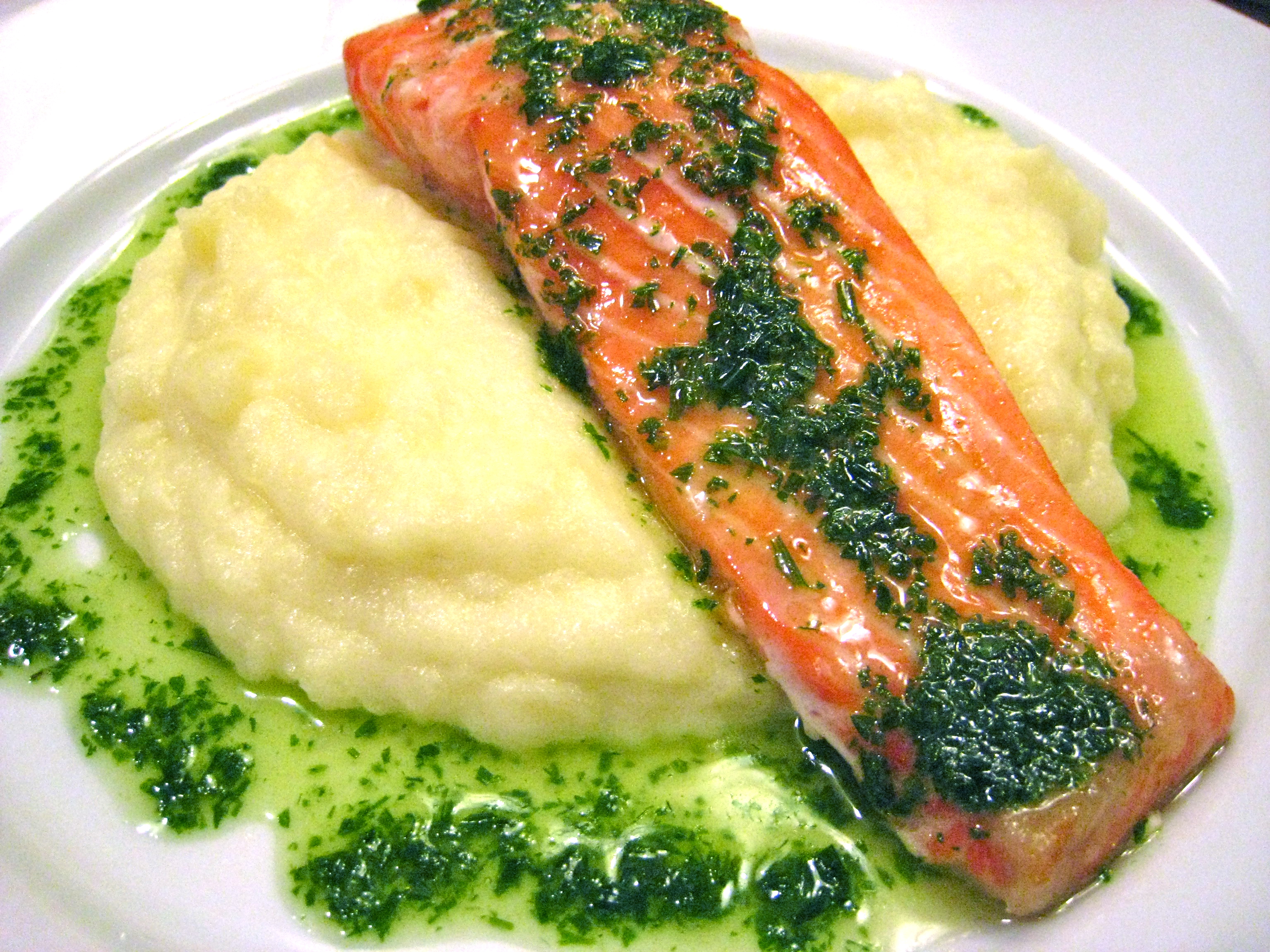
JGV’s Gently Cooked Salmon with Mashed Potatoes and Broken Chive Oil


People always ask me if the recipes on this blog are mine. Some of them are, but I also love trying out great recipes that I hear or read about. In all honesty, does it really matter? I mean, how original are anyone’s recipes anyway?

Enamored as I am of the New York Times‘s Dining Section, I picked up The Chefs of the Times a couple years ago. It’s a terrific cookbook. The contributing chefs are a “who’s who” in the culinary stratosphere: Romano, Vongerichten, Samuelsson, Boulud, Palmer, Portale, Keller, Richard, Trotter, et al. Each chef has a chapter devoted to them. What is great is that, as a preface to each recipe, each chef has composed a short written introduction about what they wanted to achieve and how they became satisfied with their finished product.

It is reassuring to keep in mind that for all their talent and ingenuity, chefs don’t exist in a vacuum. The concepts they are hoping to make reality on a plate are influenced by all kinds of things: nostalgia, personal experience, individual taste. I would also suspect that many of them owe a great deal more to Julia Child and Mastering the Art of French Cooking than they would admit in public. Certain taste combinations? They had to taste them first somewhere. The specific smoothness of mashed potatoes, for instance, that they are seeking? They must have compared theirs to either the incomparable smoothness of someone else’s potatoes, or the chunkiness of another’s.

Regardless, these little introductions are great windows into someone else’s creative process. It is true though that if you read a lot of cookbooks, you do start to see how much everyone’s recipes resemble one another. Everyone seems to have a version of Jean-Georges Vongerichten’s molten chocolate cake for example (if there was ever a recipe to which one person can lay the claim for “I was the first,” it would be this:  JGV’s extremely lucky “mistake”).

Sometimes, you just make a recipe so many times, you stop actually needing to consult a recipe anymore.

This is one of them. I don’t even remember what the original recipe was. I make it a little differently every time, but the components are the same, as is the technique. This is from The Chefs of the Times. It is a Jean-Georges Vongerichten recipe and a damn good one. You can look up the original, or you can just feel your way through this one and make it your own.

Ingredients:

Factor in one portion of salmon per person. You want to ask your fish monger for a center-cut fillet, about 2 to 2 1/2 inches wide. Skin on. Ask them to kindly remove the bones if you don’t want to do it yourself.

Estimate about one Russet potato per person. This will give you enough fluffy mashed potatoes for each guest, and just enough leftovers to eat cold out of the fridge at 3 o’clock in the morning the next day.

About 2 tablespoons of butter per potato

Heavy cream or milk, or a combo of both

About a tablespoon of grapeseed oil per person

About a tablespoon of roughly chopped chives per person

Salt and white pepper (optional) to taste

Special equipment:

A hand-held blender, food processor, or blender

How to prepare:

1. There are a million ways to make mashed potatoes. Some people like really loose spuds, some people like it like Spackle. For this recipe, I like the potatoes creamy, but not too watery. Bring a pot of well-salted water to boil. While you are waiting for the water to boil, peel the potatoes and cut them into large dice. Boil them until you can easily crush a piece of potato against the side of the pot with a wooden spoon. Drain the potatoes in the pot. Add the butter and mash the potatoes with a potato masher. Add some heavy cream, milk, or a combo of the two, and continue to mash the potatoes. Keep adding as much liquid as you like, a little bit at a time, until you have achieved the consistency that you want.

2. Meanwhile, preheat your oven to 250° (this is JGV’s genius idea). Lay the salmon fillets out on a baking sheet lined with parchment paper. You can put them skin-side up or down, depending on what you like better (I prefer up). You can smear them with a little grapeseed oil, but I’ve forgotten sometimes and no one has noticed. Put the salmon in the oven and set a timer for about 10 minutes. I’m serious. Just 10 minutes!

3. While the salmon is in the oven, blend or process the chives with the grapeseed oil and a little pinch of salt.

4. After 10 minutes, check the salmon. The meat should flake. It might look undercooked, but if it flakes and the skin comes off easily, it is done. If you would like it more done, just leave it in the oven for longer, checking it again every 2 minutes or so. Remove the skin. You can scrape any gray, fatty stuff or white protein off of the fillets before plating the dish.

5. Put a nice mound of mashed potatoes on a warmed plate. Top the potatoes with a piece of salmon. Drizzle the broken chive oil on top of the fillet and around the plate. Serve immediately.
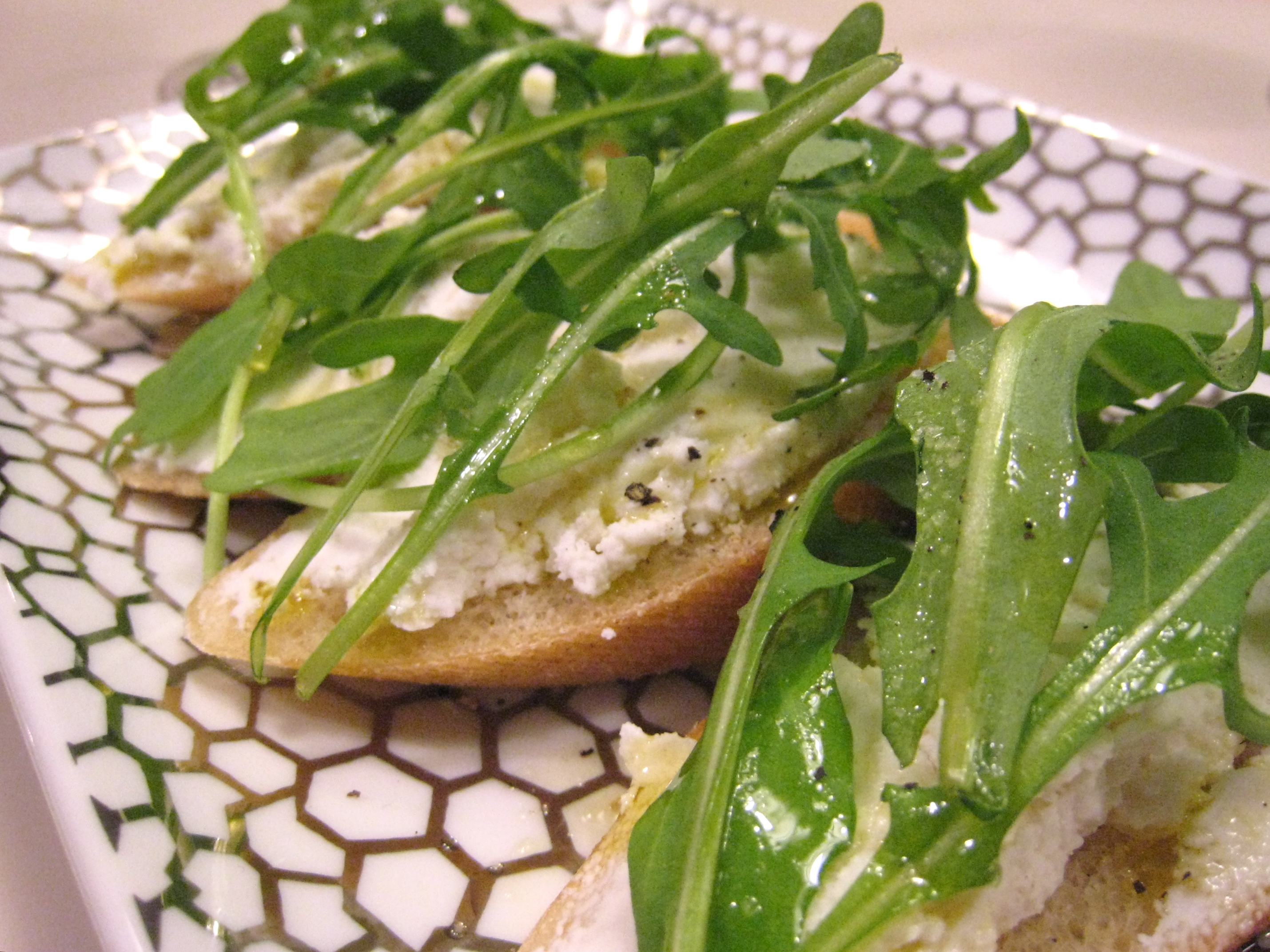
Bruschetta with Ricotta, Wild Arugula, and Olive Oil


This combo comes courtesy of Salvatore Brooklyn, makers of some of the finest whole milk ricotta this side of the pond. You can even make your own ricotta as they have made their recipe available to all. It is ridiculously easy to do, tastes fabulous, and gives you crazy bragging rights when your guests coo, “Oh my gosh! You made this!?”

In a pinch though, you can use store bought ricotta. Just try to buy the best and creamiest you can. Whole milk please. Full fat = superior mouth-feel.

To assemble, top toasted bread with a large schmear of ricotta. Artfully arrange a few leaves of peppery wild arugula. Drizzle with some super duper extra virgin olive oil. Finish with a sprinkling of flaky Maldon Salt or Fleur de sel.

And isn’t the plate so pretty? A wonderful gift from a wonderful friend!

Homemade Ricotta

Ingredients:

1 gallon of whole milk, the fullest and fattiest that you can buy

A good, healthy pinch of salt

The juice of one lemon

Special equipment:

Cheesecloth

A kitchen thermometer (somewhat optional)

How to prepare:

1. In a large pot, heat the milk and salt over high heat. Heat the milk until it reaches 190°, or you can just watch it until it reaches a good simmer (that’s about 180-190°). Turn off the heat and add the lemon juice. Stir the lemon juice in very gently and slowly. You just want to distribute the acid evenly. A vigorous stirring will break the curds up a lot. Let the pot sit undisturbed for 5 minutes or so.

2. Line a colander with cheesecloth. Place the cheesecloth-lined colander over a large bowl to catch the whey. Pour the curds and whey into the colander and let the curds strain on their own. Don’t squeeze the curds or press down on them. You can let it strain for an hour, but when the cheese looks like the consistency that you like (some people like looser ricotta, some people like denser ricotta), turn the cheese out of the cheesecloth and use it right away, or transfer it to an airtight container and refrigerate it until you want to use it.

Pipe Rigate with Broccoli and Capers


Most people know, but few believe, that I was a vegetarian for 11 years. I have no regrets. What started as an act of pre-adolescent self-rightiousness turned into a decade-long stint. It left me with a deep appreciation of weird, gnarled tubers and difficult squash, as well as a persistent, daily craving for bitter leafy greens.

When I moved to France (an act that effectively ended my vegetarianism), I took with me only two cookbooks: The Paris Cookbook by Patricia Wells and Vegetarian Cooking for Everyone by Deborah Madison. Wells’s book was a huge influence on me; it became my neighborhood guidebook, as many of her featured haunts were less than a few meters from my apartment in St-Germain-des-Près. However, it was Madison’s book that became my daily go-to, a constant source of information and inspiration. She showed me what to do with and how to eat so many of the things that I saw in the markets and had never prepared before.

Over the years, I think that I have cooked almost every recipe in the book. If you do every recipe in any cookbook, you start to feel a real intimacy with the cookbook author. Madison was a great teacher. I credit my food fearlessness, not to the hip, new restaurant du jour serving liver and brains, but to Madison. Rutabaga? Bring it on. Kohlrabi? Yeah, baby! Celeriac? Love it!

Another thing Madison taught me? Recipes are great to follow, terrific for ideas, but ultimately you have to find your own style. Now when I turn to her book — or any book for that matter — I feel confident to change it up, switch things around, and adjust it to my taste.

This recipe is originally from Vegetarian Cooking for Everyone, but of course, I’ve played with it a little bit.

Ingredients:

1 1/2 pounds of broccoli

3/4 pound of pipe rigate, lumache, or conchiglie

1/3 cup (or more) extra virgin olive oil

2 fat cloves of garlic, finely minced

1/4 cup of capers, rinsed

Red pepper flakes to taste

The juice from half a lemon

Freshly grated Parmesan

How to prepare:

1. Cut the tops off each stem of broccoli and divide the tops up into small florets. Using a vegetable peeler, peel the stems. Cut the stems into bite-sized pieces, roughly the same size as the florets.

2. Boil the pasta in a large pot of salted water. When the pasta is half-way cooked (about 5 minutes), add the broccoli florets and stems. Continue to cook, uncovered, until the pasta is al dente. Drain the pasta and broccoli into a large colander and wipe out the pot.

3. Heat the oil, garlic, and capers over medium heat until fragrant. Add as little or as many red pepper flakes as you like (I like a lot). Sizzle the red pepper flakes in the hot oil for a few seconds, being careful not to let them burn. Add the pasta and broccoli back to the pot with the lemon juice. Toss everything together well.

4. Turn off the heat and transfer everything to a large warmed bowl. Shower the pasta with freshly grated Parmesan and serve immediately.

British-Style Roast Potatoes for Roast Chicken Dinner


I’ve already expounded at length on this blog about how to roast a chicken, but some time must be devoted to that other crucial element to a roast chicken dinner: the potatoes.

Again, this is not a recipe per se, but more like a technique. Just like there are more ways to roast a chicken than I can shake a stick at — and I can shake one at a whole lot of them — there are also an almost infinite number of ways to roast a potato.

This is a very British way of roasting potatoes. I encountered many a spud like this on the other side of the pond, but never actually mastered the technique until returning to the States for good. In fact, I probably would have gone on roasting potatoes the good ol’ French way if not for Gwyneth Paltrow.

There! I said it! I admit it! I love like Gwyneth! Even her often-times derided e-newsletter GOOP! True, sometimes I must roll my eyes when I get emails from her about her latest colonic cleanse, or her holiday gift picks which include links for an $825 bag, but she sends along some really exquisite little gems of advice too.

Like that fantastic local haunt in Barcelona recommended to my boyfriend and me by a fellow food-lover in a crowded bar. Never saw it nor heard about it in any guidebook, until after I got home and read about it in Goop.

Her roast chicken and potatoes recipe is one of these great tips too.

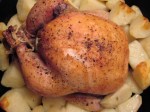
Roast chicken aside, the trick to the potatoes? Peel them. If they are large, cut them into big chunks. Parboil them in salted water for exactly 8 minutes, any longer and they will fall apart. Drain the water from the pot. Once the water is drained, put the lid on and shake the pot around really well. You want to bash those taters up. When you remove the lid, you should see that the surface texture of the potatoes is rough and fluffy. Spoon them evenly around your chicken and drizzle them with olive oil. Sprinkle sea salt over them.

Pop the whole thing in the oven and roast until the chicken has an internal temperature of 165°, about 1 hour give or take 15 minutes if your oven is at 425°.

Now you have some seriously delicious potatoes to go with your excellent CSA chicken.

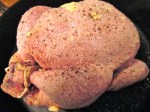
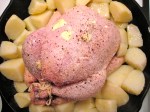
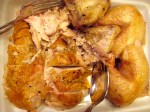
And as requested, here are some step-by-step photos of the prep.

Very Easy Macaroni and Cheese


Let’s try this again.

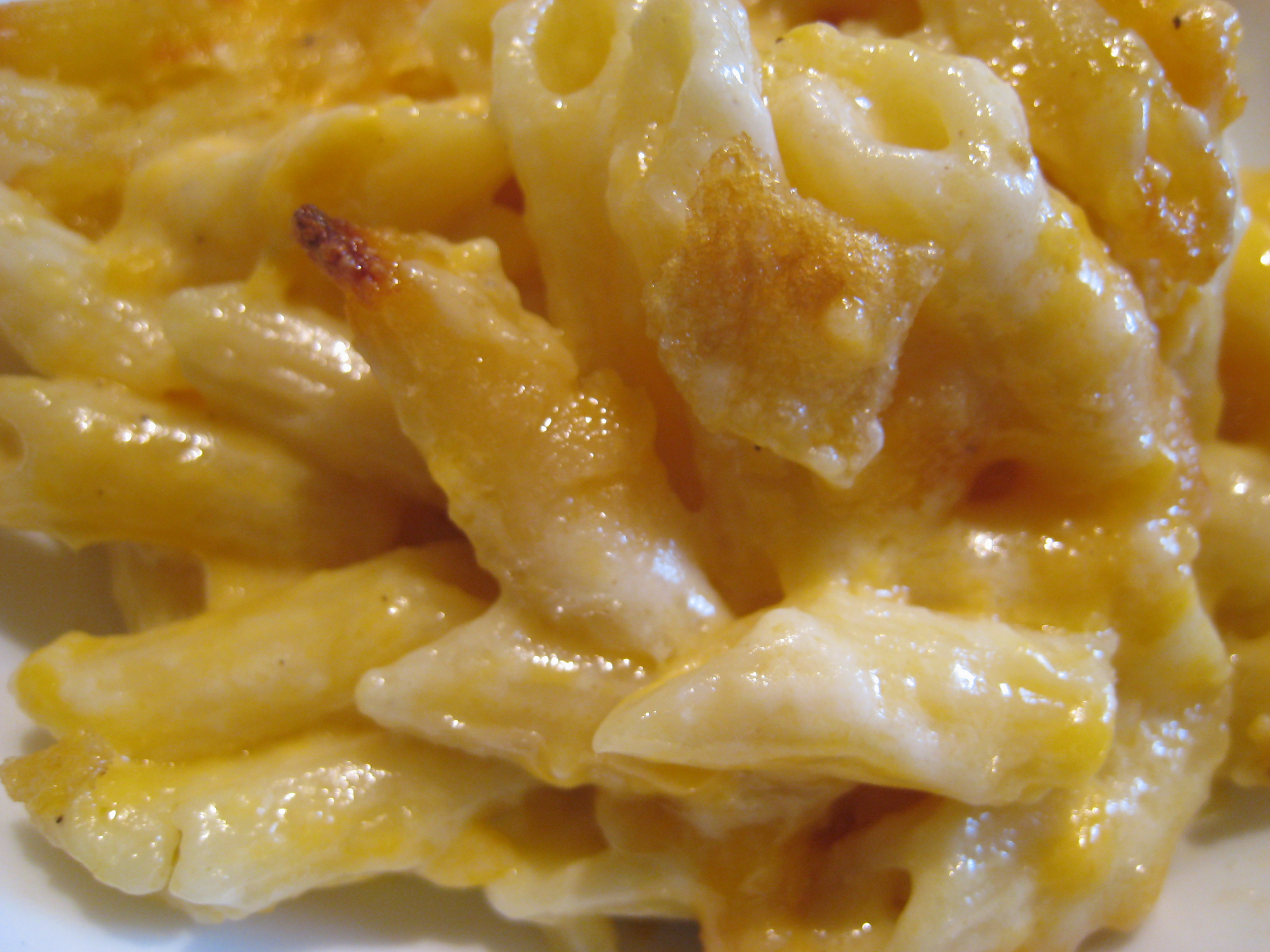
After my brothers poo-pooed my mac and cheese last year, I tried another version this year for the holidays. This time I only used pre-shredded Cheddar, Monterey Jack, and Parmesan — nixing the fancy schmancy Gruyère and smoked mozzerella that are so near and dear to my heart.

And the Parmesan? I used the real stuff. The nutty, fragrant, pungent stuff. A great big wedge of it. To fake out my family, I covertly grated it and surreptitiously snuck it into an empty green Kraft shaker bottle.

Ha! Take that picky eaters!

My brothers also have an aversion to bread crumbs (?!) which led me to make a quick substitution: crushed-up potato chips.

The result? Super easy. Super creamy. A little bland, but the dish was scraped clean.

Score!

Ingredients:

6 tablespoons of unsalted butter

1/4 cup of all-purpose flour

About 4 cups of whole milk, chicken stock, cream, or a mixture of all three

Salt and pepper to taste

1 pound of your favorite shape of pasta

8 ounces of shredded sharp Cheddar

4 ounces of shredded Monterey Jack

4 ounces of freshly grated Parmesan cheese

1 cup of crushed plain potato chips

How to prepare:

1. Preheat the oven to 350°F. Butter a 3- to 4-quart gratin dish or another shallow baking dish.

2. In a kettle of salted boiling water, cook macaroni until just al dente. Drain well.

3. In a heavy saucepan, melt just 6 tablespoons butter over moderately low heat. Add the flour and cook the roux, stirring with a wooden spoon, for about 3 minutes. Add the milk, stock, or cream, a little bit at a time. Don’t stop stirring. Slowly add more liquid until you have roughly 4 to 4 1/2 cups of sauce. Bring the sauce to a boil. Reduce the heat and simmer, stirring the sauce regularly, until it has thickened. Add salt and pepper to taste.

4. In a large bowl, combine the macaroni, the sauce, the shredded cheeses, and Parmesan. Transfer the macaroni mixture to the prepared dish and spread it out evenly.

5. Sprinkle crushed chips over the top of the macaroni and cheese.

6. Bake the macaroni in the middle of oven for 25 to 30 minutes, or until golden and bubbling. Let rest for about 10 minutes before serving.

An Ode to My Mom


“See this?”

I looked up and saw my mom holding up an egg roll that I had just finished rolling. She picked up another one. “Now which one is yours?”

I sheepishly pointed to the lumpy, misshapen one on the left, “”Um, that one?”

Side by side, my roll looked even worse! All floppy ends and squidgy middle, faults made more obvious when compared to the tight, compact, perfect cylinder that my mom just finished.

“Well, at least it will taste good,” I offered.

“It will explode in the fryer.”

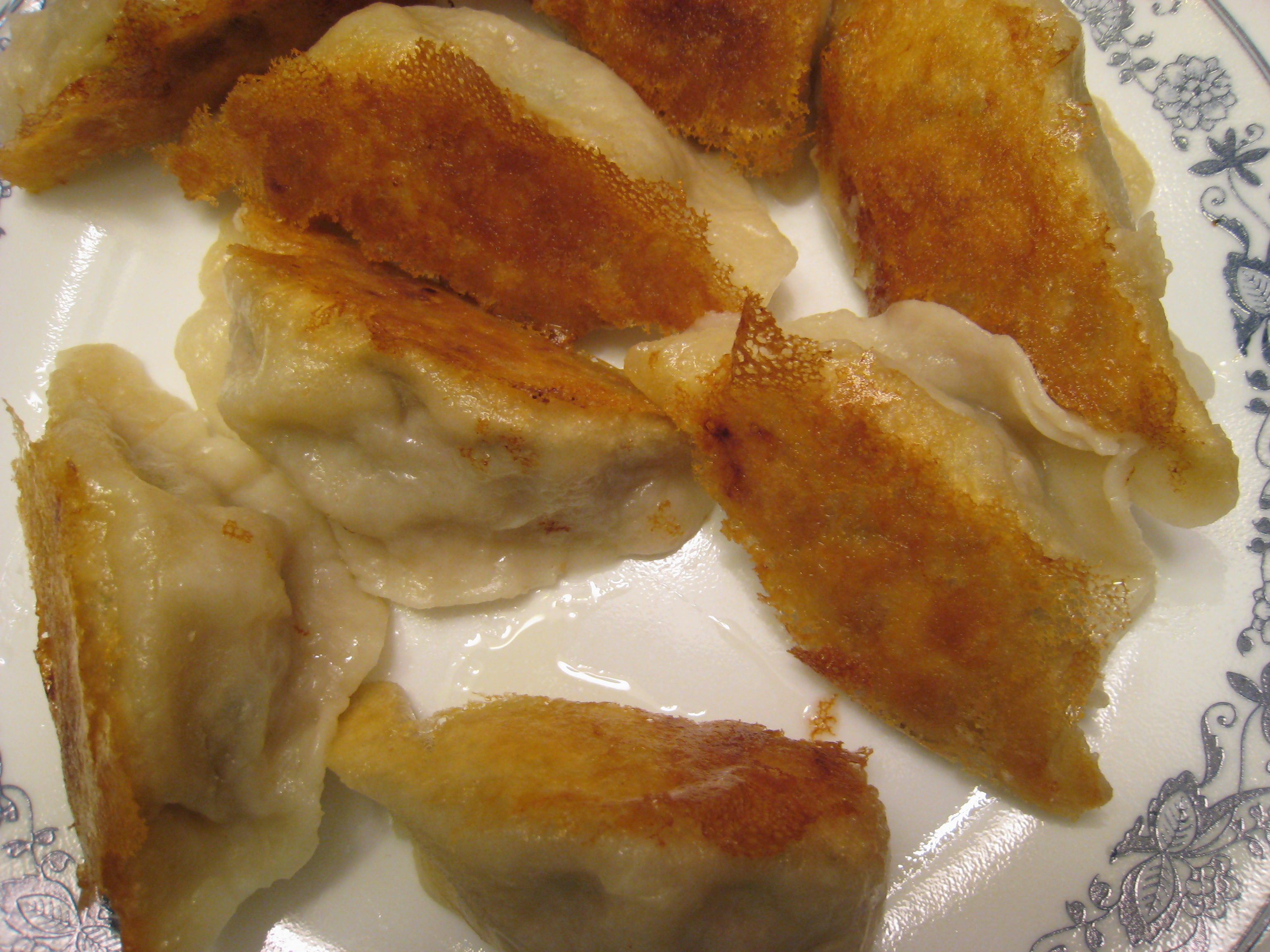
My mom is a phenomenal cook, one of those freakishly intuitive people in the kitchen who never uses a recipe and can cook as easily for an army as for one. Pan-fried dumplings from scratch? Ready in an hour, and that includes making the dough. Want fall-off-the-bone tender ribs? Go watch an episode of Project Runway and come back later. Very admirable indeed.

My mom is also a brutally honest kitchen critic. Think you can hide that crap-ass looking dumpling with the seams all askew? She’ll ferret it out from the bottom of the pile and hand it back to you. Want to get away with store-bought chicken stock? She’ll reach into the freezer for a chicken carcass and tell you not to be so lazy.

Above all, she is a great eater and a true food lover. She is my mom, and she has mad kitchen skills.

Broccoli and Cheddar Cheese Soup


Doesn’t it feel good to be back home after two weeks away? The kitchen especially feels calm and cozy, ready for warming soups and stews — the kinds of things you crave when the weather is nippy.

This recipe is super easy, as are the recipes for most creamed soups. It can be endlessly adapted for other vegetables, with or without the cheese.

Ingredients:

2 shallots, finely chopped

2 tablespoons of butter

1/2 tablespoon of olive oil

2 small heads of broccoli, or one large one

1 quart of chicken or vegetable stock, or milk, or water

1/2 cup of heavy cream

4 ounces of sharp cheddar cheese, grated

Salt and pepper to taste

Special equipment:

A hand immersion blender. You can also use a regular blender or a food processor.

How to prepare:

1. Separate the broccoli florets from the stem. Cut the florets so that they are roughly the same size and shape. Using a vegetable peeler, peel the stem to get rid of the tough outer layer. Slice the stem into 1/2 inch rounds.

2. In a medium to large-sized pot, heat the butter and olive oil together over medium heat. Add the shallots and sauté them until they start to brown. Add the broccoli florets and stems, tossing to evenly coat them in the butter-shallot mixture. Add the stock. Cover the pot and lower the heat. Simmer until the broccoli is fairly tender.

3. When the broccoli is tender, use an immersion blender to purée the broccoli in the pot. Stir in the heavy cream. Turn the heat back on low and add the cheese, stirring conscientiously to make sure that it all melts and does not stick to the bottom of the pot. Once the cheese has melted and is evenly incorporated in the soup, turn off the heat and adjust the seasoning.

Serve with bread or crackers.

Chicken Pot Pie


This is one of my favorite recipes of all time, originally taken from The Dean and Deluca Cookbook. This recipe has been tinkered with many times over the years — so much so that the glue-bound spine of the cookbook has cracked, making it fall open to pages 496 and 497 every time I pick it up. Now when I look at those scribbled-on, stained, dog-eared and water-wrinkled pages, I feel that this version here is very much my own.

Though some might consider it not quite a pot pie — there is no bottom crust, only a top — the pastry blanketing the heavenly rosemary-scented filling is so flaky and satisfying that to quibble over nomenclature seems silly.

Lately I have been adapting the recipe slightly as a way to cook up tasty bits of Thanksgiving turkey leftovers. I do love getting my fingers into the turkey carcass, stripping and pulling away every moist morsel left on the bones. This recipe makes the most of those wonderful little bits and pieces, but is also amazing as is with its freshly browned chunks of juicy chicken breast.

Ingredients:

For the pastry crust:

1 1/2 cups of flour

1/2 teaspoon of salt

1/2 cup of unsalted butter (1 stick), chilled and cubed

About 1/4 cup of iced water

For the filling:

1-1 1/2 pounds of boneless, skinless chicken breast cut into 1-inch pieces*

2-3 tablespoons of olive oil, divided

2 teaspoons of finely minced garlic

2 celery ribs cut into 1/4 inch dice

2 medium carrots cut into 1/4 inch dice

1/2 cup of frozen peas

6 pearl onions, peeled

3 tablespoons of butter

1/4 cup of flour

1 1/2 cups of chicken stock

1/2 cup of milk

1/3 cup of heavy cream

2 1/2 tablespoons of freshly chopped rosemary

For the egg wash:

1 beaten egg

How to prepare:

For the pastry crust:

1. Put the flour, salt, and butter in a food processor and pulse until the mixture resembles coarse crumbs. Do not overprices as the chunks of butter cut into the flour is what makes the crust tender and flaky. While the food processor is running, add the water, a little bit at a time, until the dough begins to pull away from the side (do not let it form a ball). You might use less water than 1/4 cup, but probably not more.

2. Turn the dough out onto a lightly floured work surface. Working quickly and lightly, knead the dough with the ball of your hand until it comes together. Shape the dough into a ball and flatten it out into a disk. Wrap the disk in plastic wrap and refrigerate for at least 30 minutes, but no longer than an hour.

For the filling:

1. Season the chicken with salt and pepper. Heat 1- 1 1/2 tablespoons of olive oil in a heavy-bottomed pan over moderate heat. Add the chicken in batches, making sure all the sides are nicely browned. Set the chicken aside.

2. Add the remaining oil to the same pan along with the garlic, celery, and carrots. Sauté the vegetables until they are tender, about 6 minutes. Set the vegetable mixture aside.

3. In a small saucepan about halfway with water and bring the water to boil. Add the peeled pearl onions. Cook for about 5 minutes. Add the frozen peas to the boiling water and continue to cook for about 4 minutes more. Drain the vegetable and set them aside.

4. In a medium-sized saucepan, melt the butter over moderate heat. When melted, add the flour and mix quickly. Brown the flour lightly before adding about 1/2 cup of the stock. Whisk the stock into the flour, smoothing out any lumps before adding the rest of the stock, the milk, and the cream. Continue whisking while the mixture is brought up to a boil. Reduce the heat to low and continue to whisk while the sauce thickens to the right consistency. Turn off the heat and stir in the chopped rosemary. Adjust the seasoning.

To assemble:

1. Preheat the oven to 375°.

2. In a large casserole or deep pie dish, spread the chicken out over the bottom. Spread the vegetable evenly out over the chicken and then pour the sauce evenly over everything.

3. On a lightly floured surface, roll the dough out until you have a round that will hang about 1 to 1 1/2 inches off the side of the dish. Place the dough gently over the pie and slightly tuck it in around the edges of the dish. Trim off any excess that falls more than 1 to 1 1/2 inches over the edge. Pinch or crimp the edges to make a decorative border. Using a knife, make a few slashes on the top of the pastry. If you have some leftover dough, you can also make some decorative leaves to go on top.

4. Brush the beaten egg on top of the dough. Bake in the oven until the crust is golden brown, about 45 minutes. Let rest at least 5 minutes (or even better, 10) before serving.

Note:

For the filling, if you have any leftover roasted chicken or turkey, you could use that instead.

Fresh Sage and Onion Dressing

Every Thanksgiving, I try a new recipe for stuffing or dressing. I’ve done it all — wild rice, pears and butternut squash, pancetta and chanterelles, sausage and fennel — and every year I’m happy, but never thrilled with the result.

In pursuit of a recipe that I can love and look forward to making every year, I decided to go very traditional this Thanksgiving: sage and onion.

I adapted this recipe from one originally published in 1975, and republished in Gourmet Magazine (RIP) in 2002. It calls for a whopping cup of butter! That’s two whole sticks! As much as I love butter, I really thought the amount was excessive; I wanted light and fluffy dressing, not greasy, leaden bread.

I also swapped the requested amounts of bread. I like cornbread stuffings, so instead of the asked for 8 cups of white bread and 4 cups of cornbread, I opted for 8 cups of cornbread and 4 cups of white bread. Don’t worry so much if it ends up being something more like 7 and 5, or 6 and 6. As long as you have a total of 12 cups of bread crumbs, it will be fine.

Gourmet’s recipe calls for you to make your own buttermilk cornbread. I suppose you could just use store-bought cornbread, but the recipe they recommend is so easy and fool-proof that I strongly urge you to try it. It makes a tremendous difference in flavor.

I think that in assembling the dressing, you could even reduce the amount of butter even more without any reduction in luxury of taste. I ended up using more stock than specified in the original recipe. I would say add a cup, and then more stock a little bit at a time, until the dressing is as moist as you would like. The recipe didn’t call for the addition of any cheese, but I think a good cup of Parmesan would go well here.

Ingredients:

8 cups of coarsely crumbled buttermilk corn bread*

4 cups of coarse fresh bread crumbs (from a small white loaf, crust removed)

1/4 cup of finely chopped fresh flat-leaf parsley

3 tablespoons of finely chopped fresh sage

1 teaspoon of salt

1/2 teaspoon of black pepper

1 sticks (1/2 cup) of unsalted butter

2 medium onions, finely chopped (about 1 1/2 cups)

1 cup of chopped celery

2 large eggs, lightly beaten

1 cup of turkey or chicken stock

1/2 cup of heavy cream

How to prepare:

1. Preheat the oven to 325°F.

2. Spread all the bread crumbs out in 2 shallow baking pans and bake until dry, about 15 minutes total.

3. Briefly cool the crumbs in the pans and then transfer them to a large bowl. Stir in the parsley, sage, salt, and pepper.

4. Melt the butter in a large heavy skillet over moderate heat. Add the onions and cook until the onions are softened, about 8 to 10 minutes. Add the celery and cook for about 5 minutes. Transfer the vegetables to the bowl with the crumbs and toss well. Add the eggs, stock, and cream and toss well. Transfer the stuffing to a buttered, shallow baking dish. Bake, covered, in the middle of the oven for 30 minutes, then uncover and bake until browned, about 30 minutes more.

Note:

You can assemble the stuffing 2 days ahead. Chill it covered, unbaked. Bring it to room temperature before baking. If reheating or baking later, you might want to sprinkle some more stock over the stuffing before putting it in the oven.

Buttermilk Corn Bread

Ingredients:

1 cup of all-purpose flour

3/4 cup of yellow cornmeal

1 1/2 teaspoons of baking powder

1/2 teaspoon of baking soda

1/2 teaspoon of salt

1 cup of well-shaken buttermilk

2 large eggs

1/2 stick (1/4 cup) of unsalted butter, melted and cooled

1/2 teaspoon finely chopped fresh sage

How to prepare:

1. Preheat the oven to 425°F.

2. Whisk together the flour, cornmeal, baking powder, baking soda, and salt in a large bowl.

3. Whisk together the buttermilk, eggs, butter, and sage in another bowl. Add this mixture to the flour mixture. Stir everything until just combined. Spread the batter evenly in a buttered 8-inch square baking pan and bake in the middle of oven until golden, about 25 minutes.

4. Cool the pan on a rack. Once cooled, coarsely crumble the bread. The corn bread can be made and crumbled up to 3 days ahead, and kept in a sealed plastic bag at room temperature.

Thanksgiving Update: A Tribute in Pictures


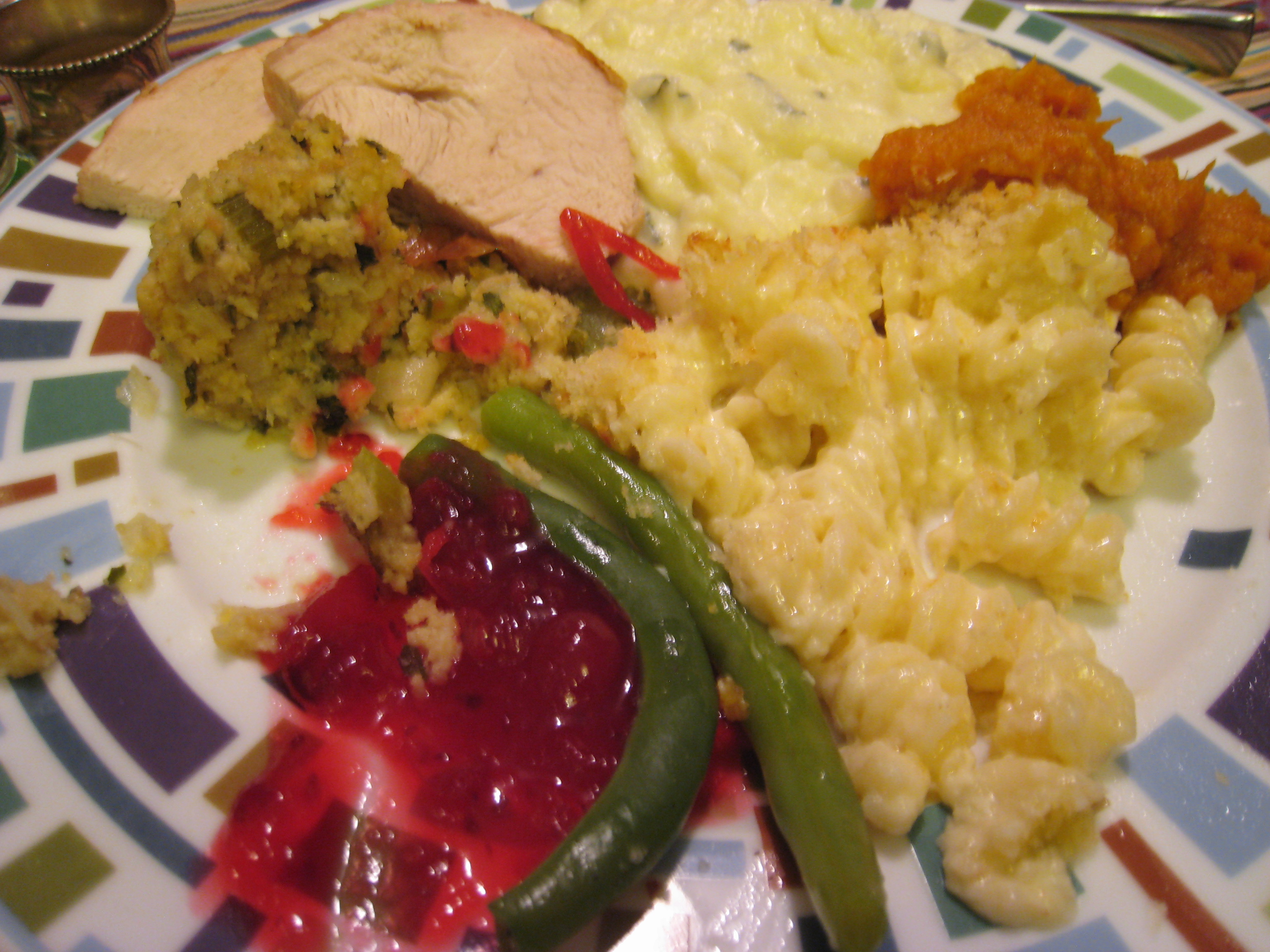
Thanksgiving dinner for nine guests was a great success!

As promised, here are some of the pictures from the evening. As we get closer to the next big calendar meals —Christmas Eve Dinner, Christmas Day Lunch, and New Year’s Nibblies — I’ll be posting recipes from Thanksgiving that can be easily recycled for the Christmas menu.

Thank you dear friends for the great booze, great (bacon) chocolates, and great company!

And yes, I do love Thanksgiving so much that I own napkins embroidered with turkeys.