Pea Frittata with Mint and Yogurt

Food always photographs wonderfully in sunlight.

In this case, it is hazy, lazy, beach weekend sunlight filtering through bungalow blinds. Weekends away with friends is a great opportunity to bust out those brunch recipes that always sound so appealing, but are way too much food for just two. This is one of those quick and easy dishes that takes little effort, but tastes much more complex than its few parts.

This is also another recipe pulled from memory, the original being from famed Argentinian chef Francis Mallmann. Several years ago, I had the pleasure of lunching at his restaurant, 1884, just outside of Mendoza and smack-dab in the middle of sun-dappled wine country. I remember having a lip-smackingly good bottle of Escorihuela Viognier that was so yummy I had to run to the tasting room and buy a bottle to take home. Like all of Argentina, the vineyard was perfumed with the intoxicating smell of wood-smoke and grilled steak.

Mallmann recommends that this frittata (or as he prefers tortilla) be baked in a wood-fired oven too. Alas, our cute little rental lacked that Argentinian mainstay, so we made do with a gas stove and its broiler.

Ingredients:

2 tablespoons unsalted butter or olive oil

1/2 pound frozen baby peas (or fresh if you are so lucky to find fat peas in pods to shell)

3/4 cup plain Greek-style yogurt, plus an extra cup to serve on the side if you wish

12 large eggs

1/2 cup coarsely chopped fresh mint

1 teaspoon kosher salt

1/4 teaspoon freshly ground pepper

How to prepare:

1. Preheat the broiler. In a large, ovenproof, nonstick skillet or shallow pan, melt the butter or heat the olive oil over medium heat. Add the peas and cook over moderate heat until warm.

2. Meanwhile, in a large bowl, beat 3/4 cup of the yogurt with the eggs, mint, salt and pepper until smooth. Pour the eggs over the peas and turn up the heat. Cook over moderately high heat until the bottom and the edges start to set, about 3-4 minutes. Transfer the pan to the oven and broil 6 inches from the heat, until the top of the frittata is set and lightly golden in spots. Slide the frittata onto a plate (or just serve it from the pan as I did) cut into wedges with the remaining 1 cup of yogurt on the side.
Penne with Beef and Arugula


Is there anything better than a weekend at the beach? We were the lucky-ducky guests of friends who had rented a house that came with an extra bungalow to share. Steps from the water, the house was cute and had a roomy and well-appointed kitchen — perfect for cooking for friends.

Each night, we were invited to share in the feast prepared by our lovely hosts. The wife is not only an amazing cook, but a superwoman who runs her own business and able to balance three young kids and two housefuls of guests with a great humor and style. Her tuna tartare was a dream: fresh tuna, avocado, sesame oil, wasabi powder, soy, and a lot of love. Juicy and thick hamburgers on a charcoal grill for lunch the next day. Fresh shrimp and clams steamed in beer with home-made cocktail sauce and melted compound butter for dinner. How could we not be inspired?

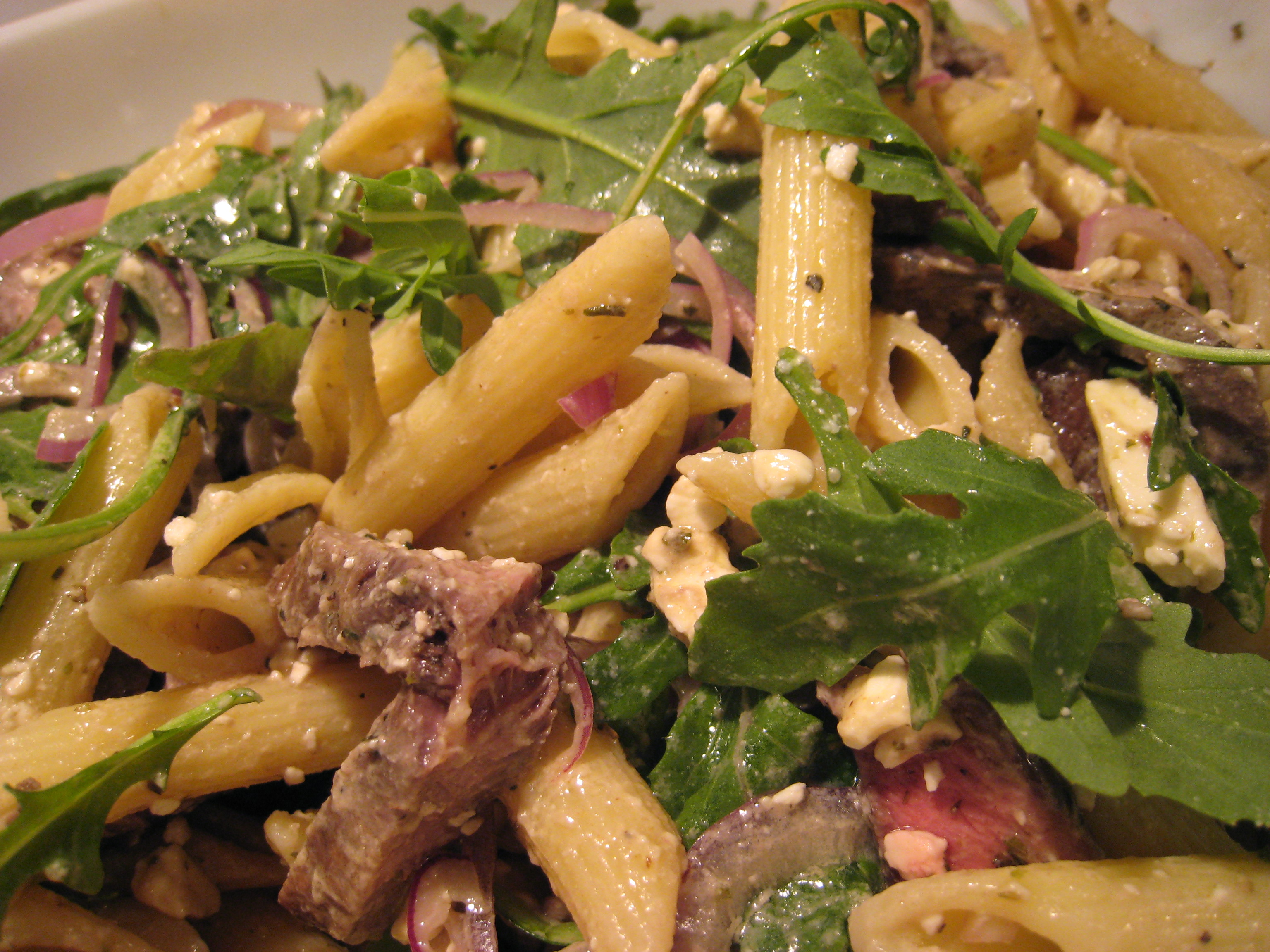
This recipe is actually from Giada DeLaurentis, but since I had to make it from memory, the dish that I produced varied quite a bit. I give you the actual recipe below, followed by my variation at the end.

Ingredients:

1 (1-pound) New York strip steak

1 teaspoon herbs de Provence

1 garlic clove, minced

3/4 cup extra-virgin olive oil, plus 3 tablespoons

1 pound penne pasta

1/4 cup balsamic vinegar

2 tablespoons Dijon mustard

1/2 teaspoon salt, plus more for steak and pasta water

1/2 teaspoon freshly ground black pepper, plus more for steak

1/4 cup chopped fresh basil leaves

1/4 cup chopped fresh parsley leaves

2 cups chopped arugula

How to prepare:

1. Season the steak with salt and freshly ground black pepper, herbs de Provence, and minced garlic. In a skillet, heat 3 tablespoons olive oil over medium heat. Sear the steak for a 7 minutes per side. Remove the meat from the pan and let it rest for 5 minutes. Thinly slice the steak. Set aside.

2. Meanwhile, bring a large pot of salted water to a boil over high heat. Add the pasta and cook until tender but still firm to the bite, stirring occasionally, about 8 to 10 minutes. Drain pasta, reserving 1/4 cup of pasta water.

3. In a small bowl, whisk together the balsamic vinegar, Dijon mustard, 1/2 teaspoon salt, 1/2 teaspoon pepper, fresh herbs, and 3/4 cup olive oil. In a large bowl toss the pasta with half of the salad dressing and the reserved pasta water. Add the arugula and steak, more dressing, and season with salt and freshly ground black pepper, as needed. Toss, pack for the picnic, or serve.

My beach weekend variation:

2 pounds boneless chuck eye steak

2 teaspoons herbs de Provence

2 garlic clove, minced

3/4 cup extra-virgin olive oil, plus 3 tablespoons

1 pound penne pasta

6 ounces crumbled feta cheese

1/2 teaspoon salt, plus more for steak

1/2 teaspoon ground black pepper, plus more for steak

3 tablespoons Dijon mustard

Juice from 1 lemon

1 small red onion, sliced thinly

5 ounces baby arugula

1. Combine the salt, ground black pepper, herbs de Provence, and minced garlic with 3 tablespoons of olive oil. Smear the mixture on both sides of the steak. Broil the steak for a few minutes per side until it is on the rarer side of medium. Remove the meat from the broiler pan and let it rest for 5 minutes. Thinly slice the steak. Set aside.

2. Meanwhile, bring a large pot of salted water to a boil over high heat. Add the pasta and cook until tender but still firm to the bite, stirring occasionally, about 8 to 10 minutes. Drain pasta, reserving 1/4 cup of pasta water.

3. In a small bowl, whisk together the meat juices from the pan, Dijon mustard, 1/2 teaspoon salt, 1/2 teaspoon pepper, lemon juice, and 3/4 cup olive oil. In a large bowl toss the pasta with half of the salad dressing and the reserved pasta water. Add the arugula, red onions, feta, steak, more dressing, and season with salt and freshly ground black pepper, as needed. Toss, pack for the picnic, or serve.

Penne with Pepper Sauce and Hot Italian Sausage


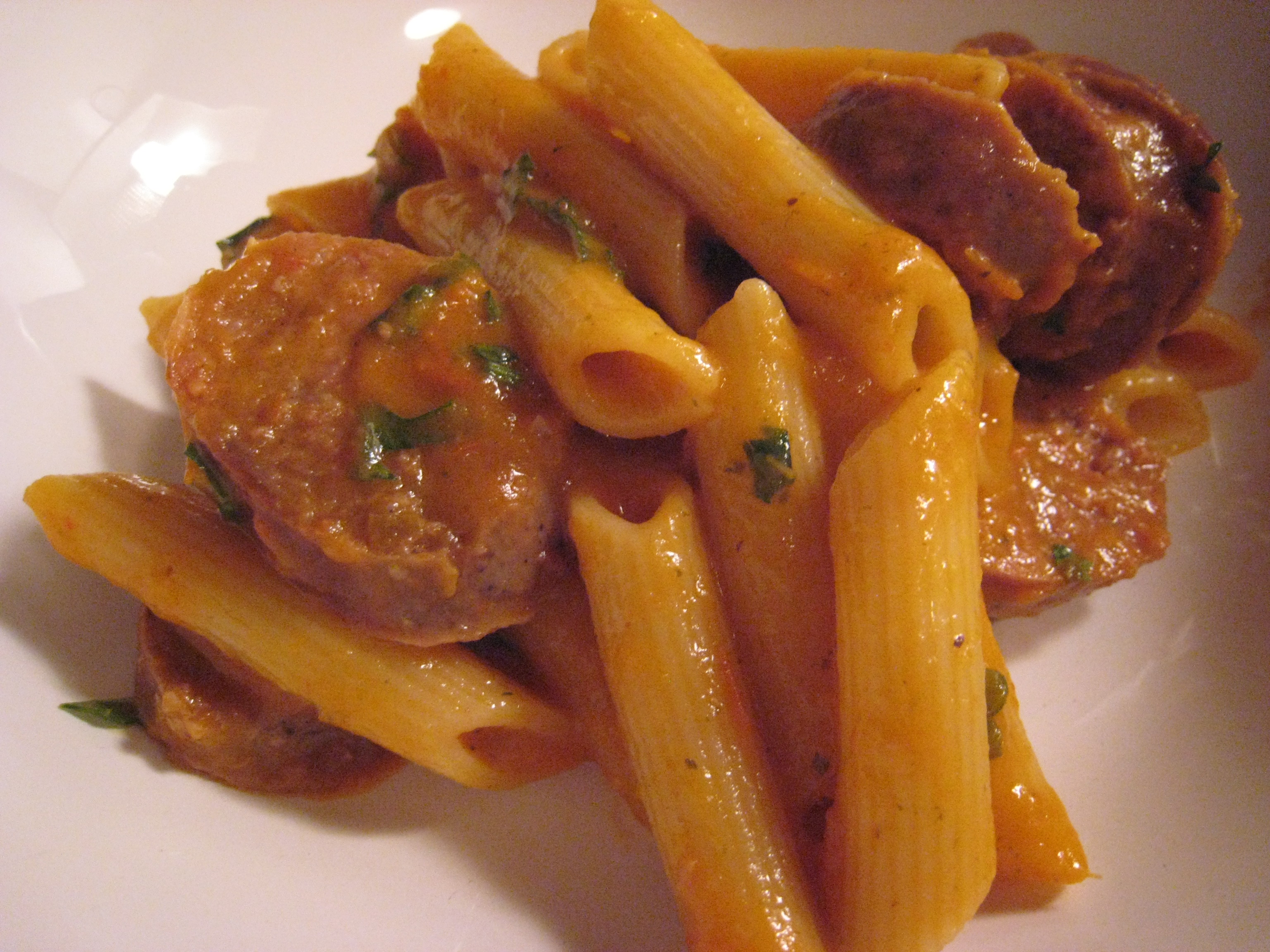
Tonight we are very lucky indeed: kind friends have shared a tub of homemade pepper sauce. It’s lovely, creamy, unctuous, with fresh parsley and a spicy kick. They made it from some beautiful bell peppers that they bought in the Hudson River Valley. Absolutely delicious. It was such a treat.

To this, we can only add the very best that we have. I took some of the hot Italian beef sausage from our CSA and roasted it in a 375° oven for about 20 minutes. Maybe it was less, but I lost track of time licking the remainder of the sauce left on the sides of the container.

After letting the sausage rest for a few minutes, we sliced it at an angle and tossed everything together.

Served with a side of local rainbow chard sautéed in minced garlic and olive oil. Does food get any better than this?

Stuffed Chard with Fresh Marinara


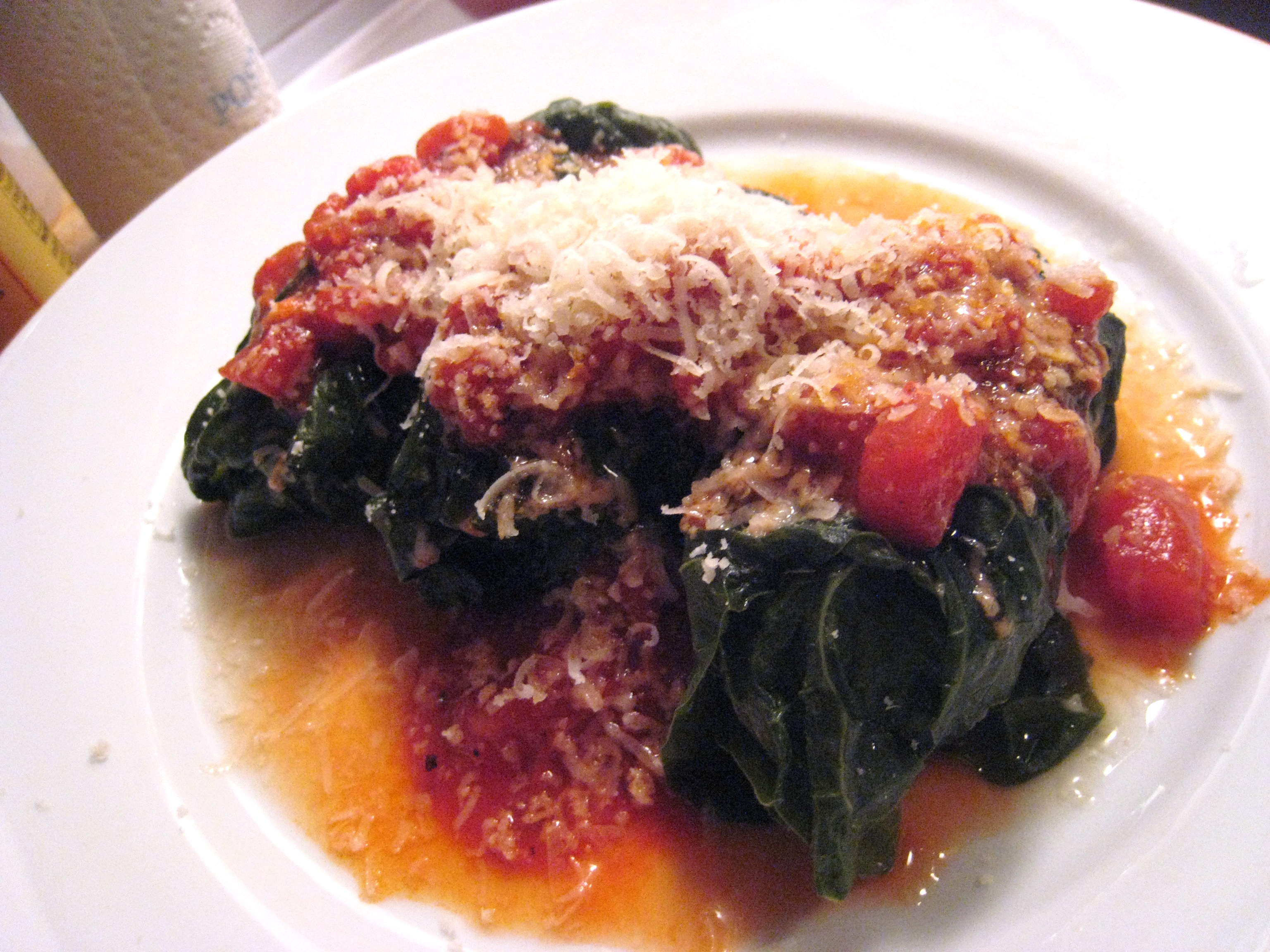
In Patricia Wells’s book, Trattoria, she writes that many pasta dishes remind her of the Italian flag with its “proud red, green, and white” colors.

This dish is certainly that.

This recipe is an adaptation of one that I found on the Eating Well website. Since starting our meat CSA, we have been quickly accumulating ground beef recipes beyond the usual suspects (hamburgers, chili, meatloaf, tacos, meatballs).

This recipe satisfies all my criteria for a great meal at home: it uses seasonal vegetables, it is not overly complicated, it is quick to put together yet looks like I spent hours in the kitchen, and it is beautiful on the plate. Most importantly? It tastes wonderful.

I have altered the recipe slightly, using fresh herbs and garlic in the meat mixture instead of dried  I have also left the dried herbs out of the sauce, their presence being a pet peeve of mine. I like to see my marinara un-flecked with dirty-looking specks of dusty leaves. If I had to do it again, I might use less panko and employ a softer touch when forming the meat so that it crumbles a little more in the mouth.

As you can see, I am a giant fan of my Microplane grater, which makes gorgeous fluffy clouds of fragrant Parmesan.

Ingredients:

1 pound lean ground beef (Go High Point Farms CSA!)

1/2 cup panko breadcrumbs

2 medium shallots, minced, divided

2-3 cloves of garlic, minced, divided

1 tablespoon fresh oregano, chopped

1/4 teaspoon crushed red pepper

Pinches of salt and freshly ground pepper

8 large Swiss chard leaves, stems removed

1 1/2 cups chicken broth

1 tablespoon extra-virgin olive oil

1/4 teaspoon crushed red pepper (or more if you prefer)

1 28-ounce can crushed or diced tomatoes (I like Muir Glen’s Fire-Roasted Tomatoes)

2 teaspoons balsamic vinegar

Salt and pepper to taste

How to prepare:

1. Gently mix the beef, breadcrumbs, 1/2 of the shallots, 1/2 of the garlic, the oregano, crushed red pepper, salt and ground black pepper in a large bowl until just combined. Roughly divide the mixture into 8 oblong 3-inch portions.

2. Overlap the two sides of a chard leaf where the stem has been removed and place a portion of beef there. You may need to adjust the amount of meat you stuff in each leaf, depending on how big the leaves are. Tightly roll the chard around the beef. Place each roll, seam-side down, in a large nonstick skillet. Pour in broth, cover and bring to a boil over high heat. Reduce the heat to a simmer and cook for 8 to 10 minutes, or until an instant-read thermometer inserted into the center of a roll reads 165°F.

3. Meanwhile, heat the oil in a medium saucepan over medium heat. Add the remaining 1/2 of the shallots and garlic. Stirring often, cook until the shallots and garlic are soft, about 1 to 2 minutes. Add the crushed red pepper to taste and cook for a few seconds longer, but don’t let the pepper burn. Add the tomatoes and cook, stirring occasionally. Lower the heat a little bit and add the balsamic vinegar. Continue to simmer the sauce until it is reduced and thickened to your liking.  Adjust the seasoning according to your taste.

4. To serve, remove the chard rolls from its broth bath with tongs. You can discard the broth afterwards. Top the rolls with sauce and Parmesan cheese, if desired — and why wouldn’t you?

Tip: Start removing the chard stems by folding each leaf in half. Beginning at a point at the top of the leaf where the stem looks skinny and pliable enough to not have to remove, sever the tender part of the stem from the thicker part with a small cut. Separate the leaf from the stem by moving your knife parallel to the stem’s length, including the widest section of the rib at the base of the leaf.

Make Ahead Tip: Cover and refrigerate the chard rolls in the sauce; reheat in a covered baking dish at 350°F for about 10 minutes.