Sliced Egg and Black Truffle Mayonnaise on Toast


My first year of graduate school, I lived down the street from an appallingly awkward airline-themed café. The space was pleasant with floor-to-ceiling windows. It had those lovely columns that fewer and fewer downtown places seem to want to retain. Apart from the odd collection of 1960’s memorabilia (Braniff, Pan-Am, and TWA), there were these nice, fat couches strewn about a lofted area — perfect for passing out after too much coursework.

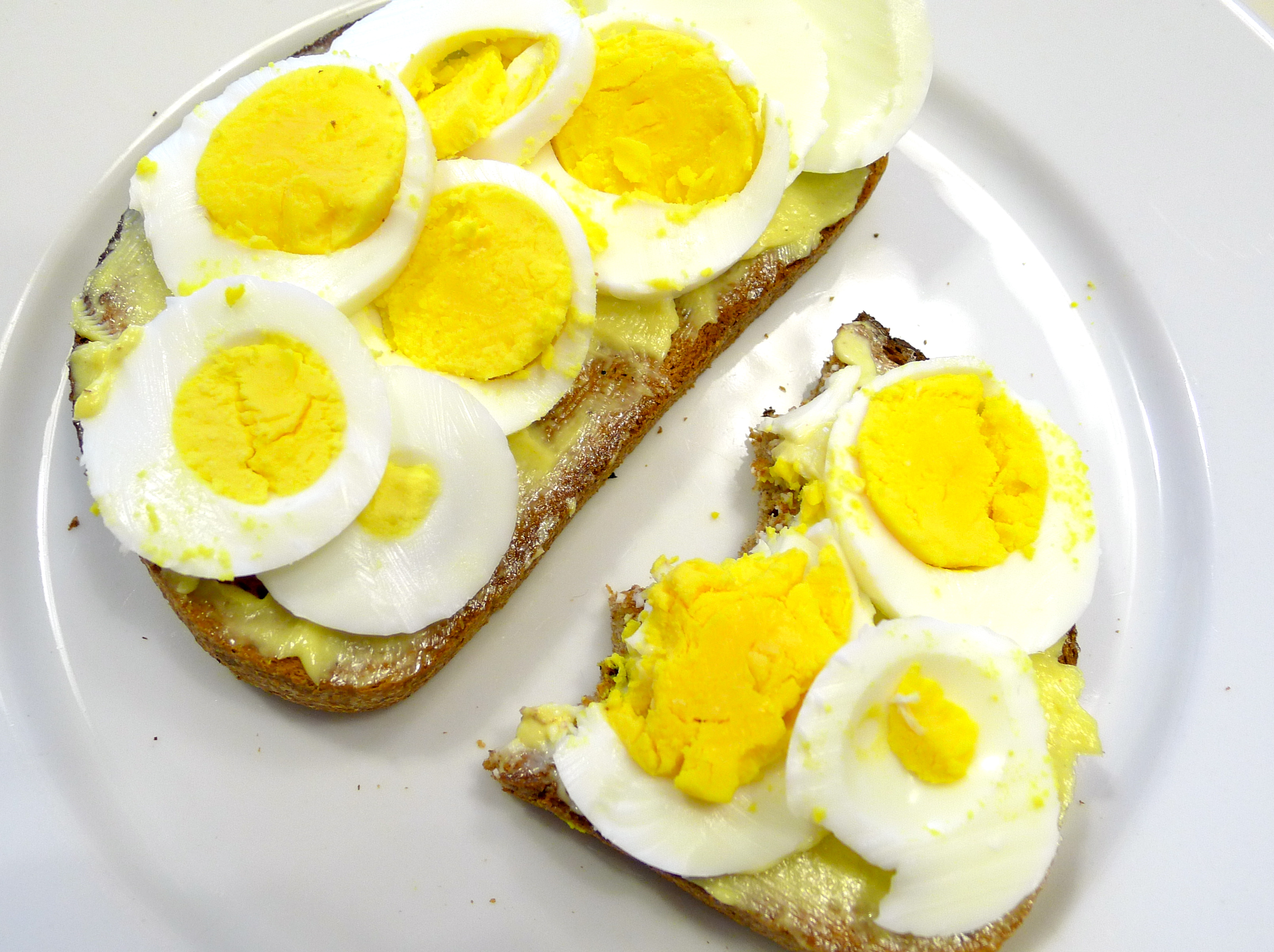
There was also the food, which thankfully was nothing like what was served on airlines. The coffee was strong, good, and Italian. They never burned my espresso. They served little panini, cut into neat quarters that you could eat while burying your nose in a book. My favorite was simple: sliced egg on toast with truffled mayonnaise.

Laura gifted me with a little tub of black truffle salt a while ago. Admittedly, I have parked myself on it for too long. When I finally decided to put it to some good use, the smell took me back to those early years when my worries were fewer.

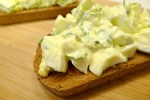
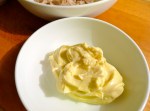
As I have expounded on how to hard boil eggs, and how to make mayonnaise on this blog before, I will refrain from further exposition. I will just say that you should use a neutral oil, like grapeseed or canola. Add about half a teaspoon of truffle salt to the mayonnaise at first, and then build up from there. I tend to make a saltier mayonnaise to compensate for the unsalted eggs. Slather each slice with the mayonnaise, and layer the sliced egg on top. Factor in about one egg per slice of toast.

Truffles, mayonnaise, and eggs. I do the sandwich open-faced these days. It is wonderful. I was in such a hurry to eat it that I hastily, and sloppily sliced up the egg. I had crammed half of it greedily down my gullet before it occurred to me that I should take a photo. So please excuse the photographic evidence of my gastronomic enthusiasm!

Egg Salad with Basil on Toast


When people say that so-and-so “can’t boil an egg,” they generally mean to say that the person in question can’t cook.

Insofar as idioms go, it’s a pretty silly one; there are a lot of people out there who cook all the time, who cook all kinds of things that people like to eat, who can’t boil an egg at all.

Because boiling an egg is both ridiculously easy, and easy to mess up at the same time. It’s really kind of tricky. I see badly boiled eggs all the time. Overcooked, horrible things with sulfurous dun-colored yolks, ringed with a nasty grayish-green penumbra.

So gross. They taste awful too, chalky and rank. No wonder there are so many people out there who don’t like their eggs hard-boiled: they have only ever had bad ones.

But a good, really good hard-boiled egg is delicious. It has a soft, silky white that cushions a rich and velvety yolk. A egg salad made with properly boiled eggs is creamy, full, and wonderfully fatty. It is very very satisfying.

Here are some ways to properly hard boil an egg:

Technique #1:

1. Carefully prick the bottom of the egg (the widest end) with a needle, or a pin (I use a push pin). You want to pierce the shell, but not the membrane separating the air pocket in the base of the egg from the egg itself. Don’t worry: you won’t “ruin” the egg, it won’t “go everywhere,” it will not leak, it will not explode. It will be okay.

2. Place the eggs in a medium saucepan filled with cold water. The eggs should be covered with about an inch of water. The eggs might bob around, pricked end-up. Don’t worry. If it bothers you, you can just hold them down a little bit until the air in the bottom-end of the egg escapes, and they sink to the bottom of the pan.

3. Bring the water to a boil. When the water starts boiling, turn off the heat and put the lid on the saucepan. Set the timer for 10 minutes. 10 minutes. No more, no less.

4. Meanwhile, set up a nice ice bath. After ten minutes, lift the eggs out of the hot water and plunge them in the ice water. Leave them there for 5 minutes. 5 minutes.

5. Now your eggs are perfectly boiled, and ready to peel.

Why is it important that you prick the bottom of the egg’s shell?

Each egg has a small pocket of air at its base. Hot air expands, and by pricking the bottom of the egg, the small hole allows this air to escape. This will relieve any pressure caused by the expanding air, instead of cracking the egg while it is still cooking and making a mess. You can just boil the egg without doing this (see Technique #2), but why risk being sorry when you can be safe?

Technique #2:

1. Place the eggs in a medium saucepan filled with cold water. The eggs should be covered with about an inch of water.

2. Bring the water to a boil. When the water starts boiling, turn off the heat and put the lid on the saucepan. Set the timer for 10 minutes. 10 minutes. No more, no less.

3. Meanwhile, set up a nice ice bath. After ten minutes, lift the eggs out of the hot water with tongs. Right before submerging them in the ice water, bang the widest end of each egg against the countertop. You want to crack the shell at the base. Leave the eggs in the ice water for 5 minutes. 5 minutes.

4. Now your eggs are perfectly boiled and ready to peel.

Technique #3:

1. Carefully prick the bottom of the egg (the widest end) with a needle, or a pin. You want to pierce the shell, but not the membrane separating the the air pocket in the base of the egg from the egg itself.

2. Place the eggs in a medium saucepan filled with cold water. The eggs should be covered with about an inch of water.

3. Bring the water to a boil. When the water starts boiling, turn off the heat and put the lid on the saucepan. Set the timer for 10 minutes. 10 minutes. No more, no less.

4. Meanwhile, set up a nice ice bath. After ten minutes, pour off the hot water. With the lid on the pan, shake the eggs enough so that their shells crackle. Submerge them in the ice water. Leave the eggs in the ice water for 5 minutes. 5 minutes.

Why is cracking the shell after cooking important?

You want to crack the shell so that any sulfurous smells inside of the egg can escape and dissipate into the ice water bath. Or so says Jacques Pépin.

Oh no, my eggs are hard to peel! What happened?

Your eggs are hard to peel, my friend, because you have very fresh eggs. The fresher the egg, the harder it is to peel it. The older the egg, the easier it is to peel.

So it’s okay if some of the egg white comes away while you are peeling the egg. Sometimes, peeling them under running water helps.

This all might seem like a fussy way to boil eggs, but believe me, once you do it right, you’ll never want to do it badly again.

Now back to the recipe . . .

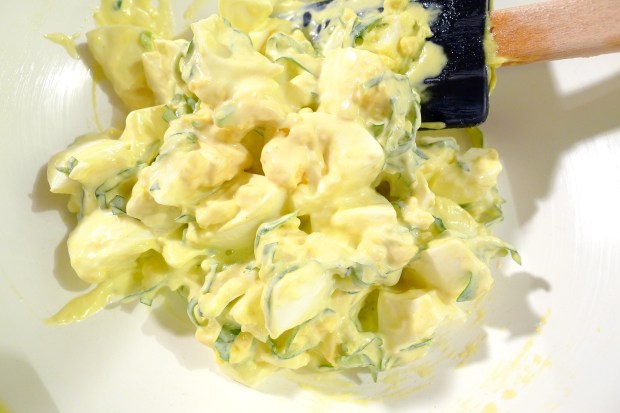
Ingredients for Egg Salad with Basil on Toast:

6 hard-boiled eggs, lightly chopped

2/3 cup of mayonnaise*

Salt to taste

One good handful of basil leaves, chopped (but I did a chiffonade, ’cause I’m all fancy like that)

Juice of 1 lemon

4 slices of toasted multigrain bread

How to prepare:

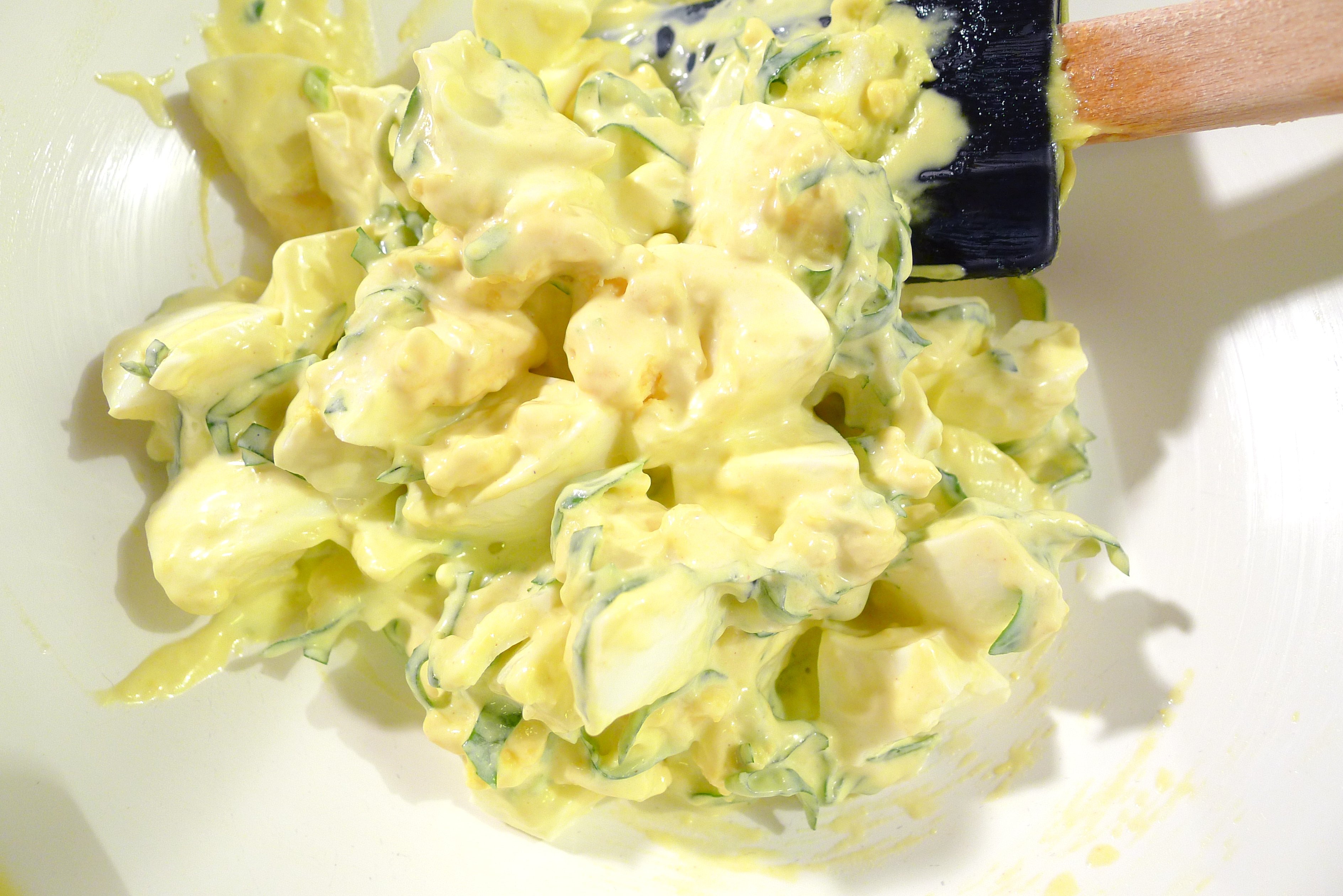
1. In a large bowl, combine the eggs, the mayonnaise, the basil, and a good sprinkling of salt. Add the lemon juice, a little bit at a time, until the salad is nice and creamy. Adjust the seasoning if needed.

2. Heap a large spoonful or two on top of each piece of toast. Serve immediately.

For the mayonnaise:

2 teaspoons of freshly-squeezed lemon juice

1/2 teaspoon of sea salt

1/2 tablespoon of Dijon mustard

1 large egg yolk at room temperature

1/2 cup of olive oil (I like a good, vibrant olive oil with eggs)

How to prepare:

1. Whisk the lemon juice, salt, and Dijon mustard together in a medium-sized bowl.

2. Measure out the olive oil into a cup with a pouring spout.

3. Whisk the egg yolk into the mustard mixture until it is well-incorporated and creamy. Continue whisking while you add a few drops of oil to the mixture. Whisk until completely incorporated before adding a few more drops. Try not to add too much oil, too quickly in the beginning, or the mixture will not emulsify. As the mixture begins to thicken, begin to add the rest of the oil in a thin and steady stream while whisking constantly.

If using a hand-blender, hand-mixer, or food processor, just start slowly adding the oil in the beginning, before adding the rest in a steady stream.

To help you visualize how mayonnaise comes together, here is a really good video clip.
Chicken-Fried Steak with Mashed Potatoes and Pan Gravy


It is a stunning 92.7° outside.

92°. Even after 8PM. It is just barely June.

This is almost 20 degrees above the seasonal average. It feels like August. This is so wrong!

So what did I decide to cook? Did I have a cool, crisp salad? Did I just lie on my floor, alternating slices of cucumber between my eyelids and my mouth?

Nope. I made chicken-fried steak, mashed potatoes, and gravy.

Why? Because apparently, the heat has made me insane.

Or maybe I can blame it on my Arkansas-born father, say that I am simply channeling the Spirit of the South. You know that Spirit? The one that makes you crave stewed collards, macaroni and cheese, and smoked meat in the wilting Delta heat?

You don’t actually need a recipe for chicken-fried steak, but for reference, I give you the link to the Pioneer Woman’s version here.

Love her or hate her, the Pioneer Woman’s blog is terrific form of escapism. Everything about Ree Drummond’s life seems beautiful: she’s beautiful, she has beautiful children, her kitchen is huge and beautiful, her ranch is beautiful, her friends and family are beautiful, her photos are beautiful. Everything is highly calorific, and all the colors are super-saturated.

And her bodice-ripper stereotype of a husband is every woman’s dirty, little secret fantasy.

The Pioneer Woman’s little slice of Oklahoma seems fantastic too. True, there is a lot of backlash (some of it really funny, like this and this), but you can’t deny that Drummond makes American Comfort Food look really, really good. Plus she slayed the Flay in Bobby’s Food Network Thanksgiving showdown. Kudos.

So, how do you make chicken-fried steak without a recipe?

You will need:

Some cube steaks (or minute steaks)

Some flour

A lot of milk

2 eggs

Some canola oil

Lots of salt and pepper

Some seasoning.

First of all, pat the cube, or minute steaks dry with paper towels. In a large shallow dish, pour in about half a cup of milk. Beat 2 eggs into the milk. In another dish, stir together about 4 heaping spoonfuls of flour, about a teaspoon and a half of salt, a lot of freshly ground black pepper, and whatever seasoning you want to add (seasoned salt, paprika, cayenne pepper, garlic powder, onion powder).

Coat each steak, one at a time, with the milk and egg mixture. Dredge each steak with the flour. Dunk each flour-covered steak back in the egg and milk mixture, and redredge each in the flour mixture. Place them on a clean plate after you are done.

In a large cast-iron skillet, heat about 1/4 inch of canola oil over medium-high heat. You want the oil to just start to smoke. When the oil has reached a good temperature, add the steaks to the pan, being careful not to overcrowd it. Fry each steak until each side is golden brown. Remove the steaks to a paper-towel covered plate the drain.

Pour off all but about a 1/4 cup of oil. Add a heaping 1/4 cup of flour to the pan, and make a roux. Brown the flour so that your gravy doesn’t have that raw flour kind of taste. It should be golden brown when you pour in the milk (about two cups). You will end up with a lot of gravy. Whisk the gravy, breaking up any lumps, until you have the consistency that you want. This can take between 5 to 10 minutes. You might have to add more milk if the gravy starts to look too thickAdjust the seasoning as you go along, adding more salt and black pepper as needed.

Ladle a generous amount of gravy over your chicken-fried steak. If you serve your chicken-fried steak with mashed potatoes, you can cover your spuds with the gravy too.

Enjoy responsibly: make this in November, not during a heat wave like now!

Chicken Salad with Tarragon

It’s hot out. It’s over 90°. The heat just saps my energy and makes me want to laze around the house until nightfall. I was eating celery sticks all afternoon, thinking that this was a healthy lunch. It probably wasn’t.

Maybe for rabbits, but not for me!

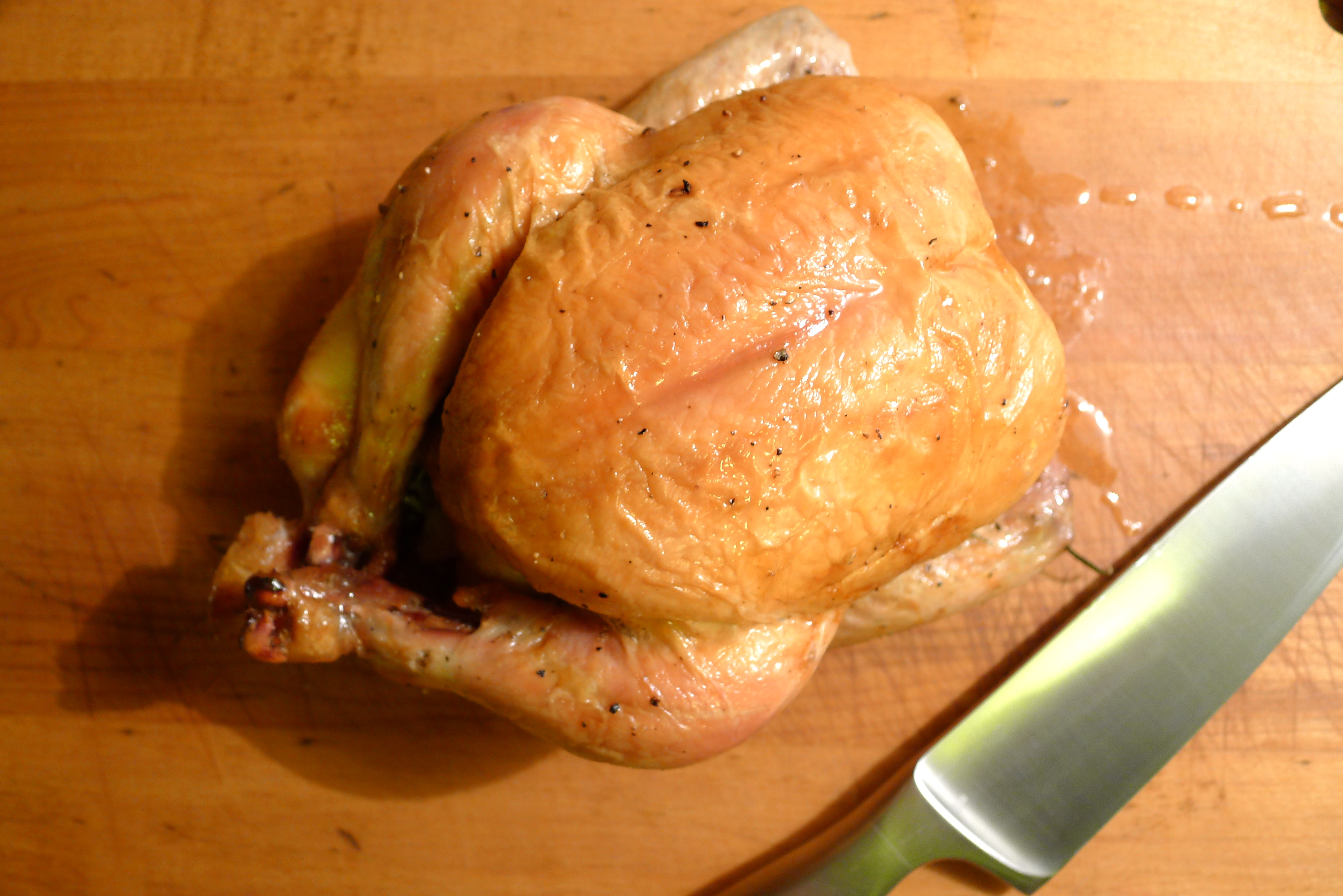
So I decided to do something with the extra roasted chicken that I had in my fridge, and make chicken salad.

You could use store-bought mayonnaise, but I prefer to make my own. It’s really easy once you get the hang of it. I’ve whipped mayonnaise together with a fork, with a whisk, with a hand mixer, with a food processor, and with a blender.

I used a hand-held immersion blender this time. The most important thing is to make sure that your egg yolk is fresh, and it is at a cool-ish room temperature — not ice cold, and not too warm either. Be sure to add the oil very slowly in the beginning. Don’t worry if your sauce separates, or breaks. If this is the first time you are making it (or even if it’s the hundreth time) there are things you can do; you can easily save it multiple ways.

Properly made mayonnaise takes practice, but it’s not rocket science. I’m not Harold McGee, so I won’t expound on why the egg yolk emulsifies. However, I will say that when it does, it feels like magic.

Ingredients:

1 cup of roasted chicken, chopped

1 stalk of celery, chopped

1 small shallot, minced

1 tablespoon fresh tarragon, finely chopped

1/2 cup of mayonnaise*

The juice of one lemon

Salt and pepper to taste

How to prepare:

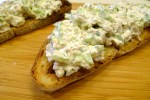
1. Combine all the ingredients, except for the lemon juice, in a medium-sized mixing bowl. Add the lemon juice a little bit at a time until the chicken salad is loose enough to be spread out easily, but not so loose that it is watery.

2. Spoon the salad on top of toasted bread and enjoy.

For the mayonnaise:

2 teaspoons of freshly-squeezed lemon juice

1/2 teaspoon of sea salt

1/2 tablespoon of Dijon mustard

1 large egg yolk at room temperature

1/2 cup of grapeseed oil, or any neutral oil

How to prepare:

1. Whisk the lemon juice, salt, and Dijon mustard together in a medium-sized bowl.

2. Measure out the grapeseed oil into a cup with a pouring spout.

3. Whisk the egg yolk into the mustard mixture until it is well-incorporated and creamy. Continue whisking while you add a few drops of oil to the mixture. Whisk until completely incorporated before adding a few more drops. Try not to add too much oil, too quickly in the beginning, or the mixture will not emulsify. As the mixture begins to thicken, begin to add the rest of the oil in a thin and steady stream while whisking constantly.

If using a hand-blender, hand-mixer, or food processor, just start slowly adding the oil in the beginning, before adding the rest in a steady stream.

To help you visualize how mayonnaise comes together, here is a really good video clip.

Anna Boiardi’s Apple Cider-Vinegar Roasted Chicken with Rosemary


The mercury hit over 80° today. So, of course, I would roast a chicken.

What possessed me? Shouldn’t I be eating sushi? Shouldn’t I be sitting under a tree chewing on raw snow peas? Yes, but I had planned this meal on a cold day, thinking that the chilly spring that we have been having would continue to the end of the week.

I wrong, but I decided to go for it anyway. I had a chicken. I have a surfeit of apple cider vinegar. I have to eat, so why not?

This recipe comes from a new cookbook that recently hit the market by the great-niece Chef Boyardee.

What? Chef Boyardee? The Chef Boyardee? From the can? The ravioli in a can?

Yes, that can. He was a real person.

I couldn’t believe it either.

Ettore “Hector” Boiardi immigrated to America with his family around the turn of the century. They settled in Cleveland and like many immigrants, started a restaurant. In response to demand, Boiardi’s started sending customers home with Italian food kits so they could reproduce what they made in the restaurant at home. It was such a success that Hector, along with his brothers Mario and Paul, began jarring their sauces and selling them under the name Chef Boyardee in 1928.

At the time, they became the largest importer of Parmesan cheese and olive oil in the country.

I know.

They moved their canning factory to Milton, Pennsylvania, where they convinced local farmers to grow the right kind of tomatoes that they needed for their sauces. They also grew and picked their own mushrooms at the plant.

I know.

So what happened?! How did they go from that to Beeferoni?! Well, after the WWII, the family sold their company — which had been supplying the troops during wartime — to a larger conglomerate.

And so it goes that . . .

. . . their descendent would be hot, live in a TriBeCa loft, and run Italian cooking classes for a living.

Of course, she would.

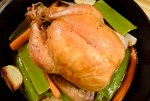
Anna Boiardi cooks real food. Real Italian food. And this recipe for Apple Cider-Roasted Chicken with Rosemary is really good.

Ingredients:

1 chicken (about 2.5 to 3 pounds)

1 cup of apple cider vinegar

Salt and pepper

1 clove of garlic, peeled and smashed

1/2 lemon

1 sprigs of rosemary

2 tablespoons of olive oil, plus more for drizzling

4 medium carrots, peeled

4 stalks of celery, peeled

1 onion, peeled and quartered

How to prepare:

1. Preheat your oven to 425°.

2. Place the chicken in a deep pot. The pot should be large enough to hold the chicken comfortably, with enough room on the top to spare. If you don’t have a pot large enough, you can improvise with some Zip-loc bags, doubled up. Add the vinegar and enough water to cover the chicken completely. Let the chicken soak for 30 minutes. After 30 minutes, remove the chicken and rinse it well under cold water. Pat it completely dry on the inside and out. At this point, your oven should be at the right temperature.

2. Put the chicken in a large cast-iron pan. Sprinkle the cavity liberally with salt and pepper. Place the garlic, the lemon, and one of the rosemary sprigs in the cavity. Truss your bird tightly. If you haven’t trussed a bird before, here is a handy video to help you.

3. Turn the chicken on its back, and massage about a teaspoon and a half of salt and about a quarter teaspoon of pepper into the skin. Be sure to get all the nooks and crannies. You want to work the salt in until it begins to dissolve. Massage in one of the two tablespoons of olive oil. Flip the chicken breast-side up, and repeat what you did to the back of the chicken. Work in another one and a half teaspoons of salt and quarter teaspoon of pepper. When the salt has dissolved,  massage in the remaining tablespoon of olive oil.

4. Arrange the aromatics (the carrots, celery, the remaining rosemary sprig, and onions) around the chicken. Drizzle them with olive oil.

5. Roast the chicken for about until it reaches an internal temperature of 165°. At that point, the juices should run clear when you pierce the deepest part of the thigh with a paring knife or a skewer. About halfway through cooking, you can also drop the temperature to 375°, and continue to roast it until it hits the target temperature. I’ve done it both ways depending on my mood. You can turn the vegetables halfway through the cooking time too so that they don’t dry out, and that they get well-coated by the drippings.

6. Let the chicken rest for about 20 minutes before carving. Serve with some of the juices spooned over the top.

Penne with Hot Italian Beef Sausage and Arugula


This is probably my favorite way to cook the terrific sausage that I get from my CSA. I originally got the idea from Epicurious, but have long since dispensed with the recipe itself.

First, I set a big pot of heavily salted water to boil (as salty as the Mediterranean, so it goes), and I preheat my oven to 350°. When the water starts to boil, I add the penne. I figure about 1/2 a pound of penne to 1 pound of sausage. You can cook your sausage any way you like; I put mine in the oven for about 10 minutes, about as long as it takes to cook the pasta. Drain your pasta, and return it to the warm pot. Slice the sausage at an angle, and add it to your drained pasta. Toss the pasta and sausage together with a good handful or two of arugula leaves (the residual heat should wilt the greens just enough), a drizzle of olive oil, a couple grinds of the peppermill, and the juice of one lemon. Top with freshly grated Dry Jack cheese (I find for this recipe, the more coarsely grated the cheese, the better).

Divide everything equally into warmed bowls, and enjoy!

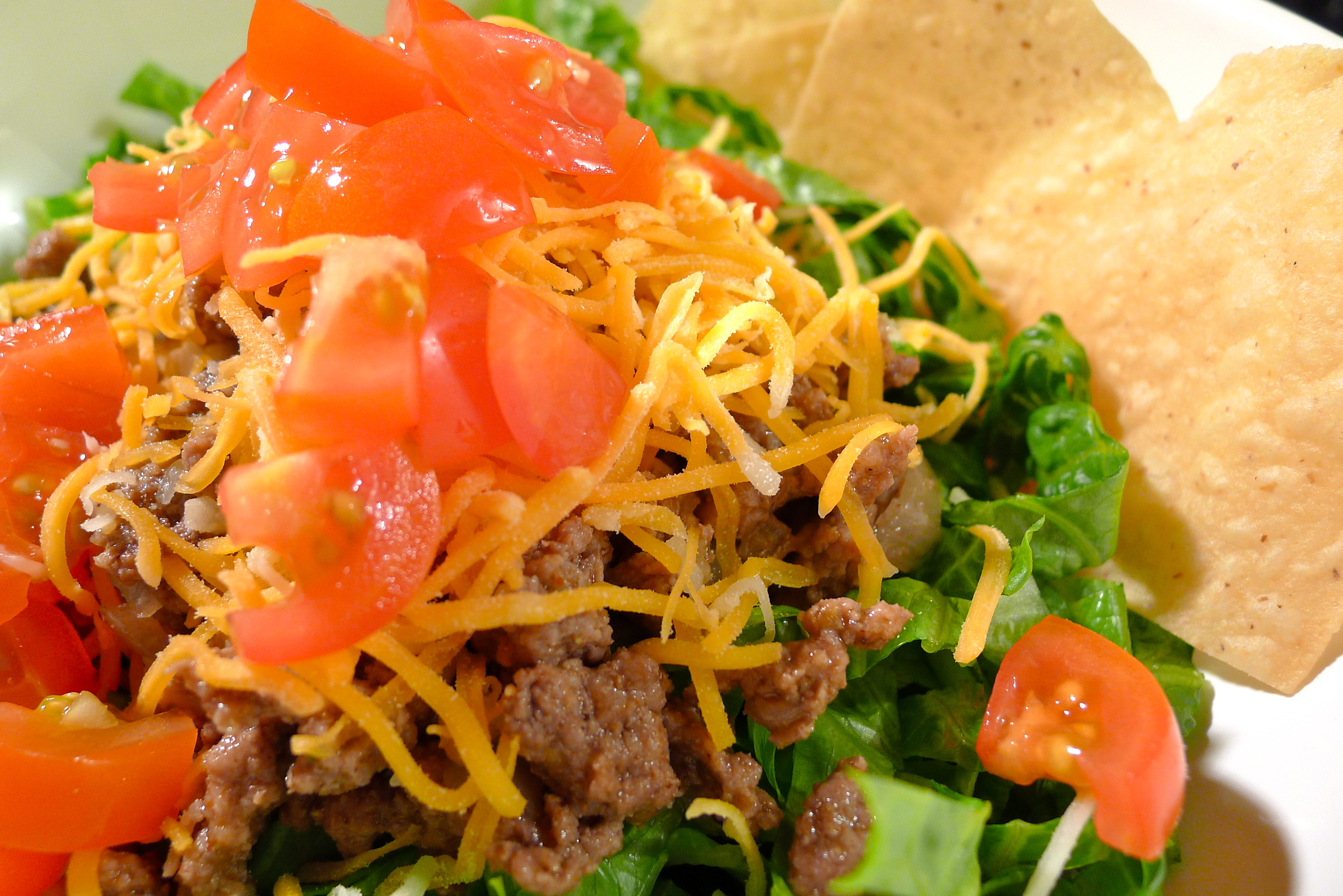
Taco Salad

Taco salad is easy to mock. Is it a salad? Isn’t it just a giant fried flour tortilla bowl full of calories? When Budweiser can sell beer by exploiting taco salad’s paradoxical nature in a very funny commercial, you know it probably isn’t that good for you.

But why can’t it be? Why not swap out the edible bowl for a just a few high-quality tortilla chips, and use really good, super lean grass-fed beef. Why not replace the iceberg lettuce (John Waters always calls iceberg lettuce the polyester of greens) with bright, crunchy, vitamin-packed Romaine? Why not throw in some organic cherry tomatoes? Just a sprinkling of good shredded cheese, the hormone-free stuff?

And forget the heavy Ranch dressing or giant scoop of sour cream. If your core ingredients are good, just a spritz of lime juice should do the trick.

Ingredients:

1 pound of very lean ground beef

2 tablespoons of olive oil

1 white onion, chopped

2-3 garlic cloves, minced

1/2 teaspoon of dried oregano

1/2 teaspoon of ground cumin

1/2 teaspoon of paprika

1/4 teaspoon of chili powder

Salt and pepper

1 head of Romaine lettuce, cut crosswise into 1/4-inch ribbons

1 cup of shredded cheese

1 pint of cherry tomatoes, diced

Tortilla chips

Lime wedges

How to prepare:

1. Heat the oil in a large heavy saucepan over medium-high heat. Add onion and garlic. Sauté them together until the onion is slightly softened, approximately 2-3 minutes. Add the beef and the spices. Cook until the meat is no longer pink. Adjust the seasoning. Turn off the heat and begin assembling the salad.

2. Make a bed of about a cup of lettuce in the bottoms of 4 good-sized individual salad bowls. Drain the beef if there seems to be a lot of oil or liquid in the bottom of the pan. Top each bed of lettuce with a scoop of ground beef, followed with the cheese, and then the diced tomatoes. Squeeze a lime wedge or two over the top. Serve with chips on the side.

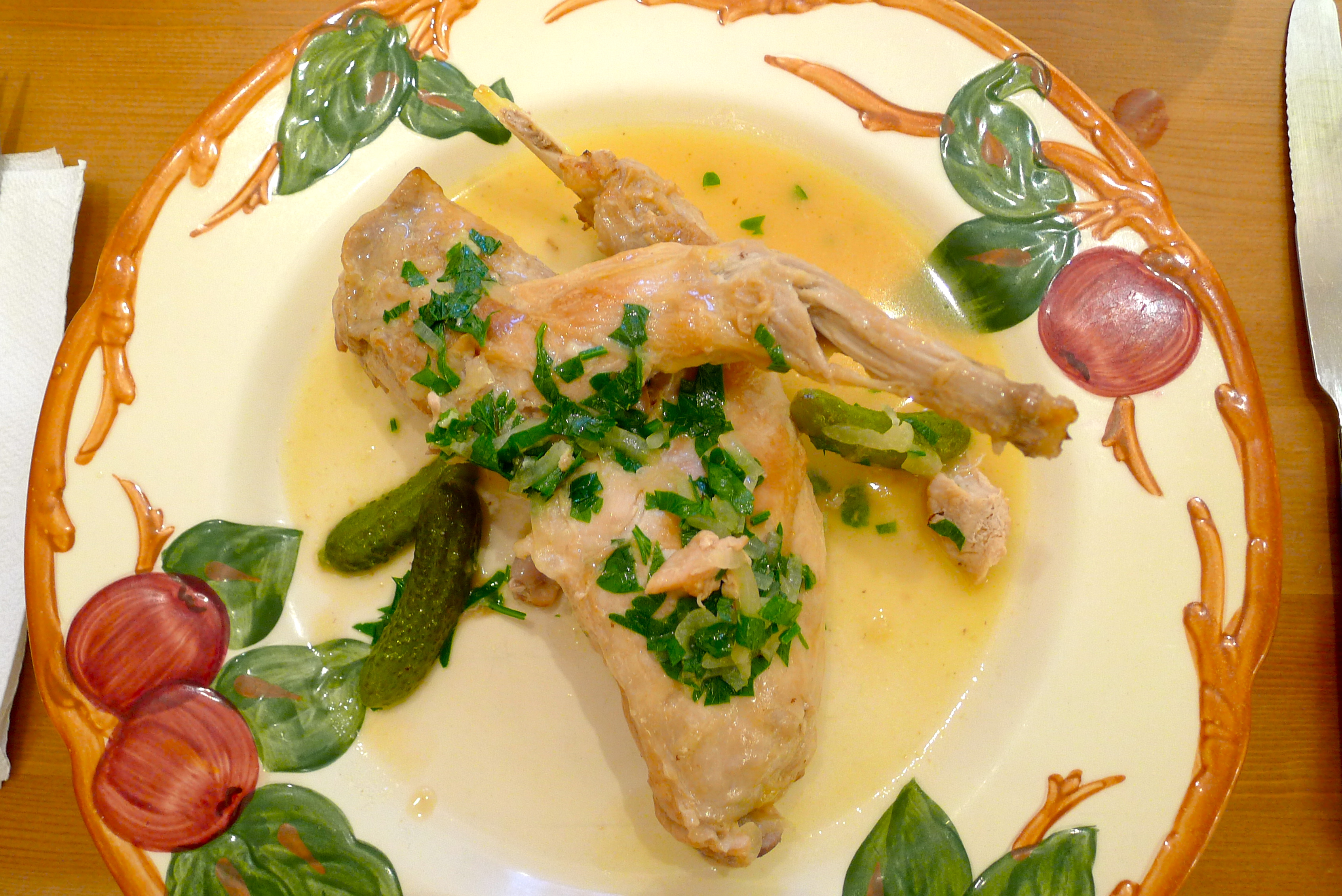
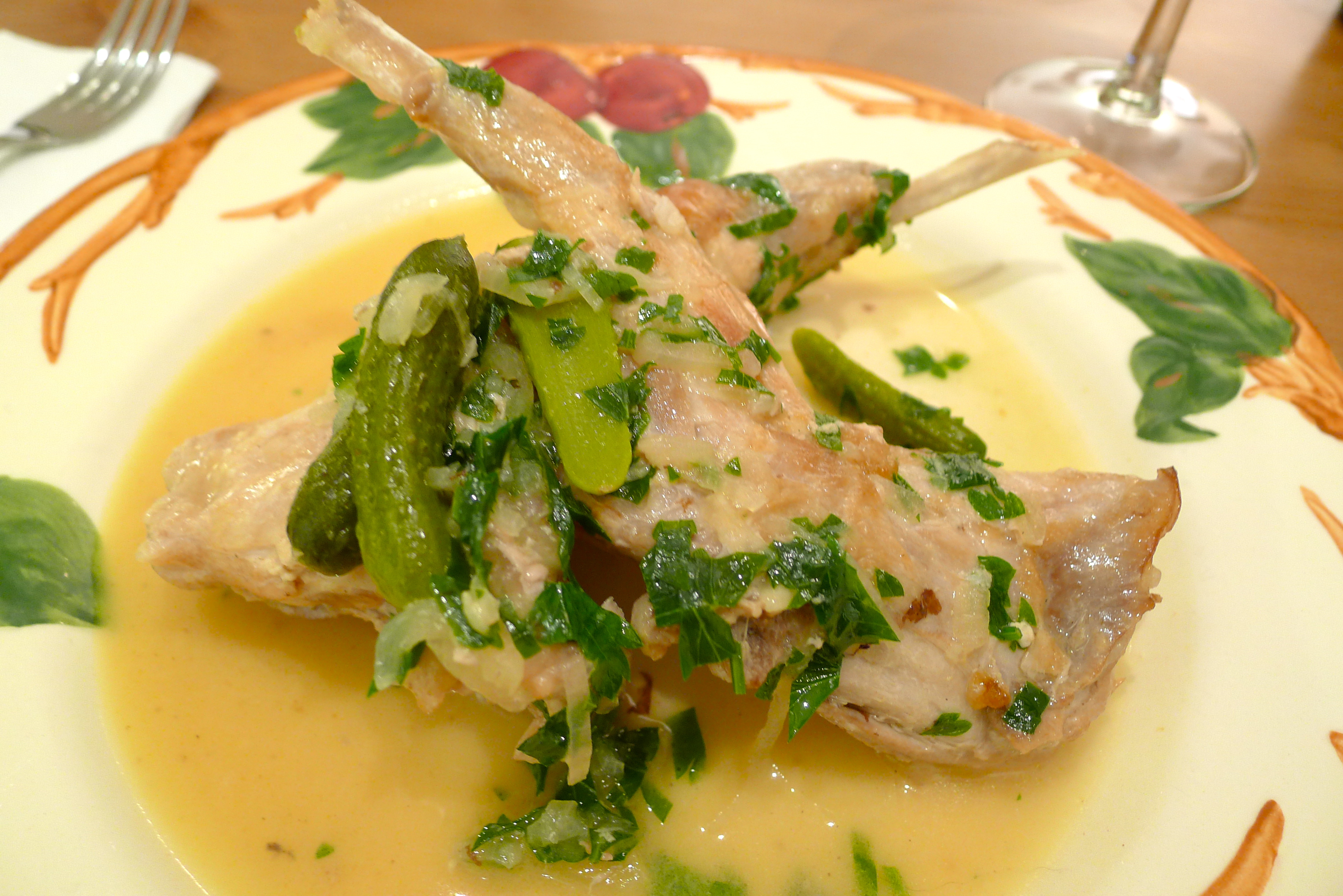
Gabrielle Hamilton’s Braised Rabbit


Rabbit is a tricky thing to cook. Braising is the usual method — something that always always puzzles me as rabbit is very lean, and there really isn’t any tough connective tissue to break down by slow, low cooking.

Shorts ribs, it is definitely not.

I also have this sad tendency to slightly overcook my rabbit, leaving the meat a little on the tough side. It’s as if the bunny was tensing up in order to leap out of the pot to give me the finger.

But when I tried Gabrielle Hamilton’s recipe for braised rabbit published in the New York Time a few weeks ago, the dish turned out like a dream.

I didn’t actually have the 8 hind legs called for in the recipe, just one rabbit that I had butchered myself into 6 pieces. If you have never broken down a whole rabbit before, here is a good step-by-step tutorial from Saveur. If I were to do it again, I might butcher two rabbits — leaving me with a nice mess of fore and hind legs — and save the loins and saddles for another dish calling for rolling and stuffing.

Ingredients:

1 rabbit (about 2 1/2 pounds), cut into 6 pieces

Salt and pepper

2 tablespoons of vegetable oil

4 large shallots, thinly sliced

1/3 of a cup of cornichons, halved

1/4 of a cup or cornichon brine

3 tablespoons of white wine vinegar

3-4 cups of chicken stock

4 tablespoons of butter, cut into cubes

1/3 of a cup of Italian parsley, chopped

1. Preheat the oven to 350°.

2. Season the rabbit pieces liberally with salt and pepper. In a large, heavy Dutch oven, heat the two tablespoons of vegetable oil over medium-high heat until it starts to shimmer. Sear the rabbit pieces on both sides. Transfer the browned pieces to a plate.

3. Lower the heat to medium. In the same pan, sauté the shallots until they are tender but not browned. Add the cornichons, brine, and vinegar. Bring everything up to a simmer. Return the rabbit pieces and any accumulated juices to the pan, spreading the rabbit out as evenly as you can over the bottom. Add just enough chicken stock so that the rabbit pieces are covered by about 1/2 inch of liquid. Bring the liquid to a boil and then turn off the heat.

4. Cover the pan and bake until the rabbit is tender, about 45 minutes. The next time I do this, I might use a meat thermometer. Rabbit should be done at 135° – 140°. The recipe says that if you can easily bend the leg at the joint, your bunny is done.

5. Remove the pan from the oven and transfer the rabbit pieces to a plate. Keep the pieces warm while you finish the sauce. Return the pan to the stove top and boil the liquid until the sauce has been reduced by about half. Whisk in the cubes of butter one at a time. The sauce should be nice and glossy. Add the rabbit back to the pan to just reheat it. Before serving, stir in the parsley. 

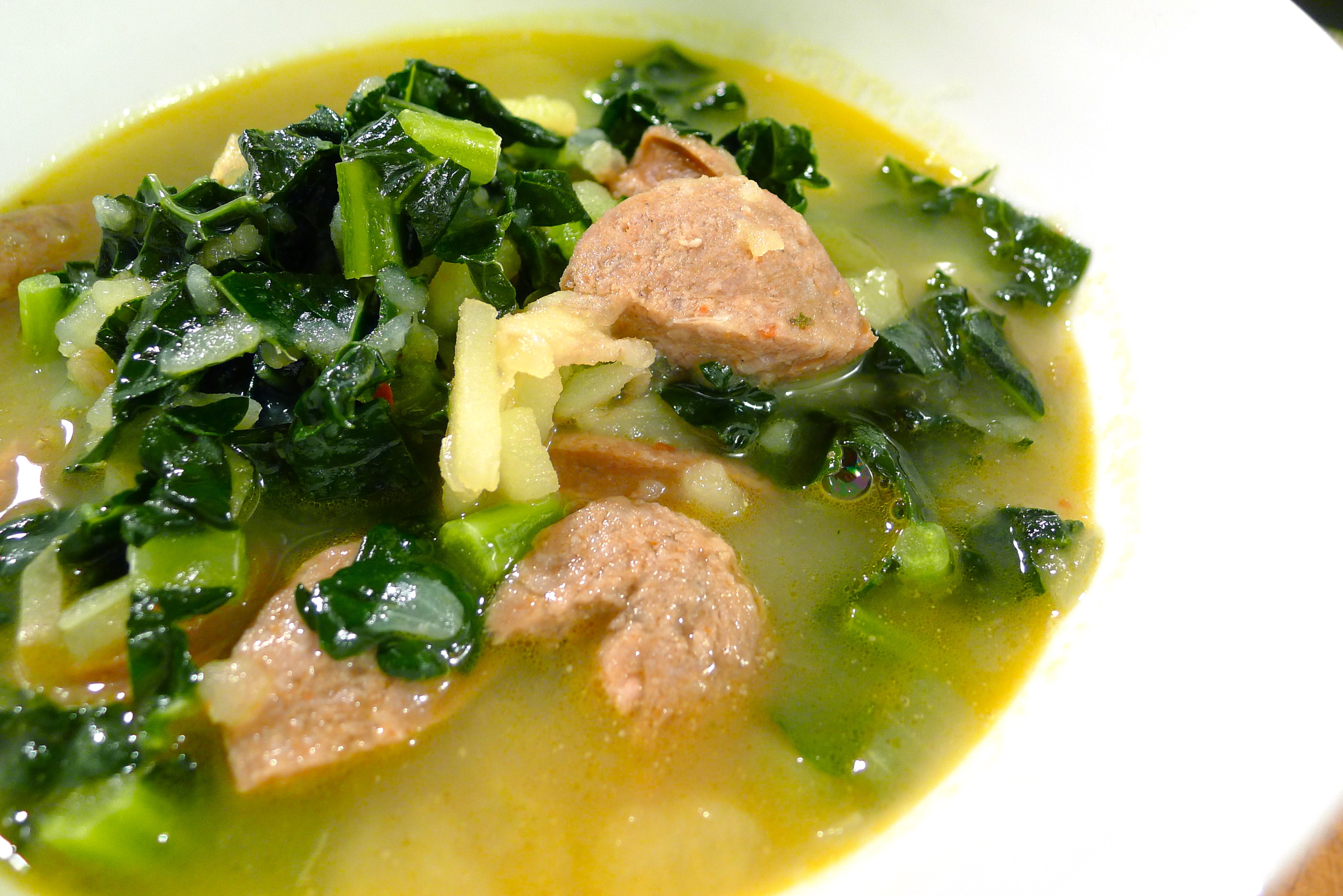
Caldo Verde


It is officially spring in New York, but it certainly doesn’t feel like it. It feels schizophrenic actually as beautiful sunny days alternate with dark gray ones filled with freezing rain and hail.

Yeesh.

This has led to a kind of odd assortment of things to eat at home as I vacillate between going out with friends for dinner (it’s so nice out!) and wanting to stay at home and burrow under the covers until the chill finally goes away.

While perusing the contents of my fridge and freezer yesterday to see what I could whip up for dinner from its random contents, I was super happy to find a pair of CSA chorizo hiding behind some frozen loaves of bread to go along with a nice bunch of kale in the crisper.

I love the combination of kale and chorizo. There is something about the clean bitterness of the leaves that marries so beautifully with the spiciness and bite of the sausage. The flavors always make me think of sunnier places like Spain and Portugal. Places where I can eat standing upright in a bar, tossing cheap paper napkins on sawdust-covered floors willy-nilly.

This soup is good for this strange weather we have been having. It’s warming and comforting, but full of bright, big, assertive flavors. It gets even thicker and spicier overnight.

Ingredients:

1 large yellow onion, finely chopped

1 tablespoon of olive oil

3 yukon gold potatoes (about 1 pound), halved and cut crosswise into 1/8-inch thick slices

4 cups of chicken stock

1/2 pound of chorizo, cut into half-inch pieces

1 big bunch of lacinato or Tuscan kale, cut crosswise into 1/2-inch ribbons

Salt and pepper to taste

How to prepare:

1. Heat the tablespoon of oil over medium heat in a large, heavy-bottomed casserole. Sauté the chorizo in the hot oil until it is browned, about 5 minutes. Transfer the chorizo to paper towels to drain.

2. Pour off any excess oil in the pot, leaving about 2 teaspoons. Sauté the onion in the same pot over medium heat until the onion begins to become golden. Add the potato slices to the onions and toss them together. Continue to cook both for about 4 minutes more. Add the chicken stock and bring everything up to a simmer. Continue to cook the soup until the potatoes are very tender.

3. Using a potato masher, coarsely crush about half of the potatoes in the pot. Add the chorizo back to the pot and continue to simmer the soup for about 5 more minutes. Add the kale and continue to cook the soup for about 10 minutes more. Adjust the seasoning now, keeping in mind that the chorizo will probably add a fair bit of saltiness to the soup.

4. Let the soup stand about 10 minutes before serving. It will get even thicker and spicier overnight.

Milk and Honey Roasted Spare Ribs (St. Louis-Cut)


Over the years, I have come across a fair number of recipes for pork cooked in milk.

Pork? Yes. In milk? Yes.

Very un-kosher.

I’m not exactly sure of where the technique finds its origins. Italy probably. The esteemed Elizabeth David cites the Veneto in particular, but I’ve also heard Bologna. Naples even.

In any case, if you don’t mind flouting several dietary laws at once, this is a pretty awesome way to ring in Spring and celebrate Biblical bounty in a truly transgressive way.

Yes, Friends, we are cooking cloven-hooved creatures in milk and honey!

A few weeks ago I got an amazing rack of ribs in my CSA share. Serendipitously, the NYT published a series of recipes about roasting ribs in the oven. Meant to be? A secular sign?

Yes!

Though the ribs take a good 2 hours or so to cook, the milk acids make the meat meltingly tender. The milk proteins and sugars create the most delectable crust. It’s like meat lollipops dipped in dulce de leche.

It’s not gross, it’s Italian.

Ingredients:

1 rack of St. Louis-cut spare ribs, or two racks of baby back ribs

2 tablespoons of olive oil, plus 2 tablespoons

2 tablespoons of fresh rosemary, chopped

3 cloves of garlic, finely minced

Salt and pepper to your liking (I like about about a teaspoon of salt and a good couple grinds of pepper)

1 yellow onion, peeled and halved

2 bay leaves

2 tablespoons of red wine vinegar

2 tablespoons of honey

2 cups of whole milk

1 cup of heavy cream

How to prepare:

1. If you haven’t done so yet, remove the membrane from the back of the rack of ribs. Flip the ribs bone-side up. Using the flat handle of a spoon or a butter knife, loosen the membrane from one end of the rack of ribs. Grasp the loosened end with a paper towel and pull the membrane slowly in the direction of the opposite end. It will probably come off in one piece but if not, you can just grab the torn end and continue. To help visualize, here is a pretty great Youtube how-to clip from BBQTalk.

2. In a small bowl, mix together the oil, rosemary, 2 tablespoons of olive oil, salt and pepper with your fingers. Lay the ribs out on a large sheet of plastic wrap. Rub the mixture all over the ribs. Arrange the ribs on top of the onion halves. Lay the bay leaves on top, and sprinkle the ribs with the red wine vinegar. Wrap the ribs up tightly in plastic wrap and refrigerate them for between 6 to 12 hours.

3. Set the oven to 350°. Remove the ribs about 30 minutes to an hour before roasting.

4. Pour the remaining 2 tablespoons of olive oil into the bottom of a heavy-duty sheet pan. Heat the oil in the oven for about 5 minutes. Add the onion halves and the ribs — rounded side-up — in the pan and roast them for 30 minutes. Drizzle the ribs with the honey and roast them for about 10 minutes more. Then, turn the ribs over and pour the milk and cream over them. Roast the ribs for another hour.  After an hour, if you notice that the ribs are starting to brown too much, cover them with a sheet of parchment paper or aluminum foil. Continue to cook them for another 30 minutes to an hour more until they are tender enough for you to be able to pull the ribs apart with your fingers.

5. Remove the ribs from the oven and let them rest on a cutting board for about 5 to 10 minutes. Cut the ribs into sections and serve immediately.