Video: Making Italian Macaroons with NYC Food Report

Want to learn how to make some amazingly easy and super delicious macaroons?

Check out this fantastic video made by fellow blogger Lior over at NYC Food Report, who was awesome enough to invite me over to his apartment to make a big mess in his sun-filled, immaculate kitchen.

The macaroon recipe is also available in Lior’s site.

PS. Lior is being exceptionally kind and generous in calling me a chef — which I am clearly not. I am only a girl who likes to eat. A lot.

Warm Wilted Kale Salad with Red Quinoa and Candied Delicata Squash


In Britain, there is a variety of kale called “Hungry Gap,” named after that period at the end of winter and in the beginning spring when there is little in the way of fresh produce.

Here in the Northeast, we are in the Hungry Gap, but sadly there is no local kale yet. When one begins to tire of tubers, squash and bulbs, sometimes you just have to bite the bullet and buy other things, even if they come from far away.

As leafy greens go, kale is fairly hearty. It can hold up to heat — both in terms of temperature and strong flavors. Kale is a great addition to winter salads, providing a bright and cleanly bitter counterpoint to warmed grains and roasted squashes.

Ingredients:

1 delicata squash, seeded and cut into small dice

1/4 cup of packed brown sugar

2 tablespoons of balsamic vinegar

Olive oil

Salt and pepper

1/3 cup of pumpkin seeds, shelled

1 large bunch of lacinato kale, ribs removed and leaves cut into 1-inch pieces

1 cup of red quinoa, uncooked

The juice and zest of one lemon

2 tablespoons of pumpkin seed oil (or olive oil)

Freshly grated Parmesan

How to prepare:

1. Preheat the oven to 425°.

2. In a medium-sized bowl, combine the brown sugar, the balsamic vinegar and the delicata squash. Drizzle it with olive oil, sprinkle it with salt, and toss everything together until the squash is evenly coated with the balsamic-olive-oil-sugar mixture. Spread the squash out in a single layer on a parchment paper-lined cookie sheet. Roast it until it just begins to soften and the edges begin to caramelize, about 15-17 minutes. Spread the pumpkin seeds over the top of the squash, and continue to roast everything for about 2-3 minutes more. When the pumpkin seeds are nicely toasted, transfer everything to a large bowl.

3. Rinse the quinoa if needed. In a separate saucepan, combine the quinoa with about two cups of water and a hefty pinch of salt. Bring everything to a boil, and then reduce the heat. Simmer the quinoa over low heat until all the water is absorbed, and the quinoa is tender. Fluff it with a fork when it is done.

4. In the meanwhile, wilt (or steam) the kale in a separate pan. When the kale is wilted, remove it to a colander. Once the kale is cool enough to handle, gently press as much liquid as you can out of the leaves without squeezing them.

5. Add the kale and the quinoa to the candied squash. Toss the salad together with two tablespoons of pumpkin seed oil and the juice and zest of one lemon. Adjust the seasoning. Before serving, grate a nice fluffy mound of Parmesan cheese on top.

Dean & Deluca’s Middle Eastern Red Lentil Soup with Yogurt and Lemon


Lentil soups are great this time of year when the season is lean, and fresh local produce consists mostly of tubers and squash. Lentils are extremely economical. Added bonuses: they cook up quickly, and have a wholesome, delicious nuttiness.

This soup is adapted from one in the Dean and Deluca Cookbook. If you keep the spices and lentils on hand, you can quickly pull it together after school or work.

Start to finish, the soup should take you about 30 minutes to make.

Actually, it will take you about 20 minutes (I added an extra 10 minutes for you to enjoy a glass of wine).

Ingredients:

1 tablespoon of olive oil

1 tablespoon of butter

1 medium onion, finely chopped

1 1/2 teaspoons of ground coriander

1 1/2 teaspoons of ground cumin

1/2 teaspoon of ground ginger

1/2 teaspoon of mustard powder

9 ounces of red lentils

4 cups of chicken or vegetable stock + 1 cup of water

The juice and the zest of one lemon

1 cup of whole milk Greek yogurt, divided

1/4 cup of fresh parsley, chopped

Aleppo pepper for garnish (you can also use sweet paprika as a substitution)

How to prepare:

1. In a large Dutch oven, melt together the butter and the olive oil over medium heat. Add the onion and cook it until it begins to turn translucent. Add the spices to the onions, stirring frequently to make sure that the spices toast, but do not burn. Continue to cook the onion until it begins to turn golden.

2. Toss the lentils with the onions and the spices. Add the stock, the extra cup of water, and a heavy pinch of salt. Bring everything to a boil, and then reduce the heat to a simmer. Simmer the lentils until they are tender, about 15 to 20 minutes. Once the lentils are tender, add the lemon zest and half of the yogurt to the soup. Continue to simmer everything together until the consistency is nice and smooth. Adjust the seasoning.

3. In a small bowl, combine the remaining yogurt with the lemon juice and the parsley. Stir everything together until the consistency is smooth and silky.

4. Ladle the soup into bowls. Top each serving with a swirl of the yogurt mixture and a sprinkle of Aleppo pepper.

Irish Bacon, Reserve Farmstead Cheese and Chive Drop Biscuits


Okay, I swear that I am going to start this new year right and get myself in the gym this week.

Many of my friends would be shaking their heads in disbelief mildly surprised to learn that I have a gym membership. I actually never talk about it because the last time that I went to the gym was in June. Yes, you read that correctly: June. My gym is open 24/7 during the week, and when I was going, I liked to slink in about 11pm or midnight when it was completely empty. That way, I could do as little as possible without feeling self-conscious about it.

But I digress . . .

I made these drop biscuits with the other wedge of CSA cheese (we get two different kinds at every pick-up), and the remaining Irish bacon from my CSA. The texture of home-made biscuits is always better than anything you could buy. Plus, they are so easy to pull together and so quick to bake, that you will want to make them all the time.

And I promise to get in better shape . . . as soon as I polish off these biscuits.

* This post was actually written the day after the Horseradish Cheddar and Irish Bacon Mac & Cheese one. However, in the whole hubbub following the Daring Cooks’ challenge, I haven’t had time to post it until today. In the meanwhile, amazingly awesome SweaterMeat posted her Cheesy Breakfast Biscuit Sandwiches on her blog, Ugly Food Tastes Better. If you haven’t already dropped by, check out blog and her biscuits!

The point being that there must be something in the air right now about drop biscuits!

Ingredients:

2 1/4 cups of all-purpose flour

2 1/2 teaspoons of baking powder

3/4 teaspoon of baking soda

1 teaspoon of salt

6 tablespoons of butter, cubed

6.5 ounces of reserve farmstead cheese (or really any kind of aged cheese), grated

1/2 cup of chives, chopped

1/2 pound of cooked Irish bacon, cut into 1/2-inch strips

1 1/2 cups of whole milk or buttermilk

How to prepare:

1. Preheat the oven to 450°.

2. Combine the flour, the baking powder, the baking soda, and the salt together in a large bowl. Add the cubes of butter. Using your fingertips, blend the butter into the dry ingredients until the mixture resembles a coarse meal.

3. Stir in the grated cheese, the chives, and the bacon. Add the milk or the buttermilk all at once. Continue to stir until all the ingredients are just combined.

4. Drop the dough in twelve equal mounds about an inch or two apart on a large baking sheet lined with parchment paper. Bake the biscuits until they are golden, about 18 to 20 minutes.

Pan-Seared Pork Chops with Sautéed Brandied Apples

Is it too cliché to mention that old adage that necessity is the mother of invention?

Maybe it should be added that necessity is good, but extreme cold and laziness is a better motivator!

This was where I found myself the other chilly night, looking at the contents of my fridge and pantry and wondering what I could make for dinner without having to go out and get anything else. Pork chops and apples was what came naturally to mind as I had a pair of juicy pork chops from the CSA, and some shrivelly apples. The apples were a little past being able to be enjoyed raw, but they were still perfectly good to cook.

And then I looked up at my nice collection of booze, and thought, “Not just any apples tonight, but flambéed apples!”

Okay, I’m not being 100% truthful. My actual thought was, “Fire! Fire! Fire!”

In any case, the results were fast, easy, delicious, and perfect for an early winter supper.

Ingredients:

2 thick-cut boneless pork chops

Olive oil

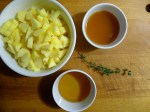
2 apples, peeled, cored, and cut into small pieces

1 shallot, finely minced

1/4 cup of apple cider

1 branch of fresh thyme

1/4 cup of brandy

Salt and pepper

Special items:

Matches

How to prepare:

1. Heat some olive oil in a pan over medium-high heat. When the oil begins to shimmer, add the pork chops. Sear the pork chops for about 3-4 minutes. They should have a nice golden crust when you flip them. Lower the heat to medium after you turn the pork chops. Continue to cook them until they are done (you’re looking for a nice rosy pink). A meat thermometer inserted in the center of each chop should register between 140-145°. Remove the chops to a plate while you finish the dish.

2. Spoon off most of the fat in the pan, leaving only about two teaspoons. Set the pan back on stove over medium-high heat. Add the apples and shallots. Toss them together in the pan, being sure to scrape up any tasty brown bits stuck to the bottom of it. Cook them until the shallots gain a little color and begin to turn translucent.

3. Reduce the heat to medium. Add the apple cider and the thyme to the pan. Cook the apples and the shallots in the apple cider until the sauce has thickened.

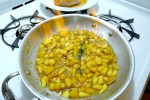
4. Take the pan away from its heat source, and carefully pour the brandy over the apples. Return the pan to the heat. Let the brandy warm for a just a few seconds before igniting it with a match. Stand back and let the alcohol burn off completely. To help you visualize this, here is a nice Youtube clip from the Food Network (the flambé-ing occurs around the 2:55 mark).

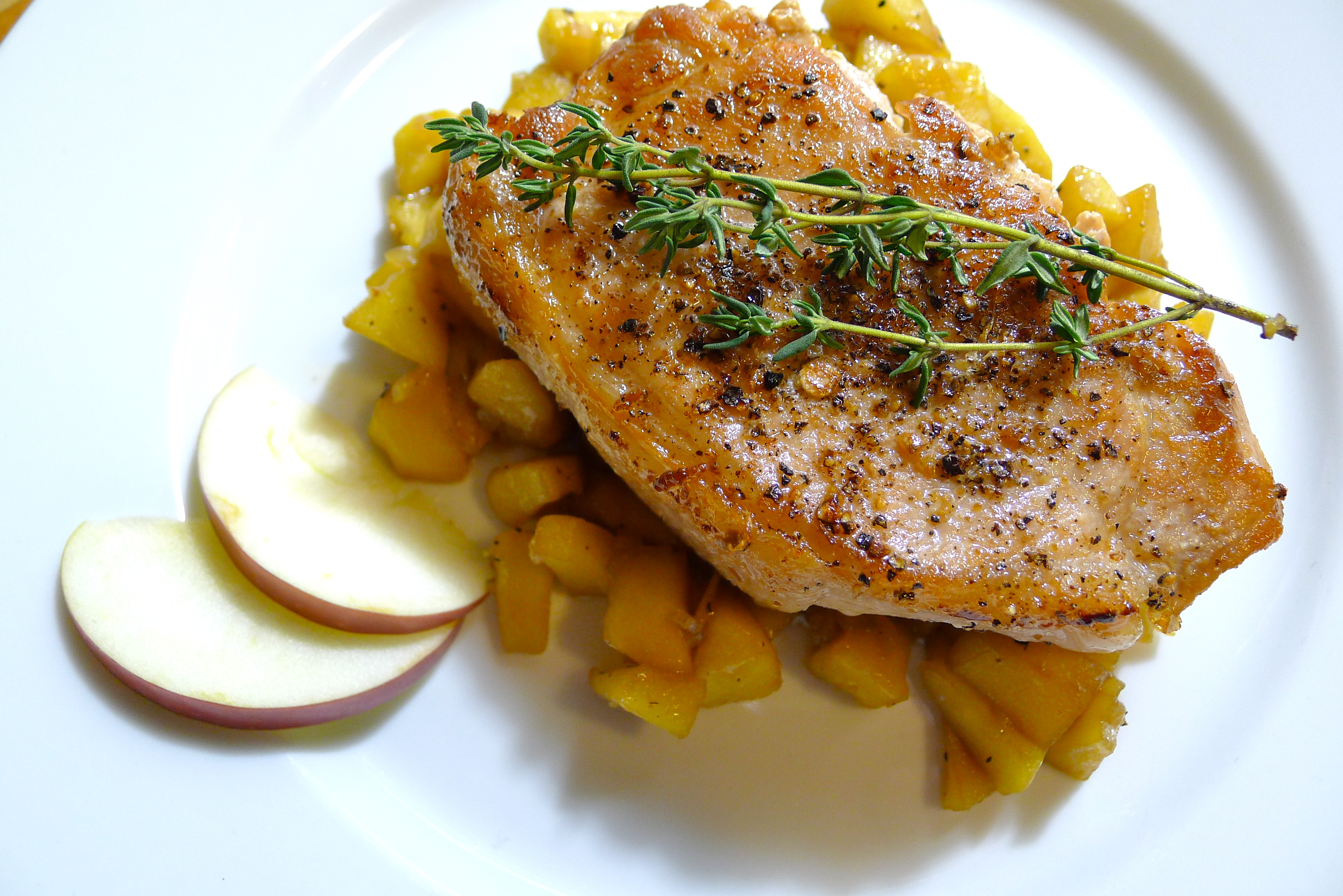
5. Add any juices that have accumulated in the plate where the pork chops are resting to the pan. Continue to cook the apples until the liquid has some reduced more. Remove the thyme branch, and adjust the seasoning. Set the pork chops on top of a good mound of apples and serve.

Keema Beef Curry


It is officially cold.

Really cold today. Not as cold as yesterday night (which was the coldest day of the season so far), but still very nose-nippy outside.

It is also officially dark at 4:30pm.

When the weather takes a sharp turn like this, I often start to crave something spicy and bright. This recipe is from the current issue of Food and Wine, and suits my tastes and my mood perfectly. The spices are so warming; they make me dream of locales where the sun shines all the time. The coconut milk makes the curry smooth and creamy, and the spritz of lemon juice makes the whole dish sparkle.

Another great thing about this recipe? It’s something new and delicious to make with ground beef that isn’t hamburger, meatloaf, or meatballs!

Adapted by Grace Parisi from the amazing Julie Sahni, this recipe strangely seems to have not been uploaded to the magazine’s website yet. I have basically kept the recipe as published. However, I have reduced the amount a liquid a bit so it isn’t so watery (you might choose to reduce it even more). Even though Parisi’s recipe doesn’t call for lemons, a hit of acid just seems like such a natural addition to make the flavors pop.

Ingredients:

1 tablespoon of canola oil

1 pound of lean ground beef

1 large onion, finely chopped

2 tablespoons of ginger, finely grated

2 large cloves of garlic, finely minced

1 1/2 tablespoons of Madras curry powder

Salt and pepper

1 large Yukon Gold potato, peeled and cut into 1/2-inch dice

1 cup of chicken stock

1 14-ounce can of unsweetened coconut milk

1 14-ounce can of diced tomatoes

1 1/2 cups of frozen baby peas

Fresh cilantro

Lemon wedges

How to prepare:

1. In a large Dutch oven, heat the oil over medium-high heat until it begins to shimmer. Add the ground beef. As it cooks, use the edge of your wooden spoon to break up any lumps. Continue to brown the meat until there is no longer any pink, about 5 minutes.

2. Add the onion, the ginger, the garlic, and the curry powder. Season everything with salt and pepper. Continue to cook the meat mixture until the onions begin to soften and become translucent, about 3 minutes.

3. Add the potato, the stock, the coconut milk, and the diced tomatoes and their juices. Stir everything to combine. Bring the everything to a boil, and then turn the heat down to a simmer. Cook the curry until the sauce has thickened, and the potatoes are tender.

4. Using the back of your wooden spoon, lightly crush some of the potatoes against the side of the casserole. Adjust the seasoning. Add the peas, and continue to simmer the curry until they are heated through. Adjust the seasoning for a final time.

Top the beef keema with cilantro and a squeeze of fresh lemon juice. Serve with either basmati rice or naan.

Classic Southern Fried Chicken


This recipe is not for the faint-of-heart.

Your mission, should you choose to undertake it, will require Crisco. Lots of it. More, probably, than you have ever felt comfortable using. Gobs. Of. Crisco.

But the payoff is huge: the crispiest fried chicken you could possibly imagine. Chicken so shatteringly good, it explodes and leaves a healthy dribble of juice running down your chin.

Prior to this endeavor, I had never fried with Crisco. Previous experiences with hydrogenated soybean oil were either a scant quarter cup here and there while baking, or a light smear to periodically re-season my cast-iron pans.

That was before getting James Villas‘ amazing cookbook, The Glory of Southern Cooking, in which he makes a very cogent and convincing argument for Southern Cooking being one of the great regional cuisines of the world.

The book is a wonderful introduction to Southern charm and Southern hospitality, portraying the American South as a world of genteel manners and local thrift where casseroles are always given, silver chafing dishes abound, and Crisco is used liberally.

Very liberally.

This is not meant to diminish the value nor underestimate the diversity of Southern cooking, but simply to point out that at its heart, the bottom-line is that good food has nothing to do with calorie-counts or percentages of saturated fats. Good food is food that tastes good, like light and fluffy cakes, gooey and melty macaroni and cheese, and Crisco-fried chicken.

Villas’ recipe is less a recipe and more a series of guidelines to perfect frying. To attain perfection, you must:

1. Cut up your own bird (on High Point Farms’ website, there is a link to a Gourmet Youtube clip that must be the best one I have seen for teaching you how to do this).

2. Use cast-iron.

3. Use Crisco.

4. Never crowd the skillet.

5. Maintain the heat of the fat, except when the chicken is obviously burning (in which case, turn down the heat).

6. Never, never, never cover fried chicken after it is drained, unless you want soggy chicken.

And though frying an all-natural, pasture-raised chicken in fully-hydrogenated fat may outwardly appear to negate all the health benefits of eating free-range in the first place, at least you have the comfort of knowing that your chickens lived very happy lives before becoming crazy good and super delicious fried chickens.

Ingredients:

1 whole chicken, cut into pieces

Buttermilk

2 cups of flour

1 teaspoon of salt

Freshly ground black pepper to taste

Crisco

1 tablespoon  of bacon fat

How to prepare:

1. Place the chicken pieces in a large bowl, and add enough buttermilk to just cover them. Let the pieces soak for about 30 minutes.

2. In a heavy brown bag, or a large Zip-loc bag, combine the flour, the salt, and the pepper together. Add the chicken pieces to the bag, one or two at a time depending on the size of your bag, and shake the bag vigorously so that all the pieces are evenly-coated with flour. Tap the excess flour off of each piece, and stack the pieces on a large plate.

3. Place a large cast-iron skillet over moderate heat. Melt together the bacon fat and a huge amount of Crisco. You want the skillet to be about half-full of melted fat. Continue to heat the oil until it comes up to temperature, about 350-375°, or when a drop of water flicked into the pan sputters loudly.

4. Start frying the dark meat pieces first. Arrange them in a single layer, making sure not to overcrowd the pan. Fry them until they are golden brown and crisp, about 15 minutes per side. You should turn the pieces only once. Drain the pieces on paper towels, and fry the white meat pieces last.

5. Transfer the pieces to a large serving platter (how Southern!). Do not cover the chicken pieces at all. Serve them warm, or at room temperature.

Pumpkin Butter


This is Cheese Pumpkin Project #2, using up the second half of the cheese pumpkin that I used in the Pumpkin Soup with Chipotle Chili Purée.

Pumpkin butter is terrific smeared on toast, or bread. This particular recipe is moderately adapted from Serious Eats.

Ingredients:

1/2 a small cheese pumpkin, seeded, peeled, and cut into 1-inch cubes

Apple cider

1/3 cup of maple syrup

1/3 cup dark brown sugar, packed

1 1/2 teaspoons of ground cinnamon

1 teaspoon of ground ginger

1/2 teaspoon of freshly ground nutmeg

A pinch of ground cloves

A pinch of salt

2 tablespoons of unsalted butter

Special equipment:

A hand-held immersion blender

A fine-mesh splatter screen*

How to prepare:

1. Place the pumpkin cubes in a large Dutch oven. Add enough apple cider to barely cover the top of the pumpkin cubes. Bring everything to a brisk simmer over medium-high heat, before lowering the heat to medium-low. Cook the pumpkin until it is very tender, about 30 minutes. You should be able to easily crush a pumpkin cube against the side of the casserole with a wooden spoon when the pumpkin is done.

2. Turn off the heat and using an immersion blender, purée the pumpkin until it is smooth. Add the maple syrup, the brown sugar, and the spices to the puréed pumpkin. Stir everything together to evenly distribute the spices throughout the mixture.

3. Turn the heat back on to low. Simmer the purée uncovered until it is thick and spreadable, and has reduced by about more than half. This can take anywhere between 1 to 2 hours. Be sure to carefully stir the mixture occasionally, scraping the bottom of the pan as well to ensure that your pumpkin butter is not burning or scorching. If it is burning or scorching, turn the heat down even more.

* At a certain point, you may want to cover the casserole with a fine-mesh splatter screen. As the mixture cooks down, thick bubbles will form and burst on the surface that can make a bit of a mess on your stove, and potentially burn you. Be sure to use a screen that allows most of the steam to pass through it so that your pumpkin butter can cook down properly.

4. Once the pumpkin butter is nice and thick, stir in the butter. Turn off the heat, and let the mixture cool completely before transferring it to another container and storing it in the refrigerator.

Pumpkin Soup with Chipotle Chili Purée and Pumpkin Seed Oil


A few weeks ago, I was possessed with the urge to buy an entire cheese pumpkin. Cheese pumpkin is somewhat of a misnomer as it is neither made of cheese, nor does it taste remotely cheese-like.

Cheese pumpkins actually have nothing to do with the cheese-making process.

Instead, the cheese in cheese pumpkin actually refers to its appearance as it resembles an old-fashioned cheese box. Okay, sure, boxes are square or rectangular, and cheese pumpkins are clearly not. But they are buff-colored, low and squat — just like unfinished wooden cheese boxes.

The cheese pumpkin is the classic Cinderella pumpkin. That wasn’t a sugar pumpkin that got turned into a carriage!

Cheese pumpkins are awesome. They have sweet, soft flesh that is hardly stringy at all when you cook them. They make amazing purées, soups, and smooth-as-buttah’ custards.

They are also huge. About 5 to 7 pounds for a small one, 6 to 10 pounds for a large one. Often at farmers’ markets, cheese pumpkins are cut up and sold in halves and quarters.

But I just had to have a whole one to myself.

So consider this Cheese Pumpkin Project #1, as I only used half of a small one for this recipe.

Ingredients:

For the chipotle chili purée:

1 7.5 ounce can of chipotle peppers in adobo sauce, reserving 2 peppers and 2 tablespoons of sauce

1 red bell pepper

1 teaspoon of sherry vinegar

1 tablespoon of honey

For the soup:

2 tablespoons of olive oil

1/2 a small cheese pumpkin, seeded, peeled, and cut into 1-inch cubes

1 medium onion, diced

2 cloves of garlic, minced

2 sprigs of fresh thyme

2 bay leaves

1 quart of chicken stock

1/2 cup of heavy cream

The reserved pair of chipotle peppers + 2 tablespoons of sauce

Salt

Pumpkin seed oil

Special equipment:

A hand-held immersion blender

A fine-mesh sieve*

How to prepare:

1. Heat the olive oil in a large Dutch oven over medium-high heat until the oil starts to shimmer. Add the onions. Sauté them until they lose their opacity and begin to turn translucent. Add the garlic and sauté everything together for about another minute. Toss the pumpkin cubes in the onion-garlic mixture for another minute or two until they are evenly coated. Add the stock to the vegetables. Tuck the thyme sprigs and bay leaves under the pumpkin cubes. Bring everything to a boil, and then reduce the heat so that the liquid is at a steady simmer. Cook the pumpkin until it is soft. You should easily be able to mash a pumpkin cube against the side of the pot with a wooden spoon.

2. Remove the thyme and the bay leaves. Add the 2 reserved chipotle peppers and 2 tablespoons of sauce. Using an immersion blender, blend everything together until smooth.

* If you, like me, prefer the look and mouthfeel of a perfectly creamy and even-colored soup unmarred by any specks of green from the thyme, or any red from the peppers, you can pass the soup quickly through a fine-mesh sieve. By sieving your soup, you improve the texture immensely. Cheese pumpkins are much less fibrous than other pumpkins, but they can still have some.

Stir in the heavy cream, and adjust the seasoning. While the soup is cooling a bit, prepare the chipotle pepper purée.

3. If you have a gas range, set the red bell pepper directly on the gas burner with the heat on high. Turn the pepper periodically to make sure that the skin chars evenly.

If you have an electric range, rub the bell pepper with olive oil and place it on a cookie sheet set underneath the broiler. You can also rub the pepper with olive oil and pop it into a 450° oven. Remove it when the skin is blistered and blackened.

4. When your pepper is nice and charred, put it in a clean plastic grocery bag or a small pepper bag and wait for it to cool. When it is cool enough to handle, you should be able to gently rub off all the charred skin from the pepper. Seed the pepper, and discard the seeds and stem. Cut the pepper into 1/2 inch pieces.

5. Using the immersion blender, combine the remaining chipotle peppers, adobo sauce, the roasted red pepper, the sherry vinegar, and the honey together until smooth.

6. To serve, top each bowl of soup with a dollop of chipotle purée and a drizzle of pumpkin seed oil.


Porchetta-Style Bone-In Pork Shoulder

Gifted with a Boston butt (also known as a Boston Blade Roast, or a Bone-In Pork Shoulder) with an almost half-inch layer of fat, I just had to challenge myself to give porchetta a try at home.

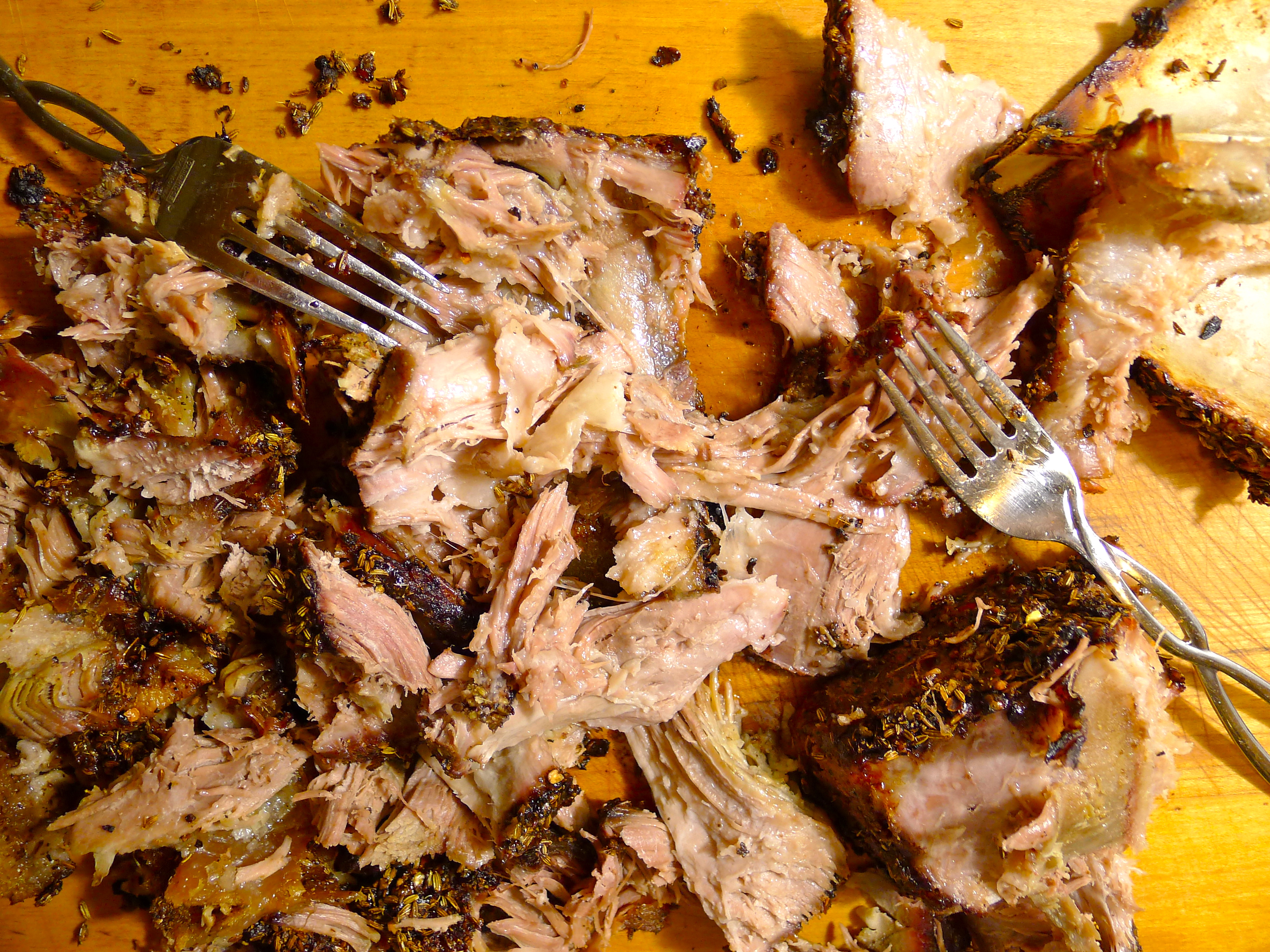
I’ve always been a little intimidated by porchetta. Traditionally, porchetta should be a giant slab of boneless pork roast covered with a thick layer of fat and skin. After crusting it with garlic, fennel, and wild herbs, it’s roasted low and slow until the skin is crackling on the outside, and gooey on the inside. The meat should fall apart in a sloppy, delicious mess in your mouth.

I don’t know why I have always been a hesitant to make it at home. Maybe it’s because I rarely think to buy such a large and fatty cut for myself. Or maybe it’s because I live so close to Sara Jenkins’ Porchetta, it just seems easier to leave the slow roasting up to professionals.

Though Jenkins does give a recipe for porchetta away on the restaurant’s site, this is actually a different one. This ridiculously easy recipe is from Epicurious, but it does take some advance scheduling before going for a long comfortable ride in the oven. Do plan ahead accordingly.

Because I used a bone-in cut instead of a boneless cut, the meat for this recipe will have a different texture and a little more give than porchetta normally does. However the flavors and fantastic fattiness are there. It is still heavenly to eat — which is the most important thing.

Porchetta is terrific crammed into ciabatta rolls, or even just spread on a plate with some nice contorni to accompany it.

Ingredients:

2 tablespoons of fennel seeds

1 tablespoon of kosher salt

2 teaspoons of black peppercorns

1 teaspoon of dried crushed red pepper

6 cloves of garlic, finely minced

1 2-3 pound bone-in pork shoulder (also known as a Boston Blade Roast, or bone-in Boston Butt) trimmed of over-hanging fat, but with its outer layer of fat intact

Olive oil

1 cup of Riesling, or another aromatic white wine

1/2 cup of chicken stock

Special equipment:

A spice or coffee grinder, or a mortar and pestle

A leave-in meat thermometer

How to prepare:

1. The night before, toss the fennel seeds in a pan set over medium-high heat until the they are toasted and fragrant. Transfer them to your spice grinder. Add the salt, the peppercorns, and the dried crushed red pepper flakes. Grind everything together to an even consistency, but not a powder. You are looking for a medium-coarse grind.

2. Using paper towels, pat the pork roast dry. Rub the finely minced garlic all over it. Rub the spice mixture in afterwards, pressing it into the meat so that it makes a nice and even crust. Wrap the roast up in a large piece of waxed paper, and refrigerate it overnight.

3. Preheat your oven to 450°. While your oven is heating up, remove the roast from the fridge, and let it come closer to room temperature.

4. Place the pork in a roasting pan, fat-side up. Drizzle it with olive oil. When the oven has come up to temperature, roast it for about 30 minutes before dropping the temperature to 300°. Continue to roast until the pork is nice and tender. This will take about 3 hours or so. The meat should register about 190°.

5. When the roast is done, remove it from the oven and let it rest for about 15-30 minutes. While the roast is resting, pour the fat and the juices from the roasting pan into a saucepan. Skim off as much fat as you can (this might be a little tricky, but do the best you can). Set the saucepan over medium-high heat, and add the wine and the stock. Whisk everything together, dissolving any crunchy bits you can. Reduce the sauce until you have about 3/4 of a cup. The sauce will be thin.

6. Pull the meat off of the bone with two forks, spoon the sauce over the meat, and eat lustily.