
I feel touched and honored to have been able to be a part of your wedding celebration. Thank you so much for sharing!
Much love to you both, D.
I feel touched and honored to have been able to be a part of your wedding celebration. Thank you so much for sharing!
Much love to you both, D.

CSA sign-ups for the fall have begun!
The upcoming distribution cycle will run every other Thursday from September to November.
Pick-up dates are as follows:
• September 8
• September 22
• October 6
• October 20
• November 3
• November 17
Pick-up will run from 4:30 to 7:00PM.
There will be two pick-up sites this round:
• Manhattan (with yours truly):
Jimmy’s 43 (43 East 7th Street, between First and Second Avenues)
• Brooklyn (with awesome Sam):
CrossFit Virtuosity Williamsburg (221 North 8th St, between Driggs and Roebling)

This is another great pasta salad recipe from Epicurious. I didn’t deviate from it too much. I changed some of the proportions for the dressing, and substituted chives for the green onions (sometimes green onions can be really overwhelming).
Also, the recipe calls for red cherry tomatoes and for red bell pepper, but as I prefer more contrasting colors, I opted for the deliciously sugar-sweet Sun Gold.
Ingredients:
For the dressing:
7 tablespoons of good extra-virgin olive oil
The juice of two lemons
The zest of two lemons
1 fat clove of garlic, grated
1 to 1 1/2 heaping tablespoons of coarse-grain Dijon mustard
For the rest:
1 pound of penne
1 pint of Sun Gold cherry tomatoes, quartered (or halved if they are small)
1 red bell pepper, seeded and diced
1 cup of crumbled French feta (I sometimes find Greek feta too salty)
1 bunch of chives, finely chopped
How to prepare:
1. Bring a large pot of salted water to boil. Add the penne and cook it until it is al dente.
2. Meanwhile, whisk the ingredients for the dressing together in a large mixing bowl. A Microplane grater is terrific for both the lemon zest, and for grating the garlic.
3. When the pasta is done, drain it and rinse it with cold water to cool it down quickly. Drain the pasta again and add it to the dressing, along with the tomatoes and the bell pepper. Toss all of the ingredients together, making sure that the pasta is well-coated. Add the crumbled cheese and the chives. Toss again. The cheese, the chives, and the vegetables should be evenly distributed throughout the salad. Adjust the seasoning if needed (depending on how salty the mustard and the feta are, you might not have to).
Pack it up for the party, or eat it immediately.


 Thank you, Lefty, for the wonderful view. And for being such an excellent host!
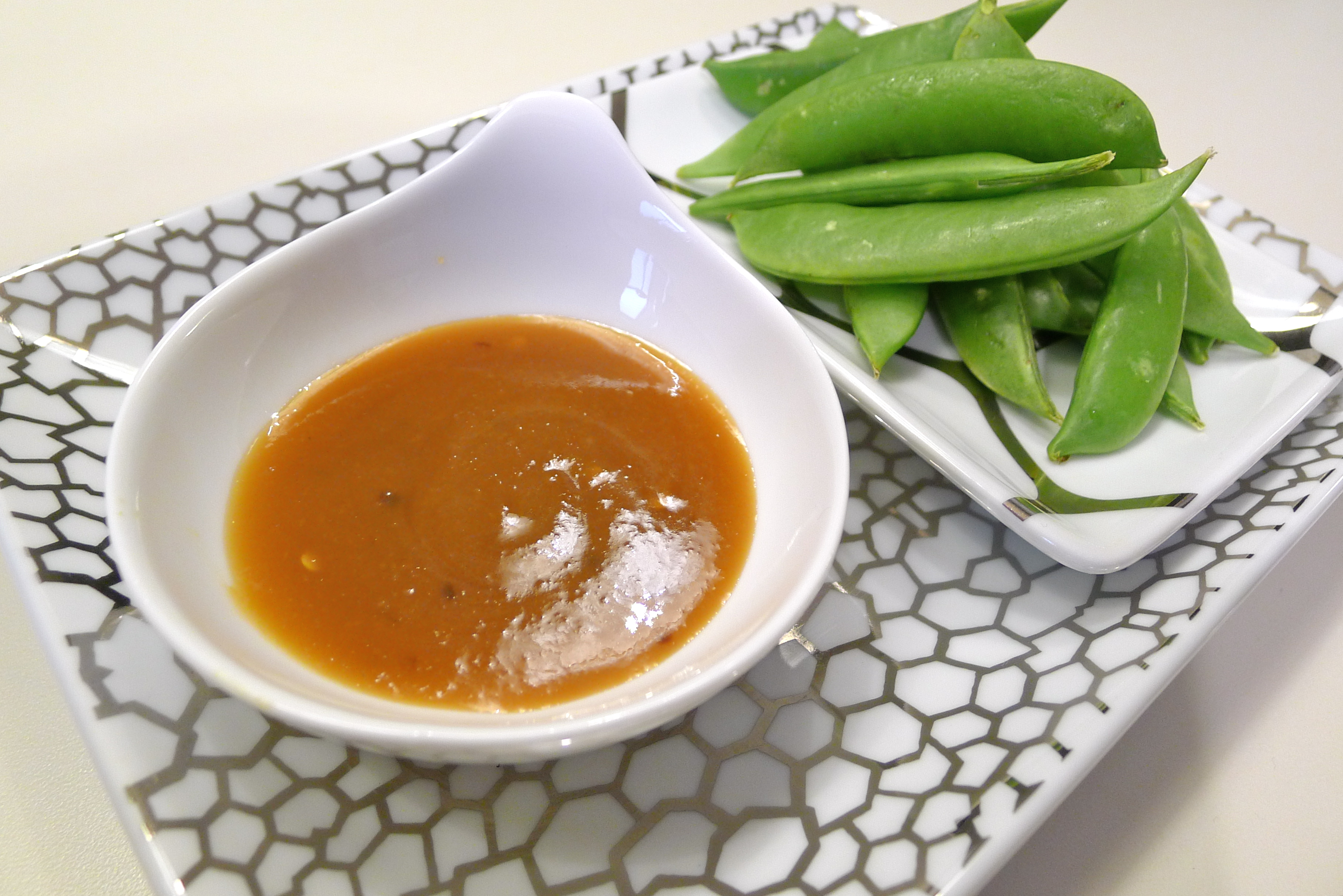
I recently made dinner for Laura at her apartment. Saddled with overwhelming piles of work, she seemed on the verge of exhaustion and in much need of some TLC. As I like playing personal chef, I was more than happy to oblige.
I didn’t have much for lunch that day and was scrounging around in her fridge for something to nibble on while cooking. She directed me to some miso dip that she had made earlier, and a nice little mound of snow peas. Maybe she hadn’t thought that I would eat all of her snow peas and inhale the dip like air . . . but I did.
Sorry, Laura.
This recipe is a riff on her riff on a recipe posted by blogger extraordinaire, Heidi Swanson. Heidi’s website (she has a cookbook too), 101 Cookbooks, is a treasure trove of delicious, healthy recipes that taste great and make you feel good. As the weather gets oh-so-slowly warmer, eating more fruits and vegetables sounds like a welcome and wholesome idea.
Ingredients:
3 ounces of white miso paste
3 ounces of red miso paste
1/4 cup of sake
1/2 cup of mirin
4 tablespoons of agave syrup
Red chili pepper flakes to taste
How to prepare:
1. Combine the miso pastes, the sake, the mirin, and the agave in a small saucepan. Bring the mixture to a boil over. Once the mixture has started to boil, reduce the heat and simmer it for about 20 minutes, whisking occasionally. You want the dip to thicken a bit.
2. Once it has thickened, add the chili pepper flakes. Remove the dip from the heat and let cool. The dip will keep in the refrigerator for between 1-2 weeks. Serve with fresh vegetables, blanched asparagus, anything really!

This is not a post about food.
It’s a post about good friends.
Great friends, actually, who refuse to let you wallow and who force you to penthouse parties with West African musical superstars. The bar was cash, but the love was free.
Laura and Melanie, thank you for the smokes, the shoulders, and the shared käsespätzle. You’re the best.
And for all of you in NYC: the incomparable, the amazing, the joyful Amadou and Mariam will be performing for free every Sunday of this month in the penthouse of the Cooper Hotel. If you want to rsvp, please do send me an email and I’ll forward along the information.

“Why,” my friend asked, “Are you taking such a huge bag with you to San Francisco when you are only going for three days?”
She has a point, I thought, but she doesn’t understand what’s in sunny California: lemons. Big, shiny, juicy, fabulous lemons. Meaty, fragrant, unsprayed suckers growing like weeds in everyone’s backyard.
Oh, and I guess my new godson is in California too 😉
Living on the East Coast, we get wonderful apples, but zero good citrus. Limes from Chile arrive bright green on the outside, and dry as popcorn on the inside. Lemons smell vaguely like styrofoam and are mouth-puckeringly tart — not in a good way. Even the Meyer lemons we get are a little overripe and slightly smushy.
So was I going to miss out on my golden (state) opportunity to bring back some excellent fruit? No way!
Thankfully, my best friend and her warm, welcoming family were more happy to accommodate. Her parents raided her uncle’s lemon trees and came out with a great big bag of fat fruit. Hooray! I must have been quite the sight at the baptism running around with a fresh lemon stuck under my nose.
And as I was packing to head back to the frigid northeast, my friend’s mother palmed a handful of super tiny, but ultra-perfumed orbs into my hand.
Calamondin, or calamansi, are used a lot in Filipino cooking. I wasn’t sure what to do with them, but I certainly was not about to let that stop me from finding out!
This recipe is from a terrific cooking blog called Coconut & Lime. Instead of wrapping the salmon in aluminum foil, I opted for my preferred parchment paper. Salmon en papillote, southeast Asian-style.
I’m also testing out a brand new camera!
Ingredients:
2 individual portions of center-cut salmon, bones and skin removed
1 small onion or shallot, very thinly sliced
1 small ripe mango, cut into thin strips
1-2 small Bird’s Eye Chiles, thinly sliced
1 1/2 teaspoons of coconut vinegar
The juice from a handful of calamansi oranges
Olive oil
Salt to taste
Special Equipment:
Parchment paper
Baking Sheet
How to prepare:
1. Preheat the oven to 350°.
2. Place the salmon portions in the center of a large sheet of parchment paper. Arrange the sliced onions evenly on top of the salmon, followed by the mango slices, and finally the sliced chiles. Sprinkle the salmon with the coconut vinegar and the calamansi juice. Drizzle olive oil over everything. Season with a shower of kosher salt to taste.
3. Pull the edges of the parchment paper up lengthwise. Roll the edges down together, making several folds as you go along. The paper should be snug against the salmon, but not too tight. Twist, or tie with butcher’s twine, the ends of each side so that you end up with a nice, neat packet.
4. Place the packet on your baking sheet seam-side up. Bake the salmon for 20 minutes. The fish should be fully cooked. When opening the packet, be careful to not burn yourself with the steam. Serve with steamed white rice.



Can anyone resist a big crunchy pile of chips and a bright red bowl of salsa?
I can’t.
It’s my weakness; I find the crunchy saltiness of the chips and the spicy sloppiness of the cool salsa irresistible.
Like everything else, I have been on the hunt for that perfect version.
This doctored-up Rick Bayless recipe comes darn close. It’s really better the next day too.
Ingredients:
2 pounds of plum tomatoes
3 jalapeño peppers, stemmed
1 medium white onion, sliced into thin rings
4 fat cloves of garlic
1 1/2 teaspoons of apple cider vinegar
The juice of 4 limes (maybe 5)
1 bunch of fresh cilantro, chopped (about 1 loosely packed cup)
1 small white onion, minced
Salt to taste
How to prepare:
1. Turn on your oven’s broiler.
2. While the broiler is heating up, spread the tomatoes and the jalapeño peppers out on a cookie sheet. Do not brush them with any oil. Broil them until their skins are blackened in spots and blistered in some parts. Turn the tomatoes and peppers throughout the cooking to make sure that all their sides are evenly colored. Remove the pan from the oven and let everything cool.
3. Set the oven to 425°. Spread the onions out on another cookie sheet, separating the rings. Tuck the garlic underneath the onions and roast in the oven until the onions are soft and starting to brown.
4. Using a food processor, process the onions, garlic, peppers and tomatoes together.
5. In a large bowl, combine the processed mixture with the remaining ingredients. You may want to add more lime juice, depending on how it tastes. Adjust the seasoning and serve.
A few years ago I read Amy Sutherland’s terrific book Cookoff: Recipe Fever in America. In it, she she follows groups of amateur chefs across the country as they compete in national cooking competitions. Two of the competitions featured in the book are the the big chili cookoffs in Terlingua, Texas: the larger Terlingua International Chili Championship run by the Chili Appreciation Society International, and the smaller, rowdier Original Terlingua International Frank X. Tolbert-Wick Fowler “Behind the Store” Championship Chili Cook-Off.
One day, when I work up the balls and enough chest hair to do so, I would love to fly into Midland and check out the competitions. Sutherland reports them to be macho, testosterone-driven affairs, full of “nudity and carrying-on — like Spring Break only in the high desert.” She is warned by others to not assume that the little old ladies there are grandmotherly (they drink Jägermeister, a lot of it, and will drink you into your grave). People paint their Coleman stoves with images of men “running out from an outhouse with flames shooting out of their behinds.” There are wet tee-shirt contests and lots of trash talk.
Maybe they’ve cleaned up a little bit since Sutherland’s book was published, but I was still about to find these and these on the web without difficulty.
The most important thing to know about chili is that there are rules. Strict, no-funny-business at all, rules.
“In competitive chili,” Sutherland writes, “There is only one bowl of red — meaning cubed meat and absolutely no beans — and you’d better not screw with it.”
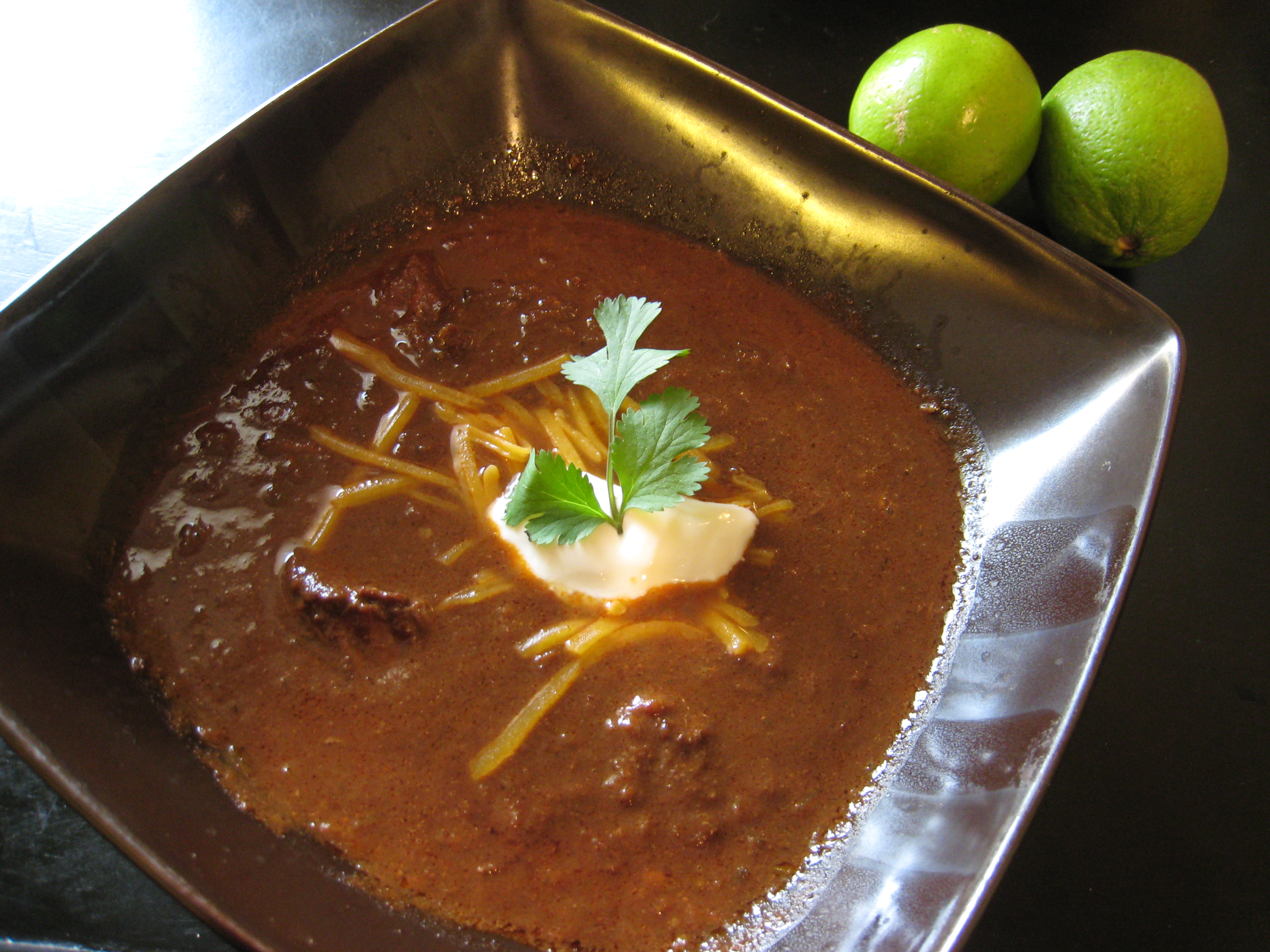
Ever since reading about these desert chili-heads, I have been dreaming of coming up with the ultimate recipe for the perfect bowl of red. My recipe is derived from fancy-panted Napa chef Michael Chiarello’s recipe, which means that from the get-go, there is a fair bit of “funny business.”
But it’s effing delicious.
I’ve played with the recipe for several years now and have managed to come up with a version that I adore that also feeds a hungry army of football fans sans légumes.
‘Cause if you know beans about chili, you know chili ain’t got no beans!
Ingredients:
6 pounds of beef chuck or sirloin, cubed
Freshly ground black pepper
Kosher salt
1 teaspoon of ground cinnamon, plus 2 teaspoons
2 teaspoons of ground cumin, plus 4 teaspoons
4 tablespoons of chili con carne seasoning blend, plus 4 heaping tablespoons
Masa harina
Grape seed oil
8 large red onions, minced
12 cloves of garlic, minced
8 jalapeño peppers, sliced thin with seeds and stems removed
6 ounces of tomato paste
4 teaspoons of dried oregano
1 (12-ounce) bottle of beer (ideally lager)
1 (12-ounce) can of fire roasted diced tomato in juices
2 quarts of chicken stock, divided
4.5 ounces of bittersweet chocolate, chopped
How to prepare:
1. Place the meat in a large bowl. Season liberally with salt and pepper. Add 1 teaspoon of the cinnamon, 2 teaspoons of the cumin, and 4 tablespoons of the chili seasoning powder, and 2 heaping tablespoons of masa harina. Mix well with your hands, making sure that all the meat is evenly coated with the spice/corn flour mixture.
2. Preheat a very large cast-iron Dutch oven on the stove over medium heat.* Add enough grapeseed oil to coat the bottom of the pan. Heat the oil until it is almost smoking. Add the coated meat, spreading it out evenly so that it covers the bottom in a single layer. Do not overcrowd the pan — you want the meat to develop a nice crust. When one side is nicely seared, turn each piece with tongs. Once all the sides are seared, remove the meat from the pan let it rest. You will probably need to sear the meat in batches, adding more oil if the pan starts to get dry. Leave the oil and juices in the Dutch oven to sauté the vegetables.
2. When the last batch of meat is done, add the onions and garlic quickly to the pan and sauté for 10 minutes over medium heat (this way, the nice crusty bits on the bottom of the pan don’t get the chance to burn). As they start to caramelize and get soft, scrape up the tasty brown bits stuck to the bottom of the pan. Add the jalapenos and cook for 4 more minutes until they are soft. Add the remaining 4 teaspoons of the cumin, 2 teaspoons of the cinnamon, the oregano, 4 heaping tablespoons of the chili powder, and the tomato paste. Stir to mix everything up evenly and sizzle the tomato paste a little. Stir in the diced tomatoes, beer, and 1 quart of chicken stock. Add the reserved meat and accumulated juices.
3. Bring the pot to a boil and then lower the heat to a slow simmer. You will need to cook everything until the meat is wonderfully tender, about four hours depending on how big your chunks of meat are. Periodically skim the top of the chili. As it thickens, add the remaining quart of chicken stock, a little bit at a time, to keep the liquid level and the consistency consistent. Once the meat is tender, add the chunks of bittersweet chocolate.* Stir until it all melts.
4. Serve topped with sour cream, cheese, and sprigs of cilantro or chopped green onions.
Notes:
• If you’re not making you own chili spice blend, make sure you buy one from a good spice supplier. Sometimes chili powder that you buy in a store is exactly that: one kind of chili, powdered. For this recipe, you want a spice blend. I like one that has some ancho chile in it. Penzey’s blends are wonderful, but for a little bit of real Terlingua, order online from Pendery’s.
• If need be, you can sear the meat in a large skillet, sauté the onions and garlic in it, and then transfer everything to a much larger pot before you add the liquids.
• I used a nice big chunk of Callebaut Bitterweet Belgian Chocolate. See? Lots of funny business here.
• My great friend, Gideon, brought over a bottle of Ghost Pepper Hot Sauce made from bhut jolokia, the hottest pepper in the world. It’s hot. Really, really hot. He put just a touch from the end of a skewer into my big bowl, and that was enough for me. If you are fan of lots of heat, I strongly recommend you give it a try. It adds a terrific, smoky dimension to this chili.
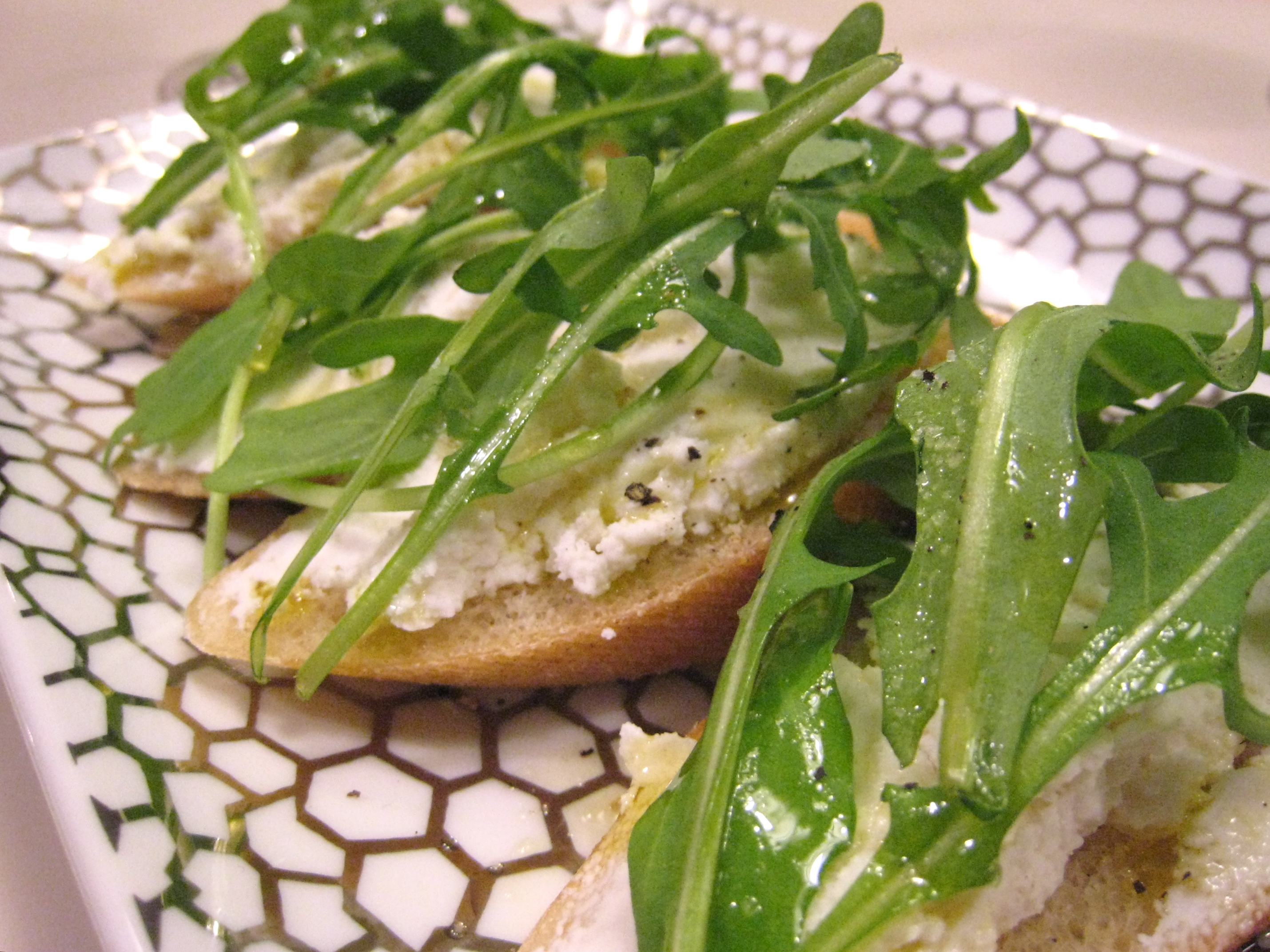
This combo comes courtesy of Salvatore Brooklyn, makers of some of the finest whole milk ricotta this side of the pond. You can even make your own ricotta as they have made their recipe available to all. It is ridiculously easy to do, tastes fabulous, and gives you crazy bragging rights when your guests coo, “Oh my gosh! You made this!?”
In a pinch though, you can use store bought ricotta. Just try to buy the best and creamiest you can. Whole milk please. Full fat = superior mouth-feel.
To assemble, top toasted bread with a large schmear of ricotta. Artfully arrange a few leaves of peppery wild arugula. Drizzle with some super duper extra virgin olive oil. Finish with a sprinkling of flaky Maldon Salt or Fleur de sel.
And isn’t the plate so pretty? A wonderful gift from a wonderful friend!
Homemade Ricotta
Ingredients:
1 gallon of whole milk, the fullest and fattiest that you can buy
A good, healthy pinch of salt
The juice of one lemon
Special equipment:
Cheesecloth
A kitchen thermometer (somewhat optional)
How to prepare:
1. In a large pot, heat the milk and salt over high heat. Heat the milk until it reaches 190°, or you can just watch it until it reaches a good simmer (that’s about 180-190°). Turn off the heat and add the lemon juice. Stir the lemon juice in very gently and slowly. You just want to distribute the acid evenly. A vigorous stirring will break the curds up a lot. Let the pot sit undisturbed for 5 minutes or so.
2. Line a colander with cheesecloth. Place the cheesecloth-lined colander over a large bowl to catch the whey. Pour the curds and whey into the colander and let the curds strain on their own. Don’t squeeze the curds or press down on them. You can let it strain for an hour, but when the cheese looks like the consistency that you like (some people like looser ricotta, some people like denser ricotta), turn the cheese out of the cheesecloth and use it right away, or transfer it to an airtight container and refrigerate it until you want to use it.
 coolcookstyle