Strawberries Dipped in Chocolate Caramel Sauce


Chocolate-covered strawberries get a bad rap. It’s perhaps not so surprising: the majority of ones in this country are sold in February, when strawberries are completely out-of-season.

Now I have nothing against partaking in enrobed fruit for Valentine’s Day, but strawberries bought in the middle of winter are usually shipped from South America, freakishly oversized, and stunningly tasteless despite their glossy red exteriors.

The chocolate sarcophagus they come in isn’t always very appetizing either.

But it is finally springtime — officially the start of strawberry season. Now is the time to see that chocolate-covered strawberries done right can be a sinfully sloppy mess.

How can you tell if a strawberry is ripe?

Smell it. Does it smell like a strawberry? No? Put it down. Walk away. Yes? Is it a full-on, luscious, musky strawberry-smell? Buy. Now. Buy buckets of them.

This sauce is fantastic. So easy and so versatile. Dredge fruit in it, or even better, drizzle warm gobs of it over vanilla-bean gelato. Or just eat it out of the pot. It’s fabulous.

Ingredients:

1 pint of ripe strawberries, washed and gently patted dry

1/4 cup of sugar

1/2 cup of heavy cream

2 ounces of semi-sweet chocolate (no more than 70% cacao), broken into smaller pieces

1/8 teaspoon of sea salt

How to prepare:

1. Cook the sugar in a small dry saucepan over moderately high heat, undisturbed, until it begins to melt, about 2 minutes. Continue to cook, tipping the pan from one side to the other, until the sugar has melted into a deep golden caramel, about 1 to 2 minutes. To help visualize this, here is a handy profanity-free video with Gordon Ramsay.

2. Remove the caramel from the heat and carefully pour in the cream. The cream will steam and bubble vigorously. Once the bubbles begin to subside, return pan to moderately low heat and cook, stirring or whisking constantly, until the caramel has dissolved. If the caramel does not seem to dissolve completely, add 1 to 2 teaspoons of water at a time, stirring, until it has dissolved.

3. Turn off the heat and continue to stir or whisk the caramel to cool it down a little bit. Add the chocolate and the salt. Stir or whisk the chocolate into the caramel. The sauce should be thick and glossy when you are finished.

4. Dip the strawberries in the sauce and arrange them on a plate. Serve them to someone you want to make happy.
Very Easy Macaroni and Cheese


Let’s try this again.

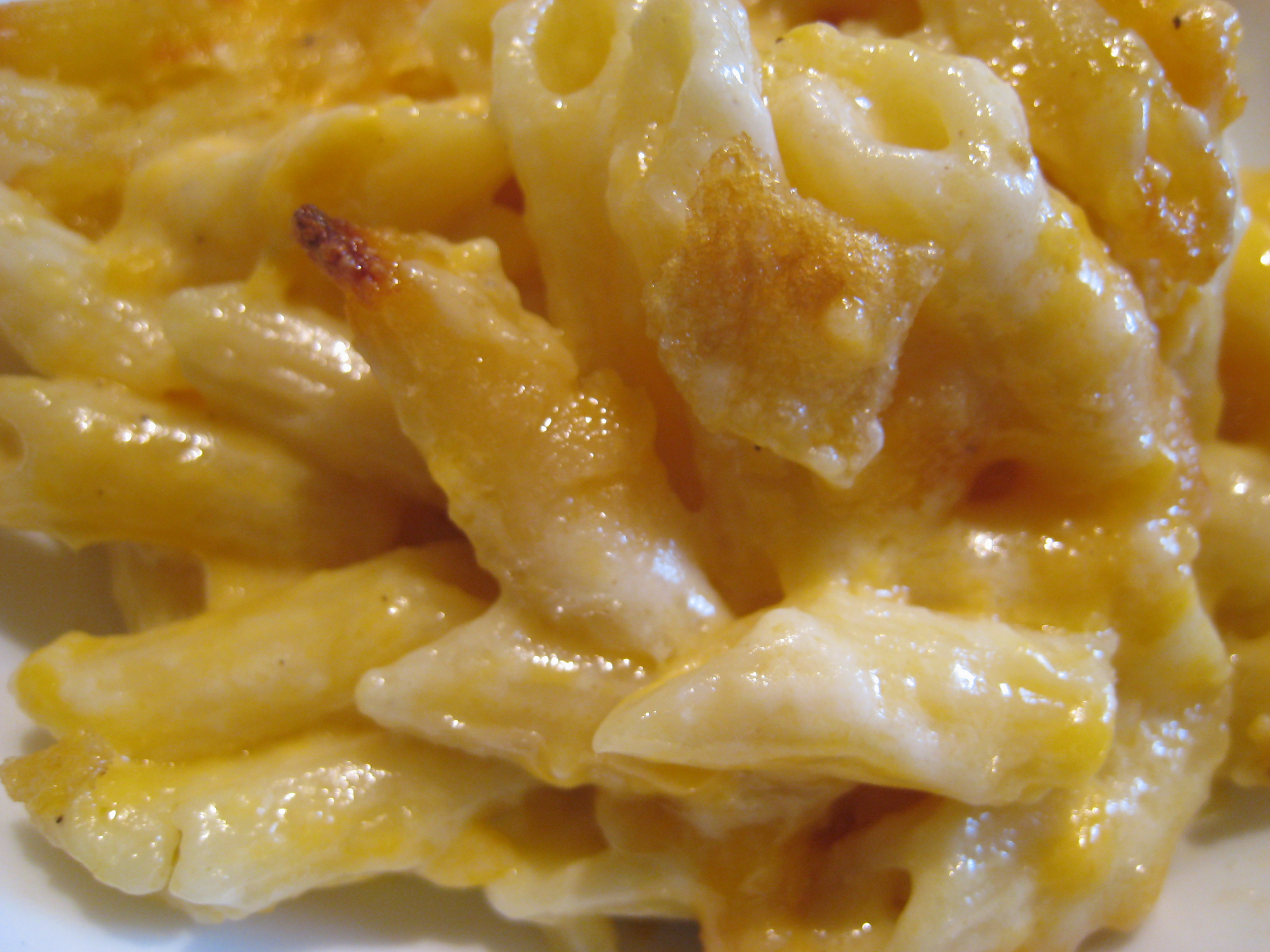
After my brothers poo-pooed my mac and cheese last year, I tried another version this year for the holidays. This time I only used pre-shredded Cheddar, Monterey Jack, and Parmesan — nixing the fancy schmancy Gruyère and smoked mozzerella that are so near and dear to my heart.

And the Parmesan? I used the real stuff. The nutty, fragrant, pungent stuff. A great big wedge of it. To fake out my family, I covertly grated it and surreptitiously snuck it into an empty green Kraft shaker bottle.

Ha! Take that picky eaters!

My brothers also have an aversion to bread crumbs (?!) which led me to make a quick substitution: crushed-up potato chips.

The result? Super easy. Super creamy. A little bland, but the dish was scraped clean.

Score!

Ingredients:

6 tablespoons of unsalted butter

1/4 cup of all-purpose flour

About 4 cups of whole milk, chicken stock, cream, or a mixture of all three

Salt and pepper to taste

1 pound of your favorite shape of pasta

8 ounces of shredded sharp Cheddar

4 ounces of shredded Monterey Jack

4 ounces of freshly grated Parmesan cheese

1 cup of crushed plain potato chips

How to prepare:

1. Preheat the oven to 350°F. Butter a 3- to 4-quart gratin dish or another shallow baking dish.

2. In a kettle of salted boiling water, cook macaroni until just al dente. Drain well.

3. In a heavy saucepan, melt just 6 tablespoons butter over moderately low heat. Add the flour and cook the roux, stirring with a wooden spoon, for about 3 minutes. Add the milk, stock, or cream, a little bit at a time. Don’t stop stirring. Slowly add more liquid until you have roughly 4 to 4 1/2 cups of sauce. Bring the sauce to a boil. Reduce the heat and simmer, stirring the sauce regularly, until it has thickened. Add salt and pepper to taste.

4. In a large bowl, combine the macaroni, the sauce, the shredded cheeses, and Parmesan. Transfer the macaroni mixture to the prepared dish and spread it out evenly.

5. Sprinkle crushed chips over the top of the macaroni and cheese.

6. Bake the macaroni in the middle of oven for 25 to 30 minutes, or until golden and bubbling. Let rest for about 10 minutes before serving.

Fresh Sage and Onion Dressing

Every Thanksgiving, I try a new recipe for stuffing or dressing. I’ve done it all — wild rice, pears and butternut squash, pancetta and chanterelles, sausage and fennel — and every year I’m happy, but never thrilled with the result.

In pursuit of a recipe that I can love and look forward to making every year, I decided to go very traditional this Thanksgiving: sage and onion.

I adapted this recipe from one originally published in 1975, and republished in Gourmet Magazine (RIP) in 2002. It calls for a whopping cup of butter! That’s two whole sticks! As much as I love butter, I really thought the amount was excessive; I wanted light and fluffy dressing, not greasy, leaden bread.

I also swapped the requested amounts of bread. I like cornbread stuffings, so instead of the asked for 8 cups of white bread and 4 cups of cornbread, I opted for 8 cups of cornbread and 4 cups of white bread. Don’t worry so much if it ends up being something more like 7 and 5, or 6 and 6. As long as you have a total of 12 cups of bread crumbs, it will be fine.

Gourmet’s recipe calls for you to make your own buttermilk cornbread. I suppose you could just use store-bought cornbread, but the recipe they recommend is so easy and fool-proof that I strongly urge you to try it. It makes a tremendous difference in flavor.

I think that in assembling the dressing, you could even reduce the amount of butter even more without any reduction in luxury of taste. I ended up using more stock than specified in the original recipe. I would say add a cup, and then more stock a little bit at a time, until the dressing is as moist as you would like. The recipe didn’t call for the addition of any cheese, but I think a good cup of Parmesan would go well here.

Ingredients:

8 cups of coarsely crumbled buttermilk corn bread*

4 cups of coarse fresh bread crumbs (from a small white loaf, crust removed)

1/4 cup of finely chopped fresh flat-leaf parsley

3 tablespoons of finely chopped fresh sage

1 teaspoon of salt

1/2 teaspoon of black pepper

1 sticks (1/2 cup) of unsalted butter

2 medium onions, finely chopped (about 1 1/2 cups)

1 cup of chopped celery

2 large eggs, lightly beaten

1 cup of turkey or chicken stock

1/2 cup of heavy cream

How to prepare:

1. Preheat the oven to 325°F.

2. Spread all the bread crumbs out in 2 shallow baking pans and bake until dry, about 15 minutes total.

3. Briefly cool the crumbs in the pans and then transfer them to a large bowl. Stir in the parsley, sage, salt, and pepper.

4. Melt the butter in a large heavy skillet over moderate heat. Add the onions and cook until the onions are softened, about 8 to 10 minutes. Add the celery and cook for about 5 minutes. Transfer the vegetables to the bowl with the crumbs and toss well. Add the eggs, stock, and cream and toss well. Transfer the stuffing to a buttered, shallow baking dish. Bake, covered, in the middle of the oven for 30 minutes, then uncover and bake until browned, about 30 minutes more.

Note:

You can assemble the stuffing 2 days ahead. Chill it covered, unbaked. Bring it to room temperature before baking. If reheating or baking later, you might want to sprinkle some more stock over the stuffing before putting it in the oven.

Buttermilk Corn Bread

Ingredients:

1 cup of all-purpose flour

3/4 cup of yellow cornmeal

1 1/2 teaspoons of baking powder

1/2 teaspoon of baking soda

1/2 teaspoon of salt

1 cup of well-shaken buttermilk

2 large eggs

1/2 stick (1/4 cup) of unsalted butter, melted and cooled

1/2 teaspoon finely chopped fresh sage

How to prepare:

1. Preheat the oven to 425°F.

2. Whisk together the flour, cornmeal, baking powder, baking soda, and salt in a large bowl.

3. Whisk together the buttermilk, eggs, butter, and sage in another bowl. Add this mixture to the flour mixture. Stir everything until just combined. Spread the batter evenly in a buttered 8-inch square baking pan and bake in the middle of oven until golden, about 25 minutes.

4. Cool the pan on a rack. Once cooled, coarsely crumble the bread. The corn bread can be made and crumbled up to 3 days ahead, and kept in a sealed plastic bag at room temperature.

Thanksgiving Update: A Tribute in Pictures


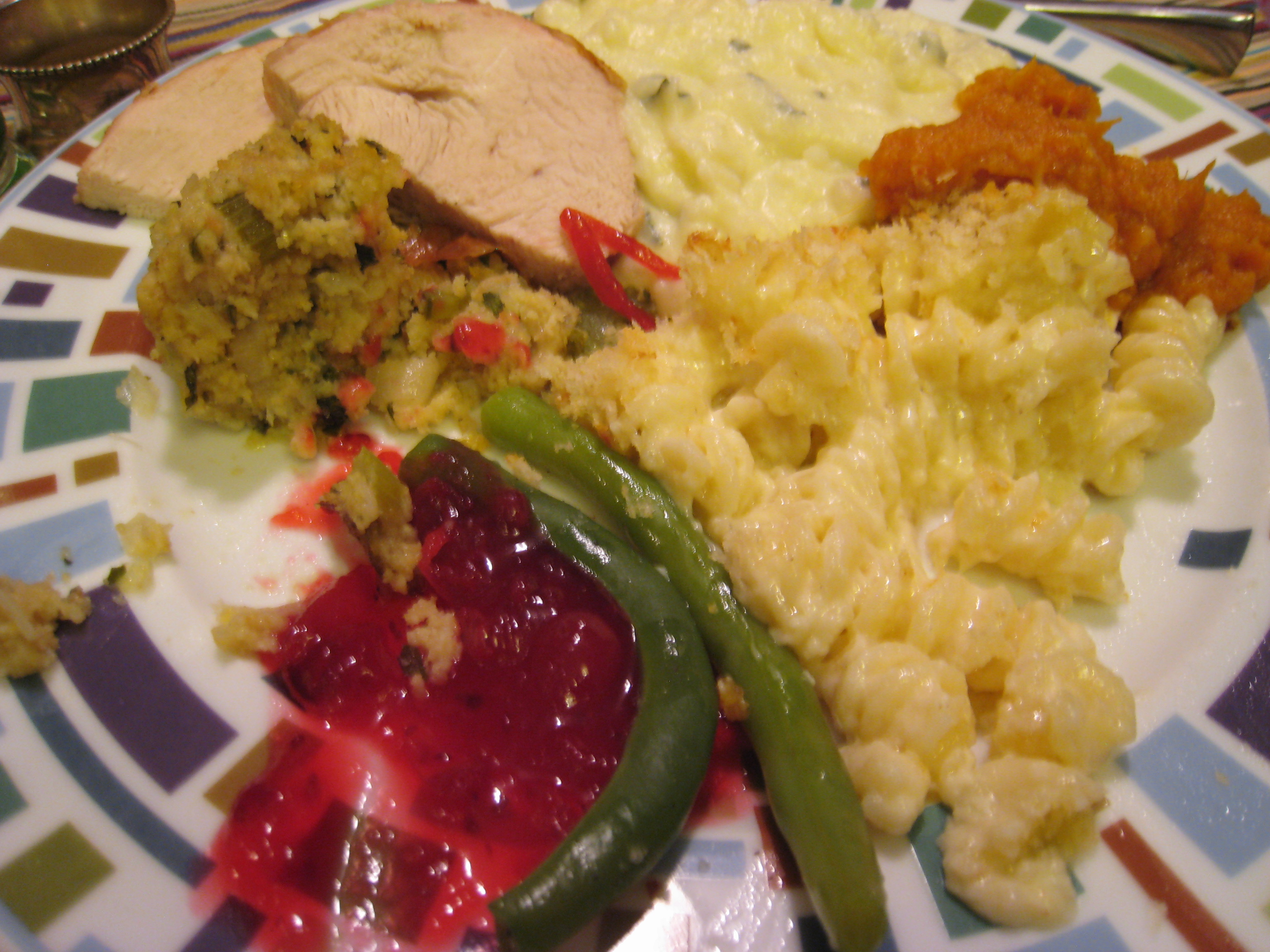
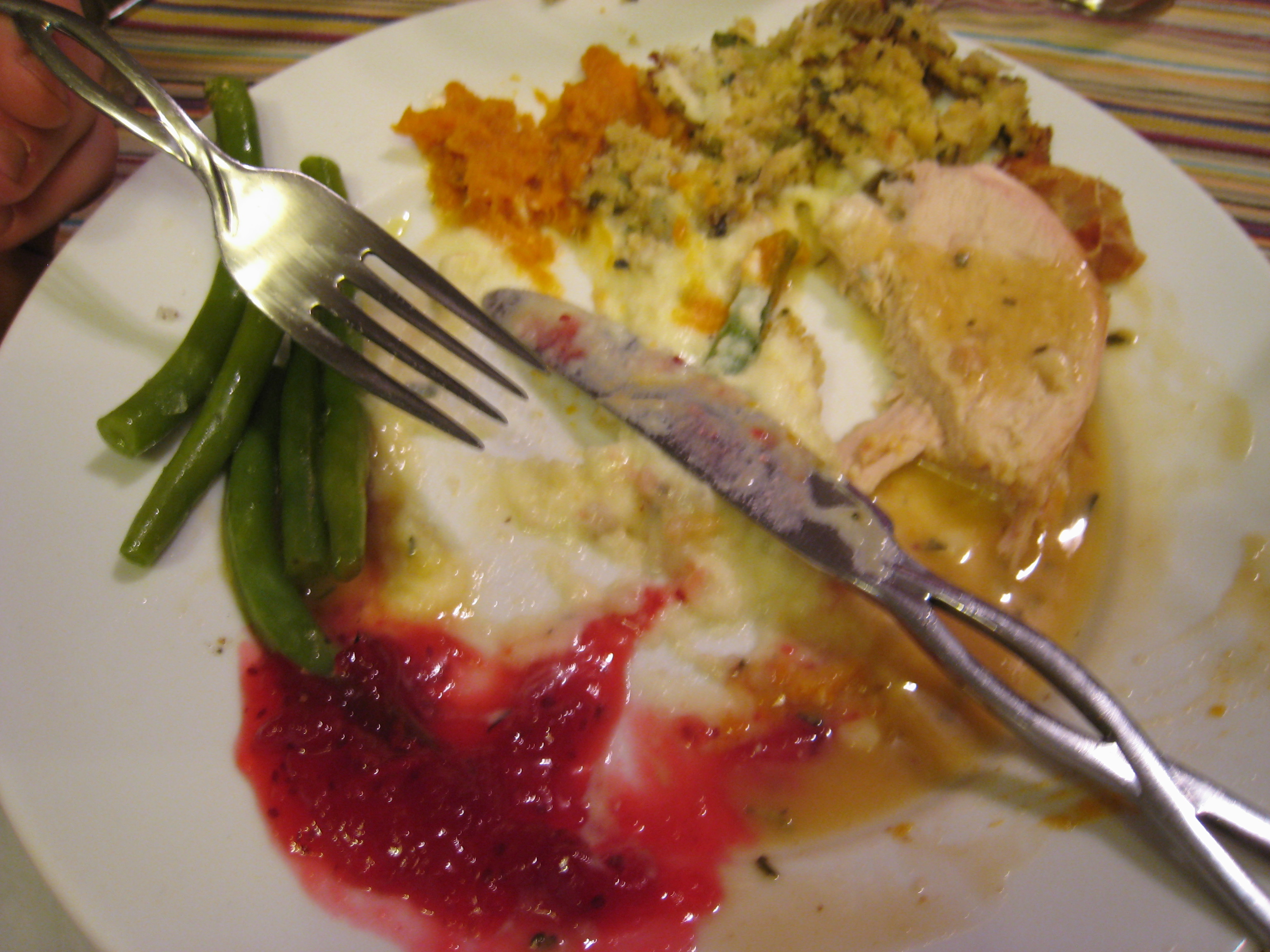
Thanksgiving dinner for nine guests was a great success!

As promised, here are some of the pictures from the evening. As we get closer to the next big calendar meals —Christmas Eve Dinner, Christmas Day Lunch, and New Year’s Nibblies — I’ll be posting recipes from Thanksgiving that can be easily recycled for the Christmas menu.

Thank you dear friends for the great booze, great (bacon) chocolates, and great company!

And yes, I do love Thanksgiving so much that I own napkins embroidered with turkeys.

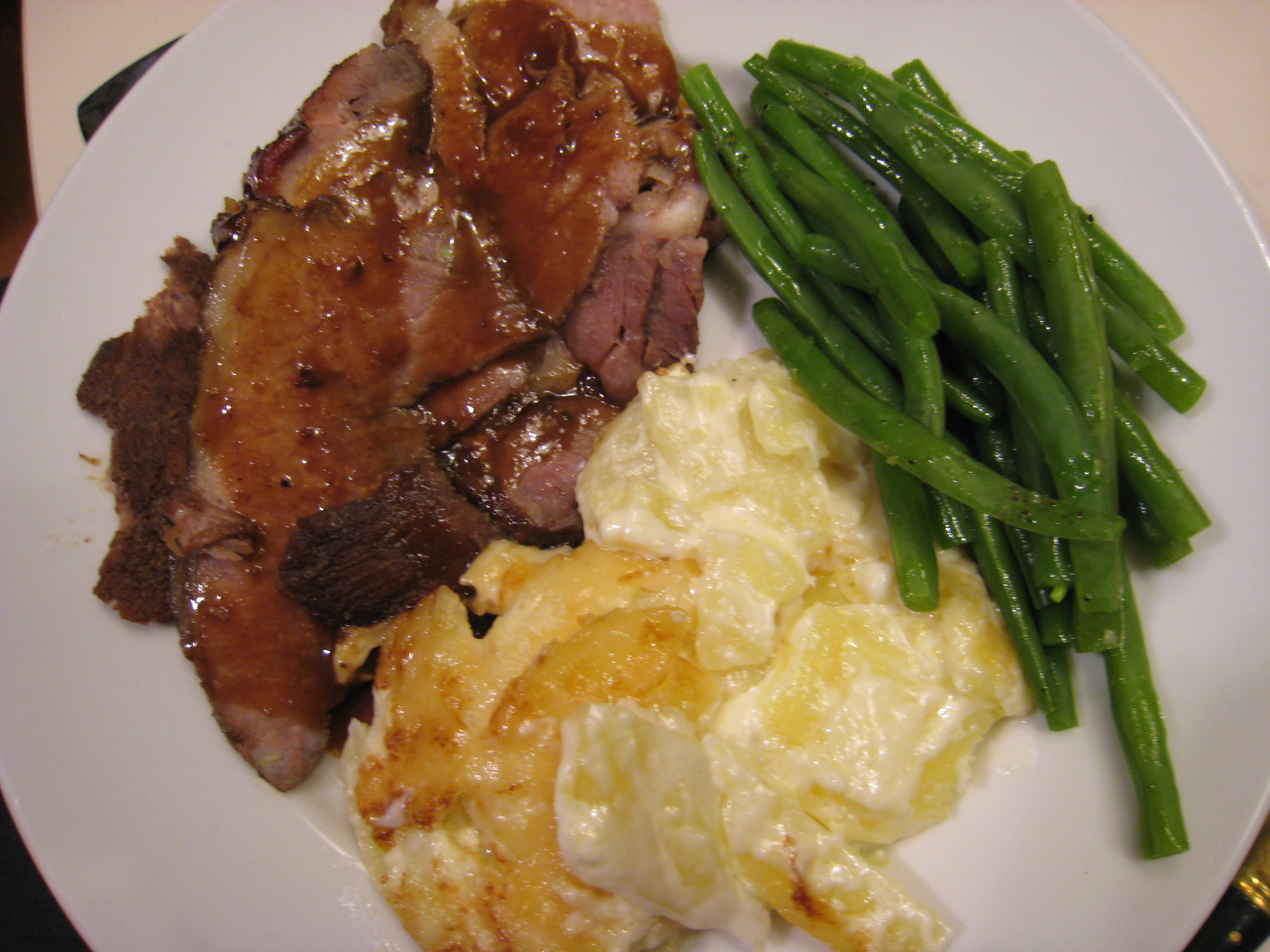
Holiday Ham with Pomegranate Molasses, Black Pepper and Bourbon Glaze


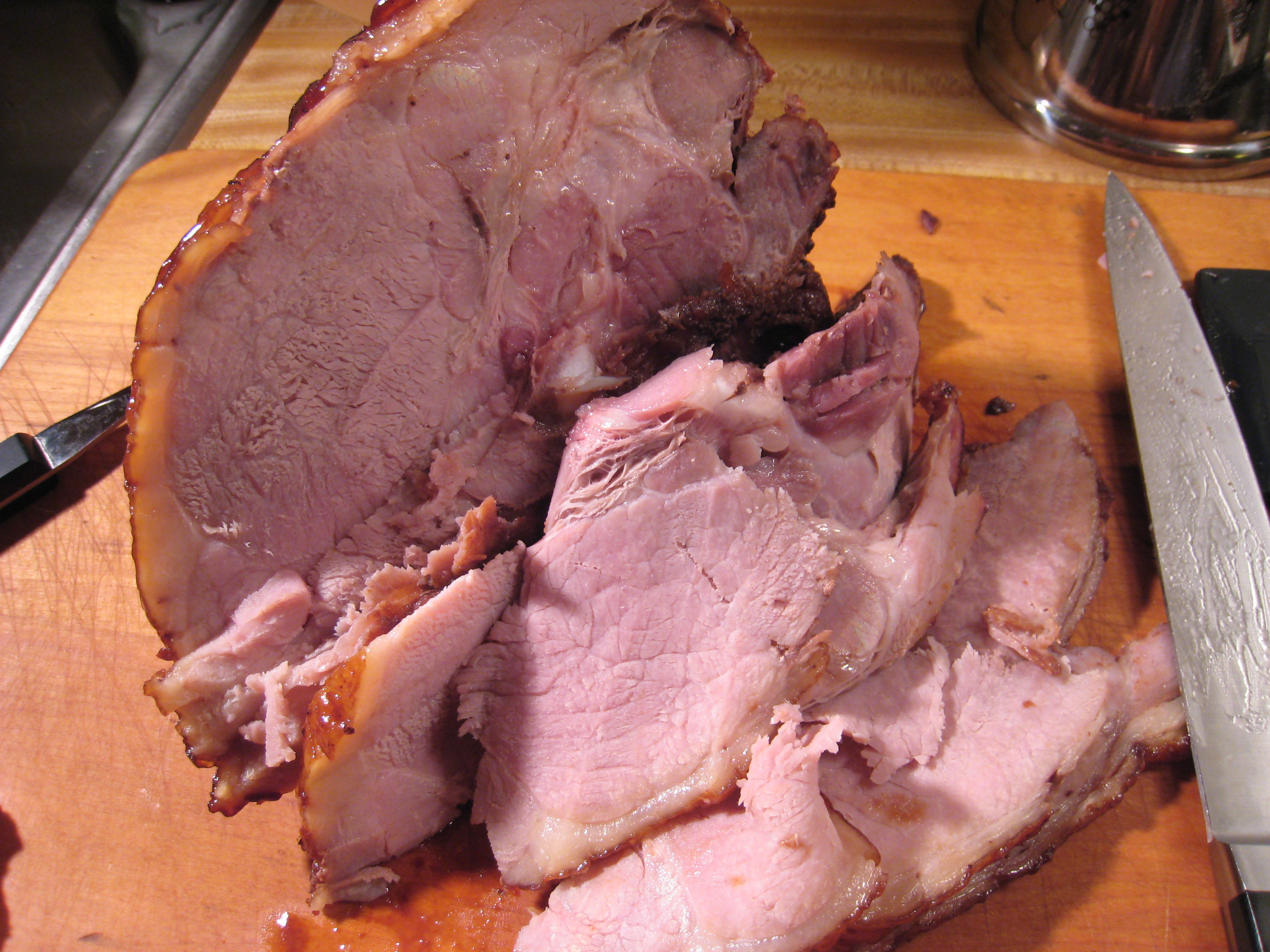
There was a special treat in the CSA basket last week: a beautiful ham.

Growing up, hams in my household were always honey-baked affairs, spiral-cut and gifted by friends and relatives who came to the house bearing boxes of See’s Candies. I don’t think I ever remember my parents baking a ham themselves, so this was a new experience for me.

What to do with a lovely ham? When Tina from High Point Farms suggested a glaze, something in clicked in my mind that I had filed away in my mental “To Cook” folder: pomegranate.

I have been seeing crates of pomegranates lately in the market. ‘Tis the season!

Though native to ancient Persia, the pomegranate figures prominently in the Greek myth of Persephone. Dear Persephone, minding her own business in a field, is abducted by her uncle Hades and spirited away to the underworld to be his bride. Overwrought with sorrow, her mother Demeter, Goddess of the Harvest, plunges the Earth into brutal winter. With nothing growing, Zeus sends Hermes to demand that Hades return her daughter to her. But not without caveats : Persephone can only return if nothing — no food nor drink — from the Underworld has passed her lips. Good Persephone had indeed been denying herself both, but when presented with a gorgeous pomegranate, she is unable to resist and swallows six ruby-red seeds. For this, she is allowed to be reunited with her mother for 6 months out of the year — 6 glorious months filled with sunshine and green, growing things — before returning to Hades, leaving her mother’s sadness to expand over the cold and frigid earth.

Such a story! To be seduced by a pomegranate! Certainly something to think about as the ham bakes, filling the apartment with warm, cuddly smells of sweet spice and exotic fruit. Maybe, I wondered as I basted another candy-colored layer onto the ham, it was worth it after all?

This recipe is from the terrific food blog, Food 52. It calls for pomegranate molasses, which I assume is easily available in most ethnic and specialty food markets. Actually, I wouldn’t know because I found it even easier to just make my own. You can too. The recipe is super easy and doesn’t require much attention, leaving you free to mind other things.

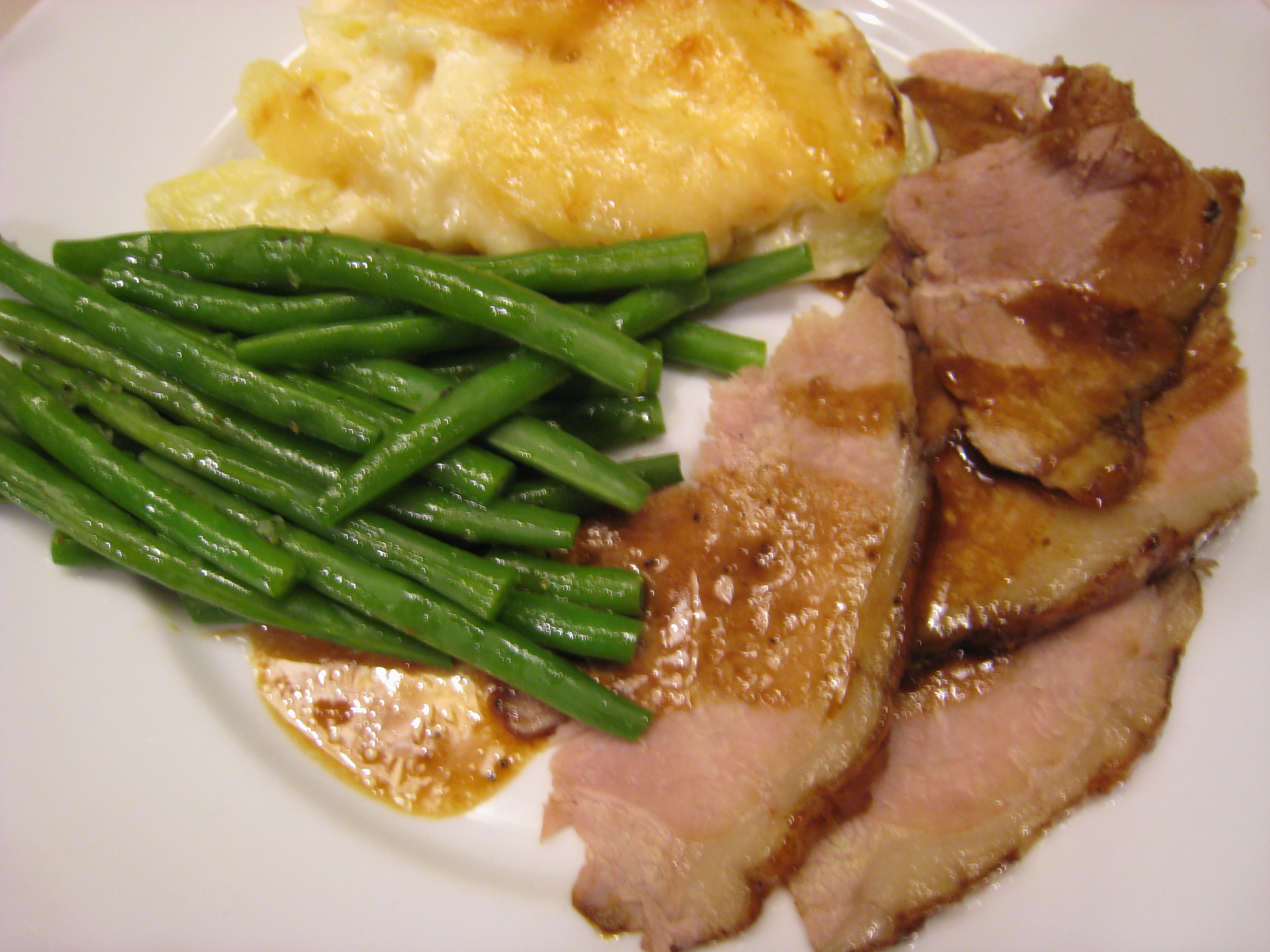
The glaze is spectacular. So interesting, it is tart, tangy, sweet and smoky all at once. Don’t skip reducing whatever remains into a quick pan sauce and drizzling it with abandon on top of your pearly pink slices of ham. We served it with a golden potato gratin and some blanched green beans.

Ingredients:

1 bone-in ham roast, about 3 lbs.

3/4 cups of pomegranate molasses*

1/4 cup of Dijon mustard

2 tablespoons of bourbon

1 tablespoon of freshly ground whole black pepper

1 teaspoon of ground allspice (optional)

1 teaspoon of kosher salt

How to prepare:

1. Let the ham come up to room temperature. Plan on about an hour before cooking.

2. Preheat the oven to 325 F.

3. To make the glaze, combine the pomegranate molasses, Dijon mustard, bourbon, pepper, allspice and salt in a bowl and whisk until well-blended.

4. Place the ham, fat side up, in a roasting pan. Score the fat in a cross-hatch pattern without incising the meat. Generously baste the ham with the glaze. Bake it in the oven, basting occasionally, until the internal temperature of the ham is 120°. The ham should be a deep golden brown and crusty at this time. If not, increase the heat to 450° and continue to bake for a few minutes longer, keeping an eye on it so it doesn’t burn. Remove the ham from the oven and transfer it to a cutting board. Let it rest 20 minutes before carving.

5. Transfer the remaining basting sauce to a small saucepan along with the skimmed pan juices. Simmer everything briefly to thicken it and burn off the alcohol. Slice the ham and serve with the sauce drizzled on top.

Note:

To make you own pomegranate molasses, combine 4 cups of 100% pomegranate juice (it can be from concentrate, just be sure to look at the label closely to make sure that the juice is not a blend), 1/2 a cup of sugar, and the juice of one lemon in a saucepan. Stir the mixture to dissolve the sugar and bring it to a boil. Lower the heat to medium-low and cook until everything has reduced to about a cup of liquid. You don’t really need to stir it at all. This should take about 60-70 minutes and you should end up with a thick syrup. Let the molasses rest for about 30 minutes. It should thicken a little more as it cools. Transfer the molasses to a covered container. It should keep in the fridge for about 6 months.

Maple Syrup Sweet Potatoes Topped with Tiny Marshmallows


The first time that I ever saw Gary Vaynerchuck was on Conan O’Brien. Brought on the show to teach Conan how to taste wine, he gagged his way through a routine as slap-stick as it was slap-shtick. As I watched him swallow glugs of Sauvignon followed by mouthfuls of fresh grass, I thought to myself, “Is this guy for real?”

Vaynerchuck has since built himself a sizable empire of influence. I read somewhere that he is the most followed wine critic after Robert Parker. I can’t speak to whether or not those following him are doing it for the wine or the antics, but I can say that this recipe, adapted from one in Food and Wine’s feature on him last month, is the best that I have for the holidays. The dark maple syrup rounds out the nuttiness of the roasted sweet potatoes, and the kick of cayenne is divine.

Ingredients:

9 sweet potatoes, about 12 ounces each

1 tablespoon of vegetable oil

1 stick of butter

1/3 of a cup of dark maple syrup

3/4 teaspoon of ground cinnamon

Salt to taste

Cayenne pepper to taste

1 1/2 – 2 cups of mini marshmallows.

How to prepare:

1. Preheat the oven to 350°. Set a sheet of aluminum foil on top of the middle rack. Rub the sweet potatoes all over with oil. Prick each one evenly on all sides with a fork. Roast the potatoes directly on top of the foil for about an hour, or until easily pierced with a paring knife. Remove the potatoes from the oven, and let them rest until they are cool enough to handle.

2. Split each potato lengthwise and peel the skin off of each half. Put the peeled potatoes in a large saucepan that can accommodate them all. Using a potato masher, mash the potatoes over gentle heat. With a wooden spoon, stir in the butter, maple syrup, cinnamon, salt and cayenne to taste. Continue stirring until the potatoes are smooth and hot.

3. Spoon the potatoes into a 9 x 9 dish.* Top with the mini marshmallows. Bake the potatoes in the oven for about 10-15 minutes, or until the topping is nice and browned. Alternatively, you could also place the dish under the broiler and broil the top until the marshmallows are toasted.

Note:

You can make the dish ahead too. Bring the mashed sweet potatoes up to room temperature before topping it with the mini-marshmallows. Reheat the dish in the oven until the potatoes are hot and the marshmallows are browned, about 20 minutes at 350°.

Pumpkin Cheesecake with Brown-Butter Pears


This recipe is from this month’s issue of Food and Wine magazine.

Though it seems like a lot of work, the cheesecake comes together quite quickly and has a incredibly light and refined texture. Browning the pears in butter took longer than the recipe specified (maybe I should have not been so lazy and divided up the pears into batches), but they were still a delicious topping to have.

In the future, I might experiment with some kind of Concord grape topping instead. Purple and orange can look so nice together, and the punchier grapes might be the tangy hit of acid that can turn a great dessert into something sublime.

Ingredients:

For the cheesecake:

8 ounces of gingersnap cookies

2/3 of a cup, plus 2 tablespoons of sugar

Salt

2 tablespoons of unsalted butter, softened

12 ounces of cream cheese, softened

1 cup of canned pumpkin puree

1/2 teaspoon of pure vanilla extract

2 large eggs

1/4 cup of all-purpose flour

1/8 teaspoon of ground cinnamon

A pinch of freshly grated nutmeg

For the brown-butter pears:

4 tablespoons of unsalted butter

3 large, ripe Bartlett pears, peeled and cored*

1 teaspoon of sugar

How to prepare:

1. Preheat the oven to 350°. In a food processor, pulse the gingersnaps with 2 tablespoons of the sugar and a pinch of salt until fine crumbs form. Add the softened butter and process until moistened. Using your fingers, press the gingersnap crumbs into the bottom of a buttered 9-inch springform pan in an even layer. Bake the crust for about 10 minutes, until it is lightly browned. Let the crust cool slightly, then wrap the the bottom of the pan tightly in aluminum foil so it’s watertight. You might need to overlap several sheets to make sure that you have everything covered and sealed. Set the pan in a large, deep skillet or a small roasting pan.

2. Using a paper towel, wipe out the food processor bowl. Add the softened cream cheese, pumpkin puree, vanilla extract and the remaining 2/3 cup of sugar to the food processor bowl and process for about 30 seconds until smooth. Add the eggs and pulse to blend. Add the flour, cinnamon, nutmeg and 1/2 teaspoon of salt and process for about 30 seconds, or until smooth.

3. Carefully pour the pumpkin filling over the gingersnap crust. Set the skillet in the oven and carefully pour in enough hot water to reach halfway up the side of the springform pan. Bake the cheesecake for about 50-55 minutes, until the filling is barely jiggly in the center. Carefully transfer the skillet to a rack and let the cheesecake cool. Remove the aluminum foil. Run a sharp knife around the edge of the cheesecake and refrigerate the cheesecake until it is firm, at least 4 hours or overnight.

4. Cut the peeled and cored pears into thin wedges with a sharp knife. In a large skillet, cook the butter over moderately high heat until it is lightly browned and nutty-smelling, about 3 minutes. Add the pear wedges and cook, turning until they are softened and lightly browned. Add the sugar and cook, turning until the pears are more browned and glazed, about 1 minute longer.

5. To serve, remove the springform ring. Cut the pumpkin cheesecake into wedges and serve with the warm pears.

Tips:

To easily core a pear, cut the pear in half and use a melon baller to remover the core.

This cheesecake can be refrigerated for up to 3 days. Warm the pears up on the stove before serving.

Cranberry Sauce with Grand Marnier and Candied Orange Peel


Cranberry sauce from scratch is so easy to make, and tastes so much better, that I have always wondered why anyone bothers with the sauce out of a can.

People do love the canned stuff though.

Shopping for Thanksgiving dinner with my boyfriend became an exercise in Abbott & Costello-esque absurdity as he kept putting a can of jellied cranberry sauce in the cart, and I kept removing it and putting it back.

“But it has rings that show you where to slice it!” he whined as I removed the can one last time.

Now, I must admit a fondness for tubular food: sausages, Boston Brown Bread, cannolis. Even the occasional Twinkie finds its way down my gullet about once a year.

But if you have ever had whole berry, home-made cranberry sauce, you know how really wonderful this condiment can be. No longer an afterthought plopped out of metal cylinder, real cranberry sauce can bring just the right hit of acid to the richness of the assembled dinner plate. Done right, it smells like the holidays: candied citrus, cloves, cinnamon. All warmth, sugar, spice, and everything nice.

The very basic recipe involves just three ingredients: cranberries, water, and sugar. It is essentially jam, which sounds intimidating to make but really isn’t.

To that, there are nearly endless variations. Feel free to play with it. No Grand Marnier? How about some rum? Or brandy? Try O.J. No orange peel? Got a lemon? Nope? No problems. Apples? Why not! Raisins? Throw in a handful for fun. Just feel your way through it. It will taste marvelous, I assure you.

And the other beauty? It can be made days before dinner, leaving you free to worry about something else. Even better, as the flavors meld together, it will be much yummier on day 3 than day 1.

Ingredients:

12 ounces of fresh cranberries

1 cup of water

1 cup of sugar

The zest from 1 untreated, organic orange*

1/4 cup of Grand Marnier or Cointreau, plus 1 tablespoon

3-4 whole cloves

1 cinnamon stick

A pinch of salt

Special equipment:

A citrus zester

How to prepare:

1. In a medium saucepan over medium-high heat, combine all the ingredients. Bring everything to a boil, stirring continuously to dissolve the sugar. Once the mixture begins to boil, reduce the heat so that it is at a slow, constant simmer. Continue to stir so that it doesn’t burn. As the sauce comes together, you might notice some foam or scum that appears on the surface. Don’t worry about skimming it off as it will dissipate as the sauce thickens.

2. Continue to simmer and stir until the mixture begins to jell. If you are slightly unsure what this means, you can put a small plate in the fridge and periodically test the thickness of your sauce by putting a dime-sized drop on the cold plate. If you drag your finger through it and the sauce doesn’t run back into the void you have created, it has nicely jelled and you are done. This whole process can take up to ten minutes or so.

3. Pour the sauce into a container, cover, and place it in the fridge. It will become more solid as it cools. Before serving, stir in 1 tablespoon of whatever alcohol you used if you would like extra boozy sauce — and who doesn’t?

Note:

Most citrus fruits (oranges, tangerines, grapefruit, lemons) are coated in a food-grade wax to preserve and protect the fruit. It also makes them really shiny. If you are cooking with the rind or peel of any citrus, try to look for fruit that has not be spray-treated with wax. Most fruit labeled “organic” should be untreated. How can you tell for sure?  Just scratch the surface of the fruit. If you see some clear wax on your finger nail, move on.