Strawberries Dipped in Chocolate Caramel Sauce


Chocolate-covered strawberries get a bad rap. It’s perhaps not so surprising: the majority of ones in this country are sold in February, when strawberries are completely out-of-season.

Now I have nothing against partaking in enrobed fruit for Valentine’s Day, but strawberries bought in the middle of winter are usually shipped from South America, freakishly oversized, and stunningly tasteless despite their glossy red exteriors.

The chocolate sarcophagus they come in isn’t always very appetizing either.

But it is finally springtime — officially the start of strawberry season. Now is the time to see that chocolate-covered strawberries done right can be a sinfully sloppy mess.

How can you tell if a strawberry is ripe?

Smell it. Does it smell like a strawberry? No? Put it down. Walk away. Yes? Is it a full-on, luscious, musky strawberry-smell? Buy. Now. Buy buckets of them.

This sauce is fantastic. So easy and so versatile. Dredge fruit in it, or even better, drizzle warm gobs of it over vanilla-bean gelato. Or just eat it out of the pot. It’s fabulous.

Ingredients:

1 pint of ripe strawberries, washed and gently patted dry

1/4 cup of sugar

1/2 cup of heavy cream

2 ounces of semi-sweet chocolate (no more than 70% cacao), broken into smaller pieces

1/8 teaspoon of sea salt

How to prepare:

1. Cook the sugar in a small dry saucepan over moderately high heat, undisturbed, until it begins to melt, about 2 minutes. Continue to cook, tipping the pan from one side to the other, until the sugar has melted into a deep golden caramel, about 1 to 2 minutes. To help visualize this, here is a handy profanity-free video with Gordon Ramsay.

2. Remove the caramel from the heat and carefully pour in the cream. The cream will steam and bubble vigorously. Once the bubbles begin to subside, return pan to moderately low heat and cook, stirring or whisking constantly, until the caramel has dissolved. If the caramel does not seem to dissolve completely, add 1 to 2 teaspoons of water at a time, stirring, until it has dissolved.

3. Turn off the heat and continue to stir or whisk the caramel to cool it down a little bit. Add the chocolate and the salt. Stir or whisk the chocolate into the caramel. The sauce should be thick and glossy when you are finished.

4. Dip the strawberries in the sauce and arrange them on a plate. Serve them to someone you want to make happy.
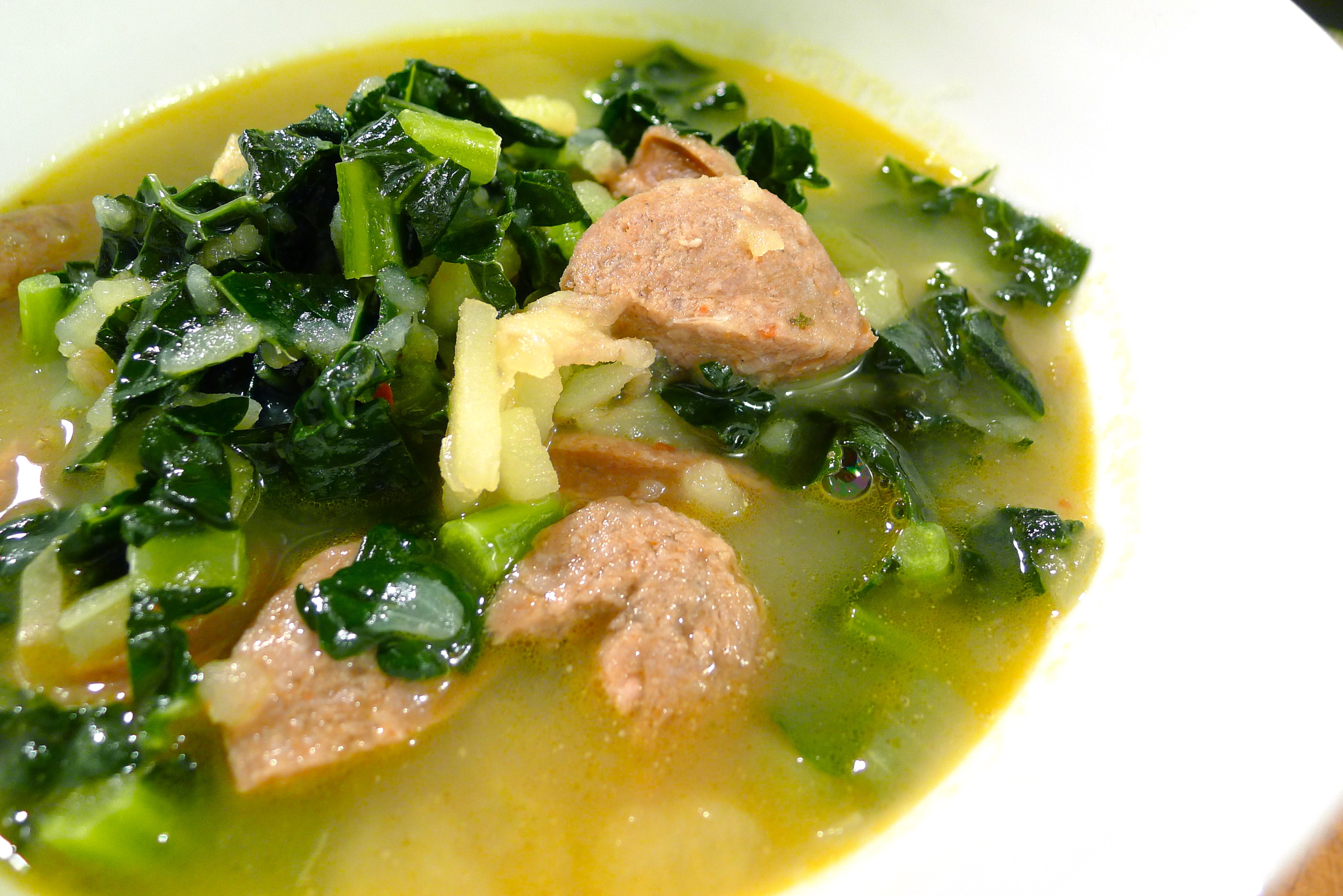
Caldo Verde


It is officially spring in New York, but it certainly doesn’t feel like it. It feels schizophrenic actually as beautiful sunny days alternate with dark gray ones filled with freezing rain and hail.

Yeesh.

This has led to a kind of odd assortment of things to eat at home as I vacillate between going out with friends for dinner (it’s so nice out!) and wanting to stay at home and burrow under the covers until the chill finally goes away.

While perusing the contents of my fridge and freezer yesterday to see what I could whip up for dinner from its random contents, I was super happy to find a pair of CSA chorizo hiding behind some frozen loaves of bread to go along with a nice bunch of kale in the crisper.

I love the combination of kale and chorizo. There is something about the clean bitterness of the leaves that marries so beautifully with the spiciness and bite of the sausage. The flavors always make me think of sunnier places like Spain and Portugal. Places where I can eat standing upright in a bar, tossing cheap paper napkins on sawdust-covered floors willy-nilly.

This soup is good for this strange weather we have been having. It’s warming and comforting, but full of bright, big, assertive flavors. It gets even thicker and spicier overnight.

Ingredients:

1 large yellow onion, finely chopped

1 tablespoon of olive oil

3 yukon gold potatoes (about 1 pound), halved and cut crosswise into 1/8-inch thick slices

4 cups of chicken stock

1/2 pound of chorizo, cut into half-inch pieces

1 big bunch of lacinato or Tuscan kale, cut crosswise into 1/2-inch ribbons

Salt and pepper to taste

How to prepare:

1. Heat the tablespoon of oil over medium heat in a large, heavy-bottomed casserole. Sauté the chorizo in the hot oil until it is browned, about 5 minutes. Transfer the chorizo to paper towels to drain.

2. Pour off any excess oil in the pot, leaving about 2 teaspoons. Sauté the onion in the same pot over medium heat until the onion begins to become golden. Add the potato slices to the onions and toss them together. Continue to cook both for about 4 minutes more. Add the chicken stock and bring everything up to a simmer. Continue to cook the soup until the potatoes are very tender.

3. Using a potato masher, coarsely crush about half of the potatoes in the pot. Add the chorizo back to the pot and continue to simmer the soup for about 5 more minutes. Add the kale and continue to cook the soup for about 10 minutes more. Adjust the seasoning now, keeping in mind that the chorizo will probably add a fair bit of saltiness to the soup.

4. Let the soup stand about 10 minutes before serving. It will get even thicker and spicier overnight.

Milk and Honey Roasted Spare Ribs (St. Louis-Cut)


Over the years, I have come across a fair number of recipes for pork cooked in milk.

Pork? Yes. In milk? Yes.

Very un-kosher.

I’m not exactly sure of where the technique finds its origins. Italy probably. The esteemed Elizabeth David cites the Veneto in particular, but I’ve also heard Bologna. Naples even.

In any case, if you don’t mind flouting several dietary laws at once, this is a pretty awesome way to ring in Spring and celebrate Biblical bounty in a truly transgressive way.

Yes, Friends, we are cooking cloven-hooved creatures in milk and honey!

A few weeks ago I got an amazing rack of ribs in my CSA share. Serendipitously, the NYT published a series of recipes about roasting ribs in the oven. Meant to be? A secular sign?

Yes!

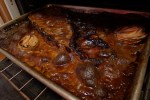
Though the ribs take a good 2 hours or so to cook, the milk acids make the meat meltingly tender. The milk proteins and sugars create the most delectable crust. It’s like meat lollipops dipped in dulce de leche.

It’s not gross, it’s Italian.

Ingredients:

1 rack of St. Louis-cut spare ribs, or two racks of baby back ribs

2 tablespoons of olive oil, plus 2 tablespoons

2 tablespoons of fresh rosemary, chopped

3 cloves of garlic, finely minced

Salt and pepper to your liking (I like about about a teaspoon of salt and a good couple grinds of pepper)

1 yellow onion, peeled and halved

2 bay leaves

2 tablespoons of red wine vinegar

2 tablespoons of honey

2 cups of whole milk

1 cup of heavy cream

How to prepare:

1. If you haven’t done so yet, remove the membrane from the back of the rack of ribs. Flip the ribs bone-side up. Using the flat handle of a spoon or a butter knife, loosen the membrane from one end of the rack of ribs. Grasp the loosened end with a paper towel and pull the membrane slowly in the direction of the opposite end. It will probably come off in one piece but if not, you can just grab the torn end and continue. To help visualize, here is a pretty great Youtube how-to clip from BBQTalk.

2. In a small bowl, mix together the oil, rosemary, 2 tablespoons of olive oil, salt and pepper with your fingers. Lay the ribs out on a large sheet of plastic wrap. Rub the mixture all over the ribs. Arrange the ribs on top of the onion halves. Lay the bay leaves on top, and sprinkle the ribs with the red wine vinegar. Wrap the ribs up tightly in plastic wrap and refrigerate them for between 6 to 12 hours.

3. Set the oven to 350°. Remove the ribs about 30 minutes to an hour before roasting.

4. Pour the remaining 2 tablespoons of olive oil into the bottom of a heavy-duty sheet pan. Heat the oil in the oven for about 5 minutes. Add the onion halves and the ribs — rounded side-up — in the pan and roast them for 30 minutes. Drizzle the ribs with the honey and roast them for about 10 minutes more. Then, turn the ribs over and pour the milk and cream over them. Roast the ribs for another hour.  After an hour, if you notice that the ribs are starting to brown too much, cover them with a sheet of parchment paper or aluminum foil. Continue to cook them for another 30 minutes to an hour more until they are tender enough for you to be able to pull the ribs apart with your fingers.

5. Remove the ribs from the oven and let them rest on a cutting board for about 5 to 10 minutes. Cut the ribs into sections and serve immediately.

Vanilla Bean Crème Brûlée


This was one of the first desserts that I learned to make in Paris. It’s quick, easy, elegant, and tastes better than anything you have ever tried in a restaurant.

The recipe will fill four 4.5 ounce ramekins.

Ingredients:

1 cup of whole milk

1 cup of heavy cream

1 whole vanilla bean

4 egg yolks

1/4 of white sugar

Enough butter to butter the ramekins

1/4 cup of light brown sugar

How to prepare:

1. Preheat your oven to 325°.

2. Split the vanilla bean lengthwise. Using a paring knife, scrape the vanilla beans from each half of the pod. Here is a good video to show you how if you haven’t done this before.

2. Heat the milk, the cream, the vanilla beans, and the vanilla pod halves over medium-low heat in a medium saucepan until the mixture just begins to boil. Turn off the heat and let the vanilla bean infuse the milk and cream mixture for anywhere between 10-30 minutes.

3. In a separate mixing bowl, whisk the egg yolks and the white sugar together until the mixture is pale and creamy, about 30 seconds. Remove the vanilla bean pod halves from the milk and cream mixture. Now you need to temper the egg yolks. This is important because if you add all the hot liquid to the egg yolks at the same time, you will be on you way to making scrambled eggs.

To temper, add a spoonful of the warm milk-cream mixture to the eggs. Stir quickly to incorporate the liquid into the egg and sugar mixture. Continue to add the liquid a little bit at a time, whisking everything until the mixture has become pale yellow and slightly foamy.

5. Carefully divide and pour the mixture into the buttered ramekins. Gently set the filled ramekins in a baking dish. Fill the dish with water until the water level comes halfway up the side of the ramekins. Bake the crèmes in the oven for about 45 minutes. The centers should be jiggly, but not watery.

6. Remove the crèmes from the oven and cool them on the countertop for about 10 minutes before chilling them the refrigerator for about 3 hours.

7. Before serving, heat your broiler element. Sprinkle the brown sugar evenly over the top of each crème. Broil the crèmes under the broiler until the brown sugar has become hard and crackly. Serve immediately.

Macaroni and Cheese with Sliced Hot Dogs

Is it? Could it possible be?

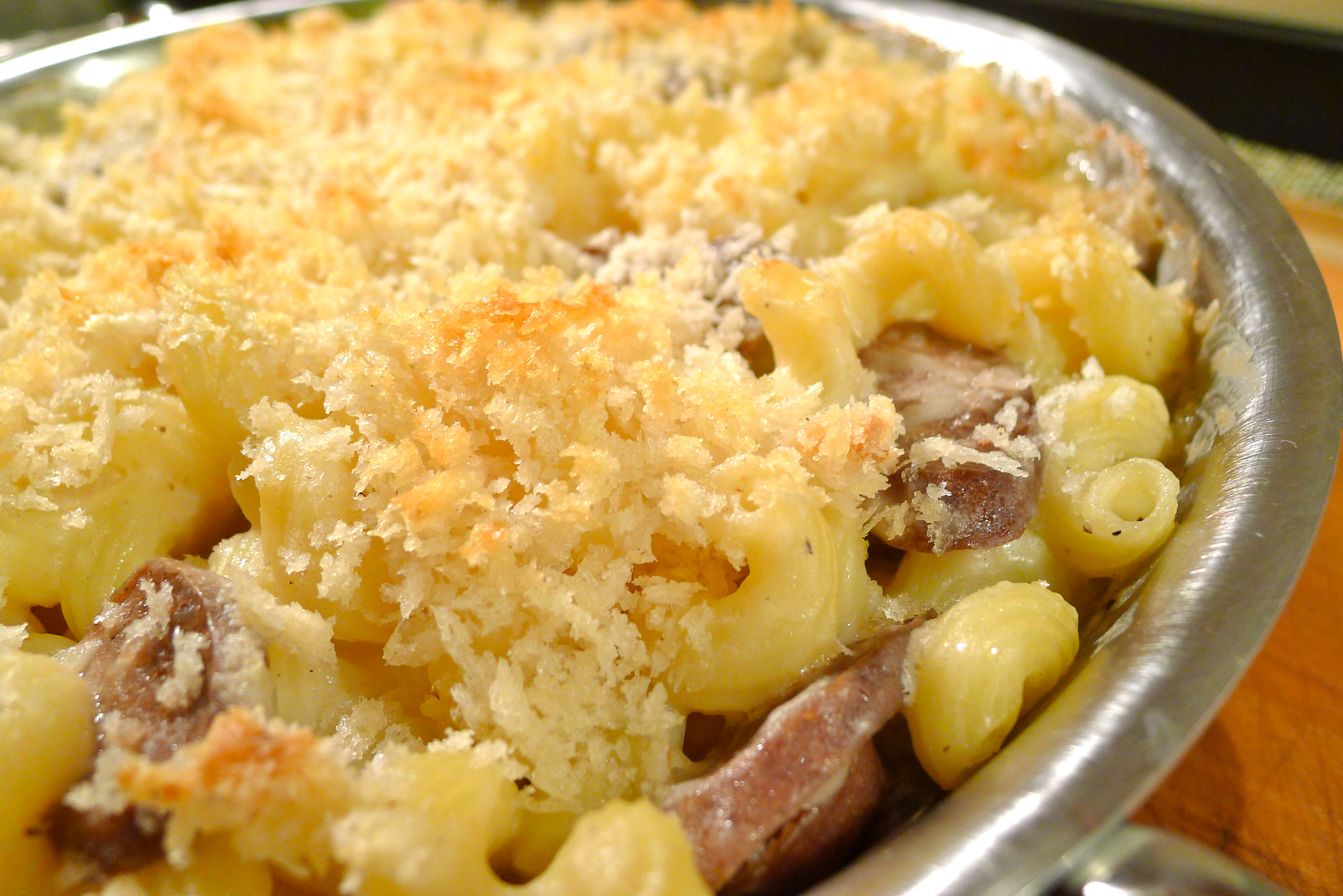
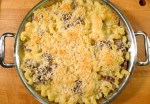
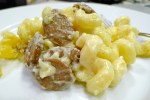
Oh, yes. It’s macaroni and cheese. With hot dogs.

Don’t be a food snob. You know you want it.

Ingredients:

8 ounces of dry pasta

3 tablespoons of butter, plus 1 tablespoon

1/4 cup of flour

2 cups of milk

1/4 teaspoon nutmeg

8 ounces of grated cheese (I used raw milk cheddar)

4 hot dogs, sliced into 1/4-inch wide coins (I used beef hot dogs from my meat CSA)

1/2 cup of breadcrumbs

How to prepare:

1. Preheat your oven to 350°.

2. Prepare the pasta according to directions, but drain the pasta just right before it’s al dente.

3. Now, while your pasta is boiling, prepare the béchamel. Melt 3 tablespoons of butter over medium-low heat in a medium saucepan. Add the flour and stir them both together to make a roux. Continue to heat the roux until the flour starts to just brown. Add the milk a little bit at a time, stirring constantly as you add it. It will seize up when you add the first little bit of liquid, but will relax the more you stir it. Add the nutmeg after you have added all 2 cups of milk. Continue to stir and stir and stir. Don’t worry about adjusting the seasoning; the cheese and hot dogs should add enough sodium. Once the béchamel has thickened to a nice, smooth white sauce, turn off the heat and move the saucepan off of the burner.

4. Combine the pasta, the cheese, the sauce, and the hot dogs in a large bowl. Pour the mixture into a good-sized baking dish.

5. Melt the remaining tablespoon of butter and mix it with the breadcrumbs. Sprinkle the breadcrumbs evenly over the top of the macaroni and cheese. Bake for 30-35 minutes until brown and bubbly. Serve with a good, heaping side of Midwestern nostalgia.

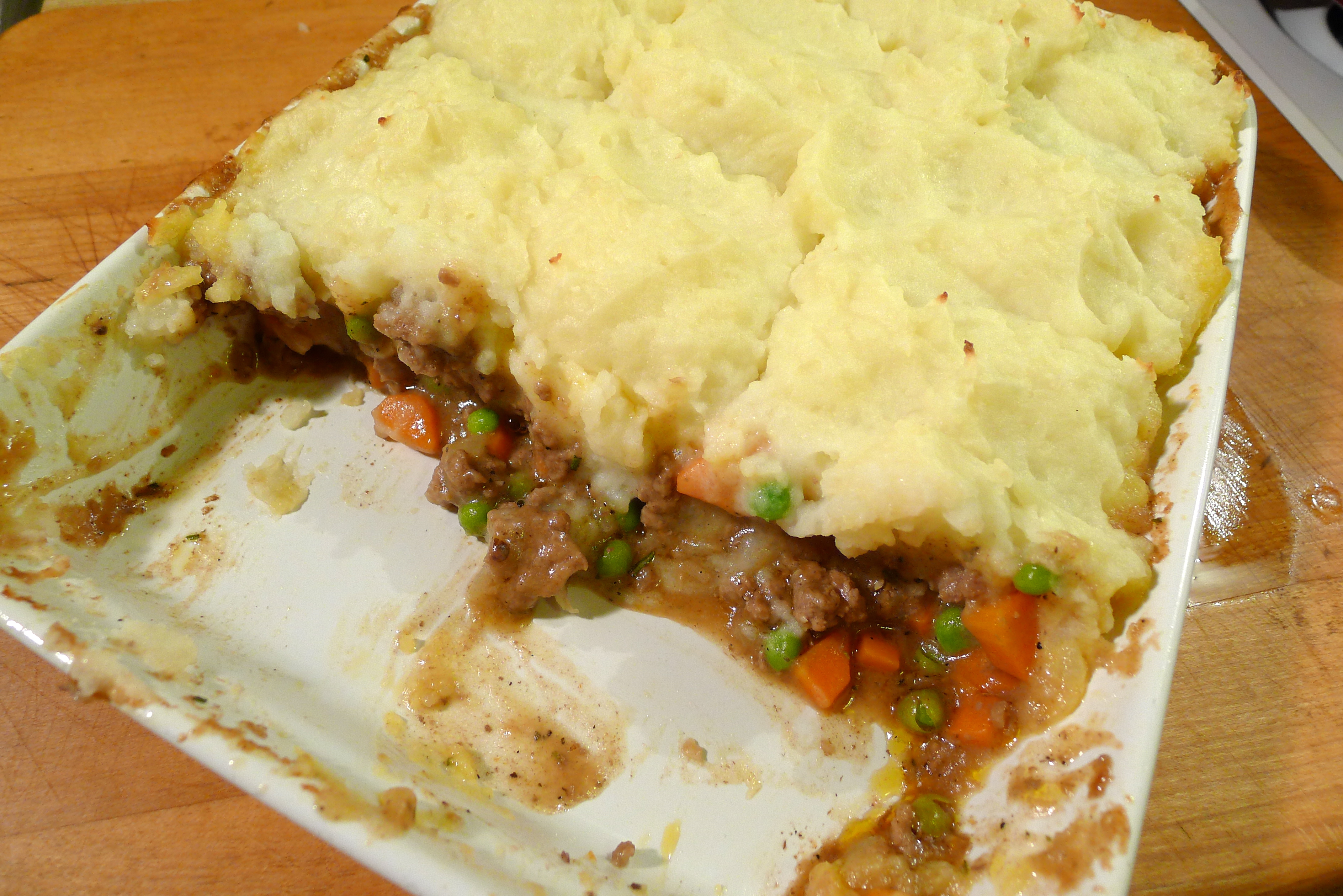
Cottage Pie (also known as Shepherd’s Pie with Beef)


I like mashed potatoes on top of just about anything.

This dish is one of those great things that you can play around with, improvising with whatever you have around the house. Parsnips? Sure, throw them in. How about a turnip? Sounds good. Lamb? Change “cottage” to “shepherd” and you’re good to go. Beef? Beef is better than okay! Tomato paste? Some fresh chopped tomato. I say add whatever makes you feel warm and happy.

Just imagine whatever you would like to eat in your cottage if you had one (you might).

Ingredients:

3 medium Russet potatoes, cut into large dice

1 heaping tablespoon of kosher salt

2 tablespoons of butter

1/2 to 1 cup of milk

1 tablespoon of olive oil

1 medium onion, chopped

2 large carrots or 3 medium carrots, diced

2-3 cloves of garlic, finely minced

1 pound of grass-fed, lean ground beef

1 1/2 tablespoons of Worcestershire sauce

1 1/2 teaspoons of fresh rosemary, finely chopped

2 tablespoons of flour

1 cup of veal or beef stock (you could also use milk or chicken stock)

1/2 cup of frozen green peas

Salt and pepper to taste

How to prepare:

1. Preheat the oven to 375°.

2. Put the potatoes in a large saucepan and cover them with water. Add the salt. Bring the water to a boil and cook the potatoes until they are tender. You will know that they are ready when you can crush a potato piece easily against the side of the pan with a wooden spoon. Drain the potatoes. In the same pan, mash the potatoes with the butter. Add the milk a 1/4 cup at a time until you get the right consistency. You don’t want the potatoes to be dry, but you don’t want them soupy either. Aim for a texture that is loose enough to spoon on top of your beef filling, but not so loose that the potatoes add a lot of excess water to your pie.

3. In a large skillet, heat the olive oil over medium heat. When the oil is hot, add the onions and carrots. You want to cook the onions until they are translucent and are just beginning to brown. At that point, add the minced garlic to the carrots and onion. Cook the garlic for about a minute until it is fragrant but not burning. Add the ground beef to the pan. Breaking up bigger chunks of ground beef with your wooden spoon, cook the beef until there is no longer any visible pink. Sprinkle the beef with the Worcestershire sauce and the rosemary. Cook everything for another minute or two. Sprinkle the beef with flour. Stir again and cook for a few more minutes to brown the flour. Add the stock to the pan and stir to combine everything. The sauce should begin to thicken. When the sauce has gotten to the point that you think it is ready (the mixture should be held together by a nice, thick sauce) , distribute the peas over the top of the beef and continue to cook everything together for about another minute before turning off the heat.

4. Spread the meat mixture over the bottom of a casserole dish. Spoon the mashed potatoes on top of the meat. You can even use a fork to rough up the surface if you like. Bake the casserole uncovered in the oven for 25 minutes. The potatoes will have just started to brown. Wait at least 15 minutes before serving.

NY Strip Steak, ATK-Style


How do you cook a nice, thick steak in a pan? You sear it, right? On high heat to get that nice browned crust. Then you move it to a hot, hot oven to finish. “Sear and blast,” goes the standard mantra.

But what if you did the reverse? In pursuit of the perfectly cooked, medium-rare steak without that darned grayish band of overcooked protein ringing the outer edge of the meat, those pesky perfectionists at Cook’s Illustrated did precisely that: they started the steaks in a reasonably cool oven, and then moved them to a hot pan to sear.

The result? Very. Evenly. Cooked. Steak.

Of course, under the weight of all their test kitchen trials, you might be persuaded that this is the right way, nay the only way to cook your meat.

But it’s not.

It is fun to try it, though.

Ingredients:

2 New York strip steaks, at least 1-inch thick

Kosher salt

1 teaspoon olive oil, plus 1 tablespoon

Freshly ground black pepper

2 nice pats of butter

Special equipment:

1 half-size heavy-duty sheet pan

1 wire rack to fit the half-size, heavy-duty sheet pan

1 leave-in meat thermometer

How to prepare:

1. In order for this method to work, your steaks should be about room temperature before cooking. Be sure to take your steaks out of the fridge, or from wherever you are storing them, ahead of time.

2. Preheat the oven to 275°.

3. Using paper towels, thoroughly pat your room-temperature steaks dry. Season both sides liberally with kosher salt and rub the olive oil all over them.

4. Position the steaks on the wire rack that you have set in the sheet pan. Insert the meat thermometer probe into the center of one of the steaks. You will want the tip of the probe to be parallel to the steak, so the probe should go in the side of the steak instead of sticking straight up. Make sure not to position the probe tip too close to the wire rack or to the top of the steak. Set the timer to go off at 100°.

5. When the timer goes off, remove the steaks from the oven. Remove the probe. Heat the remaining olive oil over medium-high heat until the pan is nice and hot, and oil is not quite smoking. Sear the steaks on both sides. You should remove them from the pan when they reach an internal temperature of 125° for rare, or 130° for medium rare. While the steaks are resting, the internal temperature should continue to rise about 5 degrees.

If you feel like this is a bit fussy (those America’s Test Kitchen folks are really fussy!), you can just sear your steaks for about a minute or two per side and call it a night.

6. Place a nice pat of butter and a good grind of black pepper on each steak before serving. Serve and smile.

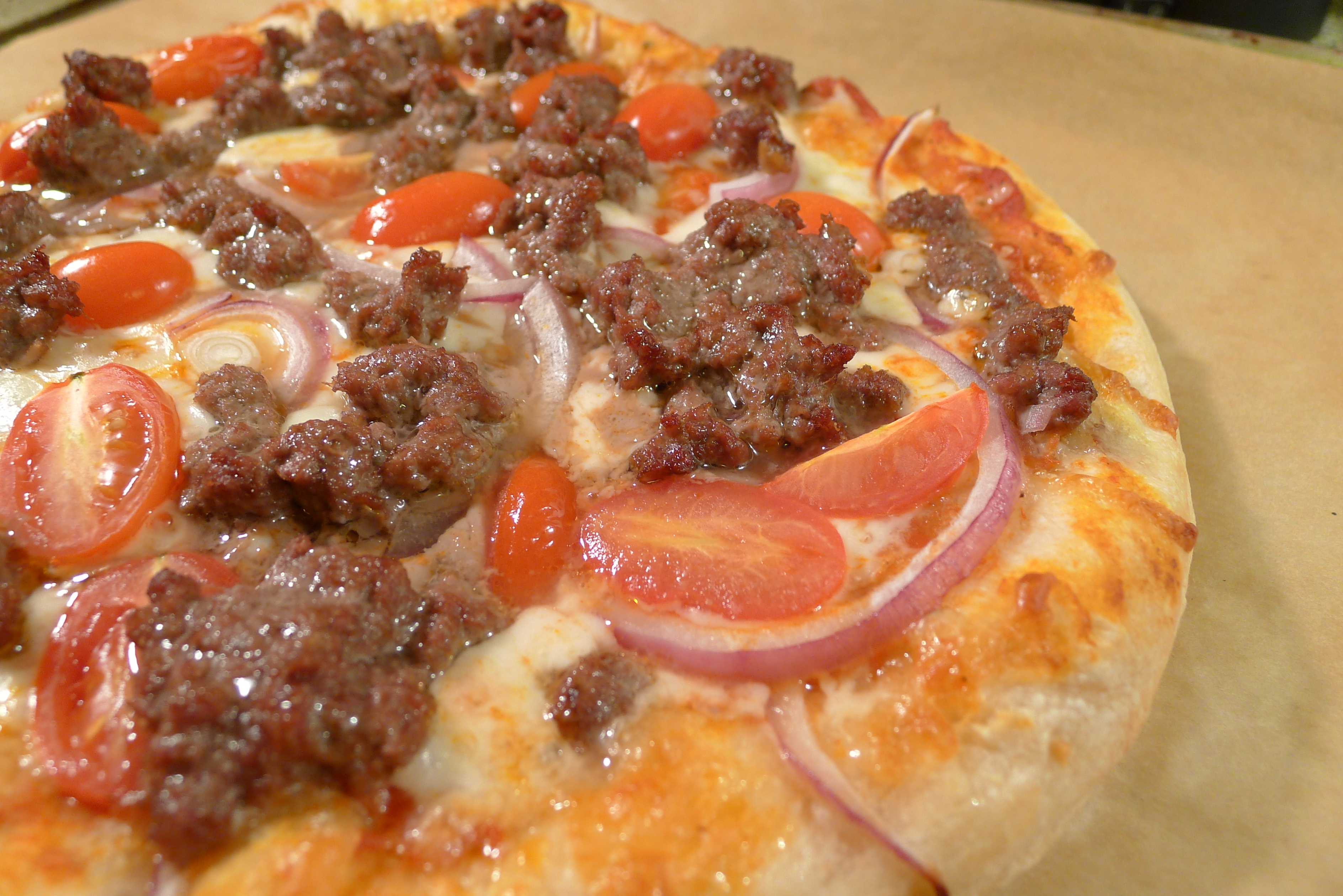
Hamburger, Grape Tomato, and Red Onion Pizza


I got this idea from Martha Stewart and it has become one of my favorite things to make with ground beef from our CSA. It’s quick, it’s easy, and it’s delicious. On the table in less than 20 minutes too.

Now that’s what I call good fast food!

Ingredients:

Pizza dough, about 1 pound of dough will make two 12-inch pizzas, or one really big pizza

Marinara sauce

Low-moisture mozzarella cheese or sliced provolone

1/2 pound of grass-fed, very lean ground beef

12-14 grape tomatoes, halved

1/2 a small red onion, thinly sliced into rings

Maldon salt

Special equipment:

A large baking sheet

Parchment paper

How to prepare:

1. Preheat the oven to 450°.

2. You can easily make your own pizza dough, but I rarely ever do it anymore since I can buy reasonably good, organic frozen dough at the market. In a hurry, I have also been known to run down to the nearest slice joint and buy their dough. Most pizzerias will sell it to you, you just have to ask.

I know. Gasp! I don’t make it from scratch? No. On special occasions, maybe. But if I’m tired and hungry, no. And that’s okay!

Once your dough ball is made, defrosted, or acquired, you need to stretch it out. Start by flattening your dough ball into a disk. By flouring both sides, you avoid having to flour your countertop. Any hard surface will do to stretch out the dough as long as it is flat, clean, and dry. Using your fingertips, start pushing down on the dough, roughly making the border that will become your crust. Now begin using the palm of your hand to pull the dough away from you and away from its center while turning it. At this point, you can try tossing it up in the air. But every time I try doing that, I end up looking like a fool with dough on the floor. Instead, you can position your knuckles under the dough and start stretching it out off of your flat surface. This super helpful video will give you a better idea what to do (contrary to the video, you don’t actually need a marble or stainless steel surface. And just flour is okay if you have no semolina lying around).

2. Now that your dough is nice and stretched out, position it on your parchment paper- lined baking sheet. Egads! No pizza stone? No tiles or bricks wrapped in aluminum foil lining your oven to achieve optimal heat?

No. When I can afford a real, wood-burning Neapolitan oven outside my villa then I will do things like they do in the old country.

3. Spread your marinara sauce around your stretched out dough. I buy this too. I really like the sauces from Sauces n’ Love. They’re wonderful. The pizza sauce is good. Very good.

4. Top the pizza with either the mozzarella or the provolone. I like the flavor of the provolone better with the ground beef, but I love the melty creaminess of mozzarella. Try one, or the other, or both. Maybe at the same time.

5. Scatter the onion rings, halved tomatoes, and RAW ground beef over the pizza.

6. Bake in the oven for 15 minutes, longer if you want a more browned crust. I kind of prioritize though: absent the hardware and capability to get a really excellent crust, I aim for just really excellently cooked beef. Shower your finished pie with Maldon salt, slice, and serve.

Juicy Skillet Pork Chops


I’m on the fence about Cook’s Illustrated, the cooking magazine published by America’s Test Kitchen. On the one hand, their recipes work. They really work. Chris Kimball and his team of test cooks try just about every technique in and out of the book to achieve perfection.

Which they do . . . but on the other hand, they can also saddle the average home cook with a severe case of insecurity if he or she decides to cook something a different way.

However, they do come up with really ingenious ideas about how to get consistent and reliable results: flaky pastry? use vodka not water! perfectly cooked steaks with no gray ring of over-cooked protein? start them in the oven and then sear them in a hot pan!

Despite my reluctance to say that there is one and only one way to cook something and make it delicious, sometimes by doing it their way, you really learn and eat something wonderful.

When we got some nice thick-cut pork chops in our CSA share, I immediately thought that the best way to make their super-porky flavor shine would be to do it the Cook’s Illustrated way.

This is not really a recipe, but technique:

Start with your chops. You want wonderful, natural pork chops — not enhanced chops, which are pre-brined. You want them thick and meaty too, between 1/2 and 3/4 of an inch thick. Bone-in, of course. You want to make two perpendicular slits in the fatty edge of each chop. This will prevent your pork chops from curling up as they cook. Rub them on both sides with some nice olive oil. Cook’s Illustrated recommends you sprinkle some sugar on both sides along with your seasoning, but I’ve forgotten sometimes and had it still turn out fine.

If you have an electric hob, turn it on now to medium heat, but don’t put the pan on the burner just yet. You don’t need to do this if you have a gas range.

You want to start them in a cold pan. That’s right. A cold pan. Press the chops down in the pan to make sure that the whole underside of the chop is in contact with its surface.

Now, put the pan on the burner. Turn the heat on to medium. Leave them alone and cook them until they are lightly browned, about 4-9 minutes depending on the thickness of your pork chops. Doing it this way doesn’t get the nice brown crust that starting pork chops off in a hot pan does, but you do get amazingly juicy and evenly-cooked meat. Be sure to listen for gentle sizzling. If your pork chops aren’t gently sizzling, your heat is too low.

Flip your chops over. Cover the pan and reduce the heat to low. The second side will not be as brown as the first. You want to cook your chop until the internal temperature registers 140° — perfectly safe, and perfectly pinkish. Start checking the temperature after 2 minutes, or if you have one of those leave-in thermometers, insert it into the center of the chop and set the timer to go off at 140°.

Remove the pork chops from the pan and let rest for 5 minutes, just enough time to make a quick pan sauce.

Oven-Roasted Baby Back Ribs

Finger-lickin' good.
It is official: my mother is a kitchen saboteur.

For Valentine’s Day this year, I decided to toss some ribs in the oven and save my boyfriend and myself from a night out. I was thinking something fun to eat. Finger food. Something fast and easy.

I thought of my mom’s fantastic oven-roasted baby back ribs.

When I asked her for the recipe, she casually tossed out something more like a manner than a method with what I realize now to be a completely non-realistic cooking time.

“35 minutes? For real?”

I hooted with joy. Thirty five minutes of roasting meant that I could leave off dinner until the last minute! I could dawdle around the supermarket playing with squeeze bottles of agave syrup and Dijonnaise without feeling the pressure to get going and get home!

So I went about my day, happy and relaxed. Then my mother called somewhere around the dairy section to say that it was actually about 35 minutes . . . after the first hour.

First hour? What first hour! Am I hard of hearing? Does my cellular service suck?

No, I can hear fine. The service is not terrific, but the call was crystal.

My mother had lied. Again!

And again, it turns out, as she had to call back a second time to say that it was actually more like 35 minutes to an hour after the first hour.

Well, mine ended up taking about one hour and 40 minutes. I imagine that that can be a little less or more depending on thick your racks of ribs are.

So here is a great, super easy recipe for juicy, falling-off-the-bone ribs done in your oven.

Seriously, no lie.

Ingredients:

1 or 2 racks of baby back pork ribs

1/3 of a cup of dark brown sugar per rack of ribs

1 heaping tablespoon of steak seasoning or rib rub (I like one with some smoke) per rack of ribs

Special equipment:

One half-size sheet pan

One wire rack to fit the sheet pan

How to prepare:

1. Pre-heat the oven to 375°.

2. The secret to melt-in-your mouth tender ribs? You have to remove the membrane on the back of the pork ribs. It’s super easy to do and allows your ribs to cook nice and flat, without curling up. It also makes them much nicer to eat. Flip the ribs bone-side up. Using the flat handle of a spoon or a butter knife, loosen the membrane on one end of the rack of ribs. Grasp the loosened end with a paper towel and pull the membrane slowly in the direction of the opposite end. It will probably come off in one piece but if not, you can just grab the torn end and continue. To help visualize, here is a pretty great Youtube how-to clip from BBQTalk.

3. In a small bowl, mix together the brown sugar and seasoning with your fingers. After you have dried off your rack of ribs with paper towels, rub the brown sugar-seasoning mix into both sides of the rack. Lay the rib(s) out on the wire rack.

4. Set the racks of ribs in the oven. Carefully pour about 2 1/2 to 3 cups of water into the bottom of the sheet pan. The water should not touch the bottom of the wire rack. Roast the ribs in the oven at 375° for one hour. Lower the temperature to 350° and continue to roast until the ribs are tender and buttery, about 40 minutes to an hour longer depending on the thickness of your rack of ribs. Remove carefully from the oven. Let the ribs rest for 5 to 10 minutes before slicing and serving.