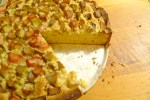
Mascarpone-Polenta Cake with Rhubarb and Meyer Lemon


I wish that I was more of a baker. Unfortunately, my baking past is littered with all kinds of baking misfortunes: lumpy cakes, leaden cakes, cracked cakes, dry cakes, lopsided cakes, burned cakes, burned cakes with runny centers, runny cakes with charred tops. The list is unfortunately long!

I think it must be related to the fact that, when it comes to recipes, I am incorrigible: I rarely follow them to the letter. It doesn’t help that I am generally inclined to eyeball amounts instead of dirtying up another measuring cup or spoon. This is fine for regular cooking, but kind of disastrous when it comes to baking.

So when I decided to try to come up with my own recipe for a polenta cake with mascarpone that would make use of the first of this season’s rhubarb, I was pretty nervous.

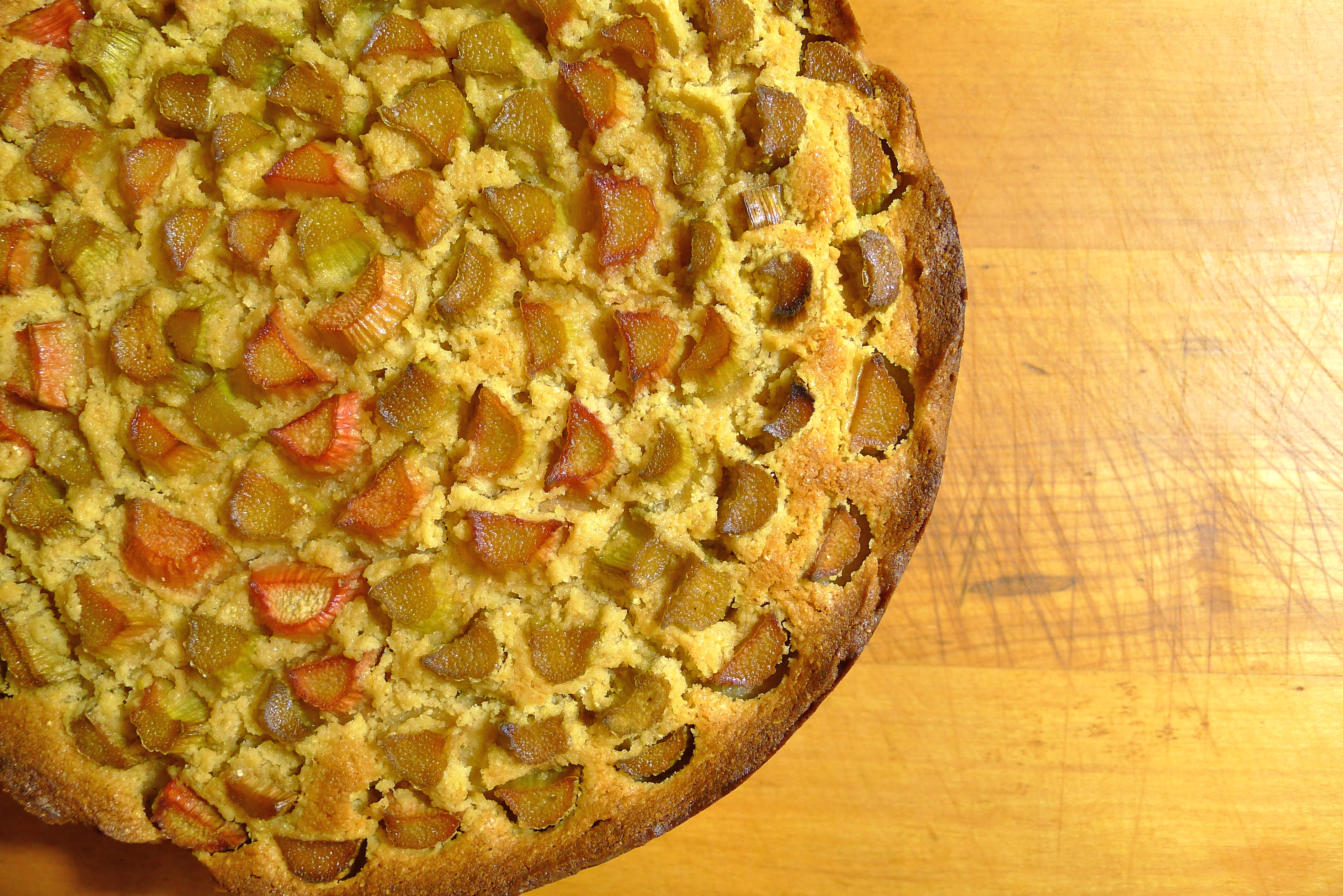
Thankfully, it came out beautifully. The cake had a wonderfully moist and tangy crumb that beautifully complemented the rhubarb’s tartness. The idea of arranging the fruit (or vegetable? I guess rhubarb actually a vegetable) on the top of the cake batter comes from Nigel Slater’s Blueberry-Pear Cake from his Kitchen Diaries.

One more thing: be sure to remove any leaves from your rhubarb stalks before cooking. Only the stems are edible. The leaves contain oxalic acid that can make you pretty sick. It goes without saying to keep your animals away from rhubarb. More for you, I say. What a delicious way to live dangerously!

Ingredients:

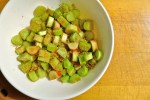
About 2 1/2 cups of rhubarb, washed, trimmed and sliced into 1/2 inch pieces

1 cup of brown sugar, plus an additional 1/4 cup

8 tablespoons of butter (1 stick), softened

1 egg

3/4 cup of mascarpone

The zest and juice of one Meyer lemon

1 cup of all-purpose flour

1 cup of yellow corn meal

3/4 teaspoon of salt

1 teaspoon of baking powder

1/4 teaspoon of baking soda

How to prepare:

1. Line the bottom of a 9-inch springform pan with parchment paper. Butter the sides.

2. In a medium-sized bowl, toss the rhubarb with 1/4 cup of brown sugar. Let the rhubarb sit for about 30 minutes.

3. Preheat the oven to 350°.

4. Sift the dry ingredients (the flour, the corn meal, the salt, the baking powder and the baking soda) together into a large bowl.

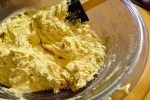
5. In another large bowl, cream together the remaining cup of brown sugar and the softened butter. Add the egg, followed by the mascarpone, the lemon zest and the lemon juice. Continue beating the mixture until it is nice and fluffy. Beat in the dry ingredients, a little bit at a time, until they are well-incorporated into the batter.

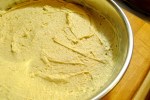
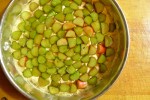
6. Spread the batter out as evenly as possible onto the bottom of the springform pan. It will be thick. Arrange the rhubarb by pressing each piece into the batter in concentric circles. Bake the cake for about 1 hour and 30 minutes, until the top is golden and the center has set.

Let cool before slicing and serving.

Asparagus with Fried Egg and Parmesan


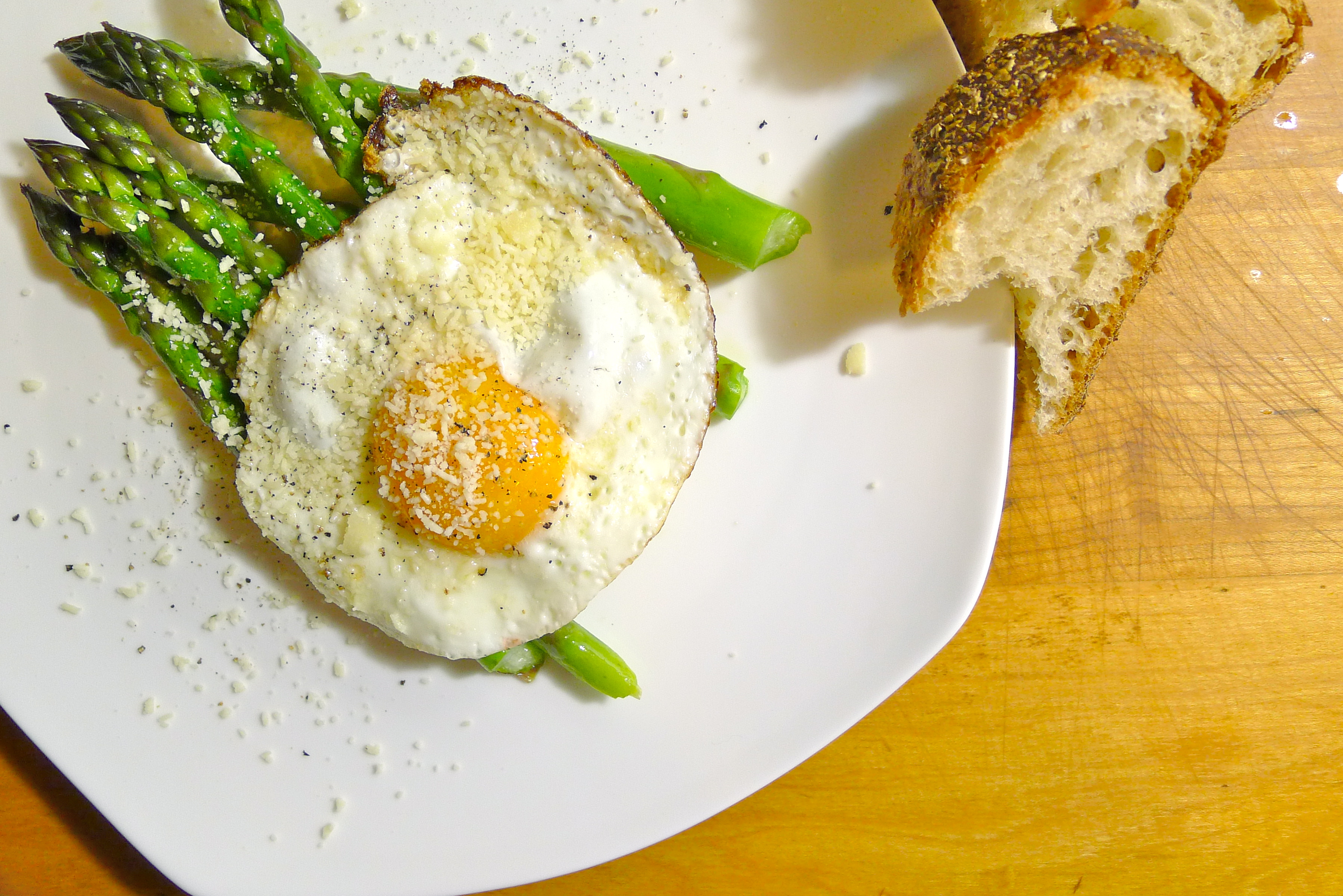
It’s asparagus season! Which means it’s time for my favorite fast lunch: sweet local asparagus topped with a fried egg and sprinkled with Parmesan. To anyone who thinks that making yourself lunch takes too much time, I challenge them to find something quicker than this meal.

But, Daisy, don’t you have to steam asparagus? Or boil it? That takes time!

Oh no no, young Padawan. You can . . . microwave it!

This idea comes from Andrew Carmellini‘s Urban Italian. In the book, he recommends microwaving asparagus as a quick and terrific way to perfectly cook it without sullying up another pot. I just have to quote him on this:

“Asparagus in the microwave is awesome. Yup. You read that right. I’m sure some food snob somewhere is recoiling in horror and throwing this book across the room, but I don’t care.”

I don’t care either. I love Carmellini’s food. He’s got a Michelin star and two James Beard Awards. If microwaving asparagus is good enough for him, it’s good enough for me.

This is one of those no recipe-recipes that can be multiplied by as much as you need. I give you the recipe for one but obviously, if you are cooking for more people, you will need to punch an extra minute or two into the microwave.

Ingredients:

6-7 asparagus spears, rinsed clean and trimmed of their woody ends

Olive oil

1 egg

Butter

Salt and freshly ground black pepper

Grated Parmesan cheese

How to prepare:

1. Spread out the asparagus in a single layer on a microwave-safe plate. Season the asparagus with salt and sprinkle on a little bit of water. Drizzle it with some olive oil. Cover the plate tightly with plastic wrap and nuke it for 1 minute and 30 seconds.

2. In the meanwhile, fry up an egg in butter.

3. Carefully remove the plastic wrap from the plate and arrange the asparagus spears on a clean plate. Top the asparagus with the fried egg. Season everything with salt and black pepper. Sprinkle on as much grated Parmesan as you like.

Serve with a good, crusty bread.

Moroccan-Style Brisket with Green Olives and Preserved Lemons


When I was an undergraduate, I had friends who could subsist on Cheerios and skim milk for the whole semester. I could never do that. First of all, I didn’t want to contract scurvy, beriberi or any other kind of disease caused by a vitamin deficiency. Secondly, the combo of cold cereal and low-fat milk remains heartbreakingly depressing and just plain unsatisfying to this day. Even after eating a big bowl of it, I still feel hungry.

Of course, those friends grew up and graduated to slightly more mature versions of “quick” meals like spaghetti and jarred sauce, or something with boneless, skinless chicken breast.

I don’t consider those to be very appealing either.

I like a meals. Real meals with real foods and real fats.

Having never been much of a snacker, I look forward to my two big square meals a day. I say two only because I still struggle to fit breakfast into my daily routine.

Believe me, if I were to have breakfast, it would be a square meal too!

What is a real meal to me? It doesn’t necessarily have to be a hot meal, but it has to be satisfying in a way beyond filling my empty stomach. I’m not looking for just the sensation of fullness. I want to feel fulfilled.

Lately, work has been overwhelming. My dissertation deadline is pretty much set for early August, which leaves me little time for much else but my good friends, weekly dim sum with my grandfather, and my parents.

But I will always make time for good food, cooking and even some blogging. Food is my passion. Cooking is how I decompress. Blogging keeps me social. Without it, I fear that I will start slinking around corners, stroking my pages and covetously purring, “MY PRECIOUS!”

Any LOTR fans out there 😉

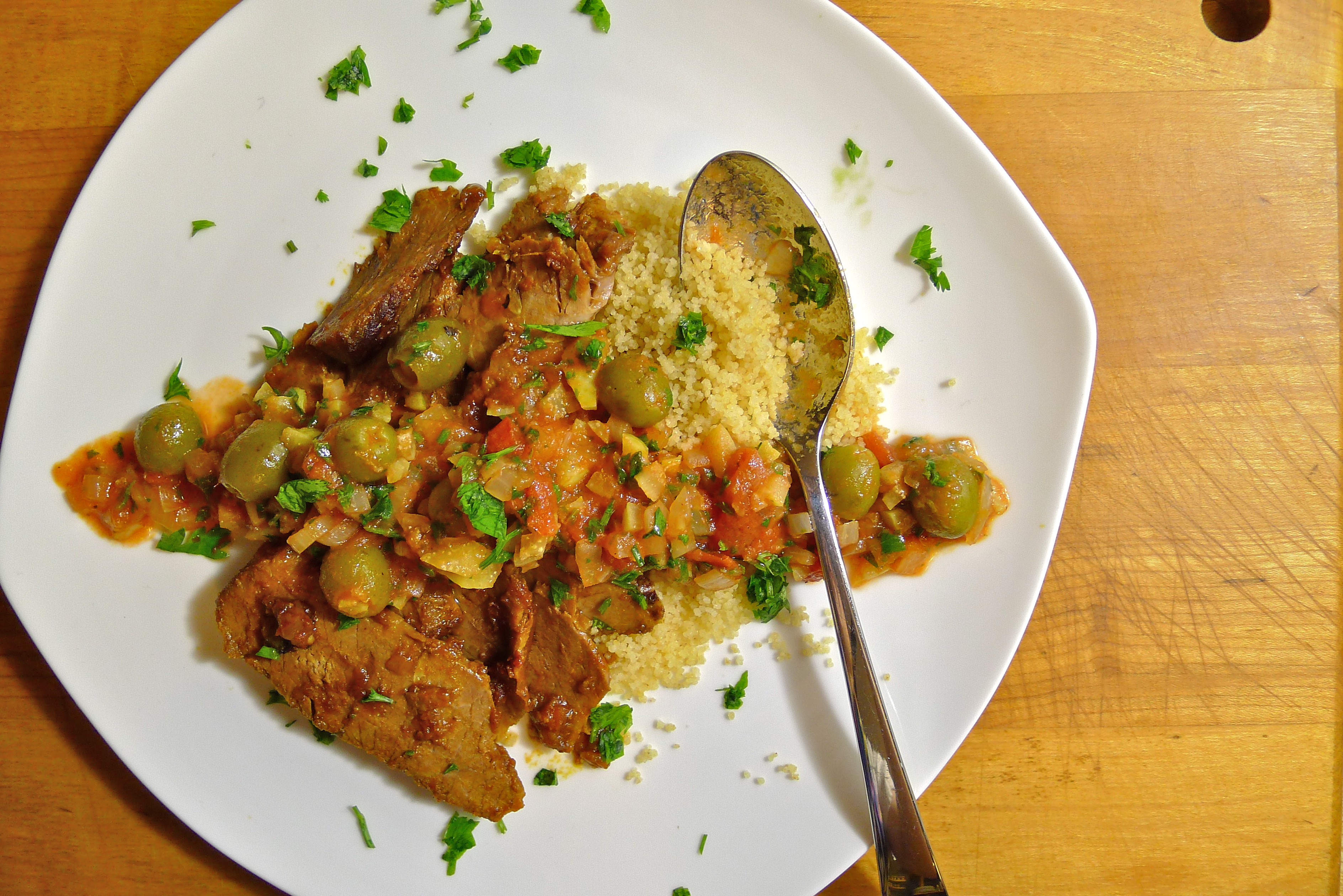
In this period, I see nothing wrong with making something big and elaborate just for me. I can eat it for a week and feel nourished in both body and soul. This Moroccan-style brisket fit the bill this week. Preserved lemons give the brisket’s crowning sauce a distinctly delicious North African flavor. Preserved lemons can be a strong, but their strength mellows over time. This is why I would recommend that you make the sauce a day before serving the brisket. That way, the ingredients have time to meld together and their flavors can become rounder. Preserved lemons can now be found in many supermarkets and specialty stores. You can also order them online, but they are also ridiculously easy and inexpensive to make. Just remember to budget between 1-3 weeks of preservation time before they are usable. There are many recipes available online. This one and this one are good places to start.

Also, like any braised or stewed meat, brisket gets better over time. If you can resist the temptation of eating it straight out of the oven, let it cool and sit overnight in the fridge. It is also much easier to remove any fat from the surface of the sauce the next day.

This recipe is freely adapted from Joan Nathan‘s Foods of Israel Today. Her original recipe can be found more or less in its entirety here. It includes another recipe for preserved lemons.

Ingredients:

For the brisket:

1 3-3 1/2 pound beef brisket

3 cloves of garlic, thinly sliced into slivers

Salt and pepper

Olive oil

2 small onions, finely diced

1/2 teaspoon of ground turmeric

1/2 teaspoon of ground cinnamon

1 tablespoon of freshly grated ginger

2 bay leaves

1/2 cup of red vermouth

1 14.5-ounce can of crushed tomatoes

2 tablespoons of honey

1/2 cup of water

For the green olive-preserved lemon sauce:

2 small onions, finely diced

Olive oil

1 14.5-ounce can of crushed tomatoes

1/2 cup of water

6 ounces of pitted green olives

2 tablespoons of parsley, finely chopped

2 tablespoons of cilantro, finely chopped

2-3 preserved lemons, rinsed, flesh discarded, and peels finely chopped

Salt and pepper

How to prepare:

1. Blot the brisket dry with paper towels. If needed, trim the brisket of any excessive fat. Using the sharp point of a small paring knife, make shallow cuts all around the brisket and push slivers of garlic into the slits. Let the brisket sit uncovered on a wire rack for about 30 minutes.

2. Preheat the oven to 350°.

3. Season the brisket on both sides with salt and freshly ground black pepper. Heat about two tablespoons of olive oil over medium-high heat in a very large skillet. When the oil begins to shimmer, sear the brisket well on both sides. Remove the brisket to a large casserole or baking dish. Reduce the heat to medium and add the two finely diced onions to the skillet. While sautéing the onions, be sure to scrape up any tasty brown bits stuck to the bottom of the pan. When the onions begin to turn translucent, stir in the turmeric, the cinnamon, the ginger and the bay leaves. Cook the spices until they are fragrant (be careful to not let them burn). Deglaze the pan with red vermouth. Wait until most of the alcohol has cooked off before adding the tomatoes, the honey and half a cup of water. Let everything simmer together until it has thickened into a sauce. Adjust the seasoning and pour it over the brisket.

4. Cut a piece of parchment paper to just fit your casserole or baking dish. Completely cover the brisket with it and make a tight seal by pressing the paper down onto the meat and onions. Roast the brisket for about 3 hours, or until the meat is tender.

5. When your brisket is tender, remove it from the oven and let it cool completely in its sauce. If you can delay gratification, let it sit in the fridge overnight. This will make it much easier to remove any fat from its surface the next day. If that isn’t a possibility, try to skim as much fat as you can before moving forward.

6. While the brisket is cooling, make the green olive-preserved lemon sauce. In a large saucepan, heat about two tablespoons of olive oil over medium-high heat until the oil begins to shimmer. Sauté the onions until they begin to turn translucent. Add the tomatoes and half a cup of water. Reduce the heat and simmer the sauce until it has thickened. Add the olives, the chopped herbs and the preserved lemons to the sauce. Let everything simmer together until the flavors begin to come together, about 5-6 minutes. Adjust the seasoning.

7. When the brisket has cooled completely, slice it thinly on a diagonal against the grain. Return the sliced meat to its casserole or baking dish and recover it with its sauce. Before serving, heat your oven to 350°. Cover the casserole or baking dish with aluminum foil and bake the sliced brisket for about 30 minutes, or until warmed through.

Serve the brisket on couscous and topped with the green olive-preserved lemon sauce.

Kimchi Fried Rice


“I never see you eat rice,” Laura said, “Ever.”

“That’s not true! I eat risotto! and paella! and biryani . . .”

But despite my protestations, it is true though: I am not a fan of plain, steamed white rice.

I am so un-Asian.

When people find out I don’t really like plain white rice, I generally get two reactions:

• From non-Asian people, they look at me as if I just told them I was born with six fingers on one hand and the extra digit was removed at birth. At this point, they usually tell me how much they love rice.

• From Asian people, they just ignore me. I don’t even think they hear the “don’t,” they just hear the “like white rice.” Because what Asian doesn’t like white rice? Inconceivable!

Plain white rice was the bane of my young existence. As a child, it was always just giant piles of tasteless filler stacked in sticky, unswallowable heaps in front of me. My parents used to make me finish all of my rice before I was allowed to leave the dinner table. I used to drive them crazy by eating my rice grain-by-grain until they finally gave up and sent me to my room — which is all I really wanted in the first place.

As I have gotten older, I have learned to eat it. Partly because it gives me something to chew on as I contemplate all the dishes spinning around the Lazy Susan. After really strong flavors, I have come to appreciate white rice as a palate cleanser. Also, a Chinese meal just feels incomplete without rice on the table, regardless whether I eat any or not.

There is one way to always get me to eat my rice: fry it.

But let’s be honest, I’ll eat just about anything so long as it’s fried 😉

Kimchi fried rice is a particularly good way to get me to eat rice because not only is it fried, it’s so far removed from bland, steamed white rice that I will happily accept it on my plate. For this, I threw in some amazing all-beef hotdogs from my CSA. I know that there are a lot of people who don’t like hotdogs, but I never wonder what is in the ones that I get from my farmer. If you are a vegetarian, or just don’t like hotdogs, you can leave them out. Or replace them with Spam 😉

It’s also traditionally topped with a fried egg, and who can resist fried food topped with more fried food?!

Kimchi fried rice calls for a nice dollop of Korean red pepper paste, or gochujangGochujang is one of the most common condiments/ingredients in Korean cooking and as such, is fairly easy to find in Asian supermarkets. I think the problem is that there are so many brands of commercially-made gochujang that it can be a little overwhelming as to which one to pick. This is why I love this post from One Fork, One Spoon. As Diane and Grace point out, it’s hard to shop for Korean ingredients if you don’t speak Korean! I certainly don’t, and really appreciated their tasting notes and photographs of labels and brand logos.

Ingredients:

1 tablespoon of butter

1 tablespoon of vegetable oil

2-3 hot dogs, cut into pieces

2-3 green onions, chopped

2 cups of cooked (preferably day old) rice, japonica variety preferred

1 tablespoon of sesame oil

2 cups of napa cabbage kimchi, roughly chopped

1 tablespoon of gochujang

Salt

1 egg per person

How to prepare:

1. In a large skillet, heat the butter and oil over medium-high heat until the oil begins to shimmer. Add the sliced hot dogs and the green onions. Cook the hot dogs until they are heated through and the green onions have softened.

2. Add the rice to the pan, breaking up any clumps with the side of a wooden spoon or a spatula. Evenly drizzle the sesame oil over the top of the rice and let it cook undisturbed for about a minute before stirring it.

3. Add the chopped kimchi and the gochujang to the skillet. Stir everything together until red pepper paste has been well-incorporated and the kimchi has been evenly distributed throughout the rice.  Adjust the seasoning. Lower the heat and spread the rice and kimchi out in an even layer over the bottom of the pan. Let it cook for a few minutes until the rice has become nice and crispy on the bottom. Stir the pan again, scraping the browned rice off the bottom of the skillet. Adjust the seasoning for a final time and divide the fried rice into bowls.

4. In a separate pan, fry up one egg per person. Top each bowl of kimchi fried rice with an egg. Scatter some chopped green onions on top and serve.

Green Garlic Shrimp Scampi with Linguine


I am finally getting to the end of the massive amount of green garlic that I bought at the Greenmarket. Whew! It has been a very delicious process, but it still feels good to polish it off.

With the last three bulbs, I decided to go hog-wild with . . . not hog, shrimp!

Big, fat, sugary sweet Florida Gulf shrimp. Deepwater Horizon be damned. Yeah, there are some scary reports out there, but it’s not like I have Gulf shrimp every day. And I just had four. They were supposedly wild, which is supposed to be okay.

I live in New York City so I figure that the air I breathe is probably deadlier.

They were so tasty. And the green garlic was a great spring twist on shrimp scampi, that Italian-American classic. No green garlic? The original calls for regular garlic and is still delicious. Don’t want to chance it with Gulf shrimp? Go for any shrimp that make your motor run. Or no shrimp at all — the sauce for the linguine is incredible on its own.

On another note, has anyone been having a problem with the WordPress Reader? Generally, you should be able to see an updated feed of all the blogs you follow when you open it, right? Lately, it hasn’t been updating the some of the blogs that I follow. It’s really random, though. Sometimes it will just skip posts, or sometimes it just stops updating a single blog altogether.

I read somewhere that the solution is to edit the list and refollow everyone. I started doing that, but it was so annoying that I stopped.

Has anyone else had this problem? There must be another fix . . .

Ingredients:

1/3 pound of dried linguine

1 tablespoon of olive oil

3 green garlic bulbs, the white parts and the tender green stems finely chopped

1 tablespoon of parsley, finely chopped

2 tablespoons of butter

Red chili pepper flakes to taste

1/3 cup of dry white wine

1/2 pound of shrimp, shelled and deveined

The juice of one lemon

How to prepare:

1. Bring a large pot of salted water to boil and cook the linguine until it is al dente.

2. While the pasta is cooking, heat a tablespoon of olive oil over medium heat in a heavy saucepan or a Dutch oven until it begins to shimmer. Add the green garlic and sauté it until it begins to soften and turn translucent. Stir in the butter, the parsley, and red chili pepper flakes to taste. When the butter has completely melted, carefully add the white wine and the shrimp to the pan. Cook the shrimp until they are pink on the outside and their flesh has turned white or opaque all the way through, about 3-5 minutes.

3. Add the cooked linguine to the pan and toss everything together. Turn off the heat and add the lemon juice to the pasta. Toss again before dividing it up the and serving.

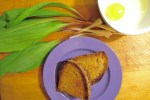
Fried Egg with Sautéed Ramps and Garlic-Rubbed Toast


Ramps. Just the thought of them at the Greenmarket makes me really excited. Ramps taste like the essence of spring given that they are the first greens to come up after a long winter of tubers and root vegetables.

I’m not the only one with ramp-mania either. Unfortunately, the dramatic rise in their popularity over the past few years has been raising concerns that foragers are over-harvesting to meet demand.

Ramps are notoriously difficult to cultivate. For the most part, they are a foraged food that is found and plucked in the wild. To ensure that the plant keeps growing requires foragers to leave their bulbs intact — problematic since most ramps are sold with their bulbs and roots attached.

So what do you do if you love them like I do? Should you stop eating them all together?

You don’t have to give up ramps as long as you stay committed to being a responsible consumer. If you forage for them, take no more than you can reasonably eat. If you can, just take the leaves and leave the bulbs in the ground. If you buy them, try to buy them from a farmer you trust. Talk to your farmer and make sure that their ramps are coming to you in a sensible and sustainable way. The Greenmarket NYC closely monitors and regulates foraged food to ensure that things like ramps will continue to be around in the future.

Celebrate their scarcity because that is what makes them special!

Once you get your hands on some sensibly-foraged ramps, this is a great way to prepare them for lunch or for a light supper. I hesitate to even call this a recipe since it is such a simple way to prepare them, but simple preparations are oftentimes the best way to showcase especially great ingredients.

Ingredients:

Thickly-sliced bread, as many pieces per person as you like

1 garlic clove

4 ramps per person, cleaned and bulbs split in half if they are on the large side

1 egg per person

Olive oil

Butter

Salt and black pepper

How to prepare:

1. Generously brush both sides of your bread with olive oil. Broil the pieces until they are golden brown. Rub a garlic clove on both sides of the bread, including the edges.

2. In a large skillet, heat some olive oil over medium heat. Add the ramps to the pan when the oil begins to shimmer. When the leaves have wilted and the bulbs have begun to turn translucent, shape the ramps into a circle and crack an egg into the center. Add a knob of butter to the pan. When the butter has melted, begin spooning the hot fat over the egg yolk as it cooks. When the whites have set, use a spatula to gently remove the egg and the ramps from the pan to a plate. Season the egg and ramps with salt and freshly ground black pepper.

Serve with the garlic-rubbed toast.

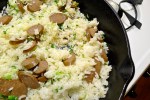
Ramp Risotto with Pancetta, Meyer Lemon and Parmesan


Spring is officially here when ramps are in!

And when I think ramps, I think risotto.

Sometimes, people think that risotto is difficult. But as long as you are willing to be patient, and don’t mind giving your stirring arm a little workout, risotto is a ridiculously easy way to have an elegant dinner.

This recipe is for two, but you can easily make the recipe for more people by adhering to the following ratio: for every 1/4 cup of rice, you will need one cup of liquid.

Ingredients:

1 quart (4 cups) of chicken or vegetable stock

3 ounces of pancetta, sliced into thin strips

Olive oil

1 bunch of ramps, cleaned with stems and leaves divided

1 cup of Arborio rice

1/4 cup of white wine

The zest and juice of 1 Meyer lemon

2 tablespoons of butter, cut into small cubes

1/4 cup of Parmesan, plus more for sprinkling

How to prepare:

1. Thinly slice the white ramp bulbs and roughly chop the leaves. Keep them separated.

2. In a saucepan, bring the stock up to a boil and then turn off the heat.

3. In a large Dutch oven or heavy-bottomed saucepan, brown the pancetta over medium heat until most of the fat has rendered and the pancetta has just begun to crisp. Spoon off all but one tablespoon of fat. Add the sliced white parts of the ramps and sauté them until they begin to turn translucent. Add the rice and toss the grains in the fat for about a minute or two.

4. When the rice grains begin to lose their opacity, add the white wine. When the wine has been absorbed, begin adding the hot stock, a ladleful at a time, while stirring constantly, until you have used all the stock or the rice has lost its chalky hardness and is perfectly al dente. This can take between 15-20 minutes.

5. When the rice is creamy and the grains are al dente, turn off the heat. Add the lemon juice and zest, the chopped green ramp tops and the butter. Incorporate everything into the rice. When the ramp tops have wilted, stir in about a 1/4 cup of Parmesan. Adjust the seasoning, adding a little hot water or more hot stock if the risotto seems to be a little thick. Serve immediately topped with more grated Parmesan.

Young, Green Garlic Knots with Parmesan and Marinara Sauce


Well, I did it. I broke my oven.

After a week of intense pizza-making, my oven decided that it was having no more of this high-heat nonsense and promptly decided that it was going to go on strike.

The stovetop still works, but the oven just makes a clicking noise and stays as cold as my hopes and dreams for weekend baking 😦

If my landlord doesn’t fix it in the next day or so, this will certainly throw a wrench into my plan for this month’s Daring Kitchen challenge. It is strongly looking like I am going to have to get creative fast.

Thankfully, before my oven decided that it had lived through enough, I was able to crank out these awesome garlic knots using Patricia Wells‘ basic pizza dough recipe.

Since I used the rest of the green garlic I got at the Greenmarket, the garlic butter turned out to be more like a garlic spread. No matter, the results were still sloppily delicious. I inhaled about four in a row while standing in my kitchen. They were just so soft, pillowy and slathered with green garlicky goodness that I couldn’t eat just one or two . . . or, erm, three!

On another note, I passed that darned Spanish exam! Tequila para todos!!!

Ingredients:

For Patricia Wells’ Basic Pizza Dough:

1 teaspoon of active dry yeast

1 teaspoon of sugar

1 1/3 cups of lukewarm water (between 105°-115°)

2 tablespoons of olive oil

2 teaspoons of salt

3 3/4 cups of bread flour (thank you RubyandWheaky!) or all-purpose flour

For the Marinara Sauce:

2 tablespoons of olive oil

1 28-ounce can of crushed tomatoes (if you don’t live in the Tri-State area, you can order Jersey Fresh tomatoes here, or use the best San Marzano tomatoes that you can find)

Salt

For the Young, Green Garlic Spread:

2 bulbs of young, green garlic, white and green parts trimmed and thinly sliced

2 tablespoons of olive oil

2 tablespoons of butter

1 teaspoon of salt

Freshly grated Parmesan cheese for sprinkling

How to prepare:

1. In a large bowl, mix together the yeast, the warm water and the sugar. Let it stand for about 5 minutes before stirring in the olive oil and the salt.

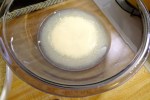
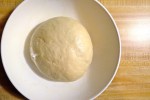
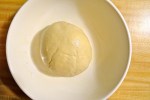
2. Using a wooden spoon, stir in the flour, a little bit at a time, until most of the flour has been absorbed and the dough begins to pull together. Turn the dough out onto a lightly floured countertop and knead it until it is smooth and elastic, about 5 to 6 minutes. Shape the dough into a ball and transfer it to a large lightly oiled bowl. Cover the bowl tightly with plastic wrap and let the dough rise between 8-12 hours in the refrigerator, or until it has doubled or tripled in size.

3. When the dough has risen, remove it from the refrigerator and punch it down. Let the dough rise again until it has doubled in size.

4. While the dough is rising, heat two tablespoons of olive oil in a heavy-bottomed saucepan over medium heat. Add the tomatoes. Reduce the heat to medium-low and simmer the tomatoes, stirring frequently, until all the oil has been incorporated and the sauce has thickened. Adjust the seasoning.

5. Preheat the oven to 400°.

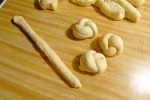
6. Divide the dough into 15 2-ounce portions. Use your hands to roll and stretch each portion into a 6-8 inch-long strip. Make a knot, and tuck the ends under the bottom of the knot. Arrange the knots on a parchment paper-lined sheet pan so that they are evenly spaced apart. Bake the knots for about 20-25 minutes, or until they are browned and golden.

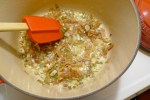
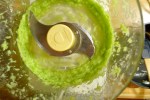
7. While the knots are baking, soften the green garlic in the olive oil and butter over medium heat. When the garlic is soft, season it with about a teaspoon of salt. Transfer everything to a food processor and process it until you have a smooth purée.

8. When the knots are done, remove them from the oven and let them sit until they are just cool enough to handle. Spread the green garlic purée over the top of each knot. Let the knots cool and absorb the the melted butter and olive oil in the purée. Sprinkle each knot with Parmesan cheese and serve with marinara sauce on the side.

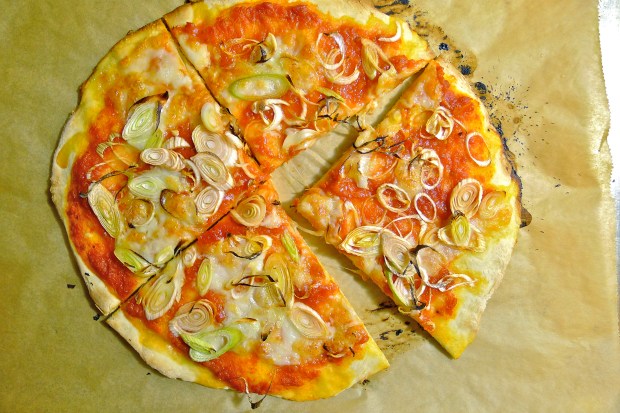
Young, Green Garlic Pizza


Have you seen Jim Lahey‘s new book? The one all about pizza? I have been a big fan of Lahey ever since I lived up the street from the Sullivan Street Bakery in Soho. Back then, I used to go over there almost daily for shots of Illy coffee and square slices of pizza, available in four varieties: Bianca, Potato and Rosemary, Tomato Sauce, and Mushroom and Thyme.

Since those years, Lahey has expanded the Sullivan Street Bakery and opened a pizza joint called Co. Co. is just about one of my favorite places for a pizza pie in the city. The dough is imperfectly perfect: lumpy, irregular, charred, crispy and toothsome, with just the right amount of salt and olive oil. When I saw that Lahey had published a book all about pizza, I got really, really excited.

Because I thought it would be really, really easy.

See, Lahey’s other book contained the über-recipe for no-knead bread. As long as you were willing to let the dough do its thing and rise overnight, you could have amazing bread with just about zero effort. You didn’t need a fancy oven, or a special starter, or a wooden paddle. You just needed a bowl and an oven-safe pot with a lid.

So of course, I assumed that his pizza would be just as simple.

In many ways, it is. You mix the ingredients, you let it rise overnight, you stretch it, you top it . . . and then you pull out your pizza stone, pizza paddle or pizza peel.

Insert screeching wheel sound here.

Lahey wants you to heat your pizza stone by positioning it about 8 inches from the broiler element before using your pizza paddle to slide your pie onto its hot surface. I have three problems with this:

A) I live in a tiny studio apartment and I don’t have any space left for any more pieces of specialized cooking equipment, no matter how “inexpensive” Lahey says they are.
B) My broiler has exactly three inches worth of clearance because the broiler unit is positioned underneath the actual oven. If I put a pizza stone in there, there will be no room for a pizza. If I do manage to wedge a pizza in there, chances are that I will set my apartment on fire.
C) I live in a rental.

I have no problem with letting dough proof overnight. Delayed gratification doesn’t bother me, but if there is one thing I abhor in terms of cooking it is being told that I can’t make X if I don’t have Y.

Especially when Y is a piece of equipment.

Pizza is pizza. It’s not molecular gastronomy, it’s peasant food — albeit very wonderful peasant food that has a cult following and official Italian government recognition.

Nevertheless, I refuse to be precious about pizza.

If you have a pizza stone, by all means use it. If you have a pizza peel, good for you. You are likely a more serious pizza aficionado than myself. If you have neither, you can still make a perfectly serviceable— and even an amazing pizza — without them.

I’ll worry about authenticity when I have the money, time and space to build a outdoor wood-burning oven just like they have in old Napoli.

Pizza dough is really easy to make at home. Generally, it consists of five ingredients: flour, yeast, olive oil, salt and water. Every time that I make pizza dough, I end up using a different recipe than I did before because I forgot to scribble down the proportions that I used. However, there is one dough that I keep coming back to consistently: Amy Scherber‘s “Push Button” Pizza Crust, published in The Chefs of the Times. Scherber’s dough is super easy to pull together; you just whizz all the ingredients together in a food processor for about 60 seconds total, and then let the dough rest for 60 minutes. You don’t have to toss it to stretch it, just use your fingertips to “press, prod, push and poke” the dough into place on a plain old cookie sheet. The crust gets wonderfully crispy in the oven, but it still has a little bit of give to it. It also has great flavor even though it has the same ingredients that every pizza dough has.

If you don’t have a food processor, you can just stir the ingredients together with a spoon, and then knead it until the dough feels elastic.

For the sauce, I make the simplest marinara ever using Jersey Fresh Crushed Tomatoes — which are amazing straight out of the can. All I do is heat about two tablespoons of olive oil in a heavy-bottomed saucepan, add the 28 ounces of crushed tomatoes, and simmer everything over low heat until the oil has been incorporated and the sauce has thickened. I love it. If the canned tomatoes are really good, it’s just the purest taste of tomato that you can imagine.

The #1 most important trick to perfect pizza at home is to go easy on the sauce and the toppings.

I know it’s hard to resist the urge to slather your dough with tons of sauce and cheese, but the more you pile on, the spongier your dough will be because all those toppings carry moisture. The more toppings you add, the less chance you will have of achieving a crispy crust.

And pizza really is all about the crust. So remember, less is more!

This is also the first post this year to feature spring vegetables. Green garlic is in! Whoo-hoo!!!

Ingredients:

For Amy Scherber’s “Push Button” Crust:

Olive oil

3/4 cup + 1 tablespoon of warm water (between 105-115°)

1 1/2 teaspoons of active dry yeast

2 cups of all-purpose flour

2 tablespoons of coarse cornmeal

2 1/2 teaspoons of salt

For the pizza sauce:

2 tablespoons of olive oil

1 28-ounce can of crushed tomatoes (if you don’t live in the Tri-State area, you can order Jersey Fresh tomatoes here, or use the best San Marzano tomatoes that you can find)

Salt

For the toppings:

1 ball of buffalo mozzarella

1 bulb of young, green garlic, thinly sliced on the bias along with some of the tender green stem

Special equipment:

1 half-sheet pan or a plain old cookie sheet

How to prepare:

For the dough:

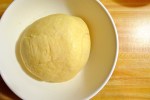
1. Whizz together the water, the yeast and 2 teaspoons of olive oil in the food processor. Add the flour, the cornmeal and 2 1/2 teaspoons of salt. Process everything together until the dough comes together, about 10 seconds. Process the dough for about 5 seconds more before turning it out onto a lightly floured countertop. Knead the dough briefly for about 30 seconds. Shape the dough into a ball and place it in an oiled bowl. Cover it with plastic wrap and let it rest for about an hour.

If you don’t have a food processor, you can mix the water, the yeast and the olive oil together with your fingers, and then incorporate the dry ingredients a little bit at a time with a wooden spoon. Turn the dough out onto a lightly floured countertop, and knead the dough until it becomes elastic. Shape the dough into a ball and place it in an oiled bowl. Cover it with plastic wrap and let it rest for about an hour.

2. While the dough is rising, heat two tablespoons of olive oil in a heavy-bottomed saucepan over medium heat. Add the tomatoes. Reduce the heat to medium-low and simmer the tomatoes, stirring frequently, until all the oil has been incorporated and the sauce has thickened. Adjust the seasoning.

3. Preheat the oven to 450-475°.

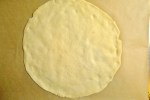
4. When the dough has risen, divide it in half if you want to make two round personal pizzas, or leave it as one ball of dough if you want to make one big rectangular pizza. Line your sheet pan with a parchment paper. Lift the dough out the bowl and stretch it out slightly. Place it in the center of the sheet pan. Using lightly oiled fingertips, press the dough out from its middle to its edges. Continue to pat it out until it is thin and evenly covers the pan.

5. Spoon just enough sauce over the dough so that there is a thin, even layer. Hand tear the mozzarella over the top, half a ball per round if you are making two round pizzas instead of one large rectangular pizza. Scatter the thinly sliced green garlic evenly over the top. Bake the pizza until the crust is golden and the top is bubbly, about 10-15 minutes.
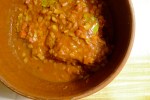
Split Pea Soup with Bacon Ends


A while ago, I was gifted a giant tub of bacon ends from a member of a different CSA. They languished in the back of my freezer until a deep spring clean last week.

Bacon ends are a terrific thing to have in the house — even if you’re like me and fall into the “out of sight, out of mind” camp. Just make sure that you have them somewhere you can see them at all times, a visual reminder that every dish is better with bacon.

Not only are bacon ends a good thing to always have on hand, but they are also much more economical than buying bacon strips. Chopped up and slowly browned, they make wonderful bacon bits. The rendered fat can be used in the place of oil or butter, or in anything that could be enhanced by some smoky porcine flavor.

And let’s be honest, what wouldn’t benefit from added porkiness?

People can sometimes be a little skeeved out by cooking with animal fat. However, so long as the pigs are pasture-raised by a farmer who follows organic practices, there should be no fear of needing Lipitor. Bacon fat from pasture-raised pork even has the added benefit of being a good source of vitamin D, making bacon fat certainly as good as butter!

I’m not saying that you should sit around the house and chow down on scoops of it, but a little bacon fat is much healthier for you than all those omnipresent, heavily-processed vegetable oils. My rule of thumb is that the more steps in processing it takes to get the food to your mouth, the less healthy it is for you. I would even go as far as to argue that it’s not even food at that point. This is why I always shake my head at people who buy low-fat foods because in order to make up for the taste and flavor deficit, those items are generally bulked up with tons of sugar — which might be worse for you than the fat.

Plus low-fat foods taste bad.

Anyway, no more ranting. Back to the soup!

Dried split peas scream for bacon! But if animals are not your thing, you can leave the bacon out and make the soup with smoked paprika instead.

Ingredients:

About 3 or 4 ounces of bacon or bacon ends, cut into small dice

1 small onion, chopped

1 large carrot, peeled and diced

2 stalks of celery, diced

1 pound (16 ounces) of dried split peas, picked over for small stones

2 bay leaves

4 cups of chicken or vegetable stock + 1 cup of water

Salt and pepper

Smoked paprika

Special equipment:

A hand-held immersion blender (optional)

How to prepare:

1. In a large Dutch oven, cook the bacon or bacon ends over medium heat with a little bit of olive oil until most of the fat has rendered. Reserve a few bits of bacon for garnish. Spoon off all but one tablespoon of bacon fat. Keep the bacon fat in a clean container in your freezer, and use it for other things like roasting potatoes, eggs, roasting chickens, anything really.

2. Add the vegetables to the pot. Let them cook until the vegetables have softened and the onion is translucent, about 5-7 minutes. Add the split peas and toss them with the vegetables until they are evenly coated with bacon fat. Add the bay leaves, the stock and the water. Bring everything up to boil, and then reduce the heat. Let the peas simmer until they are tender, about 45 minutes to an hour. Periodically skim the top of the soup of scum and grease. If the soup seems too thick, thin it out by adding more stock or water.
3. When the peas are tender, you can leave the soup alone if you like a chunky soup. I like to partially purée the soup so that it is creamier, but still has some interesting bits of vegetables and peas in it. This is super easy to do with an immersion blender. Just insert the stick blender into the soup and blend as much as you like. You can also transfer half of the soup to a regular blender or a food processor, then add the blended soup back to the unblended half. If you use a blender, keep your hand smacked tight onto the blender lid lest it go flying off, leaving your kitchen covered in pea soup spray. Adjust the seasoning for a final time, and thin the soup with stock or water again if it seems too thick.

Serve topped with a few of the reserved bacon bits, a dusting of smoked paprika and with some good, hearty bread.