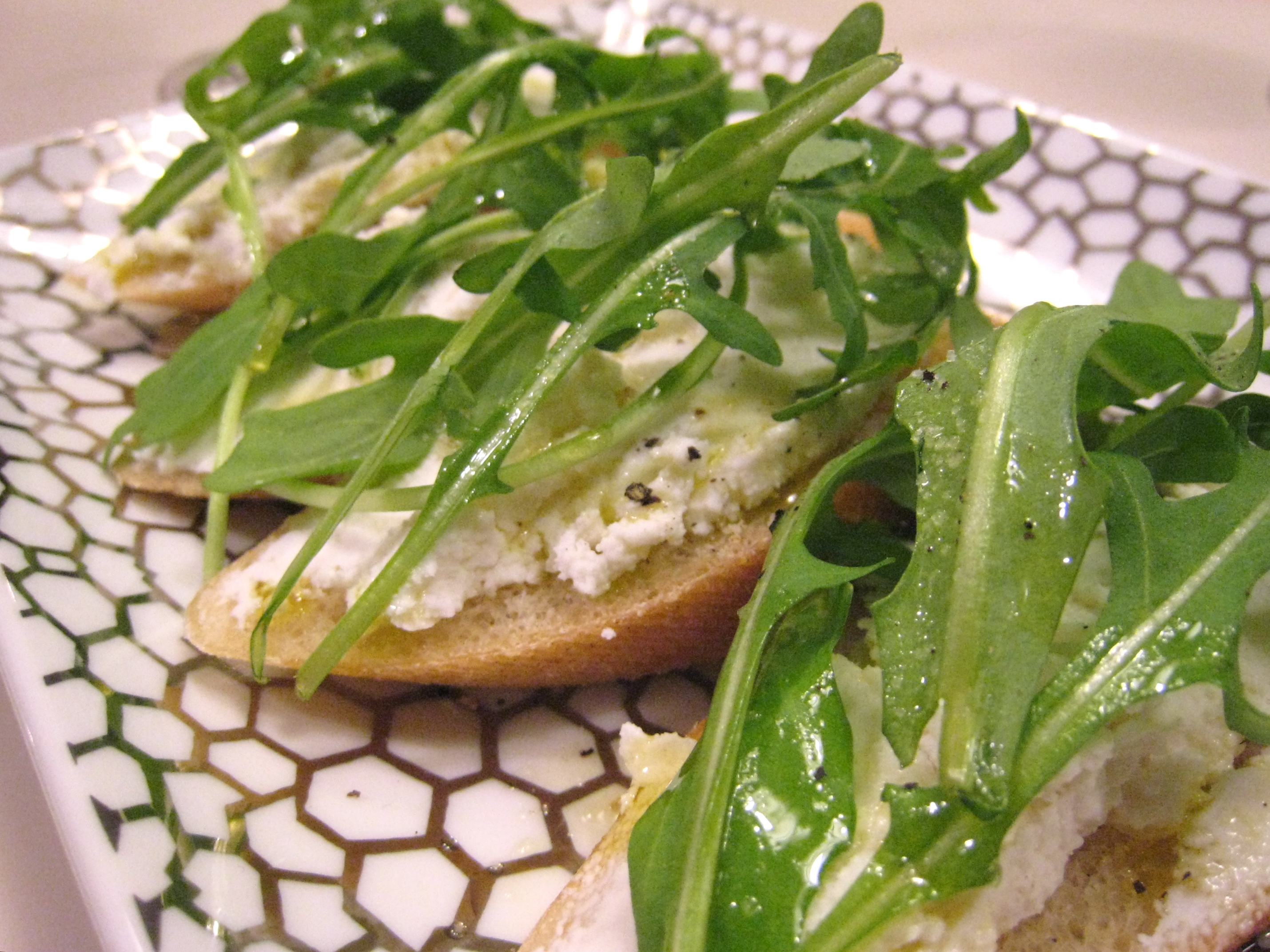
Bruschetta with Ricotta, Wild Arugula, and Olive Oil


This combo comes courtesy of Salvatore Brooklyn, makers of some of the finest whole milk ricotta this side of the pond. You can even make your own ricotta as they have made their recipe available to all. It is ridiculously easy to do, tastes fabulous, and gives you crazy bragging rights when your guests coo, “Oh my gosh! You made this!?”

In a pinch though, you can use store bought ricotta. Just try to buy the best and creamiest you can. Whole milk please. Full fat = superior mouth-feel.

To assemble, top toasted bread with a large schmear of ricotta. Artfully arrange a few leaves of peppery wild arugula. Drizzle with some super duper extra virgin olive oil. Finish with a sprinkling of flaky Maldon Salt or Fleur de sel.

And isn’t the plate so pretty? A wonderful gift from a wonderful friend!

Homemade Ricotta

Ingredients:

1 gallon of whole milk, the fullest and fattiest that you can buy

A good, healthy pinch of salt

The juice of one lemon

Special equipment:

Cheesecloth

A kitchen thermometer (somewhat optional)

How to prepare:

1. In a large pot, heat the milk and salt over high heat. Heat the milk until it reaches 190°, or you can just watch it until it reaches a good simmer (that’s about 180-190°). Turn off the heat and add the lemon juice. Stir the lemon juice in very gently and slowly. You just want to distribute the acid evenly. A vigorous stirring will break the curds up a lot. Let the pot sit undisturbed for 5 minutes or so.

2. Line a colander with cheesecloth. Place the cheesecloth-lined colander over a large bowl to catch the whey. Pour the curds and whey into the colander and let the curds strain on their own. Don’t squeeze the curds or press down on them. You can let it strain for an hour, but when the cheese looks like the consistency that you like (some people like looser ricotta, some people like denser ricotta), turn the cheese out of the cheesecloth and use it right away, or transfer it to an airtight container and refrigerate it until you want to use it.
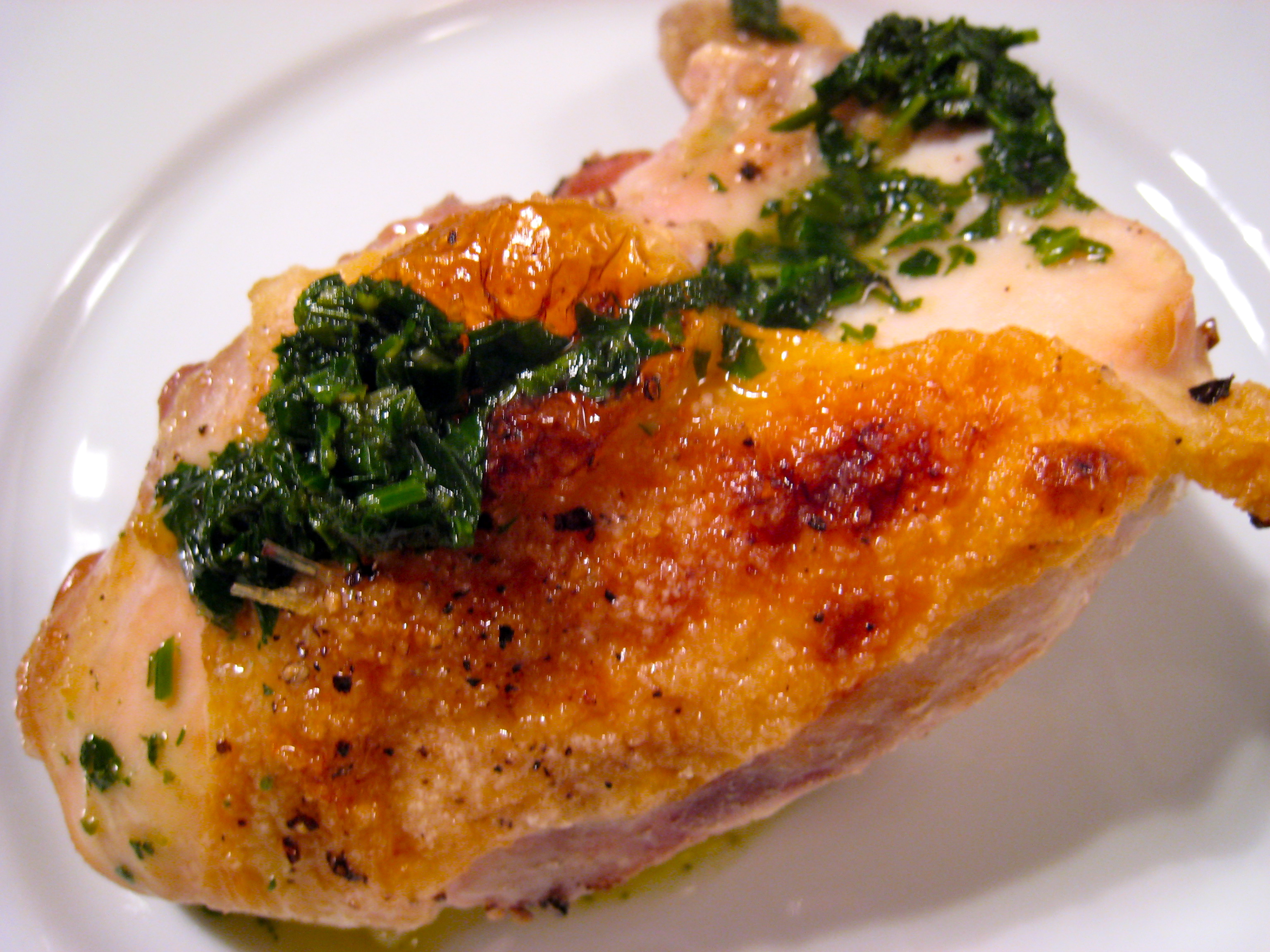
Jonathan Waxman’s Roast Chicken with Melted Herb Butter


Recently, I had dinner at Jonathan Waxman’s Barbuto — home to “supposedly” one of the best roast chickens in the city. I say “supposedly” because there are a lot of good chickens to be had in this town — including, ahem, my own.

Needless to say, I was skeptical. I just had to order it to see if it deserved its reputation.

From the first bite, nay from the first whiff, I was a goner. Juicy dribble slopped down my chin. My fingers were sticky and slick from the luscious melted compound butter dotting the surface. The skin itself was thin and crispy, popping in my mouth as I chewed.

Oh, swoon.

Before I realized it, half a chicken’s worth of bones lay in clean pile on the side of my plate. I knew I had to try to make this at home.

Waxman’s recipe has been easily available for a while. When I first looked it over, the old skepticism resurfaced: A warm water bath for the raw chicken? Cooked only under the broiler? Olive oil, no butter?

This negative thinking persisted as I fished slimy, raw chicken pieces out of warm, greasy water, trying with seemingly no success to dry them off with an excessive amount of paper towels. Due to my East Village broiler’s inadequacy, I could only start the chicken under the broiler and had to finish the pieces in the oven.

How did it turn out? The flesh was amazingly tender, juicy, and flavorful. The seasoned skin sang with succulence. Oh, swoon once more.

It was really, really fantastic.

Jonathan Waxman, I will never doubt you again.

Ingredients:

1 3-4 pound chicken (preferably free-range, naturally raised, no antibiotics, no hormone, possibly kosher), cut into 8 pieces

2 tablespoons olive oil

Kosher salt and freshly ground black pepper

4 tablespoons unsalted butter

4 tablespoon chopped fresh herbs, such as rosemary, thyme, and parsley — whatever you have available

How to prepare:

1. Preheat your oven to 425°.

2. Relax the flesh by soaking the chicken for 5 minutes in a large bowl filled with enough warm water to cover it. Drain and dry the pieces thoroughly with paper towels.

3. Heat the broiler. Arrange the chicken pieces in a single layer in a large cast-iron pan, skin side up. Rub the chicken with olive oil, season well with salt and pepper

4. Place the pan under the broiler, about 2 inches from the heat source, and cook until the skin is perfectly golden brown. Move the pan to the oven and continue to cook, roasting the chicken until the skin is really crispy and an instant-read thermometer inserted in the thickest part of the thigh registers 165 degrees. Remove the pan from the oven and let the chicken rest while you make the herb butter sauce.

5. While the chicken is resting, melt the butter in a small skillet over low heat. When melted, stir in the chopped herbs, along with a little salt and pepper. Continue to slowly and gently heat the herbs until the butter has become infused with their flavors.

6. To serve, drizzle a spoonful of broken herb butter sauce over each piece of chicken. Serve right away.

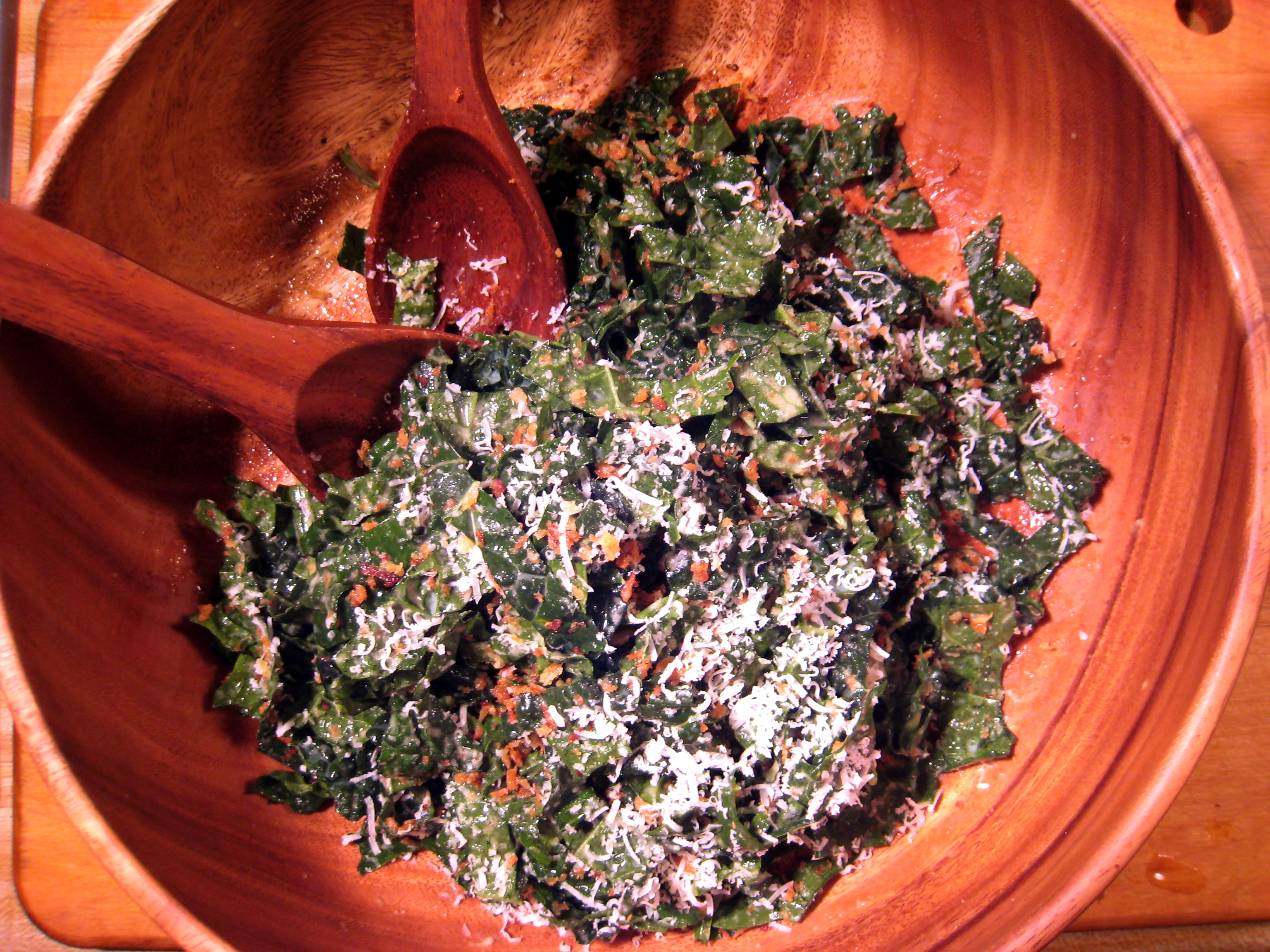
Tuscan Kale “Caesar” Salad


I have a cook’s confession to make: I don’t really like small, salty, oily fish, particularly when there are a lot of little bones to contend with. Mackerel has always made me feel slightly ill. Herring, sardines, or any other fish needing to be either canned or pickled before eating leaves me a little bit nauseous.

And let’s not even talk about anchovies.

I know. What kind of self-proclaimed gourmand doesn’t like anchovies? But I just can’t do it. It’s those little needle-like skeletons that so many people claim “dissolve,” but really don’t. And it is that persistent fishiness that sticks and clings, making me swear that I can smell it on my hands, clothes, and in my hair for hours afterwards.

So it is very ironic that I love Caesar salad.

It is just about the only dish with anchovies that I can abide by, so long as someone else does the dressing dirty work.

An abundance of lovely kale in the markets has had me thinking about kale salads. Kale is the kind of leafy green that cries out for strong flavors and tastes. Because it is so fibrous, you can dress it about an hour before dinner and let the acids in the dressing soften and relax the leaves into luscious, cruciferous ribbons.

Ever since reading about this Tuscan kale “Caesar” salad in the New York Times, I have been anxious to try it. Of course, some changes were made to suit my mood and what I had in the kitchen. For Pecorino, we were lucky and fortunate to have a fabulously savory and sharp wedge of Locatelli. Instead of croutons for crunch, I substituted some of Andrew Carmellini’s “Crumbs Yo!” One last Meyer lemon too. The result? A salad that was both tangy and delicate, mouthwateringly delectable and incredibly flavorful. I just want to eat it every day.

No anchovies required.

Ingredients:

1 bunch of Tuscan kale, stems removed and leaves cut into 1/2-wide ribbons

1/2 cup of “Crumbs Yo!” (1/2 cup of Panko bread crumbs, 1 tablespoon of olive oil, and salt and pepper to taste)

1 fat, minced clove of garlic

1/3 cup of freshly grated Pecorino Romano, plus more for serving

3 1/2 tablespoons of extra virgin olive oil

The freshly squeezed juice of one lemon

1/8 of a teaspoon of red pepper flakes

Salt and pepper to taste

Special Equipment:

A hand-held immersion blender

How to prepare:

1. In a small bowl, combine the garlic, Pecorino, olive oil, lemon juice, red pepper flakes, and salt and pepper. Using a hand-held immersion blender, whizz everything together until it forms a nice emulsion, just about 15 seconds or so. Let stand for 5 minutes or more to let the flavors meld together.

2. Meanwhile, make the “Crumbs Yo!” In a small sauté pan, heat the olive oil over medium heat. Add the bread crumbs, salt, and pepper to the warmed oil, tossing gently to evenly coat all of the crumbs. Continue to toast the bread crumbs until they are golden brown, about 3 to 4 minutes. Remove the bread crumbs from the heat, and transfer them to a cool plate or bowl. Let them cool for about 4-5 minutes.

3. Using your hands, toss the kale with the dressing in a large salad bowl until all the leaves are evenly coated. Let sit for at least 5 minutes (but you can let it sit for longer) before adding the bread crumbs and tossing again. By adding the bread crumbs near the end, you can preserve their crunch. Shower the salad with some more freshly grated Pecorino right before serving.

Spaghetti and Meatballs


In general, the restaurants that are nearest and dearest to my heart are the one’s that are the least complicated. Just straightforward, quality food. Beautifully sourced and expertly prepared. No foams, no fuss.

For this reason, I have always been a big fan of Frankies Spuntino. In the years since opening their doors — first in Carroll Gardens and then on Clinton Street — Frank Falcinelli and Frank Castronov’s food has never failed to put a big smile on my face. This is good, solid, tasty cooking at its best.

In June, the gastronomic duo released their first cookbook, The Frankies Spuntino Kitchen Companion & Cooking Manual. It’s a beautiful tome to own, filled with charming fine-line drawings and direct prose. Like their food, it is exceptionally accessible.

This meatball recipe is mostly theirs, though the basic tomato sauce is my own. While making them at home, I forgot to add the eggs, but did not find that the flavor suffered. Maybe my meatballs were a little springier as a result. If I had to do it again, I think that I would do something to make the raisins and the pine nuts not so obtrusive by either substituting golden raisins for dark. Even better still, I think I would use currants. The pine nuts I might think about coarsely chopping too.

Ingredients:

2 slices white bread (about 1 packed cup’s worth)

1 pounds lean ground beef (from High Point Farms if you have it!)

2 finely minced cloves garlic

1/4 cup finely chopped flat-leaf parsley

1/4 cup grated Pecorino Romano, plus about 1 cup for serving

1/4 cup raisins

1/4 cup pine nuts

1 1/2 teaspoons fine sea salt

7 turns white pepper

1/2 cup Panko bread crumbs

Basic tomato sauce

Spaghetti

How to prepare:

1. Heat the oven to 325°F. Put the fresh bread in a bowl, cover it with water, and let it soak for a minute or so. Pour off the water and squeeze the excess out the bread as best as you can. Tear it into tiny pieces.

2. In a mixing bowl, combine the bread with all the remaining ingredients except the tomato sauce and the spaghetti. The mixture should be moist-wet, not sloppy-wet. If the mixture is too moist, you can adjust it by adding more Panko.

3. Gently shape the meat mixture into handball-sized balls. Space them evenly on a baking sheet or arrange them evenly in a large cast-iron pan. Bake for 25 to 30 minutes. The meatballs will be firm, but still juicy and gently yielding when they’re cooked through.

4. Meanwhile, reheat the tomato sauce in a deep-sided pan that is large enough to accommodate the meatballs and sauce comfortably.

5. Put the meatballs into the pan of sauce and turn the heat up a little. Simmer the meatballs for no more than half an hour so they can soak up some sauce. Any longer that 30 minutes, and they start to disintegrate.

6. Meanwhile, prepare the spaghetti according to directions.

7. Top each serving of spaghetti with 3-4 meatballs and a healthy helping of the sauce. Shower the bowl with the freshly-grated Pecorino and a little finely chopped parsley. Serve immediately.