Sliced Andouille Sausage with Boiled Fingerling Potatoes


I can’t say that I would wholeheartedly recommend Elaine Sciolino‘s recently published La Séduction: How the French Play the Game of Life. It’s not that it isn’t interesting, or that the anecdotes that she includes don’t entertain — they do. Maybe it’s the tone. Or the fact that I can’t figure out whether it is meant to be some kind of non-scientific monograph on seduction,  or some kind of memoir.

I will say that if you are in frequent contact with a bunch of French people, it can be illuminating. Had her book been around earlier, it might have given me some insight as to how to have made my graduate-student life easier by not taking things so seriously.

That being said, you can sum up the book like this:

It ain’t fun if it ain’t charming. And if it ain’t charming, it’s probably American.

Maybe that’s why I don’t like the book: the author is clearly very cultured, intelligent, well-read, and well-traveled, but still manages to come off as a frustrating rube.

She’s been living in France since 2002.

In the end, Sciolino cannot help but be charmed over and over again by the French. But each of these “you-won-me-over” moments follows the exact same cycle: Journalist doesn’t understand why the French do X. Journalist seeks the help of the French intellectual crème de la crème to help explain it to her. She still doesn’t understand, and protests using the the biggest American clichés and cultural stereotypes at her disposal. She tries it out reluctantly. It works. She is now a converted.

There was one chapter that I very much enjoyed: the story about when Guy Savoy (Guy Savoy!) invited her to take a quick trip with him to his mother’s house to have lunch with his family.

It might almost be worth the book — or at least reading it in the bookstore, and then putting it back on the shelf.

Even when Savoy is chez maman, he can’t help being in control: Where is the cream! Where is the knife! No, the one that cuts! Smell this! Try this! Where are the glasses! Champagne!

And the meal is fabulous. Full of stick-it-to-your ribs country goodness: salad, andouille, butter, potatoes, côte de boeuf, petits pois, morels, vanilla and raspberry ice cream, more cream, white sugar, meringue, hazelnut biscuits, coffee, obligatory nap.

On their way back to Paris, Savoy admits that he had never brought an outsider to his mother before. Why, Sciolino asks, did he take her?

To which Savoy replies (and this is exquisite), “I didn’t do it for you, I didn’t do it for me. I did it for France.”

But of course.

So of course after reading that, I had to have my own simple little country affair: just some excellent CSA andouille done in the oven, served with boiled local fingerling potatoes cut into coins. Melted butter and parsley.

Does that need a recipe?

Probably not, but I have found that there is a helpful order of preparation:

1. Set your oven to 350°.

2. In a large pot of salted water, boil the potatoes until you can easily pierce them with a paring knife. Drain them and set them aside to cool enough so you can handle them without burning your fingers.

3. Rub the andouille with olive oil, and pop it in the oven. It should cook for about 10-15 minutes. The andouille that I get from my CSA is pretty lean, so it might cook more quickly than yours. Check it after about 10 minutes for doneness, and leave it in the oven for longer if it needs more time.

4. In a small saucepan over low heat, melt about 4 tablespoons of butter with 1 teaspoon of salt and freshly ground black pepper. When the butter is melted, turn off the heat and add about a tablespoon of finely chopped parsley.

5. When the sausage is done, slice it into coins, along with the fingerling potatoes. Spoon the melted butter and parsley on top of the potatoes, and serve immediately.


High Point Farms: Fall CSA Membership Drive is on!


CSA sign-ups for the fall have begun!

The upcoming distribution cycle will run every other Thursday from September to November.

Pick-up dates are as follows:

• September 8
• September 22
• October 6
• October 20
• November 3
• November 17

Pick-up will run from 4:30 to 7:00PM.

There will be two pick-up sites this round:

Manhattan (with yours truly):

Jimmy’s 43 (43 East 7th Street, between First and Second Avenues)

Brooklyn (with awesome Sam):

CrossFit Virtuosity Williamsburg (221 North 8th St, between Driggs and Roebling)

Sign up to meet your meat here.

Andouille Pigs-In-A-Blanket


What’s cuter? Pigs-in-a-blanket, the name “pigs-in-a-blanket,” or real pigs in blankets?

Regardless, whoever came up with pigs-in-a-blanket is a complete genius!

Pigs-in-a-blanket can go upscale. You could use nice puff pastry, and nestle your “pigs” in flaky baskets of buttery goodness. But is that going too fancy?

When I think of pigs-in-a-blanket, what I want good ol’ uncomplicated nostalgia . . . okay, nostalgia with a twist.

So use that commercial tube of pop-out crescent rolls! Preheat your oven to 375°. Take about half a pound of excellent CSA andouille, and cut it into 1 1/2 to 2-inch sections. Cut each section into quarters. Separate the crescent roll dough into its pre-cut triangles. You will need to split each triangle kind of “in half.”

Wrap a triangle of crescent roll dough around each andouille sausage quarter. Spread them out evenly on a baking sheet lined with parchment paper. Bake your andouille pigs-in-blankets for about 12-15 minutes, or until golden and flaky. 

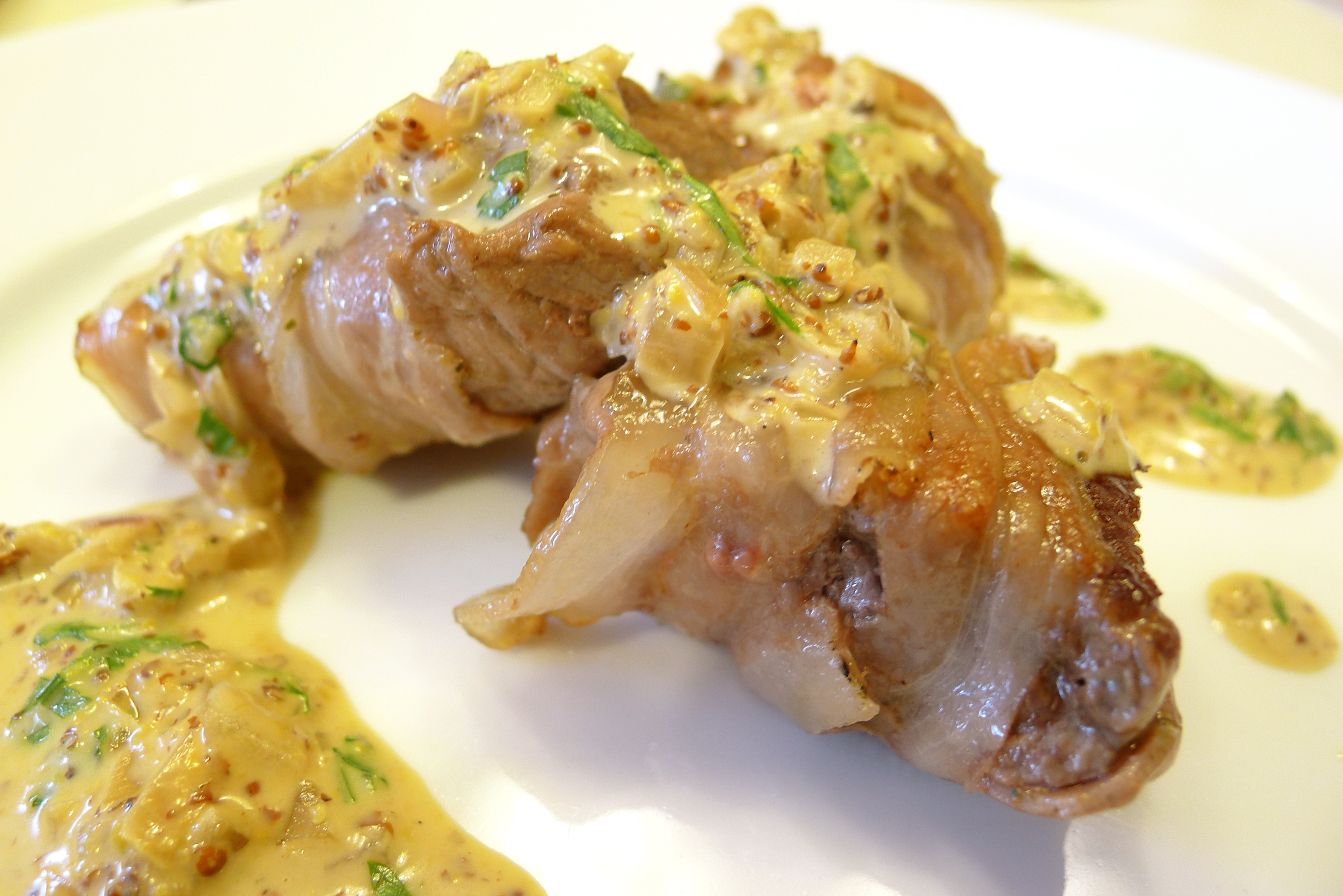
Pancetta-Wrapped Beef with Mustard Cream Sauce


When looking for a recipe to try, I find myself repeatedly drawn to certain things. In general, I prefer natural food pairings: peas and mint, asparagus and parmesan, brussels sprouts and bacon. Even though I like flavor combinations to be on the conventional side, I do want food to be inspired, but never forced. I don’t like tortured dishes made from overly complicated recipes — meaning the ones with too many things going on.

I look for balance. I want harmony. The plate has to “work.” Most importantly, it has to let the ingredients shine. The emphasis should be on letting food taste like what it is supposed to taste like. I’m not that keen on hiding the flavors with a bunch of heavy spices, nor do I look fondly on over-worked preparation.

Simplicity is best. Simplicity is not boring, it’s elegant.

That is what I like about this recipe. It’s just enough work to be interesting, but not so much that it is a chore. I have tweaked it a bit from its original, but it makes a terrific little meal when you don’t have a lot of time, but want a lot of style.

Ingredients:

1 pound of tender cut beef, cut into 2-inch cubes (you should have about 12 cubes total)

About 12 thin slices of pancetta or proscuitto, one per beef cube

2 tablespoons of canola oil

1 shallot, finely minced

1/4 cup of Bourbon

1/4 cup of water

1 tablespoon coarse Dijon mustard

1/4 cup of heavy cream

2 tablespoons of parsley, finely chopped

How to prepare:

1. Pat the beef cubes dry with paper towel. Wrap each cube with a slice of pancetta or a slice of proscuitto, making sure to cover as much of the cube as possible. If you have rolled pancetta, you can unroll it and then wrap it around each cube.

2. In a large cast-iron skillet, heat the oil over medium-high heat until it starts to shimmer. Place the wrapped cubes seam-side down in the pan. Sear the cubes evenly on all sides, about a minute or two per side. You want the beef to stay medium rare, but the pancetta to crisp a little bit.

Remove the beef cubes to a paper towel-lined plate while you finish the sauce.

3. Reduce the heat to medium, and add the shallots to the same skillet. Sauté the shallots until they begin to get translucent, scraping up the browned bits from the bottom of the pan as you go. Carefully add the bourbon and the water to the pan. Dissolve the browned bits in the added liquid. Once most of the alcohol has cooked away, add the mustard and the heavy cream. Stir everything together. Continue to simmer the sauce until it has thickened. Turn off the heat, and add the parsley to the sauce.

4. To serve, top the beef cubes with the sauce and eat.

Food News: FDA Lowers Safe-Cooking Temperature for Lean Pork to 145°

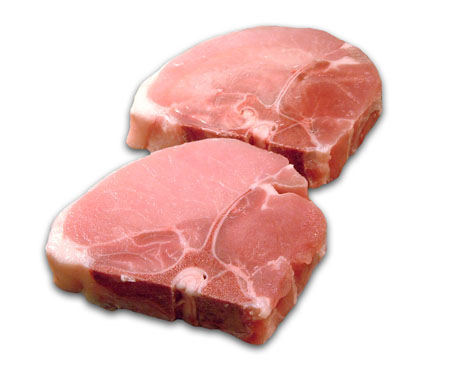
About darn time for the FDA to lower their safe-cooking guidelines for lean pork chops.

No more 160° hockey pucks.

It’s now a recommended an internal temp of 145°, kids!

That means take your pork off the heat at 140° and let it for three minutes.

Pinky porky chops for all!

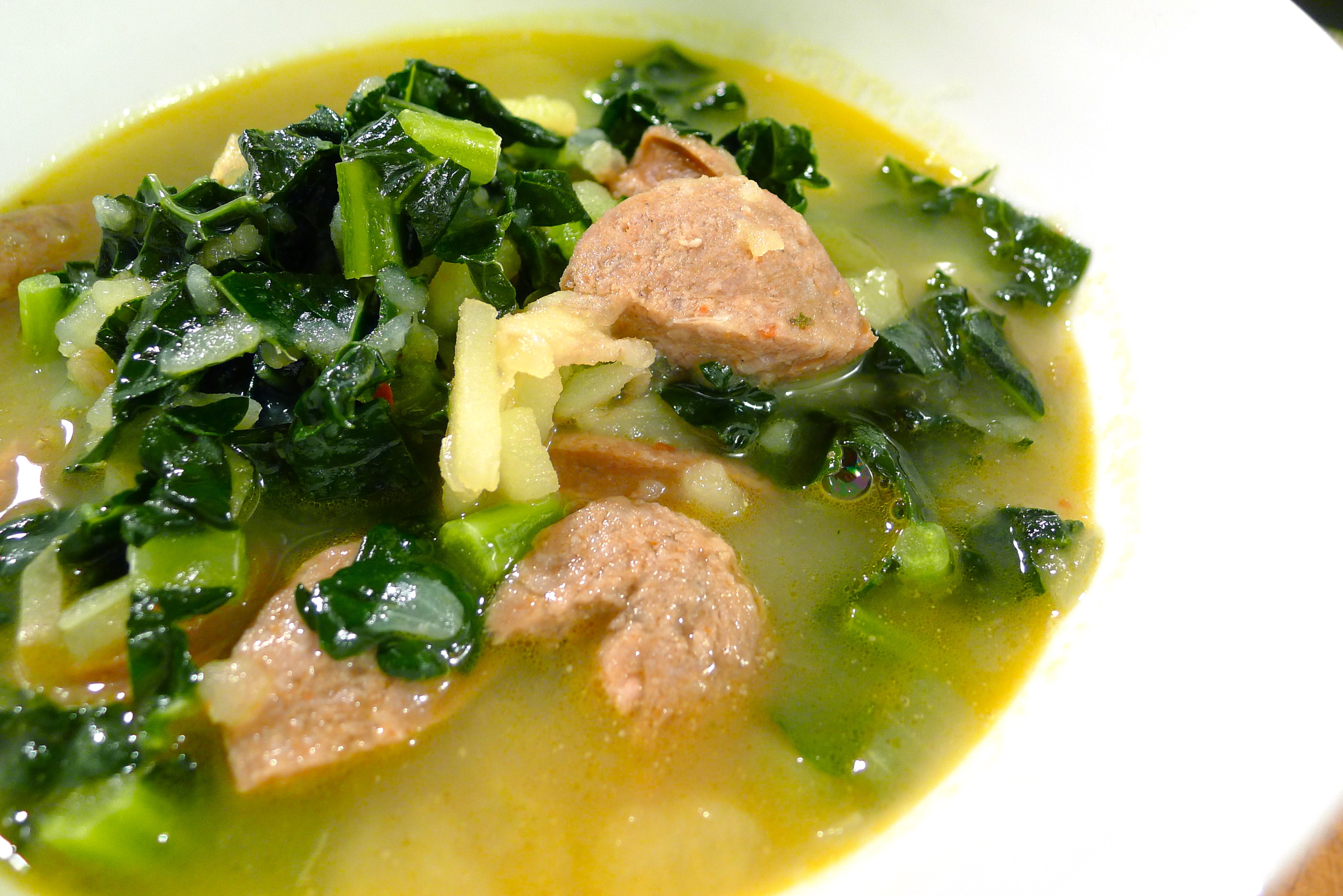
Caldo Verde


It is officially spring in New York, but it certainly doesn’t feel like it. It feels schizophrenic actually as beautiful sunny days alternate with dark gray ones filled with freezing rain and hail.

Yeesh.

This has led to a kind of odd assortment of things to eat at home as I vacillate between going out with friends for dinner (it’s so nice out!) and wanting to stay at home and burrow under the covers until the chill finally goes away.

While perusing the contents of my fridge and freezer yesterday to see what I could whip up for dinner from its random contents, I was super happy to find a pair of CSA chorizo hiding behind some frozen loaves of bread to go along with a nice bunch of kale in the crisper.

I love the combination of kale and chorizo. There is something about the clean bitterness of the leaves that marries so beautifully with the spiciness and bite of the sausage. The flavors always make me think of sunnier places like Spain and Portugal. Places where I can eat standing upright in a bar, tossing cheap paper napkins on sawdust-covered floors willy-nilly.

This soup is good for this strange weather we have been having. It’s warming and comforting, but full of bright, big, assertive flavors. It gets even thicker and spicier overnight.

Ingredients:

1 large yellow onion, finely chopped

1 tablespoon of olive oil

3 yukon gold potatoes (about 1 pound), halved and cut crosswise into 1/8-inch thick slices

4 cups of chicken stock

1/2 pound of chorizo, cut into half-inch pieces

1 big bunch of lacinato or Tuscan kale, cut crosswise into 1/2-inch ribbons

Salt and pepper to taste

How to prepare:

1. Heat the tablespoon of oil over medium heat in a large, heavy-bottomed casserole. Sauté the chorizo in the hot oil until it is browned, about 5 minutes. Transfer the chorizo to paper towels to drain.

2. Pour off any excess oil in the pot, leaving about 2 teaspoons. Sauté the onion in the same pot over medium heat until the onion begins to become golden. Add the potato slices to the onions and toss them together. Continue to cook both for about 4 minutes more. Add the chicken stock and bring everything up to a simmer. Continue to cook the soup until the potatoes are very tender.

3. Using a potato masher, coarsely crush about half of the potatoes in the pot. Add the chorizo back to the pot and continue to simmer the soup for about 5 more minutes. Add the kale and continue to cook the soup for about 10 minutes more. Adjust the seasoning now, keeping in mind that the chorizo will probably add a fair bit of saltiness to the soup.

4. Let the soup stand about 10 minutes before serving. It will get even thicker and spicier overnight.

Milk and Honey Roasted Spare Ribs (St. Louis-Cut)


Over the years, I have come across a fair number of recipes for pork cooked in milk.

Pork? Yes. In milk? Yes.

Very un-kosher.

I’m not exactly sure of where the technique finds its origins. Italy probably. The esteemed Elizabeth David cites the Veneto in particular, but I’ve also heard Bologna. Naples even.

In any case, if you don’t mind flouting several dietary laws at once, this is a pretty awesome way to ring in Spring and celebrate Biblical bounty in a truly transgressive way.

Yes, Friends, we are cooking cloven-hooved creatures in milk and honey!

A few weeks ago I got an amazing rack of ribs in my CSA share. Serendipitously, the NYT published a series of recipes about roasting ribs in the oven. Meant to be? A secular sign?

Yes!

Though the ribs take a good 2 hours or so to cook, the milk acids make the meat meltingly tender. The milk proteins and sugars create the most delectable crust. It’s like meat lollipops dipped in dulce de leche.

It’s not gross, it’s Italian.

Ingredients:

1 rack of St. Louis-cut spare ribs, or two racks of baby back ribs

2 tablespoons of olive oil, plus 2 tablespoons

2 tablespoons of fresh rosemary, chopped

3 cloves of garlic, finely minced

Salt and pepper to your liking (I like about about a teaspoon of salt and a good couple grinds of pepper)

1 yellow onion, peeled and halved

2 bay leaves

2 tablespoons of red wine vinegar

2 tablespoons of honey

2 cups of whole milk

1 cup of heavy cream

How to prepare:

1. If you haven’t done so yet, remove the membrane from the back of the rack of ribs. Flip the ribs bone-side up. Using the flat handle of a spoon or a butter knife, loosen the membrane from one end of the rack of ribs. Grasp the loosened end with a paper towel and pull the membrane slowly in the direction of the opposite end. It will probably come off in one piece but if not, you can just grab the torn end and continue. To help visualize, here is a pretty great Youtube how-to clip from BBQTalk.

2. In a small bowl, mix together the oil, rosemary, 2 tablespoons of olive oil, salt and pepper with your fingers. Lay the ribs out on a large sheet of plastic wrap. Rub the mixture all over the ribs. Arrange the ribs on top of the onion halves. Lay the bay leaves on top, and sprinkle the ribs with the red wine vinegar. Wrap the ribs up tightly in plastic wrap and refrigerate them for between 6 to 12 hours.

3. Set the oven to 350°. Remove the ribs about 30 minutes to an hour before roasting.

4. Pour the remaining 2 tablespoons of olive oil into the bottom of a heavy-duty sheet pan. Heat the oil in the oven for about 5 minutes. Add the onion halves and the ribs — rounded side-up — in the pan and roast them for 30 minutes. Drizzle the ribs with the honey and roast them for about 10 minutes more. Then, turn the ribs over and pour the milk and cream over them. Roast the ribs for another hour.  After an hour, if you notice that the ribs are starting to brown too much, cover them with a sheet of parchment paper or aluminum foil. Continue to cook them for another 30 minutes to an hour more until they are tender enough for you to be able to pull the ribs apart with your fingers.

5. Remove the ribs from the oven and let them rest on a cutting board for about 5 to 10 minutes. Cut the ribs into sections and serve immediately.

Juicy Skillet Pork Chops


I’m on the fence about Cook’s Illustrated, the cooking magazine published by America’s Test Kitchen. On the one hand, their recipes work. They really work. Chris Kimball and his team of test cooks try just about every technique in and out of the book to achieve perfection.

Which they do . . . but on the other hand, they can also saddle the average home cook with a severe case of insecurity if he or she decides to cook something a different way.

However, they do come up with really ingenious ideas about how to get consistent and reliable results: flaky pastry? use vodka not water! perfectly cooked steaks with no gray ring of over-cooked protein? start them in the oven and then sear them in a hot pan!

Despite my reluctance to say that there is one and only one way to cook something and make it delicious, sometimes by doing it their way, you really learn and eat something wonderful.

When we got some nice thick-cut pork chops in our CSA share, I immediately thought that the best way to make their super-porky flavor shine would be to do it the Cook’s Illustrated way.

This is not really a recipe, but technique:

Start with your chops. You want wonderful, natural pork chops — not enhanced chops, which are pre-brined. You want them thick and meaty too, between 1/2 and 3/4 of an inch thick. Bone-in, of course. You want to make two perpendicular slits in the fatty edge of each chop. This will prevent your pork chops from curling up as they cook. Rub them on both sides with some nice olive oil. Cook’s Illustrated recommends you sprinkle some sugar on both sides along with your seasoning, but I’ve forgotten sometimes and had it still turn out fine.

If you have an electric hob, turn it on now to medium heat, but don’t put the pan on the burner just yet. You don’t need to do this if you have a gas range.

You want to start them in a cold pan. That’s right. A cold pan. Press the chops down in the pan to make sure that the whole underside of the chop is in contact with its surface.

Now, put the pan on the burner. Turn the heat on to medium. Leave them alone and cook them until they are lightly browned, about 4-9 minutes depending on the thickness of your pork chops. Doing it this way doesn’t get the nice brown crust that starting pork chops off in a hot pan does, but you do get amazingly juicy and evenly-cooked meat. Be sure to listen for gentle sizzling. If your pork chops aren’t gently sizzling, your heat is too low.

Flip your chops over. Cover the pan and reduce the heat to low. The second side will not be as brown as the first. You want to cook your chop until the internal temperature registers 140° — perfectly safe, and perfectly pinkish. Start checking the temperature after 2 minutes, or if you have one of those leave-in thermometers, insert it into the center of the chop and set the timer to go off at 140°.

Remove the pork chops from the pan and let rest for 5 minutes, just enough time to make a quick pan sauce.

Oven-Roasted Baby Back Ribs

Finger-lickin' good.
It is official: my mother is a kitchen saboteur.

For Valentine’s Day this year, I decided to toss some ribs in the oven and save my boyfriend and myself from a night out. I was thinking something fun to eat. Finger food. Something fast and easy.

I thought of my mom’s fantastic oven-roasted baby back ribs.

When I asked her for the recipe, she casually tossed out something more like a manner than a method with what I realize now to be a completely non-realistic cooking time.

“35 minutes? For real?”

I hooted with joy. Thirty five minutes of roasting meant that I could leave off dinner until the last minute! I could dawdle around the supermarket playing with squeeze bottles of agave syrup and Dijonnaise without feeling the pressure to get going and get home!

So I went about my day, happy and relaxed. Then my mother called somewhere around the dairy section to say that it was actually about 35 minutes . . . after the first hour.

First hour? What first hour! Am I hard of hearing? Does my cellular service suck?

No, I can hear fine. The service is not terrific, but the call was crystal.

My mother had lied. Again!

And again, it turns out, as she had to call back a second time to say that it was actually more like 35 minutes to an hour after the first hour.

Well, mine ended up taking about one hour and 40 minutes. I imagine that that can be a little less or more depending on thick your racks of ribs are.

So here is a great, super easy recipe for juicy, falling-off-the-bone ribs done in your oven.

Seriously, no lie.

Ingredients:

1 or 2 racks of baby back pork ribs

1/3 of a cup of dark brown sugar per rack of ribs

1 heaping tablespoon of steak seasoning or rib rub (I like one with some smoke) per rack of ribs

Special equipment:

One half-size sheet pan

One wire rack to fit the sheet pan

How to prepare:

1. Pre-heat the oven to 375°.

2. The secret to melt-in-your mouth tender ribs? You have to remove the membrane on the back of the pork ribs. It’s super easy to do and allows your ribs to cook nice and flat, without curling up. It also makes them much nicer to eat. Flip the ribs bone-side up. Using the flat handle of a spoon or a butter knife, loosen the membrane on one end of the rack of ribs. Grasp the loosened end with a paper towel and pull the membrane slowly in the direction of the opposite end. It will probably come off in one piece but if not, you can just grab the torn end and continue. To help visualize, here is a pretty great Youtube how-to clip from BBQTalk.

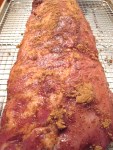
3. In a small bowl, mix together the brown sugar and seasoning with your fingers. After you have dried off your rack of ribs with paper towels, rub the brown sugar-seasoning mix into both sides of the rack. Lay the rib(s) out on the wire rack.

4. Set the racks of ribs in the oven. Carefully pour about 2 1/2 to 3 cups of water into the bottom of the sheet pan. The water should not touch the bottom of the wire rack. Roast the ribs in the oven at 375° for one hour. Lower the temperature to 350° and continue to roast until the ribs are tender and buttery, about 40 minutes to an hour longer depending on the thickness of your rack of ribs. Remove carefully from the oven. Let the ribs rest for 5 to 10 minutes before slicing and serving.

Holiday Ham with Pomegranate Molasses, Black Pepper and Bourbon Glaze


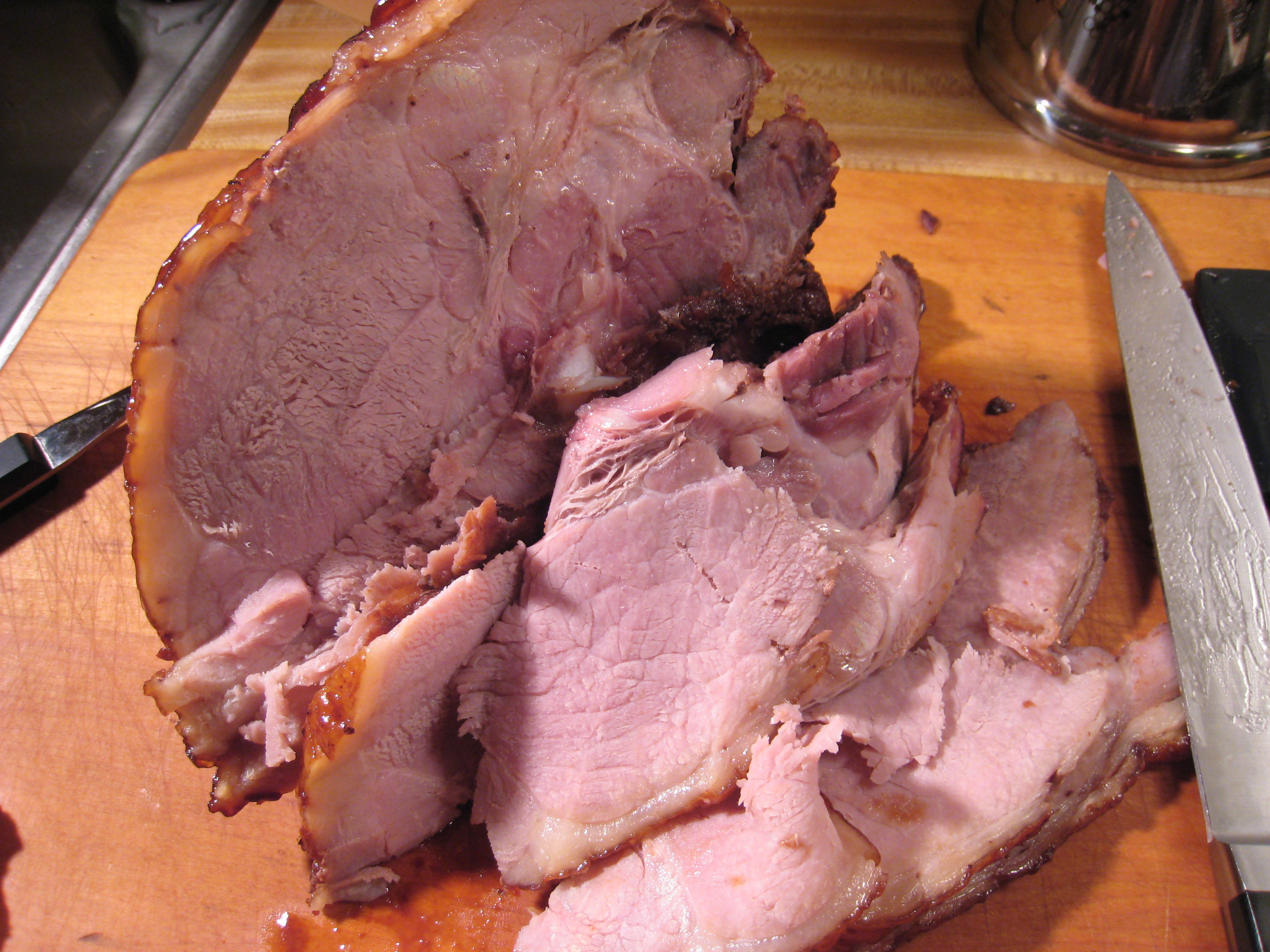
There was a special treat in the CSA basket last week: a beautiful ham.

Growing up, hams in my household were always honey-baked affairs, spiral-cut and gifted by friends and relatives who came to the house bearing boxes of See’s Candies. I don’t think I ever remember my parents baking a ham themselves, so this was a new experience for me.

What to do with a lovely ham? When Tina from High Point Farms suggested a glaze, something in clicked in my mind that I had filed away in my mental “To Cook” folder: pomegranate.

I have been seeing crates of pomegranates lately in the market. ‘Tis the season!

Though native to ancient Persia, the pomegranate figures prominently in the Greek myth of Persephone. Dear Persephone, minding her own business in a field, is abducted by her uncle Hades and spirited away to the underworld to be his bride. Overwrought with sorrow, her mother Demeter, Goddess of the Harvest, plunges the Earth into brutal winter. With nothing growing, Zeus sends Hermes to demand that Hades return her daughter to her. But not without caveats : Persephone can only return if nothing — no food nor drink — from the Underworld has passed her lips. Good Persephone had indeed been denying herself both, but when presented with a gorgeous pomegranate, she is unable to resist and swallows six ruby-red seeds. For this, she is allowed to be reunited with her mother for 6 months out of the year — 6 glorious months filled with sunshine and green, growing things — before returning to Hades, leaving her mother’s sadness to expand over the cold and frigid earth.

Such a story! To be seduced by a pomegranate! Certainly something to think about as the ham bakes, filling the apartment with warm, cuddly smells of sweet spice and exotic fruit. Maybe, I wondered as I basted another candy-colored layer onto the ham, it was worth it after all?

This recipe is from the terrific food blog, Food 52. It calls for pomegranate molasses, which I assume is easily available in most ethnic and specialty food markets. Actually, I wouldn’t know because I found it even easier to just make my own. You can too. The recipe is super easy and doesn’t require much attention, leaving you free to mind other things.

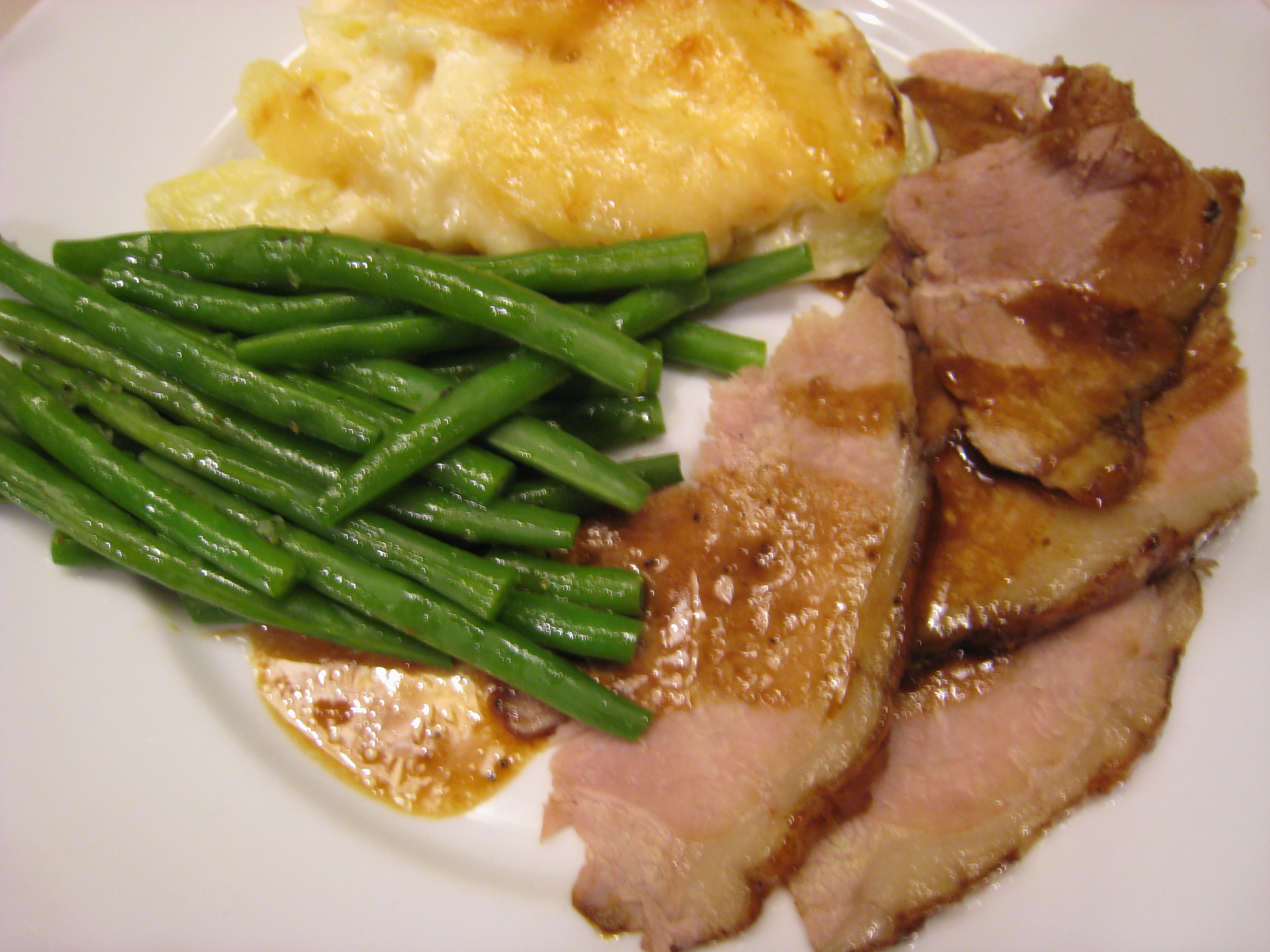
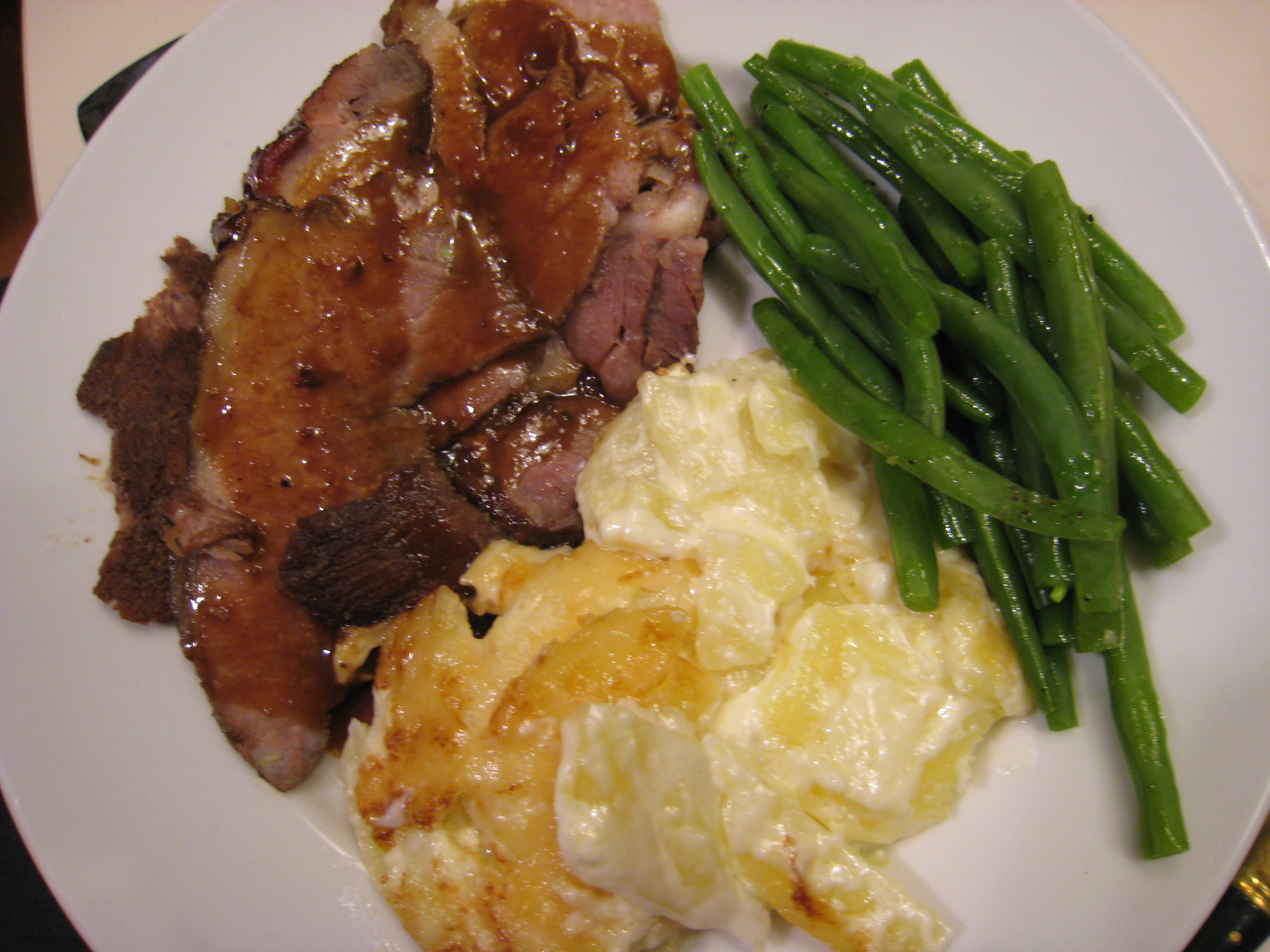
The glaze is spectacular. So interesting, it is tart, tangy, sweet and smoky all at once. Don’t skip reducing whatever remains into a quick pan sauce and drizzling it with abandon on top of your pearly pink slices of ham. We served it with a golden potato gratin and some blanched green beans.

Ingredients:

1 bone-in ham roast, about 3 lbs.

3/4 cups of pomegranate molasses*

1/4 cup of Dijon mustard

2 tablespoons of bourbon

1 tablespoon of freshly ground whole black pepper

1 teaspoon of ground allspice (optional)

1 teaspoon of kosher salt

How to prepare:

1. Let the ham come up to room temperature. Plan on about an hour before cooking.

2. Preheat the oven to 325 F.

3. To make the glaze, combine the pomegranate molasses, Dijon mustard, bourbon, pepper, allspice and salt in a bowl and whisk until well-blended.

4. Place the ham, fat side up, in a roasting pan. Score the fat in a cross-hatch pattern without incising the meat. Generously baste the ham with the glaze. Bake it in the oven, basting occasionally, until the internal temperature of the ham is 120°. The ham should be a deep golden brown and crusty at this time. If not, increase the heat to 450° and continue to bake for a few minutes longer, keeping an eye on it so it doesn’t burn. Remove the ham from the oven and transfer it to a cutting board. Let it rest 20 minutes before carving.

5. Transfer the remaining basting sauce to a small saucepan along with the skimmed pan juices. Simmer everything briefly to thicken it and burn off the alcohol. Slice the ham and serve with the sauce drizzled on top.

Note:

To make you own pomegranate molasses, combine 4 cups of 100% pomegranate juice (it can be from concentrate, just be sure to look at the label closely to make sure that the juice is not a blend), 1/2 a cup of sugar, and the juice of one lemon in a saucepan. Stir the mixture to dissolve the sugar and bring it to a boil. Lower the heat to medium-low and cook until everything has reduced to about a cup of liquid. You don’t really need to stir it at all. This should take about 60-70 minutes and you should end up with a thick syrup. Let the molasses rest for about 30 minutes. It should thicken a little more as it cools. Transfer the molasses to a covered container. It should keep in the fridge for about 6 months.