Nigel Slater’s Blueberry-Pear Cake


One of my favorite books is Nigel Slater’s The Kitchen Diaries. Part cookbook, part, well, diary, longtime Observer columnist Slater takes you through a year in his life food-wise. He doesn’t give an entry for every day (and some days he doesn’t even cook at all), but each one is a beautiful little snippet of real life lived well.

I love Slater’s writing voice, which seems to be a reflection of his cooking: honest and personal. He has had some training, but is not a chef per se (neither was Julia). That doesn’t mean that his food suffers; Slater is a good eater who appreciates food, and loves to share generously. Who can’t respect that?

His recipes are dead-simple, but they are made with the assumption that you know your way around the kitchen. Sometimes, they are a little skimpy on details, but they do all work (at least the ones that I have tried).

His tastes are also very, very British, which — forgive me — might be construed as a somewhat dumb statement to make, given that he is British. That being said, there are some things to note:

1. The Brits eat a lot of gooseberries, and drink a lot of things flavo(u)red with elderflower.
2. They like desserts named “fool” and “mess,” and collectively dessert is referred to as “pudding.”
3. There is a lot of smoked fish.
4. Chili is spelled with two l’s.
5. Curry powder is common.
6. Parsley sometimes seems bizarrely interchangeable with cilantro.
7. Cilantro is called “coriander.”
8. “Medium-rare” can infuriatingly mean “medium-done.”

As for Mr. Slater himself, he has:

1. A kick-ass garden.
2. A beautiful wooden-plank farm-house table.
3. A lot of chipped dishes.
4. A kick-ass neighborhood deli.

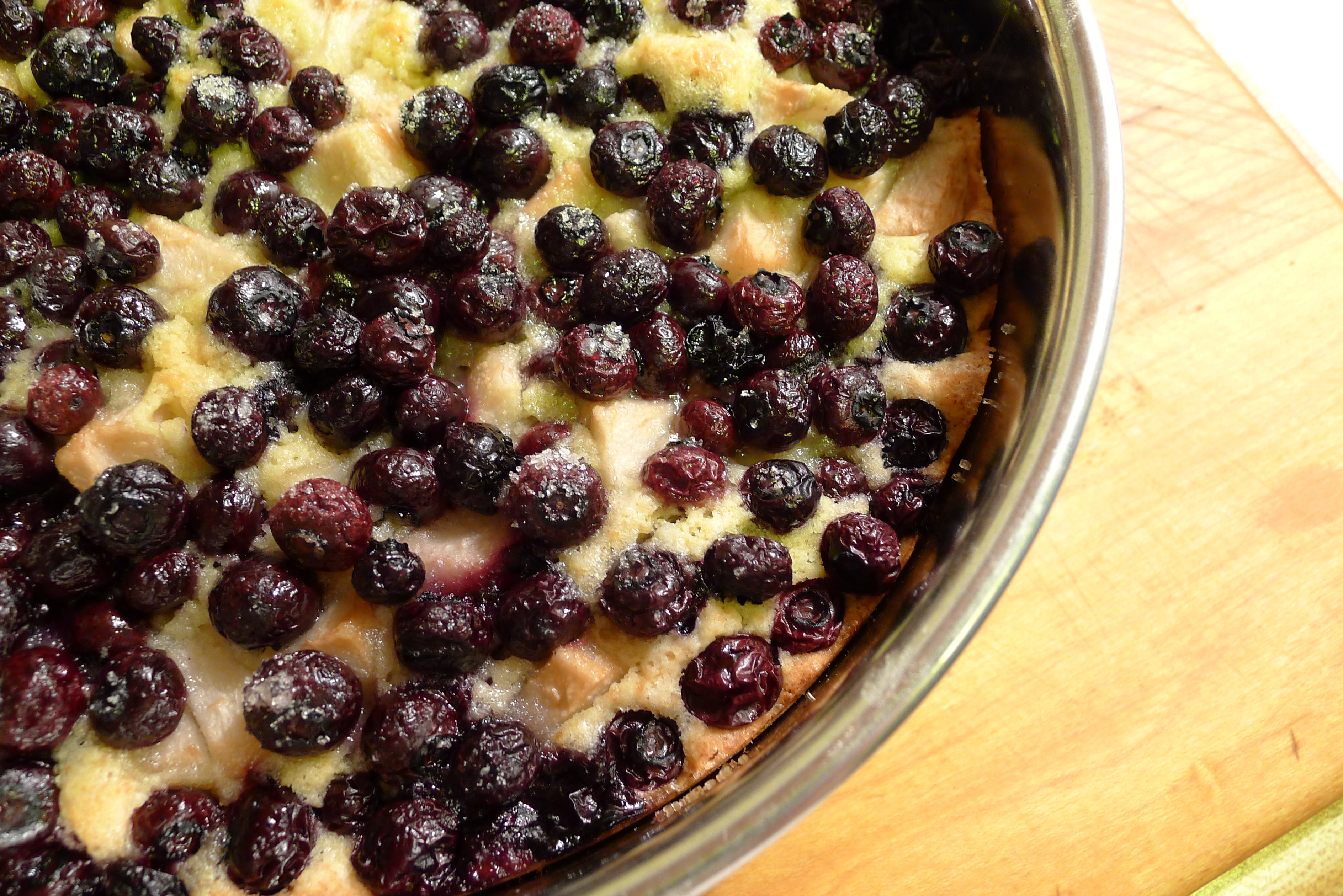
This recipe adapted from Slater’s is a terrific way to take advantage of the blueberries currently in the market. It comes together quickly, and looks beautiful. Though Slater makes no mention of it in his Diary, my dining companion did suggest that a little jug of crème anglaise on the side would be a nice addition.

Ingredients:

1 1/4 cups of flour

A pinch of salt

1 teaspoon of baking powder

1/2 cup of good butter, softened

1/2 cup of sugar

2 eggs, beaten

1-2 ripe pears, peeled, cored, and cut into small pieces

1 large pint of blueberries

About 2 more tablespoons of sugar

Special equipment:

A spring-form pan

How to prepare:

1. Preheat the oven to 350°. Butter the bottom and sides of the spring-form pan. Line just the bottom with a circle of parchment paper.

2. Sift or stir together the flour, salt, and baking powder.

3. In a separate large bowl, beat the butter and sugar together until the mixture is pale and fluffy. Add the beaten eggs slowly to the butter/sugar mixture. While continuing to beat everything together, add the dry ingredients a little bit at a time until they are fully incorporated. The resulting batter will be a little thick.

4. Pour (or spread) the batter out in an even layer over the lined bottom of the spring-form pan. Scatter the pear pieces and the blueberries evenly across the top of the batter. Sprinkle the fruit with the remaining 2 tablespoons of sugar.

5. Bake for about 55 minutes to an hour. The top should be golden, and a skewer or knife inserted into the center of the cake should come out clean when it is done. Let cool before removing the spring-form pan’s outer ring.

Andouille Pigs-In-A-Blanket


What’s cuter? Pigs-in-a-blanket, the name “pigs-in-a-blanket,” or real pigs in blankets?

Regardless, whoever came up with pigs-in-a-blanket is a complete genius!

Pigs-in-a-blanket can go upscale. You could use nice puff pastry, and nestle your “pigs” in flaky baskets of buttery goodness. But is that going too fancy?

When I think of pigs-in-a-blanket, what I want good ol’ uncomplicated nostalgia . . . okay, nostalgia with a twist.

So use that commercial tube of pop-out crescent rolls! Preheat your oven to 375°. Take about half a pound of excellent CSA andouille, and cut it into 1 1/2 to 2-inch sections. Cut each section into quarters. Separate the crescent roll dough into its pre-cut triangles. You will need to split each triangle kind of “in half.”

Wrap a triangle of crescent roll dough around each andouille sausage quarter. Spread them out evenly on a baking sheet lined with parchment paper. Bake your andouille pigs-in-blankets for about 12-15 minutes, or until golden and flaky. 

Steak and Eggs

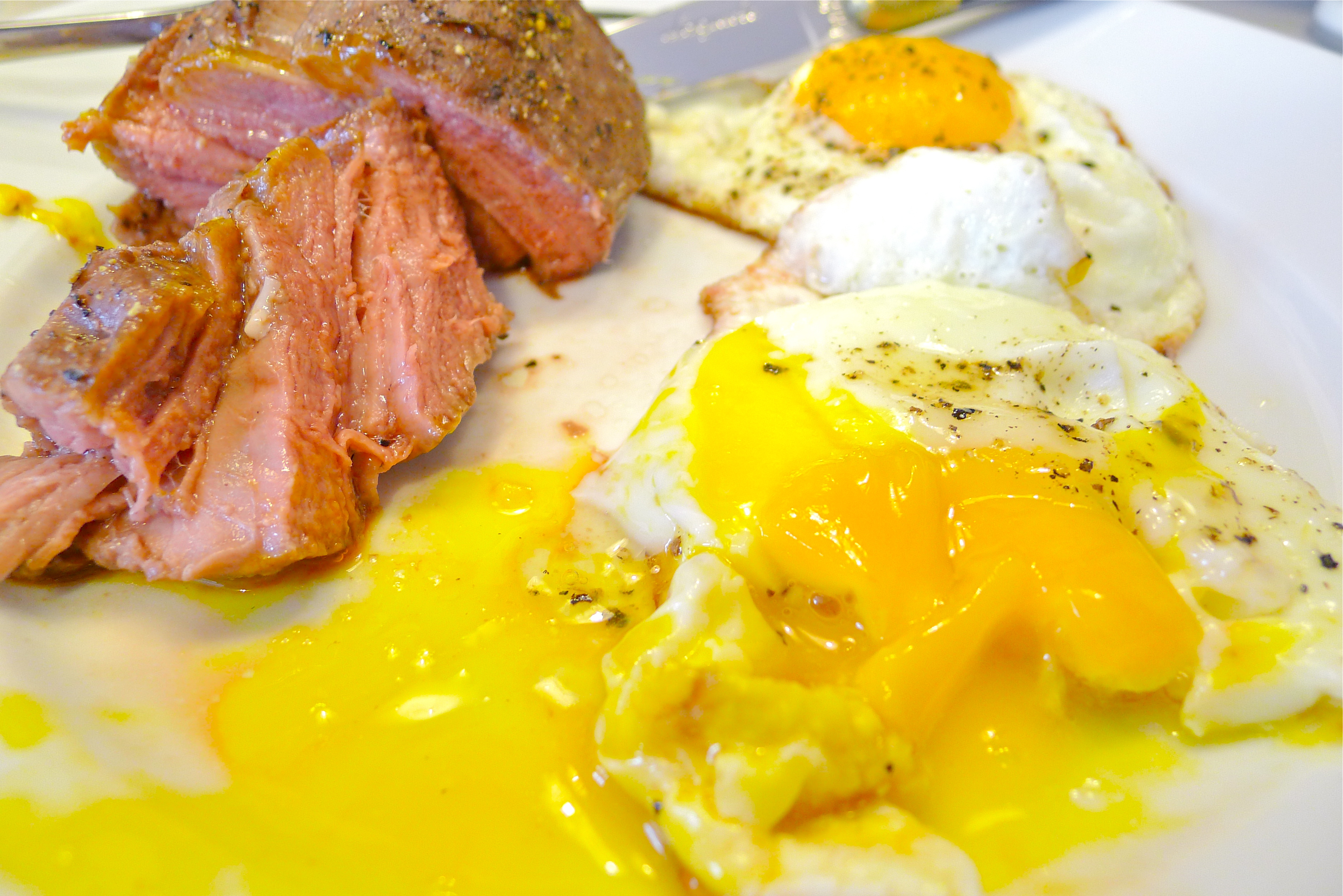
Do you really need a recipe for steak and eggs? The title pretty much says it all. However, I did manage to distill the instructions into three easy steps . . . and in haiku too!

How to prepare:

1.

Room temperature.
Season with salt and pepper.
Heat oil till smoking.

2.

Sear steak on both sides.
Will have a very nice crust.
Let it rest a bit.

3.

Fry up your two eggs.
Sunny-side up is my thing.
Please keep yolks runny

4.

Sometimes toast is nice.
It is not necessary,
But it is tasty.

Freshly Shucked Peas


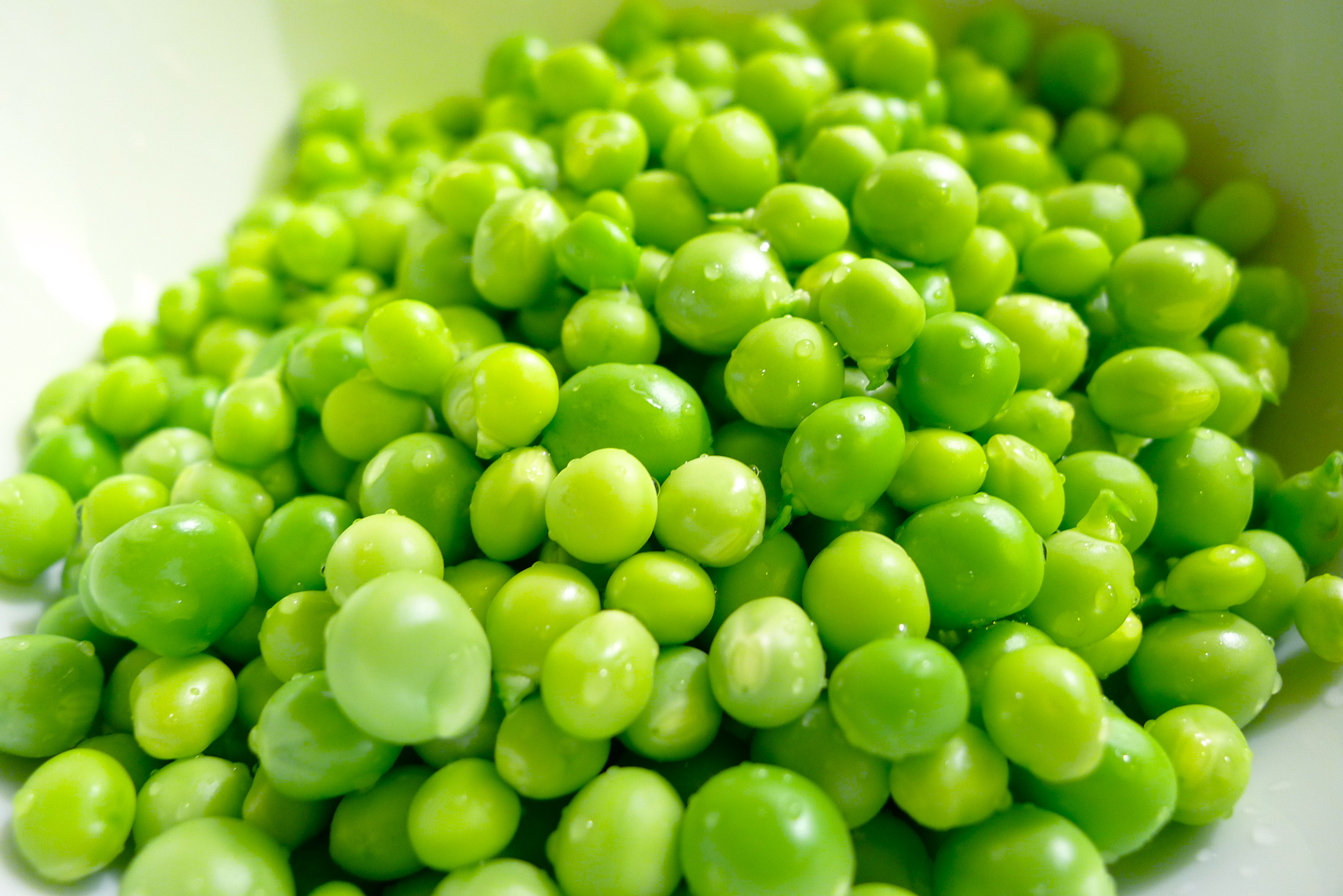
This crazy spring/summer has been a little bit of a wrench in what has been coming to market lately. A shortened period of sweet, delicate spring vegetables, and an early arrival of things like squash. In any case, freshly shucked peas are wonderful — despite President Obama’s recent diss!

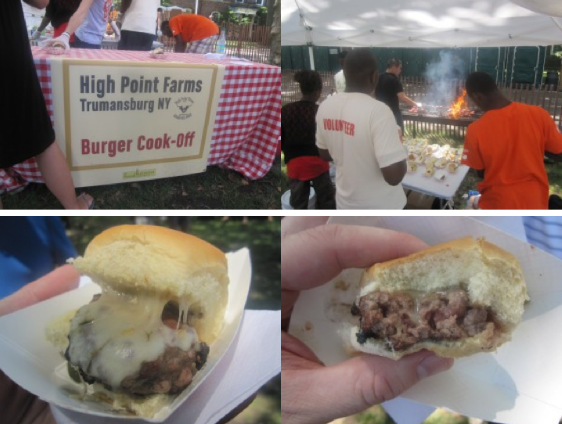
High Point Farms takes Best Burger at Cook Out NYC on Governor’s Island

Photos courtesy of the Reverend at burgerconquest.com.

Happy cows make delicious burgers! Congratulations to High Point Farms for taking the Best Burger award at last weekend’s Burger Cook-Off on Governor’s Island! Go CSA!

Read about the event here.

And see more pictures of the event here!

Lemon Pasta Salad with Sun Gold Cherry Tomatoes and Feta


This is another great pasta salad recipe from Epicurious
. I didn’t deviate from it too much. I changed some of the proportions for the dressing, and substituted chives for the green onions (sometimes green onions can be really overwhelming).

Also, the recipe calls for red cherry tomatoes and for red bell pepper, but as I prefer more contrasting colors, I opted for the deliciously sugar-sweet Sun Gold.

Ingredients:

For the dressing:

7 tablespoons of good extra-virgin olive oil

The juice of two lemons

The zest of two lemons

1 fat clove of garlic, grated

1 to 1 1/2 heaping tablespoons of coarse-grain Dijon mustard

For the rest:

1 pound of penne

1 pint of Sun Gold cherry tomatoes, quartered (or halved if they are small)

1 red bell pepper, seeded and diced

1 cup of crumbled French feta (I sometimes find Greek feta too salty)

1 bunch of chives, finely chopped

How to prepare:

1. Bring a large pot of salted water to boil. Add the penne and cook it until it is al dente.

2. Meanwhile, whisk the ingredients for the dressing together in a large mixing bowl. A Microplane grater is terrific for both the lemon zest, and for grating the garlic.

3. When the pasta is done, drain it and rinse it with cold water to cool it down quickly. Drain the pasta again and add it to the dressing, along with the tomatoes and the bell pepper. Toss all of the ingredients together, making sure that the pasta is well-coated. Add the crumbled cheese and the chives. Toss again. The cheese, the chives, and the vegetables should be evenly distributed throughout the salad. Adjust the seasoning if needed (depending on how salty the mustard and the feta are, you might not have to).

Pack it up for the party, or eat it immediately.

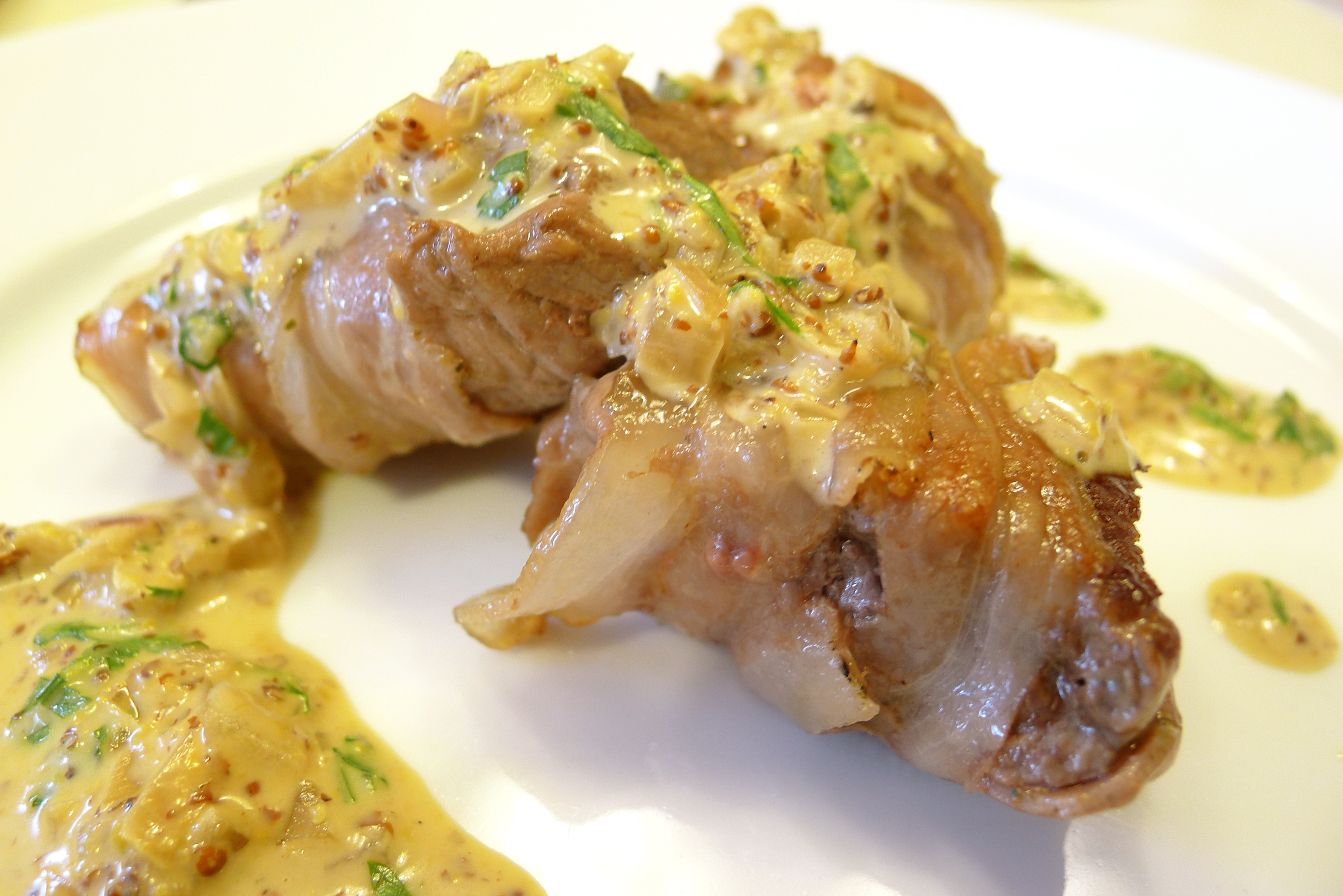
Pancetta-Wrapped Beef with Mustard Cream Sauce


When looking for a recipe to try, I find myself repeatedly drawn to certain things. In general, I prefer natural food pairings: peas and mint, asparagus and parmesan, brussels sprouts and bacon. Even though I like flavor combinations to be on the conventional side, I do want food to be inspired, but never forced. I don’t like tortured dishes made from overly complicated recipes — meaning the ones with too many things going on.

I look for balance. I want harmony. The plate has to “work.” Most importantly, it has to let the ingredients shine. The emphasis should be on letting food taste like what it is supposed to taste like. I’m not that keen on hiding the flavors with a bunch of heavy spices, nor do I look fondly on over-worked preparation.

Simplicity is best. Simplicity is not boring, it’s elegant.

That is what I like about this recipe. It’s just enough work to be interesting, but not so much that it is a chore. I have tweaked it a bit from its original, but it makes a terrific little meal when you don’t have a lot of time, but want a lot of style.

Ingredients:

1 pound of tender cut beef, cut into 2-inch cubes (you should have about 12 cubes total)

About 12 thin slices of pancetta or proscuitto, one per beef cube

2 tablespoons of canola oil

1 shallot, finely minced

1/4 cup of Bourbon

1/4 cup of water

1 tablespoon coarse Dijon mustard

1/4 cup of heavy cream

2 tablespoons of parsley, finely chopped

How to prepare:

1. Pat the beef cubes dry with paper towel. Wrap each cube with a slice of pancetta or a slice of proscuitto, making sure to cover as much of the cube as possible. If you have rolled pancetta, you can unroll it and then wrap it around each cube.

2. In a large cast-iron skillet, heat the oil over medium-high heat until it starts to shimmer. Place the wrapped cubes seam-side down in the pan. Sear the cubes evenly on all sides, about a minute or two per side. You want the beef to stay medium rare, but the pancetta to crisp a little bit.

Remove the beef cubes to a paper towel-lined plate while you finish the sauce.

3. Reduce the heat to medium, and add the shallots to the same skillet. Sauté the shallots until they begin to get translucent, scraping up the browned bits from the bottom of the pan as you go. Carefully add the bourbon and the water to the pan. Dissolve the browned bits in the added liquid. Once most of the alcohol has cooked away, add the mustard and the heavy cream. Stir everything together. Continue to simmer the sauce until it has thickened. Turn off the heat, and add the parsley to the sauce.

4. To serve, top the beef cubes with the sauce and eat.

Chicken Fried Rice


Comfort food brings up all kinds of dishes: macaroni and cheese, meat loaf, casserole, matzo ball soup. French fries, ice cream, chocolate. These foods are comforting for lots of people. But comfort food is so subjective. What comforts someone, might be strange and unappetizing for someone else.

What makes food comfortable and familiar is oftentimes a complex interplay between memory, taste, nostalgia, personal history, ethnicity, and emotion. There is no existing formula to make things comforting; they either are or they aren’t.

Despite the subjectivity of comfort food, I do think that in order to be comforting, there are certain qualities that must be present:

1. The dish is usually warm. Sno-cones, for example,  evoke nostalgia. You can crave a Sno-Cone. Do you want a Sno-Cone to comfort you when you have had a disaster day at work? Probably not.

Ice cream maybe, but ice cream has enough fat to have a luxurious mouthfeel, negating the fact that it is cold.

2. It’s usually filling. True comfort should relax you. It should be full of soft middles and rounded edges. It should warm you from your core, and make you feel full and satisfied. It should make you feel safe, cosseted in familiar smells and textures.

3. It’s usually full of salt and fat, or fat and sugar. Despite efforts to negate our very human attraction to calories, millions of years of biology and evolution have made us creatures who crave fattening foods simply because they are fattening.

4. Comfort food should above all taste good. It should hit all the sweet spots, and tick all of the boxes.

If you had to say something about comfort food, it makes you happy to eat it. It takes your stress away. It transports you to a simpler, less complicated time. Recently, there was a NYT article about Filipino cruise ship workers who pull into Red Hook when their luxury liners dock in New York City. It’s really a great little story about how food can connect you, and make you feel closer to home.

And that is precisely what fried rice does for me. My mom would make fried rice for me after school, after long speech meets, after coming home too late, after long hours at summer jobs, after exhausting semesters at college, after months abroad. She would use leftover rice, and whatever else was in the fridge. It didn’t matter if it was some extra pork, or beef, shrimp, or chicken from the night before. Sometimes she had some broccoli, some carrots, some peas. Sometimes she just had some scallions, which — let’s be honest — she always has.

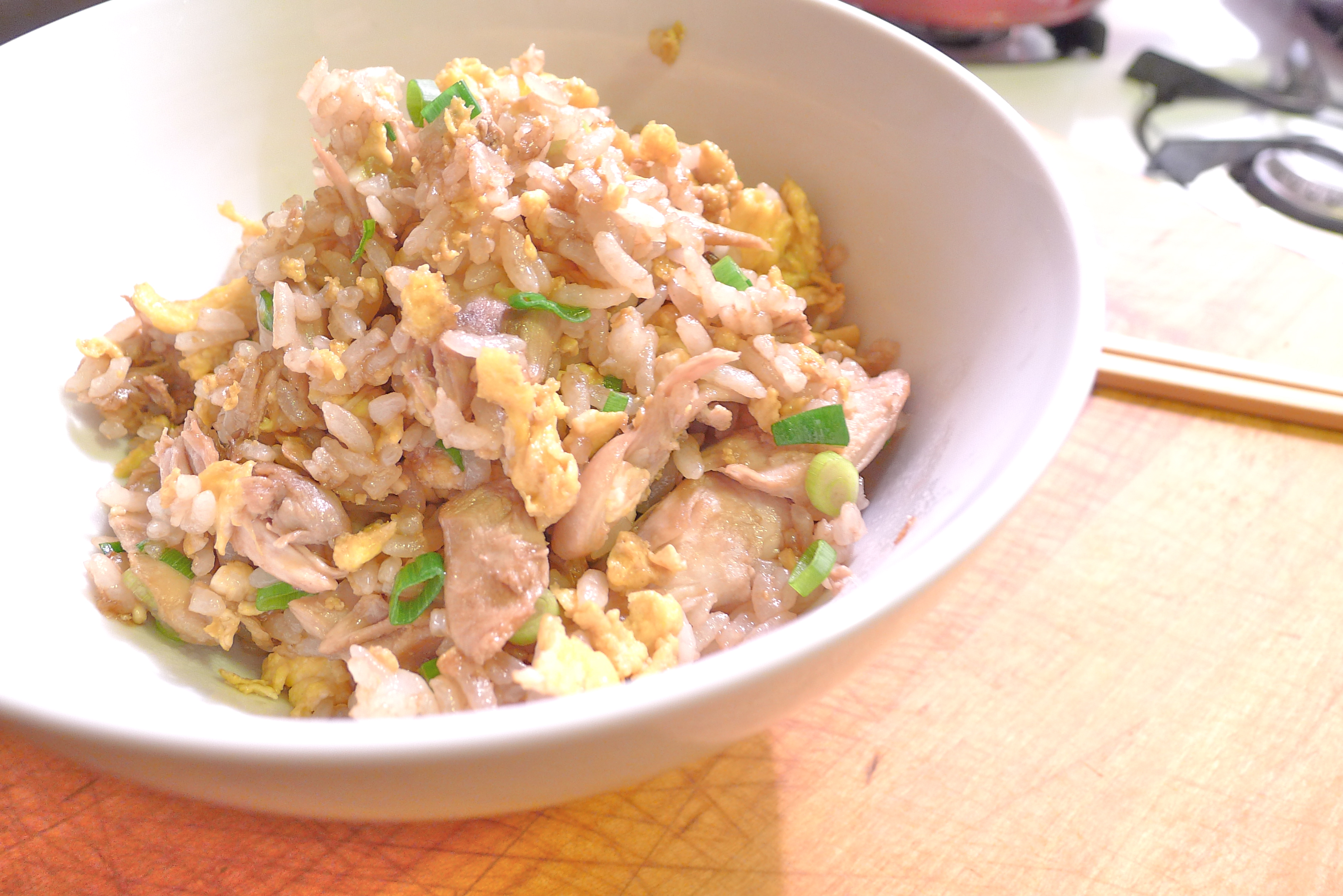
Left with some extra soy-poached chicken and steamed rice myself after dinner with Tomoko, I decided to do the same.

Fried rice has no recipe. What I do when I am just making it just for myself is I scramble two eggs in a skillet, breaking up the curds into smaller bits. When they are done, I remove them from the skillet and set them aside. I add about a tablespoon of vegetable oil to the same pan, and set it over medium-high heat. When the oil starts to shimmer, I add the rice, the chicken, and the eggs. I let the everything begin to brown and sizzle, stirring and tossing the ingredients together all the while. I add a few splashes of good soy sauce, continuing to move all the ingredients around with a spatula. Once most of the liquid has evaporated, I add a handful of chopped scallions. I toss everything together so that the scallions are evenly distributed throughout the rice. Then I eat, and think of home.

Sliced Filet Mignon with Fava Beans and Radishes


This is another recipe is from Epicurious. It is terrific for spring. I’ve modified the recipe a little bit, but kept the primary components.

I like to do steak in a pan the Tom Colicchio-way, basting the meat in butter as it cooks. Factor in about one steak per person.

I prefer my radishes crunchy, so I wouldn’t recommend letting them sit in the dressing for as long as the original recipe states.

I love fava beans. Get them fresh while you can (now is the season). They are extremely labor intensive to shuck and peel, but it is worth it. Here is a handy video clip to show you how if you have never cooked with fava beans before. Just ignore the cooking times that the cook in the clip recommends.

I never really measure out my oil or vinegar for the vinaigrette . . . If pressed, I would suggest that 3:1 ratio of oil to vinegar.

Ingredients:

About a 1/4 cup of extra-virgin olive oil

A splash of apple cider vinegar

Dijon mustard to taste (I use about a teaspoon and a half)

About 1/3 cup of fresh fava beans (from about 6-7 pods)

2 radishes, thinly sliced

2 filet mignon steaks, about 5-7 ounces each

Canola oil

Butter

Salt and pepper

About a tablespoon of chopped chives

Crumbled, soft goat cheese, or chèvre

How to prepare:

1. In a medium bowl, whisk together the vinegar, oil, and mustard until they form an emulsion. Adjust the seasoning to your taste.

If using fresh favas, you will first need to shuck the beans from the pods. Discard the empty pods, and blanch the beans in boiling water for about 2 minutes — any longer than that, and they will be mushy. Have an ice bath ready to shock the beans. By submerging the beans in ice water after draining them, you will retain their beautiful green color. When the beans are cool, you will need to remove the waxy outer-covering of each one. If you nick the end of a bean with your finger nail, you can easily squeeze the bean out of its peel.

Toss the fava beans and the radishes in the vinaigrette. You want them evenly-coated with the dressing.

2. Pat the steaks dry with paper towels, and season them liberally with kosher salt and pepper. In a heavy pan, heat the canola oil over high heat until it is almost smoking. You’ll be able to see when the oil is up to temperature when its surface begins to shimmer. Sear the meat on both sides, about 2 minutes per side. Reduce the heat to medium-low. You must reduce the heat to prevent the butter from burning on contact with the pan. Add a good knob of butter to the pan. Tilt the pan and, using a spoon, baste the steaks continually with the melted butter and oil mixture, flipping them halfway through cooking. Continue to cook the steaks until you have achieved your desired level of doneness.

Transfer the steaks to a cutting board. Let them rest a few minutes before slicing them.
Bear in mind that the steaks will continue to cook a little bit while resting, so you may want to keep this in mind and remove them from the pan when they are a little bit rarer than how you want to eat them.

3. Toss the fava beans and the radishes with the chives. Divide the fava bean and radish mixture between two plates. Top each portion with one of the sliced filet mignons. Drizzle some of the vinaigrette, and sprinkle on some of the crumbled chèvre over each steak. Serve immediately.