Update: Brooklyn Cookie Takedown 2012

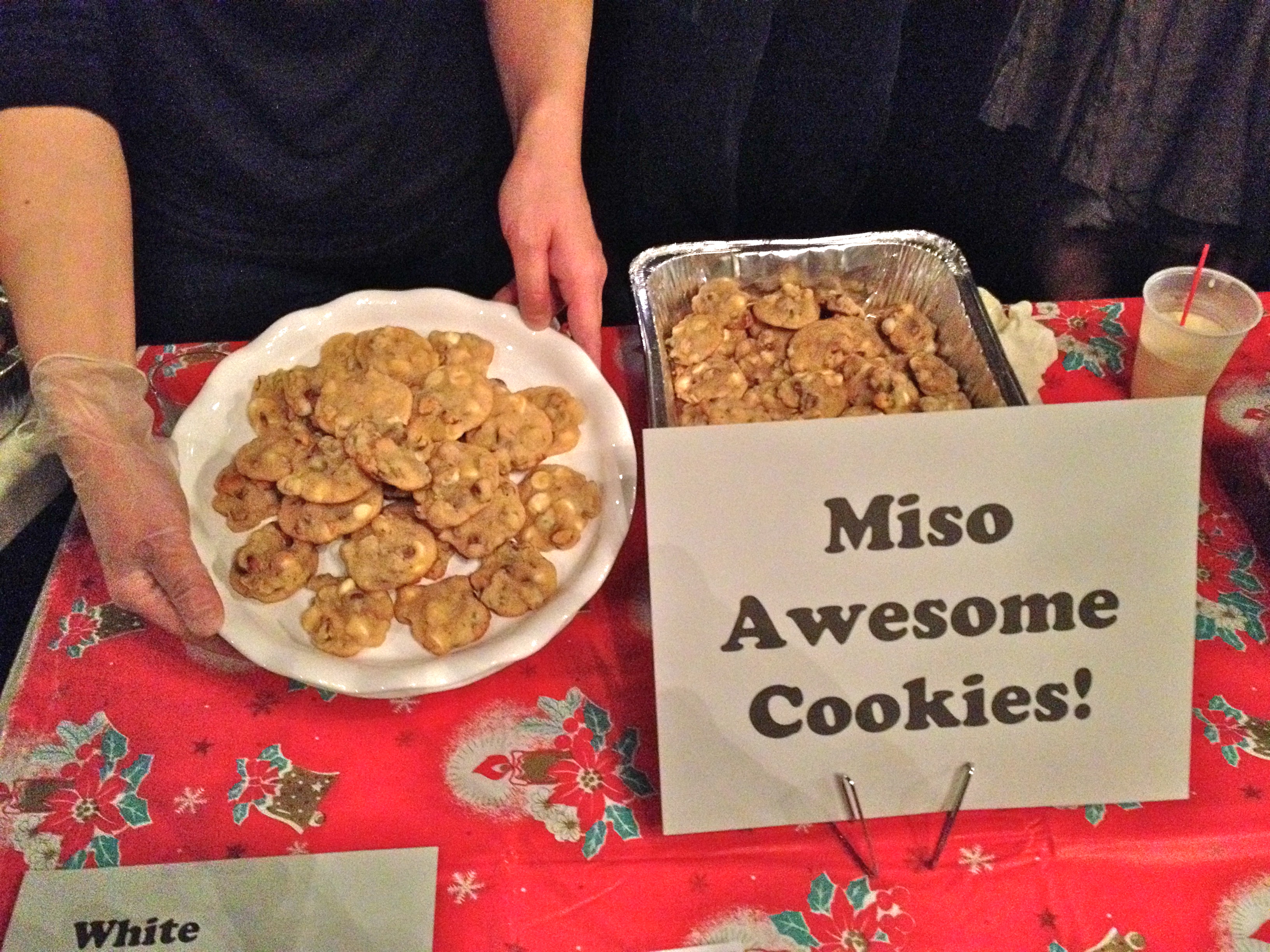
Who's so awesome? Miso Awesome!
Who’s so awesome?
MISO AWESOME!!!!!!!

My Takedown cookie entry was:

white chocolate chips + white miso + wasabi peas + tamari almonds.

Even though I didn’t win with that crazy combination, I had a great time and learned a lot about baking cookies. Recipe and baking tips to follow soon.

Thanks to Dave C. for the inspiration, and Dave L. for being the best darned cookie assistant ever.

For more, check out Maestro Extraordinaire Matt Timms’ Takedown site here.

And the Miso Awesome Fantastic Duo gets a nice shout-out on LocalBozo here (with more photos!).

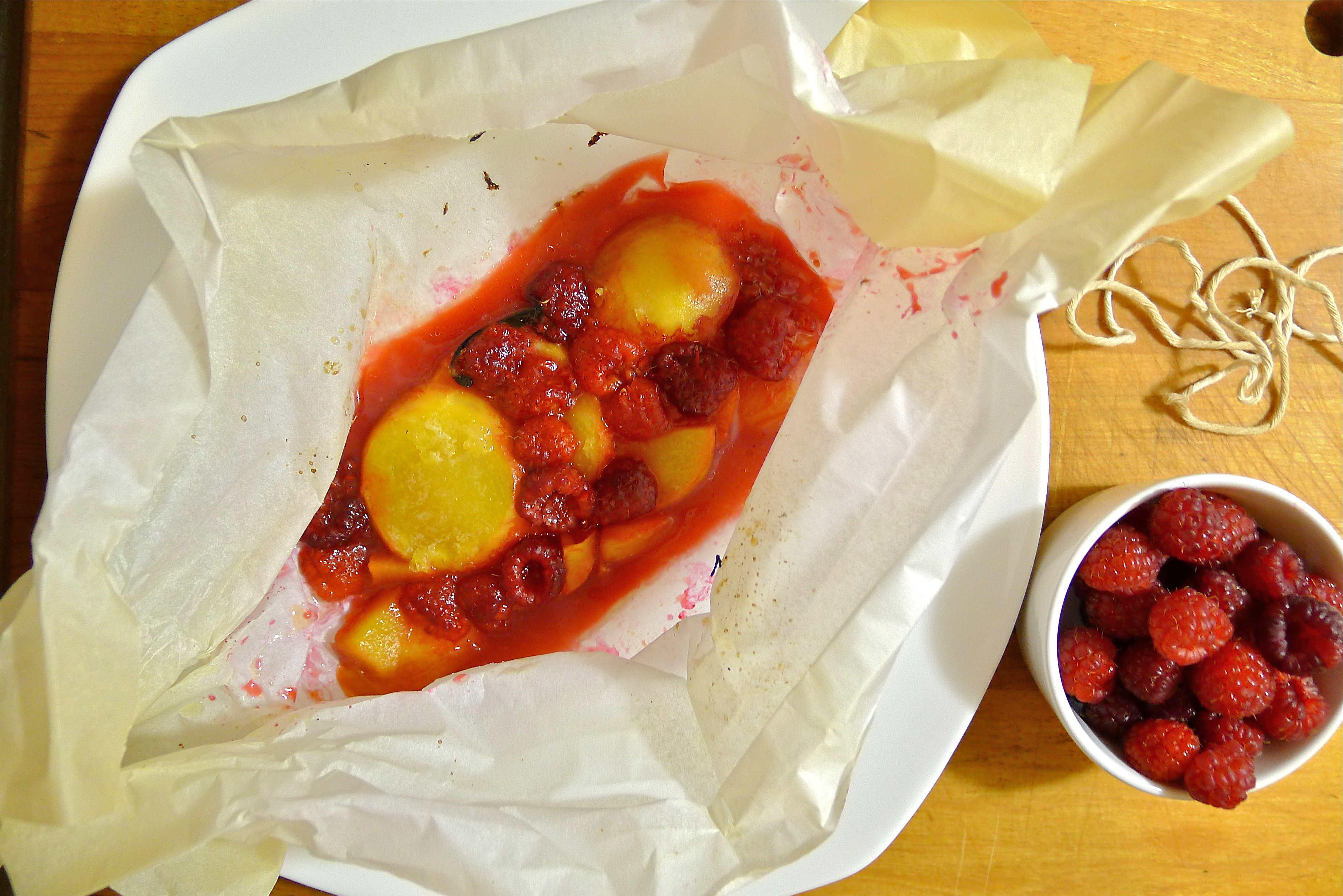
The Daring Kitchen July Cooks’ Challenge: Papillotes de pêches et framboises à la vanille (Peaches and Raspberries Cooked in Parchment Paper with Vanilla Bean)


The dissertation has been pretty overwhelming lately. This is the big push before the defense so I haven’t had much time for all the things that I love like spending time with my friends, cooking, blogging, eating out and drinking.

I miss the drinking. I ran an errand the other day and saw some nice people drinking wine in the shade. I remember jealousy thinking, “I bet they don’t even appreciate that wine!” Suddenly, I was overcome with the desire to grab their glasses out of their hot little hands and go sprinting down the street.

I didn’t do it, but I sure wanted to.

No way did I think that I was going to be able to participate in the Daring Kitchen challenge this month either until I saw the challenge: cooking en papillote.

En papillote is a fancy schmancy way of saying that you cook something in a paper envelope. We’re not talking about any old paper here; we’re talking about parchment paper, also known as bakery release paper or greaseproof paper. Cooking in parchment is a terrific way to cook delicate things quickly without fear of them drying out. You can also roast food en papillote as the paper allows just enough steam to release so that potato skin, for example, gets nice and crispy while the insides gently steam to perfection.

You could use aluminum foil instead of parchment paper — also known as a hobo pack — but I find that the results lack the finesse and elegance of cooking in paper. I might also be too negatively affected by the word “hobo,” and too seduced by the phrase “en papillote“!

It’s true that this month’s Daring Kitchen assignment wasn’t really a challenge for me since cooking en papillote is one of my favorite cooking methods. On this blog, I have posted a recipe for roasted tiny potatoes en papillote and roasted salmon with mango and Bird’s Eye chiles. However, it was completely new for me to use this cooking method to make a something sweet instead of something savory.

This dessert recipe was inspired by one that I saw months ago on Elle à table, the companion cooking site of French Elle Magazine. I kept the primary components — parchment, peaches and raspberries — and changed the rest. The original recipe has you peel the peaches. However, if the peaches are nice and ripe, this step seems fussy. It also seems like it would be a big waste of precious juice. The Elle à table recipe also calls for lime zest and juice, whereas I only used the zest for fear that the extra juice would have made the dessert too watery. Instead of a lime, I used a lemon. I also swapped out the cinnamon for vanilla bean, and shortened the cooking time so that the fruit would stay more intact.

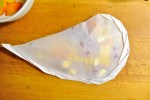
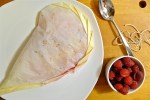
Just like there is more than one way to roast a chicken, there is more than one way to make a parchment paper packet. Traditionally, you take a large piece of parchment paper, fold it in half, and cut out a heart — just like how you did as a child. After you position your food on the paper, you seal up the packet by folding or crimping the edges shut. To give you an example of how to seal up a parchment paper packet, here is a video with Chef Paul Prudhomme — who can pronounce papillote any dang ol’ way he pleases in Cajun country.

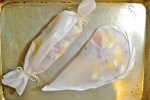
Alternatively, you can arrange your food in the center of a square of parchment paper, pull two of the sides up, fold them down, and then tie off the ends with cooking string. For some more examples of parchment paper packets, I direct you to this month’s Daring Cooks’ Challenge PDF.

In the end, it doesn’t really matter how you seal up the parchment paper as long as you make sure that your packets are snug, but not too tight around your food.

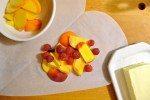
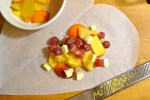
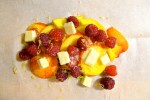
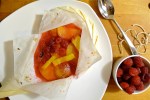
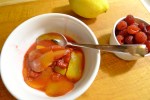
I made two different kinds of packets for this challenge. You can see them both in the photo gallery below. This challenge didn’t take up too much of my time since I had the fruit already (it’s high peach season here). Most importantly, it reminded me of how valuable it is to not give up those things in life that give you pleasure at those moments in life when you feel most stressed out.

A big thank you to Sarah from All Our Fingers in the Pie for the terrific challenge 🙂 In terms of mandatory items, you only asked that we cook in parchment. As suggestions, you gave us some amazing savory ones like beef, lamb or rabbit. I chose a gourmand take on cooking en papillote, which I hope still keeps with the spirit of the challenge even though it might not have been as challenging!

Mandatory blog checking lines: Our July 2012 Daring Cooks’ host was Sarah from All Our Fingers in the Pie! Sarah challenges us to learn a new cooking technique called “Cooking En Papillote” which is French and translates to “cooking in parchment”.

* The reveal date for this month’s French cooking challenge happens to fall on Bastille Day: le 14 juillet 🙂 Bonne fête, tout le monde!

Ingredients:

4 beautifully ripe yellow peaches

1 vanilla bean pod, split into four pieces

1 punnet of raspberries*

Cane sugar

The zest of 1 lemon

Cold butter

How to prepare:

1. Pre-heat your oven to 400° F.

2. Defuzz the peaches by very gently rubbing as much of the peach fuzz off as you can under cold running water. Cut the peaches into slices that are a little more than a quarter-inch thick.

3. Evenly divide the peach slices between 4 parchment paper sheets. You will use about one peach’s worth of slices per packet. Tuck one split vanilla bean pod in-between the peach slices. The vanilla should perfume the fruit, but not overwhelm it. Arrange a small handful of raspberries over the peaches. Sprinkle the fruit with cane sugar. Grate a little lemon zest over the top. Dot the fruit with about a 1/2 tablespoon of cold butter cut into small pieces

4. Crimp or tie off your parchment paper parcels and arrange them on a large baking sheet. Bake them between 8-10 minutes. Remove them from the oven and carefully open them (they will be steamy). Find and discard the vanilla bean pods.

You can serve the peaches and raspberries straight from the paper, or you can transfer the fruit to a small bowl to top with a scoop of vanilla ice cream or gelato.

* Although punnet is a Britishism, but it’s a pretty useful word for those little plastic or molded paper baskets intended for berries. We don’t seem to have any equivalent in American English (the closest approximation is a pint basket). Furthermore, punnets for raspberries are generally smaller than the containers used for pints of strawberries . . .

Cherry Clafoutis


Clafoutis is the classic dessert of the Limousin, the northwestern part of the Massif Central in the middle of France. Traditionally, it is baked in a buttered dish and is more or less a flan with ripe black cherries. Sometimes, other red fruits like prune plums, red plums or blackberries are used. Done correctly, it is lovely.

When I was doing my internship, the chef taught me a great recipe for clafoutis that was simple and foolproof. We would schedule it for days when we had cooking students who had little or no experience in the kitchen. Not to be trusted with knives, we knew that we could put cherry pitters in their sweaty little hands without fear of accidents. Better yet, since clafoutis tastes best when you leave the cherries unpitted (a little more onerous to eat, but worth it), sometimes the students wouldn’t even get cherry pitters, just whisks!

Try to take an eye out with those!

At home, I reliably depended on that recipe any time I needed to deliver a perfect clafoutis. It worked every time — even when I was a little short or too generous with the cherries, and even when I ran low on sugar, flour, milk or all three.

Then I moved back to New York. Suddenly, the recipe that worked so marvelously in Paris became a total dud. I can’t tell you how many heavy, lumpy, pathetic clafoutis I turned out. I was making clafoutis that tasted more like lightly sugared cherry omelets — every bit as unpleasant as it sounds.

I even inflicted them on friends, like poor Tomoko who had to pick her way around my rubbery pâte and gray (yes, gray) cherries last summer.

“What did you do to them?” she asked.

I had no idea. I could only think of something a friend in Paris repeated to me, something that she had overheard at a dinner party. Faced with the prospect of ingesting one more morsel of clafoutis after a lengthy and generous meal, one of the guests declared himself cla-foutu — a French play on words that roughly means cla-f***ked.

Well, my New York clafoutis were definitely their own kind of cla-foutus.

You always hear people who say that the definition of crazy is doing the same thing over and over again and expecting a different result. When I saw gorgeous cherries at the Greenmarket this week, I decided to get off the Crazy Train and stop trying to make my Parisian recipe. It was time to get back to Julia.

Julia Child, that is 🙂

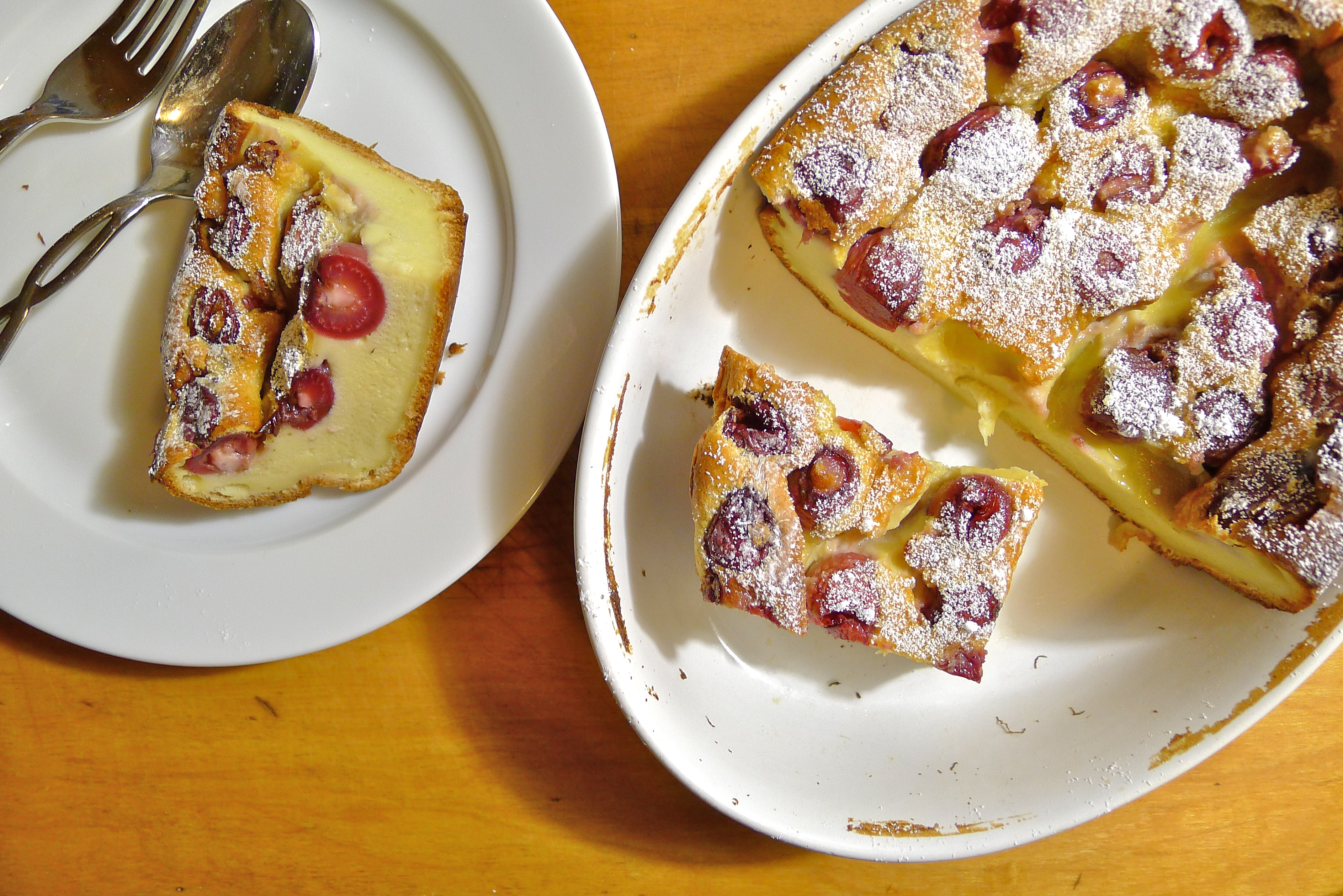
Compared to what I was making, I think this clafoutis is a beauty. Sure, it rose much higher on one side than the other (I should have turned it halfway through cooking. Stupid un-calibrated oven). Yeah, it cracked (I over-cooked it. I should have taken it out of the oven sooner).

But I feel like I am getting my clafoutis-groove back on.

This recipe is adapted from Mastering the Art of French Cooking, Volume I. Julia calls for three cups of cherries, and if I had three cups, I would have used them 🙂

For the original recipe, click here.

Special equipment:

A stick immersion blender

Ingredients:

Butter

2-3 cups of ripe cherries, pitted . . . or not!

1/3 cup of sugar

1 and 1/4 cup of whole milk

5 pullet eggs or 3 large eggs

1 tablespoon of vanilla extract

A pinch of salt

2/3 cup of all-purpose flour

Powdered sugar

How to prepare:

1. Preheat the oven to 350°.

2. Butter a baking dish and arrange the cherries in a single layer on the bottom.

3. In a large bowl, use the immersion blender to blend together the milk, the eggs, the vanilla extract, the salt and the flour for 1 minute. The batter should be nice and frothy.

4. Set the baking dish on a baking sheet. Use a ladle to carefully pour the batter over the cherries. Bake for about an hour. The clafoutis will be done when the sides are puffed and golden, and when a knife or a skewer inserted in the center comes out clean. The clafoutis will be like a souffle when you remove it from the oven. Let it settle completely — it will sink down as it cools — before serving. Dust the clafoutis with powdered sugar right before cutting it into wedges.

Mascarpone-Polenta Cake with Rhubarb and Meyer Lemon


I wish that I was more of a baker. Unfortunately, my baking past is littered with all kinds of baking misfortunes: lumpy cakes, leaden cakes, cracked cakes, dry cakes, lopsided cakes, burned cakes, burned cakes with runny centers, runny cakes with charred tops. The list is unfortunately long!

I think it must be related to the fact that, when it comes to recipes, I am incorrigible: I rarely follow them to the letter. It doesn’t help that I am generally inclined to eyeball amounts instead of dirtying up another measuring cup or spoon. This is fine for regular cooking, but kind of disastrous when it comes to baking.

So when I decided to try to come up with my own recipe for a polenta cake with mascarpone that would make use of the first of this season’s rhubarb, I was pretty nervous.

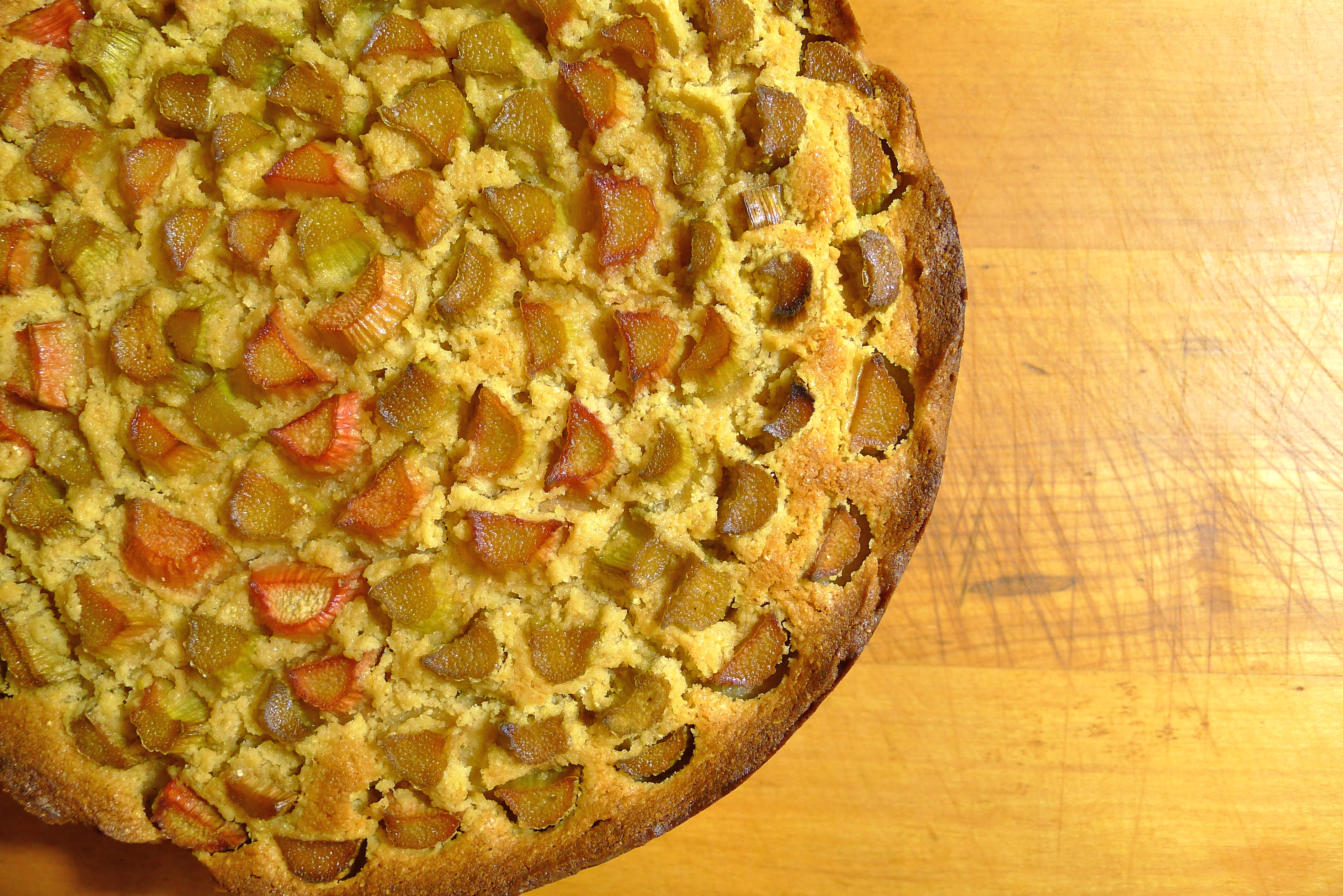
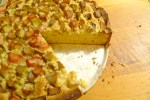
Thankfully, it came out beautifully. The cake had a wonderfully moist and tangy crumb that beautifully complemented the rhubarb’s tartness. The idea of arranging the fruit (or vegetable? I guess rhubarb actually a vegetable) on the top of the cake batter comes from Nigel Slater’s Blueberry-Pear Cake from his Kitchen Diaries.

One more thing: be sure to remove any leaves from your rhubarb stalks before cooking. Only the stems are edible. The leaves contain oxalic acid that can make you pretty sick. It goes without saying to keep your animals away from rhubarb. More for you, I say. What a delicious way to live dangerously!

Ingredients:

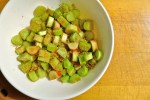
About 2 1/2 cups of rhubarb, washed, trimmed and sliced into 1/2 inch pieces

1 cup of brown sugar, plus an additional 1/4 cup

8 tablespoons of butter (1 stick), softened

1 egg

3/4 cup of mascarpone

The zest and juice of one Meyer lemon

1 cup of all-purpose flour

1 cup of yellow corn meal

3/4 teaspoon of salt

1 teaspoon of baking powder

1/4 teaspoon of baking soda

How to prepare:

1. Line the bottom of a 9-inch springform pan with parchment paper. Butter the sides.

2. In a medium-sized bowl, toss the rhubarb with 1/4 cup of brown sugar. Let the rhubarb sit for about 30 minutes.

3. Preheat the oven to 350°.

4. Sift the dry ingredients (the flour, the corn meal, the salt, the baking powder and the baking soda) together into a large bowl.

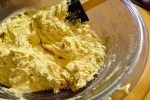
5. In another large bowl, cream together the remaining cup of brown sugar and the softened butter. Add the egg, followed by the mascarpone, the lemon zest and the lemon juice. Continue beating the mixture until it is nice and fluffy. Beat in the dry ingredients, a little bit at a time, until they are well-incorporated into the batter.

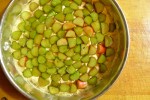
6. Spread the batter out as evenly as possible onto the bottom of the springform pan. It will be thick. Arrange the rhubarb by pressing each piece into the batter in concentric circles. Bake the cake for about 1 hour and 30 minutes, until the top is golden and the center has set.

Let cool before slicing and serving.

Peanut Butter and Milk Chocolate Chip Rice Krispies Treats


Last weekend I went to a Super Bowl party where my friend Dave was in charge of the kitchen. He had put together a menu featuring these great burgers: loosely packed patties covered with carmelized onions and loads of béarnaise sauce. Isn’t that a great idea? As we were chatting in the kitchen, Dave mentioned that this vision of béarnaise + burgers had been incubating in his mind for years before he set out to make it a reality.

Sometimes that happens. Sometimes you hold onto a sprout of an idea for a long time, waiting for the right time to make it happen. Other times, inspiration strikes in speedier ways.

When snack stadiums were popping up all over the Internet, I remember seeing a particularly unholy one in which the stadium was constructed of alternating ham hoagies and Rice Krispies treats. It was kind of disgusting, but it definitely made me think about bringing marshmallowy treats to the Super Bowl party (one should never come empty handed).

I have been nursing a jones for peanut butter for a couple weeks now, as well as a chocolate craving. So, I thought, why not a peanut buttery, chocolatey Rice Krispies treat? Like one of those Reese’s Crispy Crunchy Bars, but with much better chocolate and peanut butter.

I love the combo of salt, fat, and sugar, and you will too if you don’t already. This is going to taste like childhood, so don’t knock the milk chocolate. I used a good one, and so should you.

As you can see, the chocolate was so good that I went a little over-bonks on the drizzle.

Ingredients:

6 cups of plain Rice Krispies

1 1/2 cups of salted whole peanuts

1 1/2 cups of milk chocolate chips + 1 cup (2 1/2 cups of chocolate chips total)

4 tablespoons of unsalted butter

1/2 cup of creamy peanut butter

4 cups of mini marshmallows (about 10 ounces)

How to prepare:

1. Lightly butter a large dish.

2. Combine the Rice Krispies, the peanuts, and 1 1/2 cups of the chocolate chips in a large mixing bowl.

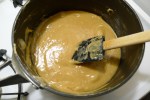
3. Melt together the butter, the peanut butter, and the marshmallows over medium-low heat in a medium-sized saucepan. When the mixture is creamy, pour it into the dry ingredients. Using a large wooden spoon, quickly stir everything together until the dry ingredients are evenly coated with the marshmallow mixture.

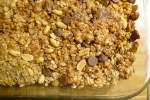
4. Tip everything into the buttered dish. Using your hands (moisten them a little with water so that they don’t stick), gently press the mixture into the dish, making an even layer.

5. In a small saucepan over very low heat, melt the remaining cup of chocolate chips. Be sure to stir them constantly so that the chocolate doesn’t separate or burn. When it has melted, remove it from the heat. Using a spatula, scoop a little bit of chocolate out of the pot and flick it quickly across the Rice Krispies treats. Continue to do this until the entire surface is evenly drizzled.

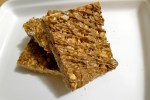
6. Let everything cool. When the chocolate has hardened, use a sharp knife to cut squares of Rice Krispies treats.

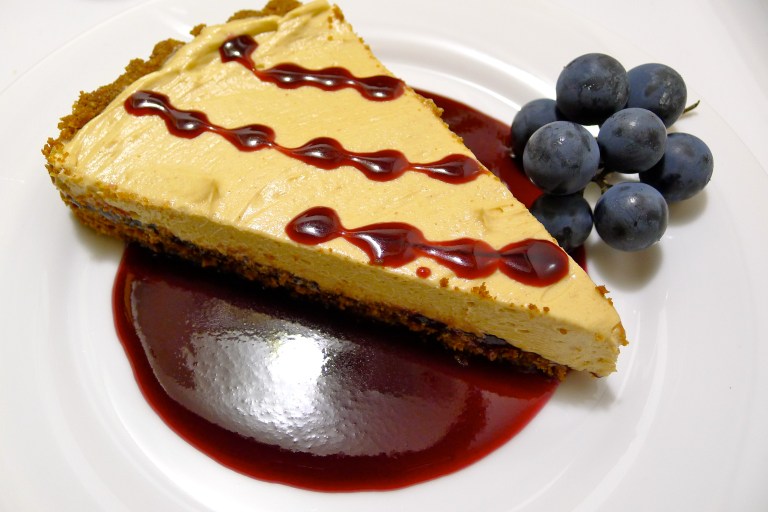
Peanut Butter and Jelly Tart with Concord Grape Sauce


Fall is my favorite time of year.

I love the crisp air, and harvest time, and hayrides, and watching the leaves turn colors.

I love squash, and apples, and spice, and all those nice things that we start eating when the weather begins to get cooler. I love being able to turn on my oven again without turning my apartment into a sauna. I love roasted meats, and roasted vegetables. It is wonderful that is getting chilly enough to be able to eat cheesy, creamy sauces again. I love stew.

We are currently in the throes of Concord grape season — not for much longer, but long enough to partake in what must be the very essence of childhood. Concord grapes have that grapey grapiness that turns your tongue purple with nostalgia. The taste instantly transports me back to lunch in the third grade.

This tart is far from the PBJ’s that I ate as a child, but the flavors are still there — just in a more refined way.

The original recipe from Epicurious seemed a little too sweet to me, so I eliminated the extra brown sugar in the peanut butter topping. Also, the recipe calls for the Concord grapes to be halved and tossed with Concord grape jam as a topping. However, as Concord grapes are pretty fabulous on their own (commercial jam is usually too sweet anyway), I opted to get rid of the topping and make my own Concord grape sauce with local grapes.

Ingredients:

For the crust:

12 5×3-inch graham crackers, broken into pieces

1 cup of salted, roasted peanuts

1/8 teaspoon of allspice

1/2 cup of melted butter

For the filling:

4 ounces of cream cheese, softened

3 tablespoons of butter, softened

1/2 cup of smooth peanut butter

1 cup of heavy cream

1/2 teaspoon of vanilla

About 1/2 cup of Concord grape jam*

For the sauce:

1 pound of Concord grapes

1/2 cup of water

3/4 cup of sugar

A pinch of salt

The juice of 1 lemon

Special equipment:

1 11-inch fluted tart tin with a removable bottom

1 food processor

1 half-size sheet pan

1 strainer

1 fine-mesh strainer

1 hand immersion blender

How to prepare:

1. Set your oven to 350°.

2. While your oven is heating up, blend the graham crackers, the peanuts, and the allspice in your food processor until the nuts are evenly ground up. Add the melted butter, and pulse everything together until the crumbs are evenly moistened.

3. Turn the moistened crumbs out into the fluted tart tin. Using your fingers, firmly press the crumbs evenly into the bottom and up the sides of the tin.

4. Set the tart tin gently on a half-size sheet pan that is lined with parchment paper. Bake the crust in the oven for about 10 to 15 minutes. When the crust is lightly browned and “set,” remove it from the oven and let it cool.

5. While the tart crust is cooling, blend the peanut butter, the butter, and the cream cheese together with an electric mixer set at medium-high speed until the mixture is fluffy. In a separate bowl, whip the cream and the vanilla together until soft peaks form. Fold the whipped cream gently into the peanut butter mixture.

6. Very carefully spread the jam over the bottom of the cooled tart crust. If you have an offset spatula, this is a little easier to do, but it’s okay if you don’t (I do have one . . . something I realized only after the tart was done). Wipe off your spatula, and carefully smooth the peanut butter topping over the top of the jam. Chill the tart in the refrigerator until the tart is firm, about 3+ hours.

7. While the tart is chilling (tart be chillin’!), prepare the sauce. Over a small bowl, slip the skins off of all the Concord grapes (they should come off easily, and if you do this over a bowl, the bowl will catch all of the juices). Reserve the skins, and keep them in separate bowl.

8. Bring the pulp and 1/2 cup of water to a boil in a small saucepan. When the peeled grapes have turned opaque, pour them into a mesh sieve set over a medium-sized bowl. Using a spatula, push the pulp through the sieve. Discard the seeds.

9. Add the grape skins to the bowl of grape pulp. Using an immersion blender, purée the skins and the pulp together. Push the mixture through the fine-mesh sieve set over a bowl, pressing the remains of the grape skins with a spatula to extract all of the juice. Discard the grape skins.

10. In a small saucepan, combine the strained grapes with the sugar and the lemon juice. Set the pan over medium heat until it begins to boil. Skim any foam that you see off of the top. When it begins to boil, lower the temperature until the sauce is just barely at a simmer (be careful that it doesn’t boil over). Keep the sauce at barely a simmer until it has thickened and reduced to a syrupy consistency. When it gets to that point, turn off the heat and let the sauce cool.

11. When the tart has cooled and set, cut it into wedges. Make a pool of grape sauce in the middle of a dessert plate, and place one tart piece on top of the purple puddle. Serve immediately.

* My recipe actually makes quite a bit of sauce, and I imagine that if you prefer to not have any commercial jam in your tart at all, you could just cook the sauce down further — with the addition of a 1/4 cup more of sugar — until you have a thick syrup. Use this instead of the jam as a layer.
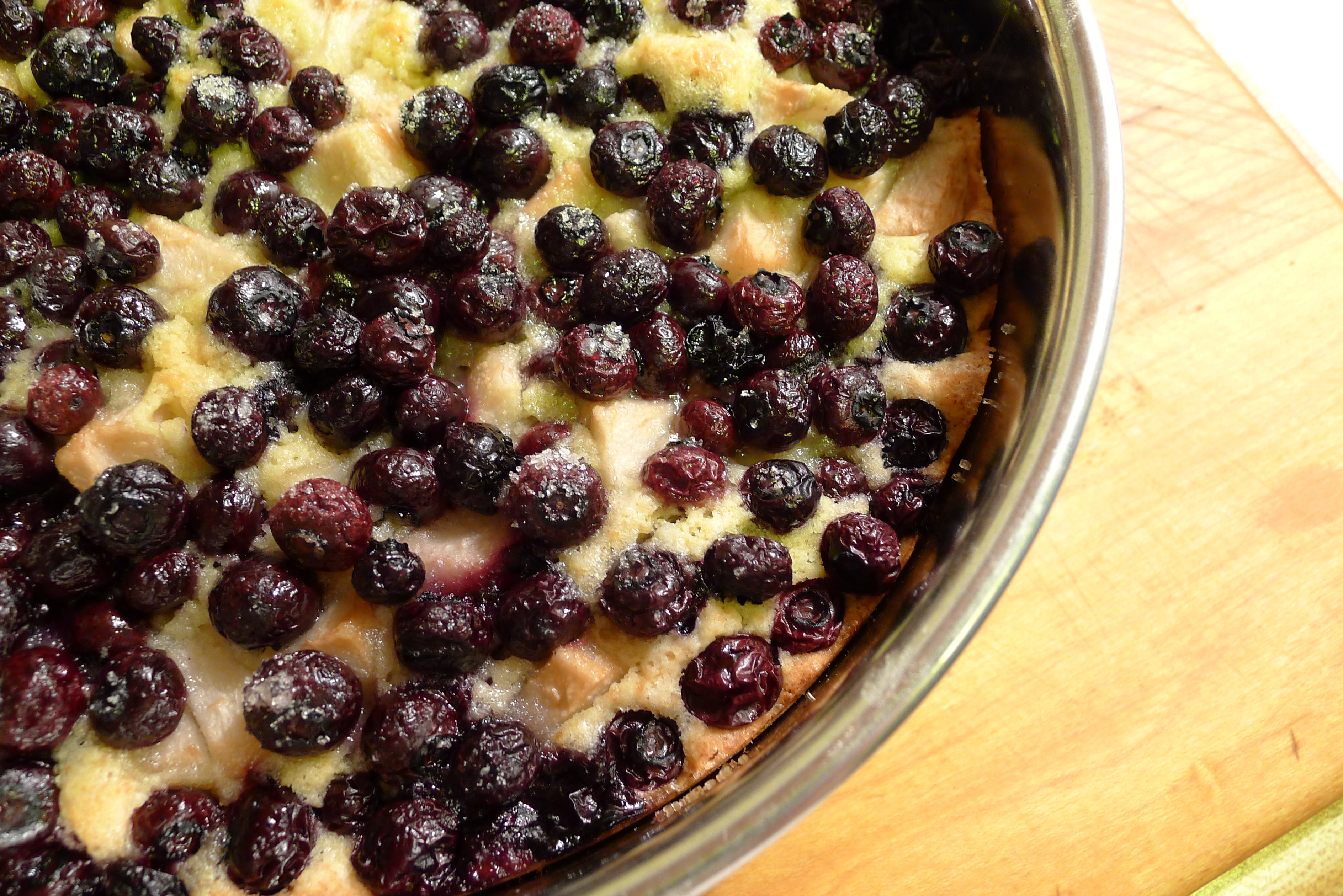
Nigel Slater’s Blueberry-Pear Cake


One of my favorite books is Nigel Slater’s The Kitchen Diaries. Part cookbook, part, well, diary, longtime Observer columnist Slater takes you through a year in his life food-wise. He doesn’t give an entry for every day (and some days he doesn’t even cook at all), but each one is a beautiful little snippet of real life lived well.

I love Slater’s writing voice, which seems to be a reflection of his cooking: honest and personal. He has had some training, but is not a chef per se (neither was Julia). That doesn’t mean that his food suffers; Slater is a good eater who appreciates food, and loves to share generously. Who can’t respect that?

His recipes are dead-simple, but they are made with the assumption that you know your way around the kitchen. Sometimes, they are a little skimpy on details, but they do all work (at least the ones that I have tried).

His tastes are also very, very British, which — forgive me — might be construed as a somewhat dumb statement to make, given that he is British. That being said, there are some things to note:

1. The Brits eat a lot of gooseberries, and drink a lot of things flavo(u)red with elderflower.
2. They like desserts named “fool” and “mess,” and collectively dessert is referred to as “pudding.”
3. There is a lot of smoked fish.
4. Chili is spelled with two l’s.
5. Curry powder is common.
6. Parsley sometimes seems bizarrely interchangeable with cilantro.
7. Cilantro is called “coriander.”
8. “Medium-rare” can infuriatingly mean “medium-done.”

As for Mr. Slater himself, he has:

1. A kick-ass garden.
2. A beautiful wooden-plank farm-house table.
3. A lot of chipped dishes.
4. A kick-ass neighborhood deli.

This recipe adapted from Slater’s is a terrific way to take advantage of the blueberries currently in the market. It comes together quickly, and looks beautiful. Though Slater makes no mention of it in his Diary, my dining companion did suggest that a little jug of crème anglaise on the side would be a nice addition.

Ingredients:

1 1/4 cups of flour

A pinch of salt

1 teaspoon of baking powder

1/2 cup of good butter, softened

1/2 cup of sugar

2 eggs, beaten

1-2 ripe pears, peeled, cored, and cut into small pieces

1 large pint of blueberries

About 2 more tablespoons of sugar

Special equipment:

A spring-form pan

How to prepare:

1. Preheat the oven to 350°. Butter the bottom and sides of the spring-form pan. Line just the bottom with a circle of parchment paper.

2. Sift or stir together the flour, salt, and baking powder.

3. In a separate large bowl, beat the butter and sugar together until the mixture is pale and fluffy. Add the beaten eggs slowly to the butter/sugar mixture. While continuing to beat everything together, add the dry ingredients a little bit at a time until they are fully incorporated. The resulting batter will be a little thick.

4. Pour (or spread) the batter out in an even layer over the lined bottom of the spring-form pan. Scatter the pear pieces and the blueberries evenly across the top of the batter. Sprinkle the fruit with the remaining 2 tablespoons of sugar.

5. Bake for about 55 minutes to an hour. The top should be golden, and a skewer or knife inserted into the center of the cake should come out clean when it is done. Let cool before removing the spring-form pan’s outer ring.

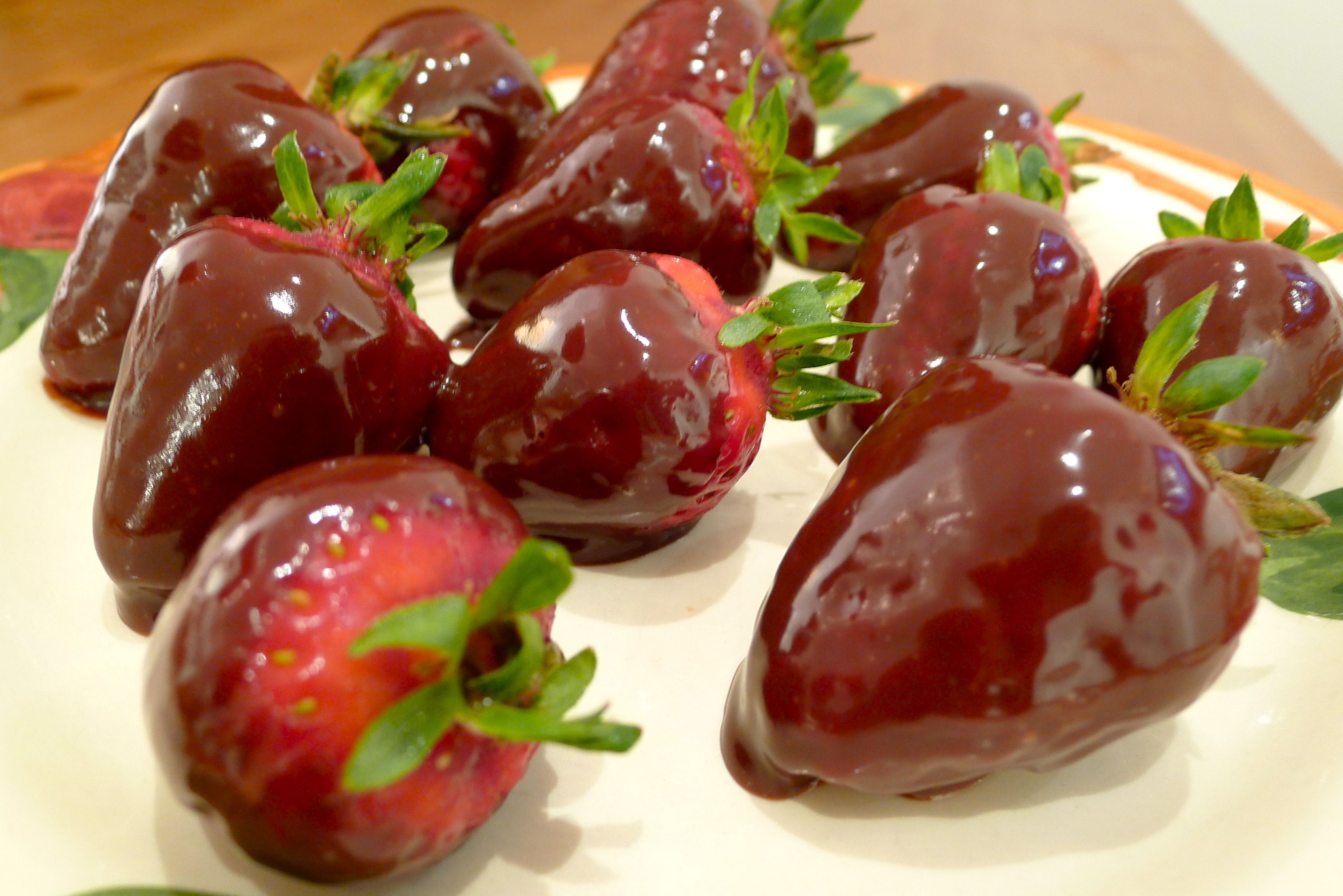
Strawberries Dipped in Chocolate Caramel Sauce


Chocolate-covered strawberries get a bad rap. It’s perhaps not so surprising: the majority of ones in this country are sold in February, when strawberries are completely out-of-season.

Now I have nothing against partaking in enrobed fruit for Valentine’s Day, but strawberries bought in the middle of winter are usually shipped from South America, freakishly oversized, and stunningly tasteless despite their glossy red exteriors.

The chocolate sarcophagus they come in isn’t always very appetizing either.

But it is finally springtime — officially the start of strawberry season. Now is the time to see that chocolate-covered strawberries done right can be a sinfully sloppy mess.

How can you tell if a strawberry is ripe?

Smell it. Does it smell like a strawberry? No? Put it down. Walk away. Yes? Is it a full-on, luscious, musky strawberry-smell? Buy. Now. Buy buckets of them.

This sauce is fantastic. So easy and so versatile. Dredge fruit in it, or even better, drizzle warm gobs of it over vanilla-bean gelato. Or just eat it out of the pot. It’s fabulous.

Ingredients:

1 pint of ripe strawberries, washed and gently patted dry

1/4 cup of sugar

1/2 cup of heavy cream

2 ounces of semi-sweet chocolate (no more than 70% cacao), broken into smaller pieces

1/8 teaspoon of sea salt

How to prepare:

1. Cook the sugar in a small dry saucepan over moderately high heat, undisturbed, until it begins to melt, about 2 minutes. Continue to cook, tipping the pan from one side to the other, until the sugar has melted into a deep golden caramel, about 1 to 2 minutes. To help visualize this, here is a handy profanity-free video with Gordon Ramsay.

2. Remove the caramel from the heat and carefully pour in the cream. The cream will steam and bubble vigorously. Once the bubbles begin to subside, return pan to moderately low heat and cook, stirring or whisking constantly, until the caramel has dissolved. If the caramel does not seem to dissolve completely, add 1 to 2 teaspoons of water at a time, stirring, until it has dissolved.

3. Turn off the heat and continue to stir or whisk the caramel to cool it down a little bit. Add the chocolate and the salt. Stir or whisk the chocolate into the caramel. The sauce should be thick and glossy when you are finished.

4. Dip the strawberries in the sauce and arrange them on a plate. Serve them to someone you want to make happy.

Vanilla Bean Crème Brûlée


This was one of the first desserts that I learned to make in Paris. It’s quick, easy, elegant, and tastes better than anything you have ever tried in a restaurant.

The recipe will fill four 4.5 ounce ramekins.

Ingredients:

1 cup of whole milk

1 cup of heavy cream

1 whole vanilla bean

4 egg yolks

1/4 of white sugar

Enough butter to butter the ramekins

1/4 cup of light brown sugar

How to prepare:

1. Preheat your oven to 325°.

2. Split the vanilla bean lengthwise. Using a paring knife, scrape the vanilla beans from each half of the pod. Here is a good video to show you how if you haven’t done this before.

2. Heat the milk, the cream, the vanilla beans, and the vanilla pod halves over medium-low heat in a medium saucepan until the mixture just begins to boil. Turn off the heat and let the vanilla bean infuse the milk and cream mixture for anywhere between 10-30 minutes.

3. In a separate mixing bowl, whisk the egg yolks and the white sugar together until the mixture is pale and creamy, about 30 seconds. Remove the vanilla bean pod halves from the milk and cream mixture. Now you need to temper the egg yolks. This is important because if you add all the hot liquid to the egg yolks at the same time, you will be on you way to making scrambled eggs.

To temper, add a spoonful of the warm milk-cream mixture to the eggs. Stir quickly to incorporate the liquid into the egg and sugar mixture. Continue to add the liquid a little bit at a time, whisking everything until the mixture has become pale yellow and slightly foamy.

5. Carefully divide and pour the mixture into the buttered ramekins. Gently set the filled ramekins in a baking dish. Fill the dish with water until the water level comes halfway up the side of the ramekins. Bake the crèmes in the oven for about 45 minutes. The centers should be jiggly, but not watery.

6. Remove the crèmes from the oven and cool them on the countertop for about 10 minutes before chilling them the refrigerator for about 3 hours.

7. Before serving, heat your broiler element. Sprinkle the brown sugar evenly over the top of each crème. Broil the crèmes under the broiler until the brown sugar has become hard and crackly. Serve immediately.

Pumpkin Cheesecake with Brown-Butter Pears


This recipe is from this month’s issue of Food and Wine magazine.

Though it seems like a lot of work, the cheesecake comes together quite quickly and has a incredibly light and refined texture. Browning the pears in butter took longer than the recipe specified (maybe I should have not been so lazy and divided up the pears into batches), but they were still a delicious topping to have.

In the future, I might experiment with some kind of Concord grape topping instead. Purple and orange can look so nice together, and the punchier grapes might be the tangy hit of acid that can turn a great dessert into something sublime.

Ingredients:

For the cheesecake:

8 ounces of gingersnap cookies

2/3 of a cup, plus 2 tablespoons of sugar

Salt

2 tablespoons of unsalted butter, softened

12 ounces of cream cheese, softened

1 cup of canned pumpkin puree

1/2 teaspoon of pure vanilla extract

2 large eggs

1/4 cup of all-purpose flour

1/8 teaspoon of ground cinnamon

A pinch of freshly grated nutmeg

For the brown-butter pears:

4 tablespoons of unsalted butter

3 large, ripe Bartlett pears, peeled and cored*

1 teaspoon of sugar

How to prepare:

1. Preheat the oven to 350°. In a food processor, pulse the gingersnaps with 2 tablespoons of the sugar and a pinch of salt until fine crumbs form. Add the softened butter and process until moistened. Using your fingers, press the gingersnap crumbs into the bottom of a buttered 9-inch springform pan in an even layer. Bake the crust for about 10 minutes, until it is lightly browned. Let the crust cool slightly, then wrap the the bottom of the pan tightly in aluminum foil so it’s watertight. You might need to overlap several sheets to make sure that you have everything covered and sealed. Set the pan in a large, deep skillet or a small roasting pan.
2. Using a paper towel, wipe out the food processor bowl. Add the softened cream cheese, pumpkin puree, vanilla extract and the remaining 2/3 cup of sugar to the food processor bowl and process for about 30 seconds until smooth. Add the eggs and pulse to blend. Add the flour, cinnamon, nutmeg and 1/2 teaspoon of salt and process for about 30 seconds, or until smooth.

3. Carefully pour the pumpkin filling over the gingersnap crust. Set the skillet in the oven and carefully pour in enough hot water to reach halfway up the side of the springform pan. Bake the cheesecake for about 50-55 minutes, until the filling is barely jiggly in the center. Carefully transfer the skillet to a rack and let the cheesecake cool. Remove the aluminum foil. Run a sharp knife around the edge of the cheesecake and refrigerate the cheesecake until it is firm, at least 4 hours or overnight.
4. Cut the peeled and cored pears into thin wedges with a sharp knife. In a large skillet, cook the butter over moderately high heat until it is lightly browned and nutty-smelling, about 3 minutes. Add the pear wedges and cook, turning until they are softened and lightly browned. Add the sugar and cook, turning until the pears are more browned and glazed, about 1 minute longer.
5. To serve, remove the springform ring. Cut the pumpkin cheesecake into wedges and serve with the warm pears.
Tips:

To easily core a pear, cut the pear in half and use a melon baller to remover the core.

This cheesecake can be refrigerated for up to 3 days. Warm the pears up on the stove before serving.