♥ Happy Valentine’s Day ♥: Grilled Beef Heart with Celeriac Slaw

I Heart You!
The first time that I ever had beef heart was at St. John’s Bread and Wine in London. It was two summers ago and I was wandering around Spitalfields on a single-origin chocolate bar search. Suddenly, the skies opened up and down came the deluge. Soaked and woefully unprepared, I ducked into the empty restaurant right in the middle of the family meal.

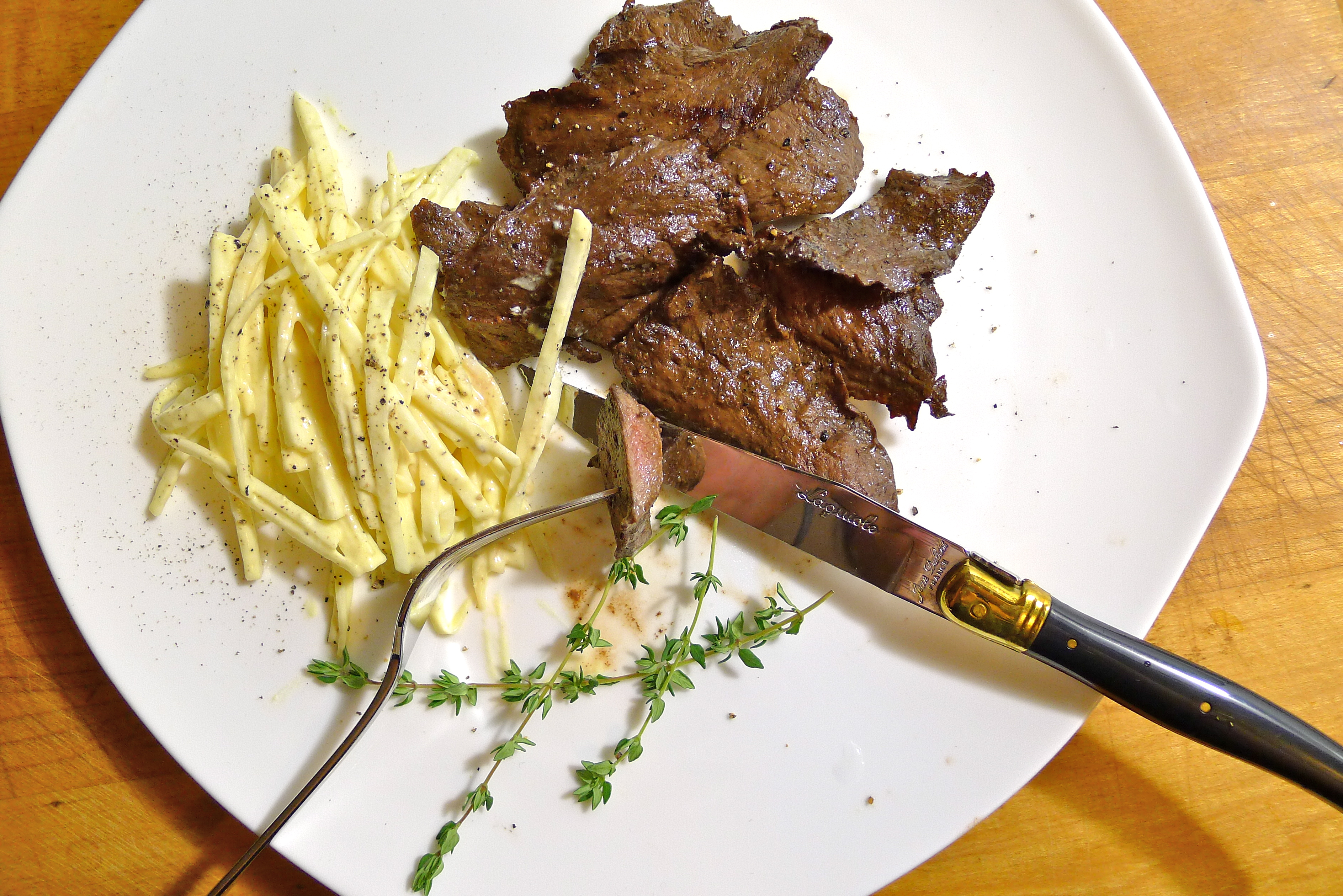
Although I’m sure that the last thing the staff wanted to deal with was another guest, they were extraordinarily gracious as they served me a late-afternoon snack of oysters, Sauternes, grilled beef heart and celeriac slaw.

Sauternes and oysters, you say? Yes, the server was intrigued as well. I had ordered them together because I had just read an article about how the original pairing for oysters was Sauternes, not Champagne.

In any case, I assure you that the combination is divine.

So was the beef heart. Flavorful and surprising tender, it had a robust beefiness and was the perfect antidote to the grey, oily weather outside. As I enjoyed the last dregs of my wine, I remembered that I had a copy of Fergus Henderson’s Nose to Tail Eating: A Kind of British Cooking collecting dust at home.

When my CSA (shares are still available, by the way) began offering beef heart, I decided that I was going to bite the bullet and try to recreate that terrific snack.

The recipe is such that no actual measurements are necessary. Follow your instinct and taste as you go along. You will be fine.

(and a very belated thank you to the staff at St. John’s for making sure that I didn’t go back out in the storm without a large umbrella)

Happy Valentine’s Day!

Ingredients:

1 beef or calf’s heart

Coarse salt

Freshly ground pepper

Balsamic Vinegar

Olive oil

Thyme sprigs

1 celery root

Crème fraîche

Dijon mustard

How to prepare:

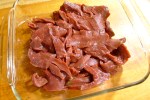
1. The first thing you will need to do is trim the heart. You basically want to remove all the fat, the membranes, and any and all vessels including the aorta. It may be a little disheartening (no pun intended) to have to discard all those trimmings, but you really only want the tasty bits. For this, you will need a very sharp knife.

When you finish, you should be left with a pile of very lean beef slices that no longer resemble a heart at all. For an instructional video, I refer you to Michael Ruhlman here.

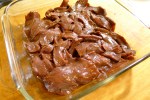
2. In a dish large enough to fit all the beef slices comfortably, drizzle them with olive oil. Add a healthy slug of balsamic vinegar. Sprinkle it generously with coarse salt and freshly ground pepper. Add a few sprigs of fresh thyme. Toss, cover, and let marinate in the fridge for 8-24 hours.

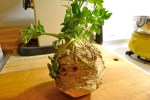
3. Before grilling the beef heart slices, set up the celeriac slaw. The first thing you will need to do is trim the root. You could use a vegetable peeler . . . if you want to have an accident! Or you could use a very sharp knife and be safer. You will have a lot of trimmings to discard as well, but trust me: you don’t want these trimmings either. If you must, you can put them in a bag and toss them in your freezer to use for stock.

First, slice off the top of the root and level off its bottom. This will ensure that it won’t rock around while you are trimming it. Holding your knife perpendicular to the root, shave or slice off the outer gnarled surface. You should be left with a clean, peeled root.

For another helpful video, I refer you to Gourmet Magazine.

Now you need to julienne the celery root. This can be accomplished most effectively by using a mandoline. If you don’t have one, or do have one but are too lazy to look for it like me, you can use a sharp knife again for the job. To julienne the celery root, cut very thin slices of it, stack the slices up and cut them into matchsticks.

Melissa Clark demos this here.

For the dressing, gently stir together 4 tablespoons of crème fraîche for every one tablespoon of Dijon mustard. That’s the ratio that I used, but you can increase the amount of mustard if you want your dressing to have more of a kick. Adjust the seasoning if necessary.

Using your hands, toss the julienned slices of celery root with the dressing.

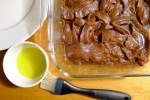
5. Prepare the grill. Brush it with oil and get it nice and hot. Cook the beef heart slices until they are medium. Henderson says about 3 minutes per side, but mine cooked faster than that. I would say to just watch them and pull them off the grill when they are ready.

To serve, plate a few slices with a nice mound of celery root slaw.
Mustard-Butter Chicken and Roasted Savoy Cabbage

Thank you, Hannah!
I cannot take credit for this meal; that distinction belongs to the amazing Hannah over at Inherit the Spoon. For about a year now (or maybe it has been longer — I’m getting forgetful), I have been following this her adventures in life and in the kitchen. I have admired her commitment to eating local, and providing a nutritious and delicious table for her family.

Recently, she published recipes for roasted Savoy cabbage and mustard-butter chicken. The minute I read them, I knew that I had to make them soon.

The meal was incredible and incredibly easy. If I wasn’t smitten with Hannah’s blog before, I definitely am now!

As I cannot write better than Hannah herself, I will direct you to her post here for step-by-step instructions on how to prepare both the cabbage and the chicken. I agree with Hannah that you should take your time and let the cabbage get dark and crispy; it really is best that way.

Thank you, Hannah!

Mercimek köftesi (Turkish Red Lentil Balls)

Detox with me!
This is a recipe that was passed along to me as part of a French assignment created for my friend Ipek last summer. I held onto it for months and months, waiting for the perfect moment and time. Then, darling Siobhan from Garden Correspondent rolled through New York, bringing with her good cheer, high spirits, and a liter of delicious Turkish olive oil!

Which, of course, helped to push Ipek’s recipe to the top of the list of things to make.

Unfortunately, everything on that list languished while other parts of life took priority over blogging. However, following the overindulgence of the holidays, I thought something simple, healthful, and delicious was in order.

This recipe is so simple that I wondered if it would even be tasty. After forming the lentils and bulgur wheat-mixture into torpedo-shapes and balls,* I had additional doubts as to whether I would be able to finish eating them all. Then, something curious happened: each time I passed my fridge, I would dip into the quickly diminishing pile for a little fix of Turkish yumminess. Although initially dismissed as bland, I found myself craving the wholesome nuttiness of lentils gently accented with mild spice.

Ipek’s recipe states that you should serve Mercimek köftesi with lettuce. At first I was a little unsure what that meant. Was the lettuce mandatory garnish? Or were you supposed to wrap the köftesi in the lettuce?

My hunch was right: you are supposed to roll the köftesi in the lettuce and eat them like you would Vietnamese spring rolls. Without the fish sauce dipping sauce, of course.

Strangely, many recipes say to serve them on top of the lettuce with no mention of eating them together either.

So I suppose it is up to you!

Incidentally, Ipek tells me that there is an alternative version called Çiğ köfte. A peek at different recipes shows that it is fairly similar if not identical to Mercimek köftesi with the exception being that raw meat is used in place of red lentils. The meat is usually massaged by hand into the bulgur until the mixture is smooth enough to be shaped. Again, the lettuce appears to somewhat ornamental, especially in the case of this restaurant where the staff seems to have just stuck the leaves upright into a giant mound of raw meat and bulgur and called it a day.

For my money and food safety reasons, I will stick to the lentils!

* Or as Sharon put it, “Can I have some more turds and balls, please?” 🙂

Ingredients:

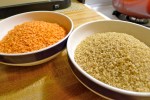
1 1/2 cups of red lentils, rinsed and drained

2 1/4 cups of water

1 1/2 cups of bulgur wheat

1 onion, finely chopped

1 tablespoon of tomato paste

1 teaspoon of ground cumin

1 teaspoon of Aleppo pepper flakes or red chili pepper flakes

4 tablespoons of olive oil

The juice of one lemon

1/3 of a cup of fresh parsley, chopped

Lettuce leaves

How to prepare:

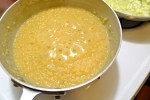
1. In a large casserole or sauté pan, combine the rinsed lentils with 2 1/4 cups of water. Bring the lentils to a boil before lowering the heat to a simmer. Season the lentils while they cook.

2. Once the lentils are very soft, turn off the heat and add the raw, dry bulgur wheat. Stir very quickly to incorporate it into the lentils. Cover the mixture and let it sit for about 30 minutes.

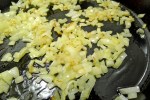
3. Meanwhile, sauté the chopped onions in about a tablespoon of olive oil until they are golden.

4. After the bulgur wheat and the lentils have finished steaming, add the onions, the tomato paste, the remaining 3 tablespoons of olive oil, and the spices. Stir to combine well. Add the chopped parsley and the lemon juice to the mixture.

5. At this point, the lentil mixture should be cool enough to handle. Using your hands, form either small balls, or small torpedo-shaped logs. Let these rest in the refrigerator until cold.

Serve on top of lettuce leaves with lemon wedges on the side.

The Daring Kitchen December Cooks’ Challenge: Pâté Chinois

Looks good, eh?
As some of you know, I have been participating in The Daring Kitchen’s Challenges for about a year now. For those of you unfamiliar with the name, The Daring Kitchen is an online community of cooks and bakers who commit to making one dish — the month’s challenge — and posting their results on their blogs on the same day.

I took a hiatus from the Daring Cooks (there is a corresponding Daring Bakers group) during and following my dissertation. In the interim, I missed out on some pretty great challenges. I especially regretted missing the Brazilian Feijoada and the Paella challenges. In addition, there were many more that passed me by as I just watched and salivated on the sidelines. This month, after a period of decompression and relaxation, I finally felt ready to jump back in and cook something new.

So imagine my reaction when I pulled up December’s challenge PDF for a mysteriously named dish called Pâté chinois and saw that . . .

Pâté chinois is essentially shepherd’s pie with a layer of canned creamed corn in-between the meat and the mashed potatoes.

That’s it.

And its traditional accompaniment is ketchup.

Yes. That’s it.

As Pâté chinois generally calls for ground beef, it is perhaps more accurate to say that it is a variation of cottage pie not shepherd’s pie. However, the more pressing question is why is it called Pâté chinois considering there is not much in it that can be either construed as pâté (ground meat alone does not a pâté make) or Chinese.

According to Wikipedia, the origins of Pâté chinois are rooted in the assumption that the name refers to Chinese cooks who came to Canada to serve the workers who built the North American railroad system in the late 19th century. These cooks were instructed by their railway bosses to prepare and serve something that was not only inexpensive, but that the railway workers would recognize and therefore eat As wood ear fungus and black chicken soup was probably out of the question, the Chinese cooks put together a version of cottage pie using canned creamed corn in place of the more expensive gravy.

Of course, this is all anecdotal. Alternatively, the name Pâté chinois might also refer to a variation of hachis Parmentier, which is basically cottage pie too. This is a dish that French-speaking families in Maine would refer to as Pâté chinois in reference to the towns where they ate it: China and South China, Maine.

I also read somewhere that Pâté chinois could also be an allusion to the dish’s preparation. When I read about the possible connection to Chinese immigrants, this was actually my first thought. Much like how chop suey is inauthentically Chinese and refers instead to the chopped items in the dish, I imagined that Pâté chinois got its name from the chopped meat and corn kernels that could be commonly found in Chinese stir-fry.

Regardless of when, where, and how Pâte chinois came to be, it is one of those quintessential Québecois comfort foods that everyone is familiar with, yet it is unknown to outsiders as it is hardly ever served outside of the home.

If you understand French (or even if you don’t), this is an truly awesome Youtube clip about Pâté chinois in Québec. It is narrated by a man with the dang coolest Québecois accent ever.

Given that I have made cottage pie numerous times (and even blogged about it here), I thought this challenge would be a easy one.

Wrong! Can you believe it, dear Readers? My first attempt at Pâté chinois was a dismal failure!

First of all, my fancy schmancy neighborhood supermarket does not carry canned creamed corn. Oh the class warfare! Consequently, I was forced to improvise with frozen corn and fresh heavy cream. Although my homemade version of creamed corn looked and tasted superior, it completely separated while cooking. To my horror, my cottage pie had morphed into a cream of potato soup with little bits of hamburger floating in it.

In my defense, it tasted amazing, but anything that is more than 50% heavy cream is almost always guaranteed to taste amazing.

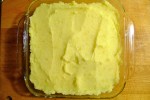
Back to the drawing board! Still no creamed corn in a can. This time, instead of blending the corn with heavy cream, I put some corn kernels with a little bit of milk in the food processor. Once puréed, I folded in more corn kernels for better texture. The result was a mass of corn about the same consistency of my mashed potatoes.

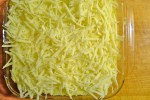
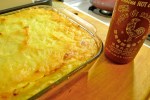
The final result yielded three distinct and yummy layers. Pâté chinois is still a fairly bland dish, which explains the predominant use of ketchup to kick it up a notch. However, since I find ketchup generally too sweet for my tastes, I substituted a healthy squeeze of Sriracha. Can’t go wrong with that 🙂

Many thanks to this month’s host, Andy of Today’s the Day and Today’s the Day I Cook!, for the challenge. I had a so much fun learning about Canadian comfort food. Your challenge was also a great reminder that it doesn’t matter how many times you make something, there is always something more to learn!

Blog-checking lines:

Our Daring Cooks’ December 2012 Hostess is Andy of Today’s the Day and Today’s the Day I Cook! Andy is sharing with us a traditional French Canadian classic the Paté Chinois, also known as Shepherd’s pie for many of us, and if one dish says comfort food.. this one is it!

Ingredients:

4 Yukon Gold potatoes (5 if they are small), peeled and cut into 1-inch cubes

2 tablespoons of butter

Milk

Salt and pepper

1 pound of frozen corn kernels, thawed and divided in half

Milk or heavy cream

One medium onion, finely chopped

1 pound of lean ground beef

1 teaspoon of paprika

1 pinch of cayenne pepper

Worcestershire sauce

1 cup of shredded Gruyère or Comté cheese

Sriracha or ketchup

How to prepare:

1. Preheat the oven to 350°.

2. Put the potatoes in a large saucepan and cover them with water. Generously add salt. Bring the water to a boil and cook the potatoes until they are tender. You will know that they are ready to mash when you can crush a potato piece easily against the side of the pan with a wooden spoon. Drain the potatoes. In the same pan, mash them with the butter. Add the milk a 1/4 cup at a time until you get the right consistency. You don’t want the potatoes to be dry, but you don’t want them to be soupy either. Aim for a texture that is loose enough to spoon out, but not so loose that the potatoes add a lot of excess water to your dish. Adjust the seasoning.

3. While the potatoes are cooking, purée half of the corn kernels in a food processor with about a quarter cup of milk. Add more milk if the mixture looks too dry, but not so much that you end up with a corn slurry. The texture of the puréed corn should match that of the mashed potatoes. Turn the puréed corn out into a large bowl and fold in the remaining whole kernels. Adjust the seasoning.

4. Heat some olive oil in a large skillet over medium-high heat. Sauté the onions until they are translucent and begin to brown. Add the ground beef to the pan, breaking up bigger chunks of ground beef with your wooden spoon as it cooks. Continue to cook the beef until there is no longer any visible pink. Sprinkle it with the paprika, cayenne pepper, Worcestershire sauce to taste. Cook everything until the sauce has thickened, about another two to three minutes.

5. In an oven-proof dish, spread the ground beef out in an even layer on the bottom. Carefully spread the corn mixture on top of the beef. Gently spoon the potatoes on top of the corn. Sprinkle the shredded cheese evenly over the top and bake until bubbly, about 20-30 minutes.

6. Let it rest for about 20 minutes before serving with Sriracha or ketchup.

Smoky Chorizo and Chickpea Soup


Have you ever looked outside your window at the overcast sky and realized that the weather has officially turned chilly? That’s how I felt today when the cold morning light began filtering through my shades.

I always think that this kind of weather inspires a taste for spices and hot liquids. This soup, adapted from Food & Wine, certainly satisfies those cravings.

There is something about Spanish food that feels perfect for this season. Maybe it’s the colors, or the strong flavors of garlic and sherry. Maybe it’s the liberal use of pimentón, whose rich and smoky heat seems to combat the gloom of gray skies.

Pimentón is basically the Spanish version of paprika and comes in three varieties of varying heat: dulce (sweet), agridulce (bittersweet), and picante (hot). For general cooking purposes, I find agridulce to be just perfect, neither too mild nor too bitter.

For this recipe, I used chorizo from my CSA. Given that most of the sausages from my CSA are fairly lean, I didn’t cook the chorizo beforehand. However, if you have particularly fatty links, you might wish to sauté the chorizo pieces and drain them before adding them to the soup.

I also love how the recipe uses puréed chickpeas as a thickener. Sometimes I find that using flour to thicken soups, stews, stocks, and gravies can lead to slightly gluey results, and using tapioca is just weird.

Ingredients:

Olive oil

1 large yellow onion, finely chopped

2 large carrots, peeled, halved lengthwise and thinly sliced

2 fat garlic cloves, thinly sliced

3 teaspoons of pimentón or smoked paprika

1/4 teaspoon of cayenne pepper

4 tablespoons of tomato paste

1 pound of fresh chorizo, cut into 1/2-inch pieces

3 cans of chickpeas, drained, rinsed, and divided into two equal portions

4 cups of beef broth

Lemon wedges

Fresh parsley sprigs

How to prepare:

1. Purée the half of the chickpeas in a food processor until they are smooth. They will act as a thickener in the soup and give the broth a wonderful nuttiness.

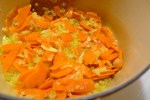
2. In a large Dutch oven, heat about two tablespoons of olive oil over medium heat. When the oil begins to shimmer, add the onions and cook them until they just start to turn translucent. Toss in the carrots and the garlic. When the garlic becomes fragrant, add the pimentón, cayenne pepper, and tomato paste to the vegetables. Combine everything together, taking care not to burn the spices. Once the vegetables are evenly coated with the tomato paste and the spices, add the chorizo, the puréed chickpeas, the remaining whole chickpeas, and the beef broth. Adjust the seasoning.

3. Simmer the soup until the whole chickpeas are nice and tender. You will want to skim the surface of the soup periodically. Adjust the seasoning for a final time. Serve the soup in warm bowls, topped with fresh sprigs of parsley and lemon wedges on the side.

The Daring Kitchen July Cooks’ Challenge: Papillotes de pêches et framboises à la vanille (Peaches and Raspberries Cooked in Parchment Paper with Vanilla Bean)


The dissertation has been pretty overwhelming lately. This is the big push before the defense so I haven’t had much time for all the things that I love like spending time with my friends, cooking, blogging, eating out and drinking.

I miss the drinking. I ran an errand the other day and saw some nice people drinking wine in the shade. I remember jealousy thinking, “I bet they don’t even appreciate that wine!” Suddenly, I was overcome with the desire to grab their glasses out of their hot little hands and go sprinting down the street.

I didn’t do it, but I sure wanted to.

No way did I think that I was going to be able to participate in the Daring Kitchen challenge this month either until I saw the challenge: cooking en papillote.

En papillote is a fancy schmancy way of saying that you cook something in a paper envelope. We’re not talking about any old paper here; we’re talking about parchment paper, also known as bakery release paper or greaseproof paper. Cooking in parchment is a terrific way to cook delicate things quickly without fear of them drying out. You can also roast food en papillote as the paper allows just enough steam to release so that potato skin, for example, gets nice and crispy while the insides gently steam to perfection.

You could use aluminum foil instead of parchment paper — also known as a hobo pack — but I find that the results lack the finesse and elegance of cooking in paper. I might also be too negatively affected by the word “hobo,” and too seduced by the phrase “en papillote“!

It’s true that this month’s Daring Kitchen assignment wasn’t really a challenge for me since cooking en papillote is one of my favorite cooking methods. On this blog, I have posted a recipe for roasted tiny potatoes en papillote and roasted salmon with mango and Bird’s Eye chiles. However, it was completely new for me to use this cooking method to make a something sweet instead of something savory.

This dessert recipe was inspired by one that I saw months ago on Elle à table, the companion cooking site of French Elle Magazine. I kept the primary components — parchment, peaches and raspberries — and changed the rest. The original recipe has you peel the peaches. However, if the peaches are nice and ripe, this step seems fussy. It also seems like it would be a big waste of precious juice. The Elle à table recipe also calls for lime zest and juice, whereas I only used the zest for fear that the extra juice would have made the dessert too watery. Instead of a lime, I used a lemon. I also swapped out the cinnamon for vanilla bean, and shortened the cooking time so that the fruit would stay more intact.

Just like there is more than one way to roast a chicken, there is more than one way to make a parchment paper packet. Traditionally, you take a large piece of parchment paper, fold it in half, and cut out a heart — just like how you did as a child. After you position your food on the paper, you seal up the packet by folding or crimping the edges shut. To give you an example of how to seal up a parchment paper packet, here is a video with Chef Paul Prudhomme — who can pronounce papillote any dang ol’ way he pleases in Cajun country.

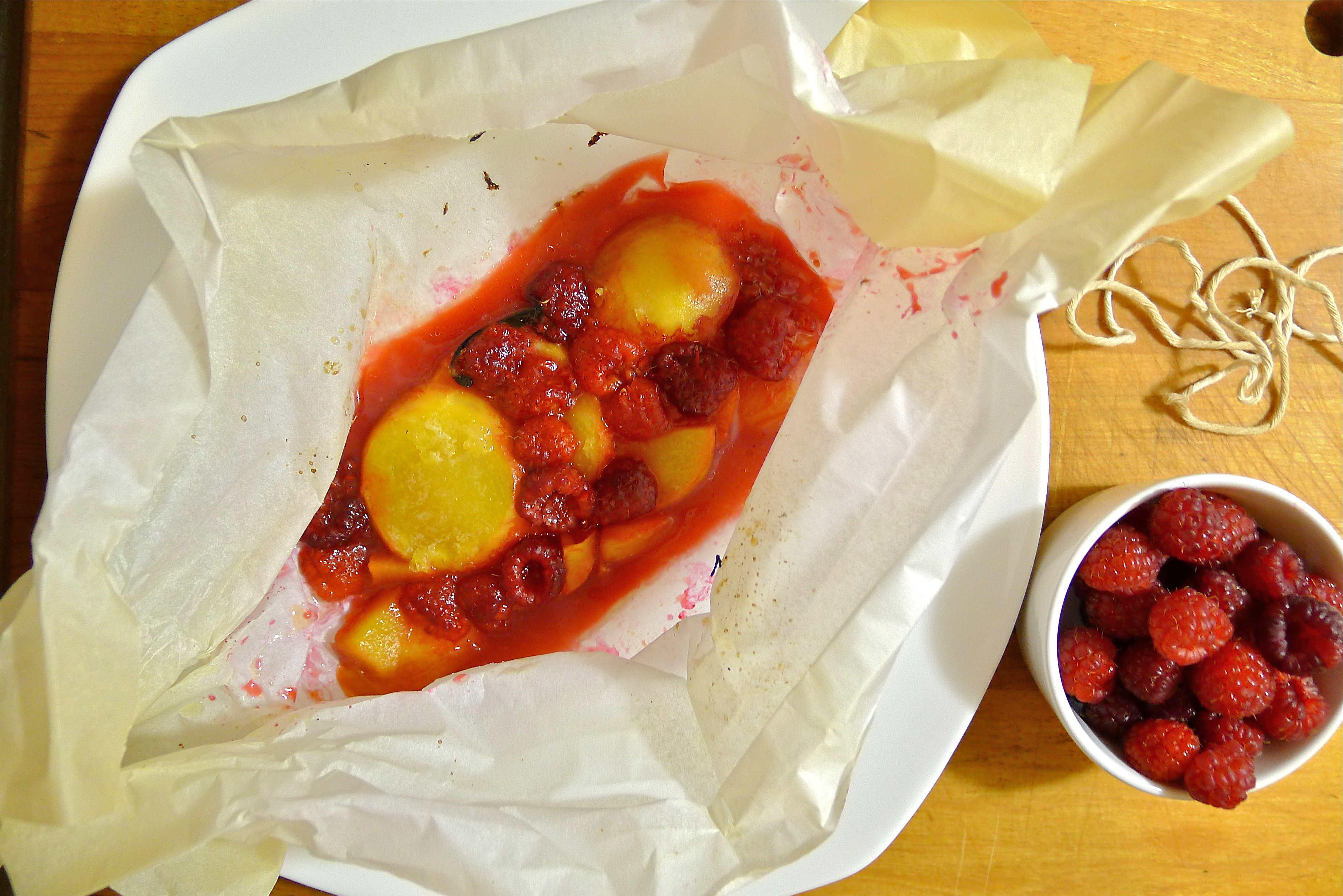
Alternatively, you can arrange your food in the center of a square of parchment paper, pull two of the sides up, fold them down, and then tie off the ends with cooking string. For some more examples of parchment paper packets, I direct you to this month’s Daring Cooks’ Challenge PDF.

In the end, it doesn’t really matter how you seal up the parchment paper as long as you make sure that your packets are snug, but not too tight around your food.

I made two different kinds of packets for this challenge. You can see them both in the photo gallery below. This challenge didn’t take up too much of my time since I had the fruit already (it’s high peach season here). Most importantly, it reminded me of how valuable it is to not give up those things in life that give you pleasure at those moments in life when you feel most stressed out.

A big thank you to Sarah from All Our Fingers in the Pie for the terrific challenge 🙂 In terms of mandatory items, you only asked that we cook in parchment. As suggestions, you gave us some amazing savory ones like beef, lamb or rabbit. I chose a gourmand take on cooking en papillote, which I hope still keeps with the spirit of the challenge even though it might not have been as challenging!

Mandatory blog checking lines: Our July 2012 Daring Cooks’ host was Sarah from All Our Fingers in the Pie! Sarah challenges us to learn a new cooking technique called “Cooking En Papillote” which is French and translates to “cooking in parchment”.

* The reveal date for this month’s French cooking challenge happens to fall on Bastille Day: le 14 juillet 🙂 Bonne fête, tout le monde!

Ingredients:

4 beautifully ripe yellow peaches

1 vanilla bean pod, split into four pieces

1 punnet of raspberries*

Cane sugar

The zest of 1 lemon

Cold butter

How to prepare:

1. Pre-heat your oven to 400° F.

2. Defuzz the peaches by very gently rubbing as much of the peach fuzz off as you can under cold running water. Cut the peaches into slices that are a little more than a quarter-inch thick.

3. Evenly divide the peach slices between 4 parchment paper sheets. You will use about one peach’s worth of slices per packet. Tuck one split vanilla bean pod in-between the peach slices. The vanilla should perfume the fruit, but not overwhelm it. Arrange a small handful of raspberries over the peaches. Sprinkle the fruit with cane sugar. Grate a little lemon zest over the top. Dot the fruit with about a 1/2 tablespoon of cold butter cut into small pieces

4. Crimp or tie off your parchment paper parcels and arrange them on a large baking sheet. Bake them between 8-10 minutes. Remove them from the oven and carefully open them (they will be steamy). Find and discard the vanilla bean pods.

You can serve the peaches and raspberries straight from the paper, or you can transfer the fruit to a small bowl to top with a scoop of vanilla ice cream or gelato.

* Although punnet is a Britishism, but it’s a pretty useful word for those little plastic or molded paper baskets intended for berries. We don’t seem to have any equivalent in American English (the closest approximation is a pint basket). Furthermore, punnets for raspberries are generally smaller than the containers used for pints of strawberries . . .

Sugar Snap Peas with Sesame, Soy Sauce and Mirin


Sugar snap peas are here! When snap peas are in season, I like to prepare them as simply as possible so that their wonderful sweetness can shine.

I like my sugar snaps barely blanched so that the pods retain their crunch, but lose their rawness. This mixture of sesame oil, soy sauce and mirin is barely a dressing; it’s more like a very thin glaze or wash. Even though the dressing is thin, it is remarkably flavorful — but not so flavorful as to overpower the peas.

It goes without saying that if you shun cooking wine (that awful shelf-stable, salty, sugary stuff that you see in the supermarket) and avoid cooking sherry (equally as salty, sugary and awful), you should probably avoid the “mirin” that is typically found in the Asian section at most grocery stores. Tomoko calls it “fake mirin” and it is certainly as gross as cooking wine and cooking sherry: salty, sugary, harsh, unpleasant and full of MSG.

If you can, try to get your hands on some real mirin. Just like how you buy wine and sherry at the wine store, you should find mirin where sake is sold.

Tomoko says that she finds hers at the liquor store, but it seems like the liquor stores downtown aren’t nearly as Asian-conversant as the ones uptown (“Mirin? You mean Wild Turkey?”).

Following a recommendation from the New York Times, I placed an order at a Sakaya, a store that sells almost exclusively sake.

“It’s not so easy to find here,” the woman at the store explained when I told her that I had a little bit of a hard time. “Oh, if I can’t get real mirin, I don’t even bother!”

So what should you do if you can’t get real mirin? As a substitution, you can dissolve a pinch of sugar in sake. Ideally, you’re looking for about a 3-to-1 ratio of sake to sugar, but you can adjust the sweetness to your taste.

The woman at Sakaya agreed, ” Yeah, yeah. Sake and some sugar.”

“Mirin,” she said, “After you open it, they say to put it somewhere cool and dark, but you should put it in the refrigerator. It lasts a long time. I use one bottle of mirin, maybe every one or two years.”

Since I have never held onto a bottle of mirin for one to two years, I don’t know if I can vouch for that. However, I will definitely say that having a bottle around the house is an incentive to use it more often!

Ingredients:

1 pound of sugar snap peas, topped and tailed

2 tablespoons of mirin

2 tablespoons of Japanese soy sauce

1 tablespoon of sesame seed oil

Salt

Sesame seeds

Shichimi or Aleppo pepper

How to prepare:

1. Bring a large pot of water to boil. Add the sugar snap peas and cook them briefly for about two to three minutes, no more than four. You want them to be a little crunchy, but not raw.

2. While the snap peas are boiling, set out a large bowl of ice water. Scoop the peas out of the boiling water when they are done and plunge them into the ice water to stop the cooking and fix the color. Drain the sugar snap peas well.

3. In a small saucepan, heat together the mirin, the soy sauce and the sesame oil over low heat. Let the sauce simmer until it has reduced to a thin glaze. Adjust the seasoning if needed.

4. Toss the drained snap peas with the dressing in a large bowl. Sprinkle them with sesame seeds and shichimi to taste.

Kolpona Cuisine’s Muttar Paneer with Freshly-Shelled Peas


When Tahmina over at Kolpona Cuisine posted her recipe for muttar paneer, I knew that the minute shell peas came into season, I was going to make it. Before I started reading her blog, I always felt so intimidated by South Asian cooking. Long lists of spices — some ground, some whole — would freak me out so much that I would end up making something French or Italian-inspired instead.

But what I love about Tahmina is how accessible she makes Bengali, Indian and South Asian cooking. Don’t have a spice grinder for garam masala? No problem. Garam masala is better with whole spices anyway — just count how many of each thing you put in, and fish them out with your fingers while you eat. Don’t have paneer? Take that 2% milk you have lying around the house and make cheese!

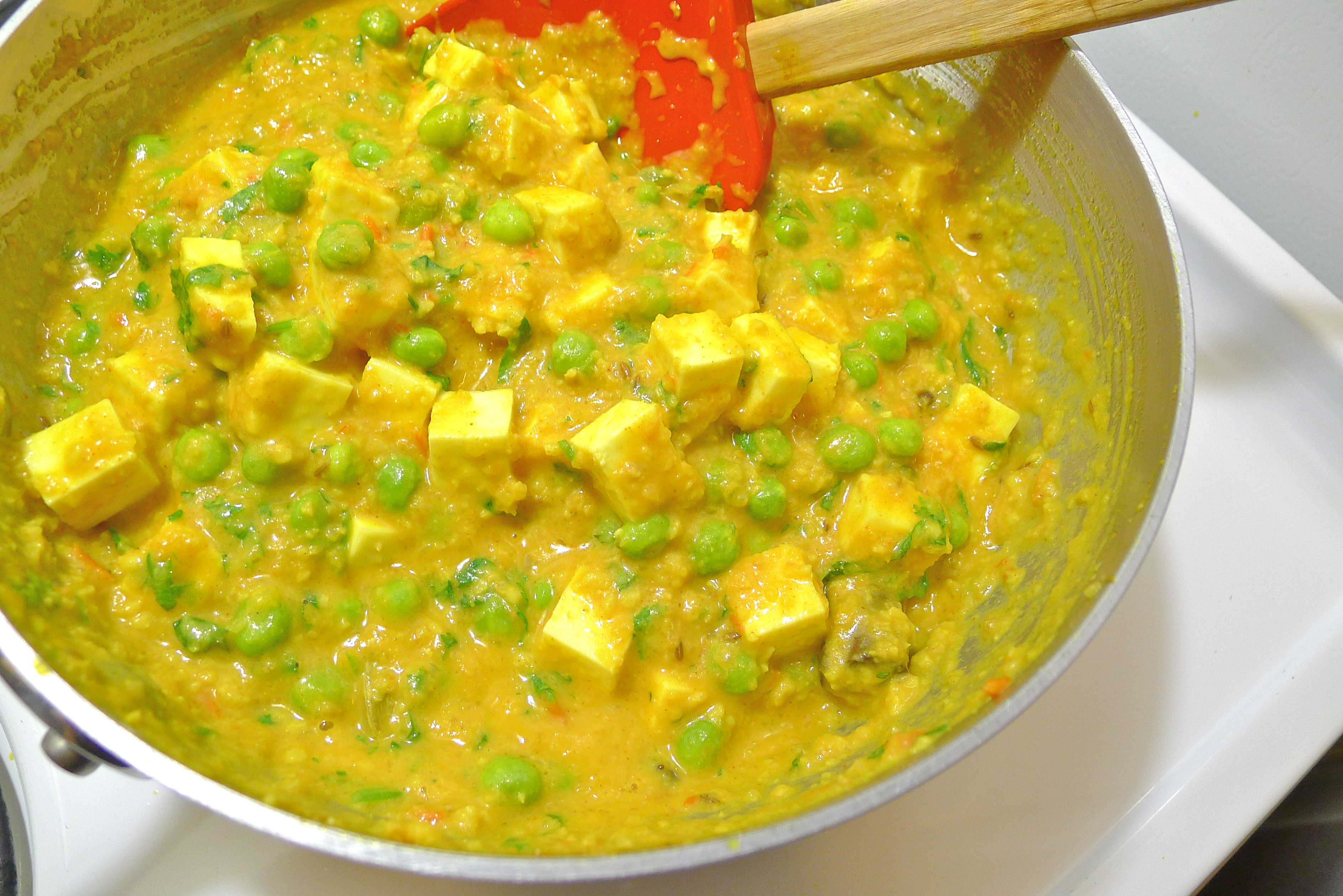
This is the second recipe from Tahmina that I have cooked (the first being kale paneer), and I loved the results. The serrano peppers and chopped cilantro added near the end of cooking give the dish a wonderful freshness. The peas are also such a pretty contrast to the sunny yellow sauce. It’s really, really good.

I think that by the end of the summer, I will have succeeded in making everything that she posts!

I hardly changed Tahmina’s recipe with the exceptions of using freshly shelled peas, substituting ginger-garlic paste for actual ginger (I didn’t have any) and garlic, and using store-bought paneer. Tahmina recommends making your own paneer  something that I would totally do if I didn’t keep forgetting to watch the clock. I never seem to be able to factor in enough time to let the cheese drain! She also advocates making your own ghee, which is also on my cooking to-do list. I keep forgetting the fenugreek leaves too . . . I need to replace that Post-it pad in the kitchen!

I did have to French up this recipe a little bit by using some fancy crème fraîche in the place of heavy cream 🙂 Oh la la!

And the absolute best part about cooking from a friend’s blog? You feel like they are right in the kitchen with you, even when they are hundreds of miles away 🙂

For the her recipe, click here.

Ingredients:

For the tomato-onion base:

2 tablespoons of ghee or vegetable oil

1/4 cup of raw cashews

1 medium onion, chopped

1/2 teaspoon of ground turmeric

1/2 teaspoon of red chili powder

1 teaspoon of ground cumin

1 teaspoon of ground coriander

2 tablespoons of ginger-garlic paste

2 Roma tomatoes, chopped

Salt

For the Garam masala:

Ghee or vegetable oil

1/2 teaspoon of cumin seeds

5 green cardamom pods

5 whole cloves

2 bay leaves

1 cinnamon stick

For the final dish:

1 cup of freshly shelled peas

2 serrano peppers, chopped

8 ounces (about 1 1/2 cups) of paneer, cubed

1/2 cup of cilantro leaves, chopped

1/4 cup of crème fraîche

Salt

How to prepare:

1. In a large saucepan, toast the raw cashews in about two tablespoons of ghee or oil over medium heat. When the cashews begin to color, add the onion and sauté everything together until the onion begins to turn golden around the edges. Add the ground spices and fry them until they are nice and fragrant. Be sure to stir the onion mixture frequently so that the spices don’t burn. Add the ginger paste and the chopped tomatoes. Cook them until the tomatoes begin to break down. Adjust the seasoning.

2. Purée the tomato-onion mixture in a food processor or blender.

3. Using the same saucepan, heat the whole garam masala spices in about a tablespoon of ghee or vegetable oil over medium heat. When the spices are fragrant and the cumin seeds begin to pop, add the puréed tomato-onion base back to the pan. Let the it simmer for a few minutes so that the garam masala spices infuse the tomato-onion mixture. Add chili peppers and the peas and cook them until the peas are just start to become tender, about 4 minutes. Add the paneer, the chopped cilantro leaves and the crème fraîche. Continue to simmer everything together for 3-4 minutes more. Adjust the seasoning for a final time.

Serve with rice or, as Tahmina recommends, chapatis.

Japanese Baby Turnips Sautéed in Butter and Soy Sauce


I have a confession which really isn’t a confession since it’s pretty obvious : When it comes to Asian cooking, I haven’t a clue most of the time.

To this, I might add something possibly incendiary: although there are many people out there who are progressive, there are a lot of people who aren’t and it happens fairly often that I meet people who think that as someone of Asian descent, I eat rice like it’s going out of style, am quiet, reserved and demure, and have relatively little body hair.

Imagine their faces when they find out that I swear like a sailor, have no filter and can hold my liquor like a white divorcée.

The body hair part is true though 😉

In regards to the swearing, now that I’m older, I have made a concerted effort to swear less. Mostly because it makes the times when I do swear even better! Just kidding 😉 In all honesty, I think that I swore so much in my youth that I used up all of my swear words. I just don’t want to swear anymore. Can believe it? I can’t!

As for the filter? Visualize some big rusty grate with giant holes in it. The kind that lets almost everything through except for large, plastic soda bottles and shoes. I have worked hard on that too since I realized that speaking without thinking is best way to get misunderstood. I still think of my filter as that grate, but now it’s jerry-rigged with an intricate network of fishing line and wire. Some stuff still gets through, but much, much less than before. Thank goodness!

In terms of Asian food, I am not completely ignorant because I happen to know plenty about eating it. I have never met a sliced jellyfish, deep-fried octopus ball, bowl of noodles, dumpling (oooooh, dumplings), taro puff, sweet red bean fritter, bao, roll (spring and summer), lotus bean paste-stuffed pastry, chicken adobo, preserved egg, roast duck, suckling pig, hot-pot, under-cooked chicken meatball, wad of natto, head-on shrimp, whole fish, chili crab or Spam musubi that didn’t make my motor run.

However, when it comes to the nitty gritty of cooking, I am a babe in the woods.

The amount of times that I have stir-fried can be counted on one hand with fingers to spare. I did attempt a stir-fry about a week ago and it was an epic fail. I actually asked my mom right before I did it too.

“Mom, how do you stir-fry?”

Silence.

I pictured her putting the phone down and walking away in shame. Or maybe it wasn’t shame, but just a refusal to tolerate such a dumb question.

So after mangling that stir-fried chicken and bok choy dish (I wilted that poor bunch of greens into a pathetic nothing), I have decided that this summer, I am going to get in touch with my yellow-ness and make a good-hearted attempt to become a little more educated about how to cook some of that food over there. I know it’s kind of wrong to lump all the Southeastern and Far Eastern cultures together, but isn’t it much more efficient to refer to all peoples who use sticks as utensils as one group rather than many? I want to learn to cook a little Chinese, some Japanese, some Korean, some Filipino, some Indonesian, some Vietnamese, some Thai and more.

I’m going to try it all.

I’m almost completely new at this, so if I stick two things together that really don’t go, like using a sauce meant for fish on cheese, please do let me know. I bet you can all stir-fry circles around me, so I’m counting on you for help.

Because my mom won’t 😦

I’m also illiterate, so please make all comments or suggestions in English or in another Latinate language 🙂

Ingredients:

1 bunch of Japanese baby turnips (or regular baby turnips) and their greens, thoroughly washed

Butter

Sesame oil

Japanese soy sauce

Crushed Aleppo pepper or shichimi

How to prepare:

1. Separate the leaves from the baby turnips. Trim the turnips and cut them in half if they are too big. You want all the turnips and turnip pieces to be roughly the same size so that they cook evenly. Roughly chop the greens into 2-inch pieces.

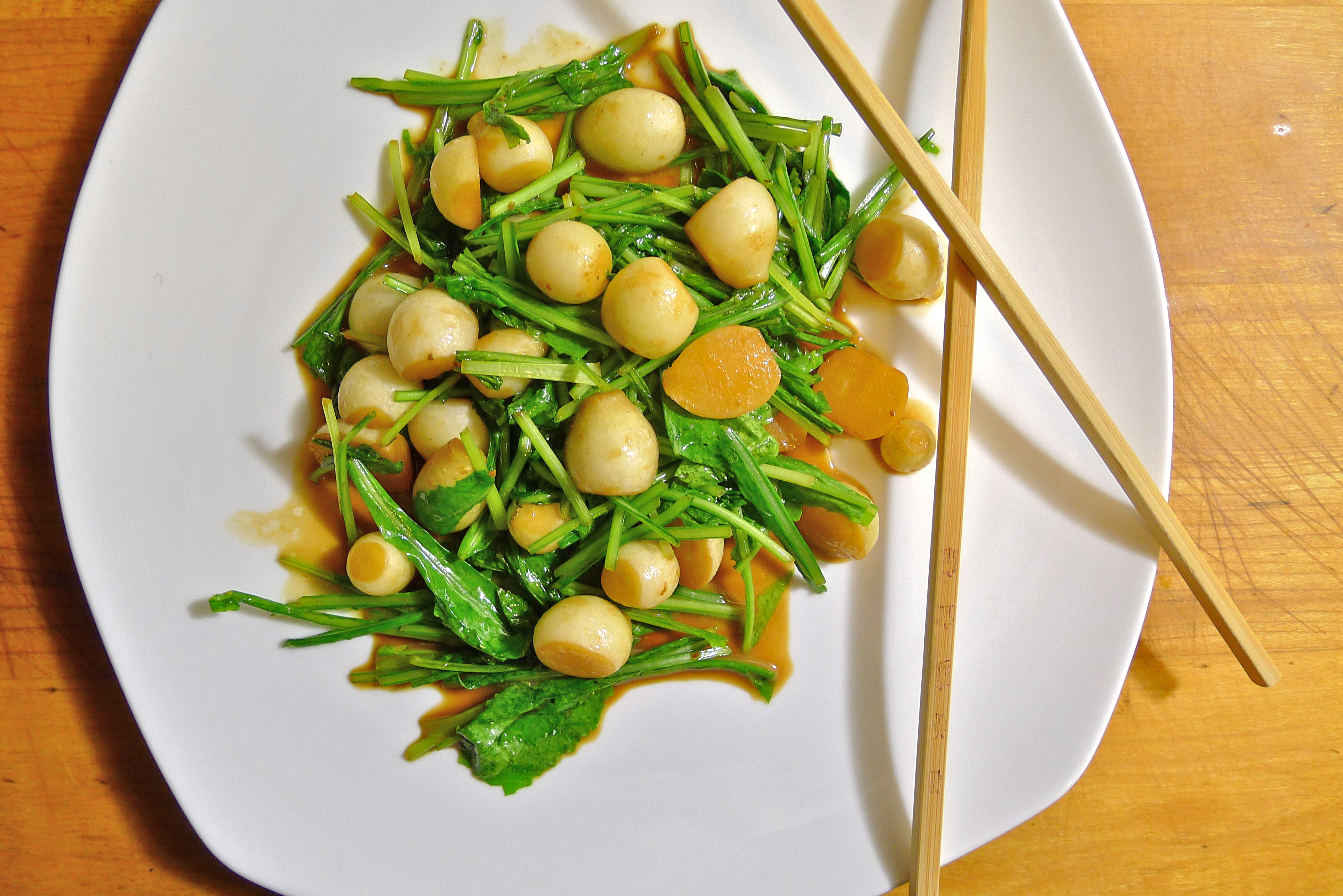
2. In a large saucepan, heat a knob of  butter and about a teaspoon of sesame oil together over medium heat. When the butter begins to foam, toss in the baby turnips. Carefully add a splash of soy sauce to the pan along with some Aleppo pepper or shichimi to taste. Sauté the turnips until they begin to lose their opacity and turn translucent. Add the greens and continue to cook everything until the greens are wilted and the turnips are cooked through. Adjust the seasoning and serve.

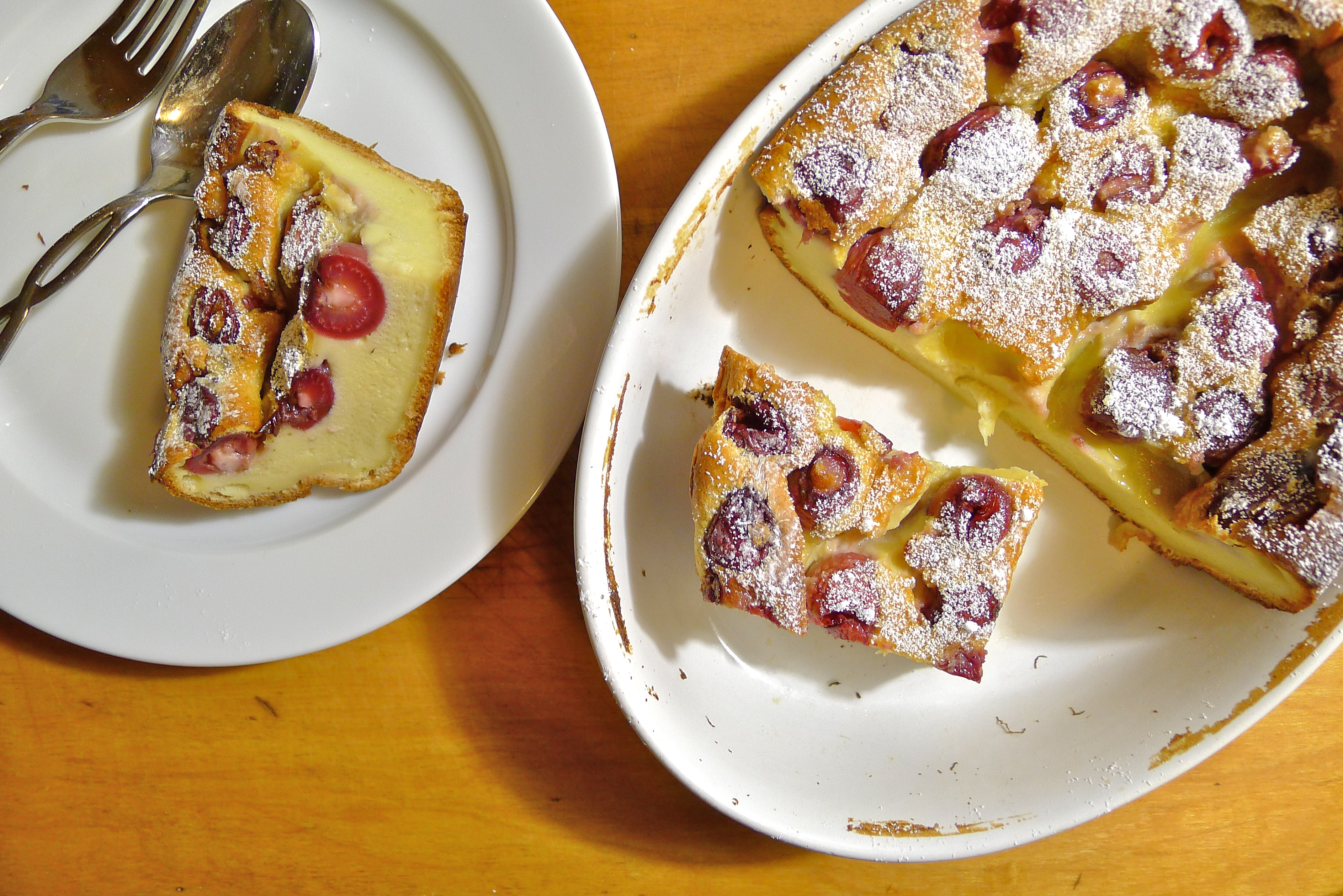
Cherry Clafoutis


Clafoutis is the classic dessert of the Limousin, the northwestern part of the Massif Central in the middle of France. Traditionally, it is baked in a buttered dish and is more or less a flan with ripe black cherries. Sometimes, other red fruits like prune plums, red plums or blackberries are used. Done correctly, it is lovely.

When I was doing my internship, the chef taught me a great recipe for clafoutis that was simple and foolproof. We would schedule it for days when we had cooking students who had little or no experience in the kitchen. Not to be trusted with knives, we knew that we could put cherry pitters in their sweaty little hands without fear of accidents. Better yet, since clafoutis tastes best when you leave the cherries unpitted (a little more onerous to eat, but worth it), sometimes the students wouldn’t even get cherry pitters, just whisks!

Try to take an eye out with those!

At home, I reliably depended on that recipe any time I needed to deliver a perfect clafoutis. It worked every time — even when I was a little short or too generous with the cherries, and even when I ran low on sugar, flour, milk or all three.

Then I moved back to New York. Suddenly, the recipe that worked so marvelously in Paris became a total dud. I can’t tell you how many heavy, lumpy, pathetic clafoutis I turned out. I was making clafoutis that tasted more like lightly sugared cherry omelets — every bit as unpleasant as it sounds.

I even inflicted them on friends, like poor Tomoko who had to pick her way around my rubbery pâte and gray (yes, gray) cherries last summer.

“What did you do to them?” she asked.

I had no idea. I could only think of something a friend in Paris repeated to me, something that she had overheard at a dinner party. Faced with the prospect of ingesting one more morsel of clafoutis after a lengthy and generous meal, one of the guests declared himself cla-foutu — a French play on words that roughly means cla-f***ked.

Well, my New York clafoutis were definitely their own kind of cla-foutus.

You always hear people who say that the definition of crazy is doing the same thing over and over again and expecting a different result. When I saw gorgeous cherries at the Greenmarket this week, I decided to get off the Crazy Train and stop trying to make my Parisian recipe. It was time to get back to Julia.

Julia Child, that is 🙂

Compared to what I was making, I think this clafoutis is a beauty. Sure, it rose much higher on one side than the other (I should have turned it halfway through cooking. Stupid un-calibrated oven). Yeah, it cracked (I over-cooked it. I should have taken it out of the oven sooner).

But I feel like I am getting my clafoutis-groove back on.

This recipe is adapted from Mastering the Art of French Cooking, Volume I. Julia calls for three cups of cherries, and if I had three cups, I would have used them 🙂

For the original recipe, click here.

Special equipment:

A stick immersion blender

Ingredients:

Butter

2-3 cups of ripe cherries, pitted . . . or not!

1/3 cup of sugar

1 and 1/4 cup of whole milk

5 pullet eggs or 3 large eggs

1 tablespoon of vanilla extract

A pinch of salt

2/3 cup of all-purpose flour

Powdered sugar

How to prepare:

1. Preheat the oven to 350°.

2. Butter a baking dish and arrange the cherries in a single layer on the bottom.

3. In a large bowl, use the immersion blender to blend together the milk, the eggs, the vanilla extract, the salt and the flour for 1 minute. The batter should be nice and frothy.

4. Set the baking dish on a baking sheet. Use a ladle to carefully pour the batter over the cherries. Bake for about an hour. The clafoutis will be done when the sides are puffed and golden, and when a knife or a skewer inserted in the center comes out clean. The clafoutis will be like a souffle when you remove it from the oven. Let it settle completely — it will sink down as it cools — before serving. Dust the clafoutis with powdered sugar right before cutting it into wedges.