Colcannon and Irish Bacon


I’m not really the kind of person to post Irish dishes simply because it’s Saint Patrick’s Day. In all honesty, this meal came about from searching for something to accompany the nice Irish bacon that I get from my CSA.

While idea hunting, I came across colcannon, and somewhere in the dusty outer reaches of my memory came the image of mashed potatoes and winter greens mushed together. Not quite sure where I had it first; it might have been at some random inn or, more likely, some Irish pub in Boston. In any case, it didn’t make that much of an impression on me at the time. Furthermore, I would have never considered making it if I hadn’t read this from The Country Cooking of Ireland by Colman Andrews:

“To serve [colcannon] in the traditional Irish manner, push the back of a large soup spoon down in the middle of each portion to make a crater, then put a large pat of room-temperature butter into each one to make a ‘lake.’ Diners dip each forkful of colcannon into the butter until its walls are breached.”

Holy. Crap.

If I had known that you were supposed to eat colcannon that way . . . well, let’s just say that it would have been dangerous. Dangerously delicious, I mean!

In his recipe, Andrews asks you to heat the milk together with chopped green onions, and then beat the hot infused milk into the mashed potatoes. I actually spaced out and tipped all my cold milk into the potatoes before I remembered that step. Regardless, it still tasted wonderful.

So if you think that a dipping “lake” of melted butter for your mashed potatoes and greens (which might as well be ornamental at this point) sounds as awesome as it does to me, than colcannon is definitely for you!

And once those “walls are breached,” Irish bacon tastes pretty darn good in the ensuing butter flood. Don’t forget the mustard!

Ingredients:

2 large Russet (or floury) potatoes, about 2 pounds, peeled and cut into large dice

1 cup of whole milk

6-8 tablespoons of butter at room temperature

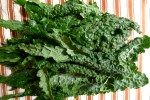
1 bunch of Lacinato kale, stemmed and cut into 1-inch pieces (you could also use curly leaf kale, savoy cabbage, or any other kind of leafy winter green)

Salt and freshly ground pepper

About a pound of Irish bacon

Coarse Dijon mustard

How to prepare:

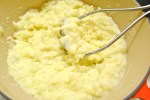
1. Place the diced potatoes in a large pot of salted water and bring everything to a boil. Reduce the heat and simmer the potatoes until they can be easily crushed against the side of the pot with the back of a wooden spoon. Drain the potatoes well. Add two tablespoons of butter and the cup of milk to the potatoes. Using a potato masher, mash the potatoes until all the potato pieces are crushed. If the mash doesn’t seem sufficiently nice and fluffy, add some more milk, a little bit at a time, until it has the right consistency. Cover the pot while you prepare the rest.

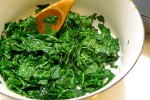
2. Melt about a tablespoon of butter in a large saucepan over medium heat. Add the cut kale and a little bit of water (about a tablespoon). Season the kale with salt and pepper. Sauté the kale until it begins to wilt. Tip the kale into the potatoes and stir everything together to combine. Adjust the seasoning.

3. Brown the Irish bacon slices on both sides in a large cast-iron skillet. Transfer the browned slices to paper towels to drain.

4. Mound a good amount of warm colcannon on each plate. Using the back of a spoon, make wells in the middle of each mound and put a hefty knob of butter in each one.

Serve your colcannon with a few slices of Irish bacon and grainy mustard on the side.

High Point Farms Buyers Choice CSA! Sign Up Now!


As many of you know, one of the major inspirations for this blog was High Point Farm’s Meat CSA — my very first CSA ever.

CSA stands for Community Supported Agriculture. The basic CSA model is that you become a member of the farm, pay for a certain amount of food up front and come to pick up your “shares” at designated times throughout the season. CSA’s have all kinds of benefits. First of all, you support local agriculture, sustainable and environmentally- sound farming practices, and small farms. Second of all, you are able to form a relationship directly with your farmer. You learn about how your food is raised, how it is harvested, how your food gets to your table.

Most importantly, you get the best quality food for your money.

The meat is from our CSA absolutely amazing. All the beef is grass-finished, which means that the cows are fattened by grass — hay and baleage in the winter — not grain. The flavor is deep, rich and incredible.

I actually can’t have steak in restaurants now because it just doesn’t taste like meat!

I had always wanted to do a CSA. However, the only kind of CSA that I ever knew of before hearing about High Point Farms was either a vegetable or a fruit CSA. As someone who hates to waste food, I feared having to throw out more food than I could prepare or eat at any given moment — which is precisely what made a meat CSA so appealing.

Our farmer gives us our meat frozen. It is vacuum-packed in super thick plastic so that it keeps in the freezer really well. For anyone who claims that fresh meat is superior to frozen, I would say that this is really spoken from a place of ignorance as so much of the “fresh” meat sold in markets (even high-end butcher chops) was frozen — it just got defrosted by the shop or the butcher instead of by you!

You can go on the farm’s facebook page and see what a happy and wonderful life the animals have. If you are going to eat meat, wouldn’t you want the animals to be raised with love and care, and humanely slaughtered with deep respect and appreciation? To the argument that eating animals is “unhealthy,” I have to say that what is really unhealthy is eating pesticide-covered vegetables imported from Chile or some other South American country with horribly lax labor and safety practices — not to mention the carbon-footprint!

Some other vegetable CSA’s in the City offer meat through partnerships with other farms. However, I have to say that though I found High Point Farms almost by accident two years ago, getting involved with them has been one of the best and most rewarding things that I have ever done in New York City.

As I live close to the pick-up site in Manhattan, I am able to help the farm out on the distribution end by helping to coordinate the CSA’s bi-monthly pick-ups. Thanks to Tina and Bob MacCheyne, the farmer-owners of High Point Farms, I have learned so much. Not only have I discovered new cuts of meat and how to cook them, I have learned so much about being a better eater, consumer, and food advocate.

High Point Farms will be starting its next CSA season next week. There are still membership spaces available. The farm will be moving to a new model for this time around called a Buyers Choice.

This is how it works: there are different share options, beginning with a Trial Membership at $225 and going up to a Gourmet Share for $1000. That money goes directly to the farm, and is also your credit at the farm store for the season. Every two weeks, you go to the online store and load up your shopping cart with what you want: steaks, osso buco, oxtails, ground beef, roasts, chickens, eggs, cheese, pork chops, sausages, bacon. You can order as much or as little as you want. You can even skip that pick-up and wait for the next one. If you run out of credit, you can add more to your account. You come, you pick up your meat, you go home and cook it. And then you shiver with delight because it tastes soooo good.

And look, you just supported local agriculture and not evil giant agro-business.

The Deets:

• Our CSA season will run from March to December. You do not have to pick up something every pick-up., only on the days when you have ordered meat for pick-up.

In New York City, we have three pick-up locations this season:

East Village: Jimmy’s 43 (on East 7th Street, between 2nd and 3rd Avenues)
Williamsburg: Crossfit Virtuosity (221 North 8th St, between Driggs and Roebling)
Brooklyn Heights: Sweet Pea CSA (you must be a member of Sweet Pea Vegetable CSA to join this group)

• For the season’s delivery dates, click here.

• Membership Share Prices:

Trial Share: $225.00 (buys $225.00 of Farm Store Credit)

Single Share: $350.00 (buys $350.00 of Farm Store Credit)

Medium Share: $500.00 (buys $515.00 of Farm Store Credit + priority on limited items)

Large Share: $700 (buys $735.00 of Farm Store Credit + priority on limited items)

Gourmet Share: $1000.00 (b $1050.00 of Farm Store Credit + first priority on limited items)

There is a $25.00 Membership fee at sign up. ne time charge per CSA Season to offset the farm’s administrative and shipping costs.

For more information and to sign up, click here!

PS. See all that nice food pictured at the top of this blog post? You too can make all that awesomeness with High Point Farm’s meat!

Crustless Mini-Quiches


I love quiche because I love the four basic components of classic quiche: pork, cheese, custard, and butter crust.

Quiche is one of those things that can be easily pulled together, but it can also be amazingly time-consuming and complicated. The last time that I made quiche, I decided on Thomas Keller’s Quiche Lorraine from the Bouchon Cookbook (a modified version of which appeared in Food and Wine).

The Bouchon quiche may rank up there as one of the most challenging things that I have ever cooked. First of all, at a super deep 2-inches, getting the center to set perfectly is not easy. Secondly, Keller’s recipe instructs you to aerate the egg mixture to the consistency of a sloshy, frothy broth before pouring it into your delicate parbaked crust in 2 stages. And you must do this without the quiche leaking at all.

Tricky. Very tricky.

And I have to admit that I wasn’t entirely successful.

What I am successful at is the standard quiche, perfected over years and years of repetition. Even though I can whip up a butter crust with my eyes shut, it always seems like a big affair because equipment always needs to be pulled out of tight spaces, and countertops need to be cleared to roll out the crust.

And let’s not even talk about the clean-up!

So what to do when you want to get your French on, but find yourself pressed for time, space and energy à l’américaine?

You make a crustless quiche, Silly 😉

Now before you scoff at a crustless quiche, let me just say that I love butter crust. As I might love butter crust even more than the average bear, I thought that I would really miss it in crustless quiches. However, I still thought these were wonderful.

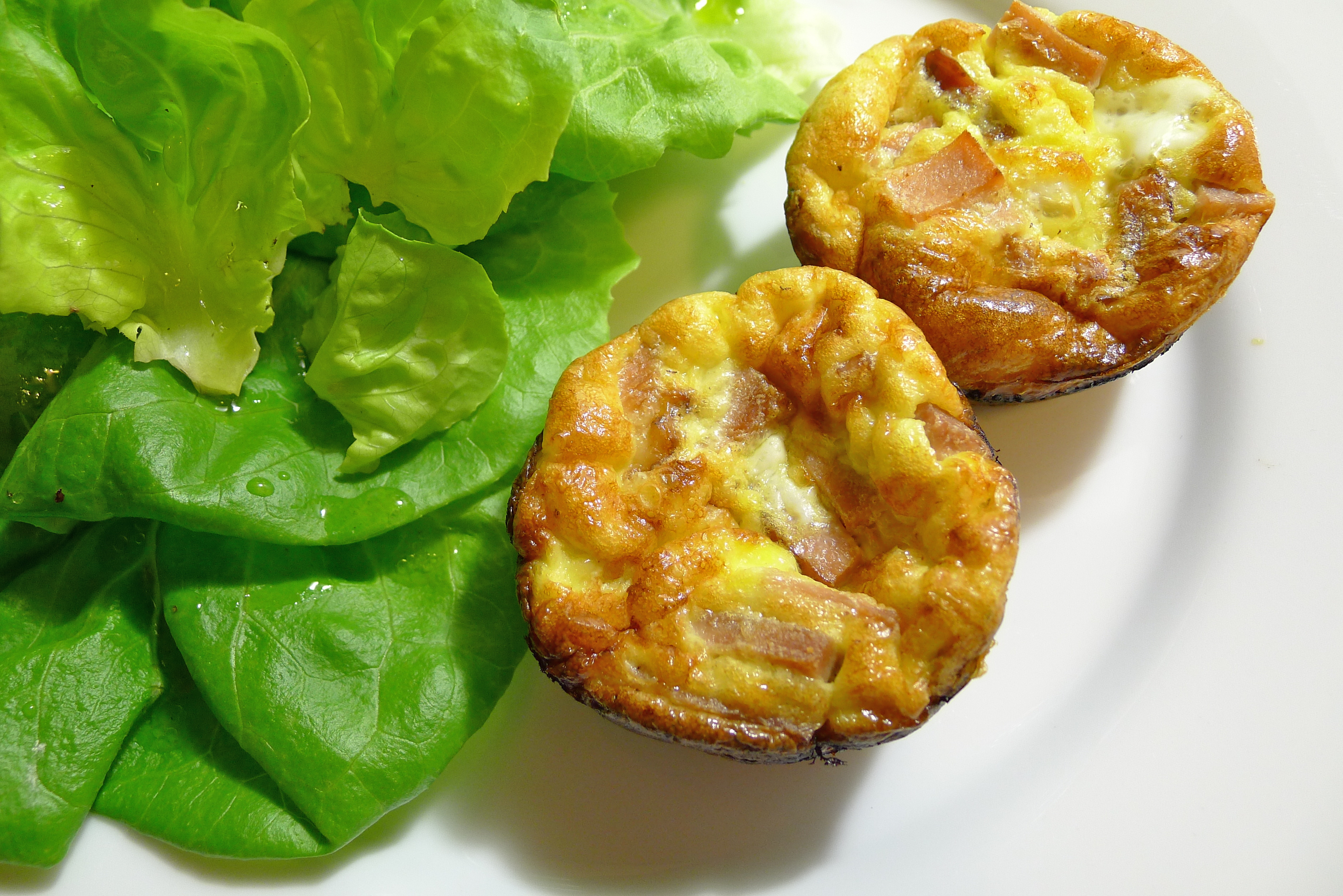
Think of them less as quiches, and more like ham-custard poppers! Or quiche shooters!

The idea to use bread crumbs as a quick and easy base on which to build a crustless quiche comes from Gourmet Magazine. I changed the ratio of eggs to cream to milk so that the quiches would hold together a little better when you remove them from the muffin pan (the original recipe makes just one big quiche).

I used ham and Gruyère, but you can very easily use anything you like: cheddar, broccoli, mushrooms, feta, bacon. The possibilities are endless.

Special Equipment:

A 12-cup muffin pan, preferably non-stick (thanks, Laura! You’re never getting your pan back! Bwahahahaha!)

Ingredients:

1 cup of Panko breadcrumbs (or any other kind of plain breadcrumbs)

1 cup of ham, diced (you could also use a cup of chopped, cooked bacon)

1 cup of Gruyère, shredded

2/3 of a cup of whole milk

2/3 of a cup of heavy cream

4 large eggs

1/4 teaspoon of freshly grated nutmeg

Salt and white pepper

How to prepare:

1. Preheat the oven to 425°.

2. If you don’t have a non-stick muffin pan, be sure to butter each individual cup well. Cover the bottom of each muffin cup with a layer of bread crumbs.

3. Evenly divide the shredded cheese among all the muffin cups.

4. Do the same with the ham or bacon.

5. In a large bowl, whisk together the milk, the cream, the eggs, the nutmeg, and salt and white pepper to taste. Carefully pour the mixture into each muffin cup (this is easier with a spouted bowl or measuring cup). Leave about a 1/4-inch between the top of the egg mixture and the rim of each cup.

6. Bake the quiches until they are set and the tops are golden, about 20 minutes. They will be puffy like a soufflé when you remove them from the oven. Let them settle and cool slightly before removing them from the pan and serving with a nice green salad.

Cauliflower and Ham Gratin with Sourdough Rye Breadcrumbs


A few days ago at the CSA pick-up, a member came in and said, “It’s snowing! It’s snowing!”

Was it finally winter finally? By the time I got outside, the scant millimeter of snow that we got had melted and the skies were clear. And it was warming up again.

I think that the season has been toying with me, bringing week after week of warm spring-like days alternating with gusty arctic ones. For someone who likes matching my meals to the season, this has all made for some pretty schizophrenic eating. I have found myself wanting to nibble on mâche and radishes, and then wanting to bury myself under cheese and carbs the next day.

As it is currently quite chilly, I feel like I need to hurry up and cook some cold-weather food before the temps climb back up to 60°. This cauliflower gratin fits the bill quite well. It is basically a macaroni and cheese, with the cauliflower filling in for the mac — which makes it feel somewhat healthier!

Ingredients:

1 head of cauliflower, cut into small florets

1 1/2 cups of ham, diced

1 clove of garlic, lightly smashed

1 1/2 cups of aged cheese (I used an aged farmstead cheese from Snow Farm Creamery, but you could use an aged Gruyère, or another good, firm earthy cheese)

1/4 cup of flour

4 tablespoons of butter, plus 1 tablespoon

4 cups of milk

1/4 teaspoon of freshly grated nutmeg

Salt and pepper

1 cup of sourdough rye breadcrumbs (or any other bread you might have one hand: sourdough, rye, brown . . .)

How to prepare:

1. Preheat the over to 350°. Rub a large ceramic or clay baking dish with the smashed clove of garlic.

2. Combine the cauliflower florets with the ham in a large bowl.

3. In a medium-sized sauce pan, melt the 4 tablespoons of butter over medium-low heat. Once the butter has melted, stir in the flour. Cook the flour for about a two or three minutes (you want to get rid of that raw, floury taste). Once the flour has toasted a little, add the milk all at once and whisk everything together. Add the nutmeg. Raise the heat to medium, and continue to whisk the sauce as it thickens. Once the sauce has thickened, turn off the heat and stir in the cheese. Continue stirring until all the cheese has melted. Adjust the seasoning.

4. Pour the sauce over the cauliflower and the ham. Stir everything together until the cauliflower is evenly coated. Tip everything into the baking dish.

5. Melt the remaining tablespoon of butter. Toss the breadcrumbs in the melted butter, and then spread them evenly over the top of the cauliflower.

6. Bake for about 40 minutes, or until the gratin top is browned. The sides should be nice and bubbly too. Let rest for about ten minutes before serving.

The Daring Kitchen January Cooks’ Challenge: Red Chili Pork and Poblano and Cheese Tamales

As many of you know, I signed up a few months ago to participate in the The Daring Kitchen‘s monthly challenges. The basic premise of the Daring Kitchen is that you sign up for one of two groups: The Daring Bakers or The Daring Cooks. Once confirmed, you will be tasked with either a baking or a cooking challenge (depending on which group you joined), and given one month to complete the challenge. All members upload their completed dishes to their blogs on the same day.

Well, today is the day, and this month’s challenge was tamales.

I love tamales. I have always wanted to try them at home, but never have because I was always intimidated by how much work everyone said they were to make.

“Pain in the ass,” said one friend.

“Why don’t you just buy them?” asked another.

“You don’t have enough room to make tamales!” exclaimed yet another friend.

Well, now I can tell you that you can make tamales in a studio apartment kitchen without an army of willing friends and family to help.

I know because I just did it!

This blog post is a little different from my normal recipe posts. First of all, I am going to show you the recipe step-by-step with photos. This will make the post a lot longer, but I hope that it will also give me a chance to walk you through the challenge and show you what I did, why I did it, what I thought worked, and what I would have done differently knowing what I know now.

But before we get started, I need to include the monthly challenge’s mandatory blog-checking lines: “Maranda of Jolts & Jollies was our January 2012 Daring Cooks hostess with the mostess! Maranda challenged us to make traditional Mexican Tamales as our first challenge of the year!”

For Maranda’s challenge, a lot of freedom was given to us to choose our own tamale recipe and improvise as we saw fit. This was a little different from some other cooks’ challenges that I have seen, but after making tamales, I see that it made a lot of sense. For me, some ingredients were not that easy to find. I can imagine for others that a lot of substitutions would be pretty much necessary. Also, like a lot of people, I didn’t want to buy any special equipment. Thankfully, as I found out, there are as many ways to steam a tamal as there are ways to roast a chicken.

Tamales are not difficult to make, but they are very time-consuming. You will probably need to set aside a whole day to pull them together. Be sure to read the recipe ahead of time. What takes the most time is just waiting for different components of the tamales to cook, soak, rest, etc.

That being said, let’s get on with it.

Ingredients:

For the red chili pork filling (adapted from Rick Bayless):

1/3 of a cup of good-quality chili powder, preferably without salt

3/4 teaspoon of salt if the chili powder has no salt (omit this if salt is included in the spice powder)

1 pound of boneless pork shoulder

2 tablespoons of masa harina

1/4 cup of golden raisins, chopped

1/4 cup of pitted green olives, chopped

Salt

For the poblano chili and cheese filling (adapted from Diana Kennedy):

3 fresh poblano peppers

10 ounces of Queso Chihuahua, or Monterey Jack if Chihuahua cheese is not available

About 1/2 cup of salsa verde

For the rest:

2 to 3 3-ounce packages of dried corn husks

10 ounces of rendered leaf lard, or vegetable shortening if lard is unavailable, softened but not runny

1 1/2 teaspoons of baking powder

3 1/2 cups of dried or instant masa harina for tamales

2 1/4 cups of hot water

1 to 1 1/2 cups of chicken broth

Salt

How to prepare:

1. Find all your ingredients.

This alone took about a day of calling around town and shopping. You would think that living in New York City would make it relatively easy to procure ingredients for tamales, but the truth is that though the size of the Mexican community is growing, it is still not particularly sizable compared to other ethnic populations in the city.

I could have gone all the way up to Corona to the very excellent Tortilleria Nixtamal for fresh masa, but Corona is super far from the East Village. So dried, or instant, masa it was going to be.

Luckily, I do live relatively close to Zaragoza Mexican Deli and Grocery on Avenue A. If you have never been to Zaragoza, I would highly recommend it. Outside, it looks like any other deli. Let’s admit it: inside it doesn’t look like much either. “Deli and Grocery” is a bit of a generous statement too given that when you walk in, the “deli” part consists of a two-foot long counter packed with cigarettes and lottery tickets. The “grocery” looks like a crammed wall of dimly lit cans. You would totally be amazed, though, at what they have. It’s almost like magic; rarely have I asked for something that they didn’t stock.

In the back of the deli, there are a few tables set up for food. Zaragoza does homemade tacos, sandwiches, rice and beans, and soup. It’s all very fresh and really delicious — which is why I opted to buy a quart each of their salsa roja and salsa verde instead of making my own.

Tamales are enough work on their own without my having to worry about making sauces too. Plus, Zaragoza’s salsas are really fantastic.

The other challenge was procuring the lard. Lard is relatively easy to find, but I always think that if there is any animal product that reveals most distinctively what the animal ate and how the animal was treated, it’s the animal’s fat. So I wanted to buy good lard.

And I wanted someone else to render it for me because I don’t like rendering fat very much.

Yeah, I’m a pussy like that.

That took me to Dickson’s Farmstand Meats in Chelsea Market. They stock rendered leaf lard — the highest quality lard you can get, made from the soft, visceral fat that surrounds kidneys and loins of the pig. It is pure, pillowy, snowy whiteness, and smells like the cleanest, most pristine pork rind ever.

While I was there, I picked up a pound of pork shoulder. Had I more time, I would have defrosted some awesome pork shoulder from my CSA. Unfortunately, I didn’t plan ahead so I had to buy it. Not only did the butcher at Dickson’s cut me .8 of a pound instead of a full pound, but about half of that was fat and connective tissue. After cooking, I think that I had less than half a pound of pork for tamal filling.

And no, the butcher did not show me the meat before wrapping it up. I know. I should have asked, but I was in a hurry.

To Dickson’s Farmstand Meats: BOO! #BUTCHERFAIL!

To Manhattan Fruit Exchange, also in Chelsea Market, thank you for stocking Chihuahua Cheese and poblano peppers.

To any Daring Cooks out there: did anyone use bacon fat instead of lard?

2. Soak your corn husks.

For my tamales, I was torn between using the eminent Diana Kennedy’s recipe, or Rick Bayless’ recipe. In the end, I used a little bit from both, with sprinkles of tricks and suggestions from a bunch of Youtube clips.

But the tamal dough recipe that I used is Bayless’ because Kennedy’s recipe frankly scared me: she asks for you to take the wide, white corn used for pozole, soak it overnight, use your fingers to rub the skin off each individual kernel, let the kernels dry in the sun for two days, grind the corn in a mill, sift it, and then grind and sift it again.

No joke. That is seriously hard core.

So Bayless it was.

His recipe is for 26 tamales, and he suggests buying about 8 ounces of corn husks. I bought 3 packages of corn husks that weighed 3 ounces each. I had a ton of corn husks left over, but I reasoned that it was better to be on the safe side and have too many than too few.

Bayless recommends soaking the corn husks in hot water for a couple of hours, but I would recommend doing it for much longer if not overnight. I soaked mine for about 4, and some were still not completely pliable.

• Take a large roasting pan and arrange the corn husks in it. Cover them with hot water until they are completely submerged. Weight them down with a heavy plate or dish for about 4 hours, or even overnight.

3. Make the red chili pork filling.
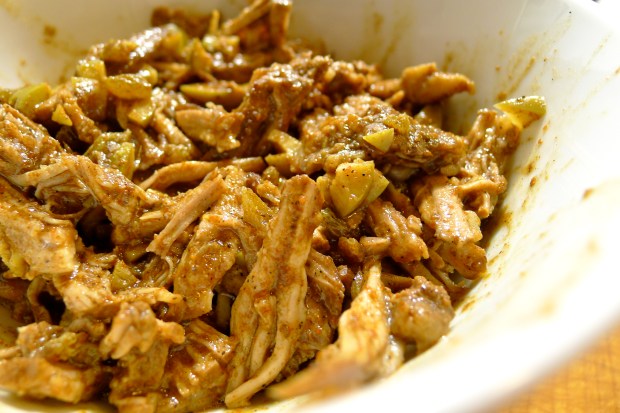
• In a medium sauce pan, whisk the chili powder and the salt if needed with about 3 cups of water. Add the pork shoulder to the pan and bring the liquid up to a boil. When the liquid is boiling, reduce the heat to medium-low and simmer the pork, partially covered, for about an hour. The meat should be falling-apart tender. Let the meat cool slightly in the broth before removing it to a plate. Do not get rid of the cooking liquid.

• In a separate bowl, mix 2 tablespoons of masa harina with about 1/2 a cup of water to make a slurry. Bring the remaining cooking liquid to a simmer over medium-high heat. Strain the masa slurry. Discard the solids, and whisk the strained liquid into the remaining cooking liquid. Continue to simmer the sauce until it has reduced by about half and has thickened. Be sure to skim the surface of any fat or foam as the sauce cooks down.

• As the chili sauce reduces, use two forks to break up the pork shoulder into shreds. In a bowl, toss the pork with the chopped raisins and olives. Add the reduced sauce, little by little, until the pork is well-moistened and evenly coated. The pork should not be swimming in liquid. You can use any leftover sauce to serve your tamales.

• Adjust the seasoning.

4. Prep the poblano chilies and the cheese.
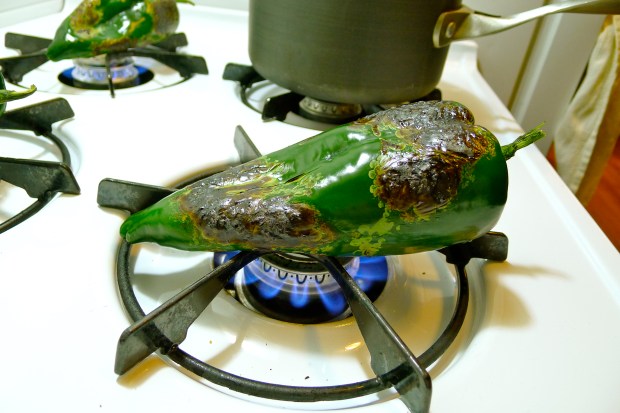
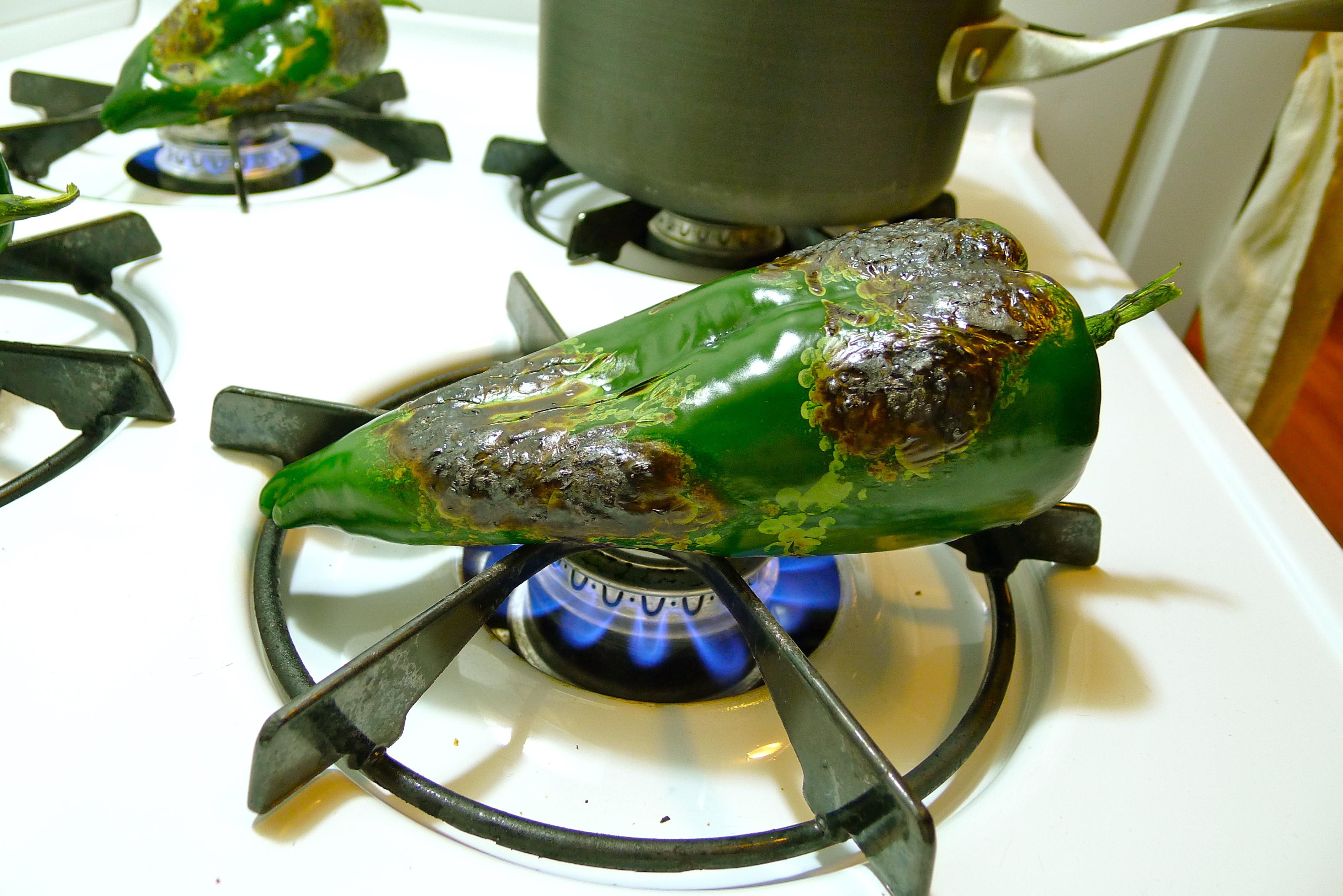
• If you have a gas range, set the poblano peppers directly onto the gas burners with the heat on high. Turn the peppers periodically to make sure that their skins char evenly. Poblano peppers have relatively thin skins compared to bell peppers, so watch them carefully as they will char quickly.

If you have an electric range, rub the peppers with olive oil and place them on a cookie sheet set underneath the broiler. You can also rub the peppers with olive oil and pop them into a 450° oven. Remove them when their skins are blistered and blackened.

• When your peppers are nice and charred, put them in a clean plastic grocery bag or a small paper bag and wait for them to cool. When they are cool enough to handle, you should be able to gently rub off all the charred skin from the pepper using a paper towel. Seed the peppers, and discard the seeds and stems. Cut the peppers into strips.

• Cut the cheese into small bars, about 1/2 an inch thick and about 2 1/2 inches long.

5. Prepare the tamal dough.

The first thing you need to do if you do not have fresh masa is to reconstitute dried or instant masa harina for tamales. Bayless recommends 3 1/2 cups of masa harina to 2 1/4 cups of hot water.

I did this by stirring in the water with a wooden spoon, which I really feel was a mistake because the dough was so stiff and hard to manipulate that I felt it three days later.

I think I have tennis elbow now.

Only after I made the tamales did I see that someone had suggested mixing the hot water into the masa flour with your hands, like bread dough.

Now they tell me!

So even though I haven’t tried it myself, it is what I would suggest that you do.

• In a large bowl, using your hands, mix the masa harina with the hot water until the dough begins to pull together into a large mass.

Now it takes a lot of lard to make tamales. However, in lard’s defense, it is probably much better for you than vegetable shortening. Furthermore, Diana Kennedy points out that despite the scary amount of lard needed to make tamal dough, “it is absorbed by the husk and transpires into the water.”

So it just disappears?! All that lard just disappears?!?! Oh my gosh. It’s FREAKIN’ MAGIC!!!

Regardless whether or not you believe Kennedy, for the absolute best tasting tamales, you should use lard.

I suppose that there are some people out there who like their tamales dense as rocks. I prefer the masa soft and airy. The best way to achieve this is to really whip that lard until it is light and fluffy, like creaming butter for a cake.

I would not recommend you do this by hand.

• If you have a Kitchenaid mixer, use that. If not, use a hand blender. Cream together the softened lard, the baking powder, and the salt on high speed until it is light in texture.

• When the lard is fluffy, keep the mixer running and add the reconstituted masa a handful at a time. Once all the masa is incorporated, add about 1 cup of chicken broth. Continue beating the mixture for about another minute or two. Bayless says that the texture should be like a soft, but not runny, cake batter, but I think it’s more like a super fluffy cookie dough.

Ideally, a dollop of tamal dough it will float in a glass of water when you have achieved tamal dough perfection. This didn’t happen to me the first time that I tested it, and I figured out it was because I had added too much water to the reconstituted masa. It was only after I added more masa flour, a little bit at a time to compensate for the extra moisture, that I got it right.

• Cover the bowl with plastic wrap, and let the tamal dough rest in the refrigerator for about an hour. After an hour, rebeat the tamal dough, adding a little more chicken broth if it needs it. Retest it by seeing if a dollop of the dough floats.

• Adjust the seasoning.

6. Form the tamales.
Now we’re in the home stretch!

I must say that I watched a lot of Youtube clips to get this right. Most recipes that I read said to use a spoon or a spatula to spread the dough over the corn husks. That is what Zarela Martinez did, and well, she’s Zarela Martinez!

However, I proved to be some kind of tamale-making flunky and couldn’t manage to spread the dough thinly across the corn husks without tearing them. After a few ruined attempts, I checked out this brilliant Youtube clip that showed how to lay a piece of plastic wrap over the masa to smooth it out gently without any tearing.

Whoever you are in Youtube land, you are amazing.

• Rinse the soaked corn husks (there might be some dead bugs stuck to them), and shake them dry before rolling your tamales.

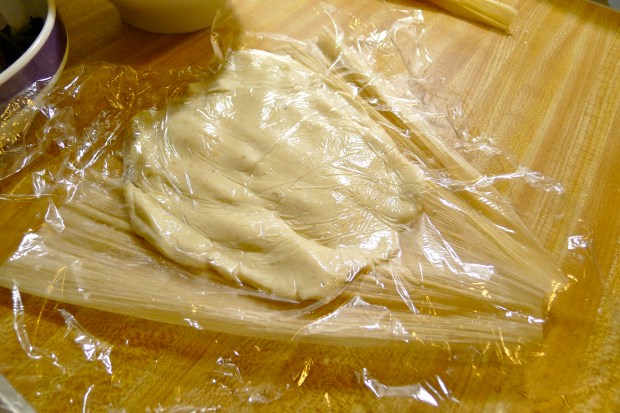
• Lay a corn husk out so that it fans away from you. Drop a dollop of about 1/4 cup of tamal dough in the middle of the upper center of the husk. Lay a piece of plastic wrap over the top of it, and use your hands to smooth the dough out in a thin layer. Make sure the dough goes all the way to the top edge, but be sure to leave a “border” of corn husk on either side. The spread-out dough should be roughly in a 4-inch square shape.

I watched a several different ways to fold tamales. I tried two ways, one of which I would recommend, and the other one I wouldn’t. The most common way that I saw online was to start on one side of the corn husk and roll the tamal like you would a jelly roll. This is what Zarela Martinez shows in her Youtube clip.

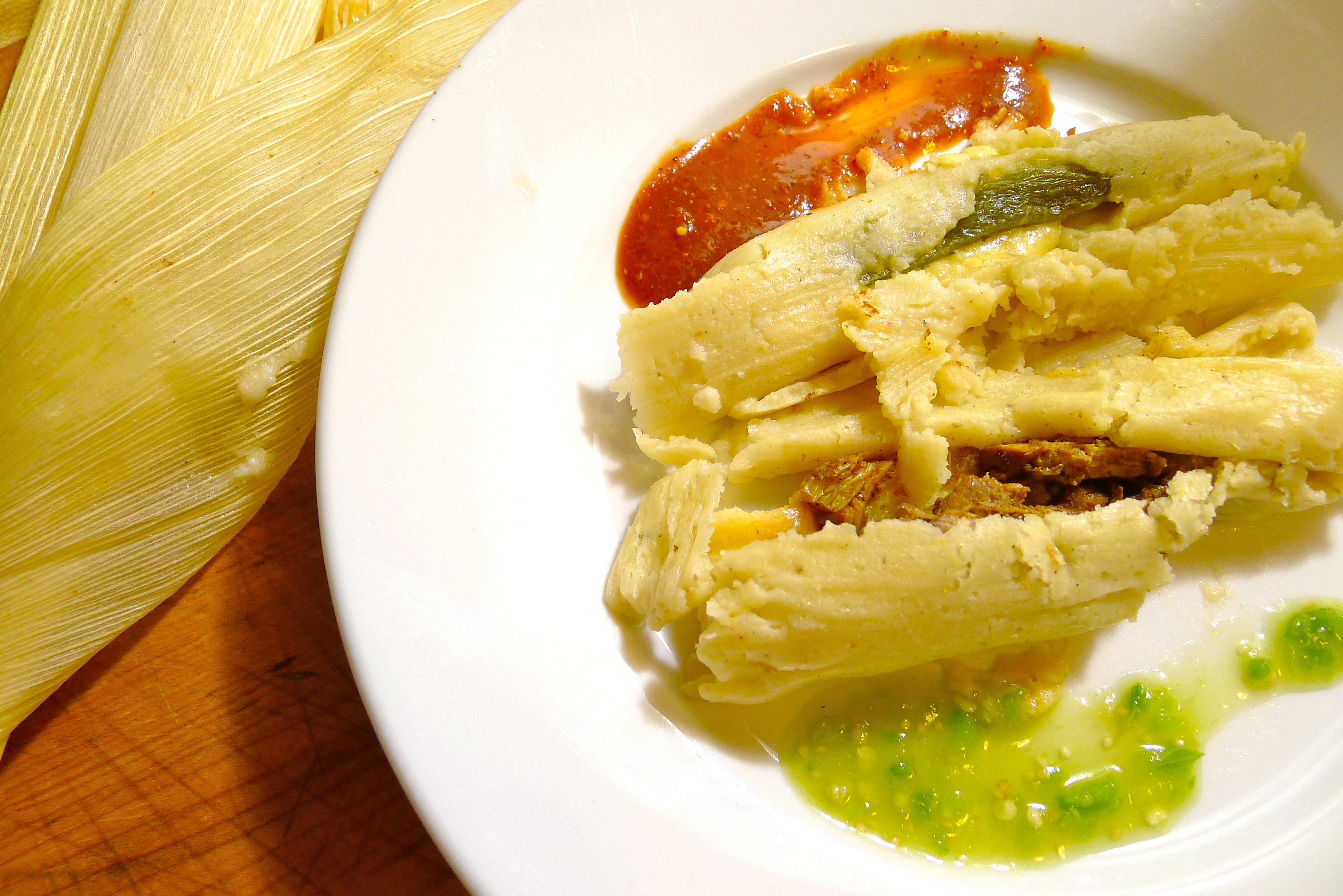
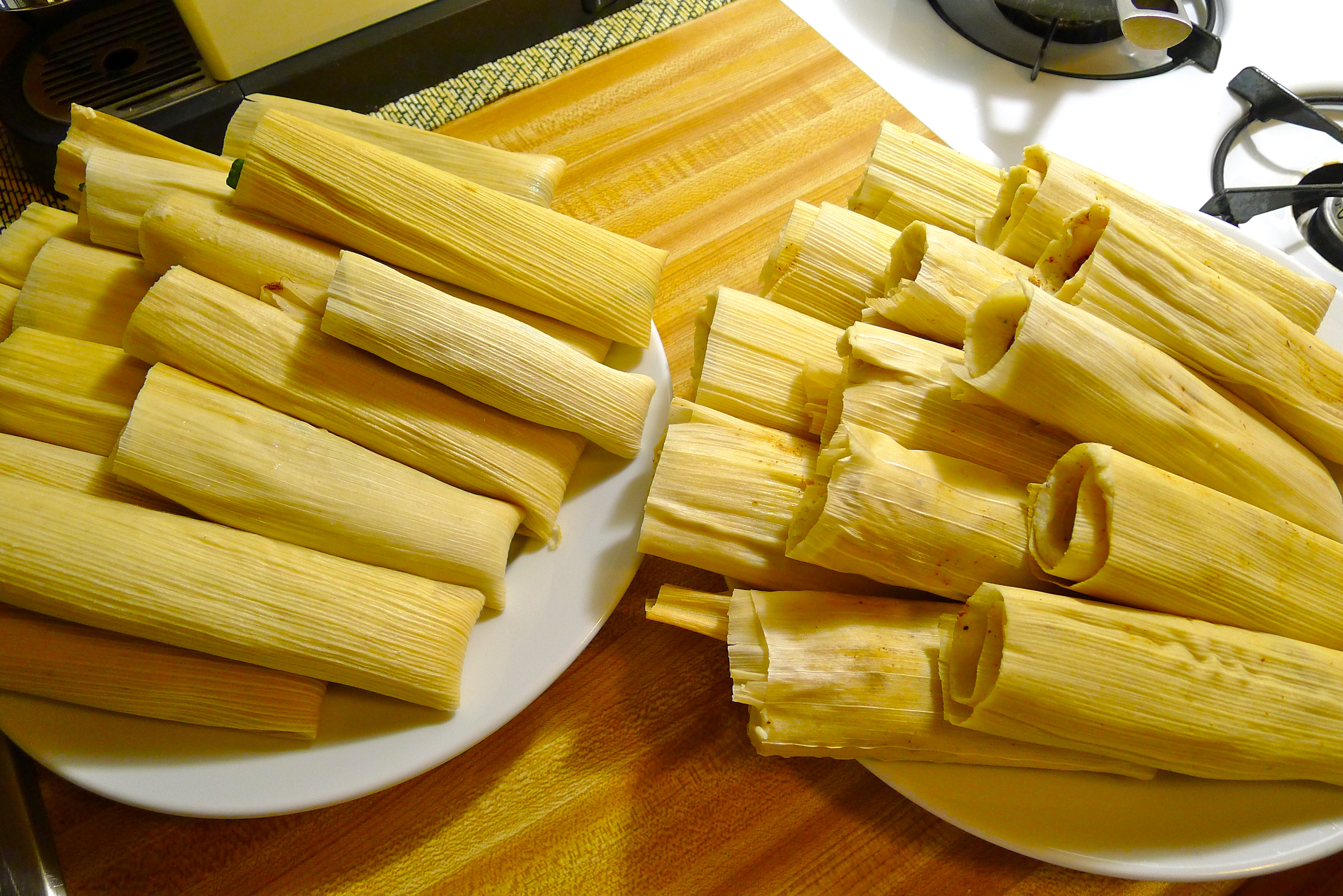
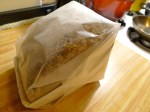
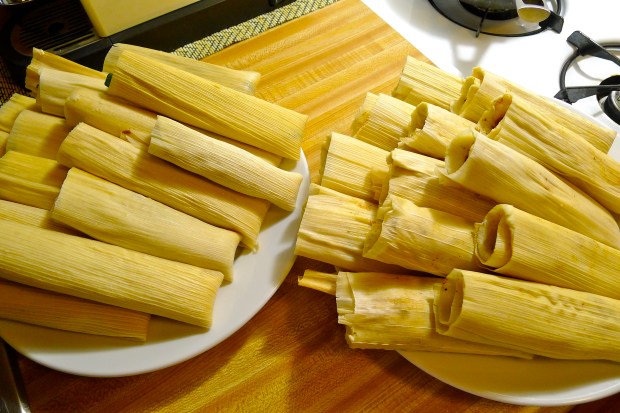
Rolling a tamal like a jelly roll is just a terrible idea because when you unwrap the tamal after it has steamed, instead of a nice compact shape, you have the potential for a sloppy mess. The tamales shown in the picture above were rolled this way. These two held their shape a little better than some of the others, but not nearly as well as the ones I rolled in the way recommended by Bayless (which are shown in the first picture of this blog post).

I kind of wish I had done them all Bayless’ way.

Bayless recommends that you after you spread the tamal dough over the upper center of the corn husk, you pick the tamal up by its two long edges to bring the sides in together. Tuck one edge in under the dough, and wrap the other edge around the tamal.

To help visualize this, here is a handy Youtube clip.

Instead of piecing two smaller corn husks together, as you might have to do if you had bought just enough, Bayless asks that you buy extra corn husks so that you can pick out the biggest and prettiest ones to roll.

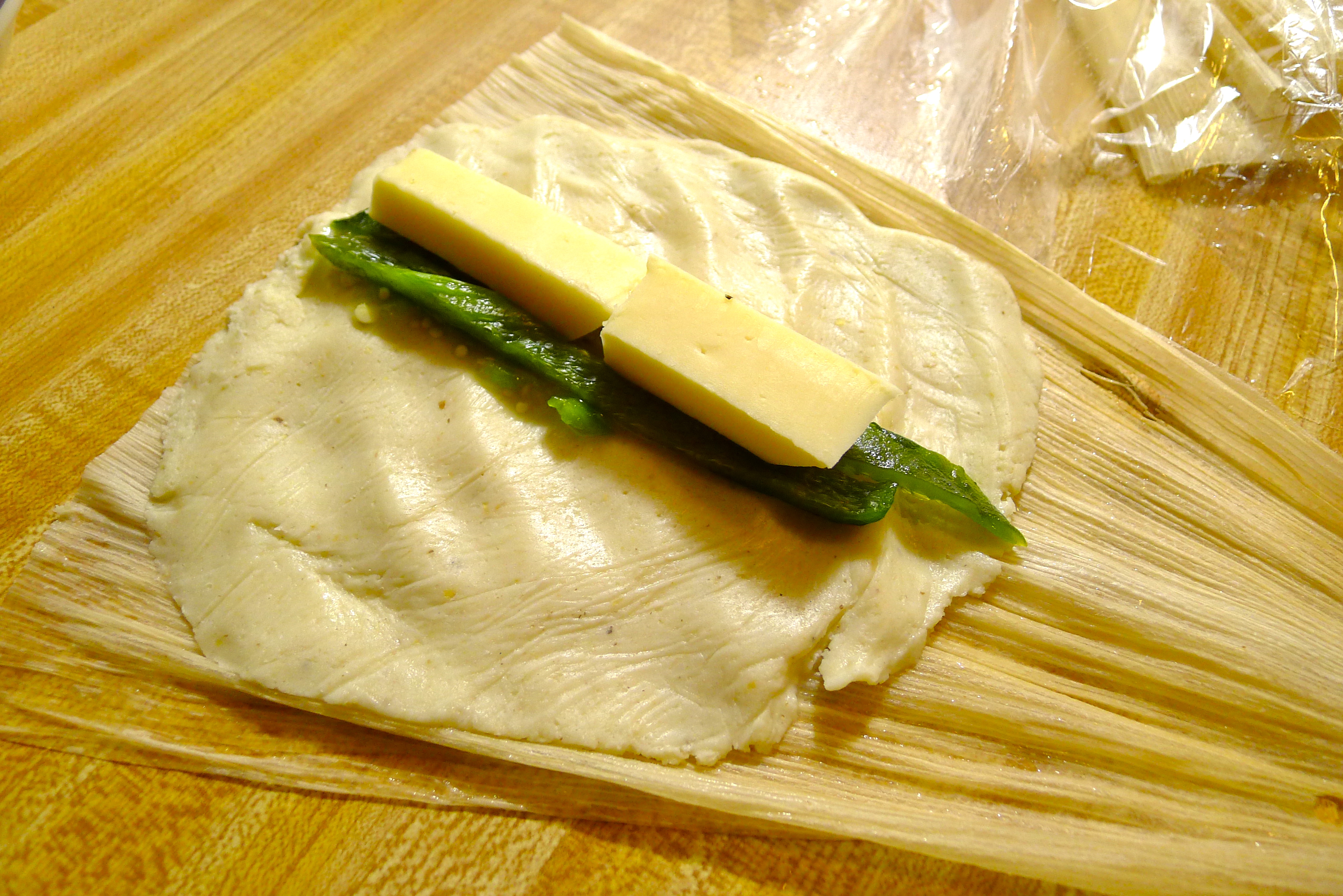
• Once the dough is smoothed out in a thin layer that extends all the way to the edge of the top of the husk, it is time to fill the tamal. For the pork tamales, mound a good spoonful of filling along the center of the dough. For the chili and cheese tamales, Put about a teaspoon of salsa verde down the center of the dough. Lay 3 poblano chili strips down on top of the salsa, followed by a piece (or two) of cheese.

• Now bring the two long edges of the corn husk together. This will cause the tamal dough to surround the filling. Gently pinch or push together the opposite sides of the dough so that you make a good seam. Tuck one edge of the corn husk under the tamal, and wrap the other side over the whole thing — kind of like swaddling a baby. Finally, fold up the empty “tail” of the tamal, leaving the top open.

7. Steam your tamales.

Bayless’s recipe should make about 16 red chili pork tamales, but given that I didn’t have much meat to work with, I ended up with only twelve. His tamal dough recipe should be enough for 26 tamales. As I had to add more flour to make up for the extra liquid that I added, I ended up with 29 tamales. Pretty accurate, Rick!
You can buy tamale steamers, which are pretty darn inexpensive (about $20), but I certainly don’t have the room to store any more specialized cookware. Moreover, I didn’t want to spend money for what is basically just a stock pot and a metal insert.

There are many different ways to steam tamales. You could use those Chinese bamboo steamers, or one of those fancy electric steamers. I even saw some Youtube clips of people steaming them in rice cookers.

I used a tall stock pot and one of those inexpensive pop-open steamer baskets, about $7. If you don’t have a steamer basket, you can improvise by coiling up a kitchen towel or crumpling up a large piece of aluminum foil into a flattened sphere, placing that on the bottom of your pot, and leaning your tamales up against it.

To visualize this, here are two handy Youtube clips:

Steaming Tamales: Louis D. Garcia explains his way
Zarela Martinez’s Tamales 1, 2, 3

The only disadvantage to doing it this way is that the bottom of your tamales will be submerged in water. But at least you didn’t have to buy anything!

• Place your stainless steel basket steamer in the bottom of a large stock pot. Add about two to three cups of water. The water should come up about an inch from the bottom of the pot, but it should not touch the bottom of the basket. Most steamer baskets have little “feet,” but if yours doesn’t, you can rest the steamer basket on either a ring of aluminum foil, or on little balls of aluminum foil to keep it elevated.

• Set the tamales in the pot vertically. To make this easier, you can tie three to four tamales together (folded tails facing in) with kitchen string, and then set them in the steamer in groups. Or you can just be stubborn like me and fiddle around with them until you get all the tamales in there. If you find that there is a lot of space between your tamales, you can ball up more aluminum foil and insert the balled up foil in-between the tamales and the sides of the pot.

• Tuck some leftover corn husks in-beween the pot and the tamales. Fold them over the top of the tamales like flower petals.

• At this point, if you are able to cover your pot with its lid, do so. If you cannot put the lid on the pot, improvise by wrapping a few large pieces of aluminum foil over everything and very tightly around the pot. Make sure there are no gaps or holes.

• Turn the heat on medium-low. Steam the tamales for about 1 hour and 15 minutes. Some recipes suggest only about 40 to 45 minutes of steaming time. However, I think with tamales, the extra time is needed so that the super-absorbent masa swells in the steamer and not in your stomach. After an hour and 15 minutes, your tamales will not be overcooked or mushy. They will be perfect.

8. Invite friends over to eat your tamales.

• When your tamales are done steaming, carefully remove the lid or the aluminum foil. Beware of hot steam. Peel the corn husks away from the center. Let the tamales stand in the steamer for about 15 minutes to firm up before serving.

I made these tamales on New Year’s Eve. Start to finish, they took me roughly 7 hours. Most of that time was spent just waiting for things to finish soaking, cooking, resting, etc.

Thank you to Joseph and Sharon for being my tamale guinea pigs, and for ringing in the New Year with me! Here’s to 2012!

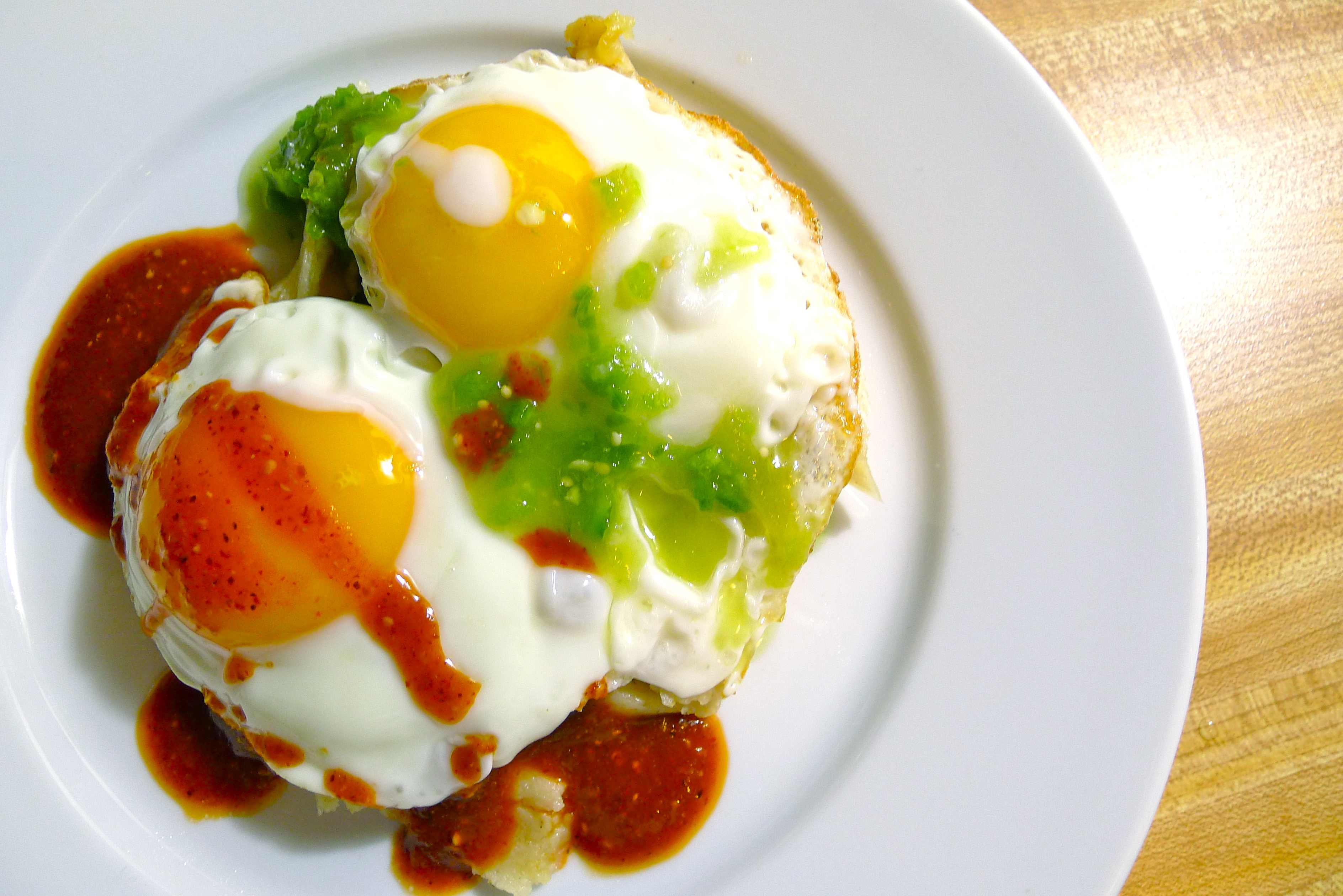
9. Eat leftover tamales the next day with fried eggs on top.
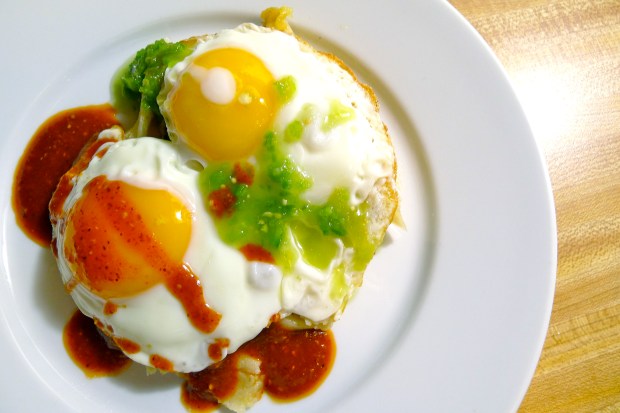
Tamales for breakfast lunch late lunch are the best ever. You can reheat them by either steaming them until they are heated through, or throwing them in the microwave for a minute or two if you are super hungover lazy like me. Serve them with a couple of fried eggs on top for a very delicious meal.

And that is how I made tamales for New Year’s. Thank you Maranda at Jolts & Jollies for the amazing challenge. I loved the idea, as well as being able to start the new year by cooking something new.

Now onto the next one!

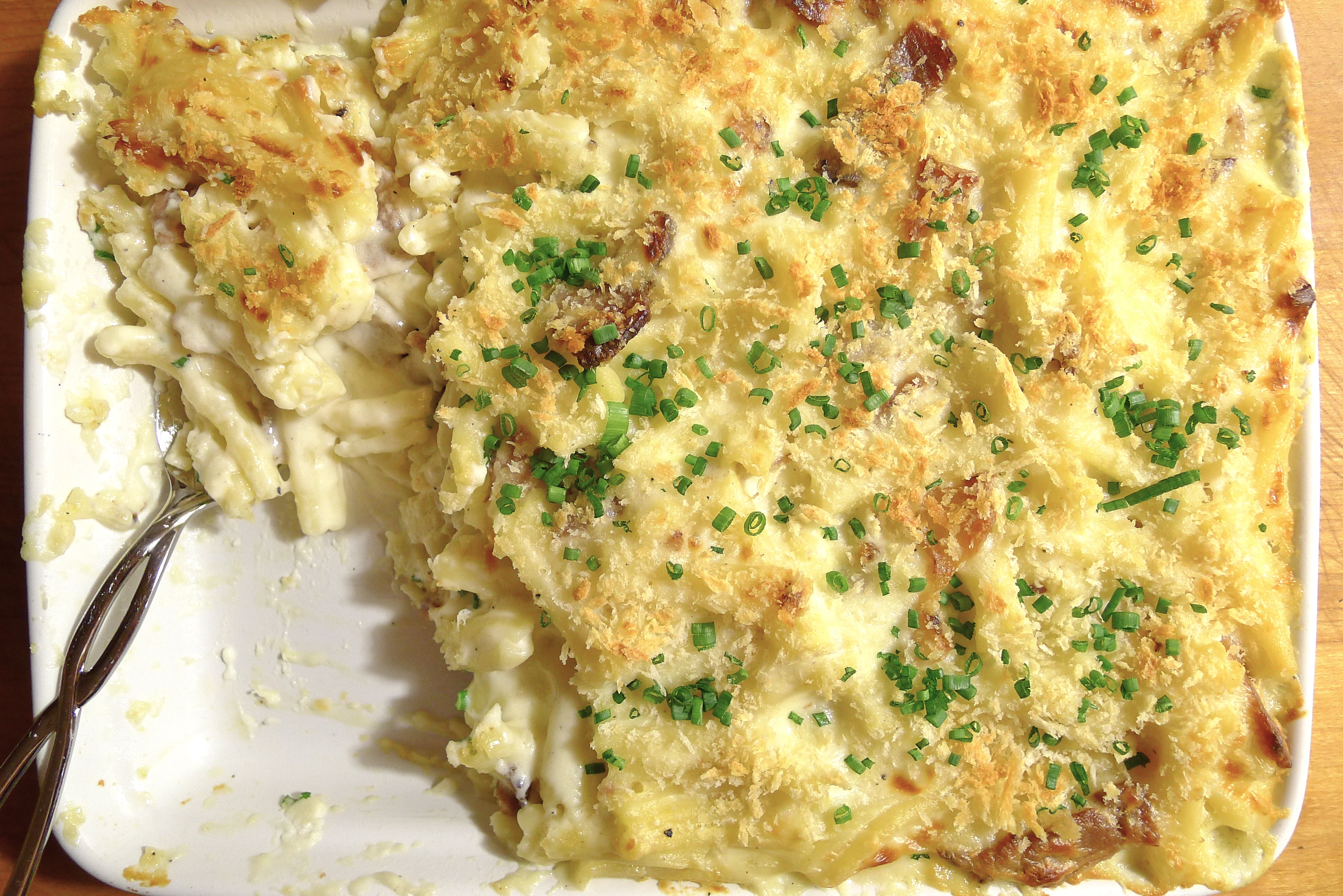
Horseradish Cheddar and Irish Bacon Mac & Cheese


Already I can see that the beginning of the new year is going to be a tug-of-war between the wanting-to-detox me, and the part of me that thinks that butter and cheese are inalienable rights to be defended Minutemen-style with muskets and bayonets.

I know that I swore to lighten things up after the holidays, but after about a day of that, I was starving. And when you’re starving, you need carbs. You need fat. You ideally need carbs and fat baked together with bacon.

I suppose that if you wanted to make this slightly healthier, you could substitute whole wheat pasta for the regular pasta, but I have never been the biggest fan of whole wheat pasta. Maybe it’s a texture thing.

I used the horseradish cheddar cheese (what was left of it after New Year’s), and the Irish bacon from my farmer to pull this together. Two, count ’em, two CSA products in one dish! Whoo hoo!

Ingredients:

1 pound of pasta (I used casarecce)

1/2 pound of Irish or Canadian bacon, cut into 1/2-inch strips

6.5 ounces of horseradish cheddar cheese, coarsely grated

4 tablespoons of butter, plus one tablespoon

1/4 cup of flour

1 quart of whole milk

Salt and pepper

About 1/2 cup of panko, or breadcrumbs

Fresh chives

How to prepare:

1. Preheat the oven to 350°. Bring a large pot of salted water to boil. Add the pasta and cook it until it is slightly under al dente. Drain it, and set it aside as you prepare the rest of the dish.

2. While the pasta is cooking, brown the Irish bacon in a large skillet. As Irish bacon is leaner than regular bacon, it will not be as crispy when cooked. Once the strips are browned and most the fat has rendered, transfer the bacon to a paper towel-lined plate to drain.

3. In a medium-sized sauce pan, melt 4 tablespoons of butter over medium-low heat. Once the butter has melted, stir in the flour. Cook the flour for about a minute or two (you want to get rid of that raw, floury taste). Once the flour has toasted a little, add the milk all at once and whisk everything together. Raise the heat to medium, and continue to whisk the sauce occasionally as it thickens.

4. Once the sauce has thickened, turn off the heat and stir in the cheese. Continue stirring until all the cheese has melted. Adjust the seasoning.

5. In a large bowl, combine the pasta, the bacon, and the cheese sauce. Spoon the mixture into a large buttered baking dish.

6. In a small sauce pan, melt the remaining tablespoon of butter over low heat. Toss the panko or breadcrumbs in the butter, and then spread them evenly over the top of the pasta. Bake the mac & cheese for about 30 minutes. The top should be golden brown, and the cheese sauce should be bubbly. If the cheese sauce is bubbling, but the top has yet to brown, you can pop the dish under the broiler for a minute or two to toast the breadcrumbs.

Let the dish rest for about 10 to 15 minutes before topping it with freshly snipped chives and serving.

Pan-Seared Pork Chops with Sautéed Brandied Apples

Is it too cliché to mention that old adage that necessity is the mother of invention?

Maybe it should be added that necessity is good, but extreme cold and laziness is a better motivator!

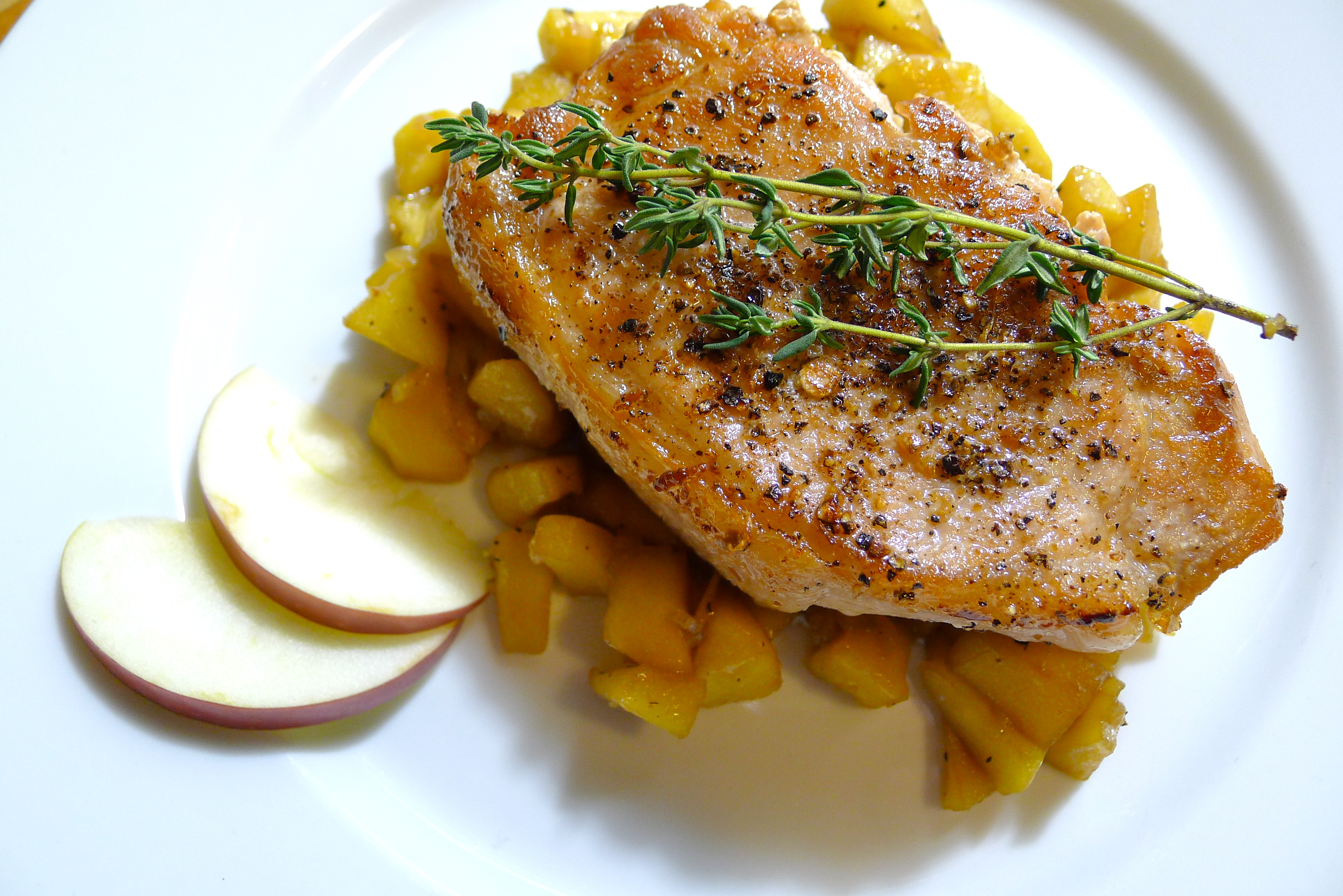
This was where I found myself the other chilly night, looking at the contents of my fridge and pantry and wondering what I could make for dinner without having to go out and get anything else. Pork chops and apples was what came naturally to mind as I had a pair of juicy pork chops from the CSA, and some shrivelly apples. The apples were a little past being able to be enjoyed raw, but they were still perfectly good to cook.

And then I looked up at my nice collection of booze, and thought, “Not just any apples tonight, but flambéed apples!”

Okay, I’m not being 100% truthful. My actual thought was, “Fire! Fire! Fire!”
In any case, the results were fast, easy, delicious, and perfect for an early winter supper.

Ingredients:

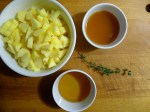
2 thick-cut boneless pork chops

Olive oil

2 apples, peeled, cored, and cut into small pieces

1 shallot, finely minced

1/4 cup of apple cider

1 branch of fresh thyme

1/4 cup of brandy

Salt and pepper

Special items:

Matches

How to prepare:

1. Heat some olive oil in a pan over medium-high heat. When the oil begins to shimmer, add the pork chops. Sear the pork chops for about 3-4 minutes. They should have a nice golden crust when you flip them. Lower the heat to medium after you turn the pork chops. Continue to cook them until they are done (you’re looking for a nice rosy pink). A meat thermometer inserted in the center of each chop should register between 140-145°. Remove the chops to a plate while you finish the dish.

2. Spoon off most of the fat in the pan, leaving only about two teaspoons. Set the pan back on stove over medium-high heat. Add the apples and shallots. Toss them together in the pan, being sure to scrape up any tasty brown bits stuck to the bottom of it. Cook them until the shallots gain a little color and begin to turn translucent.

3. Reduce the heat to medium. Add the apple cider and the thyme to the pan. Cook the apples and the shallots in the apple cider until the sauce has thickened.

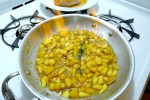
4. Take the pan away from its heat source, and carefully pour the brandy over the apples. Return the pan to the heat. Let the brandy warm for a just a few seconds before igniting it with a match. Stand back and let the alcohol burn off completely. To help you visualize this, here is a nice Youtube clip from the Food Network (the flambé-ing occurs around the 2:55 mark).

5. Add any juices that have accumulated in the plate where the pork chops are resting to the pan. Continue to cook the apples until the liquid has some reduced more. Remove the thyme branch, and adjust the seasoning. Set the pork chops on top of a good mound of apples and serve.

Porchetta-Style Bone-In Pork Shoulder

Gifted with a Boston butt (also known as a Boston Blade Roast, or a Bone-In Pork Shoulder) with an almost half-inch layer of fat, I just had to challenge myself to give porchetta a try at home.

I’ve always been a little intimidated by porchetta. Traditionally, porchetta should be a giant slab of boneless pork roast covered with a thick layer of fat and skin. After crusting it with garlic, fennel, and wild herbs, it’s roasted low and slow until the skin is crackling on the outside, and gooey on the inside. The meat should fall apart in a sloppy, delicious mess in your mouth.

I don’t know why I have always been a hesitant to make it at home. Maybe it’s because I rarely think to buy such a large and fatty cut for myself. Or maybe it’s because I live so close to Sara Jenkins’ Porchetta, it just seems easier to leave the slow roasting up to professionals.

Though Jenkins does give a recipe for porchetta away on the restaurant’s site, this is actually a different one. This ridiculously easy recipe is from Epicurious, but it does take some advance scheduling before going for a long comfortable ride in the oven. Do plan ahead accordingly.

Because I used a bone-in cut instead of a boneless cut, the meat for this recipe will have a different texture and a little more give than porchetta normally does. However the flavors and fantastic fattiness are there. It is still heavenly to eat — which is the most important thing.

Porchetta is terrific crammed into ciabatta rolls, or even just spread on a plate with some nice contorni to accompany it.

Ingredients:

2 tablespoons of fennel seeds

1 tablespoon of kosher salt

2 teaspoons of black peppercorns

1 teaspoon of dried crushed red pepper

6 cloves of garlic, finely minced

1 2-3 pound bone-in pork shoulder (also known as a Boston Blade Roast, or bone-in Boston Butt) trimmed of over-hanging fat, but with its outer layer of fat intact

Olive oil

1 cup of Riesling, or another aromatic white wine

1/2 cup of chicken stock

Special equipment:

A spice or coffee grinder, or a mortar and pestle

A leave-in meat thermometer

How to prepare:

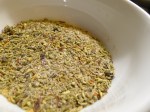
1. The night before, toss the fennel seeds in a pan set over medium-high heat until the they are toasted and fragrant. Transfer them to your spice grinder. Add the salt, the peppercorns, and the dried crushed red pepper flakes. Grind everything together to an even consistency, but not a powder. You are looking for a medium-coarse grind.

2. Using paper towels, pat the pork roast dry. Rub the finely minced garlic all over it. Rub the spice mixture in afterwards, pressing it into the meat so that it makes a nice and even crust. Wrap the roast up in a large piece of waxed paper, and refrigerate it overnight.

3. Preheat your oven to 450°. While your oven is heating up, remove the roast from the fridge, and let it come closer to room temperature.

4. Place the pork in a roasting pan, fat-side up. Drizzle it with olive oil. When the oven has come up to temperature, roast it for about 30 minutes before dropping the temperature to 300°. Continue to roast until the pork is nice and tender. This will take about 3 hours or so. The meat should register about 190°.

5. When the roast is done, remove it from the oven and let it rest for about 15-30 minutes. While the roast is resting, pour the fat and the juices from the roasting pan into a saucepan. Skim off as much fat as you can (this might be a little tricky, but do the best you can). Set the saucepan over medium-high heat, and add the wine and the stock. Whisk everything together, dissolving any crunchy bits you can. Reduce the sauce until you have about 3/4 of a cup. The sauce will be thin.

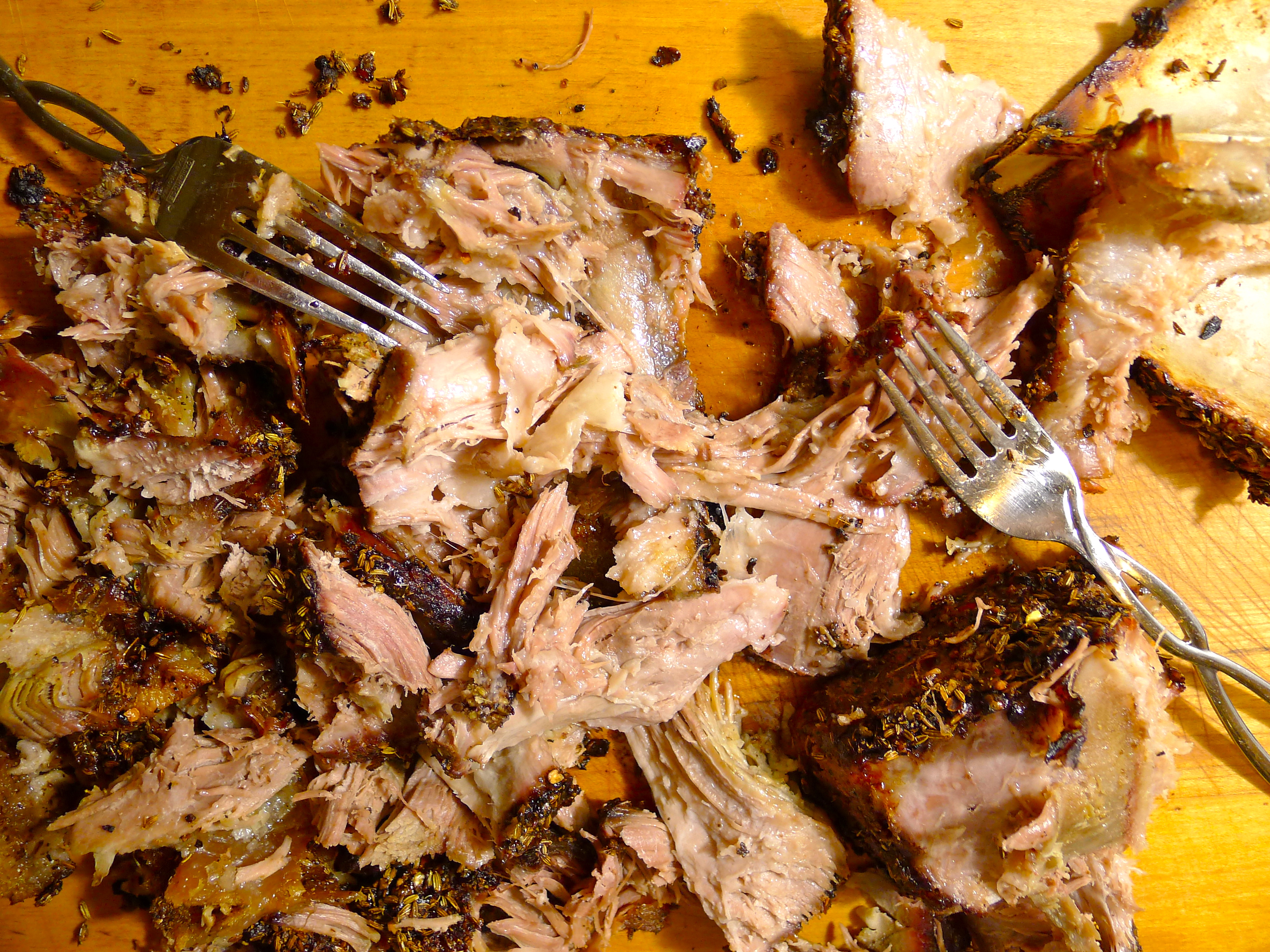
6. Pull the meat off of the bone with two forks, spoon the sauce over the meat, and eat lustily.

Meat Week NYC Starts Today!

Organized by our friends over at Jimmy’s 43, Meat Week NYC kicks off today with a Meat and Cocktails party at City Winery. General tickets are $45, but include lots of goodies like duck liver-beef brisket boudin balls and beer, and crispy pan seared polenta crostini topped with braised buffalo short ribs and Cabernet Franc. A complete list of nibblies and drinks can be had here.

There are also tons of other great events going on throughout the week, should tonight not work out for you.

Go to Meat Week NYC’s official site for more information.

I’ll be at the event tonight, as well as at the Sustainable Meat Panel and the Film Screening at Jimmy’s to represent High Point Farms!

So that means you should definitely come out 🙂

Sign-up for High Point Farms Winter CSA!

High Point Farms still has space for more members! Sign up today for their Winter CSA, beginning December 14 and running until February 22.

This is a fantastic opportunity to plan ahead for delicious dishes for the holidays, Valentine’s Day (nothing says lovin’ like red meat), and the Superbowl (mini-meatballs? nachos? chili?).

Plus, you get that warm, wonderful feeling knowing that you are supporting sustainable local farming and Earth-friendly agricultural practices!

This season there are three pick-up locations:

In the East Village:

Jimmy’s 43 (43 E. 7th Street between Second and Third Avenues)

In Williamsburg: 

CrossFit Virtuosity Williamsburg (221 North 8th St, between Driggs and Roebling)

In Fort Greene:

Five Spot Soul Food (459 Myrtle Ave)

The pick-up dates for this distribution cycle are:

• December 14
• December 28
• January 11
• January 25
• February 8
• February 22

Pick-up time:

4:30PM to 7:00 PM, every other Wednesday

Two share options are available:

• Beef, chicken, and pork
• Beef and chicken

There are also absolutely amazing eggs and cheese too!

Sign up and come meet your meat! Also, download our flier and help us spread the word about the farm! Click, print, and get the word out!