
Most brilliant diagram ever!
Question: What are the best parts of a pig?
Most brilliant diagram ever!
Most brilliant diagram ever!
From the archives!
As I am currently a little out-of-commission, I decided to revisit some meals that I have made in the recent past, but haven’t blogged about yet.
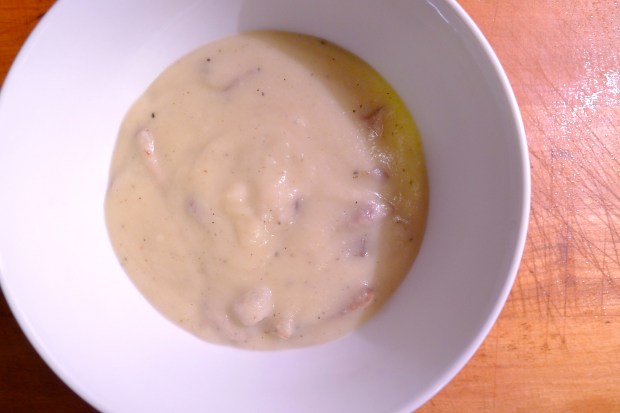
This soup is one of them. A few months ago, I got some Irish bacon in my CSA. What is the difference between Irish bacon and regular ol’ streaky bacon? Well, according to Wikipedia — the be-all, end-all arbiter of everything — regular bacon is made from pork belly (which is why it’s so nice and streaked with fat). Irish bacon, on the other hand, is made from center-cut pork loin — which is along the backside of the pig. Because this kind of bacon is not from the belly, it tends to be much leaner. There is usually a narrow band of fat that rings the edge, but each slice is generally more pork than fat. Similar to Canadian bacon, Irish bacon isn’t supposed to get crispy like belly bacon. It still has incredible flavor though, and holds up well to things like thick soups and stews. This recipe, adapted from Epicurious, makes a warm, wonderful, and traditional stick-it-to-your ribs kind of meal. Perfect for the rain and newly arrived cold weather. Ingredients: 1 pound of sliced Irish bacon 3 tablespoons of butter 1 medium onion, chopped 2 large Yukon Gold potatoes, peeled and diced 1 quart of chicken stock 2 bay leaves 1/2 of a small head of Savoy cabbage, cored and thinly sliced Salt and pepper Special equipment: 1 hand-held immersion blender How to prepare: 1. Place the bacon in a medium saucepan, and cover it with about two inches of cold water. Bring the water to a boil. Reduce the heat so that the water is at an even simmer, skimming any foam that rises to the surface. Cook the bacon for about 7 minutes. Drain the bacon, and when it is cool enough to handle, cut it width-wise into 1/2-inch strips. 2. In a large casserole, melt the butter over moderate heat. When the butter begins to bubble, add the chopped onions. Sauté the onions, stirring often, until they begin to soften and turn slightly translucent. Add the potatoes to the onions, and sauté everything together for about 2-3 minutes more. Add the stock and the bay leaves. Adjust the seasoning, and bring everything to a boil. Reduce the heat and simmer everything together until the potatoes are soft and tender, about 8 to 10 minutes. 3. When the potatoes are ready, add the cabbage to the pot. Simmer the cabbage until it is soft too, about 5 minutes. Fish out the bay leaves and discard them. Don’t forget . . . like I did! 4. Once you find and remove the bay leaves, blend the soup together until it is smooth. If the soup is really thick, you may want to add some water to it to thin it out a little. If you don’t have an immersion blender, you can use a regular blender or a food processor, working in batches if necessary. Once the soup is puréed, stir in the bacon. Adjust the seasoning for the final time, and rewarm the soup if needed before serving.


Yet another recipe adapted from Heidi Swanson’s Super Natural Every Day. This dish is a marvelous mixture of flavors and textures. It also shows off some of the first of Fall’s bounty: the gorgeous Delicata squash.
Oblong and streaked with golden yellow, forest green, and ivory, Delicata squash have a thin and delectable skin that does not need to be peeled. It cooks quickly, and yields a sweet, pure taste.
Though Swanson’s original recipe, like all of her recipes, is vegetarian, I find that the addition of thinly sliced pork goes well with the miso-curry sauce.
Ingredients:
A scant 1/4 cup of white miso
A scant 1 tablespoon of Thai red curry paste
Olive oil
1 Delicata squash
About 1 pound of small red potatoes, quartered or cut into even chunks
1 boneless pork chop (about 1/2 a pound), cut into 1/4 inch-thick slices
1-2 handfuls of shelled pepitas
Half a bunch of roughly chopped lacinato kale, stems removed
2/3 cup cilantro, roughly chopped
The juice of 1 limes (2 if the limes are small)
How to prepare:
1. Heat your oven to 400°.
2. In a small bowl, whisk together the white miso, the red Thai curry paste, and about a 1/4 cup of olive oil with a fork. Add more oil to loosen up the mixture if it seems too thick.
3. Trim both ends of the Delicata squash. Cut it in half lengthwise. Scoop out all of the seeds and discard them. Cut each half into 1/2-inch half moons.
4. In a medium bowl, combine the squash and the potatoes with about half of the miso-curry mixture. Toss the vegetables together with your hands until they are evenly coated. Turn the vegetables out onto a parchment paper-lined rimmed baking sheet. Spread them out in a single layer, and bake them for about 20 minutes.
5. In a small bowl, toss the pork with half of the remaining sauce. After the potatoes and the squash have roasted for about 20 minutes, evenly scatter the pork and the pepitas over the tops of them. Continue to roast everything until the pork is cooked and the potatoes are done, about 15 minutes more.
6. In a large bowl, combine the kale, the cilantro, the remaining miso-curry, and the lime juice. Add the roasted pork and vegetables to them. Toss everything gently together. Serve and enjoy.




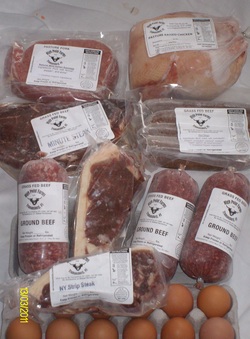 Our Fall CSA is currently underway with one pick-up out of 6 down.
Shares are still available to you lucky ducks who are salivating at the thought of grass-fed beef, pastured pork, free-range chickens and eggs!
Sign up now and pick up your share at one of two locations in the city:
http://highpointfarms.net/nyc-area-csa.html
Shares have been pro-rated to reflect the remaining pick-ups!
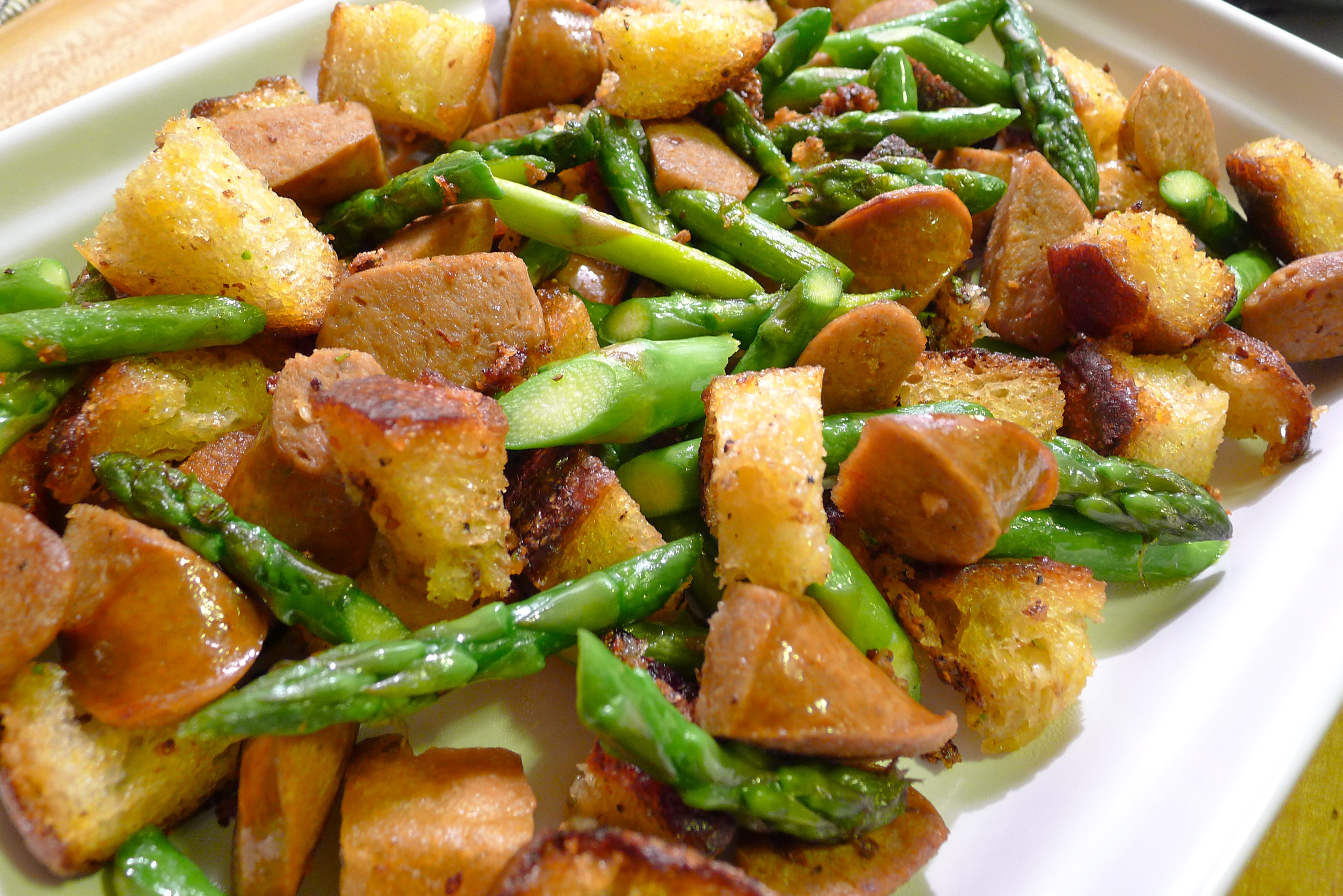
Have you ever made something from memory, and then gone back to the original recipe to find that you mixed it all up?
That’s what happened here, but that is not to say that the results are not still delicious.
This is sort of one of Jacques Pépin’s Fast Food recipes. I’m sure that his is better, but the basic combination of chorizo, asparagus, and croutons is delicious — with or without the almonds.
I adore Jacques Pépin. If I had to pick anyone living or dead to have a meal with, it would be him. Famously frugal, I saw him once on PBS make adorable garnish mice out of basically garbage. He can do that and I would eat it because he’s Jacques Pépin. Unbelievably awesome.
The man is a walking legend.
Ingredients:
1/2 pound of chorizo, cut into 3/4-inch pieces
1/2 pound of asparagus, trimmed and cut into pieces
2 cups of day old bread, cubed
1/2 cup of Parmesan cheese, grated
Salt and pepper
Olive oil
How to prepare:
1. Place the cubes of bread in a large bowl. Drizzle them with olive oil, and season them with salt and pepper. Sprinkle them with the Parmesan and toss everything together again until the bread cubes are evenly coated.
2. Heat about 1 to 2 tablespoons of olive oil in a large skillet set over medium-high heat until it begins to shimmer. Add the chorizo, the asparagus, and the bread to the skillet. Toss and stir everything together for about 5 to 6 minutes. You want the chorizo to brown, the bread to toast, and the asparagus to cook through.
Adjust the seasoning and serve immediately.
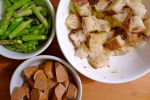


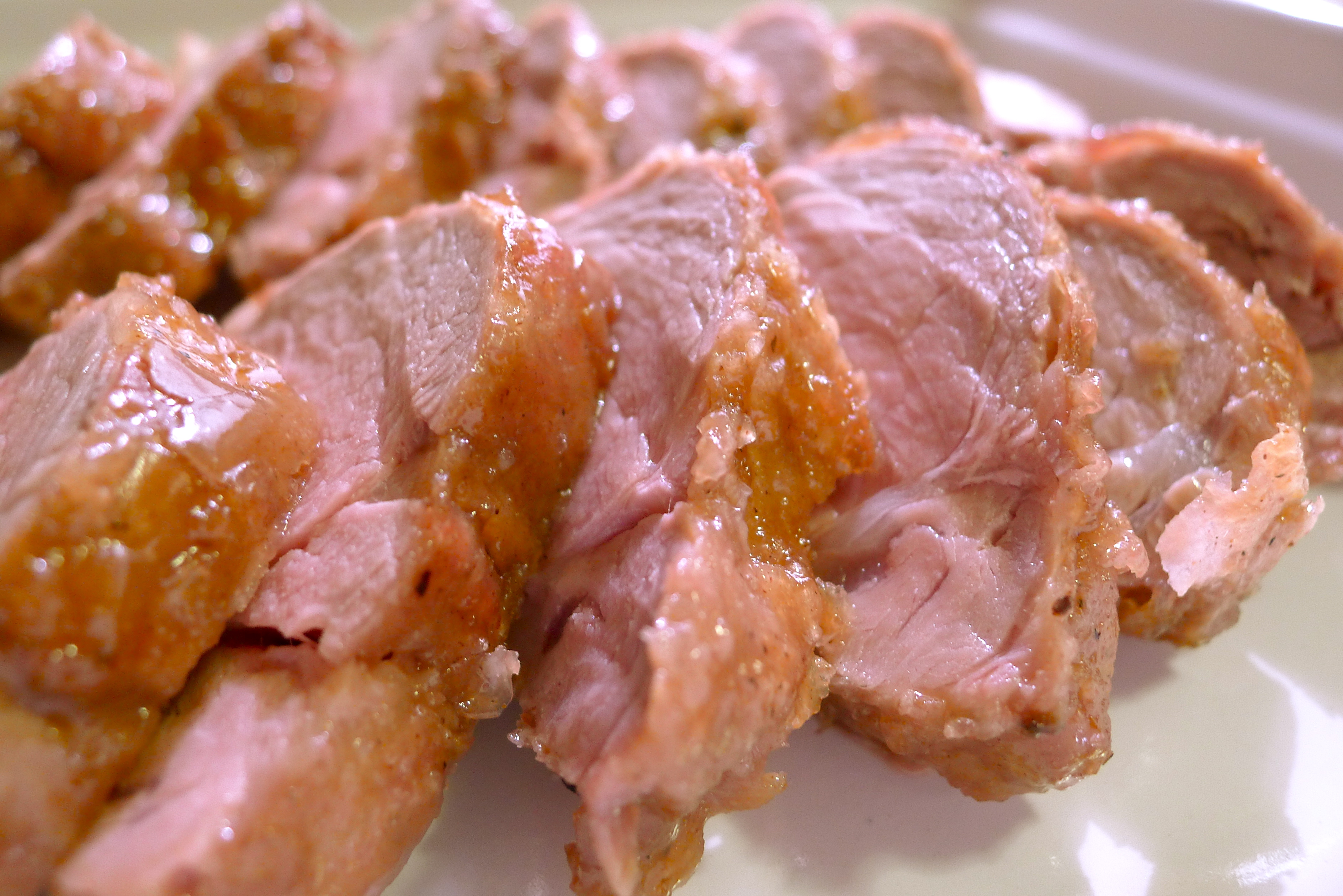
Another freely-adapted recipe from Cook’s Illustrated. It takes a page from Korean fried chicken in terms of using corn starch to create a crispy, crackly exterior that the maple-bourbon glaze can adhere to.
The pastured pork tenderloin was also a birthday gift from dear Tina at High Point Farms. It went wonderfully with Bob’s Cabernet Franc!
Thank you, thank you, thank you!
More people should give meat for birthdays.
Ingredients:
1 pork tenderloin (about 1 1/4 to 1 1/2 pounds)
3/4 cup dark maple syrup (Grade B)
1/4 cup brown sugar, packed
2 tablespoons of bourbon
A pinch of ground cinnamon
A pinch ground cloves
Cayenne pepper to taste
Salt
1/4 cup of cornstarch
Kosher salt
Ground black pepper
2 tablespoons vegetable oil
Special equipment:
1 wire rack to fit the sheet pan
How to prepare:
1. Adjust the oven rack to the middle position, and heat the oven to 375°.
2. In a small bowl, combine the maple syrup, the bourbon, and the brown sugar together, stirring until you have an even slurry. Add the ground cinnamon, ground cloves, and cayenne pepper. Add a hefty pinch of salt. Set this aside to let the sugar dissolve a little bit.
Stir the cornstarch, salt, and black pepper together in another small bowl until well-combined. Feel free to increase or decrease the seasoning according to your personal taste. Transfer the cornstarch mixture to a rimmed baking sheet. Pat the tenderloin dry with paper towels, and then roll it in the cornstarch mixture until it is evenly coated on all sides.
Shake off the excess cornstarch mixture.
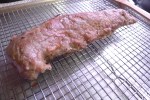
3. Heat the oil in a large cast-iron skillet over medium-high heat until it just begins to smoke. Reduce the heat to medium, and place the tenderloin in skillet. If the tenderloin is a little big for the pan, don’t worry; it will shrink a little bit while cooking. Brown the tenderloin well on all sides. Transfer it to a wire rack set in the rimmed baking sheet.
4. Pour off the excess fat from skillet, and return it to medium heat. Carefully add the sugar slurry to skillet. It might bubble a little violently depending on how hot your pan is, so take care to not stand too close. Scrape up the browned bits on the bottom of the pan with a wooden spoon. Cook the sauce until it has reduced to about ½ a cup, about 2 minutes.
Brush the tenderloin with approximately 1 tablespoon of glaze. Roast it until a thermometer inserted in thickest part of tenderloin registers 130 degrees. Brush it with another tablespoon of glaze, and continue to roast it until the thickest part of tenderloin reaches 135 to 140 degrees, about 2 minutes more.
Remove the tenderloin from oven, and brush it with the remaining glaze. Let it rest, uncovered, for about 10 minutes.
5. Transfer the meat to a cutting board, and slice it into thick pieces. Serve.









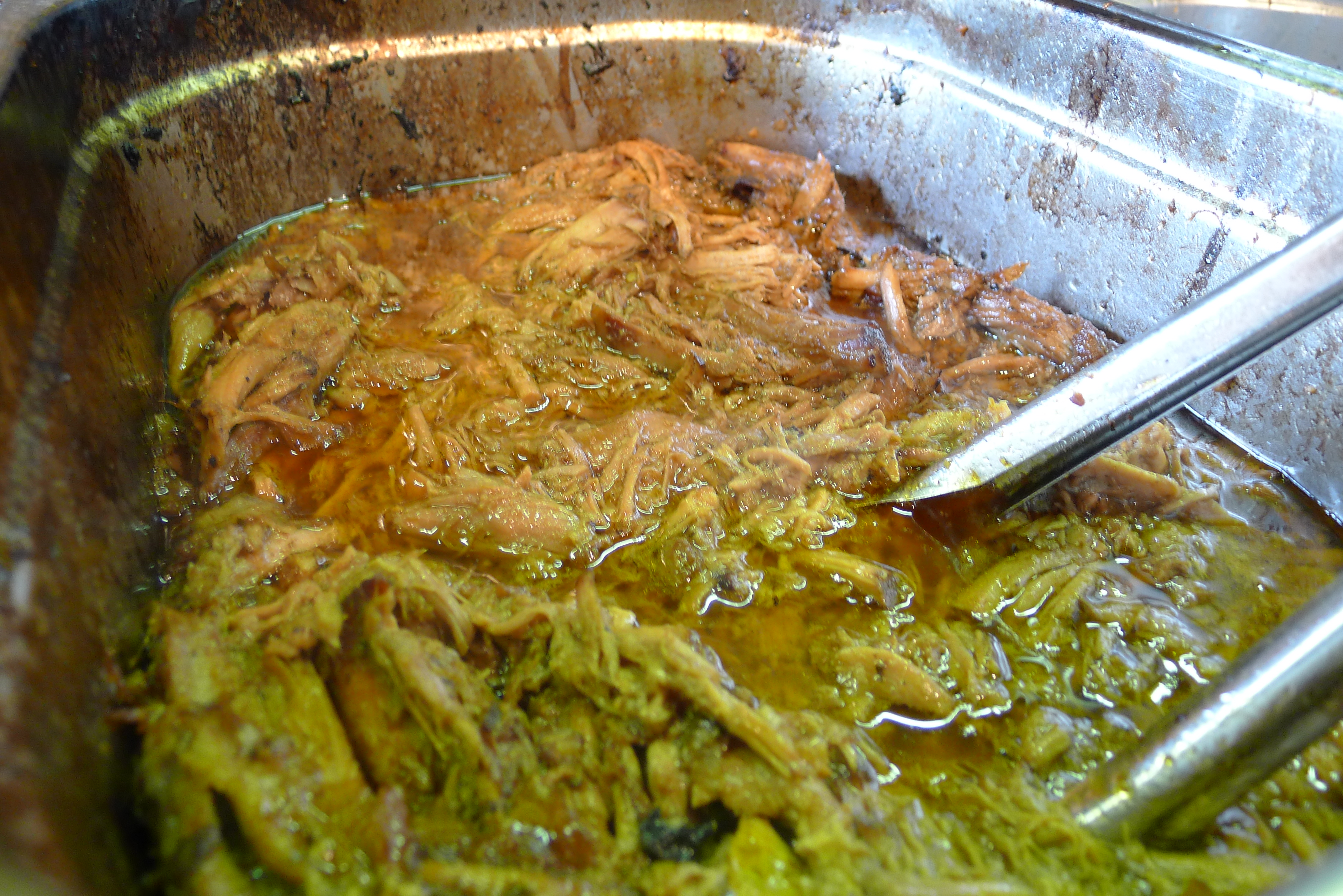


Congratulations to London’s Pitt Cue Co. crew on a wildly successful summer run! I hear that there are officially no more pigs in England because you smoked and sold them all!
Thank you for warmly welcoming a Yank into your ranks for your final weekend. It was a genuine pleasure to meet you all, and to be briefly be a part of the wonderful community that you have created.
And a special thanks to Jamie Berger, restauranteur extraordinaire, London mover-and-shaker, excellent host, and dear friend. I can’t tell you enough how proud I am of what you and Tom have accomplished, and how much I am looking forward to hearing about all the great things that await you in the future.
Good luck in KC!
 Am I allowed to shamelessly plug my friends’ food ventures?
Yes.
Especially when the reviews are as good as this, and this, and this.
If you’re in London and haven’t already been, the time to check it out is now. Go early, follow them on twitter.
And if you are Stateside, well, it is Labor Day Weekend, and London is only 7 hours away!

What a strange August we have been having! Temps in the low 80’s during the day, and cool breeziness at night. Maybe it’s not so strange after all. Maybe I have simply grown so accustomed to expecting oppressively hot and humid August weather over the years, that something nice and clement just blows my mind.
I would never have considered making a skillet breakfast last year, for instance, as it was too hot to make something that has to be baked in a cast-iron!
But this year, it didn’t feel out of place. Plus, it was a great way to use the casing-less breakfast sausage from my CSA.
Ingredients:
1 to 1 1/2 pounds of Yukon Gold potatoes
1 pound of loose or bulk pork breakfast sausage
2-3 tablespoons of vegetable oil
8 eggs
2-3 tablespoons of green onions, chopped
Salt and pepper
1 cup of shredded Cheddar cheese
Special equipment:
A cast-iron skillet
A box grater
How to prepare:
1. Set your oven to 350°.
2. Bring a large pot of water to boil. Add the potatoes and parboil them for about 6 to 8 minutes, depending on how big they are. They shouldn’t totally raw, but the potatoes shouldn’t be completely cooked through either. Drain them, and set them aside until they are relatively cool enough to handle.
3. While the potatoes are boiling, brown the breakfast sausage in a large cast-iron skillet. Break up any lumps with a wooden spoon. When the sausage is done (you should no longer see any pink, and the meat should be browned in spots), remove it from the pan with a slotted spoon and set it aside.
4. Peel the potatoes. Using a box grater, coarsely shred each one.
5. Wipe out your cast-iron pan, and heat between 2-3 tablespoons of vegetable oil in it over medium heat. Add the potatoes. Season them with salt and pepper. Toss them in the oil until they are evenly coated. Press the shredded potatoes into an even cake against the bottom of the skillet. Let the potato cake brown slowly on the stove top.
6. Meanwhile, whisk together the 8 eggs with the green onions.
7. When the potato cake is starting to brown on the bottom, and the potato shreds are beginning to turn a little translucent, add the egg mixture to the pan. Scatter the shredded cheese on top of the eggs. Let the eggs set up for about a minute or two before putting the skillet in the oven. Bake it for about 15-20 minutes, until the top is golden and puffed. Let cool for about 10-15 minutes before slicing into wedges and serving.




One of my favorite things to eat in late summer is prosciutto e melone.
The silky saltiness of the paper-thin ham delicately draped over sweet, heady melon is truly irresistible this time of year.
How’s that for a extra-hefty dose of hyperbole?
But seriously, it’s hard not to wax poetically about it. If the melons are ripe and fragrant (melons have been in the market for a few weeks now), and the prosciutto is the finest San Daniele you can get your hands on, you should.
There is no recipe for prosciutto and melon, because it is exactly just that: prosciutto and melon.
I feel very strongly, though, that as there are only 2 ingredients, there should be some clear guidelines:
1. If you do not have ripe melons, do not make prosciutto e melone.
2. Some people think honeydew is an acceptable melon. It is not.
Cantaloupe or nothing, people.
3. Do not use domestic prosciutto, which is fine for cooking, but it too salty for salad. You want the good stuff: the golden pinky-hued San Daniele. The best you can buy. You don’t need too much of it. About a quarter pound is more than enough for two people.
Buy the best. It is worth it.
4. Just slice your melon. You can do wedges or melon balls, however you want it. Drape the ham seductively across it. You want sexy ham folds, ribbons of air-dried pork tufted like satin pig-sheets over your musky melon. That’s what you want.
Do not:
1. . . . wrap your prosciutto around your melon like this.
2. . . . wrap your prosciutto around your melon, and impale it on a skewer with a freakin’ cherry tomato like this.
3. . . . drizzle it with olive oil. Do not add pepper. It does not need salt. It doesn’t.
4. . . . add a ball of mozzarella cheese, a glop of pesto, a shred of basil, dusting of dried herbs, or a bed of greens. Don’t sauce it. Don’t even have a sauce near it. Just don’t.
It is truly best as it is!



 coolcookstyle