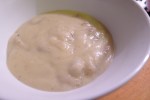
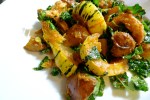
Classic Southern Fried Chicken


This recipe is not for the faint-of-heart.

Your mission, should you choose to undertake it, will require Crisco. Lots of it. More, probably, than you have ever felt comfortable using. Gobs. Of. Crisco.

But the payoff is huge: the crispiest fried chicken you could possibly imagine. Chicken so shatteringly good, it explodes and leaves a healthy dribble of juice running down your chin.

Prior to this endeavor, I had never fried with Crisco. Previous experiences with hydrogenated soybean oil were either a scant quarter cup here and there while baking, or a light smear to periodically re-season my cast-iron pans.

That was before getting James Villas‘ amazing cookbook, The Glory of Southern Cooking, in which he makes a very cogent and convincing argument for Southern Cooking being one of the great regional cuisines of the world.

The book is a wonderful introduction to Southern charm and Southern hospitality, portraying the American South as a world of genteel manners and local thrift where casseroles are always given, silver chafing dishes abound, and Crisco is used liberally.

Very liberally.

This is not meant to diminish the value nor underestimate the diversity of Southern cooking, but simply to point out that at its heart, the bottom-line is that good food has nothing to do with calorie-counts or percentages of saturated fats. Good food is food that tastes good, like light and fluffy cakes, gooey and melty macaroni and cheese, and Crisco-fried chicken.

Villas’ recipe is less a recipe and more a series of guidelines to perfect frying. To attain perfection, you must:

1. Cut up your own bird (on High Point Farms’ website, there is a link to a Gourmet Youtube clip that must be the best one I have seen for teaching you how to do this).

2. Use cast-iron.

3. Use Crisco.

4. Never crowd the skillet.

5. Maintain the heat of the fat, except when the chicken is obviously burning (in which case, turn down the heat).

6. Never, never, never cover fried chicken after it is drained, unless you want soggy chicken.

And though frying an all-natural, pasture-raised chicken in fully-hydrogenated fat may outwardly appear to negate all the health benefits of eating free-range in the first place, at least you have the comfort of knowing that your chickens lived very happy lives before becoming crazy good and super delicious fried chickens.

Ingredients:

1 whole chicken, cut into pieces

Buttermilk

2 cups of flour

1 teaspoon of salt

Freshly ground black pepper to taste

Crisco

1 tablespoon  of bacon fat

How to prepare:

1. Place the chicken pieces in a large bowl, and add enough buttermilk to just cover them. Let the pieces soak for about 30 minutes.

2. In a heavy brown bag, or a large Zip-loc bag, combine the flour, the salt, and the pepper together. Add the chicken pieces to the bag, one or two at a time depending on the size of your bag, and shake the bag vigorously so that all the pieces are evenly-coated with flour. Tap the excess flour off of each piece, and stack the pieces on a large plate.

3. Place a large cast-iron skillet over moderate heat. Melt together the bacon fat and a huge amount of Crisco. You want the skillet to be about half-full of melted fat. Continue to heat the oil until it comes up to temperature, about 350-375°, or when a drop of water flicked into the pan sputters loudly.

4. Start frying the dark meat pieces first. Arrange them in a single layer, making sure not to overcrowd the pan. Fry them until they are golden brown and crisp, about 15 minutes per side. You should turn the pieces only once. Drain the pieces on paper towels, and fry the white meat pieces last.

5. Transfer the pieces to a large serving platter (how Southern!). Do not cover the chicken pieces at all. Serve them warm, or at room temperature.
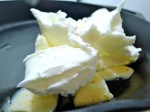
Pumpkin Butter


This is Cheese Pumpkin Project #2, using up the second half of the cheese pumpkin that I used in the Pumpkin Soup with Chipotle Chili Purée.

Pumpkin butter is terrific smeared on toast, or bread. This particular recipe is moderately adapted from Serious Eats.

Ingredients:

1/2 a small cheese pumpkin, seeded, peeled, and cut into 1-inch cubes

Apple cider

1/3 cup of maple syrup

1/3 cup dark brown sugar, packed

1 1/2 teaspoons of ground cinnamon

1 teaspoon of ground ginger

1/2 teaspoon of freshly ground nutmeg

A pinch of ground cloves

A pinch of salt

2 tablespoons of unsalted butter

Special equipment:

A hand-held immersion blender

A fine-mesh splatter screen*

How to prepare:

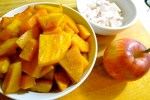
1. Place the pumpkin cubes in a large Dutch oven. Add enough apple cider to barely cover the top of the pumpkin cubes. Bring everything to a brisk simmer over medium-high heat, before lowering the heat to medium-low. Cook the pumpkin until it is very tender, about 30 minutes. You should be able to easily crush a pumpkin cube against the side of the casserole with a wooden spoon when the pumpkin is done.

2. Turn off the heat and using an immersion blender, purée the pumpkin until it is smooth. Add the maple syrup, the brown sugar, and the spices to the puréed pumpkin. Stir everything together to evenly distribute the spices throughout the mixture.

3. Turn the heat back on to low. Simmer the purée uncovered until it is thick and spreadable, and has reduced by about more than half. This can take anywhere between 1 to 2 hours. Be sure to carefully stir the mixture occasionally, scraping the bottom of the pan as well to ensure that your pumpkin butter is not burning or scorching. If it is burning or scorching, turn the heat down even more.

* At a certain point, you may want to cover the casserole with a fine-mesh splatter screen. As the mixture cooks down, thick bubbles will form and burst on the surface that can make a bit of a mess on your stove, and potentially burn you. Be sure to use a screen that allows most of the steam to pass through it so that your pumpkin butter can cook down properly.

4. Once the pumpkin butter is nice and thick, stir in the butter. Turn off the heat, and let the mixture cool completely before transferring it to another container and storing it in the refrigerator.

Pumpkin Soup with Chipotle Chili Purée and Pumpkin Seed Oil


A few weeks ago, I was possessed with the urge to buy an entire cheese pumpkin. Cheese pumpkin is somewhat of a misnomer as it is neither made of cheese, nor does it taste remotely cheese-like.

Cheese pumpkins actually have nothing to do with the cheese-making process.

Instead, the cheese in cheese pumpkin actually refers to its appearance as it resembles an old-fashioned cheese box. Okay, sure, boxes are square or rectangular, and cheese pumpkins are clearly not. But they are buff-colored, low and squat — just like unfinished wooden cheese boxes.

The cheese pumpkin is the classic Cinderella pumpkin. That wasn’t a sugar pumpkin that got turned into a carriage!

Cheese pumpkins are awesome. They have sweet, soft flesh that is hardly stringy at all when you cook them. They make amazing purées, soups, and smooth-as-buttah’ custards.

They are also huge. About 5 to 7 pounds for a small one, 6 to 10 pounds for a large one. Often at farmers’ markets, cheese pumpkins are cut up and sold in halves and quarters.

But I just had to have a whole one to myself.

So consider this Cheese Pumpkin Project #1, as I only used half of a small one for this recipe.

Ingredients:

For the chipotle chili purée:

1 7.5 ounce can of chipotle peppers in adobo sauce, reserving 2 peppers and 2 tablespoons of sauce

1 red bell pepper

1 teaspoon of sherry vinegar

1 tablespoon of honey

For the soup:

2 tablespoons of olive oil

1/2 a small cheese pumpkin, seeded, peeled, and cut into 1-inch cubes

1 medium onion, diced

2 cloves of garlic, minced

2 sprigs of fresh thyme

2 bay leaves

1 quart of chicken stock

1/2 cup of heavy cream

The reserved pair of chipotle peppers + 2 tablespoons of sauce

Salt

Pumpkin seed oil

Special equipment:

A hand-held immersion blender

A fine-mesh sieve*

How to prepare:

1. Heat the olive oil in a large Dutch oven over medium-high heat until the oil starts to shimmer. Add the onions. Sauté them until they lose their opacity and begin to turn translucent. Add the garlic and sauté everything together for about another minute. Toss the pumpkin cubes in the onion-garlic mixture for another minute or two until they are evenly coated. Add the stock to the vegetables. Tuck the thyme sprigs and bay leaves under the pumpkin cubes. Bring everything to a boil, and then reduce the heat so that the liquid is at a steady simmer. Cook the pumpkin until it is soft. You should easily be able to mash a pumpkin cube against the side of the pot with a wooden spoon.

2. Remove the thyme and the bay leaves. Add the 2 reserved chipotle peppers and 2 tablespoons of sauce. Using an immersion blender, blend everything together until smooth.

* If you, like me, prefer the look and mouthfeel of a perfectly creamy and even-colored soup unmarred by any specks of green from the thyme, or any red from the peppers, you can pass the soup quickly through a fine-mesh sieve. By sieving your soup, you improve the texture immensely. Cheese pumpkins are much less fibrous than other pumpkins, but they can still have some.

Stir in the heavy cream, and adjust the seasoning. While the soup is cooling a bit, prepare the chipotle pepper purée.

3. If you have a gas range, set the red bell pepper directly on the gas burner with the heat on high. Turn the pepper periodically to make sure that the skin chars evenly.

If you have an electric range, rub the bell pepper with olive oil and place it on a cookie sheet set underneath the broiler. You can also rub the pepper with olive oil and pop it into a 450° oven. Remove it when the skin is blistered and blackened.

4. When your pepper is nice and charred, put it in a clean plastic grocery bag or a small pepper bag and wait for it to cool. When it is cool enough to handle, you should be able to gently rub off all the charred skin from the pepper. Seed the pepper, and discard the seeds and stem. Cut the pepper into 1/2 inch pieces.

5. Using the immersion blender, combine the remaining chipotle peppers, adobo sauce, the roasted red pepper, the sherry vinegar, and the honey together until smooth.

6. To serve, top each bowl of soup with a dollop of chipotle purée and a drizzle of pumpkin seed oil.

Porchetta-Style Bone-In Pork Shoulder

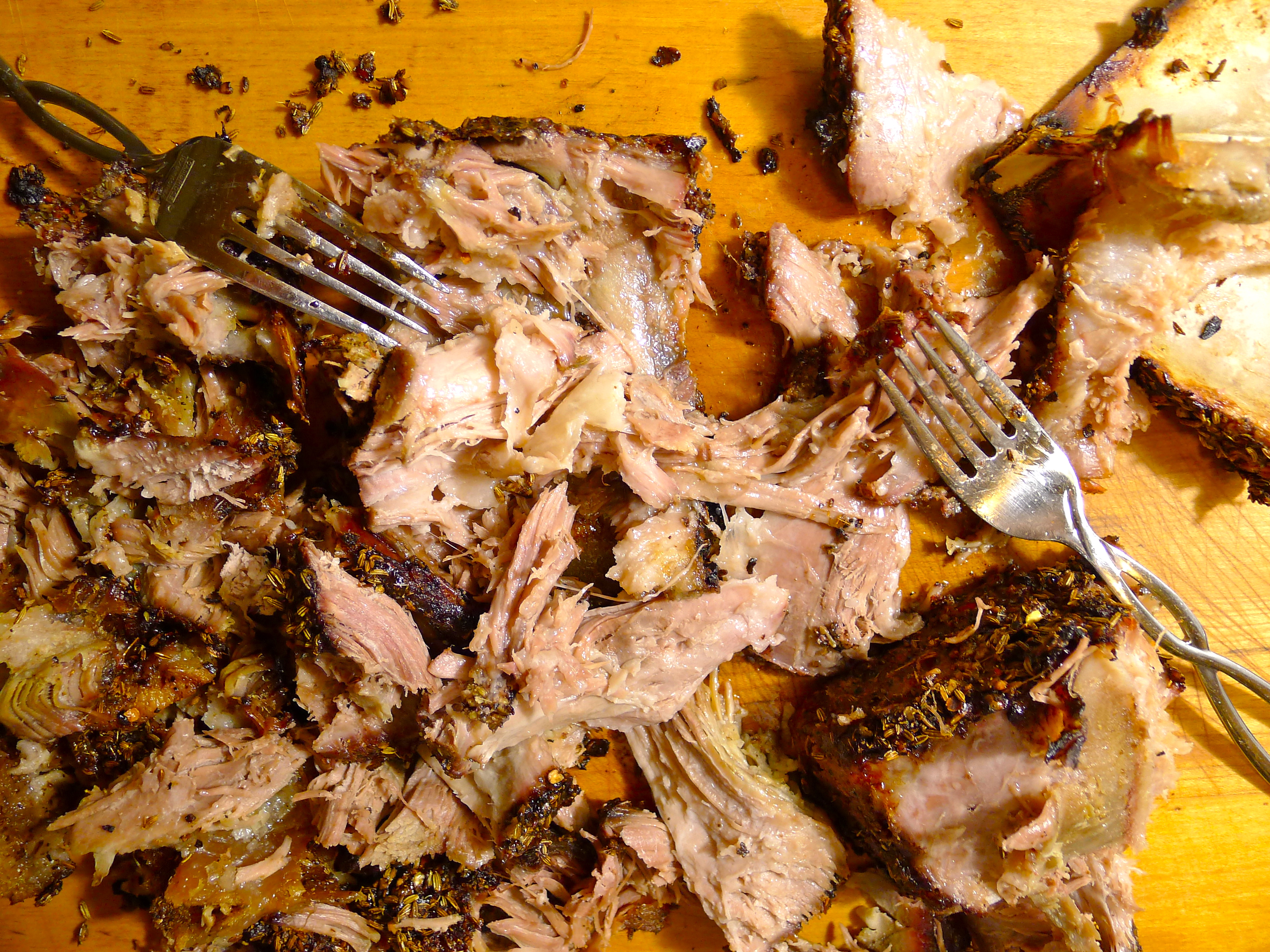
Gifted with a Boston butt (also known as a Boston Blade Roast, or a Bone-In Pork Shoulder) with an almost half-inch layer of fat, I just had to challenge myself to give porchetta a try at home.

I’ve always been a little intimidated by porchetta. Traditionally, porchetta should be a giant slab of boneless pork roast covered with a thick layer of fat and skin. After crusting it with garlic, fennel, and wild herbs, it’s roasted low and slow until the skin is crackling on the outside, and gooey on the inside. The meat should fall apart in a sloppy, delicious mess in your mouth.

I don’t know why I have always been a hesitant to make it at home. Maybe it’s because I rarely think to buy such a large and fatty cut for myself. Or maybe it’s because I live so close to Sara Jenkins’ Porchetta, it just seems easier to leave the slow roasting up to professionals.

Though Jenkins does give a recipe for porchetta away on the restaurant’s site, this is actually a different one. This ridiculously easy recipe is from Epicurious, but it does take some advance scheduling before going for a long comfortable ride in the oven. Do plan ahead accordingly.

Because I used a bone-in cut instead of a boneless cut, the meat for this recipe will have a different texture and a little more give than porchetta normally does. However the flavors and fantastic fattiness are there. It is still heavenly to eat — which is the most important thing.

Porchetta is terrific crammed into ciabatta rolls, or even just spread on a plate with some nice contorni to accompany it.

Ingredients:

2 tablespoons of fennel seeds

1 tablespoon of kosher salt

2 teaspoons of black peppercorns

1 teaspoon of dried crushed red pepper

6 cloves of garlic, finely minced

1 2-3 pound bone-in pork shoulder (also known as a Boston Blade Roast, or bone-in Boston Butt) trimmed of over-hanging fat, but with its outer layer of fat intact

Olive oil

1 cup of Riesling, or another aromatic white wine

1/2 cup of chicken stock

Special equipment:

A spice or coffee grinder, or a mortar and pestle

A leave-in meat thermometer

How to prepare:

1. The night before, toss the fennel seeds in a pan set over medium-high heat until the they are toasted and fragrant. Transfer them to your spice grinder. Add the salt, the peppercorns, and the dried crushed red pepper flakes. Grind everything together to an even consistency, but not a powder. You are looking for a medium-coarse grind.

2. Using paper towels, pat the pork roast dry. Rub the finely minced garlic all over it. Rub the spice mixture in afterwards, pressing it into the meat so that it makes a nice and even crust. Wrap the roast up in a large piece of waxed paper, and refrigerate it overnight.

3. Preheat your oven to 450°. While your oven is heating up, remove the roast from the fridge, and let it come closer to room temperature.

4. Place the pork in a roasting pan, fat-side up. Drizzle it with olive oil. When the oven has come up to temperature, roast it for about 30 minutes before dropping the temperature to 300°. Continue to roast until the pork is nice and tender. This will take about 3 hours or so. The meat should register about 190°.

5. When the roast is done, remove it from the oven and let it rest for about 15-30 minutes. While the roast is resting, pour the fat and the juices from the roasting pan into a saucepan. Skim off as much fat as you can (this might be a little tricky, but do the best you can). Set the saucepan over medium-high heat, and add the wine and the stock. Whisk everything together, dissolving any crunchy bits you can. Reduce the sauce until you have about 3/4 of a cup. The sauce will be thin.

6. Pull the meat off of the bone with two forks, spoon the sauce over the meat, and eat lustily.

Kabocha Squash Simmered in Dashi, Soy Sauce, and Mirin

“If you buy that,” Tomoko said, “I’ll tell you how to cook it.”

Sold! And suddenly I was the proud owner of a cute little kabocha squash, eagerly awaiting directions from my Asian food-guru.

It’s a toss-up really as to which “hyper-detailed” step was my favorite one from Tomoko. Either, “Okay. Dashi, soy, salt, sugar.” Or, “If it’s not yummy enough, add some mirin.”

No, wait . . . the winner for “clearest” and “most concise” instruction is: “I don’t know why, but we just kind of (insert miming the act of scraping squash skin here).”

But you know what? Sometimes that’s how you learn recipes and new cooking techniques. Some of the best cooks I know are instinctive cooks who rely on past experience, sounds, smells, and what they see to guide them more than a written recipe.

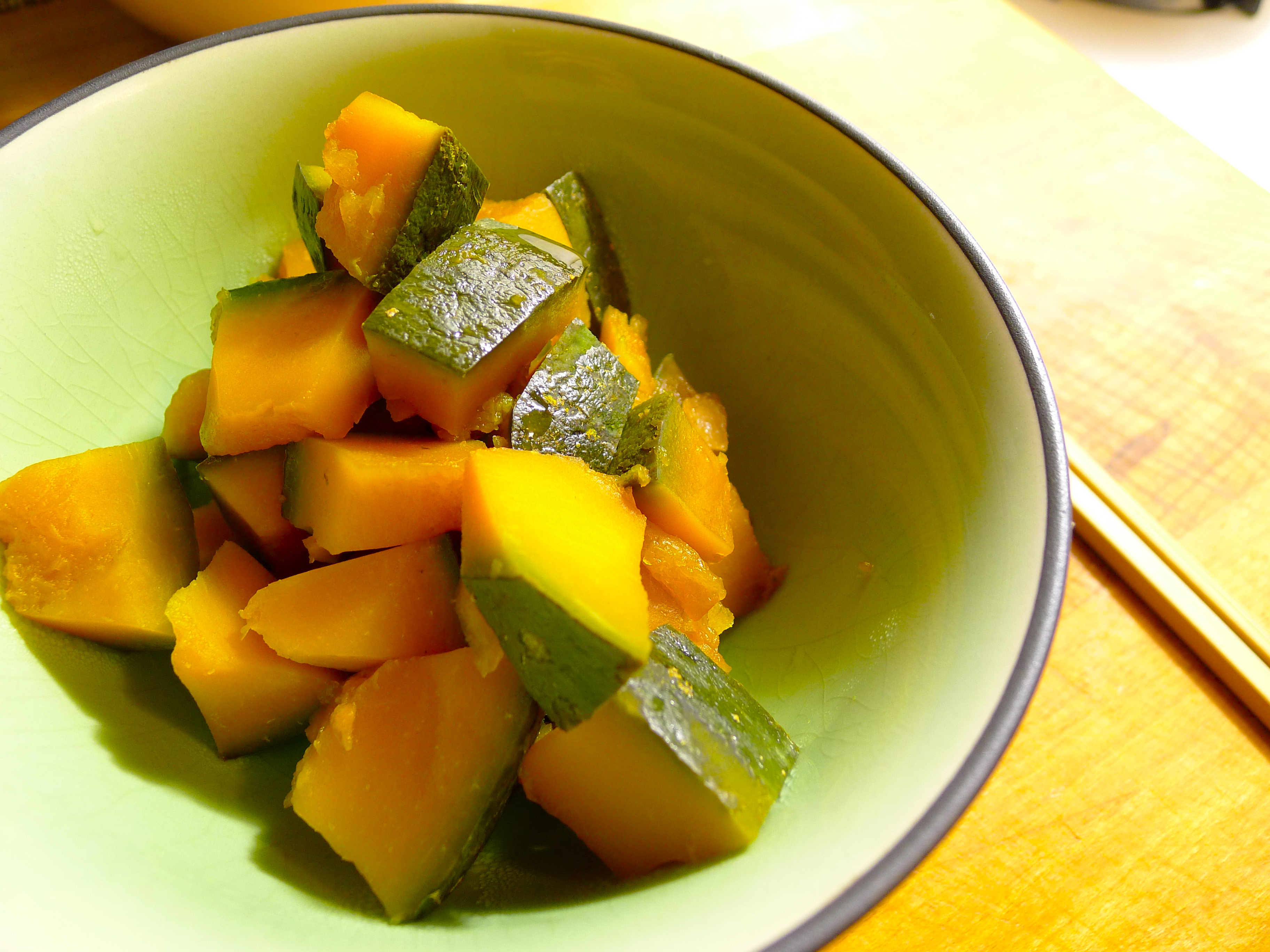
I don’t know if this is what Tomoko meant or intended for me to cook, but the result was unbelievably delicious. Probably the best thing that I have made in months. I actually loved it so much, I ate an entire pumpkin in one sitting by myself. And when there were only a few pieces left, I actually wished that I had another one. It was that good.

When I texted her later, she said, “Hee hee! Yeah, it’s one of those recipes that is so simple, no one ever explains it.”

That may be true, but I am going to try for you.

Ingredients:

4 cups of water

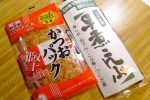
1 largish piece of kombu

1/2 cup of dried bonito flakes

1 small kabocha squash

Japanese soy sauce

Salt

Sugar

Mirin

How to prepare:

1. First, you need to make your dashi. Dashi is incredibly easy to make and consists of basically 3 ingredients: kombu (dried kelp or seaweed), dried bonito flakes, and water. For more details, I defer to La Fuji Mama, who completely demystified the whole thing for me.

Basically you take a largish piece of kombu and rehydrate it in a medium sauce pan with 4 cups of water. Let the kombu soak for about 15 minutes. Bring the water to a boil, and right when it starts to boil, remove the pan from the heat and add about half a cup of dried bonito flakes. After 3 or 4 minutes, remove the kombu and strain the broth through a fine-mesh sieve, or a coffee filter.

Voilà! You have made dashi!

2. Cut your kabocha squash in half. Scoop out the seeds. Cut each half into quarters. Using a paring knife, scrape the skin of the squash. You don’t want to remove the skin, but just clean up the outer surface. That way, your squash will cook more evenly. Cut the squash into 1-inch pieces.

3. In a large Dutch oven or casserole, try to spread the squash pieces out in a single-layer skin-side down. If that isn’t possible (it wasn’t for me), just make sure that the squash isn’t too crowded in the pot.

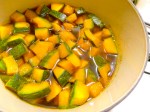
4. Sprinkle the squash with salt, sugar, soy sauce, and mirin. Fill the pot with just enough dashi to barely cover. Bring the liquid to a simmer, and continue to cook the squash until the pieces are easily pierced with a knife.

5. Using a slotted spoon, gently remove the squash from the cooking liquid, and enjoy your delicious kabocha.

The Daring Kitchen November Cooks’ Challenge: Chinese Tea Eggs

About a month or so ago, I heard about the Daring Kitchen from another blogger who writes Live the London Life. The basic premise is this: The Daring Kitchen comprises of two groups, The Daring Bakers and the The Daring Cooks. You can sign up for one or both (I am just signed up for The Daring Cooks). Once you sign up, you will be tasked with cooking one recipe each month from what the monthly host has selected as the cooking or baking challenges. Everyone posts their dishes on their blogs on the same day (also known as the reveal day).

So today is the big reveal day for my first challenge: Cooking with Tea.

I’ve never cooked with tea before, with the exception of maybe duck breast a long, long time ago. So long ago that it doesn’t count anymore. Of the three dishes I could have chosen from, I perhaps chose the easiest (the other options were a green tea noodle soup, and a beef and sweet potato stew made with rooibos).

But hey, I made the decision right after I whacked into my thumb with that folding knife!

And sometimes the simplest recipes are the most challenging . . . or at least that is what I am telling myself 😉

So here are the blog-checking lines: 

Sarah from Simply Cooked was our November Daring Cooks’ hostess and she challenged us to create something truly unique in both taste and technique! We learned how to cook using tea with recipes from Tea Cookbook by Tonia George and The New Tea Book by Sara Perry.

Ingredients:

6 eggs

2 tablespoons of loose black tea, or four tea bags (I used loose Keemun)

2 teaspoons of Chinese Five-Spice Powder

1 tablespoon of coarse salt

Sesame seeds for garnish

How to prepare:
(taken from The Daring Cooks’ November Challenge PDF)

1. In a large enough pot to avoid overcrowding, cover the eggs with cold water. Bring to a boil over medium heat and simmer for twelve minutes.

2. Remove the eggs with a slotted spoon and keep the cooking water.

3. With a spoon, tap the eggs all over until they are covered with small cracks. This can also be done by tapping and rolling the eggs very gently on the counter.

4. Return the eggs to the pan and add the tea leaves or bags, Chinese five spice powder, and salt. Cover the pan.

5. Heat gently and simmer, covered, for one hour.

6. Remove the pan from the heat and let the eggs cool down in the liquid for 30 minutes.

7. Remove the eggs from the liquid. Peel one egg to check how dark it is; the others can be returned to the liquid if you wish to have the web-like pattern darker. Allow the eggs to cool fully.

8. To serve, peel and slice the eggs in halves or quarters. Sprinkle with toasted sesame seeds.

Mini All-Beef Corn Dogs

Ever since we got all-beef hot dogs in our CSA shares, I have been wanting to make corn dogs. Maybe it was all this talk in late August and the beginning of September of state fairs. As we all know, “state fair” is a euphemism for “fried food on a stick” — just about the best two things ever combined.

If I had any reason to go to Iowa, it would be for the Iowa State Fair. The Iowa State Fair (tagline, “Nothing Compares”) website features a ticking count-down to the next fair (August 9-19, 2012). Whoa! More importantly, the fair historically features over 200 food vendors, most of which are selling something fatty and super-calorific. And if the food alone doesn’t induce visions of cardiac arrest, there is always, of course, the famous butter cow sculpture — which I imagine is awe-inspiring. The viewing experience is likely enhanced by checking out the sculpture while consuming fried butter on a stick. In all honesty, I couldn’t dream of anything better to eat when taking in a life-sized representation of of cow rendered in its own product (this all seems very un-kosher . . .).

The best part about the Iowa State Fair website is the food page, which features an entire directory devoted to foods on a stick, most of which are fried.

So in honor and appreciation of all things State Fair, I give you DIY mini-corn dogs, CSA-style. Probably the best corn dogs out there for you. No, seriously! These hot dogs are made from grass-fed beef and are packed with omega-3’s!

Ingredients:

1 cup of yellow corn meal

1 cup of all-purpose flour

1 teaspoon of baking powder

1/4 of baking soda

1/2 of cayenne pepper

2 teaspoons of kosher salt

1 1/2 cups of milk (has anyone every tried beer?)

1 pack of all-beef hot dogs (we get 8 in a pack from the CSA)

8 six-inch wooden skewers

1 liter of any kind of oil that you can use for deep-fat frying (peanut, canola, etc.)

Good coarse-grain mustard

How to prepare:

1. In a large bowl, deep enough to dip the skewered dogs in easily, combine the cornmeal, the flour, the baking powder, the baking soda, and the cayenne pepper. You can tinker with the spices if you like, substituting maybe paprika for cayenne, or maybe adding some Old Bay. Because I just kind of want the ultimate plain corn dog experience, I keep the flavorings to a minimal. Why distract yourself from the pure, unadulterated taste of fried?

2. Add the milk and stir it in gently with a fork. The batter should be thick and lumpy —like pancake batter. Let the batter rest for 10 minutes while you prep the hot dogs.

3. Cut each hot dog and each skewer in half. For the skewers, I tried breaking them in half, but then I didn’t like the look of the ragged ends that my sorry stick-snapping skills left. So I used a pair of wire cutters. I know. So food-safe! But they did the job!

Insert a skewer about a third to halfway through the end of each hot dog-half.

4. In a large Dutch oven, heat the oil over medium-high heat. It might take a while for the oil to get up to the right temperature. You don’t want the oil to smoke, but you want it to be nice and hot. You can check the oil temperature with a thermometer (it should register between 350-375°), or you can just do what I did and drop a little bit of the batter into the oil to check. If it starts frying up beautifully, your oil is at the right temperature. Just be careful to not let your oil burn. If you are lucky enough to own a deep fat fryer, this is even easier.
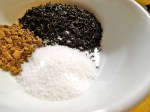
5. Holding the stick, dip each skewered dog into the batter. The batter should be thick enough to coat each dog evenly, but not so thick as to be stodgy. If it seems too thick, you can thin it out with just a little more milk. Carefully drop the corn dogs — sticks and all — into the boiling oil. Be careful not to overcrowd them or the oil’s temperature will drop, and your corn dogs will come out greasy instead of crispy. I fried no more than four or five at a time.

6. Line a colander with paper towels. Let the corn dogs fry until they are nice and golden. Using a pair of tongs, remove each dog by the stick when it is done. Let them drain upright in the colander.

7. Serve them with some good mustard, or anything else you like with your corn dogs like ketchup, relish, Cheez-Whiz . . .

Note:

Now that you are done frying, what the heck do you do with all this oil? Well, according to Cook’s Illustrated, you can reuse it without it tasting stale or rancid as long as you freeze it. Let the oil cool down completely. Carefully strain it into a clean, dry bottle (I use an empty plastic bottle, or a wine bottle). To strain, I pour the oil through a coffee filter. Freeze. Before reusing, be sure to smell or taste it. If it smells “fishy,” or tastes off, toss it. When in doubt, throw it out!

Balsamic-Roasted Butternut Squash and Apple Soup

This is a neat little twist on butternut squash soup. Roasting the squash concentrates its flavor. Roasting it in a buttery syrup accented with balsamic vinegar adds a little bit of bite, and a whole lot of interest.

Ingredients:

1 butternut squash, seeded, peeled and cut into 1-inch pieces

1 tablespoon of butter

1 tablespoon of olive oil

1 packed tablespoon of dark brown sugar

1 tablespoon of balsamic vinegar

2 teaspoons of salt

1 pinch of cayenne pepper

1 large shallot, minced

Olive oil

1 Gala apple, cored, peeled and cut into 1-inch pieces

3 cups of chicken stock

1 cup of apple cider

3 tablespoons of maple syrup

1/3 cup of heavy cream

Salt

crème fraîche to serve

Special equipment:

A hand-held immersion blender

How to prepare:

1. Preheat your oven to 400°.

2. In a small saucepan, heat the butter and the olive oil together over very gentle heat. When the butter has melted, add the brown sugar, balsamic vinegar, cayenne pepper and salt. Stir everything together until everything is well-incorporated. Continue to heat everything for a minute or two more. The mixture will become syrupy, and the harshness of the vinegar will soften a little bit.

3. In a large bowl, toss the butternut squash and the butter mixture together. Spread the squash out evenly on a parchment paper-lined cookie sheet. Roast the squash until it is tender, about 15-20 minutes. When the squash is done, transfer it from the hot pan to a bowl.

4. Heat some olive oil in a large casserole or Dutch oven over medium heat. When the oil starts to shimmer, add the shallots. Sauté them until they begin to soften. Add the apples to the shallots, and heat them together for about a minute or two. Add the butternut squash, and stir everything together. Add the chicken stock and the apple cider. Let everything simmer for about 20 minutes, skimming any foam that rises to the surface.

5. When the apples are tender, blend everything together with an immersion blender until smooth. Adjust the seasoning. Add the maple syrup and heavy cream. Stir everything together, and adjust the seasoning for a final time. Garnish with a dollop of crème fraîche and serve.

Irish Bacon and Cabbage Soup


From the archives!

As I am currently a little out-of-commission, I decided to revisit some meals that I have made in the recent past, but haven’t blogged about yet.

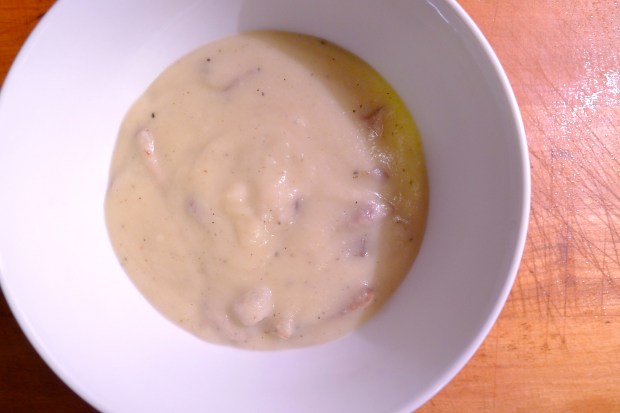
This soup is one of them. A few months ago, I got some Irish bacon in my CSA. What is the difference between Irish bacon and regular ol’ streaky bacon? Well, according to Wikipedia — the be-all, end-all arbiter of everything — regular bacon is made from pork belly (which is why it’s so nice and streaked with fat). Irish bacon, on the other hand, is made from center-cut pork loin — which is along the backside of the pig. Because this kind of bacon is not from the belly, it tends to be much leaner. There is usually a narrow band of fat that rings the edge, but each slice is generally more pork than fat. Similar to Canadian bacon, Irish bacon isn’t supposed to get crispy like belly bacon. It still has incredible flavor though, and holds up well to things like thick soups and stews. This recipe, adapted from Epicurious, makes a warm, wonderful, and traditional stick-it-to-your ribs kind of meal. Perfect for the rain and newly arrived cold weather. Ingredients: 1 pound of sliced Irish bacon 3 tablespoons of butter 1 medium onion, chopped 2 large Yukon Gold potatoes, peeled and diced 1 quart of chicken stock 2 bay leaves 1/2 of a small head of Savoy cabbage, cored and thinly sliced Salt and pepper Special equipment: 1 hand-held immersion blender How to prepare: 1. Place the bacon in a medium saucepan, and cover it with about two inches of cold water. Bring the water to a boil. Reduce the heat so that the water is at an even simmer, skimming any foam that rises to the surface. Cook the bacon for about 7 minutes. Drain the bacon, and when it is cool enough to handle, cut it width-wise into 1/2-inch strips. 2. In a large casserole, melt the butter over moderate heat. When the butter begins to bubble, add the chopped onions. Sauté the onions, stirring often, until they begin to soften and turn slightly translucent. Add the potatoes to the onions, and sauté everything together for about 2-3 minutes more. Add the stock and the bay leaves. Adjust the seasoning, and bring everything to a boil. Reduce the heat and simmer everything together until the potatoes are soft and tender, about 8 to 10 minutes. 3. When the potatoes are ready, add the cabbage to the pot. Simmer the cabbage until it is soft too, about 5 minutes. Fish out the bay leaves and discard them. Don’t forget . . . like I did! 4. Once you find and remove the bay leaves, blend the soup together until it is smooth. If the soup is really thick, you may want to add some water to it to thin it out a little. If you don’t have an immersion blender, you can use a regular blender or a food processor, working in batches if necessary. Once the soup is puréed, stir in the bacon. Adjust the seasoning for the final time, and rewarm the soup if needed before serving.

Roasted Miso-Curry Delicata Squash with Pork

Yet another recipe adapted from Heidi Swanson’s Super Natural Every Day. This dish is a marvelous mixture of flavors and textures. It also shows off some of the first of Fall’s bounty: the gorgeous Delicata squash.

Oblong and streaked with golden yellow, forest green, and ivory, Delicata squash have a thin and delectable skin that does not need to be peeled. It cooks quickly, and yields a sweet, pure taste.

Though Swanson’s original recipe, like all of her recipes, is vegetarian, I find that the addition of thinly sliced pork goes well with the miso-curry sauce.

Ingredients:

A scant 1/4 cup of white miso

A scant 1 tablespoon of Thai red curry paste

Olive oil

1 Delicata squash

About 1 pound of small red potatoes, quartered or cut into even chunks

1 boneless pork chop (about 1/2 a pound), cut into 1/4 inch-thick slices

1-2 handfuls of shelled pepitas

Half a bunch of roughly chopped lacinato kale, stems removed

2/3 cup cilantro, roughly chopped

The juice of 1 limes (2 if the limes are small)

How to prepare:

1. Heat your oven to 400°.

2. In a small bowl, whisk together the white miso, the red Thai curry paste, and about a 1/4 cup of olive oil with a fork. Add more oil to loosen up the mixture if it seems too thick.

3. Trim both ends of the Delicata squash. Cut it in half lengthwise. Scoop out all of the seeds and discard them. Cut each half into 1/2-inch half moons.

4. In a medium bowl, combine the squash and the potatoes with about half of the miso-curry mixture. Toss the vegetables together with your hands until they are evenly coated. Turn the vegetables out onto a parchment paper-lined rimmed baking sheet. Spread them out in a single layer, and bake them for about 20 minutes.

5. In a small bowl, toss the pork with half of the remaining sauce. After the potatoes and the squash have roasted for about 20 minutes, evenly scatter the pork and the pepitas over the tops of them. Continue to roast everything until the pork is cooked and the potatoes are done, about 15 minutes more.

6. In a large bowl, combine the kale, the cilantro, the remaining miso-curry, and the lime juice. Add the roasted pork and vegetables to them. Toss everything gently together. Serve and enjoy.