Split Pea Soup with Bacon Ends


A while ago, I was gifted a giant tub of bacon ends from a member of a different CSA. They languished in the back of my freezer until a deep spring clean last week.

Bacon ends are a terrific thing to have in the house — even if you’re like me and fall into the “out of sight, out of mind” camp. Just make sure that you have them somewhere you can see them at all times, a visual reminder that every dish is better with bacon.

Not only are bacon ends a good thing to always have on hand, but they are also much more economical than buying bacon strips. Chopped up and slowly browned, they make wonderful bacon bits. The rendered fat can be used in the place of oil or butter, or in anything that could be enhanced by some smoky porcine flavor.

And let’s be honest, what wouldn’t benefit from added porkiness?

People can sometimes be a little skeeved out by cooking with animal fat. However, so long as the pigs are pasture-raised by a farmer who follows organic practices, there should be no fear of needing Lipitor. Bacon fat from pasture-raised pork even has the added benefit of being a good source of vitamin D, making bacon fat certainly as good as butter!

I’m not saying that you should sit around the house and chow down on scoops of it, but a little bacon fat is much healthier for you than all those omnipresent, heavily-processed vegetable oils. My rule of thumb is that the more steps in processing it takes to get the food to your mouth, the less healthy it is for you. I would even go as far as to argue that it’s not even food at that point. This is why I always shake my head at people who buy low-fat foods because in order to make up for the taste and flavor deficit, those items are generally bulked up with tons of sugar — which might be worse for you than the fat.

Plus low-fat foods taste bad.

Anyway, no more ranting. Back to the soup!

Dried split peas scream for bacon! But if animals are not your thing, you can leave the bacon out and make the soup with smoked paprika instead.

Ingredients:

About 3 or 4 ounces of bacon or bacon ends, cut into small dice

1 small onion, chopped

1 large carrot, peeled and diced

2 stalks of celery, diced

1 pound (16 ounces) of dried split peas, picked over for small stones

2 bay leaves

4 cups of chicken or vegetable stock + 1 cup of water

Salt and pepper

Smoked paprika

Special equipment:

A hand-held immersion blender (optional)

How to prepare:

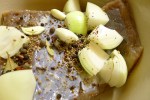
1. In a large Dutch oven, cook the bacon or bacon ends over medium heat with a little bit of olive oil until most of the fat has rendered. Reserve a few bits of bacon for garnish. Spoon off all but one tablespoon of bacon fat. Keep the bacon fat in a clean container in your freezer, and use it for other things like roasting potatoes, eggs, roasting chickens, anything really.

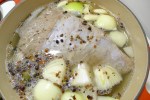
2. Add the vegetables to the pot. Let them cook until the vegetables have softened and the onion is translucent, about 5-7 minutes. Add the split peas and toss them with the vegetables until they are evenly coated with bacon fat. Add the bay leaves, the stock and the water. Bring everything up to boil, and then reduce the heat. Let the peas simmer until they are tender, about 45 minutes to an hour. Periodically skim the top of the soup of scum and grease. If the soup seems too thick, thin it out by adding more stock or water.

3. When the peas are tender, you can leave the soup alone if you like a chunky soup. I like to partially purée the soup so that it is creamier, but still has some interesting bits of vegetables and peas in it. This is super easy to do with an immersion blender. Just insert the stick blender into the soup and blend as much as you like. You can also transfer half of the soup to a regular blender or a food processor, then add the blended soup back to the unblended half. If you use a blender, keep your hand smacked tight onto the blender lid lest it go flying off, leaving your kitchen covered in pea soup spray. Adjust the seasoning for a final time, and thin the soup with stock or water again if it seems too thick.

Serve topped with a few of the reserved bacon bits, a dusting of smoked paprika and with some good, hearty bread.

Cooking The Hunger Games: District 11’s Crescent Moon Rolls with Sesame Seeds and Katniss’s Favorite Lamb Stew with Dried Plums


The Hunger Games? Nope, don’t want to read it. Isn’t that for 14-year old girls?”

“You read Harry Potter!”

It’s true. I read every single Harry Potter book, but this wasn’t Harry Potter. That was about wizards, and good and evil, and growing up, and friendship, and butter beer! This was probably some kind of Twilight spin-off full of conflicted teenagers whining about how they shouldn’t be in love with vampires and werewolves.

“No, really” Joseph insisted, “You should read it.”

“Oh, yeah? What’s it about?”

“Well, it’s about this girl . . . And she hunts . . .”

It wasn’t the most persuasive thing he could have said, but Joseph must have been sure that once the seed was planted in my mind, curiosity would get the better of me.

The next time I saw him, I told Joseph that it was completely his fault that I went to bed at 4:45 AM and was raccoon-eyed and foggy-minded for the rest of the day.

“Ha ha!” he said, “You read The Hunger Games, didn’t you!”

I did. I read it cover to cover. In one night. Straight through.

And I loved it. I was completely hooked.

Yes, The Hunger Games series is clearly Young Adult Fiction. As befits the genre, sometimes the books can be a little repetitive (okay! I thought by Chapter 3 of the first book, I get it! She hunts!). They are also fast-paced and packed full of action. The narratives are straightforward, and the books are emotional and plot-driven. It’s the world from the perspective of kids.

But just because the target audience of The Hunger Games is young, doesn’t mean that any of the books in the series are simplistic. In fact, what makes the books so good is how they use food to illustrate complex ideas and to represent the complicated relationships between different characters, different people, and different social classes. I’ve even read some other things about how the story can be read as an allegory for our current food system and its potential unsustainability, how Katniss herself can be seen as a model of locavorism as a girl who is forced outside of her manufactured food system in order to survive, and how hunting, foraging and sometimes going without — as Katniss does — is a healthier model of eating than what is offered by the super-sized Capitol (thanks, Charlene!).

But I’m getting ahead of myself. For those of you who haven’t read the books, maybe a brief overview is necessary:

The Hunger Games takes place in a postapocalyptic future in roughly what is used to be North America. Now known as the dystopian Panem, the state is divided into 13 districts — one of which was annihilated after fomenting rebellion, leaving 12 under the rule of the Capitol. As a means to control the remaining districts, the Hunger Games were created as annual televised event reminding everyone of the power that the Capitol holds over them. Participation is mandatory and each year, each district must send one boy and one girl between the ages of 12-18 to participate in a gladiatorial-like game set in an artificially constructed arena that may or may not kill them if their fellow gladiators — called tributes — don’t get to them first. There can only be one survivor, and the child who manages to be survive earns precious food and oil for their starving district.

The book’s main protagonist is a 16-year old girl from Panem’s poorest district, District 12. Her name is Katniss Everdeen and, as explained so well by Joseph, she is a hunter. More than a hunter though, she is a survivor: tough, capable, resourceful, skilled, and lethal . . . to animals (but as another character points out, are kids really that different?). The story is told from her point of view, and hardly a page goes by without the mention of food.

Food is everywhere in The Hunger Games. It is what everyone in every district outside of the Capitol is obsessed with because just about everyone outside of the Capitol is starving. The decadent Capitol produces nothing. It is reliant on the outlying districts to provide everything from its food to its fuel to its manufactured goods. However, the Capitol’s citizens want for nothing, and what the districts produce is never meant for their own consumption.

Not only is this power dynamic illustrated through the difference between the kinds of food eaten in the Capitol (rich, elegant, sophisticated, refined, and luxurious) and what is eaten in the districts (rough, unrefined foods like ration grains, or things that people eat out of desperation like the pine wood and wild dog), but in sheer quantity as well. People in the Capitol have so much to eat (and eat so much it) that they enjoy making themselves sick just so they can empty their stomachs and continue eating more. This would be inconceivable to people in districts who have never had enough to eat.

If this all sounds very Roman to you, it is pretty obvious that author Suzanne Collins intends it to be. From the idea of a gladiatorial fight to the finish, or to the use of food as a way to symbolize the contrast between the decadence of the Haves in the Capitol and the Have-Nots in the districts, Rome overshadows everything in the series. Characters have Roman names (Seneca, Cato, Cinna, Plutarch). Even the name Panem derives itself, not from Pan-American, but from the Latin phrase panem et circenses which means bread and circuses — the Roman means of appeasing and controlling populations through food and entertainment.

Speaking of bread, every single district has its own, from the rough drop biscuits of District 12, to the ultra-refined rolls of the Capitol. Bread — like all food in The Hunger Games — is used to communicate all kinds of relationships. For example, when Katniss and her fellow tribute from District 12, Peeta Mellark, are transported to the Capitol for training before the games, every table is set to include a basket of bread with representative loaves from each of the 12 districts and from the Capitol. The inclusion of the Capitol’s bread is a symbolic reminder of its power and superiority among those rougher, unsophisticated loaves.

As you can see, there is a lot in the book to think about.

You probably also guessed that I had been very anxiously awaiting the The Hunger Games movie that just came out last week. I was so excited about it that I cooked a Hunger Games feast using recipes from, or adapted from The Unofficial Hunger Games Cookbook by Emily Ansara Baines before dragging my friends to the midnight IMAX showing of the film.

What did we eat? A “Caesar” salad consisting of chopped Romaine lettuce simply dressed in a lemon juice vinaigrette with lots of grated Parmesan and freshly ground black pepper. It was meant to be a nod to The Hunger Games‘s Roman roots even though Caesar salad has nothing to do with Rome (it was invented in Mexico by a guy named Caesar).

District 11’s Crescent Moon Rolls with Sesame Seeds, because how could a Hunger Games-themed dinner not include bread? Especially this bread, as those of you who have read the books know.

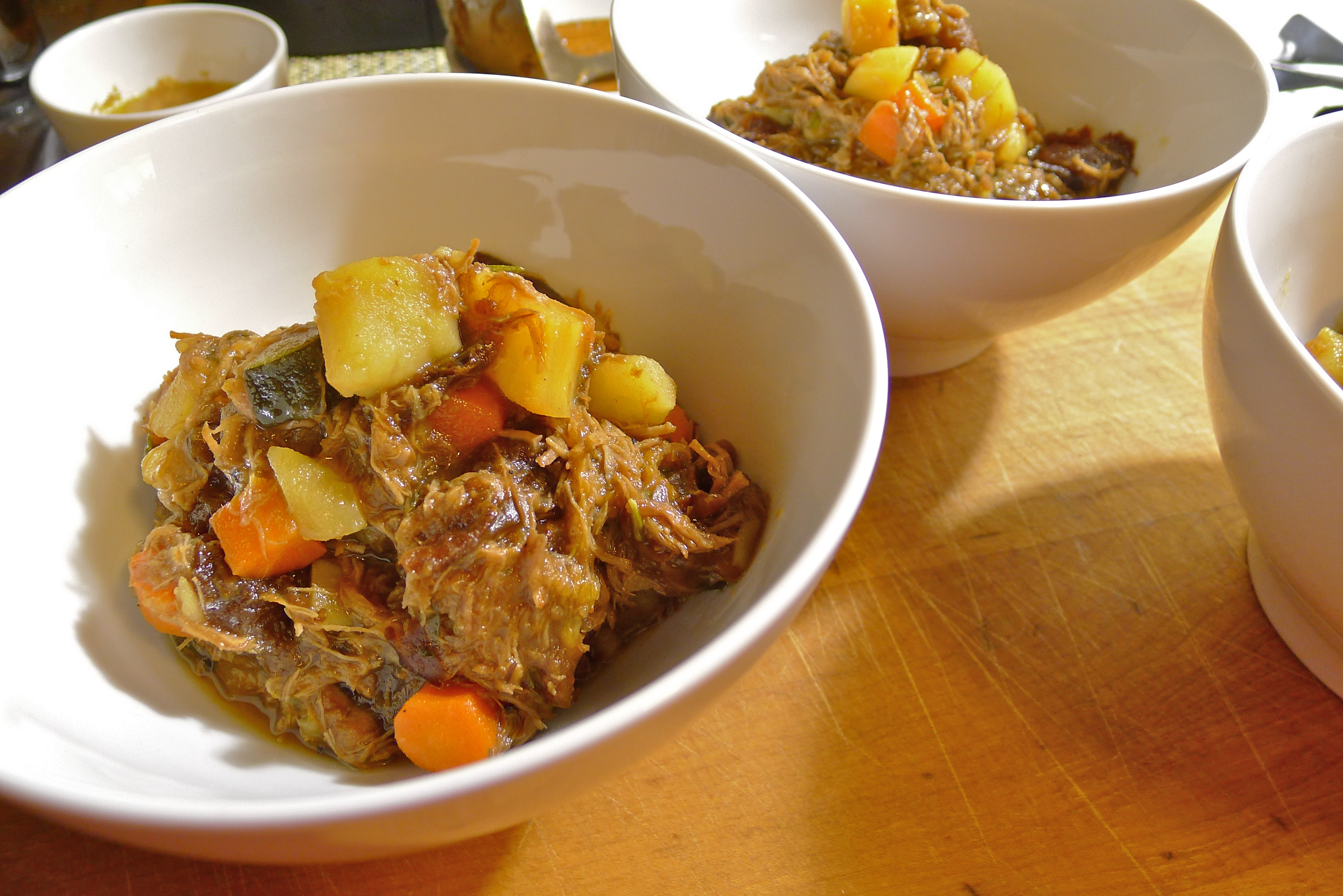
Katniss’s Favorite Lamb Stew with Dried Plums, the name says it all. But read further along to hear more about that story!

And Rum-macerated Strawberries with Prim’s Goat’s Milk Ice Cream, which was simply quartered strawberries tossed in sugar, a sprinkle of salt, and a few splashes of rum, served over goat’s milk ice cream.

It was so much fun. I can’t wait to do this for the second movie!

District 11’s Crescent Moon Rolls with Sesame Seeds

Ingredients:

2 .25-ounce packages of dry active yeast

3/4 cup of warm water (about 110°)

1/2 cup plus 2 tablespoons of white sugar

Salt

2 eggs

3/4 cup of unsalted butter at room temperature (divided into 1/2 cup and 1/4 cup)

2 cups of all-purpose flour

2 cups of whole wheat flour

For the egg wash:

1 egg

1 tablespoon of milk

2 tablespoons of sesame seeds

How to prepare:

1. Sift together the two flours into a large bowl.

2. In another large bowl, dissolve the yeast in the warm water. Using an electric mixer, add the sugar, the salt, 2 eggs, 1/2 cup of butter, and half of the flour mixture to the dissolved yeast. Beat everything together until it is smooth, about 5 minutes. Add the remaining flour mixture and beat everything together until it is smooth again.

3. Scrape the dough out onto a lightly floured surface. Using your hands, knead the dough for about ten minutes. Place the dough in a lightly oiled bowl, cover it, and let it rise in a warm place until the dough has almost doubled in size. This can take anywhere between 1 1/2 to 2 hours.

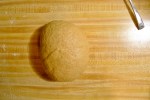
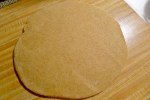
4. Line a cookie sheet with parchment paper. Punch down the dough and divide it roughly in half. Shape each half into a ball and roll each ball out into a 12-inch circle. Use a butter knife to spread half of the remaining 1/4 cup of butter evenly across the circle. Sprinkle with salt. Using a pizza cutter, cut each circle into 8 wedges. Starting at the wide end, roll each wedge up towards its point. Arrange the rolls, point-side down, about an inch apart from each other on the baking sheet. At this point, you can curve the ends inward to make more of a crescent shape. You may need to use more than one baking sheet. Cover the rolls again and let them rise until they are almost doubled, between 90 minutes to 2 hours.

5. Preheat the oven to 375°.

6. When the rolls have doubled again in size, brush them with an egg wash made from one beaten egg and a tablespoon of milk. Sprinkle each roll with sesame seeds. Bake the rolls in the over for about 12-15 minutes, or until they are golden brown.

Katniss’s Favorite Lamb Stew with Dried Plums:
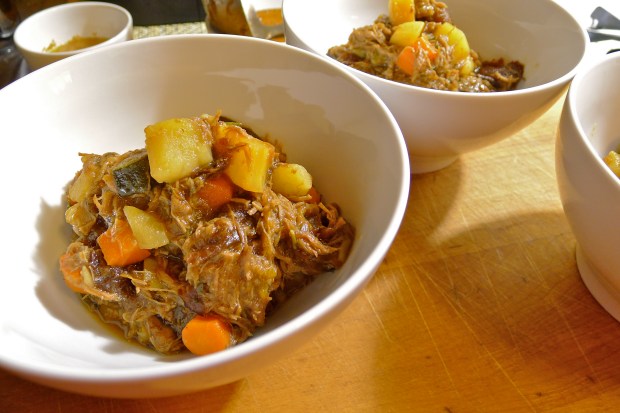
Out of all the dishes from the Capitol that Katniss eats during her training for the games, it is this stew that leaves the greatest impression on her. However, the stew kind of sounds better in concept than execution for the following reason:

If you ask for dried plums at the market, you will likely be pointed in the direction of the prunes. Because dried plums are a fancy way of saying prunes without the stigma associated to the word “prunes.”

Kind of how all bourbon is whisky, but not all whisky is bourbon, all prunes are plums, but not all plums are prunes. Prune plums are generally the plum variety that is almost always dried before eating.

And this recipe called for 5 cups of them. 5 cups of prunes.

Let us consider this for a moment:

For those of you who haven’t read the book, or are currently in the process of reading it, I apologize in advance if I give away a little bit of the story to you.

You know that when Katniss and Peeta are in the cave? When they’re starving the in the cave and they get sent a large tureen of this stew from their sponsors? I don’t know about you, but if I were Haymitch, I wouldn’t send my tributes a big pot of steaming lamb and prunes. Not a good idea.

I would send them something else, like that creamy chicken dish with oranges or some cookies. Because if the whole goal is to not get killed in the arena, I would try my best to not put my tributes in the position to literally be caught with their pants down.

Seriously. Not to be crude or anything, but I strongly think that this recipe should be renamed Katniss’s Favorite Natural Laxative with Stewed Lamb.

It was tasty, but I feel like it is my duty to warn you if you attempt this at home — especially if there are leftovers.

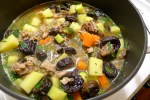
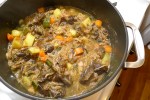
Despite halving the amounts of almost all the recipe’s ingredients (the original called for a insane 5 pounds of lamb), there was still so much stew that it completely filled up a 5-quart Dutch oven to the rim. I had to transfer the stew to an 8-quart stew pot, but even then, the pot was uncomfortably full. What would have happened if I made the recipe exactly as specified? Would I have had to have used a swimming pool?

Even after feeding myself and my friends, I was still left with unholy amounts of stew — enough to soften the stool of a small Roman army.

So if I were you, I would go ahead and halve the recipe again one step further.

Ingredients:

2 to 2 1/2 pounds of lamb stew meat

Kosher salt and freshly ground black pepper

2 tablespoons of olive oil

3 cloves of garlic, finely minced

1 large onion, chopped

1/2 of water

4 cups of beef stock

2 teaspoons of white sugar

3 teaspoons of brown sugar

3 medium carrots, peeled and cut into large dice

2 small zucchini, cut into large dice

3 Yukon Gold potatoes, peeled and cubed

5 cups of pitted prunes

2 teaspoons of fresh thyme, finely chopped

3 teaspoons of fresh rosemary, finely chopped

2 teaspoons of fresh basil, finely chopped

2 teaspoons of fresh parsley, finely chopped

1 cup of dry ginger ale

How to prepare:

1. In a large mixing bowl, generously season the lamb with salt and pepper. Toss the meat to coat it evenly with the seasoning.

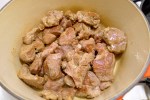
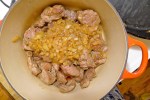
2. Heat the olive oil in a large cast-iron skillet over medium-high heat. Sear the lamb cubes on all sides, working in batches if you need to. Remove the lamb to a large stew pot or a lidded casserole.

3. Spoon off all the fat except for about a tablespoon. Add the onion to the pan. Sauté it until it just begins to turn translucent. Add the garlic and continue to sauté everything together until the onion begins to turn golden. Carefully add about 1/2 cup of water to the pan. Cook to reduce the liquid by half. As the liquid reduces, gently scrape the bottom of the pan to release and dissolve the fond. Add the garlic-onion mixture to the lamb.

4. Dissolve the two sugars in the beef stock and add it to the lamb. The liquid should cover it completely. Bring everything to a boil, then cover the pot and simmer the lamb for about an hour.

5. Add the vegetables, the prunes, the herbs, and the ginger ale to the pot. Cover the stew again and simmer it for about 30-45 minutes more. You may need to add more water or stock if the stew looks too thick. The meat should be falling apart, and the vegetables should be tender when the stew is done. Adjust the seasoning and serve.

Colcannon and Irish Bacon


I’m not really the kind of person to post Irish dishes simply because it’s Saint Patrick’s Day. In all honesty, this meal came about from searching for something to accompany the nice Irish bacon that I get from my CSA.

While idea hunting, I came across colcannon, and somewhere in the dusty outer reaches of my memory came the image of mashed potatoes and winter greens mushed together. Not quite sure where I had it first; it might have been at some random inn or, more likely, some Irish pub in Boston. In any case, it didn’t make that much of an impression on me at the time. Furthermore, I would have never considered making it if I hadn’t read this from The Country Cooking of Ireland by Colman Andrews:

“To serve [colcannon] in the traditional Irish manner, push the back of a large soup spoon down in the middle of each portion to make a crater, then put a large pat of room-temperature butter into each one to make a ‘lake.’ Diners dip each forkful of colcannon into the butter until its walls are breached.”

Holy. Crap.

If I had known that you were supposed to eat colcannon that way . . . well, let’s just say that it would have been dangerous. Dangerously delicious, I mean!

In his recipe, Andrews asks you to heat the milk together with chopped green onions, and then beat the hot infused milk into the mashed potatoes. I actually spaced out and tipped all my cold milk into the potatoes before I remembered that step. Regardless, it still tasted wonderful.

So if you think that a dipping “lake” of melted butter for your mashed potatoes and greens (which might as well be ornamental at this point) sounds as awesome as it does to me, than colcannon is definitely for you!

And once those “walls are breached,” Irish bacon tastes pretty darn good in the ensuing butter flood. Don’t forget the mustard!

Ingredients:

2 large Russet (or floury) potatoes, about 2 pounds, peeled and cut into large dice

1 cup of whole milk

6-8 tablespoons of butter at room temperature

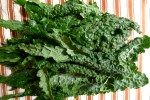
1 bunch of Lacinato kale, stemmed and cut into 1-inch pieces (you could also use curly leaf kale, savoy cabbage, or any other kind of leafy winter green)

Salt and freshly ground pepper

About a pound of Irish bacon

Coarse Dijon mustard

How to prepare:

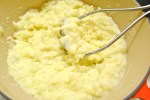
1. Place the diced potatoes in a large pot of salted water and bring everything to a boil. Reduce the heat and simmer the potatoes until they can be easily crushed against the side of the pot with the back of a wooden spoon. Drain the potatoes well. Add two tablespoons of butter and the cup of milk to the potatoes. Using a potato masher, mash the potatoes until all the potato pieces are crushed. If the mash doesn’t seem sufficiently nice and fluffy, add some more milk, a little bit at a time, until it has the right consistency. Cover the pot while you prepare the rest.

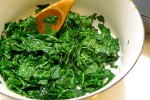
2. Melt about a tablespoon of butter in a large saucepan over medium heat. Add the cut kale and a little bit of water (about a tablespoon). Season the kale with salt and pepper. Sauté the kale until it begins to wilt. Tip the kale into the potatoes and stir everything together to combine. Adjust the seasoning.

3. Brown the Irish bacon slices on both sides in a large cast-iron skillet. Transfer the browned slices to paper towels to drain.

4. Mound a good amount of warm colcannon on each plate. Using the back of a spoon, make wells in the middle of each mound and put a hefty knob of butter in each one.

Serve your colcannon with a few slices of Irish bacon and grainy mustard on the side.

The Daring Kitchen March Cooks’ Challenge: Braised Short Ribs with Braised Root Vegetables


For last month’s Daring Kitchen Cooks’ Challenge, Lis and Audax Artifex (whose parents must be congratulated for giving him the best name on the planet) gave us a very technical challenge and dared us to make patties.

This month, Carol from Newfoundland, Canada, has given us another technical challenge: braising.

When most people consider braising, they think of tougher cuts of meat that generally have a lot of muscle or connective tissue — think lamb shanks, oxtails, short ribs, or stew beef. Braising is a very easy way to cook these economical cuts of meat, transforming them into meals that are the embodiment of pure comfort and elemental nourishment.

Braising can also be used for certain kinds of vegetables — carrots, celery and parsnips, for example — that take a long time to cook to mouthwatering tenderness.

To attain braised perfection, you really only need three things:

1. Low and steady heat
2. Liquid
3. Time.

In Carol’s challenge PDF, she gave us several recipes for ideas, including one for braised short ribs from Michael Ruhlman. Ruhlman’s recipe jazzes up short ribs with a snazzy gremolata. However, whenever I think of braised short ribs, I think of the traditional French bonne femme: pure, simple, and uncomplicated . . .

. . . which is of course why I chose a recipe from Thomas Keller‘s Ad Hoc at Home cookbook — ha ha! there goes the uncomplicated bit!

Reproduced in Food and Wine Magazine, this recipe from Keller and his brother Joseph is really quite simple. Though there seem to be like a lot of steps, they are all dead easy. The difficulty comes in just waiting to eat as your house fills with the wonderful smells of braised meat. The absolute most difficult thing is delaying gratification for a day, if you can, in order to be able to remove the fat rendered from the ribs and deepen the flavors of the braise.

I can only say that though it is hard, waiting is not impossible so long as you chant like a mantra, “It will be better tomorrow, it will be better tomorrow”!

And order a pizza 😉

A big thank you to Carol for the great challenge! I encourage everyone to take a look at her challenge PDF. She includes so many more ideas for braising (fennel, duck, pork belly and oxtail), and it is a great way to learn more about braising!

Blog-checking lines: 
The March, 2012 Daring Cooks’ Challenge was hosted by Carol, a/k/a Poisonive – and she challenged us all to learn the art of Braising! Carol focused on Michael Ruhlman’s technique and shared with us some of his expertise from his book “Ruhlman’s Twenty”.

Special equipment:

2 large Zip-loc bags

A large Dutch oven with a lid, or any enameled cast-iron casserole

(please do note though that if you do not have an enameled cast-iron pot, it is still possible to braise. Keller’s recipe calls for the short ribs to be braised in a either a large baking dish or roasting pan covered tightly with aluminum foil)

Ingredients:

4 beef short ribs (about 2 pounds)

1 bottle of full-bodied red wine like a Côtes du Rhône, minus one glass (because I drank that)

2 medium carrots, peeled and cut into 1-inch pieces

1 large leek, white and tender green parts only, roughly chopped

5 garlic cloves, minced

4 sprigs of parsley

2 sprigs of thyme

1 bay leaf

Salt and freshly ground black pepper

1/2 cup of all-purpose flour for dredging

2 tablespoons of vegetable oil

3 cups of veal stock (or one 1.5 ounce package of demi-glace + 3 cups of water)

2 tablespoons of grainy Dijon mustard

1 bunch of baby carrots, peeled

1 small turnip, peeled and cut into 1 1/2-inch pieces

2 medium parsnips, peeled and cut into 1 1/2-inch pieces

1 cup of chicken stock

2 tablespoons of butter

How to prepare:

1. In a large saucepan or Dutch oven, bring the wine to boil over medium-high heat. Remove the wine from the heat and add the vegetables, the parsley, the thyme and the bay leaf. Cover the saucepan and let the marinade cool completely.

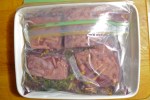
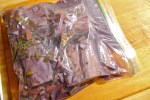
2. When the marinade has cooled, season the short ribs with salt and pepper and arrange them in a single layer in a large Zip-loc bag. You may want to double up the Zip-loc bags, just in case they leak. Pour the marinade over the ribs. Squeeze any air out of the bags and seal them. Let the ribs marinate in the refrigerator overnight, turning the bag over every once in a while to make sure that the ribs marinate evenly.

3. Preheat the oven to 300°. Remove the short ribs from the marinade. Strain the marinade, and reserve the liquid and the vegetables in separate bowls. In a large skillet, heat two tablespoons of vegetable oil until almost smoking. Dredge the ribs in flour, knocking off any excess, and add them to the skillet. Brown them over medium-high heat on all sides, about 4 minutes per side. Arrange them in a single layer in the bottom of a large Dutch oven.

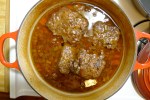
4. Spoon off all but 1 tablespoon of fat. Add the strained vegetables and cook them until they begin to brown. Add them to the short ribs. Tip the reserved liquid to the skillet and bring it to a boil. Pour the hot liquid, along with the stock, over the ribs and the vegetables. Cover the pot with its lid and bake the ribs for about 3 hours. The meat should be very tender and almost falling off the bone.

If proceeding to step 5a, leave the oven on. Turn the oven off if proceeding to step 5b.

5a. Transfer the meat to a large bowl. Skim off as much fat as you can from the surface of the cooking juices. Bring the liquid to boil over medium-high heat until it has reduced to about two cups of sauce. Whisk in two tablespoons of grainy mustard. Adjust the seasoning. Return the meat to the pot, cover, and bake for another 30 minutes.

5b. Braised short ribs are notorious having a deep layer of rendered fat floating on top of the braising liquid. If you can delay gratification for one day, let the ribs cool in their braising liquid overnight in the refrigerator. Remove and discard the layer of solidified fat from the top before preparing the ribs to be reheated. The beauty of this is that it easily allows you to get rid of all that fat. Secondly, as with all stews and braises, flavors meld together and become richer the longer the stew or the braise has to sit.

So by waiting, not only will your braise not be swimming in grease, but it will have more depth of flavor. Good things come to those who wait!

After removing the top layer of solidified fat, let the short ribs return to almost room temperature before preheating your oven to 300°. Scoop out the short ribs and transfer them to a large bowl as you finish the sauce. Set the Dutch oven with the braising liquid over medium-high heat. Reduce the liquid until you have about 2 cups of sauce. Whisk in two tablespoons of coarse mustard. Adjust the seasoning. Add the short ribs back to the sauce, cover the Dutch oven with its lid, and bake everything in the oven for about 30 minutes.

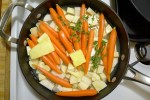
6. In the meanwhile, prepare your root vegetables. In a large deep-sided skillet, arrange the parsnips, the baby carrots and the turnips in an even layer. Add the chicken stock and the butter to the vegetables. Season with salt and pepper, and bring the liquid up to a lively simmer. Reduce the temperature to low and cover the skillet. Cook the vegetables until they are tender, about 15 minutes. Remove them from the braising liquid with a slotted spoon.

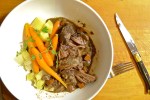
Let the short ribs cool slightly before serving them with the braised vegetables.

Cauliflower and Ham Gratin with Sourdough Rye Breadcrumbs


A few days ago at the CSA pick-up, a member came in and said, “It’s snowing! It’s snowing!”

Was it finally winter finally? By the time I got outside, the scant millimeter of snow that we got had melted and the skies were clear. And it was warming up again.

I think that the season has been toying with me, bringing week after week of warm spring-like days alternating with gusty arctic ones. For someone who likes matching my meals to the season, this has all made for some pretty schizophrenic eating. I have found myself wanting to nibble on mâche and radishes, and then wanting to bury myself under cheese and carbs the next day.

As it is currently quite chilly, I feel like I need to hurry up and cook some cold-weather food before the temps climb back up to 60°. This cauliflower gratin fits the bill quite well. It is basically a macaroni and cheese, with the cauliflower filling in for the mac — which makes it feel somewhat healthier!

Ingredients:

1 head of cauliflower, cut into small florets

1 1/2 cups of ham, diced

1 clove of garlic, lightly smashed

1 1/2 cups of aged cheese (I used an aged farmstead cheese from Snow Farm Creamery, but you could use an aged Gruyère, or another good, firm earthy cheese)

1/4 cup of flour

4 tablespoons of butter, plus 1 tablespoon

4 cups of milk

1/4 teaspoon of freshly grated nutmeg

Salt and pepper

1 cup of sourdough rye breadcrumbs (or any other bread you might have one hand: sourdough, rye, brown . . .)

How to prepare:

1. Preheat the over to 350°. Rub a large ceramic or clay baking dish with the smashed clove of garlic.

2. Combine the cauliflower florets with the ham in a large bowl.

3. In a medium-sized sauce pan, melt the 4 tablespoons of butter over medium-low heat. Once the butter has melted, stir in the flour. Cook the flour for about a two or three minutes (you want to get rid of that raw, floury taste). Once the flour has toasted a little, add the milk all at once and whisk everything together. Add the nutmeg. Raise the heat to medium, and continue to whisk the sauce as it thickens. Once the sauce has thickened, turn off the heat and stir in the cheese. Continue stirring until all the cheese has melted. Adjust the seasoning.

4. Pour the sauce over the cauliflower and the ham. Stir everything together until the cauliflower is evenly coated. Tip everything into the baking dish.

5. Melt the remaining tablespoon of butter. Toss the breadcrumbs in the melted butter, and then spread them evenly over the top of the cauliflower.

6. Bake for about 40 minutes, or until the gratin top is browned. The sides should be nice and bubbly too. Let rest for about ten minutes before serving.

Anthony Bourdain’s Mushroom Soup from the Les Halles Cookbook


I am always puzzled when I see bloggers declaim against those who try out and post recipes from other sources. It just feels kind of snobbish to me. Most, if not all food people read recipes. Food people tend to read a lot of recipes. Food people tend to own a lot of cookbooks too. A lot of food people also watch a lot of food TV.

This is not uncommon, and it strikes me as strangely inauthentic when people deny it. Furthermore, what’s so bad about it? Trying recipes from other people is a good way to learn different cooking techniques. Blogging about your experience lets others learn from you, just like you learned from them. Don’t you like the feeling that you are joining and contributing to the larger conversation? I do.

Also, there are a lot of recipes out there. What’s wrong with bringing some of those to the attention of another audience? I mean, don’t go out and plagiarize. Don’t pass off recipes that are not yours as your own. But why look down on people who properly attribute and discuss their results?

We all blog and write because we generally want to share our knowledge and experience. I personally would be thrilled if someone made and wrote about something that I posted so long as they did it respectfully — and I think that most bloggers would be pretty darn chuffed too.

Yeah, I know. I just used a British-ism.

More importantly, if you are trying your hand at writing recipes, looking at other sources is a great way to learn how to order ingredients and write directions in a way that is clear, concise, and consistent. Recipe writing is like any other kind of writing: you get better the more you do it, and the more you read.

To those who think that their recipes are completely original, well, please excuse my bluntness, but hardly any recipes are really original nowadays unless you are some molecular gastronomist making perfectly good food into weird foamy, jellied things.

Furthermore, no one I know who cooks ever sticks to any recipe as published anyway. I’ll confess: most of the time, I don’t. I’ll breezily skim the ingredients list, and cockily cook them in the order and manner that I feel works best, passing on anything that sounds untasty to me, and adding anything that I feel was an egregious omission.

How’s that for food snobbery?

For example, I remember the first time that I read this recipe from the Les Halles Cookbook. I remember poo-pooing Anthony Bourdain‘s admonition to blend carefully. I cavalierly shrugged off his archly written, “Do I have to remind you to do this in stages, with the blender’s lid firmly held down, and with the weight of your body keeping that thing from flying off and allowing boiling hot mushroom purée to erupt all over your kitchen?

Pshaw, I remember thinking. Not quite hogwash, but I had blended tons of thick soups, all at once without incident. I certainly wasn’t going to alter my MO now.

Then I remember the blender’s lid flying off — just like TV Tony said it would — and the kitchen being sprayed with hot soup and spongy bits of mushroom.

I remember having to google, “martha stewart how to clean hot mushroom soup off the ceiling.”

After cleaning everything up, I made a mental note to always read recipes straight through before cooking, and always respect any warnings the recipe writer may give.

I learned the messy way that recipe writers do not write warnings for their benefit, but ours. If Bourdain was making a point to tell me to keep a tight lock on the blender, it’s because he very likely sprayed his kitchen with mushroom soup too, cursing the other cookbook writer who failed to mention in their recipe to keep a hold on the blender lid while blending.

If you love mushrooms, this soup is not only super easy, but very, very delicious. The original recipe calls for onions, but I always prefer the ultimate combo of butter, shallots, and booze — which is one of the ways I adapted his recipe. Be sure to use a good sherry, not a cooking sherry for the soup. If you have time, you can roast a couple shitake mushrooms in the oven for garnish. I accidentally left mine in the oven for too long, ending up with mushroom chips that taste (amazingly) just like bacon. No complaints here!
I also use an immersion blender now, so no more flying blender lids for me!

Ingredients:

4 tablespoons of butter

2 shallots, thinly sliced

14-15 ounces of mixed mushrooms (you can even use all white button mushrooms if you want), cleaned, trimmed, and sliced

4 cups of chicken stock

2-3 sprigs of thyme

2 ounces of good quality sherry (I used a dry oloroso)

Special equipment:

A hand-held immersion blender

How to prepare:

1. In a large Dutch oven, melt two tablespoons of the butter with a little bit of olive oil over medium heat. Add the shallots and thyme. Keep track of how many sprigs of thyme you add so you know how many stems you need to remove before puréeing the soup. Sauté the shallots until they begin to turn translucent.

2. Add the mushrooms and the remaining 2 tablespoons of butter. Let the mixture sweat for about 6-8 minutes. The mushrooms should begin to give up most of their liquid at this point. Be careful to not let the shallots brown. Season with salt and pepper. Add the stock, and bring everything up to a boil. Reduce the temperature, and simmer the soup covered for about an hour.

3. After an hour, remove the stems of the thyme sprigs. Using an immersion blender, carefully purée the soup. Adjust the seasoning. Bring the soup back up to a simmer and mix in the sherry. You want to just simmer the soup long enough enough to cook off the alcohol in the sherry. Serve immediately with some good bread.

Home-Made Corned Beef with Buttered Cabbage and New Potatoes


The idea was first planted in my head after reading a post that SweaterMeat put up on Ugly Food Tastes Better back in November: corned beef. Fatty, salty, flavorful corned beef. Yum.

But then came the holidays and that thought got buried under a bunch of other food thoughts: pumpkin pie, bourbon pecan pie, rice congee with leftover roasted turkey, glazed ham, ham fried rice, almond cookies.

Then Jen over at Fresh and Fabulous put up her post about corned beef, and I thought, “Well, now I really got to get me some of that.”

The problem was that I didn’t have any corned beef . . . yet. I did have brisket from my CSA, and as Jen reminded me, corned beef is essentially brisket that has been brined with different spices. There is no corn in corned beef. The “corn” in question refers to the large crystals of salt that used to be rubbed into the meat to cure and preserve it for long voyages at sea.

Brining has pretty much replaced salt curing for making corned beef — which brings us back to Jen’s post in which she adapts Tyler Florence’s recipe for brining brisket. That recipe was very similar to the one I ended up adapting from Saveur, but the one in Saveur includes one other curious ingredient: pink salt.

Pink salt, as I found out in a panic as you will soon read, is not Himalayan Pink Salt. Himalayan Pink Salt is a very pretty finishing salt. Pink salt is also known as Prague Powder #1, and it is a combo of table salt + sodium nitrite.

It is dyed pink so you won’t mistake it for regular table salt and accidentally kill yourself.

Because sodium nitrite in not-so-large quantities is poisonous. But it also inhibits bacterial growth and botulism, making it a common food additive along with sodium nitrate.

I didn’t know any of this when I decided to brine my brisket for 5 days (most recipes that I have seen put brining time anywhere between a relatively safe 6 hours to 14 scary-sounding days — with 5-10 days being the most common).

Once, I accidentally over-brined a turkey and was left with a pretty toxic carcass whose smell was described to me as something that we have evolved to recognize as hazardous to our health.

So admittedly, I freaked out. Oh my gosh, I thought, I am going to eat this beef petri dish and die of botulism. Or listeria.

I googled everything: was it okay to brine brisket for 5+ days without the pink salt? Shouldn’t the salt solution inhibit bacteria growth without the sodium nitrite? Sodium nitrite is pretty nasty, did I really want to cook with it anyway? Was I going to die? Did the Pilgrims have sodium nitrite? Oh crap, tons of them died!

(from my neurotic ramblings, can you tell I live in New York?)

In the end, I put my trust in Michael Ruhlman (when in doubt . . .), who assured me that even though my brisket would probably not be pinky-pink, I certainly wasn’t going to die from botulism or listeria. Besides, Ruhlman said, any excessive bacterial growth would essentially be rendered harmless from prolonged exposure to heat, ie. cooking anyway.

And he was right. I didn’t die, Sharon didn’t die, and the corned beef was really, really good.

Ingredients:

1 2-2.5 pound beef brisket, trimmed of any excess fat

1 1/2 teaspoons of whole allspice berries

1 1/2 teaspoons of whole cloves

1 1/2 teaspoons of whole coriander seeds

1 1/2 teaspoons of crushed red pepper flakes

1 1/2 teaspoons of whole mustard seeds

1 1/2 teaspoons of whole black peppercorns

3/4 cup of kosher salt

2 tablespoons of Himalayan Pink Salt (very optional, see above post)

1/2 cup of sugar

2 cloves of garlic

1 small onion, peeled and cut into large pieces

1 small head of Savoy cabbage, cored and shredded

2 tablespoons of butter

The juice from one lemon

Salt and pepper

1 lb of small potatoes, peeled

How to prepare:

1. Combine all the spices in a small skillet. Toast them over medium heat until they are fragrant. Be sure to swirl the pan constantly so that the spices do not burn. Transfer about 3/4 of the mixture to a 2-quart saucepan. Keep the remaining toasted spices in a tightly sealed jar in the refrigerator.

2. To the spices in the saucepan, add 4 cups of water, the salt, and the sugar. Bring everything up to simmer. Turn off the heat, and let the brine cool to the point that you can put it in the fridge to chill overnight.

3. In the morning, double up two gallon-sized Zip-loc bags. Position the trimmed brisket in the inner bag, and add all the brine. Squeeze out as much air as you can. Seal both bags. Arrange the bagged brisket in a large dish and refrigerate it for 5 days, turning it over every other day.

4. On the last day of brining, remove the brisket and rinse it off well. Put it in a large Dutch oven with the remaining toasted spices, the cut-up onion, and the garlic cloves. Cover the brisket with water and simmer it until it is tender. I only simmered mine for an hour, but really I could have cooked it for much longer. When the brisket is nice and tender, remove it to a plate and cover it with foil.

5. In the meanwhile, boil the peeled potatoes in a pot of salted water until they are easily pierced with a knife. Drain them and set them aside.

6. Put the cabbage in a large pot set over medium heat. Add the lemon juice, about 1/2 a cup of water, and 2 tablespoons of butter to the cabbage. Cover the pot and cook the cabbage, stirring every now and then, until it is tender. This should take about 30 minutes. Adjust the seasoning.

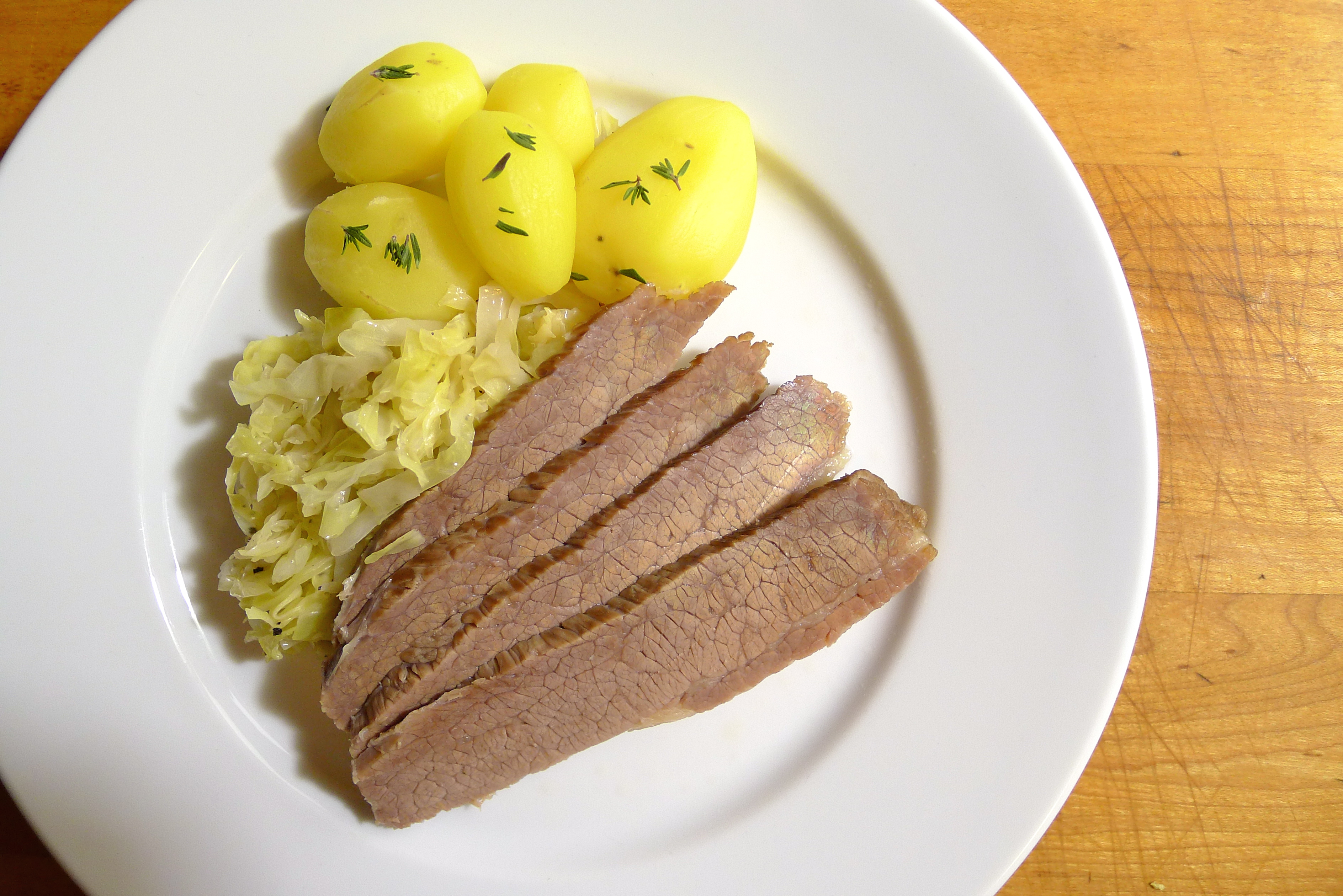
7. To serve, cut the corned beef into thin slices across the grain. Serve the slices warm, with a few potatoes and some of the cabbage. And as Jen points out, any leftovers make terrific corned beef hash!

Warm Wilted Kale Salad with Red Quinoa and Candied Delicata Squash


In Britain, there is a variety of kale called “Hungry Gap,” named after that period at the end of winter and in the beginning spring when there is little in the way of fresh produce.

Here in the Northeast, we are in the Hungry Gap, but sadly there is no local kale yet. When one begins to tire of tubers, squash and bulbs, sometimes you just have to bite the bullet and buy other things, even if they come from far away.

As leafy greens go, kale is fairly hearty. It can hold up to heat — both in terms of temperature and strong flavors. Kale is a great addition to winter salads, providing a bright and cleanly bitter counterpoint to warmed grains and roasted squashes.

Ingredients:

1 delicata squash, seeded and cut into small dice

1/4 cup of packed brown sugar

2 tablespoons of balsamic vinegar

Olive oil

Salt and pepper

1/3 cup of pumpkin seeds, shelled

1 large bunch of lacinato kale, ribs removed and leaves cut into 1-inch pieces

1 cup of red quinoa, uncooked

The juice and zest of one lemon

2 tablespoons of pumpkin seed oil (or olive oil)

Freshly grated Parmesan

How to prepare:

1. Preheat the oven to 425°.

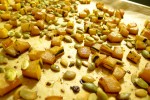
2. In a medium-sized bowl, combine the brown sugar, the balsamic vinegar and the delicata squash. Drizzle it with olive oil, sprinkle it with salt, and toss everything together until the squash is evenly coated with the balsamic-olive-oil-sugar mixture. Spread the squash out in a single layer on a parchment paper-lined cookie sheet. Roast it until it just begins to soften and the edges begin to caramelize, about 15-17 minutes. Spread the pumpkin seeds over the top of the squash, and continue to roast everything for about 2-3 minutes more. When the pumpkin seeds are nicely toasted, transfer everything to a large bowl.

3. Rinse the quinoa if needed. In a separate saucepan, combine the quinoa with about two cups of water and a hefty pinch of salt. Bring everything to a boil, and then reduce the heat. Simmer the quinoa over low heat until all the water is absorbed, and the quinoa is tender. Fluff it with a fork when it is done.

4. In the meanwhile, wilt (or steam) the kale in a separate pan. When the kale is wilted, remove it to a colander. Once the kale is cool enough to handle, gently press as much liquid as you can out of the leaves without squeezing them.

5. Add the kale and the quinoa to the candied squash. Toss the salad together with two tablespoons of pumpkin seed oil and the juice and zest of one lemon. Adjust the seasoning. Before serving, grate a nice fluffy mound of Parmesan cheese on top.

Dean & Deluca’s Middle Eastern Red Lentil Soup with Yogurt and Lemon


Lentil soups are great this time of year when the season is lean, and fresh local produce consists mostly of tubers and squash. Lentils are extremely economical. Added bonuses: they cook up quickly, and have a wholesome, delicious nuttiness.

This soup is adapted from one in the Dean and Deluca Cookbook. If you keep the spices and lentils on hand, you can quickly pull it together after school or work.

Start to finish, the soup should take you about 30 minutes to make.

Actually, it will take you about 20 minutes (I added an extra 10 minutes for you to enjoy a glass of wine).

Ingredients:

1 tablespoon of olive oil

1 tablespoon of butter

1 medium onion, finely chopped

1 1/2 teaspoons of ground coriander

1 1/2 teaspoons of ground cumin

1/2 teaspoon of ground ginger

1/2 teaspoon of mustard powder

9 ounces of red lentils

4 cups of chicken or vegetable stock + 1 cup of water

The juice and the zest of one lemon

1 cup of whole milk Greek yogurt, divided

1/4 cup of fresh parsley, chopped

Aleppo pepper for garnish (you can also use sweet paprika as a substitution)

How to prepare:

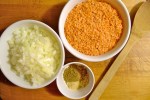
1. In a large Dutch oven, melt together the butter and the olive oil over medium heat. Add the onion and cook it until it begins to turn translucent. Add the spices to the onions, stirring frequently to make sure that the spices toast, but do not burn. Continue to cook the onion until it begins to turn golden.

2. Toss the lentils with the onions and the spices. Add the stock, the extra cup of water, and a heavy pinch of salt. Bring everything to a boil, and then reduce the heat to a simmer. Simmer the lentils until they are tender, about 15 to 20 minutes. Once the lentils are tender, add the lemon zest and half of the yogurt to the soup. Continue to simmer everything together until the consistency is nice and smooth. Adjust the seasoning.

3. In a small bowl, combine the remaining yogurt with the lemon juice and the parsley. Stir everything together until the consistency is smooth and silky.

4. Ladle the soup into bowls. Top each serving with a swirl of the yogurt mixture and a sprinkle of Aleppo pepper.

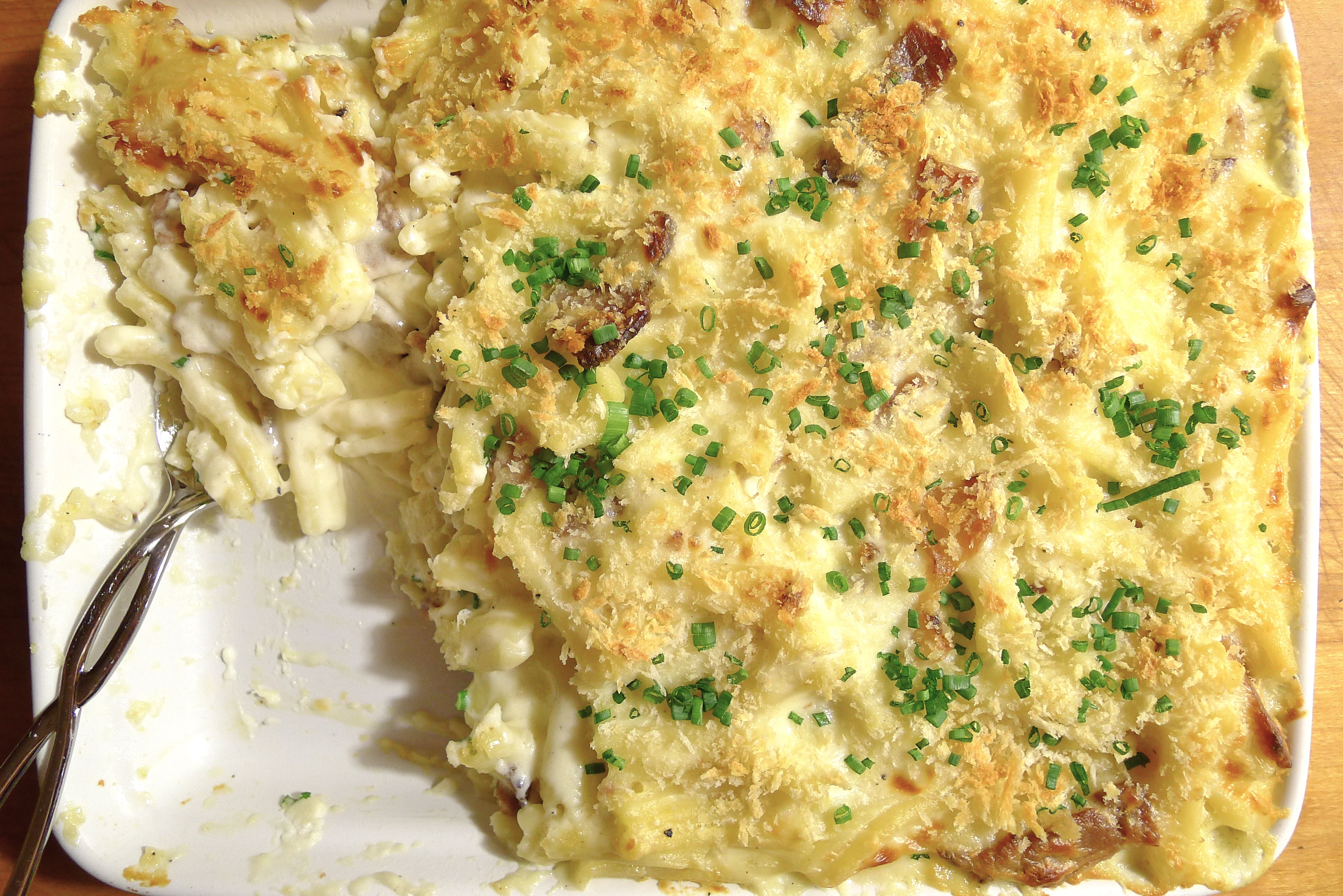
Horseradish Cheddar and Irish Bacon Mac & Cheese


Already I can see that the beginning of the new year is going to be a tug-of-war between the wanting-to-detox me, and the part of me that thinks that butter and cheese are inalienable rights to be defended Minutemen-style with muskets and bayonets.

I know that I swore to lighten things up after the holidays, but after about a day of that, I was starving. And when you’re starving, you need carbs. You need fat. You ideally need carbs and fat baked together with bacon.

I suppose that if you wanted to make this slightly healthier, you could substitute whole wheat pasta for the regular pasta, but I have never been the biggest fan of whole wheat pasta. Maybe it’s a texture thing.

I used the horseradish cheddar cheese (what was left of it after New Year’s), and the Irish bacon from my farmer to pull this together. Two, count ’em, two CSA products in one dish! Whoo hoo!

Ingredients:

1 pound of pasta (I used casarecce)

1/2 pound of Irish or Canadian bacon, cut into 1/2-inch strips

6.5 ounces of horseradish cheddar cheese, coarsely grated

4 tablespoons of butter, plus one tablespoon

1/4 cup of flour

1 quart of whole milk

Salt and pepper

About 1/2 cup of panko, or breadcrumbs

Fresh chives

How to prepare:

1. Preheat the oven to 350°. Bring a large pot of salted water to boil. Add the pasta and cook it until it is slightly under al dente. Drain it, and set it aside as you prepare the rest of the dish.

2. While the pasta is cooking, brown the Irish bacon in a large skillet. As Irish bacon is leaner than regular bacon, it will not be as crispy when cooked. Once the strips are browned and most the fat has rendered, transfer the bacon to a paper towel-lined plate to drain.

3. In a medium-sized sauce pan, melt 4 tablespoons of butter over medium-low heat. Once the butter has melted, stir in the flour. Cook the flour for about a minute or two (you want to get rid of that raw, floury taste). Once the flour has toasted a little, add the milk all at once and whisk everything together. Raise the heat to medium, and continue to whisk the sauce occasionally as it thickens.

4. Once the sauce has thickened, turn off the heat and stir in the cheese. Continue stirring until all the cheese has melted. Adjust the seasoning.

5. In a large bowl, combine the pasta, the bacon, and the cheese sauce. Spoon the mixture into a large buttered baking dish.

6. In a small sauce pan, melt the remaining tablespoon of butter over low heat. Toss the panko or breadcrumbs in the butter, and then spread them evenly over the top of the pasta. Bake the mac & cheese for about 30 minutes. The top should be golden brown, and the cheese sauce should be bubbly. If the cheese sauce is bubbling, but the top has yet to brown, you can pop the dish under the broiler for a minute or two to toast the breadcrumbs.

Let the dish rest for about 10 to 15 minutes before topping it with freshly snipped chives and serving.