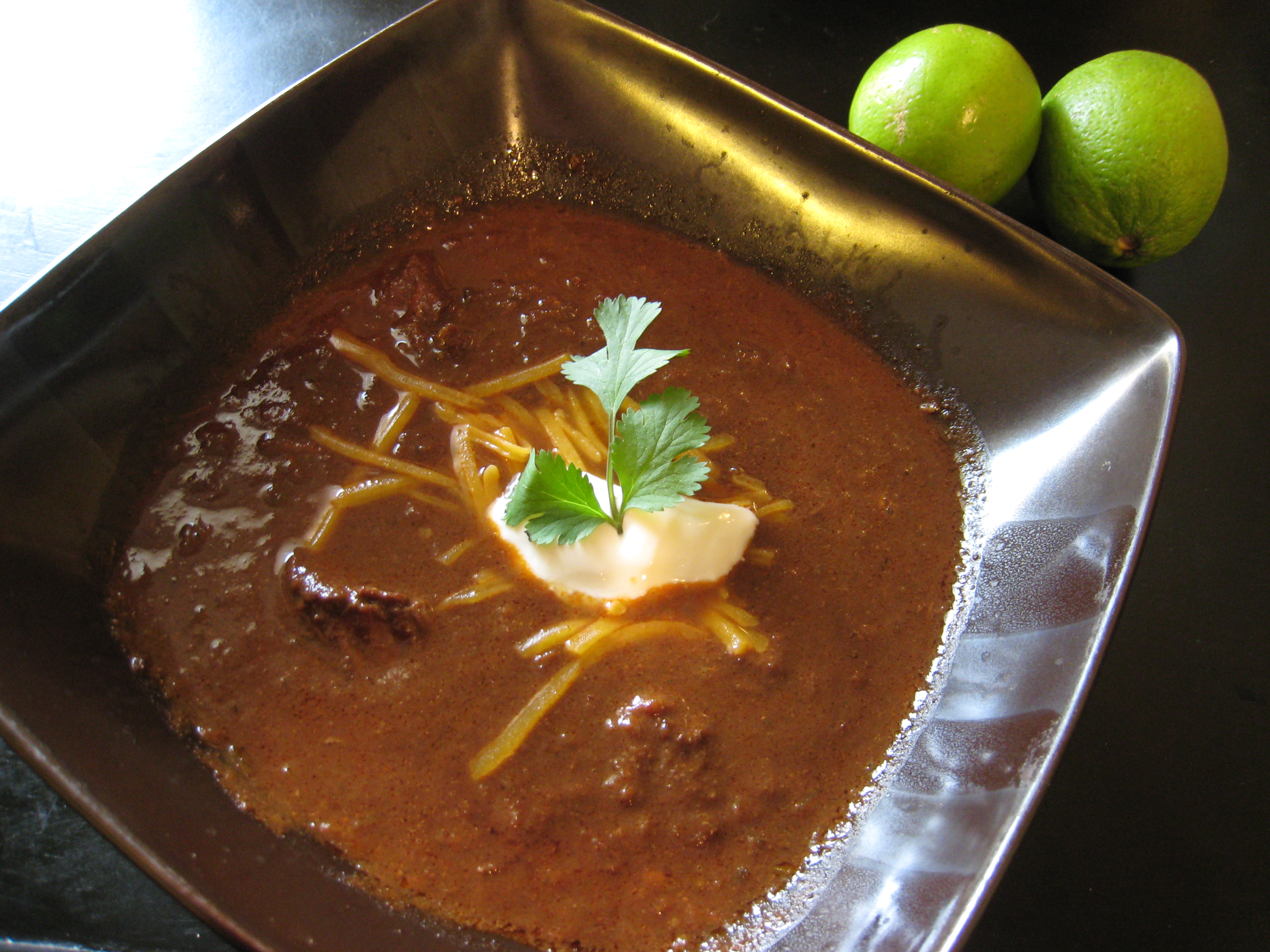
Super Bowl of Chocolate Chili Con Carne

A few years ago I read Amy Sutherland’s terrific book Cookoff: Recipe Fever in America. In it, she she follows groups of amateur chefs across the country as they compete in national cooking competitions. Two of the competitions featured in the book are the the big chili cookoffs in Terlingua, Texas: the larger Terlingua International Chili Championship run by the Chili Appreciation Society International, and the smaller, rowdier Original Terlingua International Frank X. Tolbert-Wick Fowler “Behind the Store” Championship Chili Cook-Off.

One day, when I work up the balls and enough chest hair to do so, I would love to fly into Midland and check out the competitions. Sutherland reports them to be macho, testosterone-driven affairs, full of “nudity and carrying-on — like Spring Break only in the high desert.” She is warned by others to not assume that the little old ladies there are grandmotherly (they drink Jägermeister, a lot of it, and will drink you into your grave). People paint their Coleman stoves with images of men “running out from an outhouse with flames shooting out of their behinds.” There are wet tee-shirt contests and lots of trash talk.

Maybe they’ve cleaned up a little bit since Sutherland’s book was published, but I was still about to find these and these on the web without difficulty.

The most important thing to know about chili is that there are rules. Strict, no-funny-business at all, rules.

“In competitive chili,” Sutherland writes, “There is only one bowl of red — meaning cubed meat and absolutely no beans — and you’d better not screw with it.”

Ever since reading about these desert chili-heads, I have been dreaming of coming up with the ultimate recipe for the perfect bowl of red. My recipe is derived from fancy-panted Napa chef Michael Chiarello’s recipe, which means that from the get-go, there is a fair bit of “funny business.”

But it’s effing delicious.

I’ve played with the recipe for several years now and have managed to come up with a version that I adore that also feeds a hungry army of football fans sans légumes.

‘Cause if you know beans about chili, you know chili ain’t got no beans!

Ingredients:

6 pounds of beef chuck or sirloin, cubed

Freshly ground black pepper

Kosher salt

1 teaspoon of ground cinnamon, plus 2 teaspoons

2 teaspoons of ground cumin, plus 4 teaspoons

4 tablespoons of chili con carne seasoning blend, plus 4 heaping tablespoons

Masa harina

Grape seed oil

8 large red onions, minced

12 cloves of garlic, minced

8 jalapeño peppers, sliced thin with seeds and stems removed

6 ounces of tomato paste

4 teaspoons of dried oregano

1 (12-ounce) bottle of beer (ideally lager)

1 (12-ounce) can of fire roasted diced tomato in juices

2 quarts of chicken stock, divided

4.5 ounces of bittersweet chocolate, chopped

How to prepare:

1. Place the meat in a large bowl. Season liberally with salt and pepper. Add 1 teaspoon of the cinnamon, 2 teaspoons of the cumin, and 4 tablespoons of the chili seasoning powder, and 2 heaping tablespoons of masa harina. Mix well with your hands, making sure that all the meat is evenly coated with the spice/corn flour mixture.

2. Preheat a very large cast-iron Dutch oven on the stove over medium heat.* Add enough grapeseed oil to coat the bottom of the pan. Heat the oil until it is almost smoking. Add the coated meat, spreading it out evenly so that it covers the bottom in a single layer. Do not overcrowd the pan — you want the meat to develop a nice crust. When one side is nicely seared, turn each piece with tongs. Once all the sides are seared, remove the meat from the pan let it rest. You will probably need to sear the meat in batches, adding more oil if the pan starts to get dry. Leave the oil and juices in the Dutch oven to sauté the vegetables.

2. When the last batch of meat is done, add the onions and garlic quickly to the pan and sauté for 10 minutes over medium heat (this way, the nice crusty bits on the bottom of the pan don’t get the chance to burn). As they start to caramelize and get soft, scrape up the tasty brown bits stuck to the bottom of the pan. Add the jalapenos and cook for 4 more minutes until they are soft. Add the remaining 4 teaspoons of the cumin, 2 teaspoons of the cinnamon, the oregano, 4 heaping tablespoons of the chili powder, and the tomato paste. Stir to mix everything up evenly and sizzle the tomato paste a little. Stir in the diced tomatoes, beer, and 1 quart of chicken stock. Add the reserved meat and accumulated juices.

3. Bring the pot to a boil and then lower the heat to a slow simmer. You will need to cook everything until the meat is wonderfully tender, about four hours depending on how big your chunks of meat are. Periodically skim the top of the chili. As it thickens, add the remaining quart of chicken stock, a little bit at a time, to keep the liquid level and the consistency consistent. Once the meat is tender, add the chunks of bittersweet chocolate.* Stir until it all melts.

4. Serve topped with sour cream, cheese, and sprigs of cilantro or chopped green onions.

Notes:

• If you’re not making you own chili spice blend, make sure you buy one from a good spice supplier. Sometimes chili powder that you buy in a store is exactly that: one kind of chili, powdered. For this recipe, you want a spice blend. I like one that has some ancho chile in it. Penzey’s blends are wonderful, but for a little bit of real Terlingua, order online from Pendery’s.

• If need be, you can sear the meat in a large skillet, sauté the onions and garlic in it, and then transfer everything to a much larger pot before you add the liquids.

• I used a nice big chunk of Callebaut Bitterweet Belgian Chocolate. See? Lots of funny business here.

• My great friend, Gideon, brought over a bottle of Ghost Pepper Hot Sauce made from bhut jolokia, the hottest pepper in the world. It’s hot. Really, really hot. He put just a touch from the end of a skewer into my big bowl, and that was enough for me. If you are fan of lots of heat, I strongly recommend you give it a try. It adds a terrific, smoky dimension to this chili.

Minute Steak Sandwiches with Caramelized Onions and Smoked Mozzerella


Minute steak (also known as cube steak) is a thin cut of steak that has been pounded or scored by either a mallet or an electric tenderizer. It cooks pretty quickly (hence the name), and only requires about 1 1/2 to 2 minutes per side to be medium rare.

This sandwich is another terrific suggestion from Tina at High Point Farms! It’s very tasty, very yummy, and very satisfying.

Ingredients:

4 submarine or hoagie rolls

2 medium yellow onions, thinly sliced

3 tablespoons of butter, plus one tablespoon

1 tablespoon of olive oil

2 minute steaks

Salt and pepper

8 ounces of smoked mozzerella, thinly sliced

Dijon mustard

How to prepare:

1. Pat the minute steaks dry with paper towels and generously season both sides with salt and pepper.

2. In a large cast-iron pan, melt 3 tablespoons of butter with the olive oil over medium heat. When the butter starts to foam, add the onions. Sauté the onions until they are soft and caramelized, about 10 minutes. Adjust the seasoning. Remove the onions from the pan and set them aside.

3. Add the steaks to the same pan. There should be enough oil/butter left in the pan, but if not, add a little bit more and wait for it come up to temperature before cooking the steaks. Cook the steaks for about 1 1/2 – 2 minutes per side for medium-rare. Remove the steaks to a plate and let them rest while you toast the bread.

4. Split the submarine rolls and butter each half with the remaining tablespoon of butter. Toast them butter-side up under the broiler until they are golden brown.

5. Slice the minute steaks against the grain into 1/2 inch-wide strips. Divide the onions, steak, and sliced mozzerella into 4 even portions. To assemble, smear the cut-side of each half with Dijon mustard. Arrange the bottom halves of each roll in a single layer on a cookie-sheet. Mound the steak on top of the caramelized onions, and cover everything with slices of smoked mozzerella. Slide the bottom halves under the broiler and cook until the cheese is melted and bubbling. Top with the top-half of the roll and serve immediately.

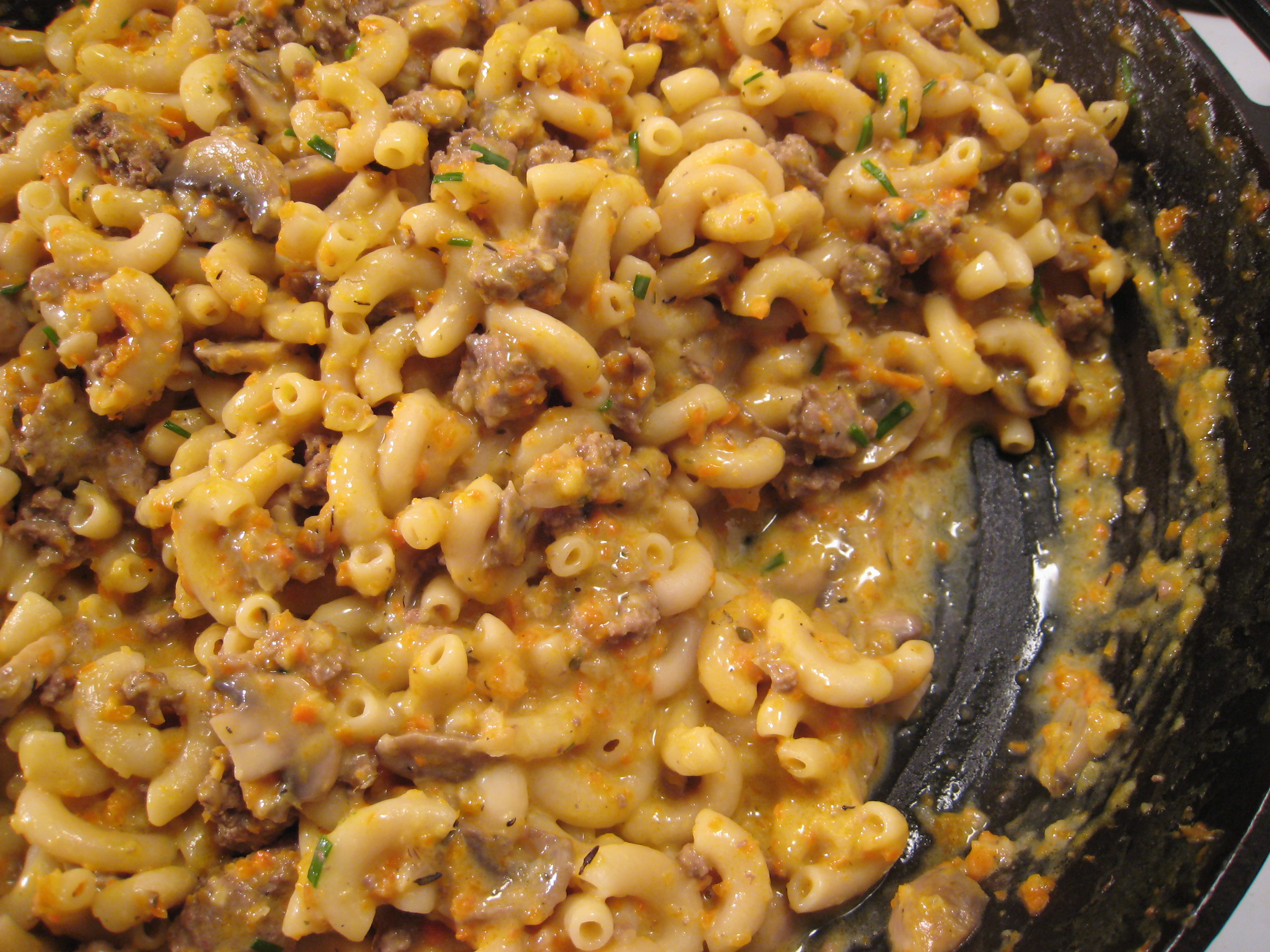
Homemade Hamburger Helper, Cheeseburger Macaroni


Feeding my brothers and myself must have been a challenge for my mother. Raised in Hong Kong, she grew up with a keen taste for fried dace and chicken feet — something that she failed to pass on to her Americanized kids. Consequently, she found convenience foods to be, well, really convenient!

One of those was Hamburger Helper. You remember it: the prepackaged sodium-bomb, like macaroni and powdered cheese mix but with meat that you had to add. When I started cooking for myself, it was foods like this that I rebelled against, forsaking as well store-bought salad dressings and mayonnaise in favor of making them from scratch like a good little French bonne femme.

Over time, I’ve found that hard feelings against certain foods does soften, and when contemplating what to do with a lone pound of CSA ground beef, I decided to recreate that fresh-from-the-box flavor without the box.

This recipe is a variation on one that appeared on Eating Well’s site called “Hamburger Buddy.” Clearly, that recipe was designed to surreptitiously feed fussy children vegetables by processing their suggested daily servings into indistinguishable purée.

While this might fool kids, it did not fool my boyfriend (“What is this? CARROTS?!).

I actually didn’t mind the carrots, but as adults feeding adults, I don’t think that you need to be so sneaky. Upon reflection, the dish would probably taste closer to the “real” thing if the carrots were omitted. It is quite tasty nevertheless. Betty Crocker be damned!

Ingredients:

3 cloves of garlic, peeled

2 medium carrots, cut into 2-inch pieces (optional, see post above)

10 ounces of white mushrooms, sliced

1 large onion, cut into 2-inch pieces

1 pound of very lean ground beef

2 teaspoons of dried thyme

Salt and freshly ground pepper to taste

1 1/2 cups of water

2 cups of chicken stock

8 ounces of elbow macaroni

2 tablespoons of Worcestershire sauce

8 ounces of sour cream

1 cup of shredded sharp Cheddar cheese

1 tablespoon chopped fresh parsley or chives

How to prepare:

1. Fit a food processor with the steel blade attachment. With the motor running, drop in the garlic cloves through the feed tube and process until minced. Add the carrots to the minced garlic and process until finely chopped. Add the onion and pulse until it is roughly chopped.

2. Cook the beef in a large straight-sided skillet or Dutch oven over medium-high heat, breaking it up with a wooden spoon until it is no longer pink. This should take about 3 to 5 minutes. Stir in the mushrooms, chopped vegetables, and thyme. Stirring often, cook until the vegetables begin to soften and the mushrooms release their juices, about 5 to 7 minutes.

3. Stir in the water, chicken stock, macaroni and Worcestershire sauce. Bring everything to a boil. Reduce heat to medium and continue to cook, stirring occasionally, until the pasta is tender, about 8 to 10 minutes.

4. Stir in the sour cream and the shredded cheese. Adjust seasoning. Simmer, stirring often, until the sauce has thickened, about 2 minutes. Toss in the parsley or chives right before serving, stirring in order to distribute the fresh herbs evenly throughout the pasta.

New Amsterdam Market Update: Grass-Fed Beef Sliders with Pickled Onions and Ronnybrook Horseradish Crème Fraîche

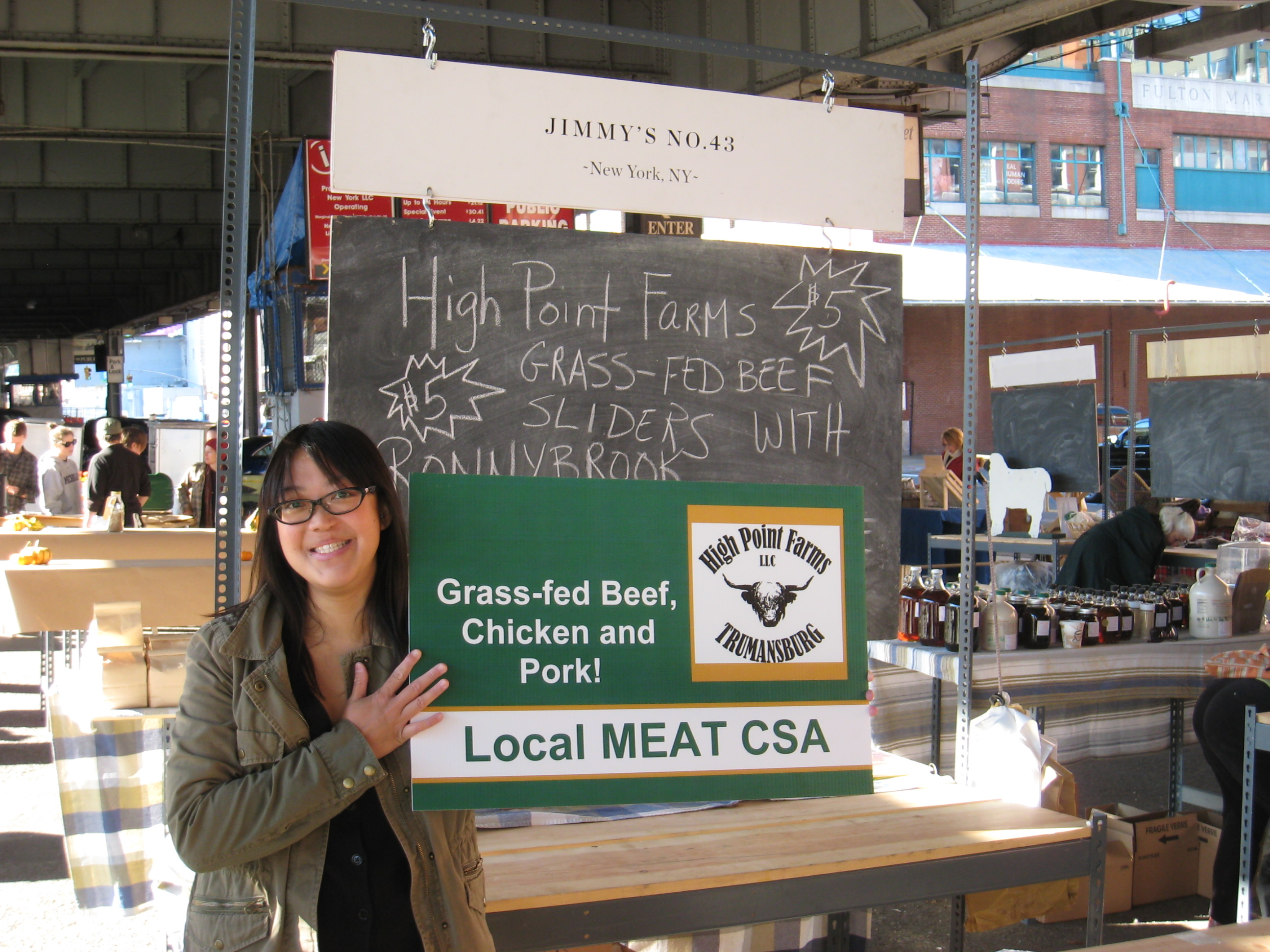
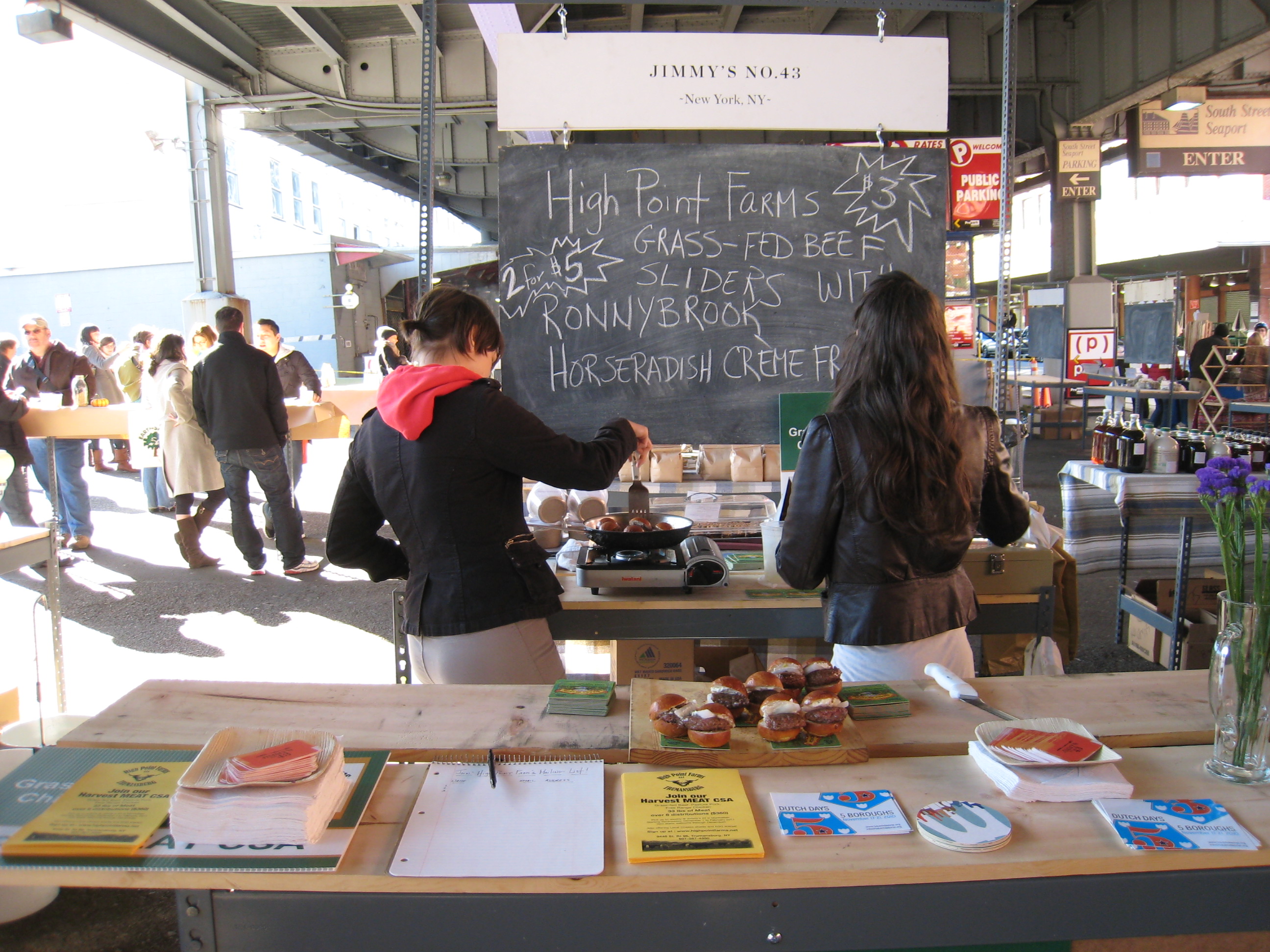
A great day at the New Amsterdam Market yesterday as Alexis and Amanda from Jimmy’s 43 slung sliders and I talked up High Point Farms upcoming Harvest CSA!

Thanks to everyone who made it out and dropped by to say “hi”! It was great to see you all and give you a chance to try some amazing meat.

The sliders were super easy to put together, but unfortunately I don’t have the recipes for either the onions or the horseradish crème fraîche. If you end up giving it a go, please do let me know how it turns out!

New Amsterdam Market Event: Join a Meat CSA this weekend and eat better!

Photo courtesy of High Point Farms.

With all the news lately about salmonella in eggs, turkey recalls, and the adverse effects of antibiotics in meat, consciousness about what we put in our bodies and how we treat the environment is growing. Vegetarianism is always one option, but another way to ensure that you are responsibly feeding you and your loved ones the safest and best food that you can is to join a local meat CSA.

CSA stands for Community Supported Agriculture. Far from the Midwestern industrial farms and feedlots that supply most East Coast supermarkets, CSA’s grow our local economy. They improve the quality of our food supply while also supporting the environmentally-friendly practices, sustainability, and humane animal husbandry.

As many of you know, I joined with my first CSA last spring. A CSA was something that I had always wanted to do, but was always hesitant because I had only heard of vegetable CSA’s. Also, I wasn’t sure if signing up for several pounds of perishable leafy greens a week would work with my schedule and lifestyle. When I heard about High Point Farm’s meat CSA, immediately I knew that this was something that would work with me. It has been a great experience, and the meat is so good and so addictive that I had to get more involved to spread the word!

Each CSA membership to High Point Farms, in Trumansburg, NY, gives you the opportunity to join the food revolution and voice your support for local agriculture and humanely-raised animals. Shares of their Harvest Meat CSA Memberships are still available.

Each share is a mix of Beef, Pastured Pork, and Free-Range Chicken.  The cows graze on grass in the summer, hay in the winter, and are not fed any grain. The pigs are pasture-raised, and the chickens freely roam the farm, feeding on bugs and whatever else nature provides. All animals raised in humane manner, without the use of any growth hormones or antibiotics. Owners Tina and Robert MacCheyne lovingly care for all of their animals. You can taste their efforts in every delicious bite.

Choose to be a part of the Manhattan, East Village distribution starting in December through February 2011. The distributions are every other Wednesday at Jimmy’s 43 on 7th Street.

High Point is also offering cheese shares from a neighboring farm, and an egg share from their own pasture-raised chickens. The eggs are a dream! The yolks are almost cartoonishly yellow, such a rich flavor and color that I find it really hard to go back to supermarket eggs.

For more information go to the CSA Page at www.highpointfarms.net or http://highpointfarmsnyc.wordpress.com/

This weekend, I’m going to be at the New Amsterdam Market, volunteering to talk up the CSA and give you the chance to have some awesome sliders made with their meat. Come and say, “hi,” on November 21st! I’ll be at the Jimmy’s 43 stand (they’re cooking, I’m talking) from 11AM to 4PM. See you there!

Spaghetti and Meatballs


In general, the restaurants that are nearest and dearest to my heart are the one’s that are the least complicated. Just straightforward, quality food. Beautifully sourced and expertly prepared. No foams, no fuss.

For this reason, I have always been a big fan of Frankies Spuntino. In the years since opening their doors — first in Carroll Gardens and then on Clinton Street — Frank Falcinelli and Frank Castronov’s food has never failed to put a big smile on my face. This is good, solid, tasty cooking at its best.

In June, the gastronomic duo released their first cookbook, The Frankies Spuntino Kitchen Companion & Cooking Manual. It’s a beautiful tome to own, filled with charming fine-line drawings and direct prose. Like their food, it is exceptionally accessible.

This meatball recipe is mostly theirs, though the basic tomato sauce is my own. While making them at home, I forgot to add the eggs, but did not find that the flavor suffered. Maybe my meatballs were a little springier as a result. If I had to do it again, I think that I would do something to make the raisins and the pine nuts not so obtrusive by either substituting golden raisins for dark. Even better still, I think I would use currants. The pine nuts I might think about coarsely chopping too.

Ingredients:

2 slices white bread (about 1 packed cup’s worth)

1 pounds lean ground beef (from High Point Farms if you have it!)

2 finely minced cloves garlic

1/4 cup finely chopped flat-leaf parsley

1/4 cup grated Pecorino Romano, plus about 1 cup for serving

1/4 cup raisins

1/4 cup pine nuts

1 1/2 teaspoons fine sea salt

7 turns white pepper

1/2 cup Panko bread crumbs

Basic tomato sauce

Spaghetti

How to prepare:

1. Heat the oven to 325°F. Put the fresh bread in a bowl, cover it with water, and let it soak for a minute or so. Pour off the water and squeeze the excess out the bread as best as you can. Tear it into tiny pieces.

2. In a mixing bowl, combine the bread with all the remaining ingredients except the tomato sauce and the spaghetti. The mixture should be moist-wet, not sloppy-wet. If the mixture is too moist, you can adjust it by adding more Panko.

3. Gently shape the meat mixture into handball-sized balls. Space them evenly on a baking sheet or arrange them evenly in a large cast-iron pan. Bake for 25 to 30 minutes. The meatballs will be firm, but still juicy and gently yielding when they’re cooked through.

4. Meanwhile, reheat the tomato sauce in a deep-sided pan that is large enough to accommodate the meatballs and sauce comfortably.

5. Put the meatballs into the pan of sauce and turn the heat up a little. Simmer the meatballs for no more than half an hour so they can soak up some sauce. Any longer that 30 minutes, and they start to disintegrate.

6. Meanwhile, prepare the spaghetti according to directions.

7. Top each serving of spaghetti with 3-4 meatballs and a healthy helping of the sauce. Shower the bowl with the freshly-grated Pecorino and a little finely chopped parsley. Serve immediately.

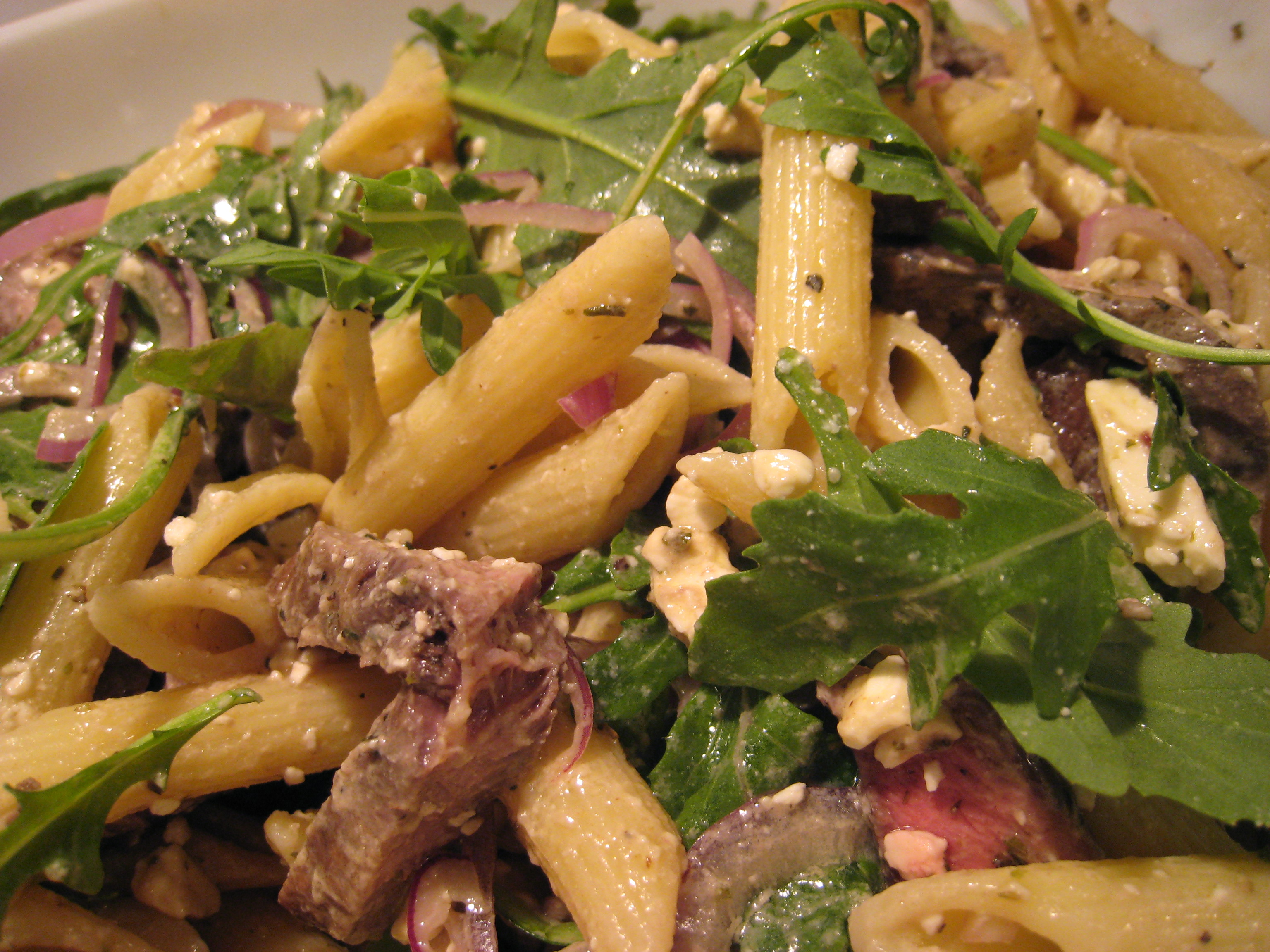
Penne with Beef and Arugula


Is there anything better than a weekend at the beach? We were the lucky-ducky guests of friends who had rented a house that came with an extra bungalow to share. Steps from the water, the house was cute and had a roomy and well-appointed kitchen — perfect for cooking for friends.

Each night, we were invited to share in the feast prepared by our lovely hosts. The wife is not only an amazing cook, but a superwoman who runs her own business and able to balance three young kids and two housefuls of guests with a great humor and style. Her tuna tartare was a dream: fresh tuna, avocado, sesame oil, wasabi powder, soy, and a lot of love. Juicy and thick hamburgers on a charcoal grill for lunch the next day. Fresh shrimp and clams steamed in beer with home-made cocktail sauce and melted compound butter for dinner. How could we not be inspired?

This recipe is actually from Giada DeLaurentis, but since I had to make it from memory, the dish that I produced varied quite a bit. I give you the actual recipe below, followed by my variation at the end.

Ingredients:

1 (1-pound) New York strip steak

1 teaspoon herbs de Provence

1 garlic clove, minced

3/4 cup extra-virgin olive oil, plus 3 tablespoons

1 pound penne pasta

1/4 cup balsamic vinegar

2 tablespoons Dijon mustard

1/2 teaspoon salt, plus more for steak and pasta water

1/2 teaspoon freshly ground black pepper, plus more for steak

1/4 cup chopped fresh basil leaves

1/4 cup chopped fresh parsley leaves

2 cups chopped arugula

How to prepare:

1. Season the steak with salt and freshly ground black pepper, herbs de Provence, and minced garlic. In a skillet, heat 3 tablespoons olive oil over medium heat. Sear the steak for a 7 minutes per side. Remove the meat from the pan and let it rest for 5 minutes. Thinly slice the steak. Set aside.

2. Meanwhile, bring a large pot of salted water to a boil over high heat. Add the pasta and cook until tender but still firm to the bite, stirring occasionally, about 8 to 10 minutes. Drain pasta, reserving 1/4 cup of pasta water.

3. In a small bowl, whisk together the balsamic vinegar, Dijon mustard, 1/2 teaspoon salt, 1/2 teaspoon pepper, fresh herbs, and 3/4 cup olive oil. In a large bowl toss the pasta with half of the salad dressing and the reserved pasta water. Add the arugula and steak, more dressing, and season with salt and freshly ground black pepper, as needed. Toss, pack for the picnic, or serve.

My beach weekend variation:

2 pounds boneless chuck eye steak

2 teaspoons herbs de Provence

2 garlic clove, minced

3/4 cup extra-virgin olive oil, plus 3 tablespoons

1 pound penne pasta

6 ounces crumbled feta cheese

1/2 teaspoon salt, plus more for steak

1/2 teaspoon ground black pepper, plus more for steak

3 tablespoons Dijon mustard

Juice from 1 lemon

1 small red onion, sliced thinly

5 ounces baby arugula

1. Combine the salt, ground black pepper, herbs de Provence, and minced garlic with 3 tablespoons of olive oil. Smear the mixture on both sides of the steak. Broil the steak for a few minutes per side until it is on the rarer side of medium. Remove the meat from the broiler pan and let it rest for 5 minutes. Thinly slice the steak. Set aside.

2. Meanwhile, bring a large pot of salted water to a boil over high heat. Add the pasta and cook until tender but still firm to the bite, stirring occasionally, about 8 to 10 minutes. Drain pasta, reserving 1/4 cup of pasta water.

3. In a small bowl, whisk together the meat juices from the pan, Dijon mustard, 1/2 teaspoon salt, 1/2 teaspoon pepper, lemon juice, and 3/4 cup olive oil. In a large bowl toss the pasta with half of the salad dressing and the reserved pasta water. Add the arugula, red onions, feta, steak, more dressing, and season with salt and freshly ground black pepper, as needed. Toss, pack for the picnic, or serve.

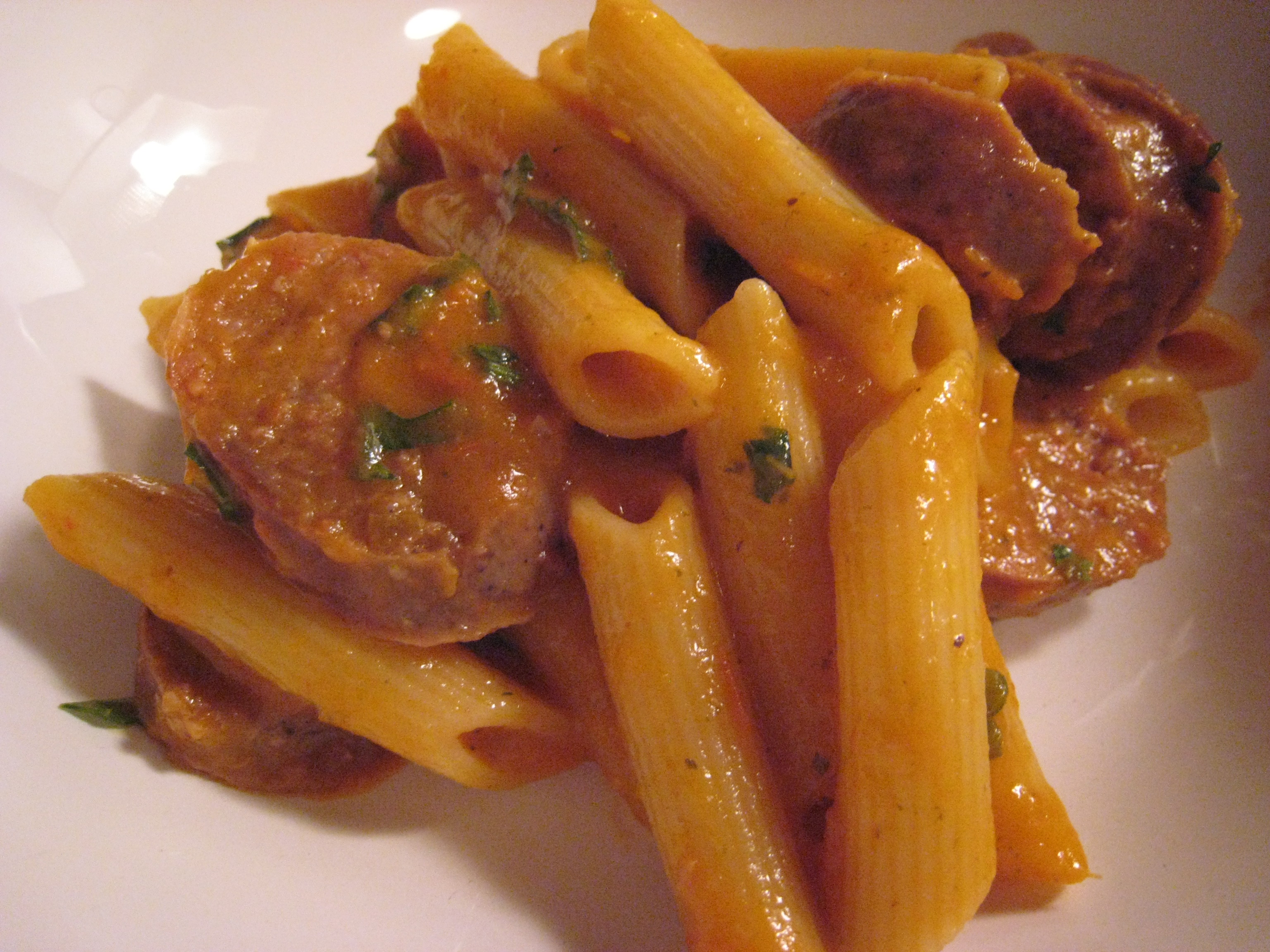
Penne with Pepper Sauce and Hot Italian Sausage


Tonight we are very lucky indeed: kind friends have shared a tub of homemade pepper sauce. It’s lovely, creamy, unctuous, with fresh parsley and a spicy kick. They made it from some beautiful bell peppers that they bought in the Hudson River Valley. Absolutely delicious. It was such a treat.

To this, we can only add the very best that we have. I took some of the hot Italian beef sausage from our CSA and roasted it in a 375° oven for about 20 minutes. Maybe it was less, but I lost track of time licking the remainder of the sauce left on the sides of the container.

After letting the sausage rest for a few minutes, we sliced it at an angle and tossed everything together.

Served with a side of local rainbow chard sautéed in minced garlic and olive oil. Does food get any better than this?

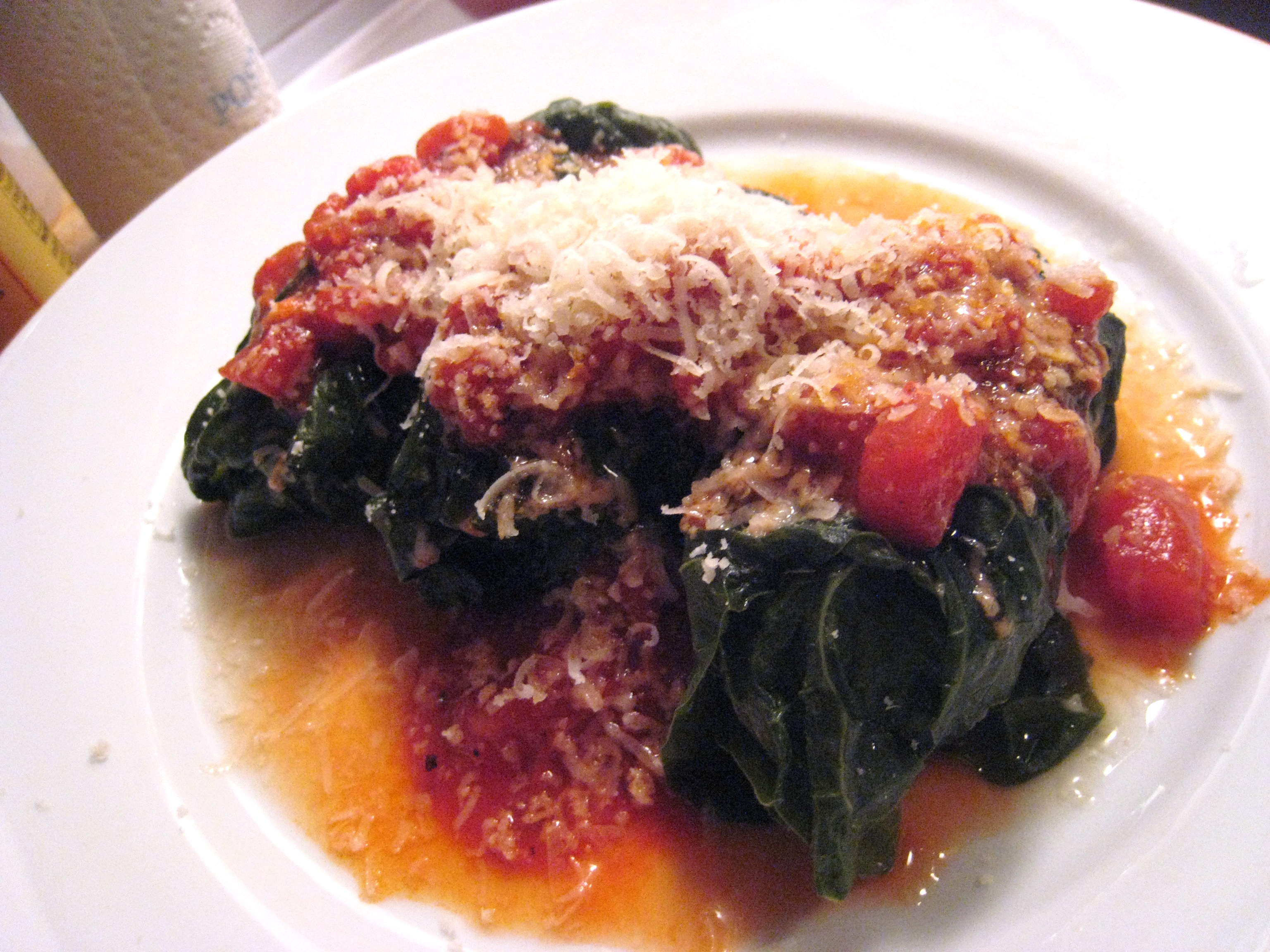
Stuffed Chard with Fresh Marinara


In Patricia Wells’s book, Trattoria, she writes that many pasta dishes remind her of the Italian flag with its “proud red, green, and white” colors.

This dish is certainly that.

This recipe is an adaptation of one that I found on the Eating Well website. Since starting our meat CSA, we have been quickly accumulating ground beef recipes beyond the usual suspects (hamburgers, chili, meatloaf, tacos, meatballs).

This recipe satisfies all my criteria for a great meal at home: it uses seasonal vegetables, it is not overly complicated, it is quick to put together yet looks like I spent hours in the kitchen, and it is beautiful on the plate. Most importantly? It tastes wonderful.

I have altered the recipe slightly, using fresh herbs and garlic in the meat mixture instead of dried  I have also left the dried herbs out of the sauce, their presence being a pet peeve of mine. I like to see my marinara un-flecked with dirty-looking specks of dusty leaves. If I had to do it again, I might use less panko and employ a softer touch when forming the meat so that it crumbles a little more in the mouth.

As you can see, I am a giant fan of my Microplane grater, which makes gorgeous fluffy clouds of fragrant Parmesan.

Ingredients:

1 pound lean ground beef (Go High Point Farms CSA!)

1/2 cup panko breadcrumbs

2 medium shallots, minced, divided

2-3 cloves of garlic, minced, divided

1 tablespoon fresh oregano, chopped

1/4 teaspoon crushed red pepper

Pinches of salt and freshly ground pepper

8 large Swiss chard leaves, stems removed

1 1/2 cups chicken broth

1 tablespoon extra-virgin olive oil

1/4 teaspoon crushed red pepper (or more if you prefer)

1 28-ounce can crushed or diced tomatoes (I like Muir Glen’s Fire-Roasted Tomatoes)

2 teaspoons balsamic vinegar

Salt and pepper to taste

How to prepare:

1. Gently mix the beef, breadcrumbs, 1/2 of the shallots, 1/2 of the garlic, the oregano, crushed red pepper, salt and ground black pepper in a large bowl until just combined. Roughly divide the mixture into 8 oblong 3-inch portions.

2. Overlap the two sides of a chard leaf where the stem has been removed and place a portion of beef there. You may need to adjust the amount of meat you stuff in each leaf, depending on how big the leaves are. Tightly roll the chard around the beef. Place each roll, seam-side down, in a large nonstick skillet. Pour in broth, cover and bring to a boil over high heat. Reduce the heat to a simmer and cook for 8 to 10 minutes, or until an instant-read thermometer inserted into the center of a roll reads 165°F.

3. Meanwhile, heat the oil in a medium saucepan over medium heat. Add the remaining 1/2 of the shallots and garlic. Stirring often, cook until the shallots and garlic are soft, about 1 to 2 minutes. Add the crushed red pepper to taste and cook for a few seconds longer, but don’t let the pepper burn. Add the tomatoes and cook, stirring occasionally. Lower the heat a little bit and add the balsamic vinegar. Continue to simmer the sauce until it is reduced and thickened to your liking.  Adjust the seasoning according to your taste.

4. To serve, remove the chard rolls from its broth bath with tongs. You can discard the broth afterwards. Top the rolls with sauce and Parmesan cheese, if desired — and why wouldn’t you?

Tip: Start removing the chard stems by folding each leaf in half. Beginning at a point at the top of the leaf where the stem looks skinny and pliable enough to not have to remove, sever the tender part of the stem from the thicker part with a small cut. Separate the leaf from the stem by moving your knife parallel to the stem’s length, including the widest section of the rib at the base of the leaf.

Make Ahead Tip: Cover and refrigerate the chard rolls in the sauce; reheat in a covered baking dish at 350°F for about 10 minutes.