I passed my doctoral defense!

Dear Friends and Readers,

I just wanted to let you all know that I passed my dissertation defense Wednesday.

I am now a completely useless kind of doctor 🙂

I cannot help you if you’re in cardiac arrest, but I can textually analyze you 🙂

After months of exhaustive work, I am very much looking forward to getting back to two things in life that give me pleasure: cooking and being in regular touch with you all.

I want to thank you all for all of your support during this long process. I couldn’t have made it this far without you!

More updates to come,
Daisy

PS. The day after the defense, I got an hour-long massage at a fancy spa, ate a giant plate of fried food, and did not open MSWord once 🙂

PPS. And big thank you to Kelly for my very own “Not that kind of doctor” T-shirt from ThinkGeek.com. I am wearing it with pride! You’re the greatest!

Mission Chinese Food New York


I have to admit to having something of a double standard when it comes to snapping pics of restaurant food and posting them on my blog.

On vacation, I will happily — nay, gleefully — take pictures of food. I will obnoxiously angle for the perfect shot, shoo away the anxious fingers of my dining companions, and blatantly ignore the wide-eyed stares of other patrons. The staff is generally stoic about my behavior. I find that they tolerate it even though I wonder if, when they talk among themselves, they wish that I wouldn’t do it.

I don’t care. I’m on vacation, gosh darn it!

However, I do care when it is in my own backyard. Taking photos of food in NYC turns shameless vacation-me into sheepish, overly apologetic local-me. When I take pictures of what I eat in New York, I always cringe a little inside.

Oh the hypocrisy!

Maybe the double standard comes from the fact that I will probably return to these restaurants. Or that wait staff seem to appear at one restaurant, and then they magically pop up at other ones, so that you end up seeing the same faces again and again. Or maybe it is because New York City is a mecca for photo-snapping foodies and like every other snooty local, I don’t want to be associated with a bunch of Yelpers.

What is it that they say about not peeing in the pool you swim in? Or not pooping where you eat? Something like that feeling.

However, I do make two exceptions. Like when friends are in town. “Take a picture!!!!” I will squeal. “I’ll take one for you!!!!! Let’s get the server to take a picture of us!!!!!!”

I just get so excited about their visit that I want to immortalize the moment in digital form, food included.

And sometimes, I just can’t resist taking pictures of what I eat when the food is exceptional. Really, truly exceptional.

Like it was at the newly opened Mission Chinese Food New York. This eagerly anticipated restaurant took over the cursed space left by Bia Garden, Michael “Bao” Huyn’s ill-conceived Vietnamese beer garden (note to prospective restaurant investors: don’t open a beer garden dedicated to a country that has no craft beer).

Mission Chinese New York is the first branch of Danny Bowien‘s famed and acclaimed San Francisco food destination Mission Chinese Food.

He was also in the house the day that I had lunch with my friend Kelly.

That lunch? Phenomenal. Just wow. Wow. It was . . . oh, man. It was good. Really, really good.

It was so good that I broke my no-photos-in-NYC rule.

In the words of the Mouse over at the blog, Live2EatEat2Live, the socks came off 😉

And for Mike over at testerfoodblog, this post is for you!

What we ate:

Szechuan pepper corn Micheladas

Fresh tofu poached in soy milk with broad bean paste, soy beans and sesame leaves

Thrice-cooked bacon with Shanghainese rice cakes, tofu skin, bitter melon and chili oil

Kung-Pao pastrami with peanuts, celery, potato and explosive chili

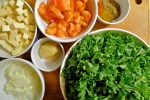
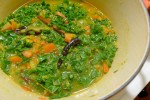
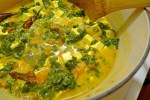
Wild pepper leaves with pressed tofu and pumpkin in salted chili broth

Where we ate:

Mission Chinese Food New York, 154 Orchard Street (between Rivington and Stanton), New York, NY 10002

* Mission Chinese Food also donates $0.75 of every main course to the Food Bank of New York City. So not only is Mission Chinese super good for getting your om noms on, but it’s good for the community too!

** Just a quick note to my dear readers, the dissertation has been a little overwhelming lately, so I might not be posting or commenting as frequently! Many apologies!

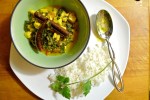
Kolpona Cuisine’s Muttar Paneer with Freshly-Shelled Peas


When Tahmina over at Kolpona Cuisine posted her recipe for muttar paneer, I knew that the minute shell peas came into season, I was going to make it. Before I started reading her blog, I always felt so intimidated by South Asian cooking. Long lists of spices — some ground, some whole — would freak me out so much that I would end up making something French or Italian-inspired instead.

But what I love about Tahmina is how accessible she makes Bengali, Indian and South Asian cooking. Don’t have a spice grinder for garam masala? No problem. Garam masala is better with whole spices anyway — just count how many of each thing you put in, and fish them out with your fingers while you eat. Don’t have paneer? Take that 2% milk you have lying around the house and make cheese!

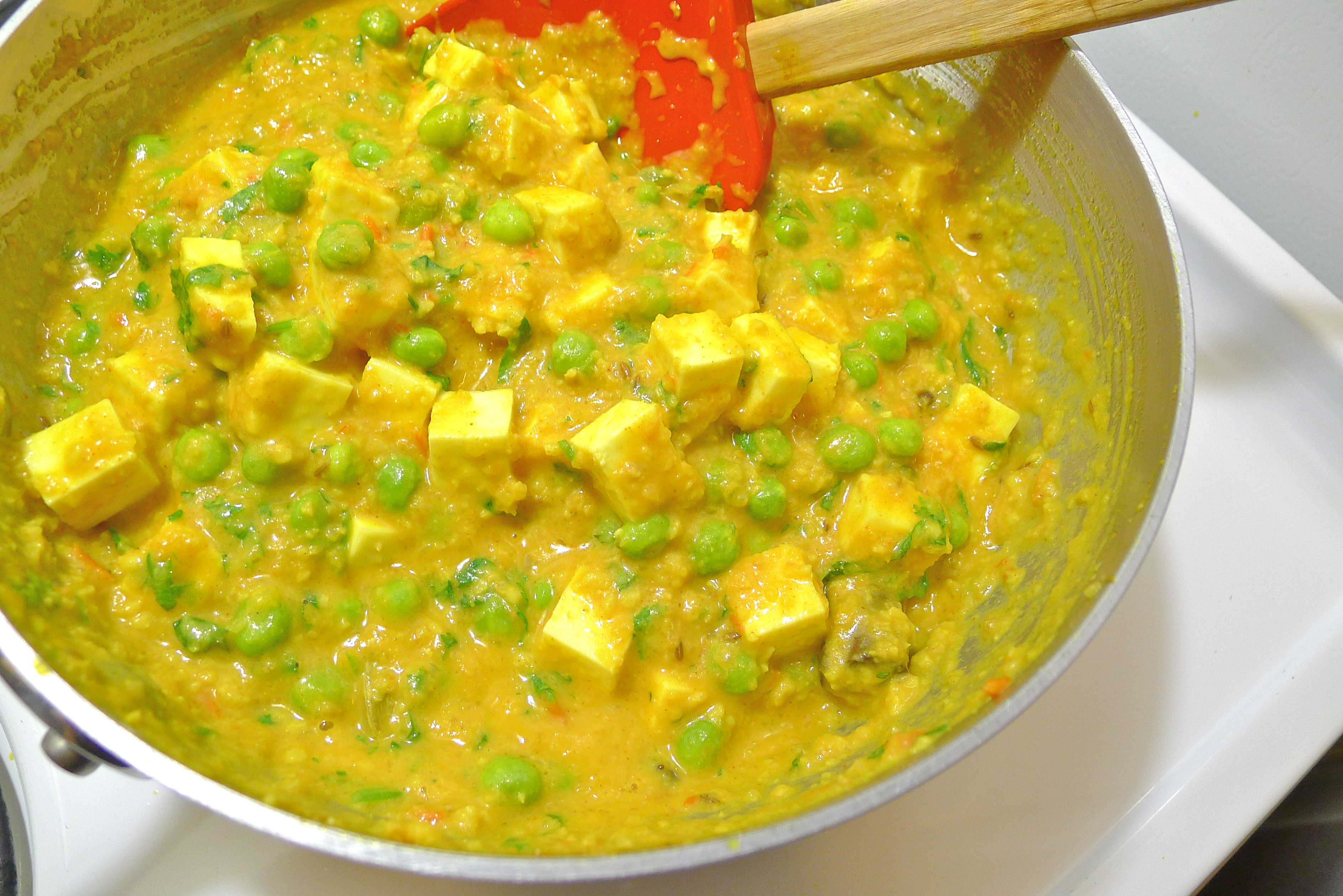
This is the second recipe from Tahmina that I have cooked (the first being kale paneer), and I loved the results. The serrano peppers and chopped cilantro added near the end of cooking give the dish a wonderful freshness. The peas are also such a pretty contrast to the sunny yellow sauce. It’s really, really good.

I think that by the end of the summer, I will have succeeded in making everything that she posts!

I hardly changed Tahmina’s recipe with the exceptions of using freshly shelled peas, substituting ginger-garlic paste for actual ginger (I didn’t have any) and garlic, and using store-bought paneer. Tahmina recommends making your own paneer  something that I would totally do if I didn’t keep forgetting to watch the clock. I never seem to be able to factor in enough time to let the cheese drain! She also advocates making your own ghee, which is also on my cooking to-do list. I keep forgetting the fenugreek leaves too . . . I need to replace that Post-it pad in the kitchen!

I did have to French up this recipe a little bit by using some fancy crème fraîche in the place of heavy cream 🙂 Oh la la!

And the absolute best part about cooking from a friend’s blog? You feel like they are right in the kitchen with you, even when they are hundreds of miles away 🙂

For the her recipe, click here.

Ingredients:

For the tomato-onion base:

2 tablespoons of ghee or vegetable oil

1/4 cup of raw cashews

1 medium onion, chopped

1/2 teaspoon of ground turmeric

1/2 teaspoon of red chili powder

1 teaspoon of ground cumin

1 teaspoon of ground coriander

2 tablespoons of ginger-garlic paste

2 Roma tomatoes, chopped

Salt

For the Garam masala:

Ghee or vegetable oil

1/2 teaspoon of cumin seeds

5 green cardamom pods

5 whole cloves

2 bay leaves

1 cinnamon stick

For the final dish:

1 cup of freshly shelled peas

2 serrano peppers, chopped

8 ounces (about 1 1/2 cups) of paneer, cubed

1/2 cup of cilantro leaves, chopped

1/4 cup of crème fraîche

Salt

How to prepare:

1. In a large saucepan, toast the raw cashews in about two tablespoons of ghee or oil over medium heat. When the cashews begin to color, add the onion and sauté everything together until the onion begins to turn golden around the edges. Add the ground spices and fry them until they are nice and fragrant. Be sure to stir the onion mixture frequently so that the spices don’t burn. Add the ginger paste and the chopped tomatoes. Cook them until the tomatoes begin to break down. Adjust the seasoning.

2. Purée the tomato-onion mixture in a food processor or blender.

3. Using the same saucepan, heat the whole garam masala spices in about a tablespoon of ghee or vegetable oil over medium heat. When the spices are fragrant and the cumin seeds begin to pop, add the puréed tomato-onion base back to the pan. Let the it simmer for a few minutes so that the garam masala spices infuse the tomato-onion mixture. Add chili peppers and the peas and cook them until the peas are just start to become tender, about 4 minutes. Add the paneer, the chopped cilantro leaves and the crème fraîche. Continue to simmer everything together for 3-4 minutes more. Adjust the seasoning for a final time.

Serve with rice or, as Tahmina recommends, chapatis.

How Food Bloggers Eat Lunch: Susan Eats London Eats New York With Me!


I was so happy to be able meet Susan from Susan Eats London for lunch while she was in town. Although we only had a couple of hours to spend before her flight back, we definitely made them count.

Because what’s better than lunch in New York City?

TWO LUNCHES IN NEW YORK CITY!

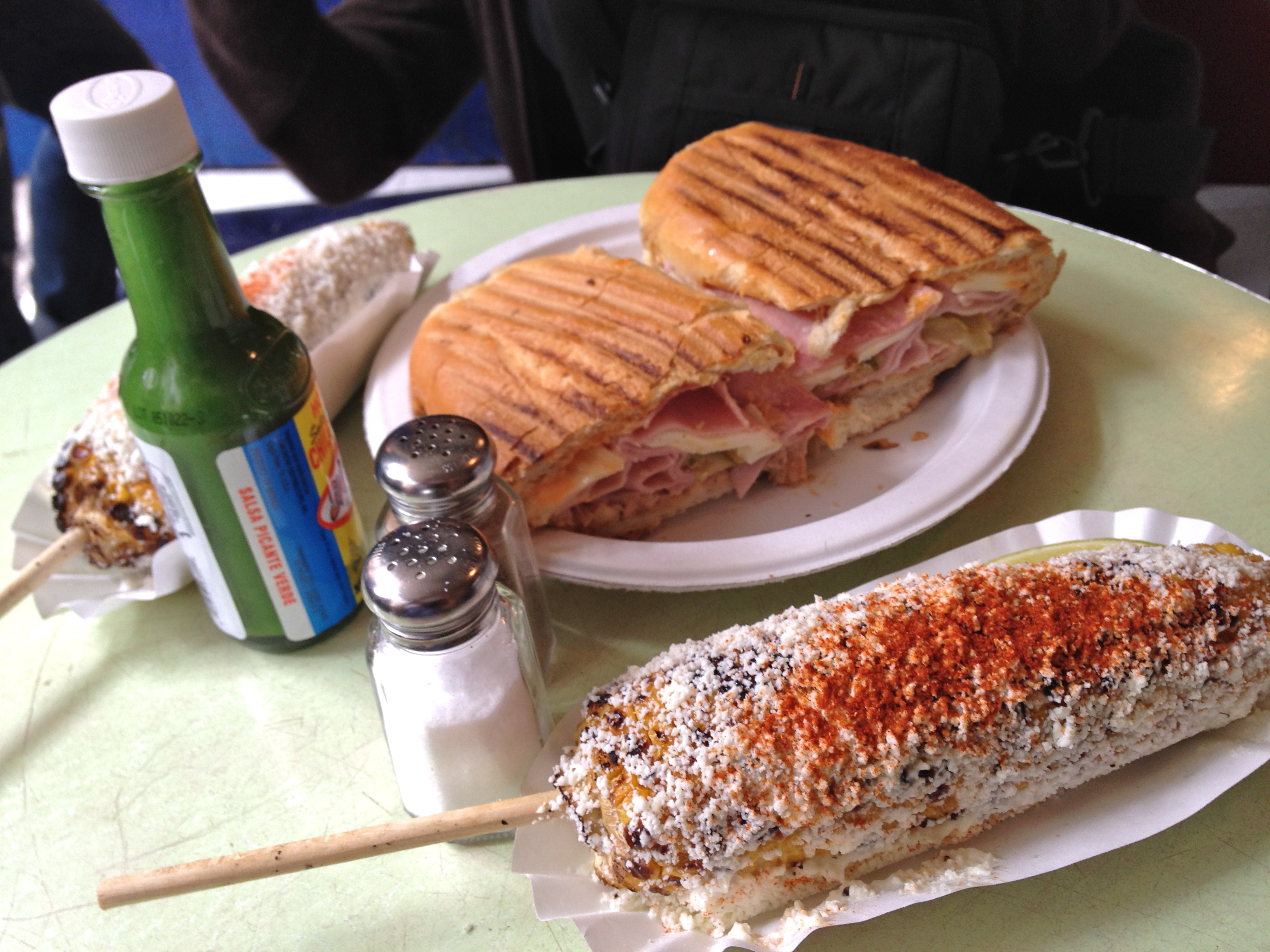
Back-to-back, baby. That’s how we food bloggers roll 🙂

Lunch #1:
Tacombi at Fonda Nolita, 267 Elizabeth Street, New York, NY 10012, (917)727-0179

Lunch #2:
Café Habana, 17 Prince Street, New York, NY 10012, (212)625-2001

Japanese Baby Turnips Sautéed in Butter and Soy Sauce


I have a confession which really isn’t a confession since it’s pretty obvious : When it comes to Asian cooking, I haven’t a clue most of the time.

To this, I might add something possibly incendiary: although there are many people out there who are progressive, there are a lot of people who aren’t and it happens fairly often that I meet people who think that as someone of Asian descent, I eat rice like it’s going out of style, am quiet, reserved and demure, and have relatively little body hair.

Imagine their faces when they find out that I swear like a sailor, have no filter and can hold my liquor like a white divorcée.

The body hair part is true though 😉

In regards to the swearing, now that I’m older, I have made a concerted effort to swear less. Mostly because it makes the times when I do swear even better! Just kidding 😉 In all honesty, I think that I swore so much in my youth that I used up all of my swear words. I just don’t want to swear anymore. Can believe it? I can’t!

As for the filter? Visualize some big rusty grate with giant holes in it. The kind that lets almost everything through except for large, plastic soda bottles and shoes. I have worked hard on that too since I realized that speaking without thinking is best way to get misunderstood. I still think of my filter as that grate, but now it’s jerry-rigged with an intricate network of fishing line and wire. Some stuff still gets through, but much, much less than before. Thank goodness!

In terms of Asian food, I am not completely ignorant because I happen to know plenty about eating it. I have never met a sliced jellyfish, deep-fried octopus ball, bowl of noodles, dumpling (oooooh, dumplings), taro puff, sweet red bean fritter, bao, roll (spring and summer), lotus bean paste-stuffed pastry, chicken adobo, preserved egg, roast duck, suckling pig, hot-pot, under-cooked chicken meatball, wad of natto, head-on shrimp, whole fish, chili crab or Spam musubi that didn’t make my motor run.

However, when it comes to the nitty gritty of cooking, I am a babe in the woods.

The amount of times that I have stir-fried can be counted on one hand with fingers to spare. I did attempt a stir-fry about a week ago and it was an epic fail. I actually asked my mom right before I did it too.

“Mom, how do you stir-fry?”

Silence.

I pictured her putting the phone down and walking away in shame. Or maybe it wasn’t shame, but just a refusal to tolerate such a dumb question.

So after mangling that stir-fried chicken and bok choy dish (I wilted that poor bunch of greens into a pathetic nothing), I have decided that this summer, I am going to get in touch with my yellow-ness and make a good-hearted attempt to become a little more educated about how to cook some of that food over there. I know it’s kind of wrong to lump all the Southeastern and Far Eastern cultures together, but isn’t it much more efficient to refer to all peoples who use sticks as utensils as one group rather than many? I want to learn to cook a little Chinese, some Japanese, some Korean, some Filipino, some Indonesian, some Vietnamese, some Thai and more.

I’m going to try it all.

I’m almost completely new at this, so if I stick two things together that really don’t go, like using a sauce meant for fish on cheese, please do let me know. I bet you can all stir-fry circles around me, so I’m counting on you for help.

Because my mom won’t 😦

I’m also illiterate, so please make all comments or suggestions in English or in another Latinate language 🙂

Ingredients:

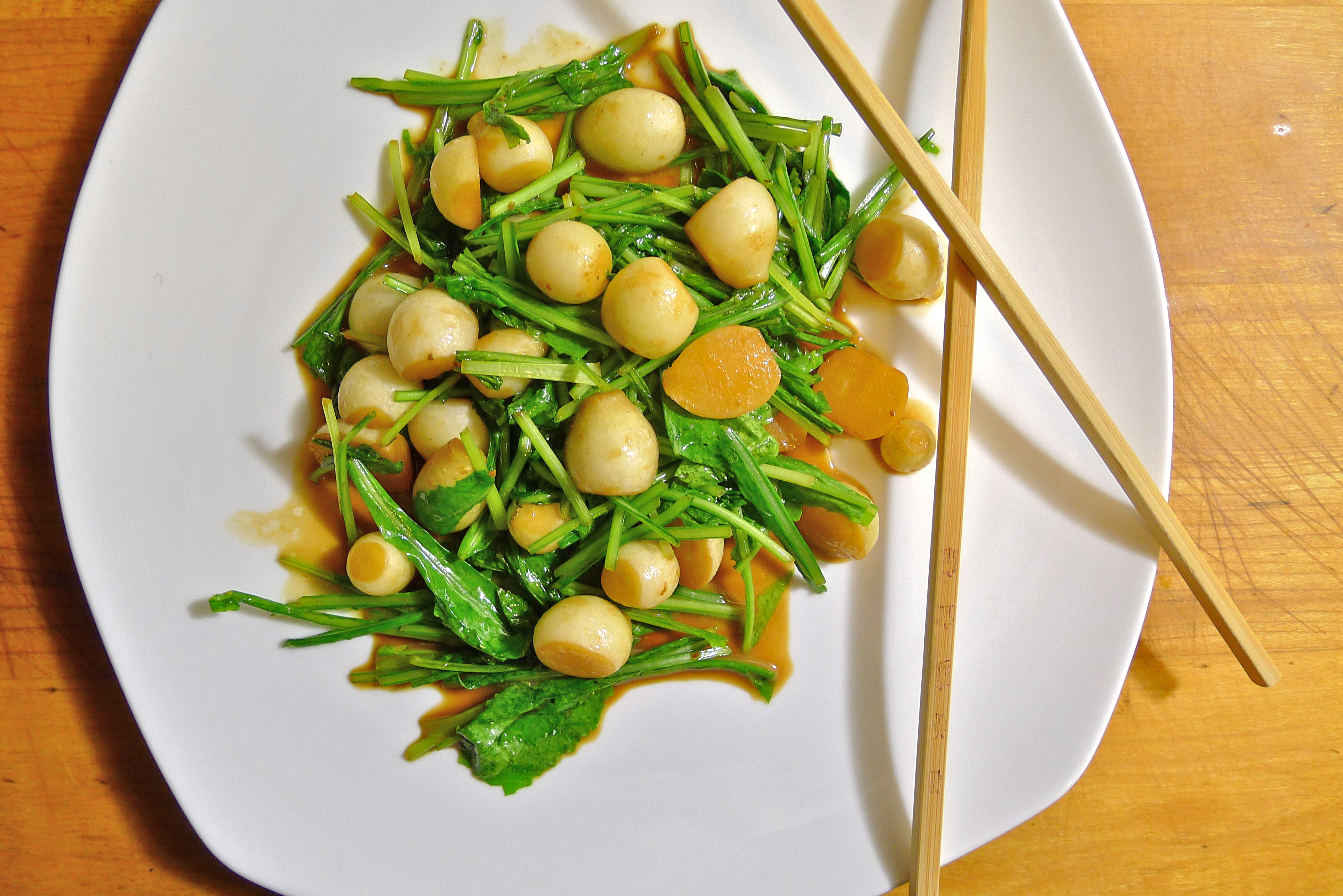
1 bunch of Japanese baby turnips (or regular baby turnips) and their greens, thoroughly washed

Butter

Sesame oil

Japanese soy sauce

Crushed Aleppo pepper or shichimi

How to prepare:

1. Separate the leaves from the baby turnips. Trim the turnips and cut them in half if they are too big. You want all the turnips and turnip pieces to be roughly the same size so that they cook evenly. Roughly chop the greens into 2-inch pieces.

2. In a large saucepan, heat a knob of  butter and about a teaspoon of sesame oil together over medium heat. When the butter begins to foam, toss in the baby turnips. Carefully add a splash of soy sauce to the pan along with some Aleppo pepper or shichimi to taste. Sauté the turnips until they begin to lose their opacity and turn translucent. Add the greens and continue to cook everything until the greens are wilted and the turnips are cooked through. Adjust the seasoning and serve.

French Breakfast Radishes Sautéed in Butter


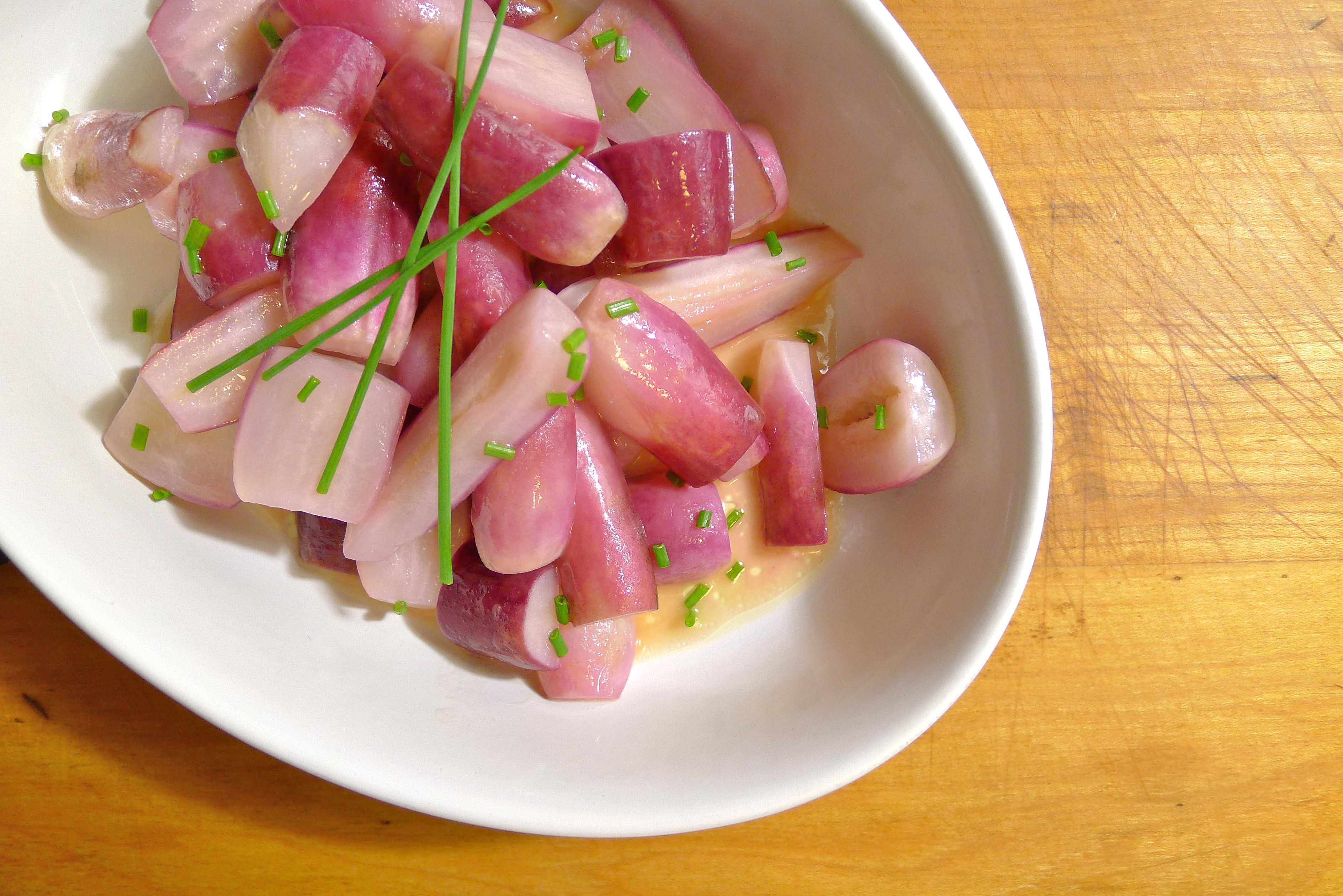
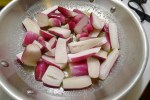
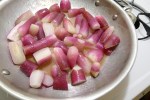
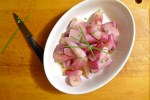
The idea for this side dish came from Susan over at Susan eats London. It’s hardly a recipe, just French breakfast radishes split in half and sautéed in butter and olive oil.

French breakfast radishes are elongated, rosy-colored radishes tipped with white at the root end. The French adore them. You see them everywhere, but I can’t recall ever hearing them called breakfast radishes in France. No “radis petit-déjeuner.” No “bweakfast wadeeesh” either.

The exact reason for why they are called French breakfast radishes is unclear. From what I can find out, their name has nothing to do with the French having them for breakfast. Instead, it comes from the Victorians who liked to eat them for breakfast or afternoon tea. “French breakfast radish” is the blanket term for any small, oblong, pink and white-tipped radish. These kinds of radishes were considered French because of their association to the French from the English perspective (the English observed that the French liked to eat a lot of them). They became known as those French radishes that you had while sipping your English breakfast tea.

French breakfast radishes are the quintessential radish for slathering with good soft butter and dunking in flaky sea salt. They are also delicious sautéed in butter. Cooked, the radishes lose their bitter bite and they turn into succulent butter bombs. During cooking, the radishes give up some of their essence and make the most beautiful pink-hued sauce. They are impossible to resist.

Susan calls them food crack, and who can resist food crack? Not me!

Ingredients:

Butter

Olive oil

1 bunch of French breakfast radishes, trimmed and halved lengthwise

Salt

Chives

How to prepare:

1. In a skillet large enough to accommodate all the radishes, melt a big knob of butter with a little bit of olive oil. When the butter begins to foam, add the radishes. Season them with salt and sauté them until the radishes lose their opacity and they all begin to turn translucent. Transfer the radishes to a serving dish and snip fresh chives over them before serving.

Kale Paneer


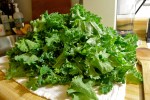
I can’t take credit for this recipe. That honor goes to the amazing Tahmina at Kolpona Cuisine whose recipe for Saag (Palak) Paneer gave me a delicious way to polish off the remainder of my giant pile of kale. The only changes that I made were to A) use fresh kale instead of spinach, and to B) forget to add the fenugreek leaves. I only realized that they were missing after I started eating 😦

Next time, I will follow Tahmina’s lead and make my own paneer. I bought it this time for the sake of convenience. I also didn’t think that fresh kale would release more liquid than fresh spinach when cooked. I should have compensated by reducing the amount of water that I added to the dish.

This was really, really good. So good that I ate it with piles of white rice! And Tahmina, you like it spicy! Thank goodness, because I like it spicy too 🙂

Thanks for the great recipe; I loved it!

Cooking The Hunger Games: District 11’s Crescent Moon Rolls with Sesame Seeds and Katniss’s Favorite Lamb Stew with Dried Plums


The Hunger Games? Nope, don’t want to read it. Isn’t that for 14-year old girls?”

“You read Harry Potter!”

It’s true. I read every single Harry Potter book, but this wasn’t Harry Potter. That was about wizards, and good and evil, and growing up, and friendship, and butter beer! This was probably some kind of Twilight spin-off full of conflicted teenagers whining about how they shouldn’t be in love with vampires and werewolves.

“No, really” Joseph insisted, “You should read it.”

“Oh, yeah? What’s it about?”

“Well, it’s about this girl . . . And she hunts . . .”

It wasn’t the most persuasive thing he could have said, but Joseph must have been sure that once the seed was planted in my mind, curiosity would get the better of me.

The next time I saw him, I told Joseph that it was completely his fault that I went to bed at 4:45 AM and was raccoon-eyed and foggy-minded for the rest of the day.

“Ha ha!” he said, “You read The Hunger Games, didn’t you!”

I did. I read it cover to cover. In one night. Straight through.

And I loved it. I was completely hooked.

Yes, The Hunger Games series is clearly Young Adult Fiction. As befits the genre, sometimes the books can be a little repetitive (okay! I thought by Chapter 3 of the first book, I get it! She hunts!). They are also fast-paced and packed full of action. The narratives are straightforward, and the books are emotional and plot-driven. It’s the world from the perspective of kids.

But just because the target audience of The Hunger Games is young, doesn’t mean that any of the books in the series are simplistic. In fact, what makes the books so good is how they use food to illustrate complex ideas and to represent the complicated relationships between different characters, different people, and different social classes. I’ve even read some other things about how the story can be read as an allegory for our current food system and its potential unsustainability, how Katniss herself can be seen as a model of locavorism as a girl who is forced outside of her manufactured food system in order to survive, and how hunting, foraging and sometimes going without — as Katniss does — is a healthier model of eating than what is offered by the super-sized Capitol (thanks, Charlene!).

But I’m getting ahead of myself. For those of you who haven’t read the books, maybe a brief overview is necessary:

The Hunger Games takes place in a postapocalyptic future in roughly what is used to be North America. Now known as the dystopian Panem, the state is divided into 13 districts — one of which was annihilated after fomenting rebellion, leaving 12 under the rule of the Capitol. As a means to control the remaining districts, the Hunger Games were created as annual televised event reminding everyone of the power that the Capitol holds over them. Participation is mandatory and each year, each district must send one boy and one girl between the ages of 12-18 to participate in a gladiatorial-like game set in an artificially constructed arena that may or may not kill them if their fellow gladiators — called tributes — don’t get to them first. There can only be one survivor, and the child who manages to be survive earns precious food and oil for their starving district.

The book’s main protagonist is a 16-year old girl from Panem’s poorest district, District 12. Her name is Katniss Everdeen and, as explained so well by Joseph, she is a hunter. More than a hunter though, she is a survivor: tough, capable, resourceful, skilled, and lethal . . . to animals (but as another character points out, are kids really that different?). The story is told from her point of view, and hardly a page goes by without the mention of food.

Food is everywhere in The Hunger Games. It is what everyone in every district outside of the Capitol is obsessed with because just about everyone outside of the Capitol is starving. The decadent Capitol produces nothing. It is reliant on the outlying districts to provide everything from its food to its fuel to its manufactured goods. However, the Capitol’s citizens want for nothing, and what the districts produce is never meant for their own consumption.

Not only is this power dynamic illustrated through the difference between the kinds of food eaten in the Capitol (rich, elegant, sophisticated, refined, and luxurious) and what is eaten in the districts (rough, unrefined foods like ration grains, or things that people eat out of desperation like the pine wood and wild dog), but in sheer quantity as well. People in the Capitol have so much to eat (and eat so much it) that they enjoy making themselves sick just so they can empty their stomachs and continue eating more. This would be inconceivable to people in districts who have never had enough to eat.

If this all sounds very Roman to you, it is pretty obvious that author Suzanne Collins intends it to be. From the idea of a gladiatorial fight to the finish, or to the use of food as a way to symbolize the contrast between the decadence of the Haves in the Capitol and the Have-Nots in the districts, Rome overshadows everything in the series. Characters have Roman names (Seneca, Cato, Cinna, Plutarch). Even the name Panem derives itself, not from Pan-American, but from the Latin phrase panem et circenses which means bread and circuses — the Roman means of appeasing and controlling populations through food and entertainment.

Speaking of bread, every single district has its own, from the rough drop biscuits of District 12, to the ultra-refined rolls of the Capitol. Bread — like all food in The Hunger Games — is used to communicate all kinds of relationships. For example, when Katniss and her fellow tribute from District 12, Peeta Mellark, are transported to the Capitol for training before the games, every table is set to include a basket of bread with representative loaves from each of the 12 districts and from the Capitol. The inclusion of the Capitol’s bread is a symbolic reminder of its power and superiority among those rougher, unsophisticated loaves.

As you can see, there is a lot in the book to think about.

You probably also guessed that I had been very anxiously awaiting the The Hunger Games movie that just came out last week. I was so excited about it that I cooked a Hunger Games feast using recipes from, or adapted from The Unofficial Hunger Games Cookbook by Emily Ansara Baines before dragging my friends to the midnight IMAX showing of the film.

What did we eat? A “Caesar” salad consisting of chopped Romaine lettuce simply dressed in a lemon juice vinaigrette with lots of grated Parmesan and freshly ground black pepper. It was meant to be a nod to The Hunger Games‘s Roman roots even though Caesar salad has nothing to do with Rome (it was invented in Mexico by a guy named Caesar).

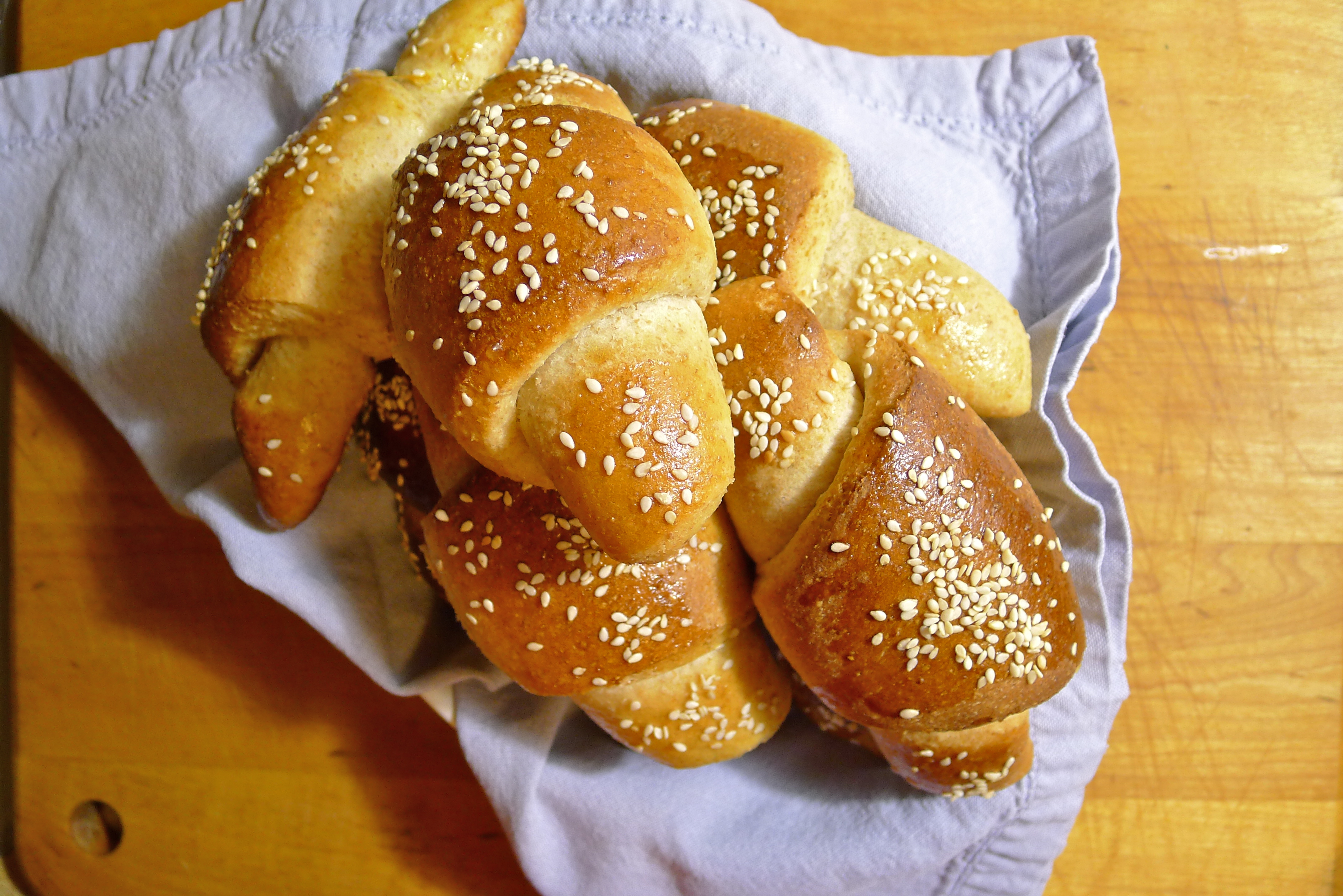
District 11’s Crescent Moon Rolls with Sesame Seeds, because how could a Hunger Games-themed dinner not include bread? Especially this bread, as those of you who have read the books know.

Katniss’s Favorite Lamb Stew with Dried Plums, the name says it all. But read further along to hear more about that story!

And Rum-macerated Strawberries with Prim’s Goat’s Milk Ice Cream, which was simply quartered strawberries tossed in sugar, a sprinkle of salt, and a few splashes of rum, served over goat’s milk ice cream.

It was so much fun. I can’t wait to do this for the second movie!

District 11’s Crescent Moon Rolls with Sesame Seeds

Ingredients:

2 .25-ounce packages of dry active yeast

3/4 cup of warm water (about 110°)

1/2 cup plus 2 tablespoons of white sugar

Salt

2 eggs

3/4 cup of unsalted butter at room temperature (divided into 1/2 cup and 1/4 cup)

2 cups of all-purpose flour

2 cups of whole wheat flour

For the egg wash:

1 egg

1 tablespoon of milk

2 tablespoons of sesame seeds

How to prepare:

1. Sift together the two flours into a large bowl.

2. In another large bowl, dissolve the yeast in the warm water. Using an electric mixer, add the sugar, the salt, 2 eggs, 1/2 cup of butter, and half of the flour mixture to the dissolved yeast. Beat everything together until it is smooth, about 5 minutes. Add the remaining flour mixture and beat everything together until it is smooth again.

3. Scrape the dough out onto a lightly floured surface. Using your hands, knead the dough for about ten minutes. Place the dough in a lightly oiled bowl, cover it, and let it rise in a warm place until the dough has almost doubled in size. This can take anywhere between 1 1/2 to 2 hours.

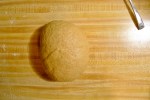
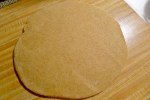
4. Line a cookie sheet with parchment paper. Punch down the dough and divide it roughly in half. Shape each half into a ball and roll each ball out into a 12-inch circle. Use a butter knife to spread half of the remaining 1/4 cup of butter evenly across the circle. Sprinkle with salt. Using a pizza cutter, cut each circle into 8 wedges. Starting at the wide end, roll each wedge up towards its point. Arrange the rolls, point-side down, about an inch apart from each other on the baking sheet. At this point, you can curve the ends inward to make more of a crescent shape. You may need to use more than one baking sheet. Cover the rolls again and let them rise until they are almost doubled, between 90 minutes to 2 hours.

5. Preheat the oven to 375°.

6. When the rolls have doubled again in size, brush them with an egg wash made from one beaten egg and a tablespoon of milk. Sprinkle each roll with sesame seeds. Bake the rolls in the over for about 12-15 minutes, or until they are golden brown.

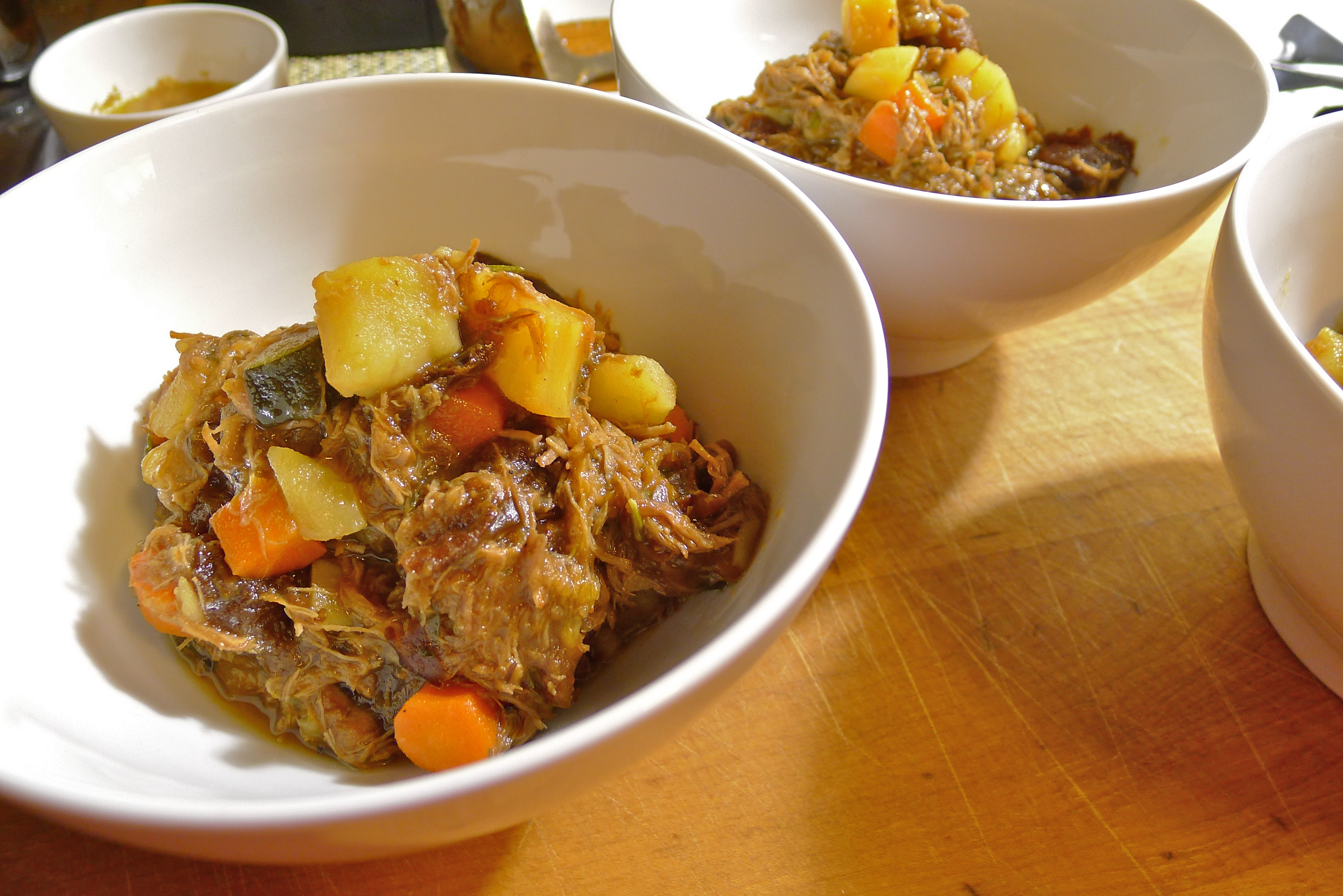
Katniss’s Favorite Lamb Stew with Dried Plums:
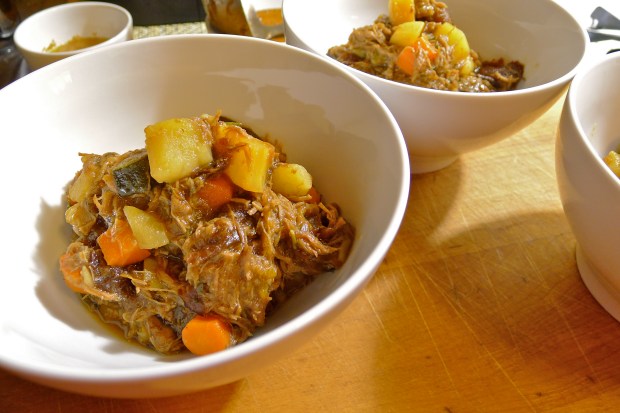
Out of all the dishes from the Capitol that Katniss eats during her training for the games, it is this stew that leaves the greatest impression on her. However, the stew kind of sounds better in concept than execution for the following reason:

If you ask for dried plums at the market, you will likely be pointed in the direction of the prunes. Because dried plums are a fancy way of saying prunes without the stigma associated to the word “prunes.”

Kind of how all bourbon is whisky, but not all whisky is bourbon, all prunes are plums, but not all plums are prunes. Prune plums are generally the plum variety that is almost always dried before eating.

And this recipe called for 5 cups of them. 5 cups of prunes.

Let us consider this for a moment:

For those of you who haven’t read the book, or are currently in the process of reading it, I apologize in advance if I give away a little bit of the story to you.

You know that when Katniss and Peeta are in the cave? When they’re starving the in the cave and they get sent a large tureen of this stew from their sponsors? I don’t know about you, but if I were Haymitch, I wouldn’t send my tributes a big pot of steaming lamb and prunes. Not a good idea.

I would send them something else, like that creamy chicken dish with oranges or some cookies. Because if the whole goal is to not get killed in the arena, I would try my best to not put my tributes in the position to literally be caught with their pants down.

Seriously. Not to be crude or anything, but I strongly think that this recipe should be renamed Katniss’s Favorite Natural Laxative with Stewed Lamb.

It was tasty, but I feel like it is my duty to warn you if you attempt this at home — especially if there are leftovers.

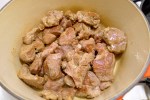
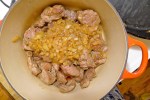
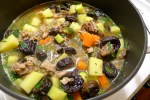
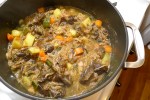
Despite halving the amounts of almost all the recipe’s ingredients (the original called for a insane 5 pounds of lamb), there was still so much stew that it completely filled up a 5-quart Dutch oven to the rim. I had to transfer the stew to an 8-quart stew pot, but even then, the pot was uncomfortably full. What would have happened if I made the recipe exactly as specified? Would I have had to have used a swimming pool?

Even after feeding myself and my friends, I was still left with unholy amounts of stew — enough to soften the stool of a small Roman army.

So if I were you, I would go ahead and halve the recipe again one step further.

Ingredients:

2 to 2 1/2 pounds of lamb stew meat

Kosher salt and freshly ground black pepper

2 tablespoons of olive oil

3 cloves of garlic, finely minced

1 large onion, chopped

1/2 of water

4 cups of beef stock

2 teaspoons of white sugar

3 teaspoons of brown sugar

3 medium carrots, peeled and cut into large dice

2 small zucchini, cut into large dice

3 Yukon Gold potatoes, peeled and cubed

5 cups of pitted prunes

2 teaspoons of fresh thyme, finely chopped

3 teaspoons of fresh rosemary, finely chopped

2 teaspoons of fresh basil, finely chopped

2 teaspoons of fresh parsley, finely chopped

1 cup of dry ginger ale

How to prepare:

1. In a large mixing bowl, generously season the lamb with salt and pepper. Toss the meat to coat it evenly with the seasoning.

2. Heat the olive oil in a large cast-iron skillet over medium-high heat. Sear the lamb cubes on all sides, working in batches if you need to. Remove the lamb to a large stew pot or a lidded casserole.

3. Spoon off all the fat except for about a tablespoon. Add the onion to the pan. Sauté it until it just begins to turn translucent. Add the garlic and continue to sauté everything together until the onion begins to turn golden. Carefully add about 1/2 cup of water to the pan. Cook to reduce the liquid by half. As the liquid reduces, gently scrape the bottom of the pan to release and dissolve the fond. Add the garlic-onion mixture to the lamb.

4. Dissolve the two sugars in the beef stock and add it to the lamb. The liquid should cover it completely. Bring everything to a boil, then cover the pot and simmer the lamb for about an hour.

5. Add the vegetables, the prunes, the herbs, and the ginger ale to the pot. Cover the stew again and simmer it for about 30-45 minutes more. You may need to add more water or stock if the stew looks too thick. The meat should be falling apart, and the vegetables should be tender when the stew is done. Adjust the seasoning and serve.

Stay Tuned: Coolcookstyle cooks The Hunger Games


I love The Hunger Games by Suzanne Collins.

Love them.

Love them so much that I dragged my friends to the midnight IMAX show last night following a Hunger Games-themed dinner cooked by yours truly from recipes from the Unofficial Hunger Games Cookbook!

No, I am not a 14 year old girl 😉

In all honesty, the book is all about interesting food topics: locavorism, foraging, food as metaphor, the symbolic and cultural value of food, historical food, food as communication, what it means to be hungry, to improvise, to remember. It’s about decadence and poverty.

And there wasn’t enough food in the movie. Which is a crying shame.

More details to follow, but just to peak your interest, the evening’s menu was:

“Caesar” salad
District 11 Crescent Moon Rolls with Sesame Seeds
Katniss’s Favorite Lamb Stew with Dried Plums
Rum-macerated Strawberries with Prim’s Goat’s Milk Ice Cream

Stay tuned!

(especially because that stew called for 5 cups of prunes)

Mexican-Style Slow Cooked Pork from The Family Meal: Home Cooking with Ferran Adrià


For years I have been both intrigued and repelled by the family meal, the meal cooked just for the restaurant staff to eat before service. Intrigued, obviously, because I have always wondered what the staff is eating without me. Repelled because, quite frankly, I have heard some awful stories about family meals being a way to unload unsaleable garbage onto servers and dishwashers. Many times it sounds like prison food without the cable TV. Or school lunches without Jamie Oliver. In a Washington Post article published a few years back, writer Matt Bonesteel reported that chef Bill Fuller used to make family meals out of “squash guts,” ostensibly the “remnants of yellow squash and zucchini that had had their yellow and green exteriors shaved off with a mandoline for vegetable spaghetti.”

“When the dishwashers stop eating it,” Fuller said, “It’s time to not serve it anymore.”

Having never worked in a restaurant myself, I can only speculate that some family meals are very nice, and some are as revolting as the ones shown on thisfamilymealsucks. True, some restaurants feed their staffs by having them order off the menu. (Now that sounds great!) However, in the case of many notable restaurants, it seems very unlikely that staff members are given free rein to have as much foie gras and caviar bubbles as they want. As put in the introduction to Ferran Adrià‘s newish book The Family Meal: Home Cooking with Ferran Adrià, “You might assume that the staff would eat the same food as the guests, but they don’t. In fact, people are often surprised when we tell them that we eat ordinary food.”
Note that he says “ordinary food,” not garbage, as it really should be in the restaurant’s best interest to keep their workers happy by feeding them well.

Also note that “ordinary food” coming out of elBulli‘s kitchen is more than likely extraordinary food for simple, common folk like you and me.

Restaurant family meals, good or bad, all seem to share two things: they are extremely economical, and they are meant to feed a crowd. This might explain why all the recipes in The Family Meal have the ingredients listed in a conversion table that allows you to adjust the recipe for parties of 2, 6, 20, and 75.

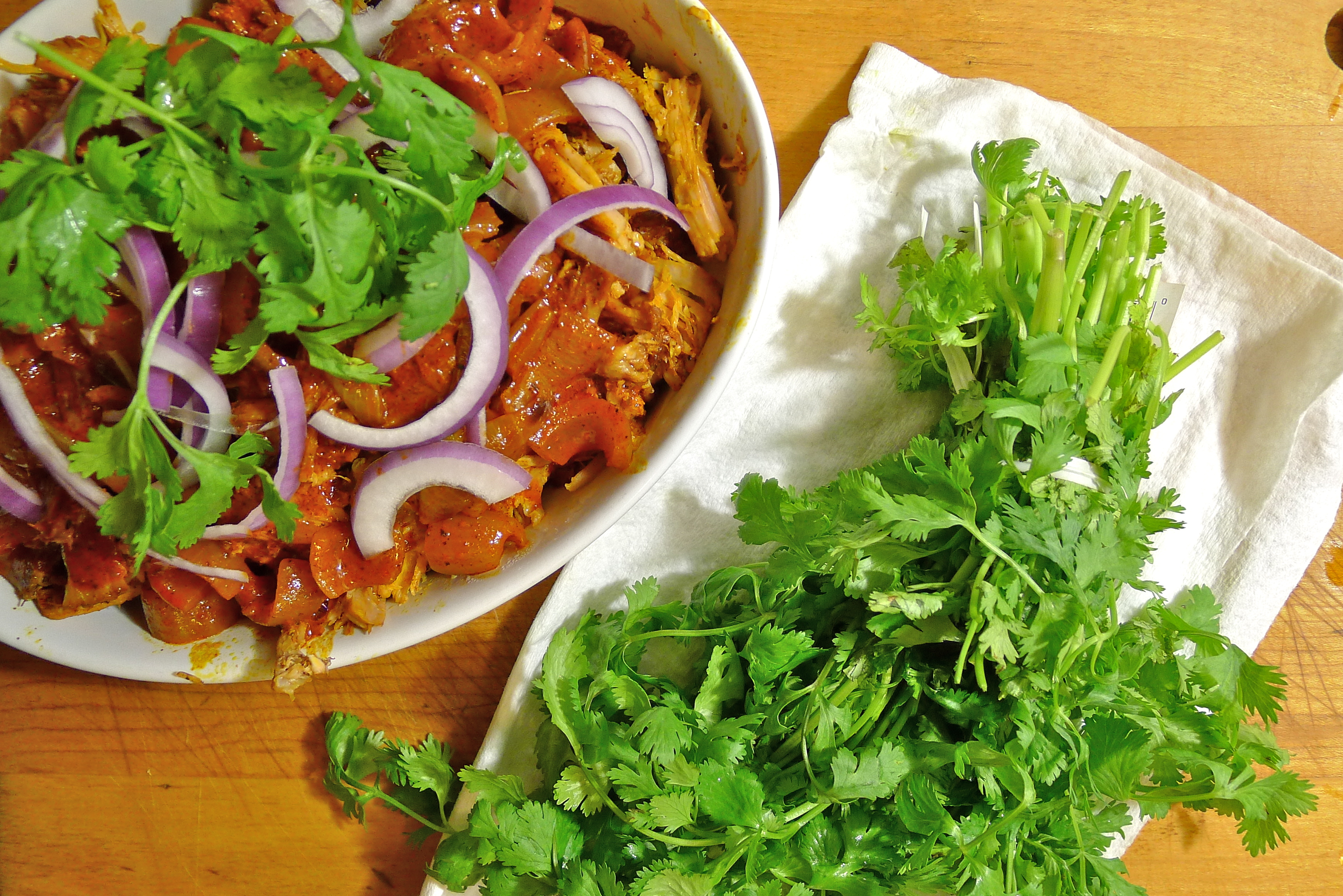
This recipe is adapted from Adrià’s in a few ways: I added garlic (weirdly missing), adjusted the amount of achiote paste (the original calls for 6 1/4 ounces, which is just a freakishly unappealing amount of annatto), and changed the cooking time and temperature (the book calls for 2 1/2 pounds of pork shoulder to be cooked at 400° for over 4 hours — not appealing either given I wouldn’t cook a 20+ pound turkey for that long).

The pork — even with less achiote and less time in the oven at a lower temperature — still turned out full and flavorful. It fell apart in a satisfying mess while I was shredding it with two forks. A sloppy, fatty, tangy yum-yum of a mess.

As for economical? Pork shoulder is a relatively inexpensive cut. You probably have the rest of the ingredients lying around the house, except for maybe the achiote paste.

Achiote paste can sometimes be found in the “ethnic” food aisle here in the US. Mine was only $0.99 at the Mexican grocery (slightly more expensive online). You can also make your own fairly easily.

(Man, I’m starting to feel like Frugal Feeding over here with all this talk of dollars and cents!)

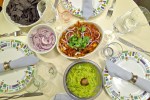
I served the pork with some homemade guacamole and some fresh, juicy lime wedges on the side. Neither were suggested by the original recipe, I suspect out of respect for the bottom line. I can imagine fresh limes and avocados for 75 hungry staff members to be beyond the budget at ol’ elBulli.

But that doesn’t mean that you should hold back! Creamy avocado is a terrific, nay sinful counterpoint to rich and citrusy pork.

All in all, this was a meal that was far from ordinary!

Ingredients:

1 3-pound boneless pork shoulder, tied

1 cup of orange juice

2 large pinches of oregano

2 large pinches of cumin

3.5 ounces of achiote paste

2 tablespoons of apple cider vinegar

3 cloves of garlic, roughly chopped

1 medium white onion, roughly chopped

Salt and pepper

1 small red onion, sliced

Cilantro for garnish

24 6-inch corn tortillas

Fresh guacamole

Lime wedges

Special equipment:

A handheld immersion stick blender

How to prepare:

1. To make the marinade, combine the orange juice, the cumin, the oregano, the achiote paste, the apple cider vinegar and the garlic in a deep bowl. Using a handheld immersion blender, whizz all the ingredients together until the marinade is smooth and creamy.

2. Using the point of a small paring knife, deeply prick the meat all over so that the marinade can penetrate it. Season the pork well with salt and pepper.

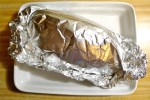
3. Line a baking dish with a large piece of heavy-duty aluminum foil. Place the meat in the middle of it and bring up the sides to create a well. Carefully pour the marinade over the pork. Scatter the onions over the top. Fold the foil over the meat to make a tight parcel. You might need to use a second piece of aluminum foil to make sure the pork is completely covered. The most important thing is that you seal all of the edges well so that no steam can escape. Let the meat marinate for about 30-40 minutes on the countertop, or up to 12 hours in the refrigerator.

4. Preheat the oven to 350°. Roast the pork for about 3 to 3 1/2 hours. After you remove the pork from the oven, let it rest for about 10-15 minutes before carefully opening the aluminum foil.

5. While the pork is resting, warm or toast the tortillas on both sides in a large cast-iron skillet set over medium-high heat. Nestle the tortillas in between a napkin on a warmed plate while you finish the rest.

6. Remove the pork to a cutting board and remove all the strings. Use two forks to gently shred the pork. Pile the shredded pork in a large bowl or dish. Skim as much fat from the surface of the saucy cooking liquid as possible, and spoon as much of it as you want over the pork. Scatter some red onion slices over the top, along with some sprigs of cilantro.

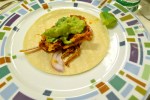
To assemble, pile a good amount of pork onto a warm tortilla. Top it with some of the remaining red onion, a dollop of guacamole and a spritz of lime juice.