Cyber Monday: My Takedown Maple-Candied Bacon and Spiced Pecan Nougat Is Now For Sale!


Just in time for the holidays!

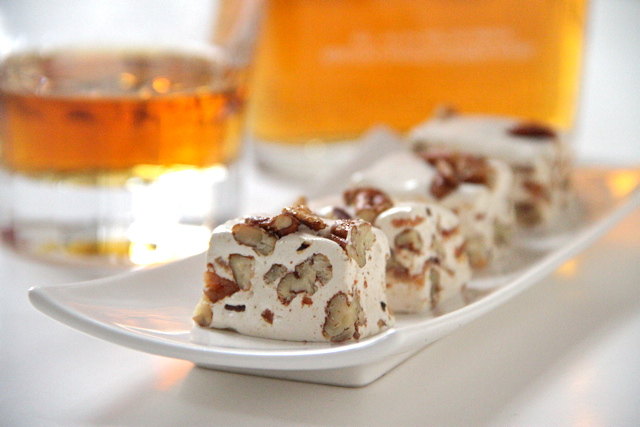
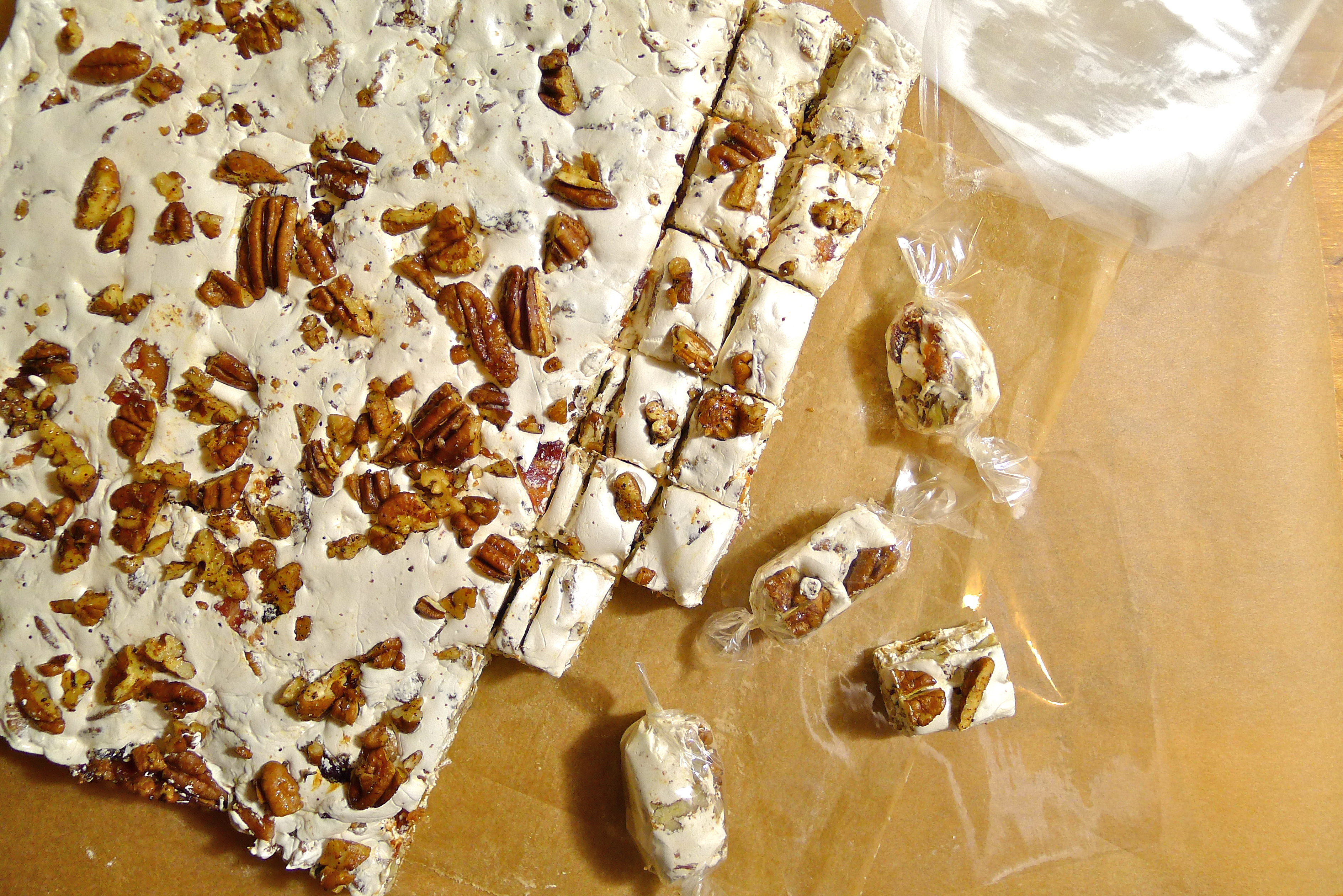
This addictive combination of maple sugar-candied bacon, Ancho chili and cayenne pepper-spiced pecans, and Bourbon nougat was created for the Brooklyn Bacon Takedown with the help of my downstairs neighbor, a professional candy maker.

I posted the labor-intensive recipe here, but who has the time to candy, sit, stir, and wrap for hours?

Let us do it for you! We’ll candy that bacon into submission and pack it up pretty so the only work you have to do is eat it 🙂

This season, give the gift that everyone loves. Give bacon!

Order from Sweetniks.com or Sweetniks on Etsy here and here.

(I would also recommend all the candies on the site. Everything Niki makes is beautiful and delicious!)

* Photo courtesy of Sweetniks.com.

Smoky Chorizo and Chickpea Soup


Have you ever looked outside your window at the overcast sky and realized that the weather has officially turned chilly? That’s how I felt today when the cold morning light began filtering through my shades.

I always think that this kind of weather inspires a taste for spices and hot liquids. This soup, adapted from Food & Wine, certainly satisfies those cravings.

There is something about Spanish food that feels perfect for this season. Maybe it’s the colors, or the strong flavors of garlic and sherry. Maybe it’s the liberal use of pimentón, whose rich and smoky heat seems to combat the gloom of gray skies.

Pimentón is basically the Spanish version of paprika and comes in three varieties of varying heat: dulce (sweet), agridulce (bittersweet), and picante (hot). For general cooking purposes, I find agridulce to be just perfect, neither too mild nor too bitter.

For this recipe, I used chorizo from my CSA. Given that most of the sausages from my CSA are fairly lean, I didn’t cook the chorizo beforehand. However, if you have particularly fatty links, you might wish to sauté the chorizo pieces and drain them before adding them to the soup.

I also love how the recipe uses puréed chickpeas as a thickener. Sometimes I find that using flour to thicken soups, stews, stocks, and gravies can lead to slightly gluey results, and using tapioca is just weird.

Ingredients:

Olive oil

1 large yellow onion, finely chopped

2 large carrots, peeled, halved lengthwise and thinly sliced

2 fat garlic cloves, thinly sliced

3 teaspoons of pimentón or smoked paprika

1/4 teaspoon of cayenne pepper

4 tablespoons of tomato paste

1 pound of fresh chorizo, cut into 1/2-inch pieces

3 cans of chickpeas, drained, rinsed, and divided into two equal portions

4 cups of beef broth

Lemon wedges

Fresh parsley sprigs

How to prepare:

1. Purée the half of the chickpeas in a food processor until they are smooth. They will act as a thickener in the soup and give the broth a wonderful nuttiness.

2. In a large Dutch oven, heat about two tablespoons of olive oil over medium heat. When the oil begins to shimmer, add the onions and cook them until they just start to turn translucent. Toss in the carrots and the garlic. When the garlic becomes fragrant, add the pimentón, cayenne pepper, and tomato paste to the vegetables. Combine everything together, taking care not to burn the spices. Once the vegetables are evenly coated with the tomato paste and the spices, add the chorizo, the puréed chickpeas, the remaining whole chickpeas, and the beef broth. Adjust the seasoning.

3. Simmer the soup until the whole chickpeas are nice and tender. You will want to skim the surface of the soup periodically. Adjust the seasoning for a final time. Serve the soup in warm bowls, topped with fresh sprigs of parsley and lemon wedges on the side.

Maple-Candied Bacon and Ancho Chili-Spiced Pecans in Maple-Bourbon Nougat


Today is another day of post-Sandy displacement. I have spent the morning plodding around my friend’s apartment in a trench coat because I didn’t bring a bathrobe with me and the mercury is dropping.

“I know you have something underneath,” she said, “But it still kind of freaks me out!”

Thankfully, this retro-pervert look won’t last much longer since my laundry is almost done drying downstairs 🙂

Instead of repeatedly checking the New York Times Liveblog for power, cellular service, and transportation updates, I have decided to put my mandatory stay-cation to good use: I will wrap up some blog posts that have been sitting in draft limbo! This one was slated to go up right after the Brooklyn Bacon Takedown, but sadly got postponed following a visit from my mother and an anticipated visit from my father.

Prior to settling on this recipe, I bopped around a bunch of ideas for the Takedown. I thought about making bacon-crusted, bacon-fat fried chicken, but decided that fried food was kind of risky for a multi-hour event. Then I had this idea to make mini bacon-Velveeta éclairs. However, the idea of hand-piping about 300 little choux pastries felt too ambitious. Then I considered making bacon-pecan sticky buns in a giant tray, but worried about even baking. In the end, I went with individually wrapped nougats, reasoning that having everything done ahead of time would ultimately be less stressful the day if the event.

Even though I didn’t win, I was very happy with the candies — which I thought were amazing. The spiced nuts and the candied bacon were a delectable combination, and the nougat was divinely fluffy.

The results were so good that a re-worked, more Bourbon-y version will probably appear on my friend’s website to be sold. Another batch will need to be made and photographed for the site first, which means that a larger circle of friends — including dear ones in Europe — can expect a little present in the mail probably before Thanksgiving. I would have sent along some of the remaining candies from the first, but it took me a while to get organized after the event. I worried that they wouldn’t survive the long trans-Atlantic shipping, and the speed of domestic mail won out!

Again, many congratulations to Adrian Ashby for winning People’s Choice with his Sex-In-Your-Mouth Bacon-Nutella Brownies. Although I can be wickedly competitive, the sight of a man crying out of happiness at the sight of a giant check for a year’s worth of bacon cannot help but melt my heart!

For more photos of the event, click here.

Ingredients:

For the maple-candied bacon:

1 pound bacon

1/4 cup of maple syrup

2 tablespoons of  maple sugar

For the ancho chili-spiced pecans:

8 ounces of roughly chopped raw pecans

Maple syrup

A pinch of cayenne pepper

A pinch of salt

1/2 teaspoon of Ancho chili powder

For the nougat:

2 egg whites at room temperature

1 1/2 cups of sugar

1/4 cup of maple syrup

3/4 cup of light corn syrup

1/2 cup of water

1 tablespoon of corn starch

1 tablespoon of Bourbon

Special equipment:

A heavy-duty stand mixer

A candy thermometer

Parchment paper

Non-stick spray

How to prepare:

1. Preheat oven to 400°. Arrange the bacon in a single layer on a half-sheet pan. Roast the bacon for about 20 minutes to render the fat. Lower the oven temperature to 350° and remove the bacon from the oven. Pour off the liquid fat. Brush the bacon on both sides with 1/4 cup of maple syrup. Evenly sprinkle 1 tablespoon of maple sugar onto the bacon. Return the bacon to the oven and roast for 15 minutes. Flip the bacon and sprinkle the other side with the remaining tablespoon of maple sugar. Continue roasting the bacon until the sugars have caramelized and the bacon is crispy, about 15-20 minutes more. Let the bacon drain on a wire rack until it is cool enough to handle. Using scissors, cut the bacon into small pieces.

2. Drop the oven temperature to 300°. In a small baking dish, very lightly drizzle the pecan pieces with maple syrup. Add the cayenne pepper, salt, and Ancho chili powder. Toss everything together until the nuts are evenly coated with the maple-spice mixture. Roast the nuts carefully, stirring them every 5 minutes or so until they have a candy coating. Remove from the oven and spread the nuts out on a large piece of parchment paper to cool.

3. Take the eggs out and set them on the counter. Line a pan with parchment paper so that the paper comes up and over the sides. Lightly coat the paper with non-stick spray and a light dusting of cornstarch.

4. In a medium saucepan, combine the sugar, the maple syrup, the corn syrup, the water, the Bourbon, and the corn starch over medium heat. Stir occasionally until the sugar has completely dissolved and the mixture becomes smooth. Insert a candy thermometer. Do not stir anymore.

5. When the temperature reaches 240°, separate the egg whites into the bowl of a large standing mixer. Begin to slowly whip the whites. Try to time it so that the egg whites make soft peaks at the same time that the syrup reaches 285°.

6. When the syrup reaches 285°, remove it the stove. With the mixer now on high speed, slowly add the syrup to the whites in a steady steam. Continue mixing the nougat until it is shiny and glossy.

7. When the nougat is the right consistency, fold in the bacon and the nuts as quickly as possible. Turn the nougat out into the parchment paper-lined pan. Using oiled hands, evenly press it out. Let it cool completely, about 2-3 hours.

8. When the nougat is cool, cut it into 1-inch pieces.

Countdown to the Brooklyn Bacon Takedown!

This slideshow requires JavaScript.

Just picked up all my bacon for the Brooklyn Bacon Takedown at the Bellhouse this Sunday.

The event is sold out, but I will keep you all updated with what I do with my bacon! For those of you lucky souls who have tickets, I look forward to seeing you and catching up at the event.

Vote for me! The newbie!

Orecchiette Carbonara with Freshly-Shelled Peas


On a hot and sticky mid-August night several years ago, I boarded an overnight train from Paris to Milan. The cabin was filled with two sets of bunk-beds that were meant to accommodate four people. Instead, we were five because the couple sharing the cabin with us had a toddler.

The family asked if they could have the bottom bunks, which was fine by me because I wanted to bunk closest to the itty bitty window that cracked open at a woefully insufficient angle.

Insufficient because the father had removed his shoes and the smell was horrific.

It was so bad that I couldn’t sleep. I was finally forced to look in my Italian phrasebook and scan the pages by moonlight for something appropriate to say that would make the man put his darn shoes back on!

Unfortunately, my phrase book had nothing related to shoes, or putting on shoes or telling people that the smell of their feet was intolerable. However, I did manage this:

“Per fevore, signore. I vostri piedi, è violazione dei miei diritti umani!”

Which worked out roughly to mean, “Excuse me, sir. Your feet, this is a violation of my human rights!”

No response. So I tried these other phrases:

I vostri piedi, sto svenendo . . . Non riesco a respirare . . . !”

Which means: “Your feet, I’m passing out . . . I cannot breathe . . . !”

Then I repeated, “I vostri piedi,” pointed to his feet, crossed my eyes and pretended to die.

Nothing. Nada. Zilch.

He must have understood me because he refused to acknowledge my existence. I tried not to take it personally, even though I hated him more and more as we crawled south to Italy. Maybe, I thought, he was trying to incapacitate his over-active son. Or maybe he was angry at his wife and was trying to suffocate her with the smell of his feet.

Seriously. If that smell could be weaponized, the war on terror would be over.

So what does this have to do with carbonara, that amazing Italian dish that uses the residual heat of freshly boiled pasta to transform bacon, beaten eggs and Parmesan into a creamy sauce?

In that very same Italian phrase book was a recipe for spaghetti alla carbonara, a recipe that I still rely on to this day.

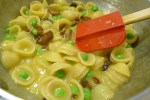
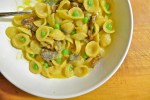
The idea to use orecchiette and peas actually comes from Suzanne Goin‘s Sunday Suppers at Lucques. Her description of how orecchiette are perfectly shaped to cup small bits of bacon and peas was irresistible to me, but I prefer to stick with my old phrasebook’s way of making carbonara because it only uses one pan — and who doesn’t prefer that?

These proportions will make enough for two, but can easily be adjusted for more. For something richer, you could add about a 1/3 of a cup of caramelized chopped onions to the mix. This recipe was also a great way to start using the wonderful shell peas that are at the market right now, as well as the bacon and pullet eggs from my CSA.

Pullet eggs are small eggs from young hens that have just started laying. They say that two pullet eggs are the equivalent of one regular chicken egg, but I find that it’s really more like 3 pullet eggs = 2 regular chicken eggs. Pullet eggs are wonderfully rich in both flavor and mouthfeel, just perfect for carbonara if you can get a hold of some.

I also used up the last of my CSA bacon ends to make my bacon bits, but you can use crumbled cooked bacon strips in this if bacon ends are not handy.

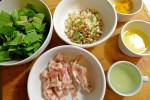
Ingredients:

1/3 pound of dried orecchiette

1/3 cup of bacon bits or crumbled cooked bacon

1/3 cup of freshly shucked green peas or frozen peas

5 pullet eggs or three regular eggs

1/2 cup of freshly grated Parmesan

Freshly grated black pepper

Olive oil

How to prepare:

1. Bring a medium saucepan of salted water to a boil. When the water has reached a rolling boil, add the pasta. While the pasta is cooking, set up the other ingredients. This recipe moves quickly near the end, so it is a good idea to have everything ready to go.

2. Combine the Parmesan and eggs in a small bowl with freshly ground black pepper.

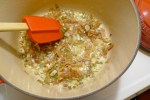
3. When the pasta is not quite al dente, add the peas to the boiling water. Let the pasta and peas finish cooking together. Drain and pour the pasta and peas back into the saucepan. Add the bacon along with a quick drizzle of olive oil. Pour the beaten egg mixture over the pasta and begin stirring everything together quickly. When you add the eggs, the pasta should be warm enough to barely cook them. You want the sauce to be just thick enough to coat the pasta with a glossy sheen. If the sauce seems soupy instead of creamy, put the pan over a very low flame and continue to stir and toss the pasta quickly until the sauce turns smooth and creamy.

Don’t worry if you accidentally overcook the eggs and they scramble a little bit. It will still be delicious.

Ramp Risotto with Pancetta, Meyer Lemon and Parmesan


Spring is officially here when ramps are in!

And when I think ramps, I think risotto.

Sometimes, people think that risotto is difficult. But as long as you are willing to be patient, and don’t mind giving your stirring arm a little workout, risotto is a ridiculously easy way to have an elegant dinner.

This recipe is for two, but you can easily make the recipe for more people by adhering to the following ratio: for every 1/4 cup of rice, you will need one cup of liquid.

Ingredients:

1 quart (4 cups) of chicken or vegetable stock

3 ounces of pancetta, sliced into thin strips

Olive oil

1 bunch of ramps, cleaned with stems and leaves divided

1 cup of Arborio rice

1/4 cup of white wine

The zest and juice of 1 Meyer lemon

2 tablespoons of butter, cut into small cubes

1/4 cup of Parmesan, plus more for sprinkling

How to prepare:

1. Thinly slice the white ramp bulbs and roughly chop the leaves. Keep them separated.

2. In a saucepan, bring the stock up to a boil and then turn off the heat.

3. In a large Dutch oven or heavy-bottomed saucepan, brown the pancetta over medium heat until most of the fat has rendered and the pancetta has just begun to crisp. Spoon off all but one tablespoon of fat. Add the sliced white parts of the ramps and sauté them until they begin to turn translucent. Add the rice and toss the grains in the fat for about a minute or two.

4. When the rice grains begin to lose their opacity, add the white wine. When the wine has been absorbed, begin adding the hot stock, a ladleful at a time, while stirring constantly, until you have used all the stock or the rice has lost its chalky hardness and is perfectly al dente. This can take between 15-20 minutes.

5. When the rice is creamy and the grains are al dente, turn off the heat. Add the lemon juice and zest, the chopped green ramp tops and the butter. Incorporate everything into the rice. When the ramp tops have wilted, stir in about a 1/4 cup of Parmesan. Adjust the seasoning, adding a little hot water or more hot stock if the risotto seems to be a little thick. Serve immediately topped with more grated Parmesan.

Split Pea Soup with Bacon Ends


A while ago, I was gifted a giant tub of bacon ends from a member of a different CSA. They languished in the back of my freezer until a deep spring clean last week.

Bacon ends are a terrific thing to have in the house — even if you’re like me and fall into the “out of sight, out of mind” camp. Just make sure that you have them somewhere you can see them at all times, a visual reminder that every dish is better with bacon.

Not only are bacon ends a good thing to always have on hand, but they are also much more economical than buying bacon strips. Chopped up and slowly browned, they make wonderful bacon bits. The rendered fat can be used in the place of oil or butter, or in anything that could be enhanced by some smoky porcine flavor.

And let’s be honest, what wouldn’t benefit from added porkiness?

People can sometimes be a little skeeved out by cooking with animal fat. However, so long as the pigs are pasture-raised by a farmer who follows organic practices, there should be no fear of needing Lipitor. Bacon fat from pasture-raised pork even has the added benefit of being a good source of vitamin D, making bacon fat certainly as good as butter!

I’m not saying that you should sit around the house and chow down on scoops of it, but a little bacon fat is much healthier for you than all those omnipresent, heavily-processed vegetable oils. My rule of thumb is that the more steps in processing it takes to get the food to your mouth, the less healthy it is for you. I would even go as far as to argue that it’s not even food at that point. This is why I always shake my head at people who buy low-fat foods because in order to make up for the taste and flavor deficit, those items are generally bulked up with tons of sugar — which might be worse for you than the fat.

Plus low-fat foods taste bad.

Anyway, no more ranting. Back to the soup!

Dried split peas scream for bacon! But if animals are not your thing, you can leave the bacon out and make the soup with smoked paprika instead.

Ingredients:

About 3 or 4 ounces of bacon or bacon ends, cut into small dice

1 small onion, chopped

1 large carrot, peeled and diced

2 stalks of celery, diced

1 pound (16 ounces) of dried split peas, picked over for small stones

2 bay leaves

4 cups of chicken or vegetable stock + 1 cup of water

Salt and pepper

Smoked paprika

Special equipment:

A hand-held immersion blender (optional)

How to prepare:

1. In a large Dutch oven, cook the bacon or bacon ends over medium heat with a little bit of olive oil until most of the fat has rendered. Reserve a few bits of bacon for garnish. Spoon off all but one tablespoon of bacon fat. Keep the bacon fat in a clean container in your freezer, and use it for other things like roasting potatoes, eggs, roasting chickens, anything really.

2. Add the vegetables to the pot. Let them cook until the vegetables have softened and the onion is translucent, about 5-7 minutes. Add the split peas and toss them with the vegetables until they are evenly coated with bacon fat. Add the bay leaves, the stock and the water. Bring everything up to boil, and then reduce the heat. Let the peas simmer until they are tender, about 45 minutes to an hour. Periodically skim the top of the soup of scum and grease. If the soup seems too thick, thin it out by adding more stock or water.

3. When the peas are tender, you can leave the soup alone if you like a chunky soup. I like to partially purée the soup so that it is creamier, but still has some interesting bits of vegetables and peas in it. This is super easy to do with an immersion blender. Just insert the stick blender into the soup and blend as much as you like. You can also transfer half of the soup to a regular blender or a food processor, then add the blended soup back to the unblended half. If you use a blender, keep your hand smacked tight onto the blender lid lest it go flying off, leaving your kitchen covered in pea soup spray. Adjust the seasoning for a final time, and thin the soup with stock or water again if it seems too thick.

Serve topped with a few of the reserved bacon bits, a dusting of smoked paprika and with some good, hearty bread.

Orecchiette with Broccoli Rabe and Italian Sausage (Orecchiette con cime di rapa e salsiccia)


Have you ever had one of those weeks where you were amazed at how busy your schedule was, yet surprised at how little you seemed to get done?

That was last week for me and the blitz of activity left me little time to cook, let alone eat something good for me. Lunch was reduced to a handful of jalapeño-flavored potato chips and half a curried tofu sandwich. Dinner was an even more embarrassing affair consisting of leftover boiled potatoes drizzled with olive oil and followed by gelato straight out of its paper container.

I was starting to feel like a human garbage disposal, and was yearning for a real meal, meaning something satisfying that was also quick and easy to put together.

Orecchiette with Sausage and Broccoli Rabe fit the bill perfectly as simple, rustic Italian seems to be my go-to cuisine when my belly is rumbling and my eyes are blinkered from low blood sugar.

One of the emblematic pastas of Puglia, orecchiette are thus named because they are supposed to resemble little ears. I don’t know about that, since they only look like ears to me if we’re talking (nerd alert!!!!) Ferengi ears. I do know that they are delicious and are perfectly shaped to cup little bits and pieces of chopped vegetables. The bitterness of broccoli rabe always goes well with savory sausage, garlic and red chili pepper flakes. To make this dish vegetarian, simply omit the sausage. It is very tasty that way as well.

As this is a very simple dish, I have given you proportions for two, even though I ate the two for one.

Yep, that’s how I roll in Hungry Town 😉

Ingredients:

1/3 of a pound of orrechiette

1/2 pound of pork Italian sausage, casings removed

Olive oil

1/3 of a bunch of broccoli rabe, roughly chopped

3-4 cloves of garlic, thinly sliced

Red chili pepper flakes

Salt and pepper

How to prepare:

1. Bring a large pot of salted water to boil. Cook the pasta until it is al dente.

2. While the pasta is cooking, heat a little bit of olive oil in a heavy skillet over medium-high heat. When the oil begins to shimmer, pinch off one-inch pieces of sausage and brown them in a single layer in the pan. When the sausage pieces are browned on all sides and cooked through, remove them to a paper towel-lined plate or bowl.

3. Drain the pasta, reserving about a 1/4 to 1/3 of a cup of the pasta water. Wipe out the skillet and add about 2 tablespoons of olive oil to the pan. Set the pan over medium heat and sauté the garlic slices until they are fragrant, about a minute or two. Add as many chili pepper flakes as you like and continue to sauté for about 30 more seconds. Be careful that the chili pepper flakes don’t burn. Add the chopped broccoli rabe and a little bit of the pasta water (you can always add more water later if the dish starts to look a little dry) to the pan. Cook the rabe until it begins to wilt. Add the sausage and the pasta, along with another splash or two of pasta water if needed. Toss and let everything cook together for another minute or two. The pasta should begin to absorb some of the sauce. Adjust the seasoning if needed.

Serve in large warmed bowls with an additional drizzle of olive oil.

Breakfast Sausage, Spinach and Roasted Red Pepper Muffins


Lately, I have been trying to get myself to eat breakfast more often. I actually love breakfast, but I regretfully have rarely made time to have it.

Breakfast muffins are a great thing to make. They are so easy to pull together. They look beautiful, and a nice big basket of them is always a hit for brunch. You can also make a batch the night before and toss one or two (three for me) in the oven to warm the following morning while you make coffee.

These muffins are a great way to use the pork breakfast sausage that I get from my CSA, but in all honesty, the recipe is fairly versatile. You can make them meatless, with broccoli, or any other vegetable that you like. You can use Parmesan or Asiago instead of Cheddar.

The tricks are to not over mix your batter, and to make sure that your vegetables have as little moisture as possible so that your muffins don’t turn out to be soggy.

I have been playing around with different combinations of ingredients and like the mix of roasted red peppers and spinach. I think it’s because I like the idea of starting the day with lots of color!

Ingredients:

1 pound of bulk breakfast sausage

1 large red bell pepper

6 ounces of baby spinach

1 cup of cheddar cheese, shredded

1 cup of whole milk

2 eggs

2 cups of all-purpose flour

4 teaspoons of baking powder

1 teaspoon of salt

Special equipment:

A 12-cup muffin pan, preferably non-stick

How to prepare:

1. Preheat the oven to 400°.

2. If you have a gas range, set the red bell pepper directly on the gas burner with the heat on high. Turn the pepper periodically to make sure that the skin chars evenly.

If you have an electric range, rub the bell pepper with olive oil and place it on a cookie sheet set underneath the broiler. You can also rub the pepper with olive oil and pop it into a 450° oven. Remove it when the skin is blistered and blackened.

When your pepper is nice and charred, put it in a clean plastic grocery bag or a small paper bag and wait for it to cool. When it is cool enough to handle, you should be able to gently rub off all the charred skin from the pepper. Seed the pepper, and discard the seeds and the stem. Dice the pepper and spread the pieces out onto paper towels to absorb any excess moisture.

3. In a large skillet, brown the breakfast sausage over medium to medium-high heat, breaking up any large pieces with the side of your wooden spoon or spatula. Remove the browned sausage to a large mixing bowl with a slotted spoon, leaving as much of the drippings behind as possible.

4. Wipe out the skillet and wilt the spinach in it over medium heat with a little bit of olive oil and about a tablespoon of water. When the spinach has wilted, remove it to a colander to drain. When the spinach is cool enough to handle, gently press as much liquid out of the leaves as you can without squeezing them.

5. Roughly chop the spinach leaves and add them to the browned sausage meat along with 2/3 of the roasted red pepper (reserve 1/3 of the peppers to top the muffins), the cheese, the milk and the eggs. Gently stir all the ingredients together until everything is well-mixed.

6. Sift together the flour, the baking powder and the salt. Gently fold the flour mixture, a little bit at a time, into the other ingredients until the batter just comes together. Do not over mix.

7. Divide the mixture evenly among all the muffin cups. Top each with a few pieces of roasted red pepper. Bake the muffins for about 20-25 minutes. The tops should be browned and golden. Let them cool in the tin for a couple of minutes before removing them to a cooling rack.

Mexican-Style Slow Cooked Pork from The Family Meal: Home Cooking with Ferran Adrià


For years I have been both intrigued and repelled by the family meal, the meal cooked just for the restaurant staff to eat before service. Intrigued, obviously, because I have always wondered what the staff is eating without me. Repelled because, quite frankly, I have heard some awful stories about family meals being a way to unload unsaleable garbage onto servers and dishwashers. Many times it sounds like prison food without the cable TV. Or school lunches without Jamie Oliver. In a Washington Post article published a few years back, writer Matt Bonesteel reported that chef Bill Fuller used to make family meals out of “squash guts,” ostensibly the “remnants of yellow squash and zucchini that had had their yellow and green exteriors shaved off with a mandoline for vegetable spaghetti.”

“When the dishwashers stop eating it,” Fuller said, “It’s time to not serve it anymore.”

Having never worked in a restaurant myself, I can only speculate that some family meals are very nice, and some are as revolting as the ones shown on thisfamilymealsucks. True, some restaurants feed their staffs by having them order off the menu. (Now that sounds great!) However, in the case of many notable restaurants, it seems very unlikely that staff members are given free rein to have as much foie gras and caviar bubbles as they want. As put in the introduction to Ferran Adrià‘s newish book The Family Meal: Home Cooking with Ferran Adrià, “You might assume that the staff would eat the same food as the guests, but they don’t. In fact, people are often surprised when we tell them that we eat ordinary food.”

Note that he says “ordinary food,” not garbage, as it really should be in the restaurant’s best interest to keep their workers happy by feeding them well.

Also note that “ordinary food” coming out of elBulli‘s kitchen is more than likely extraordinary food for simple, common folk like you and me.

Restaurant family meals, good or bad, all seem to share two things: they are extremely economical, and they are meant to feed a crowd. This might explain why all the recipes in The Family Meal have the ingredients listed in a conversion table that allows you to adjust the recipe for parties of 2, 6, 20, and 75.

This recipe is adapted from Adrià’s in a few ways: I added garlic (weirdly missing), adjusted the amount of achiote paste (the original calls for 6 1/4 ounces, which is just a freakishly unappealing amount of annatto), and changed the cooking time and temperature (the book calls for 2 1/2 pounds of pork shoulder to be cooked at 400° for over 4 hours — not appealing either given I wouldn’t cook a 20+ pound turkey for that long).

The pork — even with less achiote and less time in the oven at a lower temperature — still turned out full and flavorful. It fell apart in a satisfying mess while I was shredding it with two forks. A sloppy, fatty, tangy yum-yum of a mess.

As for economical? Pork shoulder is a relatively inexpensive cut. You probably have the rest of the ingredients lying around the house, except for maybe the achiote paste.

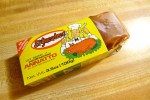
Achiote paste can sometimes be found in the “ethnic” food aisle here in the US. Mine was only $0.99 at the Mexican grocery (slightly more expensive online). You can also make your own fairly easily.

(Man, I’m starting to feel like Frugal Feeding over here with all this talk of dollars and cents!)

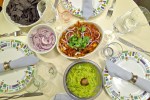
I served the pork with some homemade guacamole and some fresh, juicy lime wedges on the side. Neither were suggested by the original recipe, I suspect out of respect for the bottom line. I can imagine fresh limes and avocados for 75 hungry staff members to be beyond the budget at ol’ elBulli.

But that doesn’t mean that you should hold back! Creamy avocado is a terrific, nay sinful counterpoint to rich and citrusy pork.

All in all, this was a meal that was far from ordinary!

Ingredients:

1 3-pound boneless pork shoulder, tied

1 cup of orange juice

2 large pinches of oregano

2 large pinches of cumin

3.5 ounces of achiote paste

2 tablespoons of apple cider vinegar

3 cloves of garlic, roughly chopped

1 medium white onion, roughly chopped

Salt and pepper

1 small red onion, sliced

Cilantro for garnish

24 6-inch corn tortillas

Fresh guacamole

Lime wedges

Special equipment:

A handheld immersion stick blender

How to prepare:

1. To make the marinade, combine the orange juice, the cumin, the oregano, the achiote paste, the apple cider vinegar and the garlic in a deep bowl. Using a handheld immersion blender, whizz all the ingredients together until the marinade is smooth and creamy.

2. Using the point of a small paring knife, deeply prick the meat all over so that the marinade can penetrate it. Season the pork well with salt and pepper.

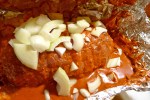
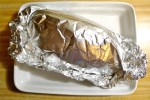
3. Line a baking dish with a large piece of heavy-duty aluminum foil. Place the meat in the middle of it and bring up the sides to create a well. Carefully pour the marinade over the pork. Scatter the onions over the top. Fold the foil over the meat to make a tight parcel. You might need to use a second piece of aluminum foil to make sure the pork is completely covered. The most important thing is that you seal all of the edges well so that no steam can escape. Let the meat marinate for about 30-40 minutes on the countertop, or up to 12 hours in the refrigerator.

4. Preheat the oven to 350°. Roast the pork for about 3 to 3 1/2 hours. After you remove the pork from the oven, let it rest for about 10-15 minutes before carefully opening the aluminum foil.

5. While the pork is resting, warm or toast the tortillas on both sides in a large cast-iron skillet set over medium-high heat. Nestle the tortillas in between a napkin on a warmed plate while you finish the rest.

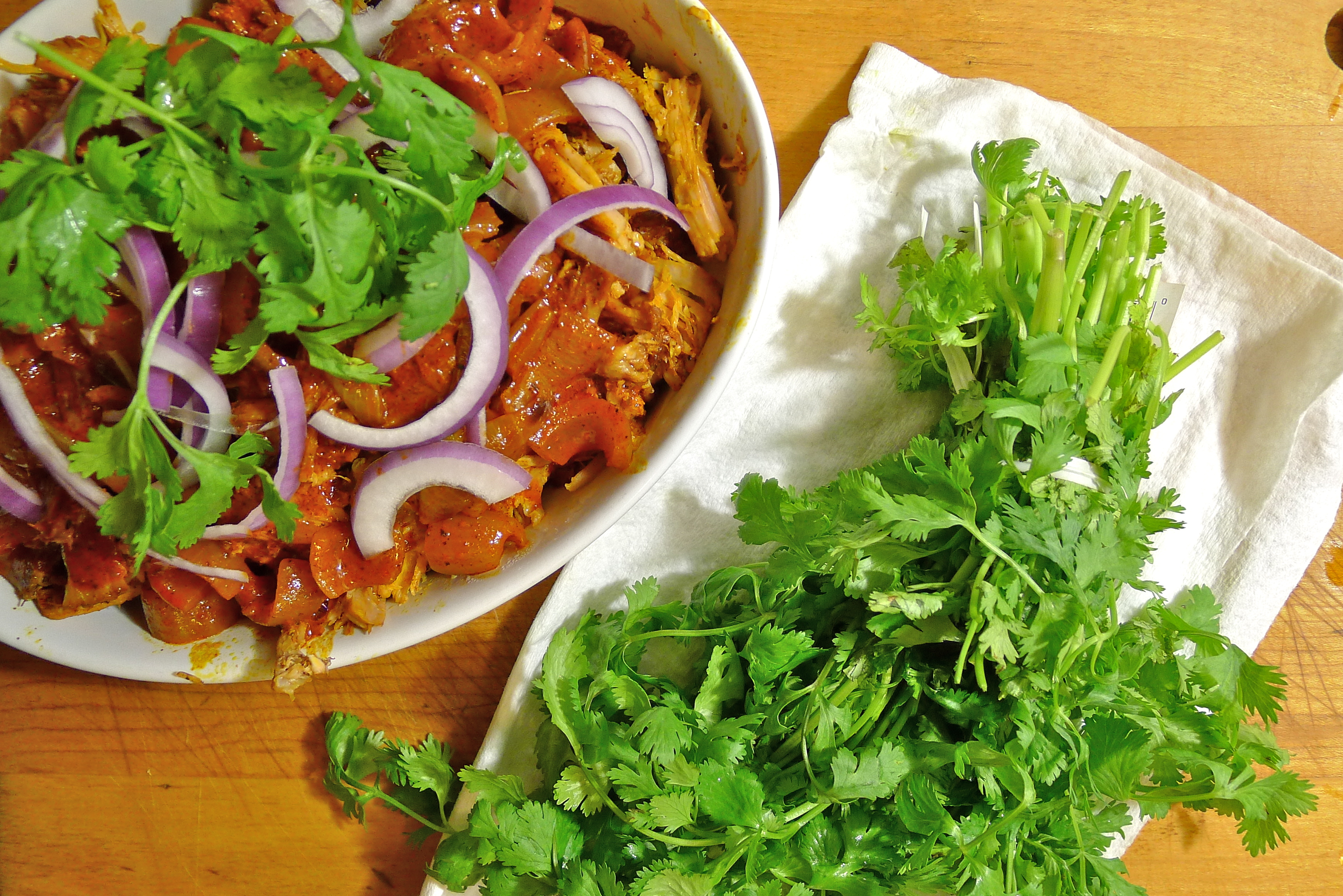
6. Remove the pork to a cutting board and remove all the strings. Use two forks to gently shred the pork. Pile the shredded pork in a large bowl or dish. Skim as much fat from the surface of the saucy cooking liquid as possible, and spoon as much of it as you want over the pork. Scatter some red onion slices over the top, along with some sprigs of cilantro.

To assemble, pile a good amount of pork onto a warm tortilla. Top it with some of the remaining red onion, a dollop of guacamole and a spritz of lime juice.