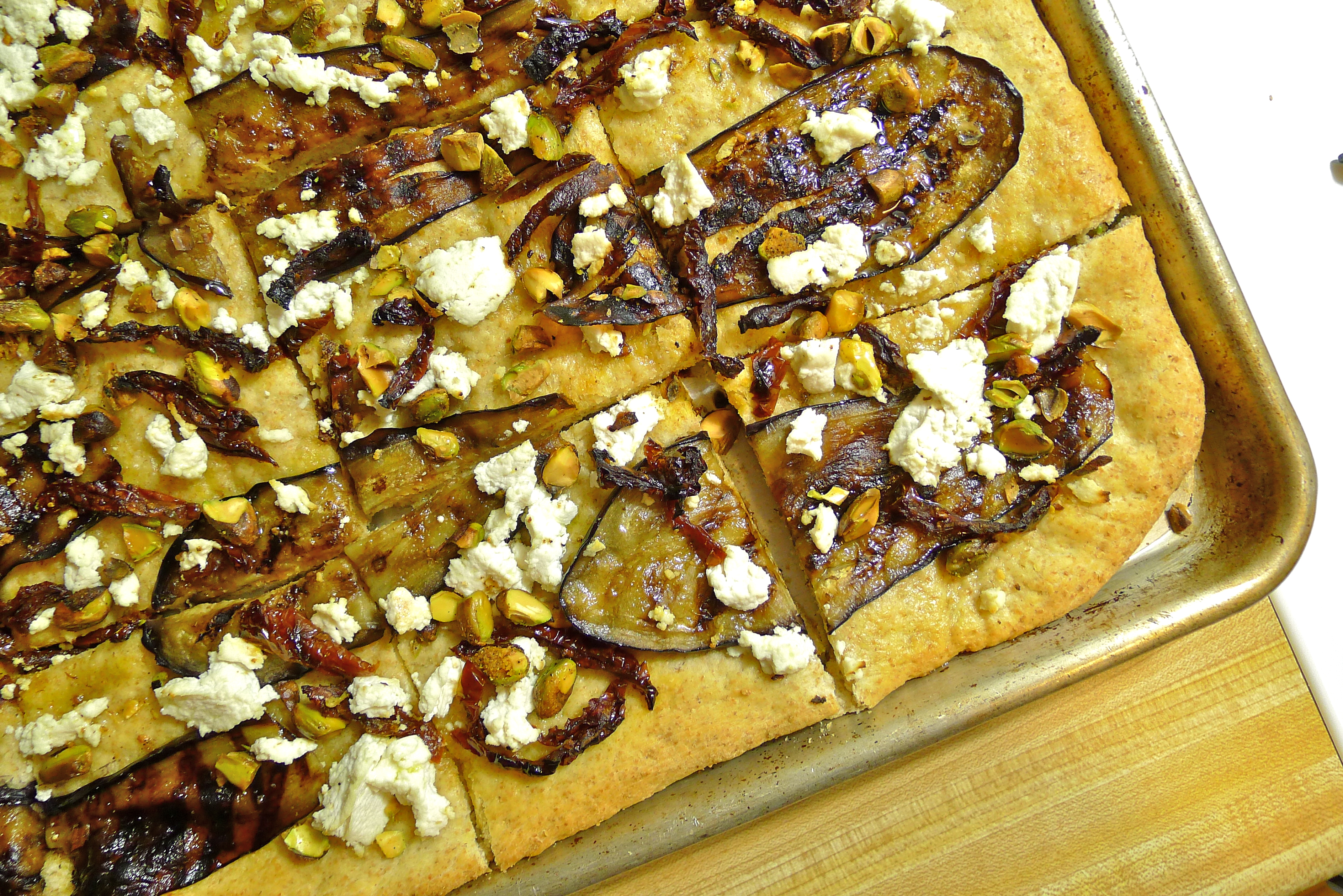
The Daring Kitchen April Cooks’ Challenge: Whole Wheat Flatbread with Grilled Eggplant, Goat Cheese Ricotta, Sundried Tomatoes and Maple-Chili Pistachios


This was the Daring Kitchen challenge that almost didn’t happen. After a few weeks of thinking, toying with ideas and brainstorming, the challenge got put on hold and then was quickly buried under a sea of other priorities. When I finally got around to making a grocery list and buying ingredients, my oven promptly decided that it was no longer participating in my kitchen adventures 😦

I thought about changing direction and doing something else, but my heart had been set on making a flatbread. I went as far as to contemplate doing the flatbread in a cast-iron pan on top of the stove (the stovetop was still working) and using a mini-blowtorch to char the top of it.

“Daisy,” Laura said, “I think that’s a bad idea.”

I even went out and bought pressurized butane despite having doubts that my newly acquired mini-torch — meant for itty bitty crèmes brûlées — would probably melt or malfunction if used on something as big as a 12 or 14-inch pizza . . .

“Daisy. It’s just a bad idea.”

Sigh.

Thankfully, my oven got fixed a lot sooner than anticipated — which just goes to show that you can get anything fixed in this town so long as you utter three magic words:

I smell gas . . .

I thought that was pretty smart of me 😉

Once the oven was fixed, I was back on track, though given the chance, I would have tinkered with the recipe more before posting. To make up for how rough the recipe is, I have written the recipe based what I would do it if I were to make it again — like use a lot more eggplant!

Also, I would suggest that you tinker a little bit with your cooking times and temperatures as it appears that when they fixed my oven, they also re-calibrated it so that it seems to run hotter that it did before.

This month, David and Karen from Twenty-Fingered Cooking challenged us to come up with our own recipes using the three lists of challenge ingredients. The recipe must include at least one item from each list, and if we fail, we must order a pizza.

The challenge lists were:

List 1: Parsnips, Eggplant, Cauliflower
List 2: Balsamic Vinegar, Goat Cheese, Chipotle Pepper
List 3: Maple Syrup, Instant Coffee, Bananas

When I first saw the challenge, I was thinking of a balsamic, instant coffee and maple syrup-glazed steak on top of a parsnip-goat cheese purée.

Then I thought about using the eggplant and cauliflower to make a vegetarian chili with chipotle peppers and instant coffee.

Then I thought that it would be fun to try to challenge myself to make the most inedible dish possible. Some kind of cauliflower-instant coffee banana cream pie, or a banana-chipotle baba ghanoush, but I felt like that might be a violation of the challenge’s good spirit.

To save me from myself, I threw the idea out to amazing Heather over at Ruby and Wheaky (one of my favorite blogs and one of my favorite bloggers — do check her site out when you get the chance! She is a phenomenal writer). She suggested a “maple syrup and chipotle-glazed cauliflower dish,” “an instant coffee dusted baked/fried eggplant dish with a goat cheese topping,” “an eggplant, goat cheese sandwich with a side dish of coffee-infused banana chips,” or “a crazy sort of eggplant, goat cheese pizza topped with maple- glazed pistachio nuts.”

As you can see, her ideas were way better than mine!

A giant thank you to David and Karen for the great challenge! I had a ton of fun dreaming up different recipes. Your challenge made me feel like an Iron Chef!

Blog-checking lines:
Our April 2012 Daring Cooks hosts were David & Karen from Twenty-Fingered Cooking. They presented us with a very daring and unique challenge of forming our own recipes by using a set list of ingredients!

Ingredients:

For the flatbread:

1 packet of active, dry yeast (about 2 1/4 teapoons)

1 cup of lukewarm water (between 105°-115°)

1 teaspoon of salt

2 tablespoons of olive oil

2 cups of bread or all-purpose flour

1 cup of whole wheat flour

For the toppings:

2 medium eggplants or one large eggplant, cut into 1/4-inch thick slices

Olive oil

2 tablespoons of balsamic vinegar

1 teaspoon of salt

1/2 cup of sundried tomatoes, cut into thin strips

6 ounces of goat milk ricotta (or another kind of soft and crumbly goat cheese)

1/3 of a cup of shelled pistachios

1 teaspoon of maple sugar (or one tablespoon of maple syrup)

1/4 teaspoon of chipotle pepper powder

1/2 teaspoon of salt

How to prepare:

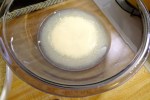
1. In a large bowl, mix together the yeast and the warm water. Let the yeast bloom undisturbed for about 10 minutes.

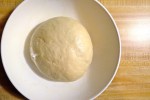
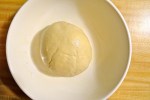
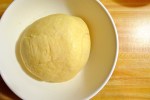
2. In a separate bowl, mix the two flours together. Once the yeast has bloomed, add the salt and two tablespoons of olive oil. Stir in the flour, a little bit at a time, with a wooden spoon until it has all been incorporated. Turn the dough out onto a lightly floured countertop and knead it for about 6-8 minutes until the dough is soft and satiny. Shape the dough into a ball and place it in a lightly oiled bowl. Cover the bowl tightly with plastic wrap and let it rise until it has doubled, about 1 1/2 to 2 hours.

3. In the meanwhile, prepare the eggplant. In a small bowl, whisk together the balsamic vinegar and 1 teaspoon of salt. Let sit for a minute or two to let the salt dissolve. Whisk in about four tablespoons of olive oil. Brush both sides of each eggplant slice with the balsamic-olive oil mixture.

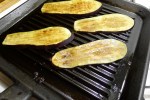
4. Brush a grill pan lightly with olive oil and heat it over medium-high heat. When the oil just begins to smoke, lay a few slices of eggplant on the grill. Grill the slices for a minute or two on each side. If you want, you can give the slices a quarter turn on the grill so that they have some nice grill marks. Remove the slices to a plate as you finish them.

5. Preheat the oven to 350°. In a small bowl, toss the shelled pistachios with the maple sugar or maple syrup, the chipotle pepper powder and a drizzle of olive oil until they are evenly coated. Toast the nuts for no more than 5 minutes, checking them frequently to make sure that they don’t burn. Remove the nuts from the oven and let them cool before roughly chopping them.

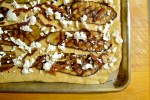
6. Turn the oven up to 425°. Punch the risen dough down and stretch it out to cover the bottom of a half-sheet pan. Lightly brush the surface with olive oil and evenly arrange the grilled eggplant slices over the top. Scatter the sun-dried tomatoes and the goat cheese evenly over the eggplant. Bake the flatbread in the oven for about 10-15 minutes. The dough should be crisp and the edges should be browned. Remove it from the oven and scatter the chopped pistachios over the top. Drizzle the flatbread with olive oil and cut into squares to serve.

Young, Green Garlic Knots with Parmesan and Marinara Sauce


Well, I did it. I broke my oven.

After a week of intense pizza-making, my oven decided that it was having no more of this high-heat nonsense and promptly decided that it was going to go on strike.

The stovetop still works, but the oven just makes a clicking noise and stays as cold as my hopes and dreams for weekend baking 😦

If my landlord doesn’t fix it in the next day or so, this will certainly throw a wrench into my plan for this month’s Daring Kitchen challenge. It is strongly looking like I am going to have to get creative fast.

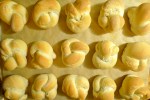
Thankfully, before my oven decided that it had lived through enough, I was able to crank out these awesome garlic knots using Patricia Wells‘ basic pizza dough recipe.

Since I used the rest of the green garlic I got at the Greenmarket, the garlic butter turned out to be more like a garlic spread. No matter, the results were still sloppily delicious. I inhaled about four in a row while standing in my kitchen. They were just so soft, pillowy and slathered with green garlicky goodness that I couldn’t eat just one or two . . . or, erm, three!

On another note, I passed that darned Spanish exam! Tequila para todos!!!

Ingredients:

For Patricia Wells’ Basic Pizza Dough:

1 teaspoon of active dry yeast

1 teaspoon of sugar

1 1/3 cups of lukewarm water (between 105°-115°)

2 tablespoons of olive oil

2 teaspoons of salt

3 3/4 cups of bread flour (thank you RubyandWheaky!) or all-purpose flour

For the Marinara Sauce:

2 tablespoons of olive oil

1 28-ounce can of crushed tomatoes (if you don’t live in the Tri-State area, you can order Jersey Fresh tomatoes here, or use the best San Marzano tomatoes that you can find)

Salt

For the Young, Green Garlic Spread:

2 bulbs of young, green garlic, white and green parts trimmed and thinly sliced

2 tablespoons of olive oil

2 tablespoons of butter

1 teaspoon of salt

Freshly grated Parmesan cheese for sprinkling

How to prepare:

1. In a large bowl, mix together the yeast, the warm water and the sugar. Let it stand for about 5 minutes before stirring in the olive oil and the salt.

2. Using a wooden spoon, stir in the flour, a little bit at a time, until most of the flour has been absorbed and the dough begins to pull together. Turn the dough out onto a lightly floured countertop and knead it until it is smooth and elastic, about 5 to 6 minutes. Shape the dough into a ball and transfer it to a large lightly oiled bowl. Cover the bowl tightly with plastic wrap and let the dough rise between 8-12 hours in the refrigerator, or until it has doubled or tripled in size.

3. When the dough has risen, remove it from the refrigerator and punch it down. Let the dough rise again until it has doubled in size.

4. While the dough is rising, heat two tablespoons of olive oil in a heavy-bottomed saucepan over medium heat. Add the tomatoes. Reduce the heat to medium-low and simmer the tomatoes, stirring frequently, until all the oil has been incorporated and the sauce has thickened. Adjust the seasoning.

5. Preheat the oven to 400°.

6. Divide the dough into 15 2-ounce portions. Use your hands to roll and stretch each portion into a 6-8 inch-long strip. Make a knot, and tuck the ends under the bottom of the knot. Arrange the knots on a parchment paper-lined sheet pan so that they are evenly spaced apart. Bake the knots for about 20-25 minutes, or until they are browned and golden.

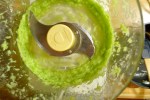
7. While the knots are baking, soften the green garlic in the olive oil and butter over medium heat. When the garlic is soft, season it with about a teaspoon of salt. Transfer everything to a food processor and process it until you have a smooth purée.

8. When the knots are done, remove them from the oven and let them sit until they are just cool enough to handle. Spread the green garlic purée over the top of each knot. Let the knots cool and absorb the the melted butter and olive oil in the purée. Sprinkle each knot with Parmesan cheese and serve with marinara sauce on the side.

Young, Green Garlic Pizza


Have you seen Jim Lahey‘s new book? The one all about pizza? I have been a big fan of Lahey ever since I lived up the street from the Sullivan Street Bakery in Soho. Back then, I used to go over there almost daily for shots of Illy coffee and square slices of pizza, available in four varieties: Bianca, Potato and Rosemary, Tomato Sauce, and Mushroom and Thyme.

Since those years, Lahey has expanded the Sullivan Street Bakery and opened a pizza joint called Co. Co. is just about one of my favorite places for a pizza pie in the city. The dough is imperfectly perfect: lumpy, irregular, charred, crispy and toothsome, with just the right amount of salt and olive oil. When I saw that Lahey had published a book all about pizza, I got really, really excited.

Because I thought it would be really, really easy.

See, Lahey’s other book contained the über-recipe for no-knead bread. As long as you were willing to let the dough do its thing and rise overnight, you could have amazing bread with just about zero effort. You didn’t need a fancy oven, or a special starter, or a wooden paddle. You just needed a bowl and an oven-safe pot with a lid.

So of course, I assumed that his pizza would be just as simple.

In many ways, it is. You mix the ingredients, you let it rise overnight, you stretch it, you top it . . . and then you pull out your pizza stone, pizza paddle or pizza peel.

Insert screeching wheel sound here.

Lahey wants you to heat your pizza stone by positioning it about 8 inches from the broiler element before using your pizza paddle to slide your pie onto its hot surface. I have three problems with this:

A) I live in a tiny studio apartment and I don’t have any space left for any more pieces of specialized cooking equipment, no matter how “inexpensive” Lahey says they are.
B) My broiler has exactly three inches worth of clearance because the broiler unit is positioned underneath the actual oven. If I put a pizza stone in there, there will be no room for a pizza. If I do manage to wedge a pizza in there, chances are that I will set my apartment on fire.
C) I live in a rental.

I have no problem with letting dough proof overnight. Delayed gratification doesn’t bother me, but if there is one thing I abhor in terms of cooking it is being told that I can’t make X if I don’t have Y.

Especially when Y is a piece of equipment.

Pizza is pizza. It’s not molecular gastronomy, it’s peasant food — albeit very wonderful peasant food that has a cult following and official Italian government recognition.

Nevertheless, I refuse to be precious about pizza.

If you have a pizza stone, by all means use it. If you have a pizza peel, good for you. You are likely a more serious pizza aficionado than myself. If you have neither, you can still make a perfectly serviceable— and even an amazing pizza — without them.

I’ll worry about authenticity when I have the money, time and space to build a outdoor wood-burning oven just like they have in old Napoli.

Pizza dough is really easy to make at home. Generally, it consists of five ingredients: flour, yeast, olive oil, salt and water. Every time that I make pizza dough, I end up using a different recipe than I did before because I forgot to scribble down the proportions that I used. However, there is one dough that I keep coming back to consistently: Amy Scherber‘s “Push Button” Pizza Crust, published in The Chefs of the Times. Scherber’s dough is super easy to pull together; you just whizz all the ingredients together in a food processor for about 60 seconds total, and then let the dough rest for 60 minutes. You don’t have to toss it to stretch it, just use your fingertips to “press, prod, push and poke” the dough into place on a plain old cookie sheet. The crust gets wonderfully crispy in the oven, but it still has a little bit of give to it. It also has great flavor even though it has the same ingredients that every pizza dough has.

If you don’t have a food processor, you can just stir the ingredients together with a spoon, and then knead it until the dough feels elastic.

For the sauce, I make the simplest marinara ever using Jersey Fresh Crushed Tomatoes — which are amazing straight out of the can. All I do is heat about two tablespoons of olive oil in a heavy-bottomed saucepan, add the 28 ounces of crushed tomatoes, and simmer everything over low heat until the oil has been incorporated and the sauce has thickened. I love it. If the canned tomatoes are really good, it’s just the purest taste of tomato that you can imagine.

The #1 most important trick to perfect pizza at home is to go easy on the sauce and the toppings.

I know it’s hard to resist the urge to slather your dough with tons of sauce and cheese, but the more you pile on, the spongier your dough will be because all those toppings carry moisture. The more toppings you add, the less chance you will have of achieving a crispy crust.

And pizza really is all about the crust. So remember, less is more!

This is also the first post this year to feature spring vegetables. Green garlic is in! Whoo-hoo!!!

Ingredients:

For Amy Scherber’s “Push Button” Crust:

Olive oil

3/4 cup + 1 tablespoon of warm water (between 105-115°)

1 1/2 teaspoons of active dry yeast

2 cups of all-purpose flour

2 tablespoons of coarse cornmeal

2 1/2 teaspoons of salt

For the pizza sauce:

2 tablespoons of olive oil

1 28-ounce can of crushed tomatoes (if you don’t live in the Tri-State area, you can order Jersey Fresh tomatoes here, or use the best San Marzano tomatoes that you can find)

Salt

For the toppings:

1 ball of buffalo mozzarella

1 bulb of young, green garlic, thinly sliced on the bias along with some of the tender green stem

Special equipment:

1 half-sheet pan or a plain old cookie sheet

How to prepare:

For the dough:

1. Whizz together the water, the yeast and 2 teaspoons of olive oil in the food processor. Add the flour, the cornmeal and 2 1/2 teaspoons of salt. Process everything together until the dough comes together, about 10 seconds. Process the dough for about 5 seconds more before turning it out onto a lightly floured countertop. Knead the dough briefly for about 30 seconds. Shape the dough into a ball and place it in an oiled bowl. Cover it with plastic wrap and let it rest for about an hour.

If you don’t have a food processor, you can mix the water, the yeast and the olive oil together with your fingers, and then incorporate the dry ingredients a little bit at a time with a wooden spoon. Turn the dough out onto a lightly floured countertop, and knead the dough until it becomes elastic. Shape the dough into a ball and place it in an oiled bowl. Cover it with plastic wrap and let it rest for about an hour.

2. While the dough is rising, heat two tablespoons of olive oil in a heavy-bottomed saucepan over medium heat. Add the tomatoes. Reduce the heat to medium-low and simmer the tomatoes, stirring frequently, until all the oil has been incorporated and the sauce has thickened. Adjust the seasoning.

3. Preheat the oven to 450-475°.

4. When the dough has risen, divide it in half if you want to make two round personal pizzas, or leave it as one ball of dough if you want to make one big rectangular pizza. Line your sheet pan with a parchment paper. Lift the dough out the bowl and stretch it out slightly. Place it in the center of the sheet pan. Using lightly oiled fingertips, press the dough out from its middle to its edges. Continue to pat it out until it is thin and evenly covers the pan.

5. Spoon just enough sauce over the dough so that there is a thin, even layer. Hand tear the mozzarella over the top, half a ball per round if you are making two round pizzas instead of one large rectangular pizza. Scatter the thinly sliced green garlic evenly over the top. Bake the pizza until the crust is golden and the top is bubbly, about 10-15 minutes.

Colcannon and Irish Bacon


I’m not really the kind of person to post Irish dishes simply because it’s Saint Patrick’s Day. In all honesty, this meal came about from searching for something to accompany the nice Irish bacon that I get from my CSA.

While idea hunting, I came across colcannon, and somewhere in the dusty outer reaches of my memory came the image of mashed potatoes and winter greens mushed together. Not quite sure where I had it first; it might have been at some random inn or, more likely, some Irish pub in Boston. In any case, it didn’t make that much of an impression on me at the time. Furthermore, I would have never considered making it if I hadn’t read this from The Country Cooking of Ireland by Colman Andrews:

“To serve [colcannon] in the traditional Irish manner, push the back of a large soup spoon down in the middle of each portion to make a crater, then put a large pat of room-temperature butter into each one to make a ‘lake.’ Diners dip each forkful of colcannon into the butter until its walls are breached.”

Holy. Crap.

If I had known that you were supposed to eat colcannon that way . . . well, let’s just say that it would have been dangerous. Dangerously delicious, I mean!

In his recipe, Andrews asks you to heat the milk together with chopped green onions, and then beat the hot infused milk into the mashed potatoes. I actually spaced out and tipped all my cold milk into the potatoes before I remembered that step. Regardless, it still tasted wonderful.

So if you think that a dipping “lake” of melted butter for your mashed potatoes and greens (which might as well be ornamental at this point) sounds as awesome as it does to me, than colcannon is definitely for you!

And once those “walls are breached,” Irish bacon tastes pretty darn good in the ensuing butter flood. Don’t forget the mustard!

Ingredients:

2 large Russet (or floury) potatoes, about 2 pounds, peeled and cut into large dice

1 cup of whole milk

6-8 tablespoons of butter at room temperature

1 bunch of Lacinato kale, stemmed and cut into 1-inch pieces (you could also use curly leaf kale, savoy cabbage, or any other kind of leafy winter green)

Salt and freshly ground pepper

About a pound of Irish bacon

Coarse Dijon mustard

How to prepare:

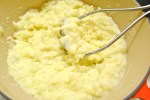
1. Place the diced potatoes in a large pot of salted water and bring everything to a boil. Reduce the heat and simmer the potatoes until they can be easily crushed against the side of the pot with the back of a wooden spoon. Drain the potatoes well. Add two tablespoons of butter and the cup of milk to the potatoes. Using a potato masher, mash the potatoes until all the potato pieces are crushed. If the mash doesn’t seem sufficiently nice and fluffy, add some more milk, a little bit at a time, until it has the right consistency. Cover the pot while you prepare the rest.

2. Melt about a tablespoon of butter in a large saucepan over medium heat. Add the cut kale and a little bit of water (about a tablespoon). Season the kale with salt and pepper. Sauté the kale until it begins to wilt. Tip the kale into the potatoes and stir everything together to combine. Adjust the seasoning.

3. Brown the Irish bacon slices on both sides in a large cast-iron skillet. Transfer the browned slices to paper towels to drain.

4. Mound a good amount of warm colcannon on each plate. Using the back of a spoon, make wells in the middle of each mound and put a hefty knob of butter in each one.

Serve your colcannon with a few slices of Irish bacon and grainy mustard on the side.

Simple Roast Chicken and Yotam Ottolenghi’s Parmesan Rice with Buttered Almonds and Fresh Oregano


The past few weeks have been insane schedule-wise. First of all, I had a slew of administrative concerns that needed to be sorted out. Never fun. Secondly, I had to take a Foreign Language Proficiency Exam. In Spanish.

I don’t speak Spanish.

So why did I have to take it? Well, long story short, for my degree, I basically needed to show that I can do research in a language other than my native one if necessary. Since I am in a French department, French doesn’t count even though it is not my native language. English doesn’t count either because it actually is my native language.

Yes, I agree; it didn’t make a whole lot of sense to me either that I had to pick something else.

What is really embarrassing is that I have actually known about this requirement for years. Why did I put it off for so long? Well, it kept getting superseded by more pressing things like students who needed final grades, or coursework that needed to be completed. Silly things like that!

I think that I also had these pleasant daydreams of jetting off to Buenos Aires to learn Spanish while sucking down copious amounts of Malbec. Or learning Spanish in Madrid with a dictionary in one hand and a tapas in the other. Or going to Lima and eating chifa until I exploded. You get the idea.

In any case, it just got to the point where I couldn’t avoid it anymore.

And that is how I found myself in a situation where I had to teach myself advanced-level Spanish in three weeks!

To those who say that Spanish is “easier,” I say that you don’t know what you’re talking about.

I have spent many, many, many years teaching French to undergrads. That is a lot of experience breaking language down into manageable chunks and patterns. Believe me when I say that, comparatively, Spanish has a lot more verb forms than French does. It also has more than one verb for “to be,” a crazy, confusing thing called the “a personal,” and imperfect past, past perfect and future subjunctive tenses that actually get used.

I would guess that people say that Spanish is easier for two primary reasons: Americans tend to have more exposure to Spanish than any other foreign language, and Spanish-speakers, in general, seem to be much more tolerant of badly-spoken Spanish than French or Italian speakers are of badly-spoken French or Italian.

Needless to say, I was so stressed out I wasn’t eating very well. However, at a certain point last week, I just couldn’t take it anymore. My body would not accept any more slices of pizza,  any more handfuls of almonds, or any more weird juice drinks in an effort to have my fruit and vegetables in a speedy, non-chewable way.

I just had to cook something. It had to be warm and comforting. It had to be interesting too, but in as fuss-free a way as possible.

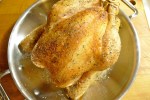
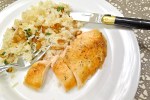
A roast chicken fit the bill beautifully. Trussed tight, massaged with butter, and showered with salt and pepper is all the effort needed to turn out a beautifully golden bird.

But woman cannot live by poultry alone!

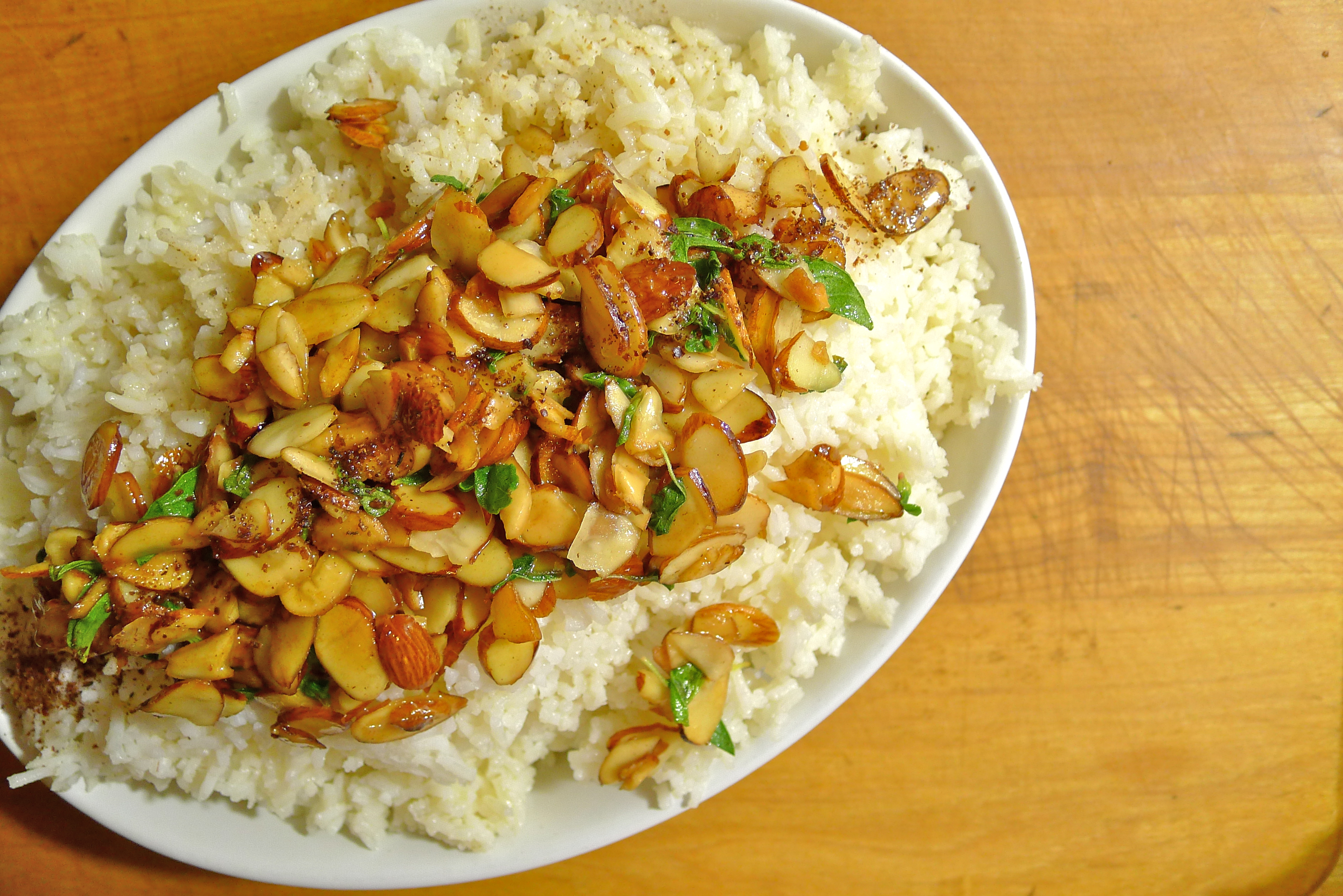
So I paired it with this fantastic Parmesan rice recipe that I adapted from Yotam Ottolenghi — which was equally as easy to make, as well as being elegant to look at and eat. Is the dish Middle Eastern-inspired? Persian? Moorish? Italian? Turkish? Who the heck knows, but it was delicious.

As for the exam, I hope that I passed! I find out in 4-6 weeks. Fingers crossed that I don’t have to take the gosh darned thing again!

Ingredients:

5 tablespoons of butter (divided into 2 tablespoons, and 3 tablespoons)

1 1/2 cups of basmati rice

3 cups of water

Salt and white pepper

1 cup of freshly grated Parmesan

1/2 cup of raw slivered almonds

The juice of 2 lemons

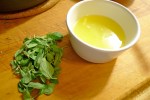
1 tablespoon of fresh oregano leaves

Sumac (optional)

How to prepare:

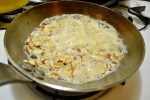
1. Melt 2 tablespoons of butter in a medium-sized saucepan over medium heat. Toss the rice in the melted butter until the individual grains become translucent. Add 3 cups of water and a good pinch of salt. Raise the heat to medium-high, and bring the rice to a boil uncovered. Cover the pan, and lower the heat about as low as it can go. Cook the rice until all the liquid has been absorbed and the rice is tender.

2. When the rice is done, fluff it with a fork. Evenly sprinkle the rice with the cheese and stir everything together. The Parmesan should be evenly distributed throughout the rice. Adjust the seasoning with salt and white pepper. Cover the rice again while you prepare the almonds.

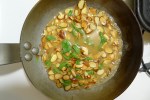
3. In a small frying pan, melt the remaining 3 tablespoons of butter over medium to medium-low heat. Once the butter has melted, add the almonds. Turn the almonds in the foamy butter until they begin to brown and turn golden. Remove the pan from the heat. VERY CAREFULLY add the lemon juice by pouring it over the back of a wooden spoon into the almonds. Stir in the oregano leaves. Adjust the seasoning.

4. Mound the Parmesan rice in a large dish. Spoon out the almonds and pour the sauce evenly over the rice. Sprinkle with sumac and serve with roast chicken.

For the Roast Chicken:

This is not a recipe per se, but more like a set of guidelines that I have used over the years for cooking perfect poultry.

1. Buy the best bird you can find. Organic, all-natural, free-range, no hormones or antibiotics, humanely-raised and processed if you can.

2. Take your chicken out of the fridge about 30 minutes to an hour before you want to cook. Your bird should be on the cool to touch (like the cooler side of room temperature), but not refrigerator cold.

3. Dry your bird throughly with paper towels, inside and out. Let it sit on the countertop uncovered. The dryer the skin, the crispier the chicken.

4. Pre-heat your oven to 425-450°. Give yourself some time for the oven to come up to temperature. This generally takes 15-20 minutes, but can take up to 30 minutes depending on your oven.

5. No stuffing. This is the secret to perfect chicken. I find that by the time the stuffing is done cooking, you have overcooked your lovely bird. I like just a few things in my chicken: one lemon (cut into wedges if your chicken is small), one onion, a few cloves of garlic and fresh thyme. If it’s Meyer lemon season, please do use one of those.

6. Use the best butter or olive oil. In Nigella Lawson’s cookbook, How to be a Domestic Goddess, she writes that when roasting chickens, you should anoint your chicken with the highest quality butter or olive oil the same way you might apply very expensive hand cream. I always liked that image.

7. Truss your bird tight. Like a compact little football. I really do think it helps your bird cook more evenly. Moreover, chicken just looks better without its legs all akimbo.

8. Season liberally. In his Bouchon cookbook, Thomas Keller writes that he never butters his bird because the moisture in the butter creates steam that will ruin the integrity of the skin’s crispiness.

I’ve never found that to be the case.

I did once try Keller’s approach sans butter and found the skin to still be tasty, but less glossy and appealing overall. I do like his salting technique though: “I like to rain the salt over the bird so that it has a nice uniform coating that will result in a crisp, salty, flavorful skin (about 1 tablespoon). When it’s cooked, you should still be able to make out the salt baked onto the crisp skin. Season to taste with pepper.”

So by all means, hold your hand high and shower that bird with seasoning!

9. 20-20-20-15 or 15-15-15-15. I don’t always follow this but when I do, I like the results. Inspired by Patricia Wells’s Roast Lemon Chicken recipe in her Paris Cookbook, I start the bird in a super hot oven on one side. After twenty minutes (or 15 if the chicken is small), I turn it on the other side for another twenty. After that, I drop the oven temperature to 375°. I turn the chicken breast-side up for yet another twenty minutes — a total of 1 hour.  I continue roasting it until the chicken’s internal temperature reaches 165°. When the chicken is done, the juices should run clear when you pierce the thickest point of the thigh with a paring knife or skewer.

Sometimes, I will just put the chicken in breast-side up at 425-450° for about half and hour to 40 minutes before dropping the temperature to 375° for the remainder of the time. I know it sounds weird, but I think you can start to smell when you should turn down the heat. I find the results to be almost as good.

10. Remove from oven and let rest for 10-30 minutes before carving. Such an important step and essential for serving a juicy bird. Plus, you don’t risk burning your fingers!

Tips:

No basting.

A top-knotch carving knife is always an asset in the kitchen.

Keep the carcass and the juices! They are worth their weight in gold.

Cuban-Style Minute Steaks with Black Beans and Rice


“Hey, T! What do you do with your minute steak?”

“I don’t know,” Tomoko texted back, “It’s hard because of how it’s sliced. What do you do with it?”

“Steak sandwiches usually, but I was kind of looking for something different this time …”

Indeed.

The minute steak that we get in our CSA has always presented a bit of a challenge for me. Minute steak, as I have learned, is not cube steak. Well, not always. It’s pretty confusing, actually, when you start searching for minute steak cooking ideas.

Most sources that I have seen say that minute steak and cube steak are basically the same thing. However, there seem to exist regional distinctions: in some parts of the country minute steak and cube steak refer to the same cut, whereas in other parts of the country, they are quite different from one another.

From what I can gather, cube steak is a cut of top round or top sirloin that has been run through an electric cube steak machine. The “cubing” refers to the kind of cross-hatched pattern that appears on the surface after the meat has been tenderized. It literally looks like it is made up of little cubes. Minute steak, on the other hand, is very thin slices of steak that are stacked, formed and shaped into a steak shape. Minute steaks, like cube steaks, cook very quickly — hence the name and the confusion.

One of the best things about having a meat CSA is learning how to cook different cuts that I would have never tried on my own. Minute steak is one of these. You could probably just throw it in a pan and be done with it, but I have found that figuring out the right cooking method with the right cut of meat can turn a perfectly good meal into something downright spectacular.

Bistec de palomilla with Cuban black beans and white rice is one of those meals that is so simple that hardly anyone bothers, as Tomoko would say, to write it down. People do write it down, of course. On the web, you can easily find many recipes for it, including this one from the New York Times that I used as the base for the one below.

In all honesty, I could have chosen any recipe for bistec de palomilla since they are all almost identical. Sure, I was tempted to put my own wacky spin on it, but sometimes good things are so good that you just have to leave them alone.

The essentials are that you marinate thin cuts of beef in garlic and lime juice (it doesn’t necessarily have to be minute steak or cube steaks, just thin steaks), you cook rice with lime juice and garlic, you cook the beans with lime juice, garlic and onions, and finally you sear the beef and top it with sautéed onions.

But just because it is simple doesn’t mean it that doesn’t taste divine.

So if you like lots of limes and lots of garlic, this recipe is for you!

* If you love limes and garlic but not the meat so much, the black beans and rice are easy to make and absolutely fabulous on their own. I used canned beans here because that is what I had in the pantry, but if you prefer dried beans (and who doesn’t), by all means soak ’em and cook ’em!

Ingredients:

For the steak:

1 to 1 1/2 pounds of minute steak (or any other kind of thinly-sliced steak)

The juice of 3 limes

4 cloves of garlic, finely minced

Salt and pepper

1 medium onion, sliced

2 tablespoons of olive oil

For the rice:

2 cups of white rice

3 cups of water or chicken stock

The juice of 1 lime

2 cloves of garlic, finely minced

1 tablespoon of olive oil

Salt

For the beans:

1 small onion, chopped

3-4 cloves of garlic, finely minced

Olive oil

2 cans of black beans

The juice of 1 lime

Salt

Fresh cilantro

How to prepare:

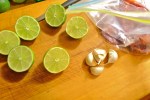
1. Lightly sprinkle the steaks with salt and pepper (because the limes are so punchy, you can reduce the salt without sacrificing flavor). In a large zip-loc bag, combine the lime juice, the garlic and the meat. Toss everything together in the bag until the steaks are evenly coated with the garlic and the lime juice. Let the steaks marinate for about 45 minutes, but do not marinate them for more than an hour.

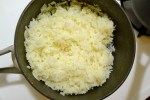
2. While the steaks are marinating, make the rice and the beans. In a medium-sized saucepan, bring the rice (you don’t need to rinse it), the 3 cups of water or chicken stock, the lime juice, the garlic and the olive oil to a boil over medium-high heat. Turn the heat down to low. Simmer the rice until it is tender and all the water has been absorbed — about 15-20 minutes. Remove the rice from the heat and fluff it with a fork. Cover it while you prepare the rest of the meal.

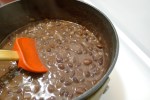
3. In another medium-sized saucepan, heat some olive oil over medium-high heat until it begins to shimmer. Sauté the chopped onion in the olive oil until it begins to turn translucent — about 5 to 6 minutes. If the onions seem to be cooking too quickly, lower the heat to medium. Add the finely minced garlic. Continue to sauté everything together for about another minute or so. Add the beans (you don’t need to drain them) and the lime juice. Stir everything together and simmer the beans over medium/medium-low heat until the cooking liquid has thickened. The beans should be tender at this point. Adjust the seasoning.

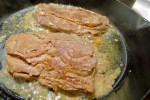
4. Heat 2 tablespoons of olive oil in a large cast-iron skillet set over medium-high heat. When the oil begins to shimmer, add the sliced onion. Sauté the onion until it just begins to turn translucent and take on a little bit of color. Remove the onions to a separate bowl or plate. Lift the steaks out of the marinade and add them to the skillet. Cook them for about 2 minutes per side (they will cook even more quickly if the steaks are really thin). Remove the steaks to a large plate or platter. Add the sautéed sliced onions back to the pan to let them soak up all those nice, meaty, lime-scented juices. Heap the onions on top of the steaks. Top everything with sprigs of fresh cilantro.

Serve the steaks with heaping scoop of white rice and another of black beans.

The Daring Kitchen February Cooks’ Challenge: Patties


Last month, when I opened up the Daring Kitchen‘s Chefs’ Challenge for February, I remember thinking, “Oh. Patties.”

As you can surmise, my initial enthusiasm was less than palpable.

It was a long PDF too, delving somewhat into the history of the patty:

“Irish chef Patrick ‘Patty’ Seedhouse is said to have come up with the original concept and term as we know it today with his first production of burgers utilizing steamed meat pattys – the pattys were ‘packed and patted down,’ and called pattys for short, in order to shape a flattened disc that would enflame with juices once steamed.”

And offering a somewhat of a basic definition:

“Technically patties are flattened discs of ingredients held together by (added) binders (usually eggs, flour or breadcrumbs) usually coated in breadcrumbs (or flour) then fried (and sometime baked).”

I would hesitate to say that anyone “invented” the patty. Flattened discs of pan-fried food seem to be commonly found everywhere, and I imagine that the technique goes as far back to when humans started smushing things together to eat. Maybe it didn’t get codified until much later, but I’m not sure that really matters much as this is the case for a lot of foods.

What kept my attention was that the hosts of this month’s challenge, Lisa and Audax, went into great detail about the technical aspects of patties, providing a kind of matrix for making them:

Main ingredient(s): some kind of ground protein (meat, poultry, seafood, beans or nuts) and/or vegetables.

Binders: eggs, flour, breadcrumbs (fresh or packaged), bran, tofu, mashed potatoes or any kind of mashed vegetable or legume.

Moisteners: water, milk, sour cream, mayonnaise, sauces, mustard, chopped spinach, shredded carrots or zucchini, shredded apples, anything that would add extra moisture if needed.

Technique: shallow pan-frying or baking.

Frying fat: butter, rice bran oil, canola, olive oil, ghee, or any other kind of oil with a relatively high smoking point.

Can you believe that I am such a food nerd that it was actually the 3.5 single-spaced pages of technical patty construction talk that sold me on the idea?

And as tempting (and easy) it would have been to have come up with a recipe on my own — ideas that I had? shrimp, chili pepper, and cilantro patties with some kind of scotch bonnet relish, or something Cantonese-ish like shrimp, corn, and egg whites — the fact is that I have been so overwhelmed with work and school lately that I haven’t had much time to devote to fun things like cooking challenges.

So, dear Readers, please do forgive my inability to milk any extra creative juice out of my brain right now!

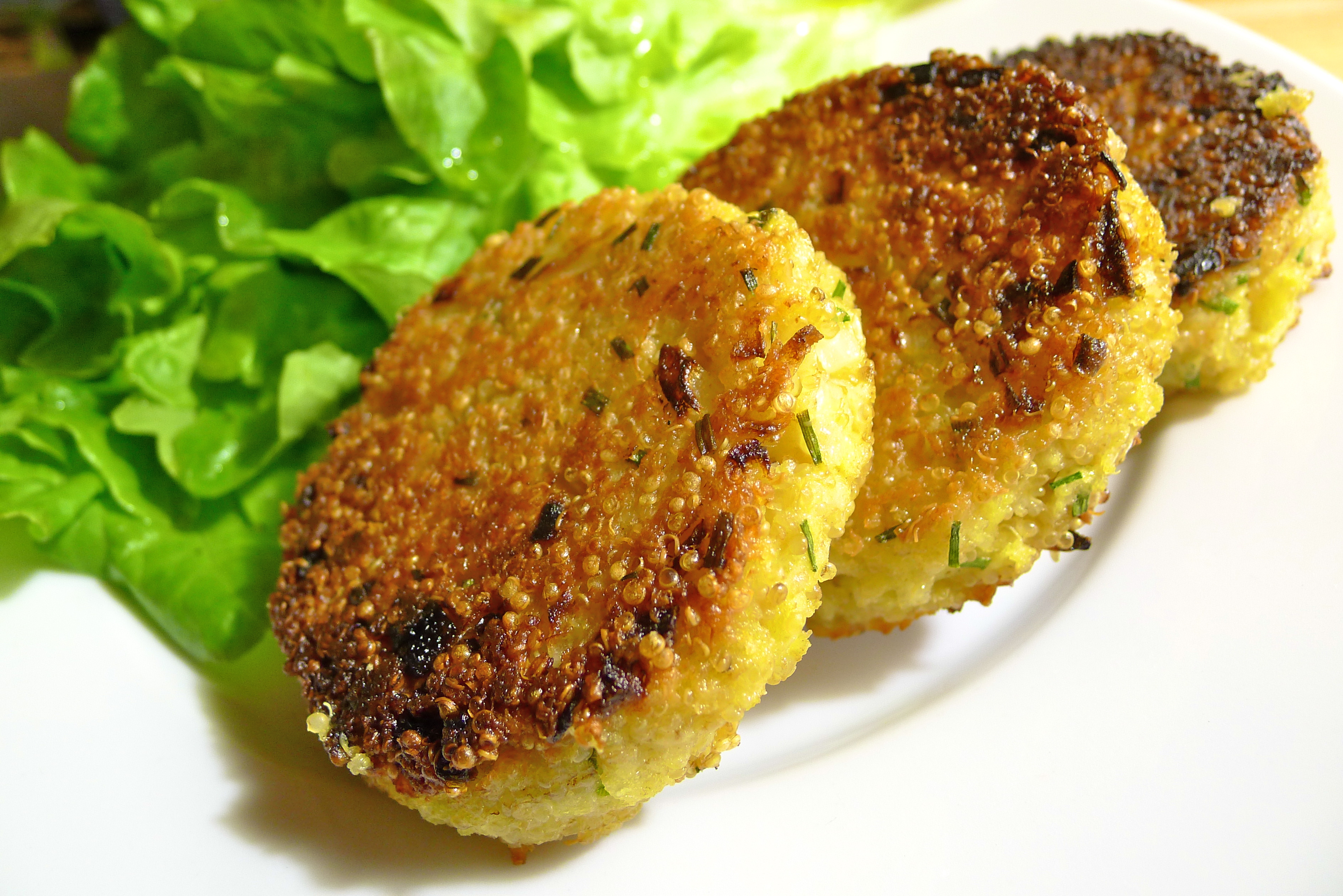
These wonderful little quinoa patties are from Heidi Swanson‘s Super Natural Everyday cookbook. They are great for lunch or a light supper. I only made half of the recipe because I just had a cup and a half of leftover quinoa, but you should certainly make the full recipe by doubling the amounts that I list below. The patties keep exceptionally well, and reheat easily in the oven.

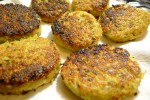
One thing I learned from the challenge? My strong suspicion that my stove sits on uneven flooring is once and for all confirmed: all the oil slid to one side of the cast-iron pan while cooking, resulting in patties that were darker on one side than the other.

As soon as I get the time, I’m going to get in there and stick some little wooden wedges under the stove to even it out.

Thank you again Lis and Audax for the technical exercise and great challenge.

And isn’t Audax just the best name ever?

Mandatory blog-checking lines: 

The Daring Cooks’ February 2012 challenge was hosted by Audax & Lis and they chose to present Patties for their ease of construction, ingredients and deliciousness! We were given several recipes, and learned the different types of binders and cooking methods to produce our own tasty patties!

Ingredients for Heidi Swanson’s Little Quinoa Patties:

1 1/2 cups of cooked quinoa (you might also use leftover cooked bulgur wheat, millet, rice, or lentils)

2 eggs

Salt

2 tablespoons of chives, chopped

1 small onion, finely chopped

3 tablespoons of freshly grated Parmesan

1 fat garlic clove, very finely chopped

About 1/2 cup of Panko breadcrumbs, plus more if needed

1-2 tablespoons of olive oil or clarified butter

Special equipment:

A 3-inch ring mold

A cast-iron skillet

A lid to fit the skillet

How to prepare:

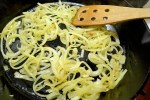
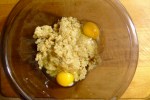
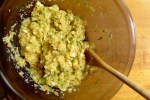
1. In a large bowl, combine the quinoa and the eggs together with a good pinch of salt. Add the chives, the onion, the Parmesan, and the garlic. Stir in the Panko, and let the mixture sit for a few minutes so that the breadcrumbs can absorb some of the moisture.

2. After a few minutes, you should be able to easily shape the mixture. If it seems a little wet, you can add more Panko to firm up the mixture. Conversely, if you find the mixture too dry, you can add a little water to loosen it up.

Swanson recommends erring on the moist side so that the patties won’t be overly dry — which is what I would recommend as well. As I left the quinoa mixture on the moist side, I found that it was easier to use a ring mold to make the patties instead of using my hands to shape them.

Set a ring mold on a plate and fill it with about three heaping spoonfuls of the quinoa mixture. Spread the mixture out evenly in the mold. Lightly compress each one by pressing on the top of the patty with the bottom of a spoon. Carefully remove the mold. Continue until you have used up all of the quinoa mixture. You should have about 6-7 patties total (or about 12 if you make the full recipe).

3. Heat the olive oil in a large cast-iron skillet over medium-low heat until it begins to shimmer slightly. Using a thin, flexible spatula, carefully transfer the patties to the skillet. You should be able to fit in all six with a little room in-between each one. Cover the skillet and let the patties cook for about 7-10 minutes. The bottoms should be deeply browned, but not burnt. Carefully flip the patties and cook them on the other side for about 7 more minutes. When both side are evenly colored, transfer the patties to a paper towel-lined plate.

Serve warm with a nice green salad.

Peanut Butter and Milk Chocolate Chip Rice Krispies Treats


Last weekend I went to a Super Bowl party where my friend Dave was in charge of the kitchen. He had put together a menu featuring these great burgers: loosely packed patties covered with carmelized onions and loads of béarnaise sauce. Isn’t that a great idea? As we were chatting in the kitchen, Dave mentioned that this vision of béarnaise + burgers had been incubating in his mind for years before he set out to make it a reality.

Sometimes that happens. Sometimes you hold onto a sprout of an idea for a long time, waiting for the right time to make it happen. Other times, inspiration strikes in speedier ways.

When snack stadiums were popping up all over the Internet, I remember seeing a particularly unholy one in which the stadium was constructed of alternating ham hoagies and Rice Krispies treats. It was kind of disgusting, but it definitely made me think about bringing marshmallowy treats to the Super Bowl party (one should never come empty handed).

I have been nursing a jones for peanut butter for a couple weeks now, as well as a chocolate craving. So, I thought, why not a peanut buttery, chocolatey Rice Krispies treat? Like one of those Reese’s Crispy Crunchy Bars, but with much better chocolate and peanut butter.

I love the combo of salt, fat, and sugar, and you will too if you don’t already. This is going to taste like childhood, so don’t knock the milk chocolate. I used a good one, and so should you.

As you can see, the chocolate was so good that I went a little over-bonks on the drizzle.

Ingredients:

6 cups of plain Rice Krispies

1 1/2 cups of salted whole peanuts

1 1/2 cups of milk chocolate chips + 1 cup (2 1/2 cups of chocolate chips total)

4 tablespoons of unsalted butter

1/2 cup of creamy peanut butter

4 cups of mini marshmallows (about 10 ounces)

How to prepare:

1. Lightly butter a large dish.

2. Combine the Rice Krispies, the peanuts, and 1 1/2 cups of the chocolate chips in a large mixing bowl.

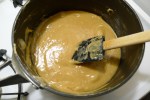
3. Melt together the butter, the peanut butter, and the marshmallows over medium-low heat in a medium-sized saucepan. When the mixture is creamy, pour it into the dry ingredients. Using a large wooden spoon, quickly stir everything together until the dry ingredients are evenly coated with the marshmallow mixture.

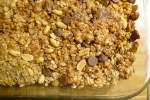
4. Tip everything into the buttered dish. Using your hands (moisten them a little with water so that they don’t stick), gently press the mixture into the dish, making an even layer.

5. In a small saucepan over very low heat, melt the remaining cup of chocolate chips. Be sure to stir them constantly so that the chocolate doesn’t separate or burn. When it has melted, remove it from the heat. Using a spatula, scoop a little bit of chocolate out of the pot and flick it quickly across the Rice Krispies treats. Continue to do this until the entire surface is evenly drizzled.

6. Let everything cool. When the chocolate has hardened, use a sharp knife to cut squares of Rice Krispies treats.

Anthony Bourdain’s Mushroom Soup from the Les Halles Cookbook


I am always puzzled when I see bloggers declaim against those who try out and post recipes from other sources. It just feels kind of snobbish to me. Most, if not all food people read recipes. Food people tend to read a lot of recipes. Food people tend to own a lot of cookbooks too. A lot of food people also watch a lot of food TV.

This is not uncommon, and it strikes me as strangely inauthentic when people deny it. Furthermore, what’s so bad about it? Trying recipes from other people is a good way to learn different cooking techniques. Blogging about your experience lets others learn from you, just like you learned from them. Don’t you like the feeling that you are joining and contributing to the larger conversation? I do.

Also, there are a lot of recipes out there. What’s wrong with bringing some of those to the attention of another audience? I mean, don’t go out and plagiarize. Don’t pass off recipes that are not yours as your own. But why look down on people who properly attribute and discuss their results?

We all blog and write because we generally want to share our knowledge and experience. I personally would be thrilled if someone made and wrote about something that I posted so long as they did it respectfully — and I think that most bloggers would be pretty darn chuffed too.

Yeah, I know. I just used a British-ism.

More importantly, if you are trying your hand at writing recipes, looking at other sources is a great way to learn how to order ingredients and write directions in a way that is clear, concise, and consistent. Recipe writing is like any other kind of writing: you get better the more you do it, and the more you read.

To those who think that their recipes are completely original, well, please excuse my bluntness, but hardly any recipes are really original nowadays unless you are some molecular gastronomist making perfectly good food into weird foamy, jellied things.

Furthermore, no one I know who cooks ever sticks to any recipe as published anyway. I’ll confess: most of the time, I don’t. I’ll breezily skim the ingredients list, and cockily cook them in the order and manner that I feel works best, passing on anything that sounds untasty to me, and adding anything that I feel was an egregious omission.

How’s that for food snobbery?

For example, I remember the first time that I read this recipe from the Les Halles Cookbook. I remember poo-pooing Anthony Bourdain‘s admonition to blend carefully. I cavalierly shrugged off his archly written, “Do I have to remind you to do this in stages, with the blender’s lid firmly held down, and with the weight of your body keeping that thing from flying off and allowing boiling hot mushroom purée to erupt all over your kitchen?

Pshaw, I remember thinking. Not quite hogwash, but I had blended tons of thick soups, all at once without incident. I certainly wasn’t going to alter my MO now.

Then I remember the blender’s lid flying off — just like TV Tony said it would — and the kitchen being sprayed with hot soup and spongy bits of mushroom.

I remember having to google, “martha stewart how to clean hot mushroom soup off the ceiling.”

After cleaning everything up, I made a mental note to always read recipes straight through before cooking, and always respect any warnings the recipe writer may give.
I learned the messy way that recipe writers do not write warnings for their benefit, but ours. If Bourdain was making a point to tell me to keep a tight lock on the blender, it’s because he very likely sprayed his kitchen with mushroom soup too, cursing the other cookbook writer who failed to mention in their recipe to keep a hold on the blender lid while blending.

If you love mushrooms, this soup is not only super easy, but very, very delicious. The original recipe calls for onions, but I always prefer the ultimate combo of butter, shallots, and booze — which is one of the ways I adapted his recipe. Be sure to use a good sherry, not a cooking sherry for the soup. If you have time, you can roast a couple shitake mushrooms in the oven for garnish. I accidentally left mine in the oven for too long, ending up with mushroom chips that taste (amazingly) just like bacon. No complaints here!

I also use an immersion blender now, so no more flying blender lids for me!

Ingredients:

4 tablespoons of butter

2 shallots, thinly sliced

14-15 ounces of mixed mushrooms (you can even use all white button mushrooms if you want), cleaned, trimmed, and sliced

4 cups of chicken stock

2-3 sprigs of thyme

2 ounces of good quality sherry (I used a dry oloroso)

Special equipment:

A hand-held immersion blender

How to prepare:

1. In a large Dutch oven, melt two tablespoons of the butter with a little bit of olive oil over medium heat. Add the shallots and thyme. Keep track of how many sprigs of thyme you add so you know how many stems you need to remove before puréeing the soup. Sauté the shallots until they begin to turn translucent.

2. Add the mushrooms and the remaining 2 tablespoons of butter. Let the mixture sweat for about 6-8 minutes. The mushrooms should begin to give up most of their liquid at this point. Be careful to not let the shallots brown. Season with salt and pepper. Add the stock, and bring everything up to a boil. Reduce the temperature, and simmer the soup covered for about an hour.

3. After an hour, remove the stems of the thyme sprigs. Using an immersion blender, carefully purée the soup. Adjust the seasoning. Bring the soup back up to a simmer and mix in the sherry. You want to just simmer the soup long enough enough to cook off the alcohol in the sherry. Serve immediately with some good bread.

Warm Wilted Kale Salad with Red Quinoa and Candied Delicata Squash


In Britain, there is a variety of kale called “Hungry Gap,” named after that period at the end of winter and in the beginning spring when there is little in the way of fresh produce.

Here in the Northeast, we are in the Hungry Gap, but sadly there is no local kale yet. When one begins to tire of tubers, squash and bulbs, sometimes you just have to bite the bullet and buy other things, even if they come from far away.

As leafy greens go, kale is fairly hearty. It can hold up to heat — both in terms of temperature and strong flavors. Kale is a great addition to winter salads, providing a bright and cleanly bitter counterpoint to warmed grains and roasted squashes.

Ingredients:

1 delicata squash, seeded and cut into small dice

1/4 cup of packed brown sugar

2 tablespoons of balsamic vinegar

Olive oil

Salt and pepper

1/3 cup of pumpkin seeds, shelled

1 large bunch of lacinato kale, ribs removed and leaves cut into 1-inch pieces

1 cup of red quinoa, uncooked

The juice and zest of one lemon

2 tablespoons of pumpkin seed oil (or olive oil)

Freshly grated Parmesan

How to prepare:

1. Preheat the oven to 425°.

2. In a medium-sized bowl, combine the brown sugar, the balsamic vinegar and the delicata squash. Drizzle it with olive oil, sprinkle it with salt, and toss everything together until the squash is evenly coated with the balsamic-olive-oil-sugar mixture. Spread the squash out in a single layer on a parchment paper-lined cookie sheet. Roast it until it just begins to soften and the edges begin to caramelize, about 15-17 minutes. Spread the pumpkin seeds over the top of the squash, and continue to roast everything for about 2-3 minutes more. When the pumpkin seeds are nicely toasted, transfer everything to a large bowl.

3. Rinse the quinoa if needed. In a separate saucepan, combine the quinoa with about two cups of water and a hefty pinch of salt. Bring everything to a boil, and then reduce the heat. Simmer the quinoa over low heat until all the water is absorbed, and the quinoa is tender. Fluff it with a fork when it is done.

4. In the meanwhile, wilt (or steam) the kale in a separate pan. When the kale is wilted, remove it to a colander. Once the kale is cool enough to handle, gently press as much liquid as you can out of the leaves without squeezing them.

5. Add the kale and the quinoa to the candied squash. Toss the salad together with two tablespoons of pumpkin seed oil and the juice and zest of one lemon. Adjust the seasoning. Before serving, grate a nice fluffy mound of Parmesan cheese on top.