Minute Steak Sandwiches with Caramelized Onions and Smoked Mozzerella


Minute steak (also known as cube steak) is a thin cut of steak that has been pounded or scored by either a mallet or an electric tenderizer. It cooks pretty quickly (hence the name), and only requires about 1 1/2 to 2 minutes per side to be medium rare.

This sandwich is another terrific suggestion from Tina at High Point Farms! It’s very tasty, very yummy, and very satisfying.

Ingredients:

4 submarine or hoagie rolls

2 medium yellow onions, thinly sliced

3 tablespoons of butter, plus one tablespoon

1 tablespoon of olive oil

2 minute steaks

Salt and pepper

8 ounces of smoked mozzerella, thinly sliced

Dijon mustard

How to prepare:

1. Pat the minute steaks dry with paper towels and generously season both sides with salt and pepper.

2. In a large cast-iron pan, melt 3 tablespoons of butter with the olive oil over medium heat. When the butter starts to foam, add the onions. Sauté the onions until they are soft and caramelized, about 10 minutes. Adjust the seasoning. Remove the onions from the pan and set them aside.

3. Add the steaks to the same pan. There should be enough oil/butter left in the pan, but if not, add a little bit more and wait for it come up to temperature before cooking the steaks. Cook the steaks for about 1 1/2 – 2 minutes per side for medium-rare. Remove the steaks to a plate and let them rest while you toast the bread.

4. Split the submarine rolls and butter each half with the remaining tablespoon of butter. Toast them butter-side up under the broiler until they are golden brown.

5. Slice the minute steaks against the grain into 1/2 inch-wide strips. Divide the onions, steak, and sliced mozzerella into 4 even portions. To assemble, smear the cut-side of each half with Dijon mustard. Arrange the bottom halves of each roll in a single layer on a cookie-sheet. Mound the steak on top of the caramelized onions, and cover everything with slices of smoked mozzerella. Slide the bottom halves under the broiler and cook until the cheese is melted and bubbling. Top with the top-half of the roll and serve immediately.

Oven-Roasted Rabbit with Mustard Sauce


2011.

The Chinese Lunar Calendar has this year marked at The Year of the Rabbit. I do love rabbits (cute and delicious) and like the idea of marking the occasion with a very Burgundian kind of dish, a nice marriage of my French culinary inclinations and my family heritage.

If you have never butchered a rabbit before, I urge you to get yourself a whole one and give it a go. You can watch a good how-to video featuring Marlow and Sons‘s Sean Rembold, or you can follow this pretty good step-by-step from Saveur here.

Or you can have your butcher do it. That’s probably the easiest thing.

Or, you can substitute a nice chicken for the rabbit. Chicken goes marvelously well with this sauce too.

The sauce is amazing. Really, really great. Especially if you get yourself some very excellent pancetta, sliced very thinly (I love La Quercia). If you roast or boil some potatoes to sop up the extra creaminess, you won’t regret it.

This recipe I think originally came from Chez Panisse. You have a little flexibility with the proportions depending on how mustardy you want it.

Ingredients:

One whole rabbit or chicken cut into pieces

Between 3/4 to 1 cup of crème fraîche

Between 1/2 to 3/4 of a cup of good quality Dijon mustard

1 tablespoon of chopped fresh thyme

1 tablespoon of chopped fresh sage

3 ounces of thinly sliced pancetta, cut into thin strips

4 cloves of garlic, thinly sliced

2 bay leaves

About a cup of chicken stock or white wine

About 1/2 cup of heavy cream

Salt and pepper

How to prepare:

1. In a large bowl, cover the rabbit or chicken with all of the ingredients except for the chicken stock or white wine, and the heavy cream. Using your hands, mix everything together, making sure that all of the rabbit or chicken pieces are evenly coated. Cover the bowl and let everything sit at room temperature for about an hour, or overnight in the refrigerator.

2. Preheat your oven to 350°. After the rabbit or chicken has marinated for about an hour, spread the pieces out in a single layer on the bottom of a large cast-iron pan. Top the pieces with any remaining marinade. Roast the rabbit or chicken in the oven until they are cooked through, about 45 minutes.* If your rabbit or chicken is small, you might want to check it a little earlier.

3. Transfer the cooked rabbit or chicken pieces to a serving dish while you finish the sauce. Put the cast-iron pan on the stove over medium to medium-high heat. Add the chicken stock or white wine. Using a wooden spoon or a flat whisk, incorporate the added liquid to the sauce and pan juices. Add the heavy cream. Lower the heat so that the sauce is at a good simmer and reduce the sauce until it is thick and creamy. Adjust the seasoning* and pour it over the rabbit and chicken pieces. Serve immediately.

Notes:

If the rabbit or chicken appears to be drying out in the cooking, add some stock or white wine to the pan.

As the mustard and pancetta add a good amount of salt themselves, adjust the seasoning at the end so that the dish doesn’t end up over-salted.

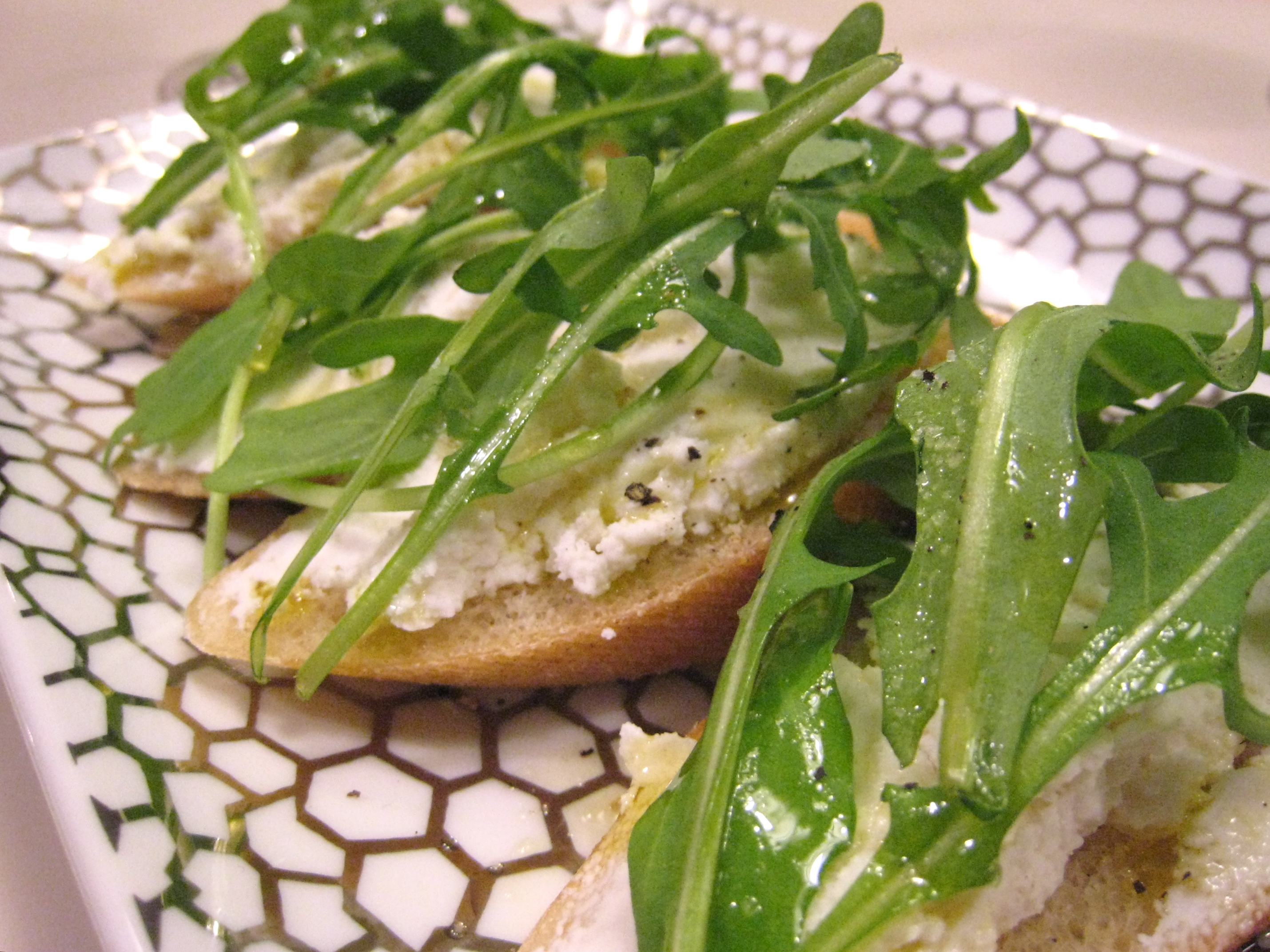
Bruschetta with Ricotta, Wild Arugula, and Olive Oil


This combo comes courtesy of Salvatore Brooklyn, makers of some of the finest whole milk ricotta this side of the pond. You can even make your own ricotta as they have made their recipe available to all. It is ridiculously easy to do, tastes fabulous, and gives you crazy bragging rights when your guests coo, “Oh my gosh! You made this!?”

In a pinch though, you can use store bought ricotta. Just try to buy the best and creamiest you can. Whole milk please. Full fat = superior mouth-feel.

To assemble, top toasted bread with a large schmear of ricotta. Artfully arrange a few leaves of peppery wild arugula. Drizzle with some super duper extra virgin olive oil. Finish with a sprinkling of flaky Maldon Salt or Fleur de sel.

And isn’t the plate so pretty? A wonderful gift from a wonderful friend!

Homemade Ricotta

Ingredients:

1 gallon of whole milk, the fullest and fattiest that you can buy

A good, healthy pinch of salt

The juice of one lemon

Special equipment:

Cheesecloth

A kitchen thermometer (somewhat optional)

How to prepare:

1. In a large pot, heat the milk and salt over high heat. Heat the milk until it reaches 190°, or you can just watch it until it reaches a good simmer (that’s about 180-190°). Turn off the heat and add the lemon juice. Stir the lemon juice in very gently and slowly. You just want to distribute the acid evenly. A vigorous stirring will break the curds up a lot. Let the pot sit undisturbed for 5 minutes or so.

2. Line a colander with cheesecloth. Place the cheesecloth-lined colander over a large bowl to catch the whey. Pour the curds and whey into the colander and let the curds strain on their own. Don’t squeeze the curds or press down on them. You can let it strain for an hour, but when the cheese looks like the consistency that you like (some people like looser ricotta, some people like denser ricotta), turn the cheese out of the cheesecloth and use it right away, or transfer it to an airtight container and refrigerate it until you want to use it.

Pipe Rigate with Broccoli and Capers


Most people know, but few believe, that I was a vegetarian for 11 years. I have no regrets. What started as an act of pre-adolescent self-rightiousness turned into a decade-long stint. It left me with a deep appreciation of weird, gnarled tubers and difficult squash, as well as a persistent, daily craving for bitter leafy greens.

When I moved to France (an act that effectively ended my vegetarianism), I took with me only two cookbooks: The Paris Cookbook by Patricia Wells and Vegetarian Cooking for Everyone by Deborah Madison. Wells’s book was a huge influence on me; it became my neighborhood guidebook, as many of her featured haunts were less than a few meters from my apartment in St-Germain-des-Près. However, it was Madison’s book that became my daily go-to, a constant source of information and inspiration. She showed me what to do with and how to eat so many of the things that I saw in the markets and had never prepared before.

Over the years, I think that I have cooked almost every recipe in the book. If you do every recipe in any cookbook, you start to feel a real intimacy with the cookbook author. Madison was a great teacher. I credit my food fearlessness, not to the hip, new restaurant du jour serving liver and brains, but to Madison. Rutabaga? Bring it on. Kohlrabi? Yeah, baby! Celeriac? Love it!

Another thing Madison taught me? Recipes are great to follow, terrific for ideas, but ultimately you have to find your own style. Now when I turn to her book — or any book for that matter — I feel confident to change it up, switch things around, and adjust it to my taste.

This recipe is originally from Vegetarian Cooking for Everyone, but of course, I’ve played with it a little bit.

Ingredients:

1 1/2 pounds of broccoli

3/4 pound of pipe rigate, lumache, or conchiglie

1/3 cup (or more) extra virgin olive oil

2 fat cloves of garlic, finely minced

1/4 cup of capers, rinsed

Red pepper flakes to taste

The juice from half a lemon

Freshly grated Parmesan

How to prepare:

1. Cut the tops off each stem of broccoli and divide the tops up into small florets. Using a vegetable peeler, peel the stems. Cut the stems into bite-sized pieces, roughly the same size as the florets.

2. Boil the pasta in a large pot of salted water. When the pasta is half-way cooked (about 5 minutes), add the broccoli florets and stems. Continue to cook, uncovered, until the pasta is al dente. Drain the pasta and broccoli into a large colander and wipe out the pot.

3. Heat the oil, garlic, and capers over medium heat until fragrant. Add as little or as many red pepper flakes as you like (I like a lot). Sizzle the red pepper flakes in the hot oil for a few seconds, being careful not to let them burn. Add the pasta and broccoli back to the pot with the lemon juice. Toss everything together well.

4. Turn off the heat and transfer everything to a large warmed bowl. Shower the pasta with freshly grated Parmesan and serve immediately.

British-Style Roast Potatoes for Roast Chicken Dinner


I’ve already expounded at length on this blog about how to roast a chicken, but some time must be devoted to that other crucial element to a roast chicken dinner: the potatoes.

Again, this is not a recipe per se, but more like a technique. Just like there are more ways to roast a chicken than I can shake a stick at — and I can shake one at a whole lot of them — there are also an almost infinite number of ways to roast a potato.

This is a very British way of roasting potatoes. I encountered many a spud like this on the other side of the pond, but never actually mastered the technique until returning to the States for good. In fact, I probably would have gone on roasting potatoes the good ol’ French way if not for Gwyneth Paltrow.

There! I said it! I admit it! I love like Gwyneth! Even her often-times derided e-newsletter GOOP! True, sometimes I must roll my eyes when I get emails from her about her latest colonic cleanse, or her holiday gift picks which include links for an $825 bag, but she sends along some really exquisite little gems of advice too.

Like that fantastic local haunt in Barcelona recommended to my boyfriend and me by a fellow food-lover in a crowded bar. Never saw it nor heard about it in any guidebook, until after I got home and read about it in Goop.

Her roast chicken and potatoes recipe is one of these great tips too.

Roast chicken aside, the trick to the potatoes? Peel them. If they are large, cut them into big chunks. Parboil them in salted water for exactly 8 minutes, any longer and they will fall apart. Drain the water from the pot. Once the water is drained, put the lid on and shake the pot around really well. You want to bash those taters up. When you remove the lid, you should see that the surface texture of the potatoes is rough and fluffy. Spoon them evenly around your chicken and drizzle them with olive oil. Sprinkle sea salt over them.

Pop the whole thing in the oven and roast until the chicken has an internal temperature of 165°, about 1 hour give or take 15 minutes if your oven is at 425°.

Now you have some seriously delicious potatoes to go with your excellent CSA chicken.

And as requested, here are some step-by-step photos of the prep.

Holiday Ham with Pomegranate Molasses, Black Pepper and Bourbon Glaze


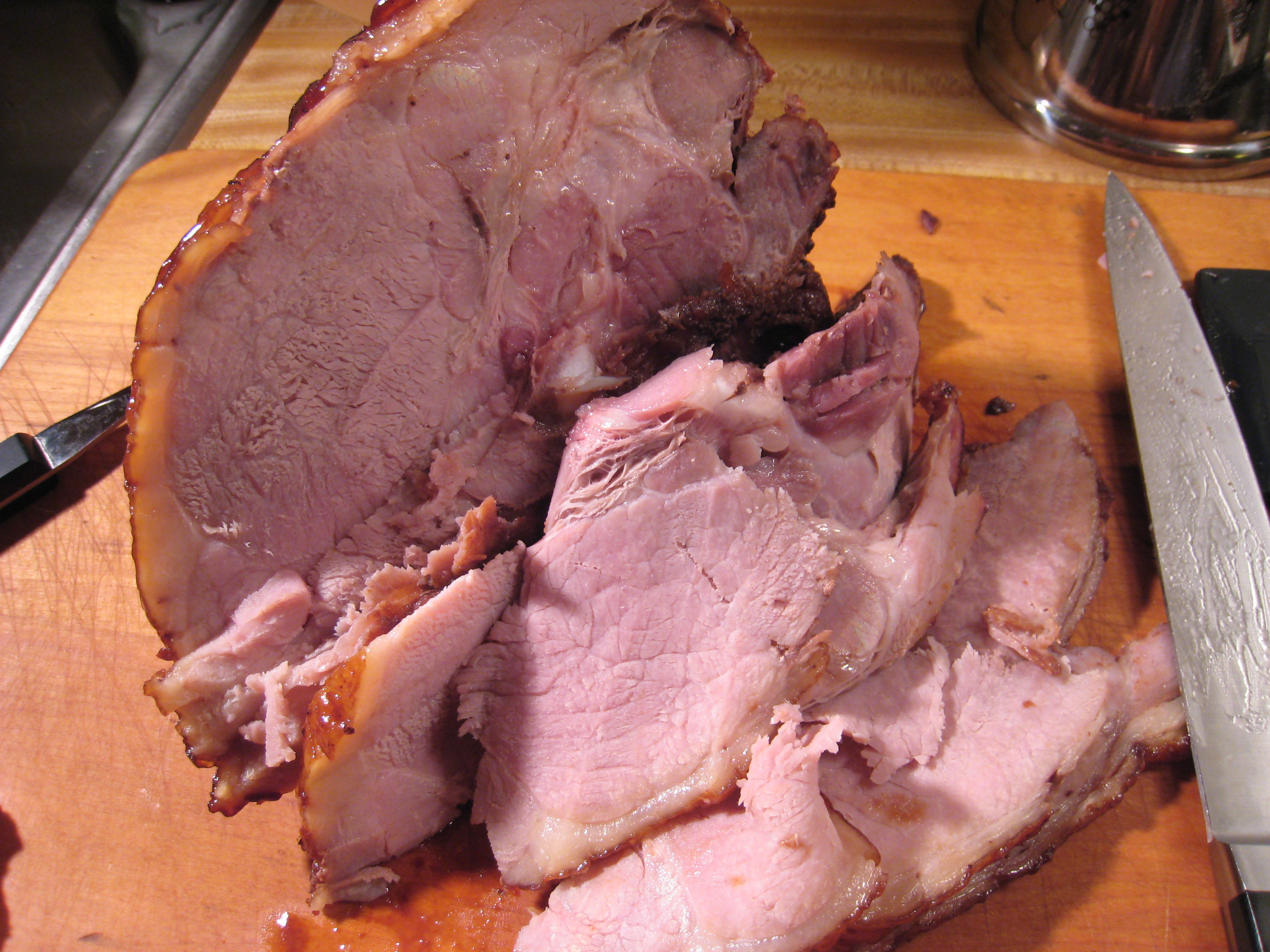
There was a special treat in the CSA basket last week: a beautiful ham.

Growing up, hams in my household were always honey-baked affairs, spiral-cut and gifted by friends and relatives who came to the house bearing boxes of See’s Candies. I don’t think I ever remember my parents baking a ham themselves, so this was a new experience for me.

What to do with a lovely ham? When Tina from High Point Farms suggested a glaze, something in clicked in my mind that I had filed away in my mental “To Cook” folder: pomegranate.

I have been seeing crates of pomegranates lately in the market. ‘Tis the season!

Though native to ancient Persia, the pomegranate figures prominently in the Greek myth of Persephone. Dear Persephone, minding her own business in a field, is abducted by her uncle Hades and spirited away to the underworld to be his bride. Overwrought with sorrow, her mother Demeter, Goddess of the Harvest, plunges the Earth into brutal winter. With nothing growing, Zeus sends Hermes to demand that Hades return her daughter to her. But not without caveats : Persephone can only return if nothing — no food nor drink — from the Underworld has passed her lips. Good Persephone had indeed been denying herself both, but when presented with a gorgeous pomegranate, she is unable to resist and swallows six ruby-red seeds. For this, she is allowed to be reunited with her mother for 6 months out of the year — 6 glorious months filled with sunshine and green, growing things — before returning to Hades, leaving her mother’s sadness to expand over the cold and frigid earth.

Such a story! To be seduced by a pomegranate! Certainly something to think about as the ham bakes, filling the apartment with warm, cuddly smells of sweet spice and exotic fruit. Maybe, I wondered as I basted another candy-colored layer onto the ham, it was worth it after all?

This recipe is from the terrific food blog, Food 52. It calls for pomegranate molasses, which I assume is easily available in most ethnic and specialty food markets. Actually, I wouldn’t know because I found it even easier to just make my own. You can too. The recipe is super easy and doesn’t require much attention, leaving you free to mind other things.

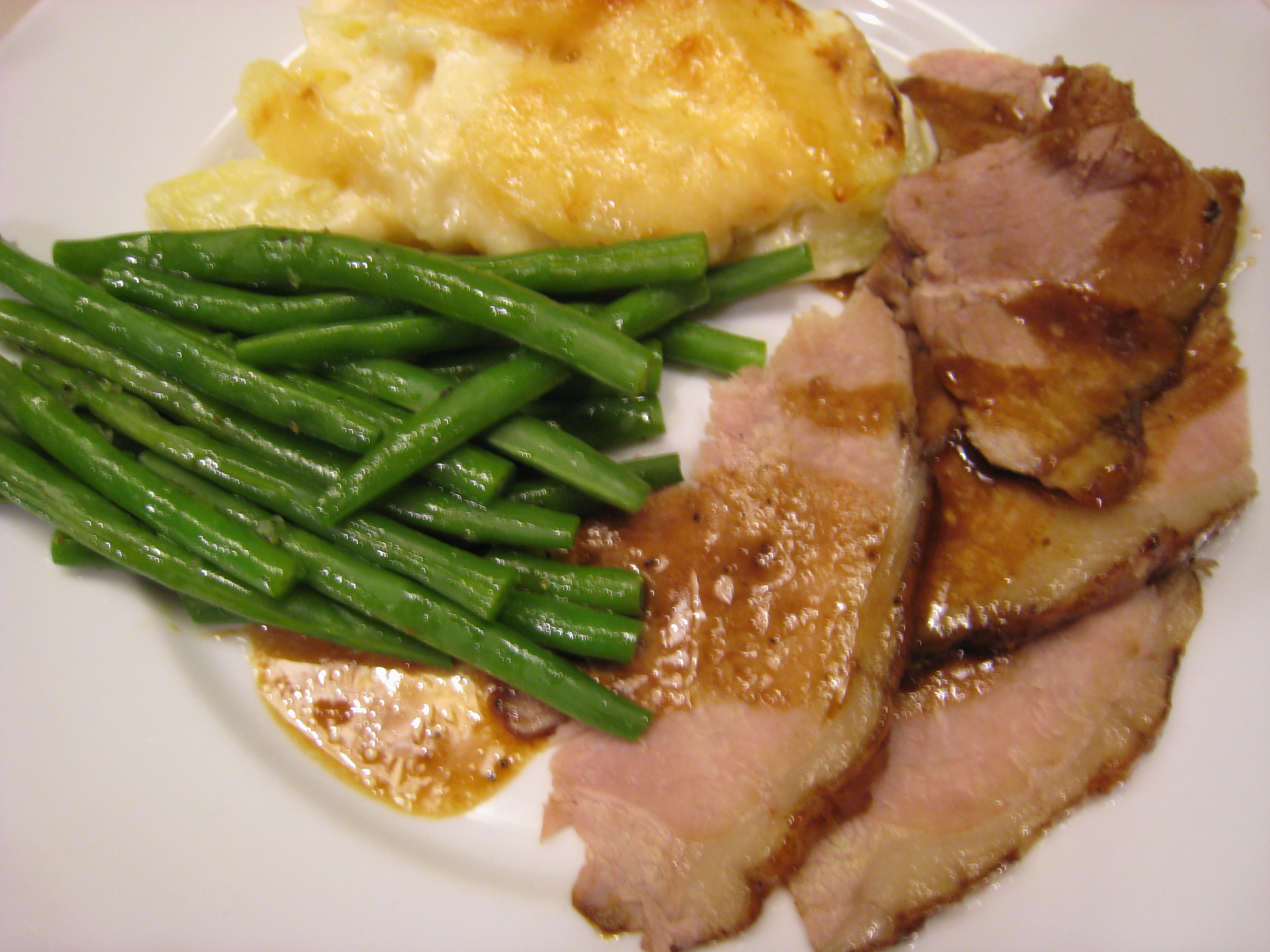
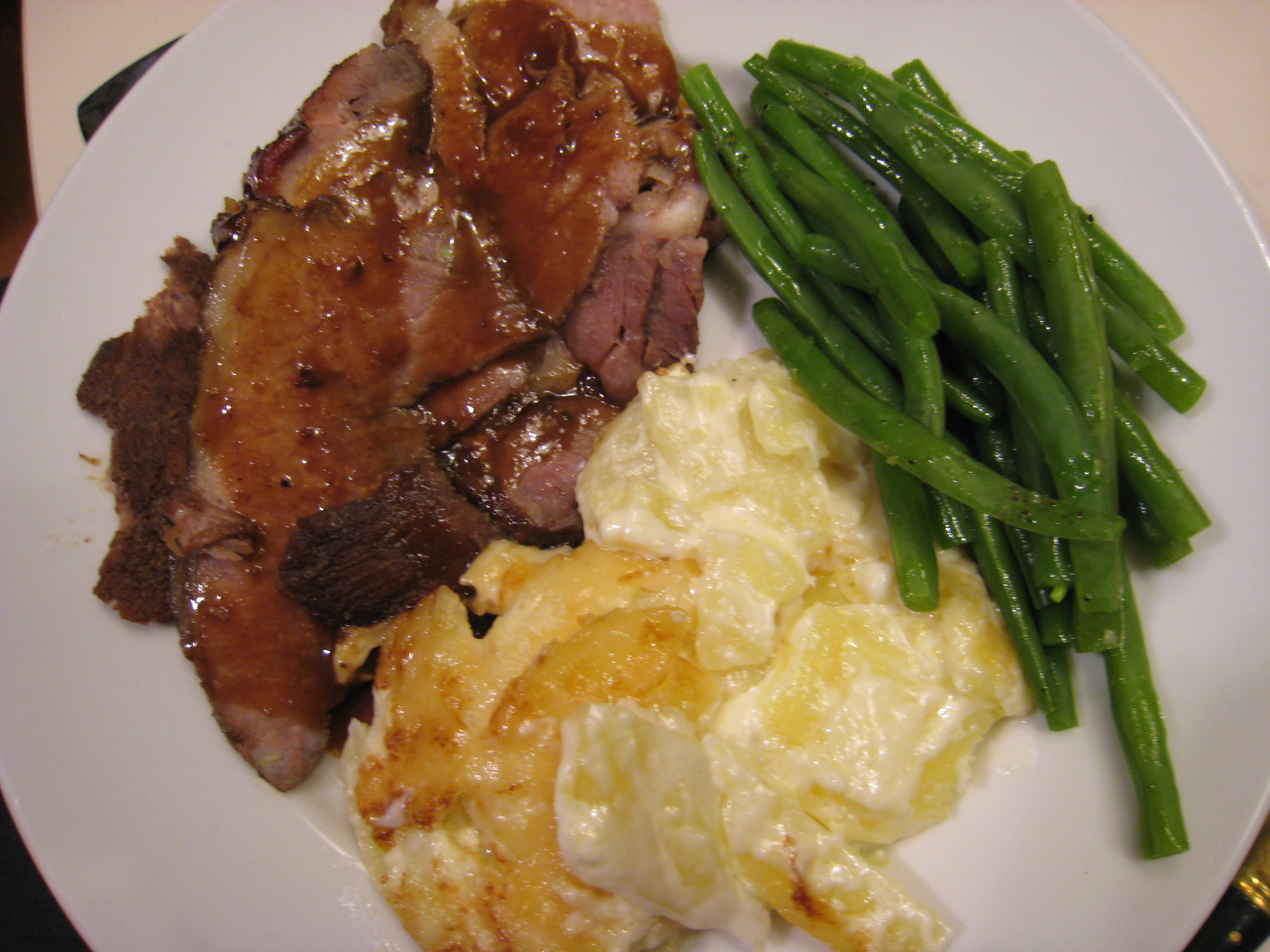
The glaze is spectacular. So interesting, it is tart, tangy, sweet and smoky all at once. Don’t skip reducing whatever remains into a quick pan sauce and drizzling it with abandon on top of your pearly pink slices of ham. We served it with a golden potato gratin and some blanched green beans.

Ingredients:

1 bone-in ham roast, about 3 lbs.

3/4 cups of pomegranate molasses*

1/4 cup of Dijon mustard

2 tablespoons of bourbon

1 tablespoon of freshly ground whole black pepper

1 teaspoon of ground allspice (optional)

1 teaspoon of kosher salt

How to prepare:

1. Let the ham come up to room temperature. Plan on about an hour before cooking.

2. Preheat the oven to 325 F.

3. To make the glaze, combine the pomegranate molasses, Dijon mustard, bourbon, pepper, allspice and salt in a bowl and whisk until well-blended.

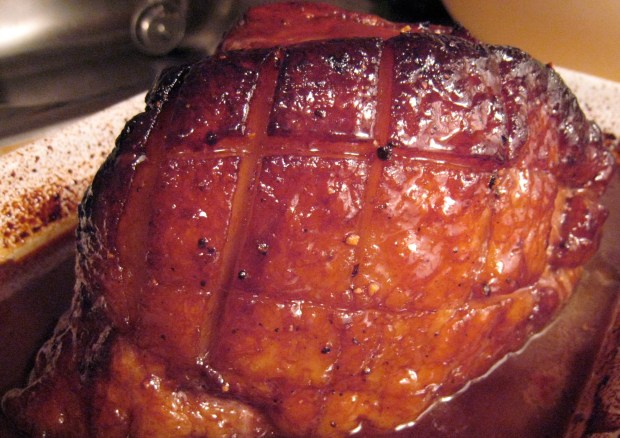
4. Place the ham, fat side up, in a roasting pan. Score the fat in a cross-hatch pattern without incising the meat. Generously baste the ham with the glaze. Bake it in the oven, basting occasionally, until the internal temperature of the ham is 120°. The ham should be a deep golden brown and crusty at this time. If not, increase the heat to 450° and continue to bake for a few minutes longer, keeping an eye on it so it doesn’t burn. Remove the ham from the oven and transfer it to a cutting board. Let it rest 20 minutes before carving.

5. Transfer the remaining basting sauce to a small saucepan along with the skimmed pan juices. Simmer everything briefly to thicken it and burn off the alcohol. Slice the ham and serve with the sauce drizzled on top.

Note:

To make you own pomegranate molasses, combine 4 cups of 100% pomegranate juice (it can be from concentrate, just be sure to look at the label closely to make sure that the juice is not a blend), 1/2 a cup of sugar, and the juice of one lemon in a saucepan. Stir the mixture to dissolve the sugar and bring it to a boil. Lower the heat to medium-low and cook until everything has reduced to about a cup of liquid. You don’t really need to stir it at all. This should take about 60-70 minutes and you should end up with a thick syrup. Let the molasses rest for about 30 minutes. It should thicken a little more as it cools. Transfer the molasses to a covered container. It should keep in the fridge for about 6 months.

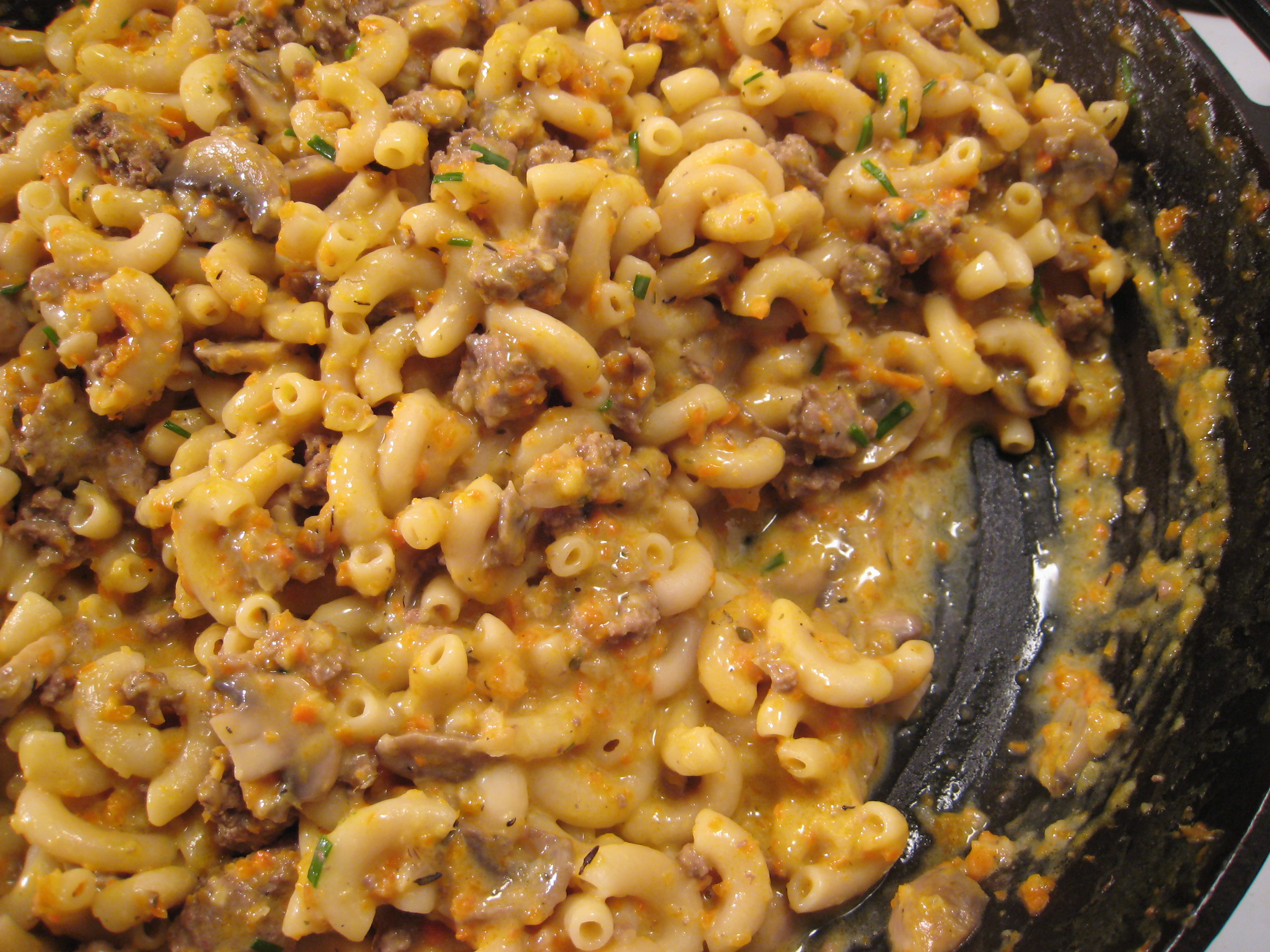
Homemade Hamburger Helper, Cheeseburger Macaroni


Feeding my brothers and myself must have been a challenge for my mother. Raised in Hong Kong, she grew up with a keen taste for fried dace and chicken feet — something that she failed to pass on to her Americanized kids. Consequently, she found convenience foods to be, well, really convenient!

One of those was Hamburger Helper. You remember it: the prepackaged sodium-bomb, like macaroni and powdered cheese mix but with meat that you had to add. When I started cooking for myself, it was foods like this that I rebelled against, forsaking as well store-bought salad dressings and mayonnaise in favor of making them from scratch like a good little French bonne femme.

Over time, I’ve found that hard feelings against certain foods does soften, and when contemplating what to do with a lone pound of CSA ground beef, I decided to recreate that fresh-from-the-box flavor without the box.

This recipe is a variation on one that appeared on Eating Well’s site called “Hamburger Buddy.” Clearly, that recipe was designed to surreptitiously feed fussy children vegetables by processing their suggested daily servings into indistinguishable purée.

While this might fool kids, it did not fool my boyfriend (“What is this? CARROTS?!).

I actually didn’t mind the carrots, but as adults feeding adults, I don’t think that you need to be so sneaky. Upon reflection, the dish would probably taste closer to the “real” thing if the carrots were omitted. It is quite tasty nevertheless. Betty Crocker be damned!

Ingredients:

3 cloves of garlic, peeled

2 medium carrots, cut into 2-inch pieces (optional, see post above)

10 ounces of white mushrooms, sliced

1 large onion, cut into 2-inch pieces

1 pound of very lean ground beef

2 teaspoons of dried thyme

Salt and freshly ground pepper to taste

1 1/2 cups of water

2 cups of chicken stock

8 ounces of elbow macaroni

2 tablespoons of Worcestershire sauce

8 ounces of sour cream

1 cup of shredded sharp Cheddar cheese

1 tablespoon chopped fresh parsley or chives

How to prepare:

1. Fit a food processor with the steel blade attachment. With the motor running, drop in the garlic cloves through the feed tube and process until minced. Add the carrots to the minced garlic and process until finely chopped. Add the onion and pulse until it is roughly chopped.

2. Cook the beef in a large straight-sided skillet or Dutch oven over medium-high heat, breaking it up with a wooden spoon until it is no longer pink. This should take about 3 to 5 minutes. Stir in the mushrooms, chopped vegetables, and thyme. Stirring often, cook until the vegetables begin to soften and the mushrooms release their juices, about 5 to 7 minutes.

3. Stir in the water, chicken stock, macaroni and Worcestershire sauce. Bring everything to a boil. Reduce heat to medium and continue to cook, stirring occasionally, until the pasta is tender, about 8 to 10 minutes.

4. Stir in the sour cream and the shredded cheese. Adjust seasoning. Simmer, stirring often, until the sauce has thickened, about 2 minutes. Toss in the parsley or chives right before serving, stirring in order to distribute the fresh herbs evenly throughout the pasta.

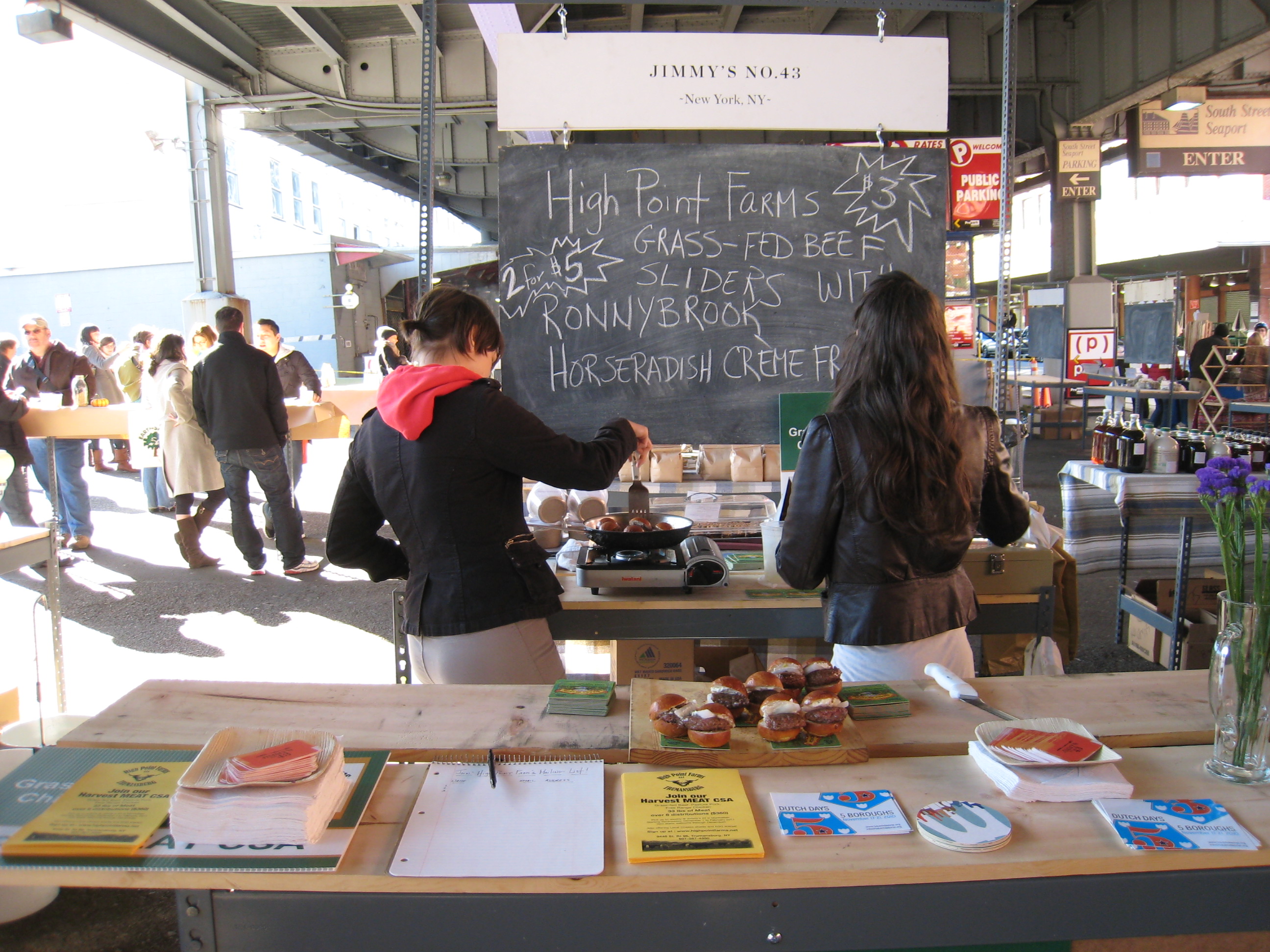
New Amsterdam Market Update: Grass-Fed Beef Sliders with Pickled Onions and Ronnybrook Horseradish Crème Fraîche

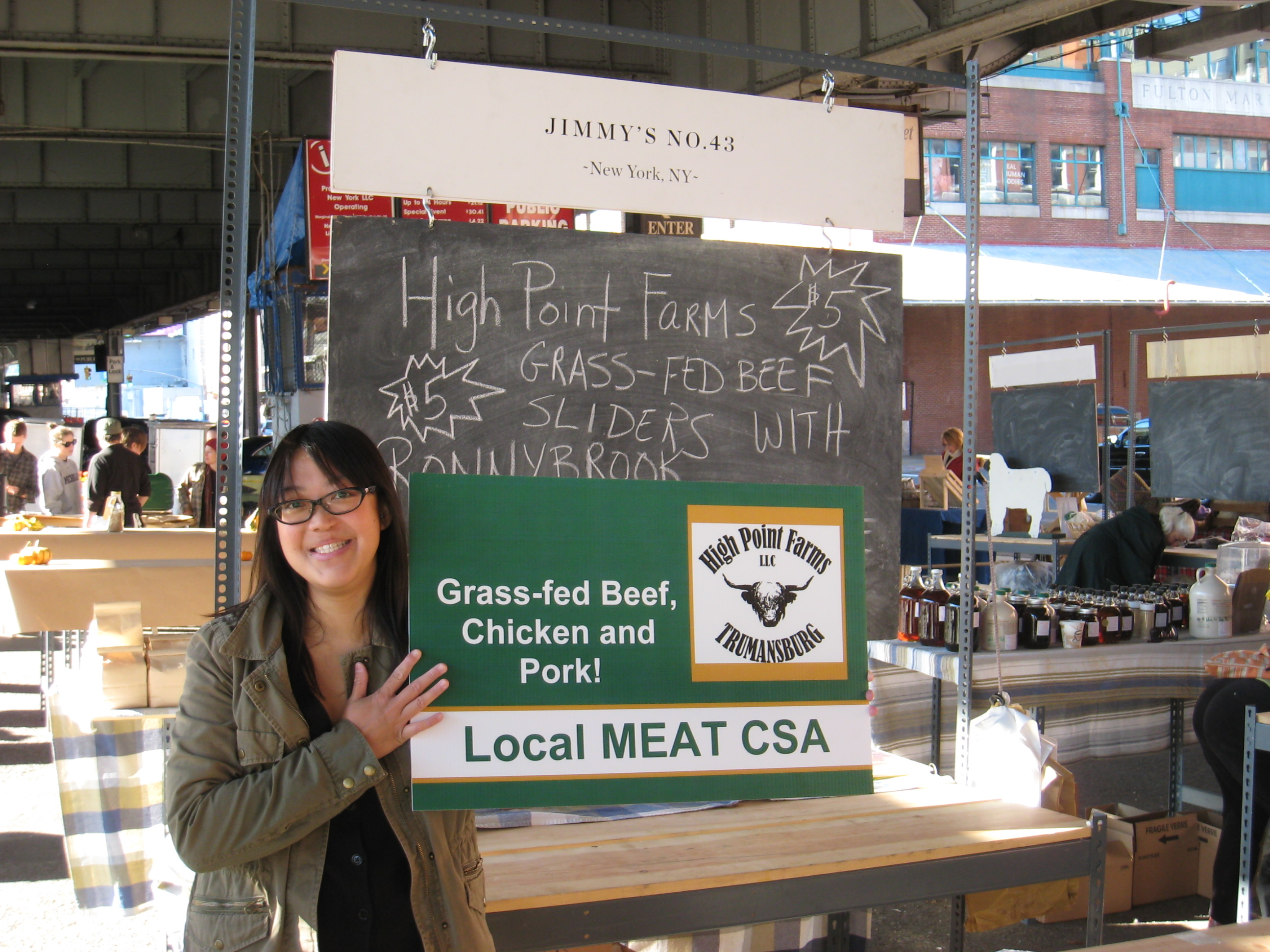
A great day at the New Amsterdam Market yesterday as Alexis and Amanda from Jimmy’s 43 slung sliders and I talked up High Point Farms upcoming Harvest CSA!

Thanks to everyone who made it out and dropped by to say “hi”! It was great to see you all and give you a chance to try some amazing meat.

The sliders were super easy to put together, but unfortunately I don’t have the recipes for either the onions or the horseradish crème fraîche. If you end up giving it a go, please do let me know how it turns out!

New Amsterdam Market Event: Join a Meat CSA this weekend and eat better!

Photo courtesy of High Point Farms.

With all the news lately about salmonella in eggs, turkey recalls, and the adverse effects of antibiotics in meat, consciousness about what we put in our bodies and how we treat the environment is growing. Vegetarianism is always one option, but another way to ensure that you are responsibly feeding you and your loved ones the safest and best food that you can is to join a local meat CSA.

CSA stands for Community Supported Agriculture. Far from the Midwestern industrial farms and feedlots that supply most East Coast supermarkets, CSA’s grow our local economy. They improve the quality of our food supply while also supporting the environmentally-friendly practices, sustainability, and humane animal husbandry.

As many of you know, I joined with my first CSA last spring. A CSA was something that I had always wanted to do, but was always hesitant because I had only heard of vegetable CSA’s. Also, I wasn’t sure if signing up for several pounds of perishable leafy greens a week would work with my schedule and lifestyle. When I heard about High Point Farm’s meat CSA, immediately I knew that this was something that would work with me. It has been a great experience, and the meat is so good and so addictive that I had to get more involved to spread the word!

Each CSA membership to High Point Farms, in Trumansburg, NY, gives you the opportunity to join the food revolution and voice your support for local agriculture and humanely-raised animals. Shares of their Harvest Meat CSA Memberships are still available.

Each share is a mix of Beef, Pastured Pork, and Free-Range Chicken.  The cows graze on grass in the summer, hay in the winter, and are not fed any grain. The pigs are pasture-raised, and the chickens freely roam the farm, feeding on bugs and whatever else nature provides. All animals raised in humane manner, without the use of any growth hormones or antibiotics. Owners Tina and Robert MacCheyne lovingly care for all of their animals. You can taste their efforts in every delicious bite.

Choose to be a part of the Manhattan, East Village distribution starting in December through February 2011. The distributions are every other Wednesday at Jimmy’s 43 on 7th Street.

High Point is also offering cheese shares from a neighboring farm, and an egg share from their own pasture-raised chickens. The eggs are a dream! The yolks are almost cartoonishly yellow, such a rich flavor and color that I find it really hard to go back to supermarket eggs.

For more information go to the CSA Page at www.highpointfarms.net or http://highpointfarmsnyc.wordpress.com/

This weekend, I’m going to be at the New Amsterdam Market, volunteering to talk up the CSA and give you the chance to have some awesome sliders made with their meat. Come and say, “hi,” on November 21st! I’ll be at the Jimmy’s 43 stand (they’re cooking, I’m talking) from 11AM to 4PM. See you there!

Finnish Ruis Bread with Sliced Cheddar and Cucumber


Last week’s trip the the New Amsterdam Market yielded all kinds of goodies. A smoked duck breast here, a bushel of Winesap apples there, and a couple rounds of Finnish Ruis bread from Nordic Breads rounded out our market basket.

Chewy and deliciously dense, these Finnish rye breads are perfect for all kinds of tasty toppers. Following the example of Nordic Breads’ bakers, we smeared lightly toasted halves of bread with good unsalted butter, topping this with thin slices of cloth-bound cheddar cheese and cucumber. Each round is reasonably thin, so it is a good idea to cut each round in halves or quarters before splitting them. In a pinch, I would imagine that a good, dark, heavy rye bread would do. Once assembled and finished with a little Maldon salt, these sandwiches make a very wonderful snack or light supper.